There is a particular kind of invitation, rare in a genre that usually hands you a smirk and a hand of cards, in watching a board play itself and discovering that the entire product is a hunt that used to be a village errand. The pieces are still pieces. The prey is still prey. The first merge that tries to teach you a lesson is not a metaphor. Lucky Hunter, the deck-building auto battler roguelike from 159 Studio and publisher indienova, is built on that quiet, and the quiet is cuter, cheaper, and more useful than a six-dollar catastrophe has any right to be.
I played the PlayStation 5 version, the 30 October 2025 console launch at $5.99 that indienova walked onto living-room hardware after a 4 November 2024 Steam debut and a demo that already knew how to put three soldiers in a row. You wake as a young hunter. You carry chess pieces with magical power. You follow the path of a legendary lucky hunter who went after a demon king and never came home. Forty-six Steam achievements sit in the grass. The English Steam sample is Very Positive, 88 percent of 106, with 412 positive voices among 457 reviews across languages, which is the honest weather of a loud little toy and not a dare. Great, not epic, and very much a hunt I would recommend you take if you like a roguelike loop that knows it is a loop.
The Village Already Spent the Legend

Most auto battlers begin with a shop and a smirk. Lucky Hunter begins with a rumor. Official copy on Steam says the world became devastated after the catastrophe, then asks you, with the grammar of a village that has already spent its hero, to walk the same road and come back with dinner. After the catastrophe, monsters roam. Crops refuse to grow. People live on what hunters drag home. A demon king sits at the far end of that sentence. A legendary lucky hunter went to end it and did not return. You are not that legend. You are the next appointment.
You start choosing routes because the alternative is becoming a rumor in a place that does not keep rumors. The first stretch is staged like a fable that forgot to be solemn. A village chief points. A young hunter leaves. Chess pieces with magical power sit in the bag like a joke that will later pay rent. The script, still a little breathless and still a little cute, asks you to grow stronger with each battle. Nobody else will. That is the rest of the map.
I like a premise that prices curiosity as a hazard and then lets you walk toward it anyway. Forests, swamps, deserts, volcanoes, and snow mountains sit on the journey like questions with teeth. Why the legend never wrote home. What a demon king wants with a crop. The more you hunt, the more the road answers with another node and another thing that would like a piece of your health. Story is environmental and stingy, which is the right instinct for a game that wants your synergies more than your diary. You are not reading a novel. You are looting a disaster that is still happening, one merge at a time.
The fantasy is not mastery of a lore bible. The fantasy is competence arriving about half a run after you invent a line of identical pieces. You will fail in ways that would be funny if the run reset were not so sincere. You leave a good relic on the shop bench. You walk back into the next attempt. You become the kind of person who thinks a slime is a personality.
A Hunter Record and a few village gifts will take the junk you have been tripping over and turn it into a history if you want one. Those notes keep the road from feeling like a tutorial that learned to punch. They are not a city. They are a reminder that someone else survived long enough to leave a receipt. I sold things I was sure I needed and then needed them, which is the oldest shop joke in the book and still a good one.
The Board Plays. You Build the Joke
The loop is the old religion and 159 Studio does not pretend otherwise. Walk a procedurally generated hunting map. Choose a node. Fight, shop, enchant, or trip over an event. Come home stronger or come home as a lesson. Weigh a unique deck against a pile of artifacts. None of that is a revolution. All of that is the sentence the rest of the toybox has to live in.
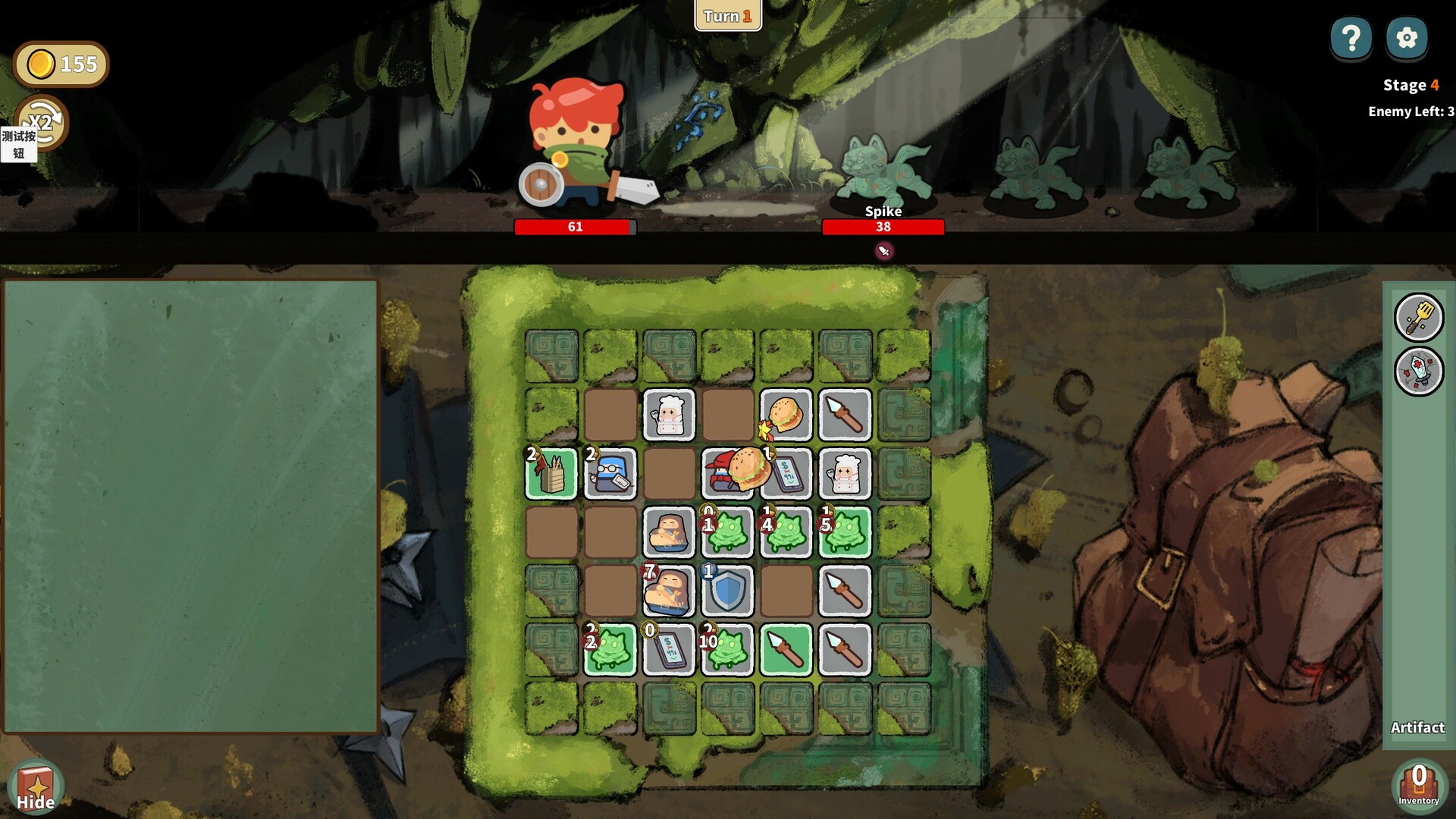
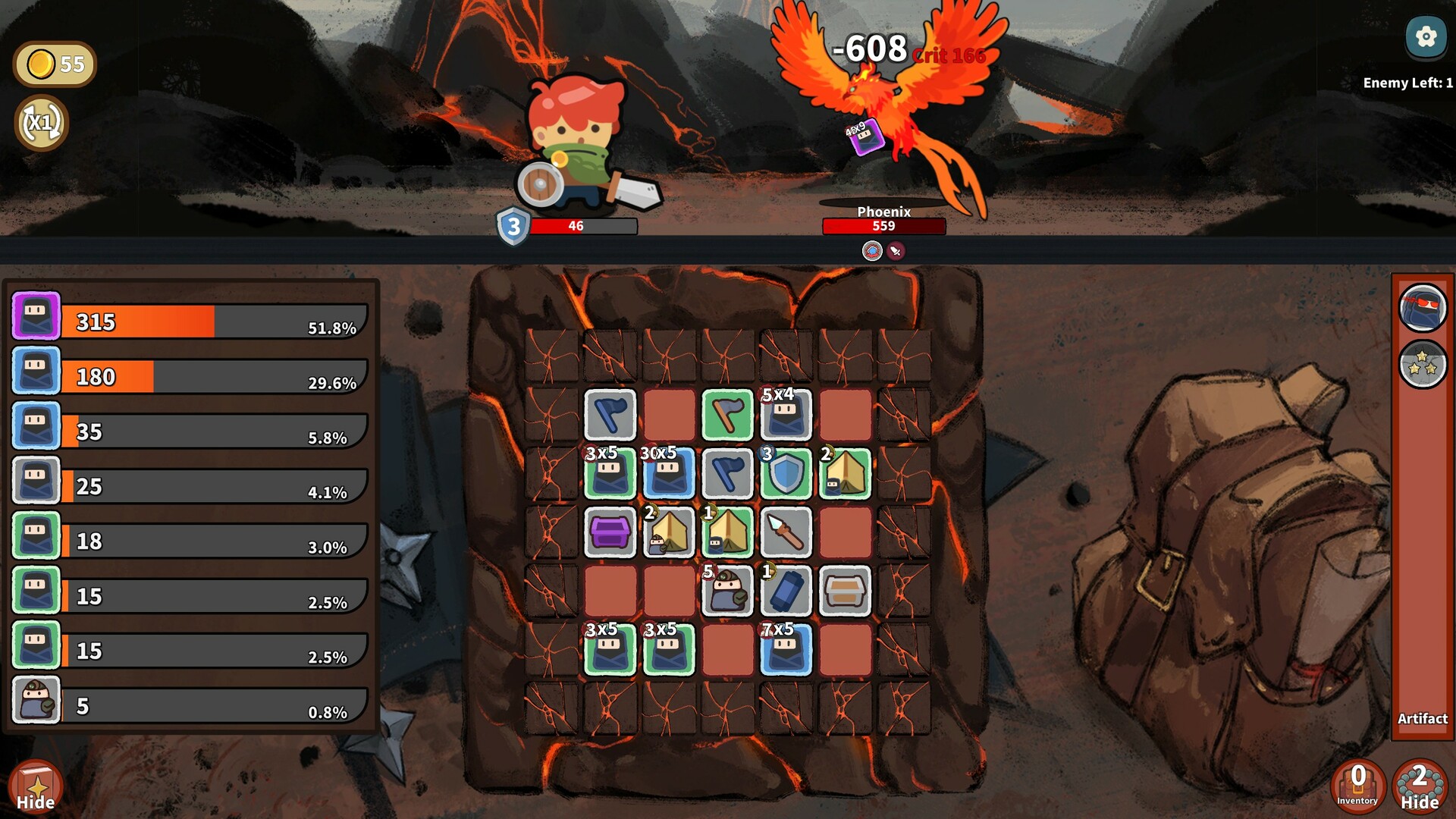
Combat is physical in the way a good workbench is physical, except the workbench plays itself. Your pieces drop onto a grid at the start of a turn. Soldiers, ninjas, slimes, alchemists, hackers, the usual village hospitality with a punchline. They fire in an order that tries to be polite about synergy. You do not steer the swing. You steer the joke that made the swing possible. Official copy says players will focus on matching and building unique decks and artifacts, fully exploiting the synergies between pieces. That sentence is both a promise and a warning. If you want a tactic that never asks you to watch, you will feel underemployed. If you want a night that turns a bag of pieces into a sentence the prey cannot finish, you will feel hired.
When three same-level pieces sit adjacent, they combine into a higher-level piece. Steam says that forging an unbreakable force is the point. The point is more mischievous than that. A merge is a punctuation mark. It is how a timid opening becomes a paragraph. The board likes setting those merges up when it can, which is a courtesy from a game that is otherwise happy to fail you for greed. I have played a lot of deckbuilders that treat the first fight as a tutorial and the hundredth fight as a spreadsheet. Lucky Hunter is lighter than that on purpose. You gain a new piece every turn. You pick from a pool that will eventually hold more than a hundred pieces and a hundred artifacts. You decide whether tonight is a soldier night or a slime night or the unlucky night you invent a ninja-and-alchemist argument because the pack said so.
I left the greedy path on for an evening and the careful path on for another. The prey did not mind. The later chapters minded either way. As a battle lasts, official copy says the attack from the prey will become increasingly fierce. That is not flavor text. It is the design refusing to pay for a cinematic when a health bar will do. Eliminate the opponent in time. Become stronger before death arrives. The rest is a village waiting to hear whether you were worth the legend.
Three of a Kind, Then the Prey Gets Rude
Power is the temperature change. Early fights establish that this is not a peaceful match-three with nicer lighting. A fat slime will chase your patience farther than pride would recommend. A clean merge handles the general population of problems. The later, nastier rooms will empty a hunter if you treat them like scenery. Further out, elite prey would like a word, and the word is short. Getting a relic with actual manners takes a while. Until then, a pair of soldiers is a strategy, not a cowardice.
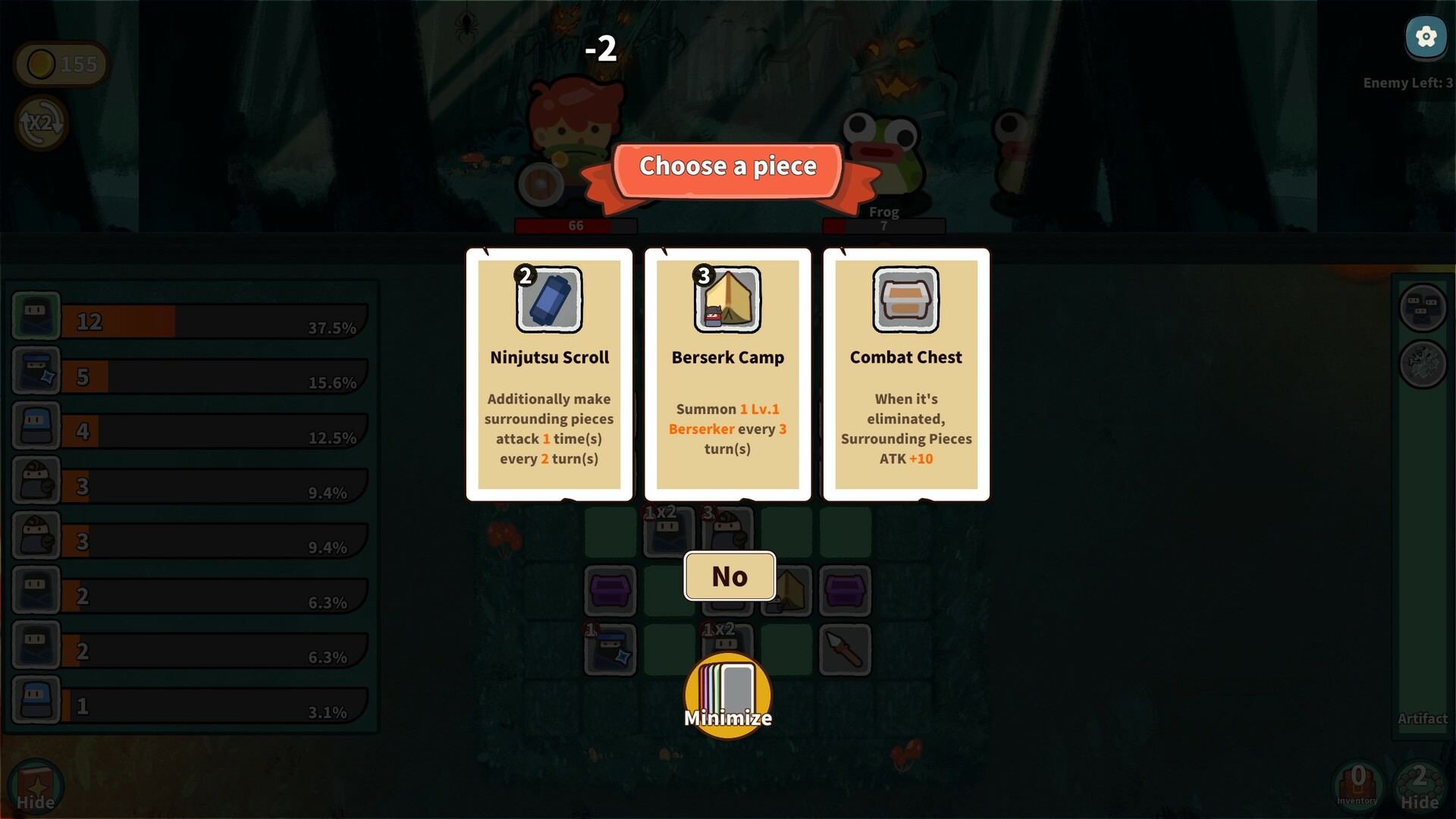
Relics are the other half of the short description and the kinder half of a week. You buy them. You pry them off a hard node. Some of them love a single archetype so much they start printing it, a soldier arriving every turn like mail. A blacksmith will take a relic you already trust and make it a little ruder. That shift is the closest Lucky Hunter comes to a power fantasy, and I like it more than a new silhouette. Mastery, here, is logistics. You gather, you stash, you walk a ridiculous little deck over a biome that tried to eat your health last chapter, and you shop like a person who has mail. The map does not get smaller because the developers deleted forest. It gets smaller because you invented commuting.
I will not invent a highlight reel with fake timestamps and tidy damage counts. The nights that stay with you are the ones where you thought the board was finished, then something started stacking in a rhythm that was not weather, and then you were on the wrong side of your own synergy. Watching a timid opening become a paragraph of merges, then a single turn that deletes a thousand hit points, is the grin the store page cannot photograph. Images alone will not sell that temperature change. The clunk, when it arrives, is real. A piece fires in a polite order that is not the order you wanted. A merge eats the buffer you needed. That clunk is also priced into an auto battler that would rather you reroute, retreat, and come back dressed. Distance helps. A favorite pack helps more.
Pressure is the variety. A node that pays is a better reward than a new silhouette if the silhouette is just another way to lose a run. Hunting regular prey is good practice and a grocery run. Elites, bosses, the usual road hospitality. Sparks happen. The store page is not shy about it. What the store page cannot tell you is how quickly you will start treating a successful merge as a mood stabilizer. You eat relics. You drink shops. You put the last piece down and look at the demon king like a person who has decided civilization is a combo.
Four Chapters and an Appetite That Does Not Clock Out
Official features split the toy into two honest rooms. Hunting Journey is the standard mode, four chapters, each one ending with a boss that would like you to prove the village sent the right kid. Endless Adventure is the other sentence. Challenge increasingly powerful prey with an ever-changing deck. How far you can get. That question mark on the store page is not cute punctuation. It is the design admitting the second mode is a dare.
A four-chapter road is a weekend with manners. You learn a biome. You spend. You enchant. You arrive at a boss with a deck that either has a thesis or has a prayer. Forest is the handshake. Swamp is the first lie. Desert, volcano, and snow mountain are how the game asks whether you were paying attention when the handshake was still friendly. I like a map that prices curiosity as a hazard and then lets you walk toward it anyway. Some nodes are handsome. Some nodes are a commute. Both nodes are the job.
Endless is the version the systems were quietly designed around once you have already killed the demon king and discovered the village still wants dinner. The deck keeps changing. The prey keeps growing. You will die. You will die later than last time, or earlier, which is the same joke in a meaner font. I have a rule for cheap roguelikes. If a game is worse with a purpose than with a checklist, it is broken. If it is only good with a purpose, it is honest. Lucky Hunter is honest, and that honesty should sit next to the price.
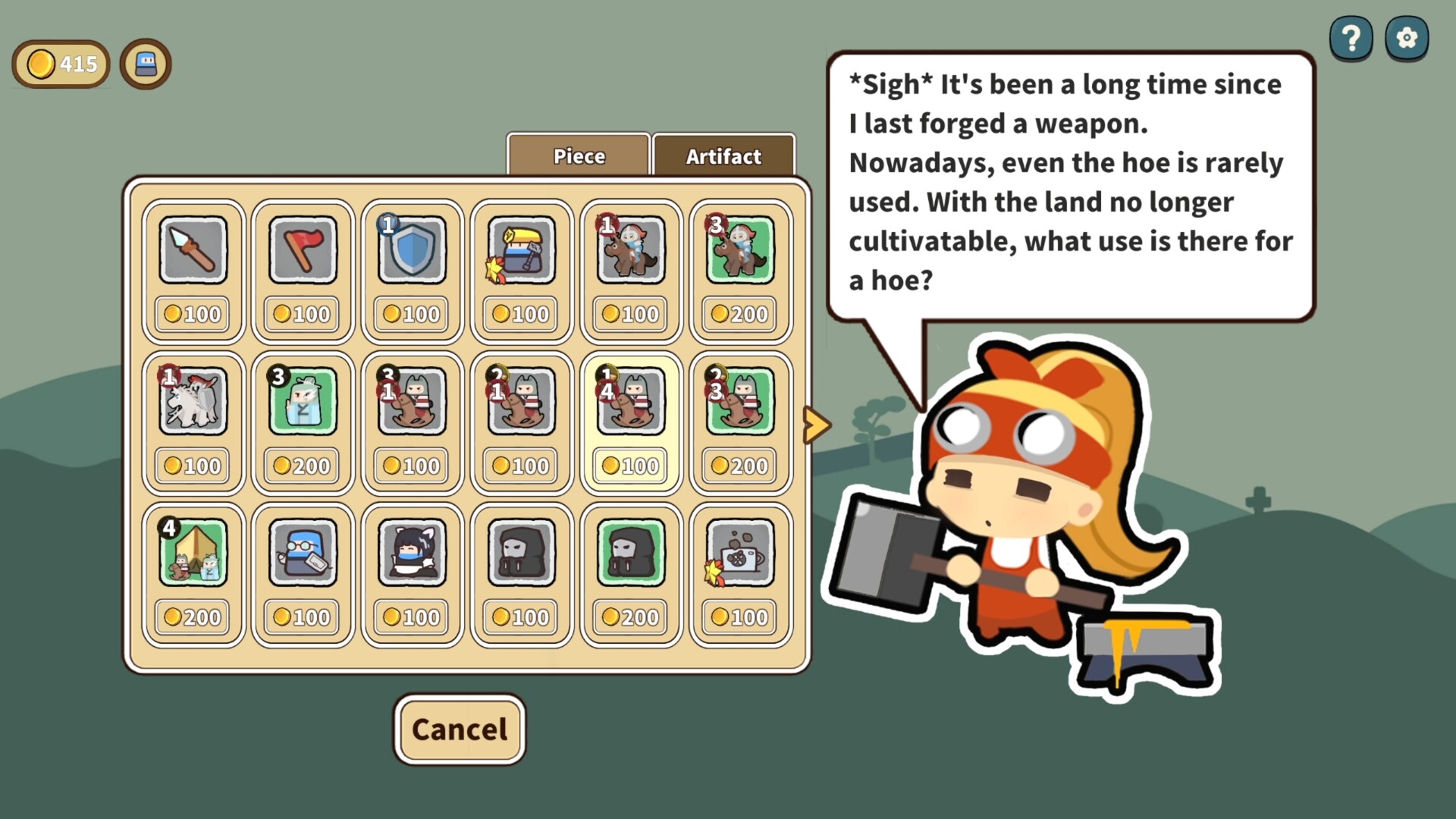
Between runs, the other half of the pitch wakes up. Success or failure, official copy says each adventure yields experience and lessons. You improve base attributes through external growth. You buy unique piece packs that introduce new mechanics. Talent points can make the next hunt kinder or make the pool louder. Unlock enough packs and the shop of possibilities gets wide enough to hide the piece you wanted. You only take three packs into a run. You can pin a favorite so the night is not a coin flip. That limit is the best manners in the building. It forces you to invent a synergy the way a village invents a hunter, with whatever is standing by the gate.
Forty-six achievements sit behind the loop for people who like a receipt. Names like Testing the Water, Elite Who?, Big Spender, and That’s It? tell you the shop has a sense of humor and is not ashamed of it. None of them change the central truth. You are here to build a board that plays itself and then find out what the board is for.
Cute Faces, Crunchy Hits, and a Story That Knows It Is Thin

I should be clear about the friction, because it is real and it is not a footnote you hide after the score. Lucky Hunter looks like a game that was built by a small shop that wanted a toy more than a showcase, then discovered the toy was a whole road. Character designs are cute on purpose. Prey arrives with the courtesy of a sticker book that learned to bite. Music is decent in the way a good village band is decent. You can hum it while a slime is ruining your evening.
The attack sound is the argument I will not pretend I won. When the board gets loud, when a dozen pieces decide to speak at max speed, the hit can crunch like an audio glitch that paid rent. I would have preferred a softer smack. I did not stop hunting. I did turn the moment into a joke I told myself every time a merge became a drumline. Presentation is readable, which matters more than prestige. You can tell a shop from an enchantment from a boss at a glance. If you cannot read a node, the hunt dies and the road becomes homework. These spaces are atmospheric enough to carry a grin and clear enough to carry a plan. You always know where you are. You do not always know why the next prey already has more health than your thesis.
Story stays thin and knows it. A hunter leaves. A village waits. A demon king sits at the end of four chapters like a receipt. Hunter Record pages and a few gifts will deepen that if you walk toward them. You do not have to. The game will not punish you for treating lore like optional furniture. That stinginess is a virtue until you want a reason to care about the legend beyond the next merge. I wanted a little more village and a little less rumor. I also understand why a six-dollar auto battler spent the budget on the board.
Technical manners on a console build can sulk when a late chapter decides to be a theology problem of numbers. I will not invent a frame census. I will say the road sometimes forgets to stock the smoothness you need and then shrugs like weather. Full controller support is on the Steam sheet, which is how a living-room copy gets in the door without inventing a new language. English is one of five Steam languages, with Simplified Chinese, Traditional Chinese, Japanese, and German sitting beside it. I will not turn this into a localization seminar. The voice of the game is the board, and the board talks in merges, shops, and the occasional crunchy slap.
Luck is in the title and in the night. A run can open like a gift and close like a coin that landed wrong. Players who wanted a deeper scrap, a prettier mix, or a resource economy that never hides the roll will bounce off. Players who wanted a cute auto battler with a village and a bad idea about slimes will stay. I am in the second camp with caveats, which is the only honest place to stand.
Still Hunting After the Merge
Lucky Hunter is a rare cheap roguelike that understands its own joke and then has the nerve to make the joke a board that plays itself. 159 Studio built a hunt about a missing legend, a village about teamwork you do with a grid, and a toybox that looks a little handmade and plays a lot more sincerely than that sentence suggests. The loop is the hook. The merge is the spine. The walk from a timid opening to a turn that deletes a boss is the grin.
It is better with a purpose than with a checklist. The late prey can clunk in the way a number storm is clunky. The attack sound can crunch. The presentation has indie fingerprints, from the cute silhouettes to the story that would rather be a record than a cutscene. All of that is true, and all of that is already priced in at $5.99. You are not buying a decade. You are buying a season that can turn into several seasons if you like being a coordinated disaster, or being the person who has to explain the disaster to a shop.
I am scoring it 8.5, Great, because the identity is this clear and the limitations are the limitations of a focused little hunt, not an empty one. I would recommend it to anyone who likes a workbench that has weight and a map that is allowed to be rude. Distinctive merge weather, a board that shrinks the road, a pack that turns salvage into conversation, and a price that respects a long week are a lot of game for the ask. The systems repeat their manners. The manners are still useful.
The road is still out there, still hiring a night shift, still asking what the legend was. After a few hunts, you will understand why the job is not finished, and why you keep lining up three pieces anyway.
We prepared this review with a digital copy of Lucky Hunter for the PS5 version provided by Pressengine.