
There is a particular kind of inheritance, rare in a genre that usually hands you a flat island and a cheerful lumber camp, in waking up after a mutiny and discovering the Caribbean has already hired a night shift of trading companies. The dock is still a dock. The warehouse is still a warehouse. The first traitor that tries to teach you a lesson is not a metaphor. Republic of Pirates, the swashbuckling city builder with real-time naval combat from Crazy Goat Games, is built on that quarrel, and the quarrel is ruder, rummier, and more useful than a twenty-five-dollar utopia has any right to be.
I played the PlayStation 5 version, the 25 September 2025 launch that PQube walked onto living-room hardware after Crazy Goat Games put the same city builder on Steam and the Epic store on 19 June 2024 at $24.99. You plant an outpost. You raise a settlement. You put rum on a warehouse route, and you learn the archipelago has already hired a night shift of companies that do not negotiate. A hundred buildings. Eight ship classes. A campaign if you would like the traitors with a syllabus, and a free play editor if you would not. Fifty Steam achievements sit in the spray. The English Steam sample is Mostly Positive, 72 percent of 245, with 416 purchasers across languages, which is the honest weather of a loud mid-priced builder and not a dare. Great, not glossy, and very much a republic I would recommend you sail if you like a city builder that remembers it is also a navy.
The Confederacy Already Lost the Argument
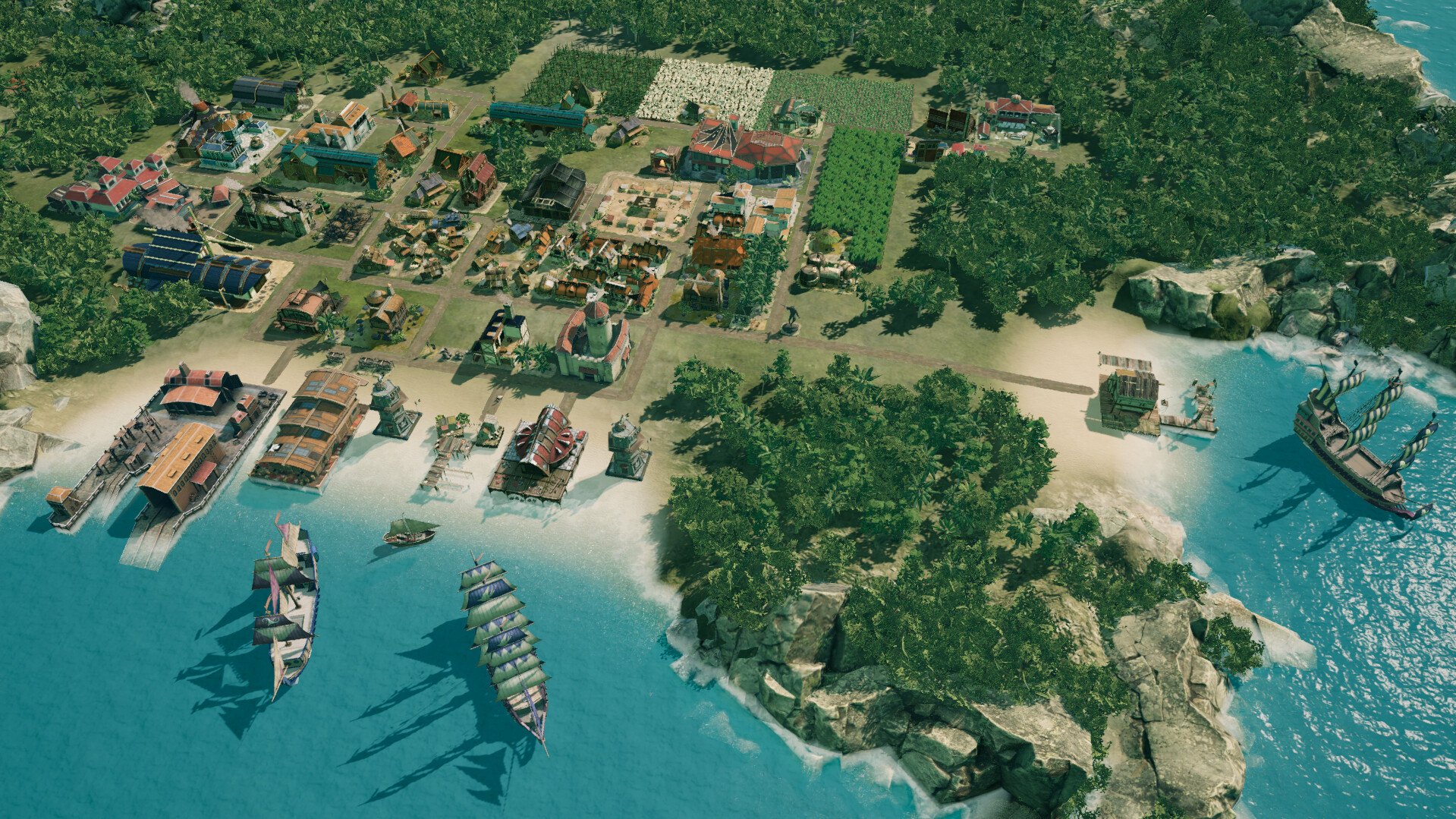
Most city builders begin with a speech and a blank meadow. Republic of Pirates begins with a breakup. Official copy on Steam says that in the heart of the Caribbean during the Golden Age of Piracy there was a powerful alliance of crews, united by ideology and collective ambition, until greed and jealousy spread into a vicious mutiny and a final bloody split. Then it asks you, with the grammar of a person who has already lost the old flag, to forge a new pirate utopia and bring justice to the traitors who wronged you. That is not flavor text. It is the design refusing to pay for a cinematic when a dock will do.
You start building because the alternative is becoming a rumor in a place that does not keep rumors. The first stretch is staged like a punchline that forgot to be funny. You plant. The outpost thinks about it. Something on the horizon thinks about you. The script, still a little breathless, asks you to grow a humble camp into a sprawling settlement. Nobody else will. That is the rest of the map.
I like a premise that prices curiosity as a hazard and then lets you sail toward it anyway. Remote islands, rival clans, and the most influential national trading companies of the era sit on the water like questions with cannons. Why are there warehouses and no honor. What was that confederacy. The more you explore, the more the Caribbean answers with another island and another thing that would like a piece of your rum. Story is environmental and stingy, which is the right instinct for a game that wants your hands more than your diary. You are not reading a novel. You are looting a quarrel that is still happening.
The fantasy is not mastery of a lore bible. The fantasy is competence arriving about half a day after you invent a warehouse route. You will fail in ways that would be funny if the empty depot were not so sincere. You leave the island. You sail back. You become the kind of person who thinks a rum distillery is a personality.
A Hundred Buildings and a Stomach
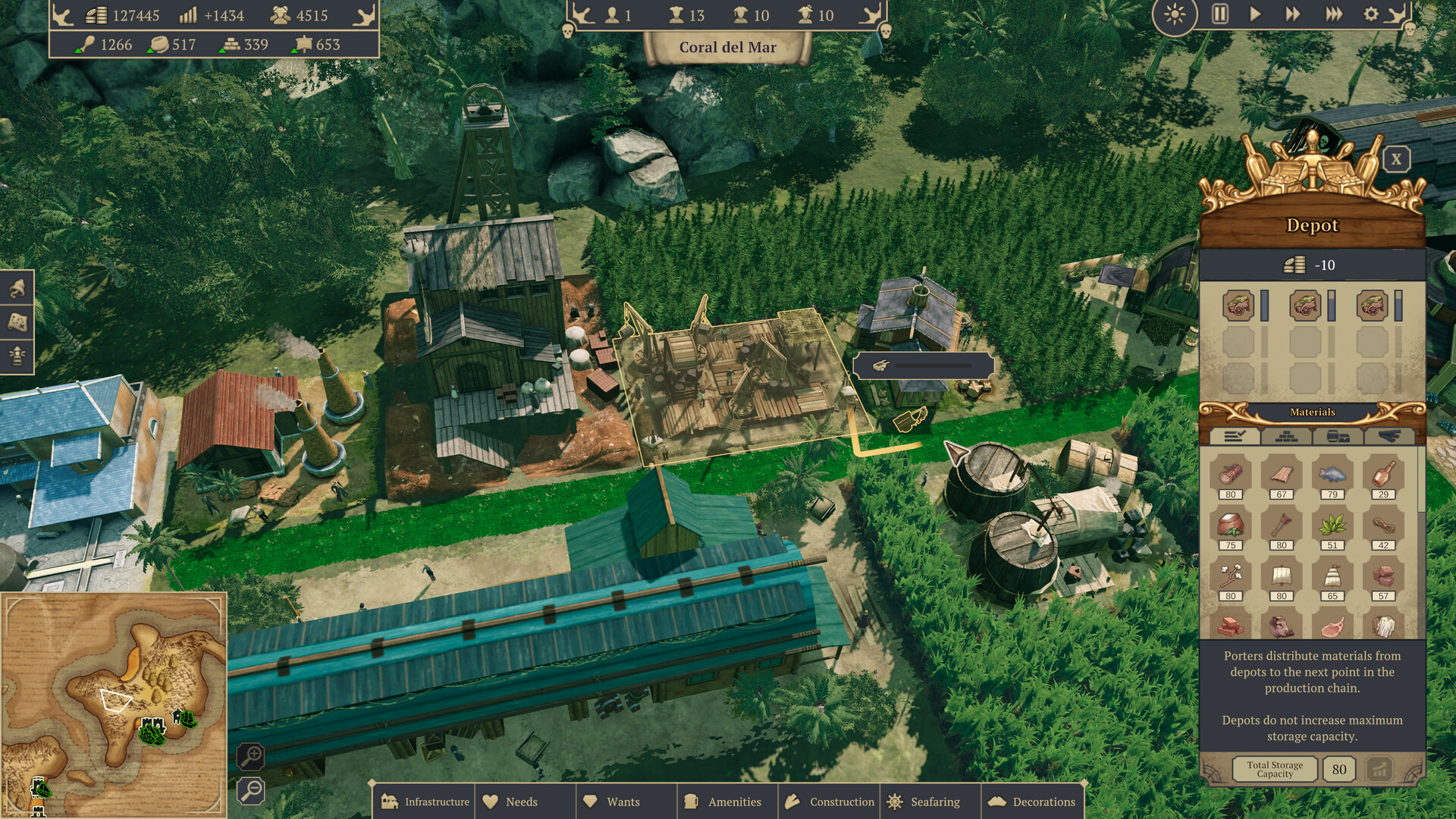
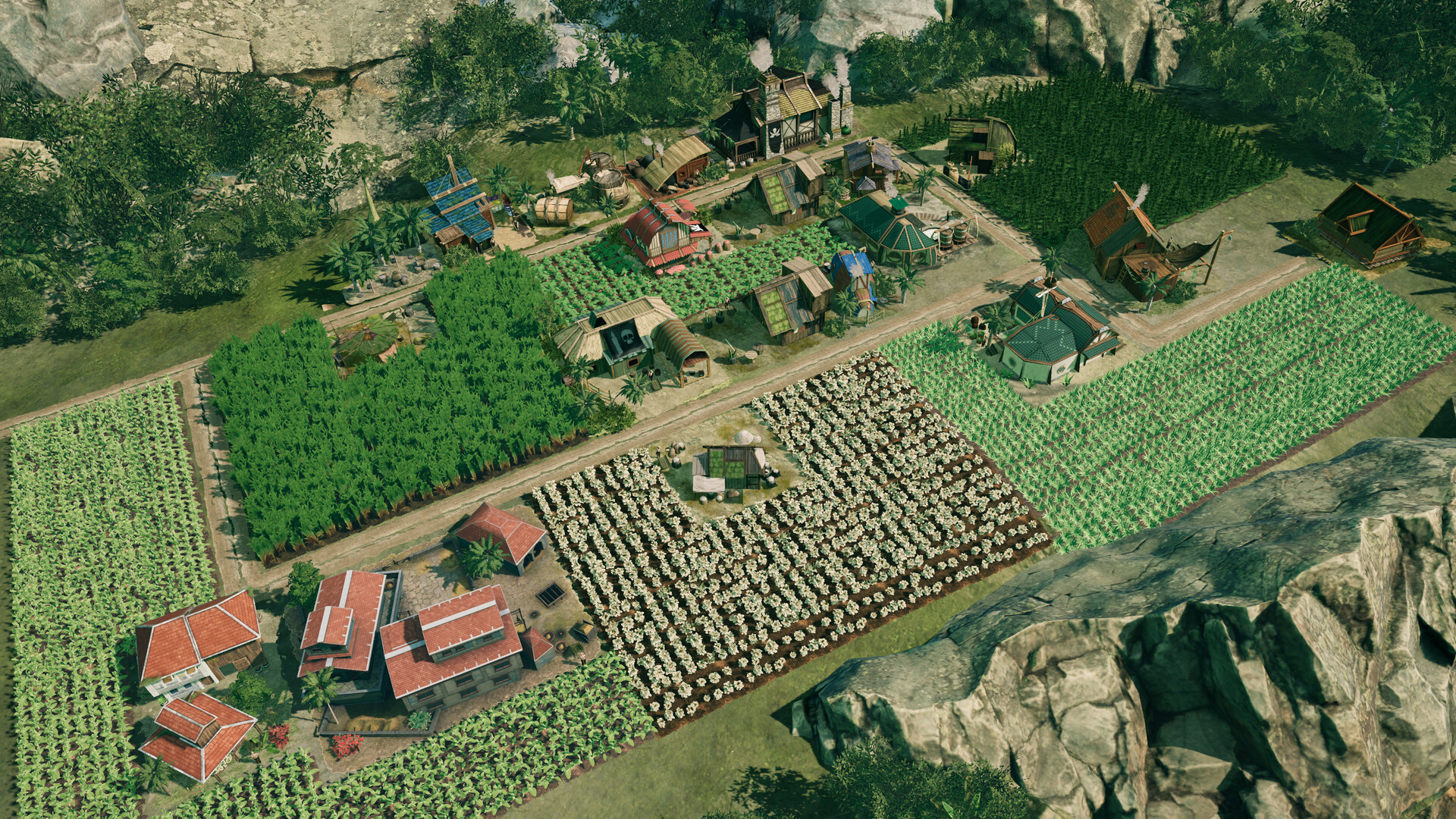
The loop is the old religion of production and Crazy Goat Games does not pretend otherwise, then it straps a navy to the religion and asks the religion to plunder. Official features ask you to utilize more than a hundred unique buildings to provide the essential resources for growth. Supply citizens with goods. Develop their proficiency. Unlock new tiers of industry. Distribute those goods across a network of docks, depots, and warehouses until a pirate house decides it has standing. None of that is a revolution. All of that is the sentence the rest of the toybox has to live in.
Needs are straightforward in the way a good workbench is straightforward. You are not drowning in menus if you are paying attention. You are looking at a plantation and deciding whether you have been useful enough today. Sugar becomes rum if you keep showing up. Timber becomes a hull if the shipyard is in a good mood. Amenities keep the settlement from writing a complaint. Upgrading houses is the temperature you turn up when a trading company has already decided you are a problem.
I have played a lot of games that treat the first night as a tutorial and the hundredth night as a spreadsheet. Republic of Pirates is heavier than a toy and lighter than a career on purpose. Official copy says you develop a humble outpost into a sprawling settlement by investing in production buildings and amenities. That sentence is both a promise and a warning. If you want a tech tree that never asks you to walk a crate from a dock to a depot by hand, you will feel underemployed. If you want a month that turns a camp into a republic, you will feel hired.
Dynamic resource management is the other half of the pitch. Craft a cannon for offense or save the materials for an easy exit from a hungry neighbor. The world is your salvage yard and your grocery list. You decide what is worth carrying to the next island. I left the greedy path on for an evening and the careful path on for another. The Caribbean did not mind. The rival crews minded either way.
Captains, Cannons, and the Tactical Map

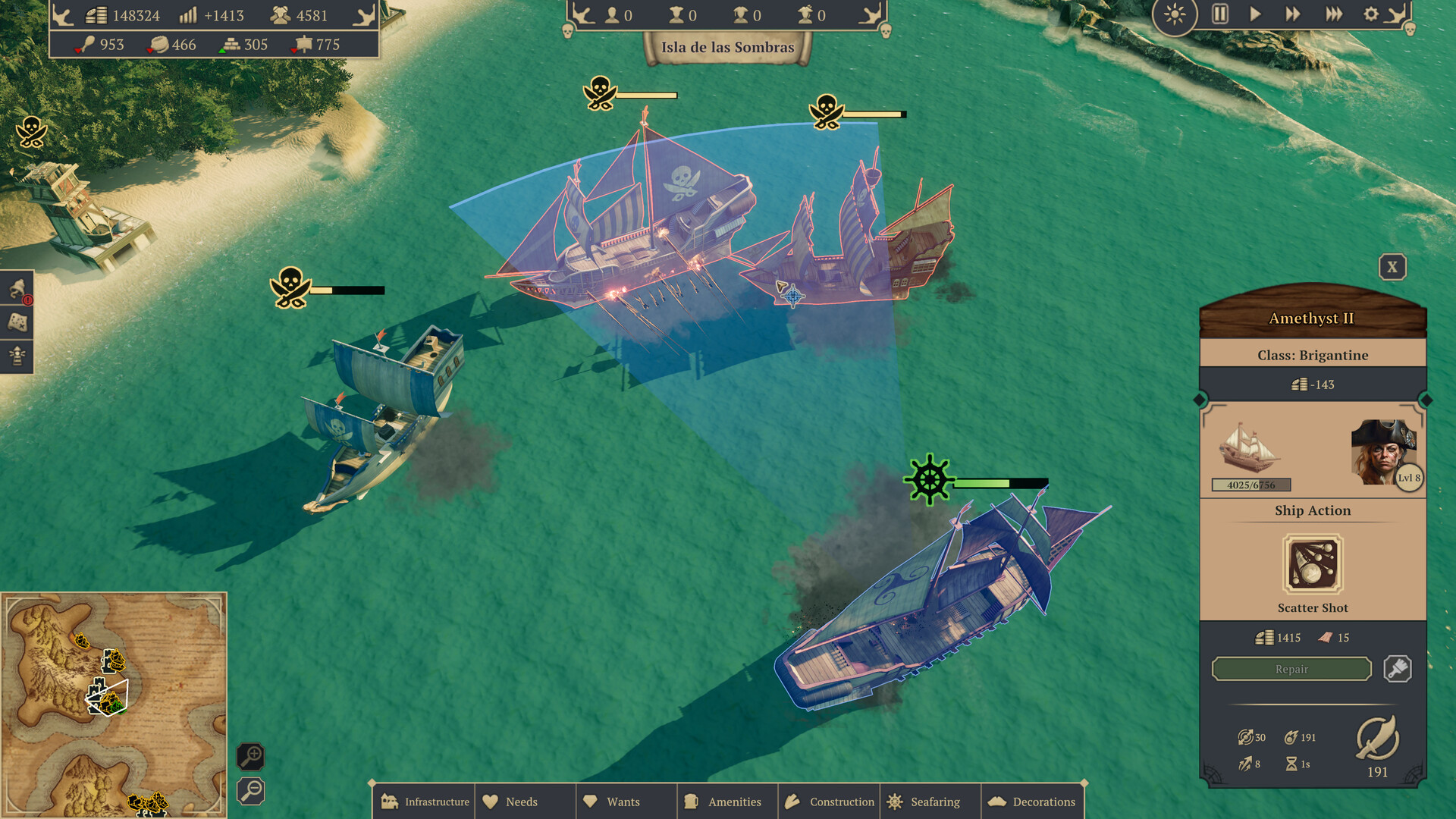
Combat is the temperature change. Early waters establish that this is not a peaceful postcard with nicer lighting. A merchant hull will chase your patience farther than pride would recommend. A single ship handles the general population of problems. The later, nastier fights will empty a hold if you treat them like scenery. Further out, rival factions would like a word, and the word is short. Getting a fleet with actual manners takes a while. Until then, a small hull is a strategy, not a cowardice.
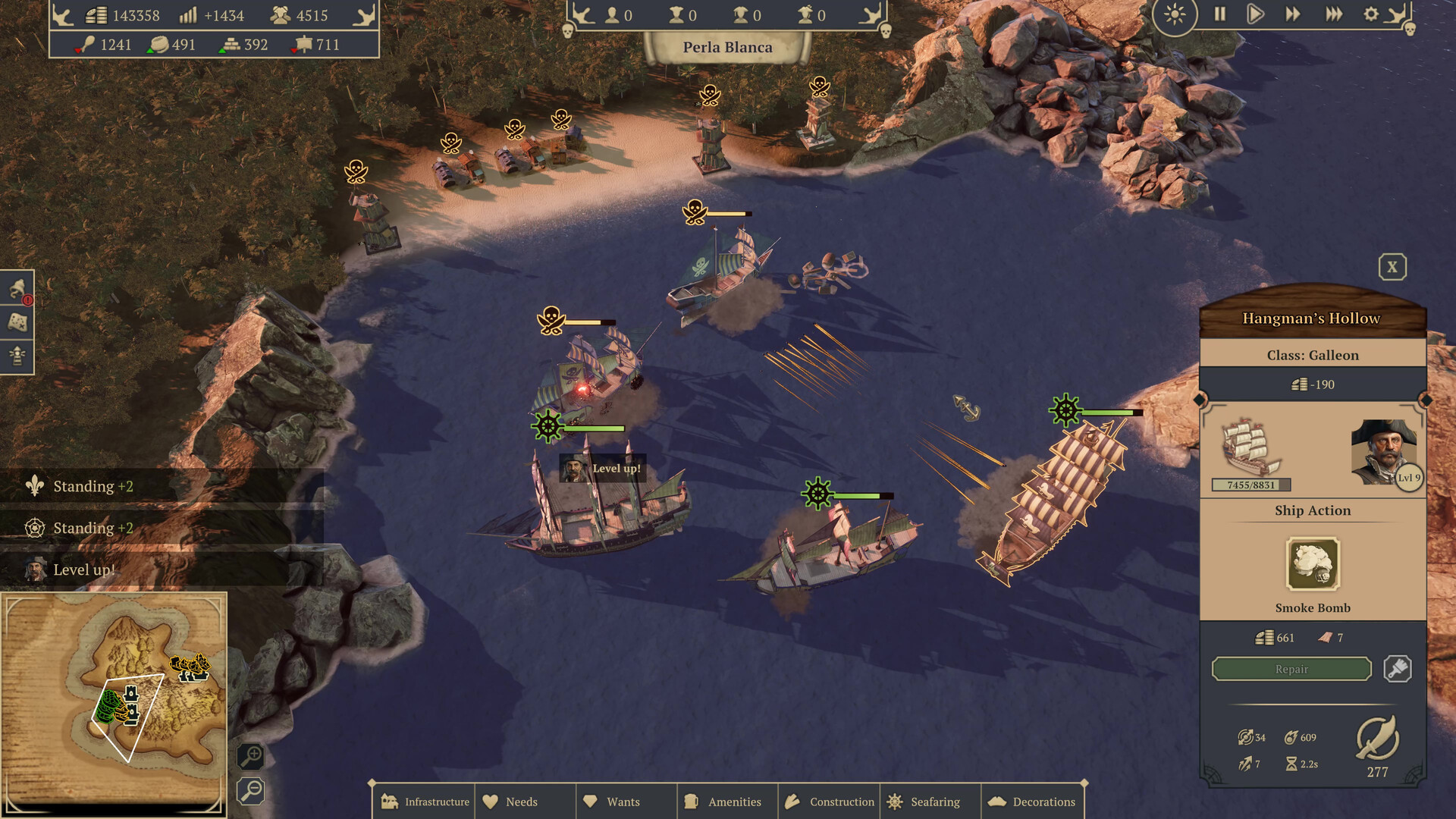
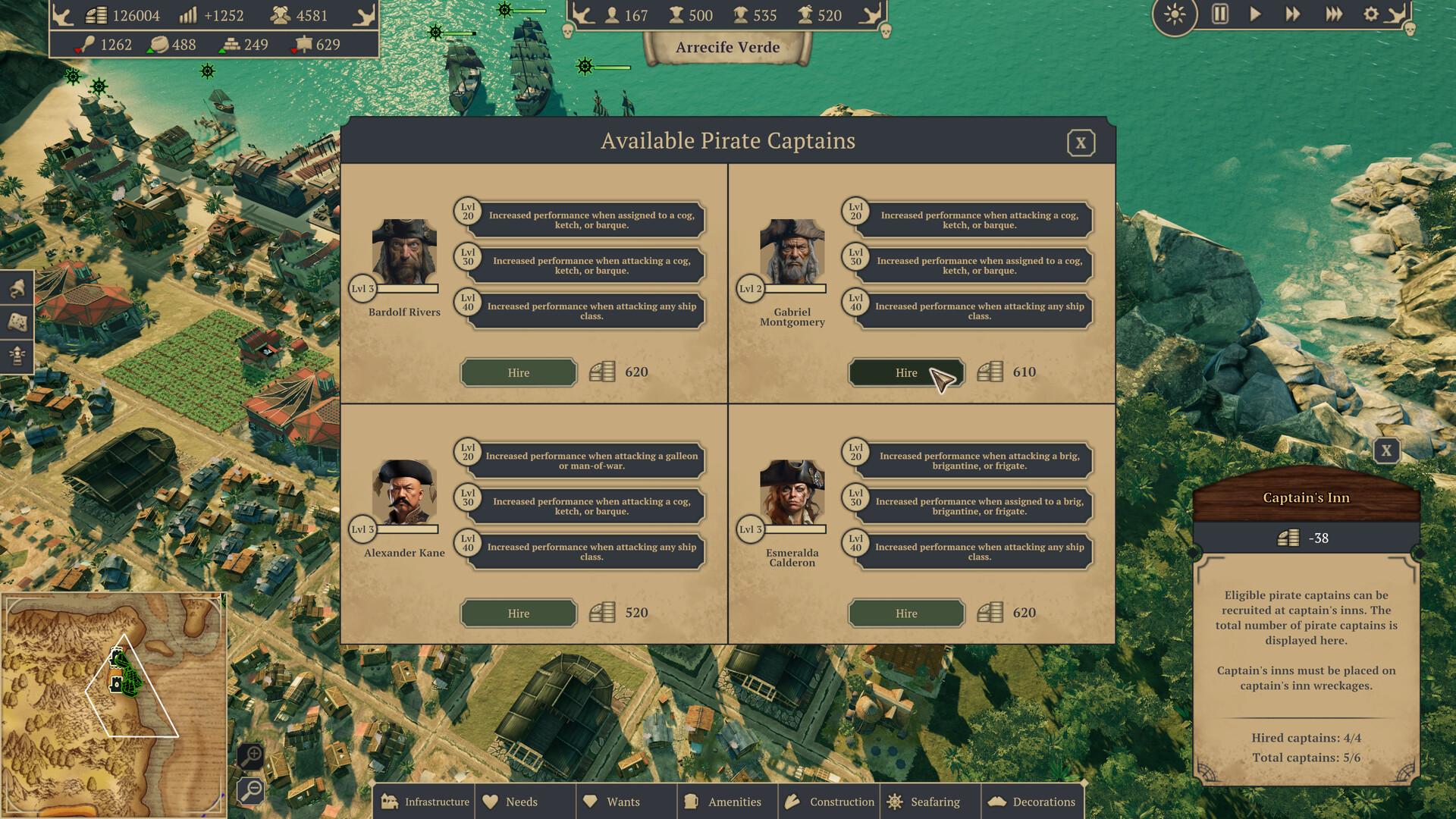
The navy is the other half of the short description and the louder half of a week. Official features ask you to command a fleet, explore and conquer the archipelago, engage in real-time strategic combat, and switch to the tactical map to plan and execute your next raid. Recruit heroic captains. Hone their skills. Experiment with tactics. Construct eight unique ship classes and customize the fleet’s appearance until the flag looks like a threat. That shift is the closest Republic of Pirates comes to a power fantasy, and I like it more than a new warehouse. Mastery, here, is logistics with gunpowder. You gather, you stash, you sail a ridiculous little brigantine over a place that tried to eat your hull last week, and you dock like a person who has mail.
I will not invent a highlight reel with fake timestamps and tidy raid counts. The nights that stay with you are the ones where you thought the route was finished, then something started knocking in a rhythm that was not weather, and then you were on the wrong side of your own architecture. Melee at sea can feel like two captains agreeing to take turns being disappointed. That clunk is real. It is also priced into a combat loop that would rather you scavenge, retreat, and come back dressed. Distance helps. A working tactical map helps more.
An inn will ask you to recruit if you would like the fantasy of purpose without a town. Captains take the junk you have been tripping over and turn it into a specialization. Those two voices keep the Caribbean from feeling like a nature documentary that learned to punch. They are not a city. They are a reminder that someone else survived long enough to leave a crew. I sold things I was sure I needed and then needed them, which is the oldest warehouse joke in the book and still a good one.
Diplomacy That Notices Everything
Pressure is the variety. A treaty that holds is a better reward than a new silhouette if the silhouette is just another way to lose a warehouse. Hunting merchant vessels is good practice and a grocery run. Liberated islands, rival clans, the usual Caribbean hospitality. Sparks happen. The store page is not shy about it. What the store page cannot tell you is how quickly you will start treating a successful raid as a mood stabilizer. You eat timber. You drink rum. You put the cannon down and look at the settlement like a person who has decided civilization is a black market.
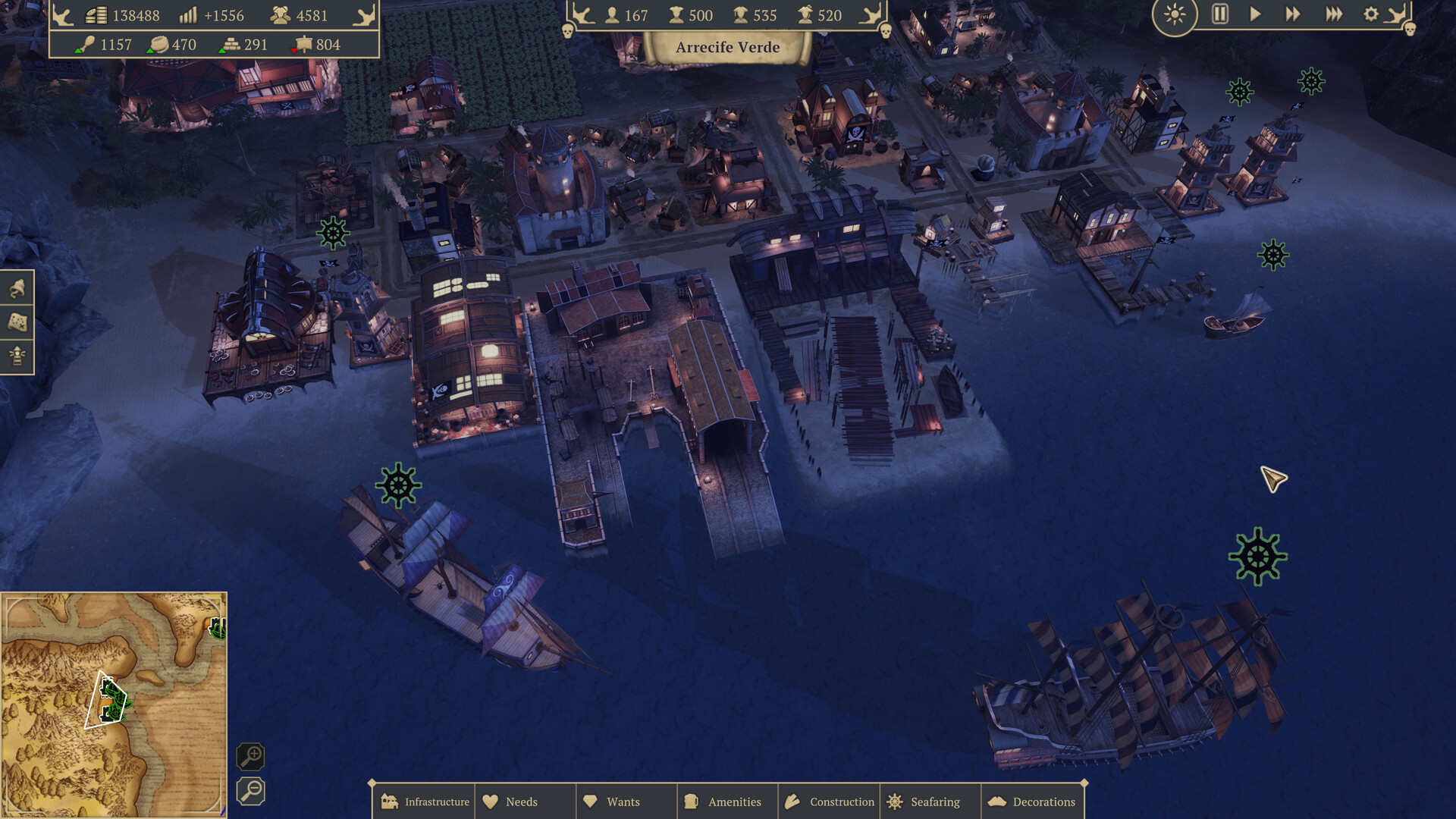
Official features ask you to manage dynamic relationships with pirate crews and trading companies. Harbor rivalries. Forge alliances. Navigate a diplomatic web where no action goes unnoticed. That last clause is the joke the whole map is telling. You cannot pretend the British company did not see the smoke. You cannot pretend a liberated island is a private hobby. Standing is a resource with worse manners than rum, and it invoices you in fleets.
I like a map that prices curiosity as a hazard and then lets you sail toward it anyway. Some islands are handsome. Some islands are a commute. Both islands are the job. Missions keep the commute from becoming a museum. Official copy says you collect bounties or strike trade deals to influence your standing, race to fulfill urgent requests, and embellish settlements with exotic rewards. I left a bounty on for an evening and a trade deal on for another. The companies did not mind. The clock minded either way.
Fifty achievements sit behind the loop for people who like a receipt. Names like Brethren of the Coast, Rule the Waves, and First Mate tell you the shop has a sense of humor and is not ashamed of it. None of them change the central truth. You are here to raise a republic and then find out what the republic is for.
Eight Hulls and a Horizon That Shrinks
Transport is the moment the Caribbean changes tense. Official features list docks, depots, warehouses, and a fleet that can grow up if you keep showing up, and all of them do the job vehicles are supposed to do in this genre. They do not just make you faster. They make yesterday’s horizon into this afternoon’s errand. A distant plantation stops being a pilgrimage. A rum run stops being a commitment. You start thinking in loops instead of marches.
That is the kinder half of a week. The map does not get smaller because the developers deleted water. It gets smaller because you invented commuting. You chart the archipelago. You gather resources. You send a captain over a place that tried to sink you last Tuesday. Mastery is still logistics. A brigantine with manners is a mood stabilizer. A man-of-war is a sentence you write when the sentence needs capital letters.
Towns co-exist if you will let them. Liberate an island, specialize it, trade with the last one, revisit when the network has a hole. I will not write a networking white paper. What I can say is that the loop is kinder when someone else is growing sugar while you argue with a foundry. Multitasking is the campaign fantasy. So is the moment a shortage that would have ended a solo outpost becomes a group project with worse manners and a convoy.
Presentation is readable, which matters more than prestige. You can tell a dock from a depot from a shipyard at a glance. If you cannot read a biome, the hunt dies and the settlement becomes homework. These spaces are atmospheric enough to carry a scare and clear enough to carry a plan. You always know where you are. You do not always know why a trading company is already there.
Missions, Free Play, and the Rough Edges
I should be clear about the friction, because it is real and it is not a footnote you hide after the score. Republic of Pirates looks like a game that was built by a small shop that wanted an adventure more than a showcase, then discovered the adventure was a whole archipelago. Islands can be handsome. Menus can be stubborn. A raid can arrive a half-second late to its own impact. Performance can sulk when the settlement decides to remember itself. I will not invent a frame census. I will say the Caribbean sometimes forgets to stock the smoothness you need and then shrugs like weather.
Technical manners on a living-room build can stutter when a late-game point of interest decides to be a theology problem. Ships can get philosophical in a channel. Routes can flip, which is a sentence no designer writes for fun. Autosaves have a way of announcing themselves. None of that is unique to this flood. All of that is the tax on a mid-priced builder that launched on PC in June 2024, spent a year hiring in public, and arrived on PlayStation in September 2025 still wearing some of the same boots, plus a campaign.
The developers wrote the toybox with the candor of a shop that has already lost the argument with a finished date. A campaign if you want the traitors with a syllabus. A customizable free play mode if you want the water without the sermon. Additional pre-made maps. A map editor. Customize island count and faction behavior. That sentence is both a promise and a warning. If you want a polished fight, you should wait for a patch that has not introduced itself. If you want a place that is already a place, you are the audience.
English is the Steam language with a long list of interface cousins, which is how a wider audience gets in the door. Full controller support is on the sheet. I will not turn this into a localization seminar. The voice of the game is the Caribbean, and the Caribbean talks in docks, weather, and the occasional mechanical knock from a warehouse that has decided it is a personality.
I have a rule for mid-priced builders. If a game is worse with a purpose than with a checklist, it is broken. If it is only good with a purpose, it is honest. Republic of Pirates is honest, and that honesty should sit next to the price. A checklist night is a competent weekend. You punch the island, you invent the kitchen, you lose a crate, you sail back, you put a better lock on the joke. A purpose night is the version the systems were quietly designed around. Someone farms sugar. Someone sails. Someone learns, too late, that a trading company does not respect architecture.
Still Standing After the Mutiny
Republic of Pirates is a rare mid-priced builder that understands its own joke and then has the nerve to make the joke a navy. Crazy Goat Games built a Caribbean about purpose, a rum chain about teamwork you do with a captain, and a toybox that looks a little homemade and plays a lot more sincerely than that sentence suggests. The loop is the hook. The warehouses are the spine. The walk from an outpost to a fleet is the grin.
It is better with a purpose than with a checklist. The late islands can clunk in the way a mid-priced scrap is clunky. Performance can sulk. The presentation has indie fingerprints, from the stubborn menus to the story that would rather be a bounty than a cutscene. All of that is true, and all of that is already priced in at $24.99 on Steam. You are not buying a decade. You are buying a season that can turn into several seasons if you like being a coordinated disaster, or being the person who has to explain the disaster to a warehouse.
I am scoring it 8, Great, because the identity is this clear and the limitations are the limitations of a focused builder, not an empty one. I would recommend it to anyone who likes a workbench that has weight and a map that is allowed to be rude. Distinctive Caribbean weather, a fleet that shrinks the horizon, a diplomatic web that turns standing into conversation, and a price that respects a long week are a lot of game for the ask. The systems repeat their manners. The manners are still useful.
The water is still out there, still hiring a night shift, still asking what the confederacy was. After a few raids, you will understand why the job is not finished, and why you keep waking up on the dock anyway.
We prepared this review with a digital copy of Republic of Pirates for the PS5 version provided by Pressengine.