
There is a particular kind of joy, rare in a medium that usually hands you a license and a livery pack, in watching a car that is almost a legend take a hairpin that is almost Monaco, while a driver who is almost a hero argues with rain that is entirely real. Formula Legends, the stylized sim-cade racer from Milan’s 3DClouds, is built on that almost. It is not trying to be the official open-wheel product with a hologram on the box. It is a love letter written in toy paint, posted without a stamp, and somehow still delivered to the right paddock.
I played the PlayStation 5 version, the September 18, 2025 launch that put 3DClouds’ own intellectual property onto storefronts at $19.99 and then watched 843 Steam recommendations decide the ride was worth the rubber. Sixteen unique models, inspired by creations from the sixties through the modern day. Fourteen circuits inspired by historic locations, each one aging as the decades roll. Rain, pits, tire wear, fuel, damage, slipstreams, and the era toys that arrive when the calendar allows them: a Wind Reduction System that is this game’s version of a rear-wing gift, a Battery Recovery System that turns braking into a savings account. Fictional drivers with custom helmets and perks. Story Mode championships that hop decades. Time Attack. Custom races. A demo if you want to taste the understeer before you buy the grid. Twenty-five achievements sit in the background. Great, not licensed, and very much a paddock I would recommend you visit.
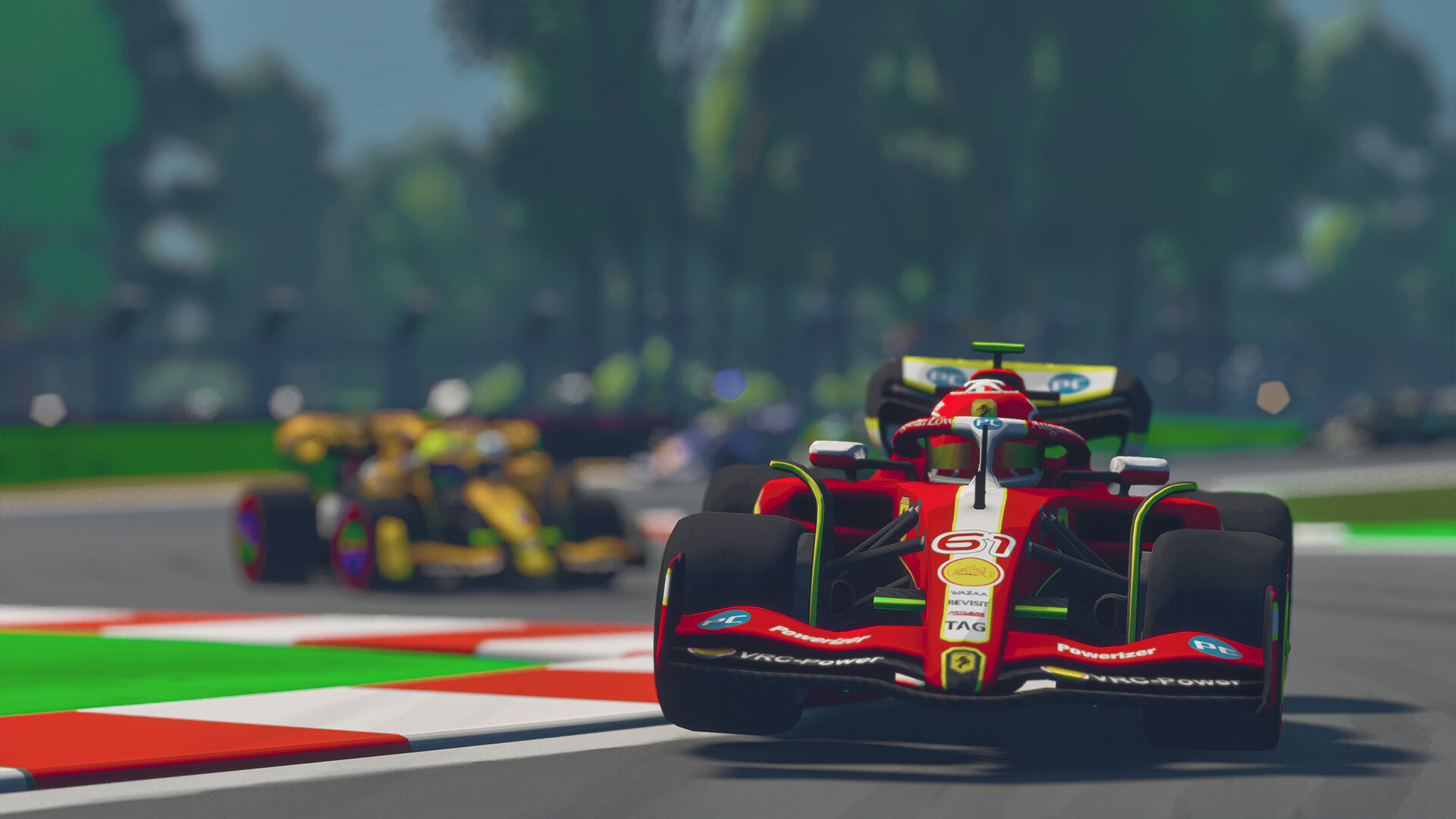
History Without a Permission Slip
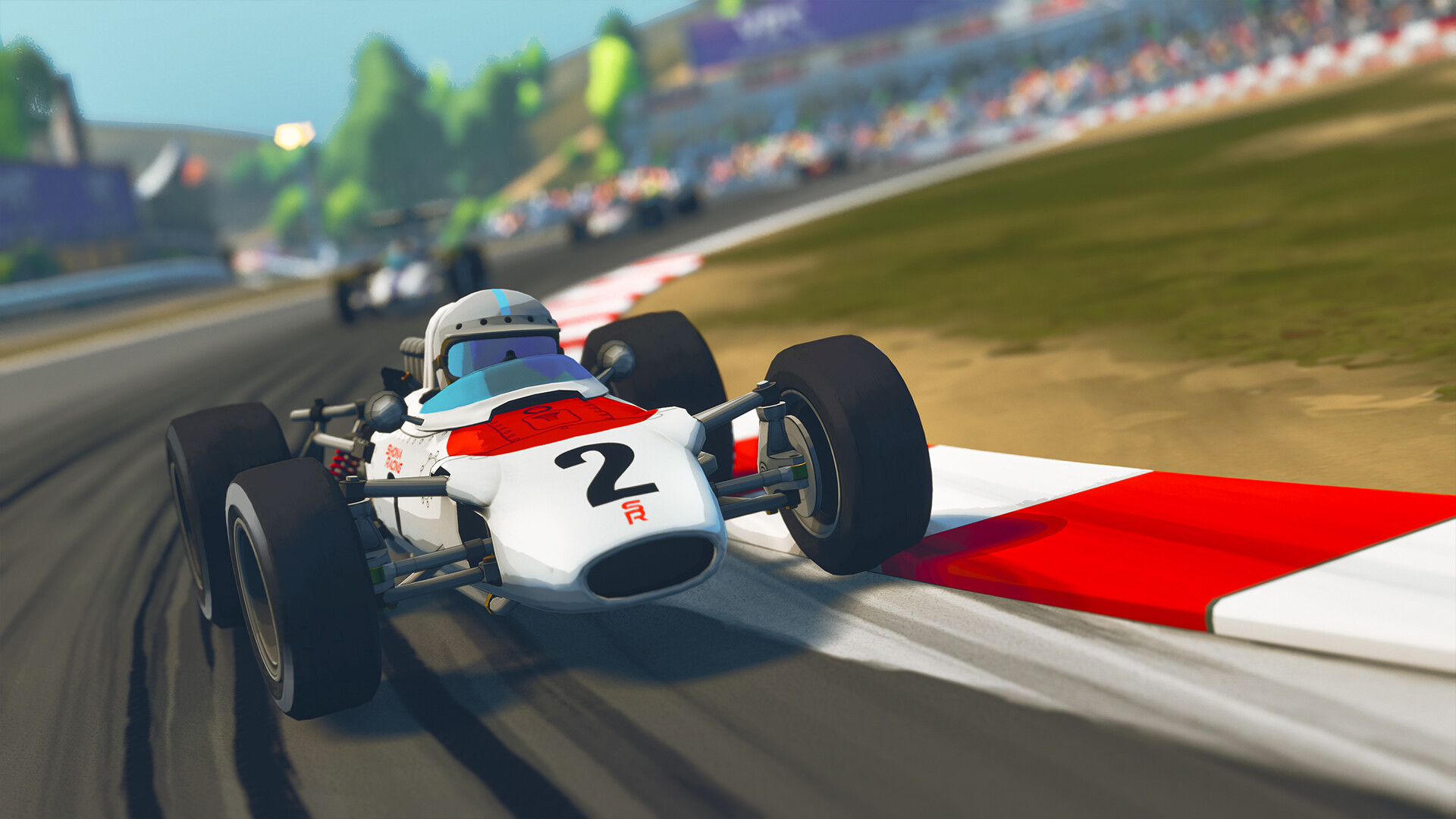
Most racing games treat history as a livery pack you unlock after the tutorial. Formula Legends treats history as the campaign. Story Mode is the reason the object exists. You do not grind a modern season until a menu lets you buy a classic. You enter an era, you race a short championship that sketches the mood of that stretch of the sport, and then you hop. Late sixties. Early, mid, and late slices of every decade after that. Vintage machinery with no electronic manners. Modern cars that arrive with a halo, a battery, and a wing that opens when you have earned the right to be rude.
The “story” is not a cutscene novel. It is a caption on an era and a set of races that behave like that caption. Rivalries get mentioned without the real surnames. A championship that would take a full season in the licensed product is a highlight reel here, thirty to fifty minutes if you are paying attention. You can jump. Do a vintage weekend, skip to the 2020s, then drop back into the nineties because you missed a particular kind of wing. The structure still gives you plenty to unlock. It just refuses to make the calendar a prison.
Rules change as the years change. The late sixties ask for gentleness. The modern slice asks for a battery, a flap, and a compound choice. The points table, unfortunately, stays modern the whole way through, which is the one anachronism I kept noticing. A sport this obsessed with its own past deserved a scoring system that aged with the cars.
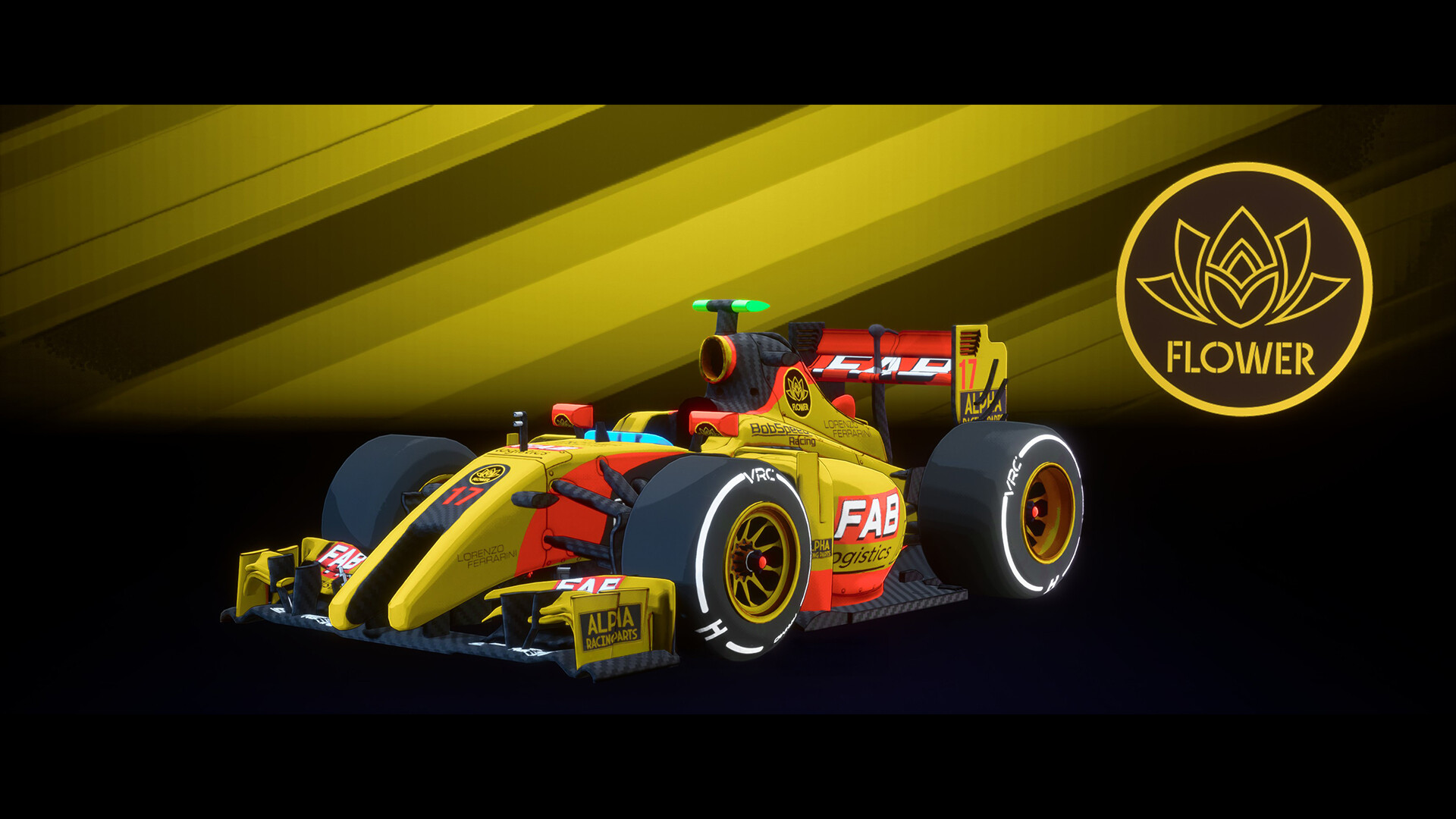
The license is the joke and the wound. There is no official stamp, so the loading screen never says the names you already know. What you get instead is Ferenzo, McLauden, Byron Renna, Jack Stewie, a Fyrrex 70L, a Flower 60L, a BRUUM that looks like it escaped a comic. The names are funny on purpose. They are also accurate enough that anyone who has watched a Sunday since the seventies will feel the ghost in the garage. Formula Legends is not pretending it bought the rights. It is pretending, with affection, that the rights were never the point.
Sixteen Machines That Remember Their Decade
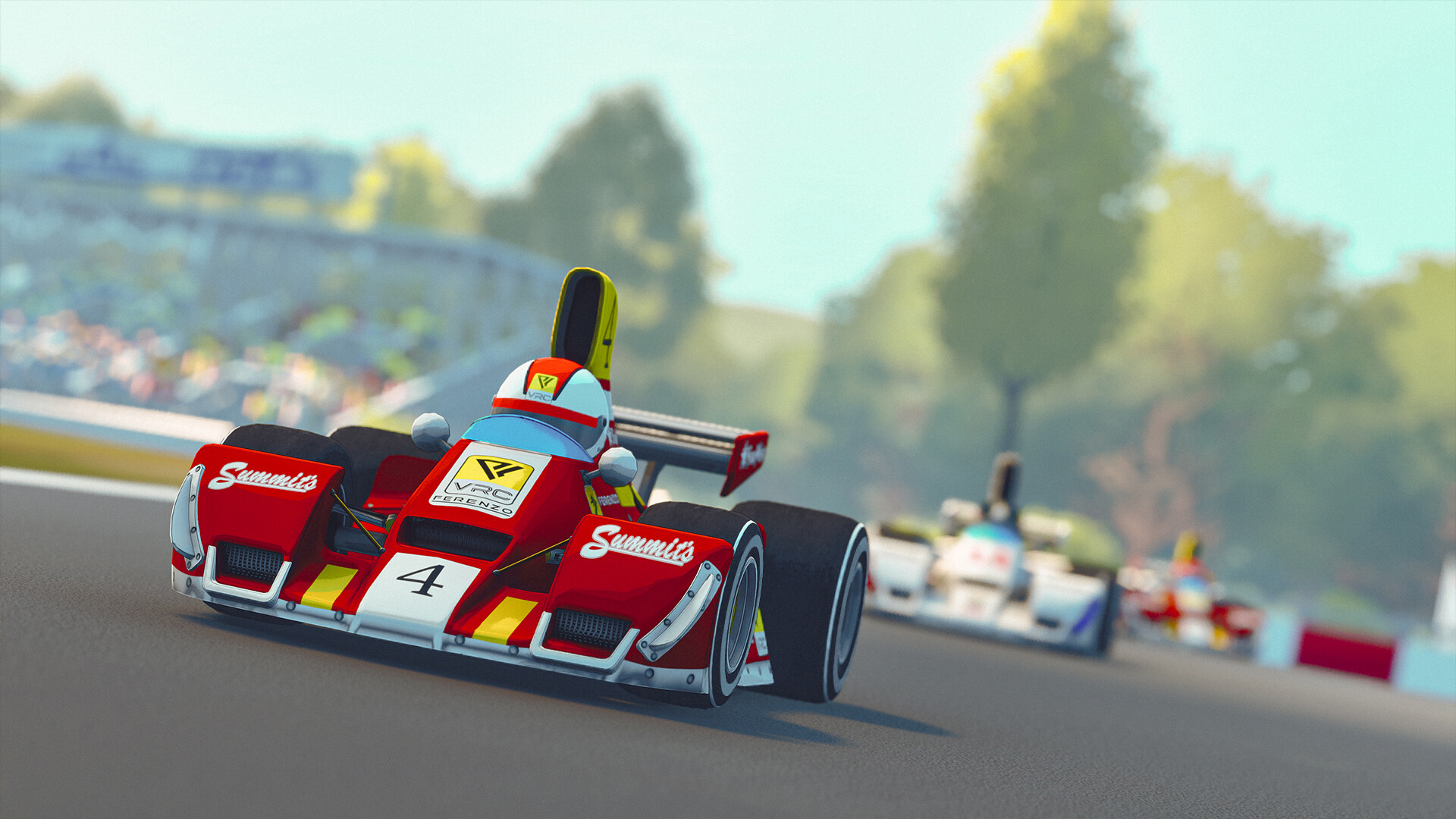
The garage is sixteen models, not sixteen clones with new stickers. A sixties car is a different sentence from a 2020s car. Wings grow, then grow again, then get civilised by a rulebook the game never bothers to read aloud. Halos appear when history says they should. The paint jobs do the team tribute work the license refused to do. You are not collecting a showroom. You are collecting a timeline you can drive.
Handling is the conversation everyone had at launch, and it is still the conversation that decides whether you stay. The original steering model can feel heavy, a little late, a little like a pad from a decade that had not invented analog yet. Understeer is the house style. 3DClouds did not throw that model away. The studio added an optional alternative after players said the same sentence in every language, which is the correct kind of stubborn. You can keep the old manners if they already live in your hands. You can switch if they do not. I switched. The car started talking back in a dialect I wanted to learn.
There are no deep setups and no engineer in your ear with a degree. What you get is a sim-cade contract: hit an apex and a braking point, then do it again while the tires get worse and the fuel gets lonelier. ABS and traction control are toggles, not a lecture. Damage is a tax. Perfect starts exist. Hold the throttle in the right RPM window and the lights feel like a drumroll. Miss the window and you watch a pack of fictional heroes leave without you.
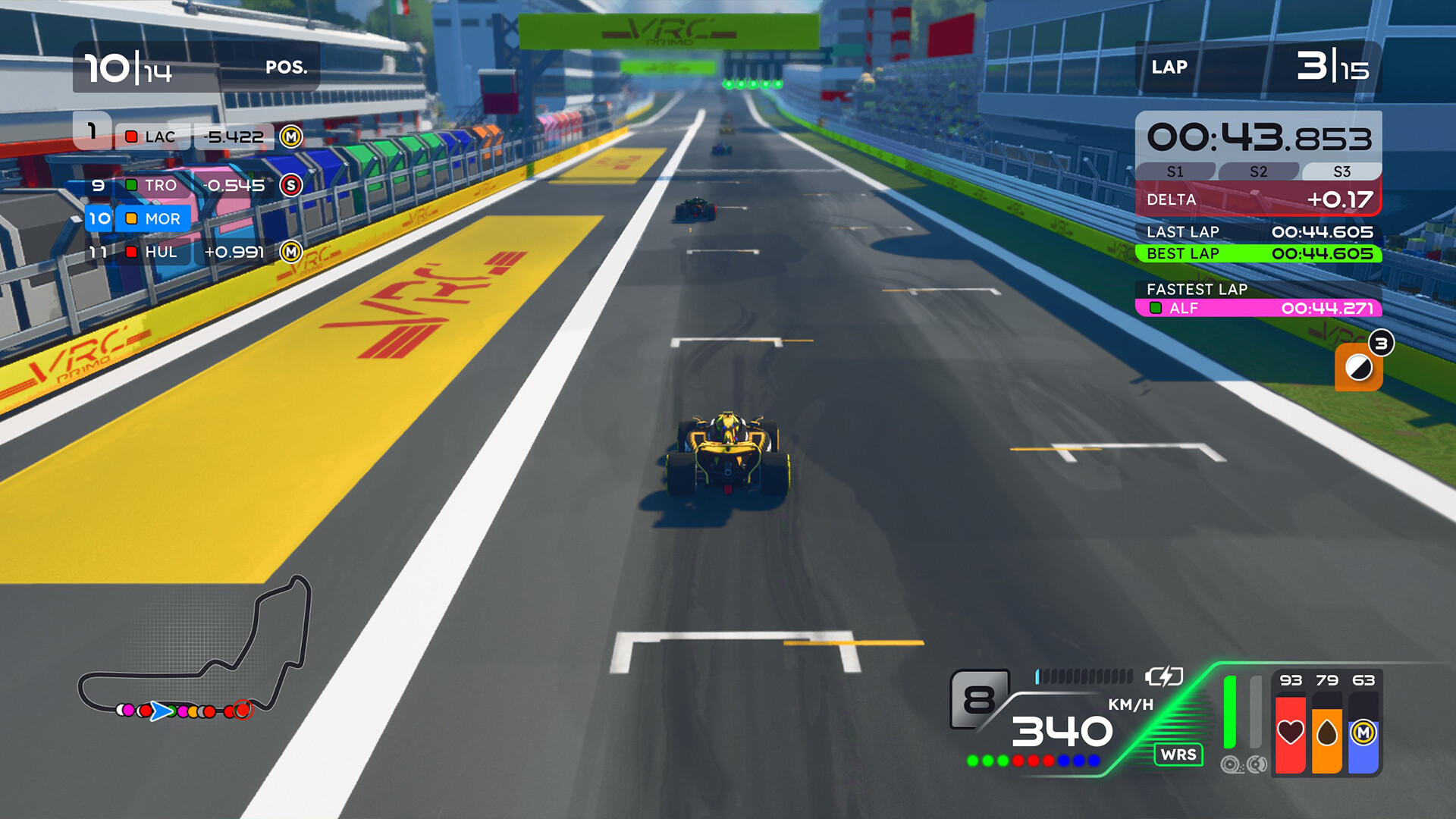
On PlayStation 5 the DualSense is the right instrument. Adaptive triggers give the throttle a weight and the brake a warning. You feel a lockup as resistance before you see it as a slide. Wind Reduction System, WRS, is a flap you open when you are close enough and inside the marked zone. Battery Recovery System, BRS, is a boost you bank by being tidy and spend when a straight asks for a personality. Both are era-locked privileges. Both make a modern race feel like a different sport from a 1970s one, which is the entire point of owning sixteen machines instead of one.
Fourteen Circuits With a Fake Passport
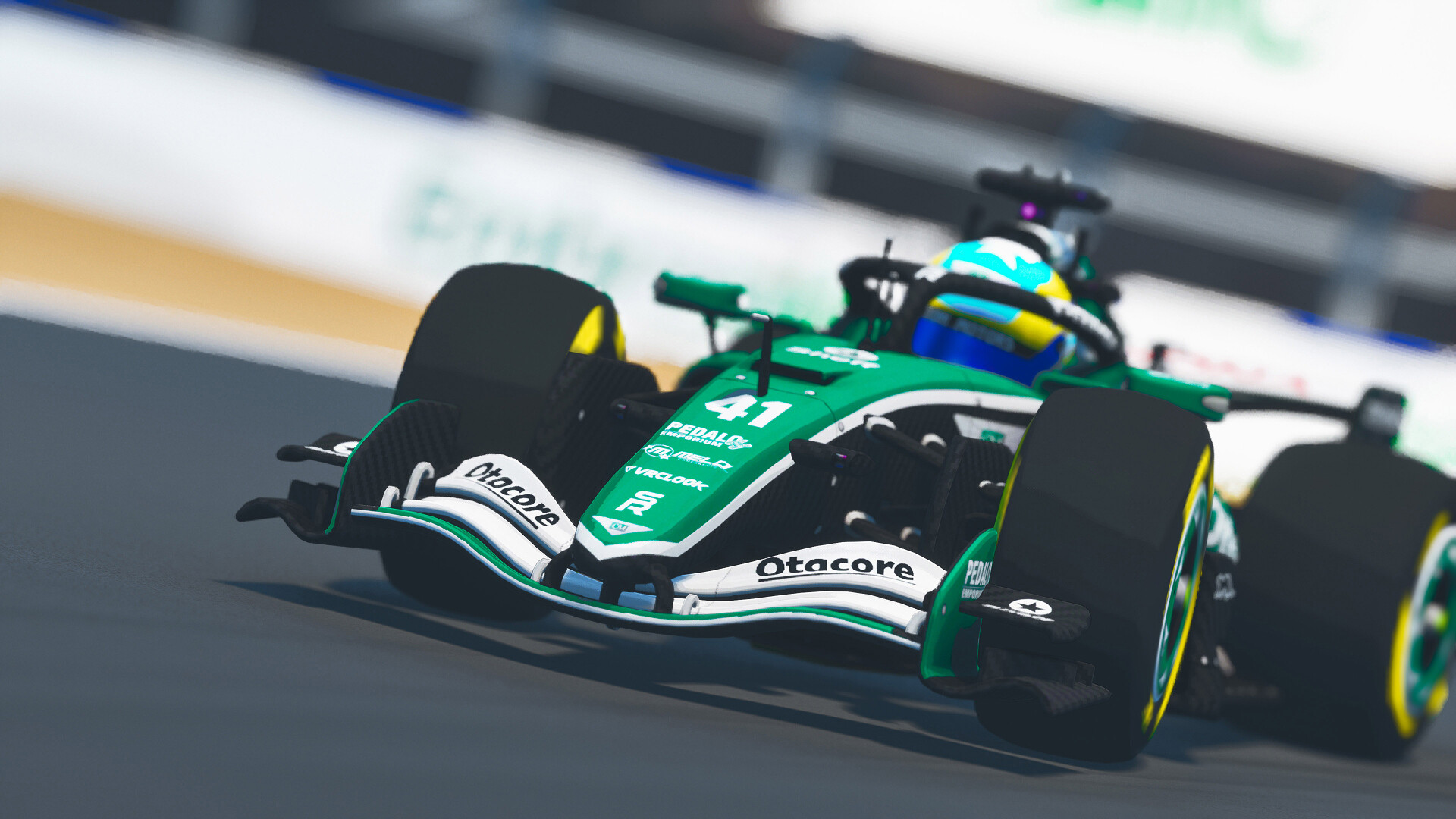
The track list is fourteen addresses inspired by historic racing locations, and the inspiration is the fun. You will recognize a country before you recognize a corner. Italy is a Temple of Speed that still wants a slipstream and a long breath. The Riviera Streets are a tight, rude, yacht-adjacent puzzle with a hairpin that leads toward a tunnel and a layout that will betray anyone who memorized the real harbor. Belgium has Ardennes weather in its bones. The better trick is that the circuits age. A sixties version of a place is a simpler object: bare apexes, thinner furniture, a landscape that has not been renovated by decades of grandstands. A classic version grows kerbs and manners. A modern version adds the buildings, the runoff, the slightly altered line that history actually took. You are racing a memory that has been allowed to get older, not the same fourteen loops with a filter.
Fourteen is still fourteen. Multiple eras multiply the laps without multiplying the addresses, and anyone who wanted a secret fifteenth country will feel the loop. A street circuit that bullies a vintage machine becomes a conversation in a car that can rotate. A fast temple that lets you pass like a rumor in a modern car becomes a prayer in something with no downforce.
The darker lines on the asphalt hint at a racing line without drawing a neon arrow through your confidence. Leave the limits and the game warns you, then it bills you. Cut a major shortcut and the penalty arrives without the courtesy warning, which is fair. The less fair version is the penalty you collect because an opponent turned your car into a bumper and the runoff decided you had a plan. That still happens. It happens less than it did in the first weeks. It is not gone.
Rain, Pits, and the Cost of a Perfect Start
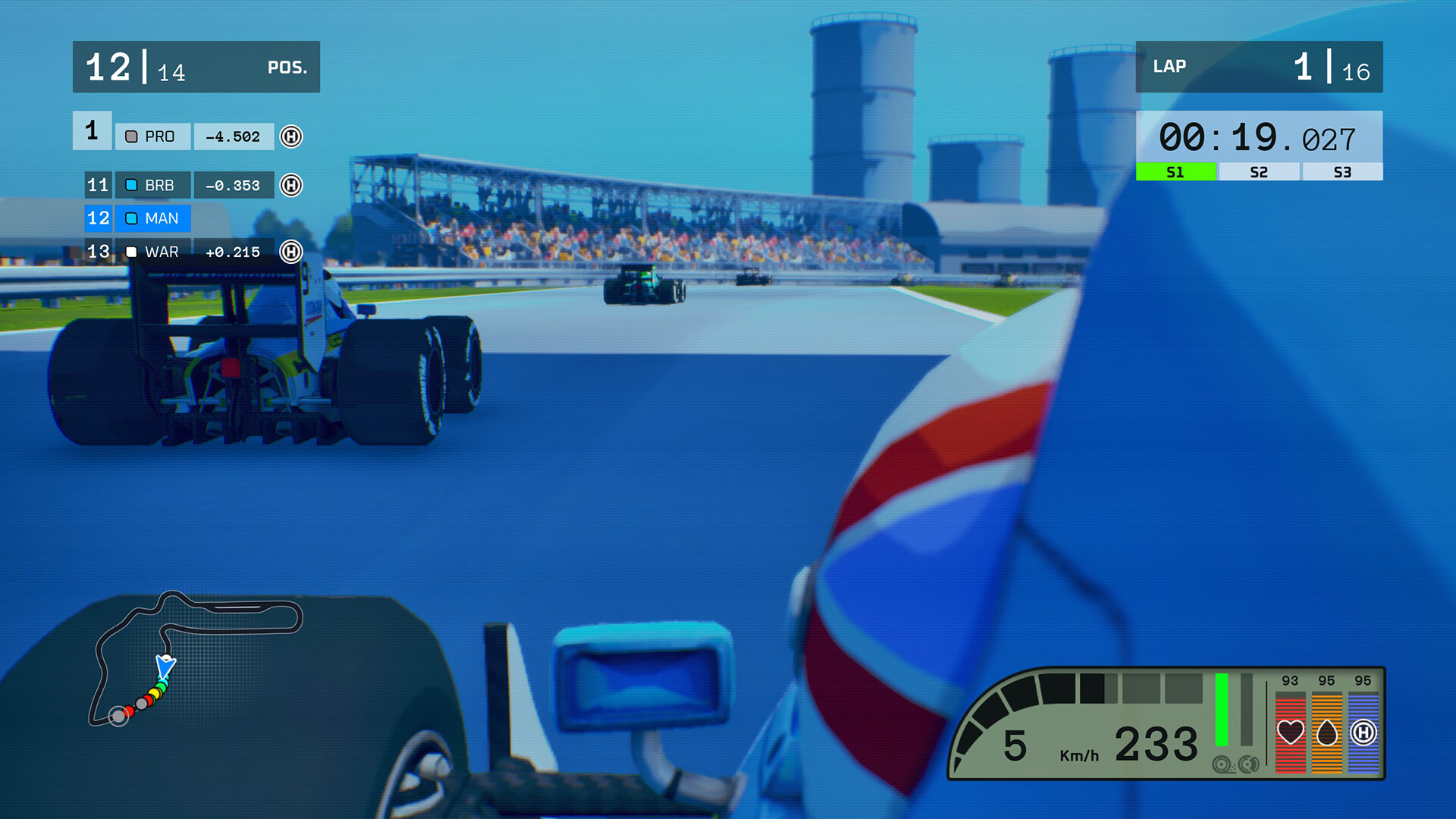
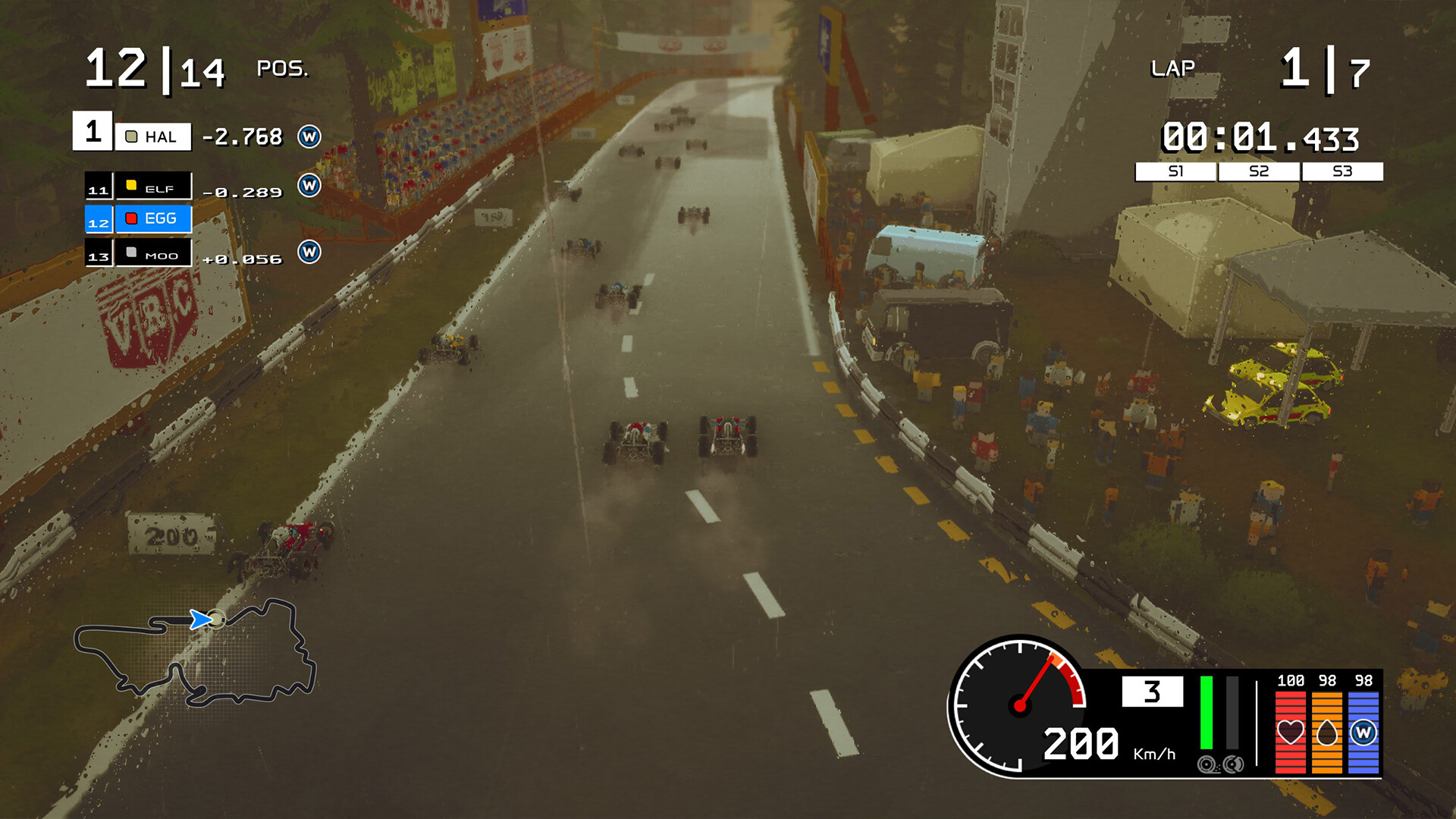
Weather is not a menu garnish. Rain rewrites the compound choice, the braking point, the personality of a curb you thought you understood. A wet-weather specialist in the cockpit is not flavor text when the sky opens. A tire whisperer is not flavor text when you are two laps past the point where the rubber still likes you. When the rain is honest, it is the best version of the game: spray, caution, a pit window that suddenly matters, a field that does not all make the same decision on the same lap.
Pits are a mini-game, and I mean that as a compliment. You roll into your box and the stop becomes a set of verbs. Tires ask for button timing. Fuel asks you to hold a trigger. Repairs ask for the other trigger. Leave when you are done, not when a cinematic says you are done. A clean stop is a lap you stole. A messy one is a documentary about your hands. Modern races make that documentary longer because you are also thinking about battery and flap. Older races make it simpler and meaner, because the car you bring back onto a wet sixties circuit has no software to apologize for you.
Tire wear, fuel, and damage are the three quiet plots. Ignore them and a late-race car becomes a suggestion. Watch them and a Sunday that looked like a sprint becomes a strategy exercise. The field does not all pit on the same lap, which is the design being kinder than its reputation. Some stay out and lose time. Some dive in and steal a window. That variance is why a championship weekend can still surprise you after you have learned the corner.
Assists are a hospitality tray. Traction control, anti-lock brakes, auto WRS, damage sliders, tire degradation toggles: the game will meet you where your pride is. I ran a middle setting for most of Story Mode and a meaner one for Time Attack. The tutorial is not optional in spirit. Spend the ten minutes and learn the perfect start.
Heroes Who Almost Have Real Names
The driver roster is a costume party with a rulebook. Every era has its heroes, and every hero is fictional, inspired by a real Sunday someone still argues about. Custom helmets do the recognition work. Perks do the mechanical work. A wet-weather master is the person you want when the Ardennes remembers it is a forest. A tire whisperer is the person you want on a street circuit that eats compounds for breakfast. A pit-stop strategist is the person you want when the race is going to be decided in the box, not at the apex. I have swapped a driver I liked looking at for a driver I needed, and I have regretted it only when the sky stayed blue.
Unlocks are the other hobby. Cars, drivers, posters, the little museum the game builds around your weekends. Finish clean on a hard setting. Climb from last to first. Keep the same team for fifty races. Twenty-five achievements sit behind those dares. None of those extras change the central truth. You are here for the championships, or you are here by mistake.
The presentation is the identity. Stylized, colorful, a little like a Saturday morning that grew up and bought a stopwatch. Photo Mode understands that better than a realistic camera would. It will not win a contest that only cares about reflections. It will win one that cares about whether you can read a corner at speed. Engines have era-correct throats. The soundtrack does not. I wanted a score with more swagger. What I got was pleasant, then invisible, which is a missed opportunity and not a crime.
Performance on PlayStation 5 is the adult in the room. The frame holds. The inputs listen. DualSense support is listed because it is used. If the steering is late, the game is over. After the handling toggle, the steering was not late.
A Campaign That Travels, a Grid That Stays Home
The mode list is honest about its ambitions. Story Mode is the meal. Custom Mode is the leftover kitchen, single races and homemade championships with the sliders you wish Story had handed you. Time Attack is the lonely craft, a global leaderboard, a chance to turn a lap into a religion. That is the box, and it is the correct size for twenty dollars if you came for the decades rather than for a lobby.
The missing lobby is still the loudest empty chair. At launch there was no online grid and no split-screen, which is a remarkable sentence for a colorful racer that looks like it wants to be passed between siblings. Time Attack leaderboards are a conversation with a ghost, not with a rival in your living room. The object I raced is a superb solo campaign with a sandbox and a stopwatch. If you need a friend in the other car, you will feel the silence.
Artificial intelligence is the other unfinished argument. Opponents can be bumper-car rude on a tight street and oddly timid on a fast sweeper. They can take a hairpin at a speed that would put you in the barrier, then dawdle through a kink you could take in your sleep. Patches narrowed the gap. They did not close it. That is why the score stays at Great instead of wandering into the next adjective.
Modding is a PC-side promise the studio was proud of at launch: liveries, helmets, sponsors, the kind of generosity that turns a small racer into a scene. On PlayStation 5 you live with the unlocks the campaign hands you. Take the demo first if your hands are picky. It is still up. Twenty minutes will tell you whether the steering dialect is one you want to speak for a dozen championships. A $19.99 indie that knows what it is should not pretend to be a different object.
The Flag Drops. The Feeling Stays.
Formula Legends is the rare mid-priced racer that understands its own joke and then has the discipline to make the joke a history lesson. 3DClouds built a toybox grid about decades, a championship structure that lets you hop eras, and a set of circuits that look a little like postcards and play a lot better than that sentence suggests. The hook is racing a sport you already love without waiting for a license. The spine is the way cars, tracks, weather, and pits change their manners as the calendar moves.
It is better as a campaign than as a scene. The era hop stays the reason to recommend it. The funny names stay the reason you keep quoting the garage to people who did not ask. The handling toggle is real progress. So is the grin when a sixties machine takes a hairpin you used to apologize for. The field is still a rival with moods. The mode list is still a solo apartment. Fourteen addresses are still fourteen addresses, even when they put on new decades like coats.
I am scoring it 8, Great, because the identity is this strong and the limitations are the limitations of a focused, unlicensed love letter, not an unfinished one. At this price you are buying a timeline you can drive, a pit that plays like a puzzle, and a loop that respects the fact that a good decade should be replayed in a different car. I would recommend it to anyone who likes open-wheel racing that treats history as a toybox rather than a museum. The weekends repeat their jokes if you live in them long enough. The jokes are still sharp.
The lights are still out. After a few nights, you will understand why you keep waiting for them to go green, and why a grid that nobody licensed keeps letting you back in.
We prepared this review with a digital copy of the Formula Legends for the PS5 version provided by 3DClouds.