There is a particular kind of dare, rare in a genre that usually hands you a garlic wreath and a tidy experience gem, in waking up as a wooden boy and discovering that the entire product is a fairy tale that learned to bite. The egg is still an egg. The horde is still a horde. The first wolf that tries to teach you a lesson is not a metaphor. Dark Fairy Tale: Dreamland Survivors, the top-down auto-shooting roguelike from BINGOBELL, is built on that bite, and the bite is stranger, hungrier, and more useful than a five-dollar nightmare has any right to be.
I played the PC version, the 19 June 2025 launch at $4.99 that BINGOBELL and BeStarsGames walked onto Steam after a Next Fest demo that already knew how to eat an egg. You fall in as Pinocchio. You collect forbidden Dream Eggs. You survive Tarot Dream stages. You fight your way back toward a reality that the shop is not in a hurry to return. Fifty Steam achievements sit in the dark. The Steam sample is Very Positive, 89 percent of 589, which is the honest weather of a loud little survivors-like and not a dare. Great, not original in the way a first idea is original, and very much a weekend I would recommend you spend if you like a horde loop that knows it is a loop.
The Dream Does Not Care Who Geppetto Was
Most survivors-likes begin with a village and a clock. Dark Fairy Tale: Dreamland Survivors begins with a puppet and a mouth. Official copy on Steam says this is a roguelike inspired by Vampire Survivors, then asks you, with the grammar of a person who has already lost the upright life, to devour more than a hundred unique Dream Eggs and walk home through a twisted fairy tale. You are Pinocchio. You have fallen into a nightmare. That is not flavor text. It is the design refusing to pay for an origin cinematic when a wooden boy and a wolf will do.
You start moving because the alternative is becoming a rumor in a place that does not keep rumors. The first stretch is staged like a punchline that forgot to be funny. Enemies drift in. Your weapon fires itself. Something in the tiles thinks about you. The script, still a little breathless, asks you to slay twisted fairy tale creatures in endless nightmares. Nobody else will. That is the rest of the map.
I like a premise that prices curiosity as a hazard and then lets you walk toward it anyway. Twisted wolves, lazy crystal slippers, vengeful ugly ducks, and a Whisperer who would like a word sit on the dream like questions with teeth. Why are there storybook faces and no story. What was that rabbit. The more you play, the more the dream answers with another floor and another thing that would like a piece of your health bar. Story is environmental and stingy, which is the right instinct for a game that wants your hands more than your diary. You are not reading a novel. You are looting a bedtime that is still happening.
The fantasy is not mastery of a lore bible. The fantasy is competence arriving about half a run after you invent a reason to eat the egg instead of wearing it. You will die in ways that would be funny if the restart were not so sincere. You leave a build. You walk back. You become the kind of person who thinks a Dream Egg is a personality.
Eat the Egg, Then Invent a Style
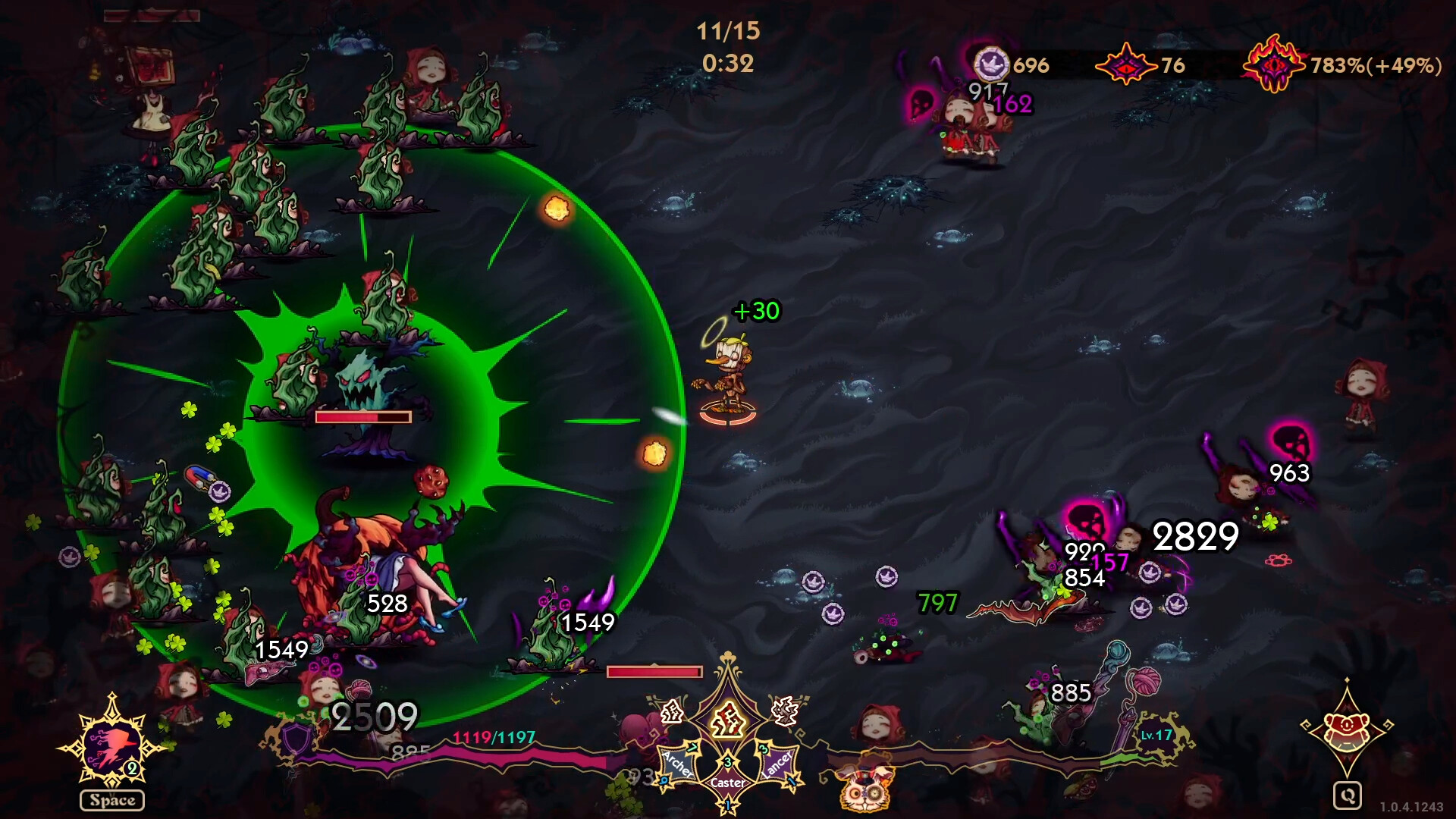
The loop is the old religion and BINGOBELL does not pretend otherwise. Move with one hand. Let the weapon work. Level up. Visit a shop. Loot a drop. Decide whether the egg in your bag is a tool or a meal. None of that is a revolution. All of that is the sentence the rest of the toybox has to live in.
Dream Eggs are the temperature change and the reason the shop has a second sentence. Official copy says they are the core resource for enhancing attributes and building your playstyle. You can obtain them through leveling up, the shop, or loot. You can activate them in your inventory or devour them for a completely different self-boosting effect. That fork is the whole joke. Activation is a job. Devouring is a dare. Early on you eat because standing still is a rumor. Later you hoard because the egg you swallowed last floor is the reason this floor is a problem.
I have played a lot of games that treat the first night as a tutorial and the hundredth night as a spreadsheet. Dark Fairy Tale: Dreamland Survivors is heavier than that on purpose and lighter than that on accident. The developers wrote it into the store page with the candor of a shop that has already lost the argument with feature creep. Combine talents and Dream Eggs. Find the playstyle that is truly yours. That sentence is both a promise and a warning. If you want a tech tree that never asks you to read a bag, you will feel underemployed. If you want a month that turns a mouth into a conversation, you will feel hired.
The bag can store an unlimited pile. Only the activated eggs work. That is a kindness and a trap. I left the greedy path on for an evening and the careful path on for another. The dream did not mind. The wolves minded either way. More Eggs, the $1.99 add-on that arrived on 15 September 2025, handed the bag twelve new eggs and nine out-of-combat talents. None of that is required. All of that is the sentence a five-dollar game writes when it still wants you to come back.
Lances, Arrows, and a Mouth That Matters
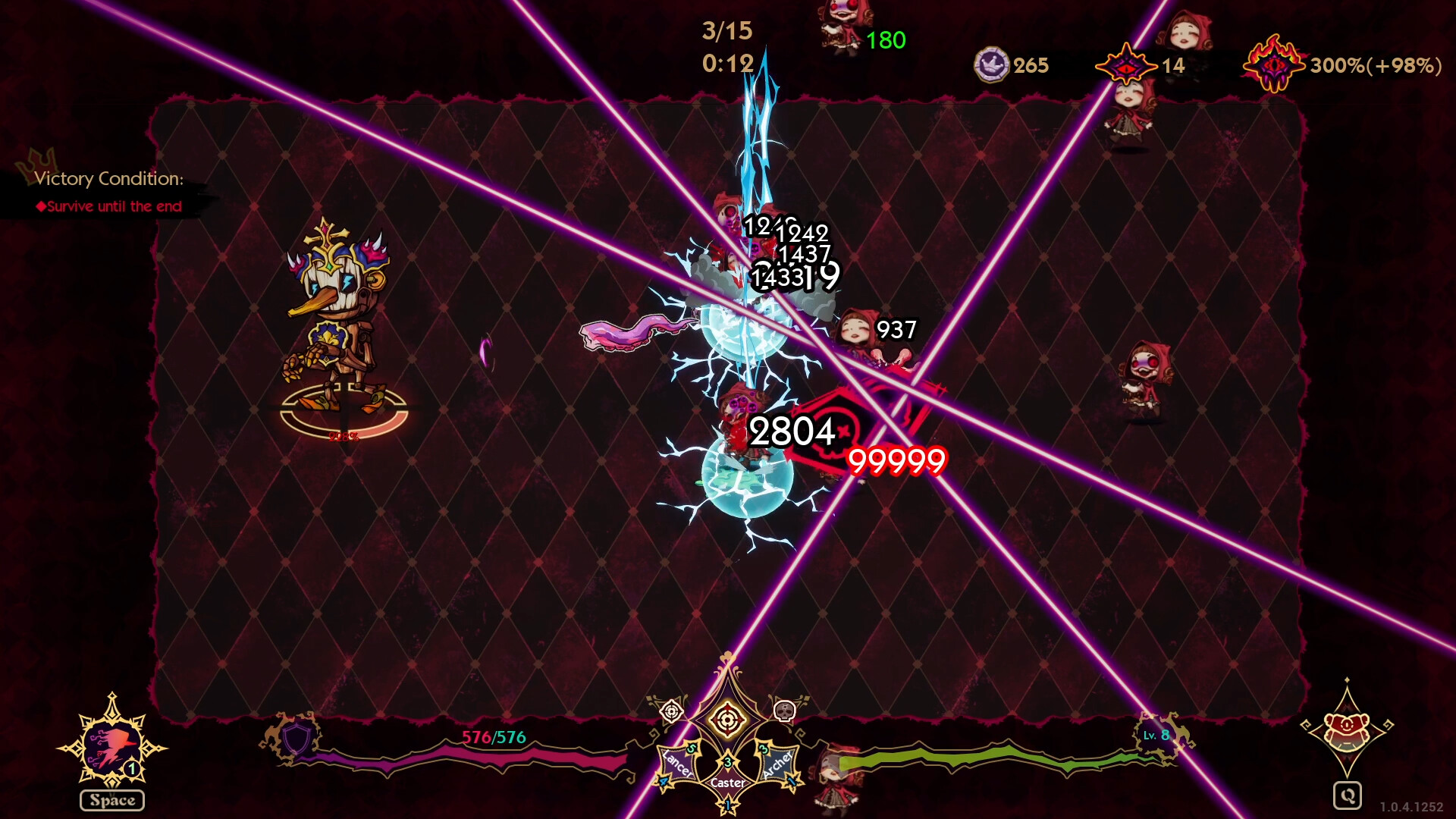
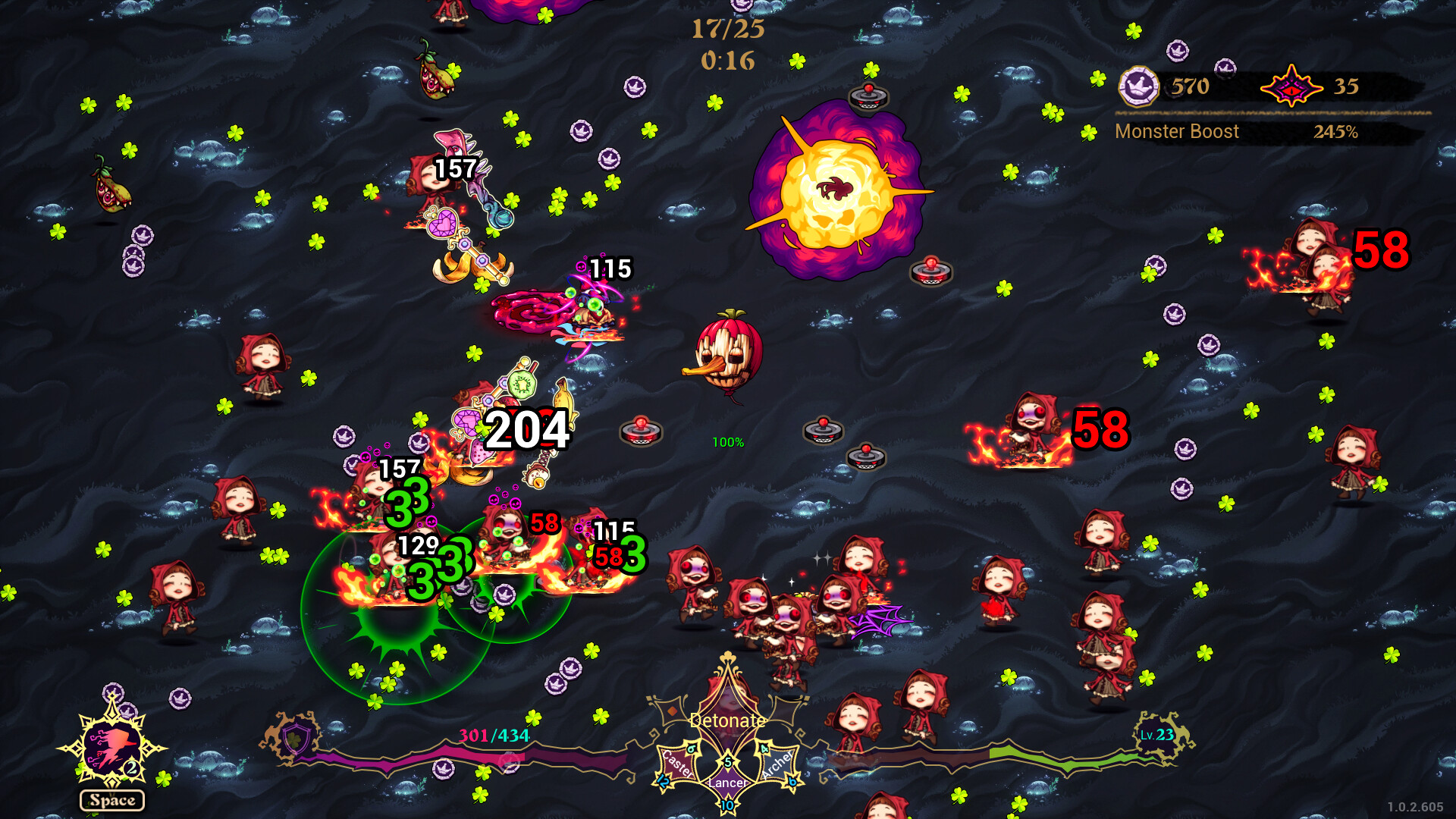
Combat is the other half of the short description and the kinder half of a week. Pinocchio wields three weapon types. Official copy says they combine into six unique attack styles based on their order. Each style offers three exclusive talents, eighteen in total, that are supposed to talk to Tarot abilities and more than a hundred items. Lancer is the hit-and-run cousin. Archer is the rapid-fire cousin. Caster is the cousin who thinks an explosion is a personality. Order is not flavor. Order is the build.
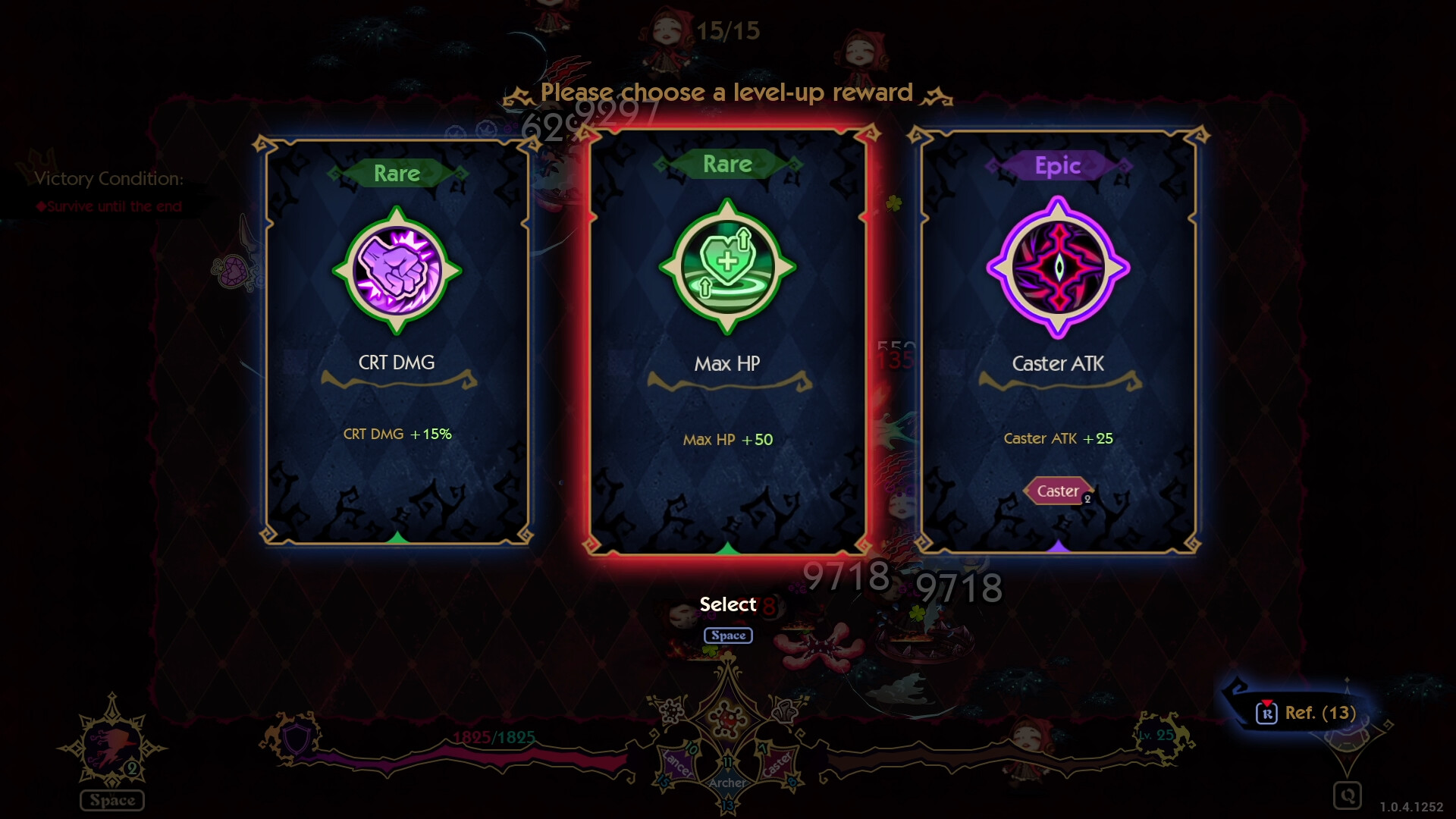
That is also where the first evening gets expensive. The game is not eager to put the cheapest explanation in your hand on run one. Weapon order, egg activation, and the difference between a talent and a meal will hide with the politeness of a menu that assumes you already live here. I will not invent a tutorial that the shop did not ship. I will say the first hour can feel like homework you have already passed if you came from a cleaner survivors-like, and like a language if you stay. Auto-select on the upgrade screen arrived later, a kindness for people who would like the dream to pick a card when they are busy not dying. Hold to move. Click to interact. Right-click to dodge. One hand is a design, not a slogan.
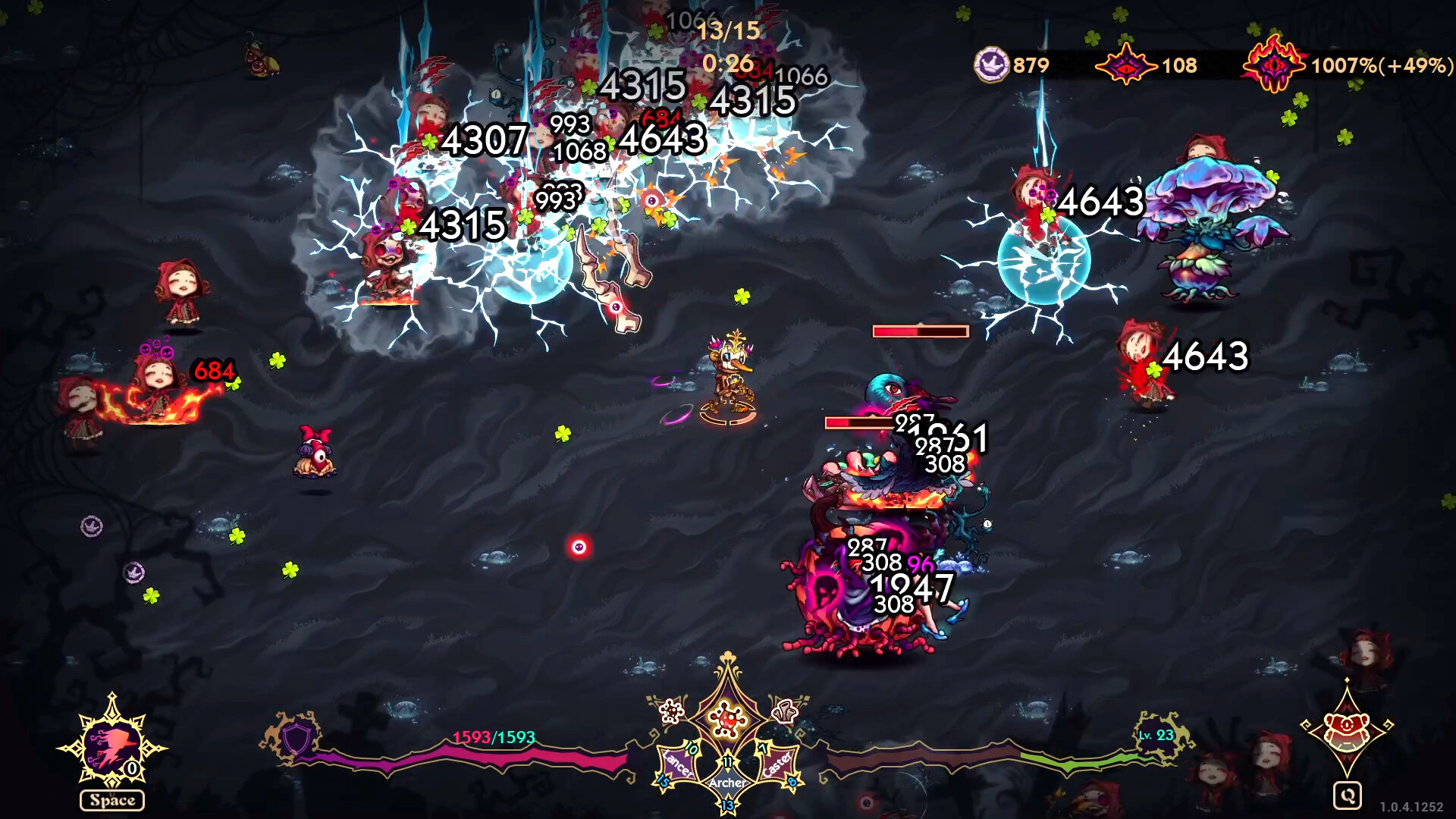
I will not invent a highlight reel with fake timestamps and tidy kill counts. The nights that stay with you are the ones where you thought the floor was finished, then something started knocking in a rhythm that was not weather, and then you were on the wrong side of your own fireworks. Auto-fire can feel like two systems agreeing to take turns being loud. That clunk is real. It is also priced into a horde loop that would rather you eat, retreat, and come back dressed. Distance helps. A working dodge helps more.
Pressure is the variety. A build that holds is a better reward than a new silhouette if the silhouette is just another way to lose a bag. Hunting floors is good practice and a grocery run. Normal, Hard, Nightmare. Sparks happen. The store page is not shy about it. What the store page cannot tell you is how quickly you will start treating a successful extract as a mood stabilizer. You eat eggs. You drink eggs. You put the lance down and look at the tarot like a person who has decided civilization is a shard.
Tarot Shards, Whisperers, and the Map Getting Meaner
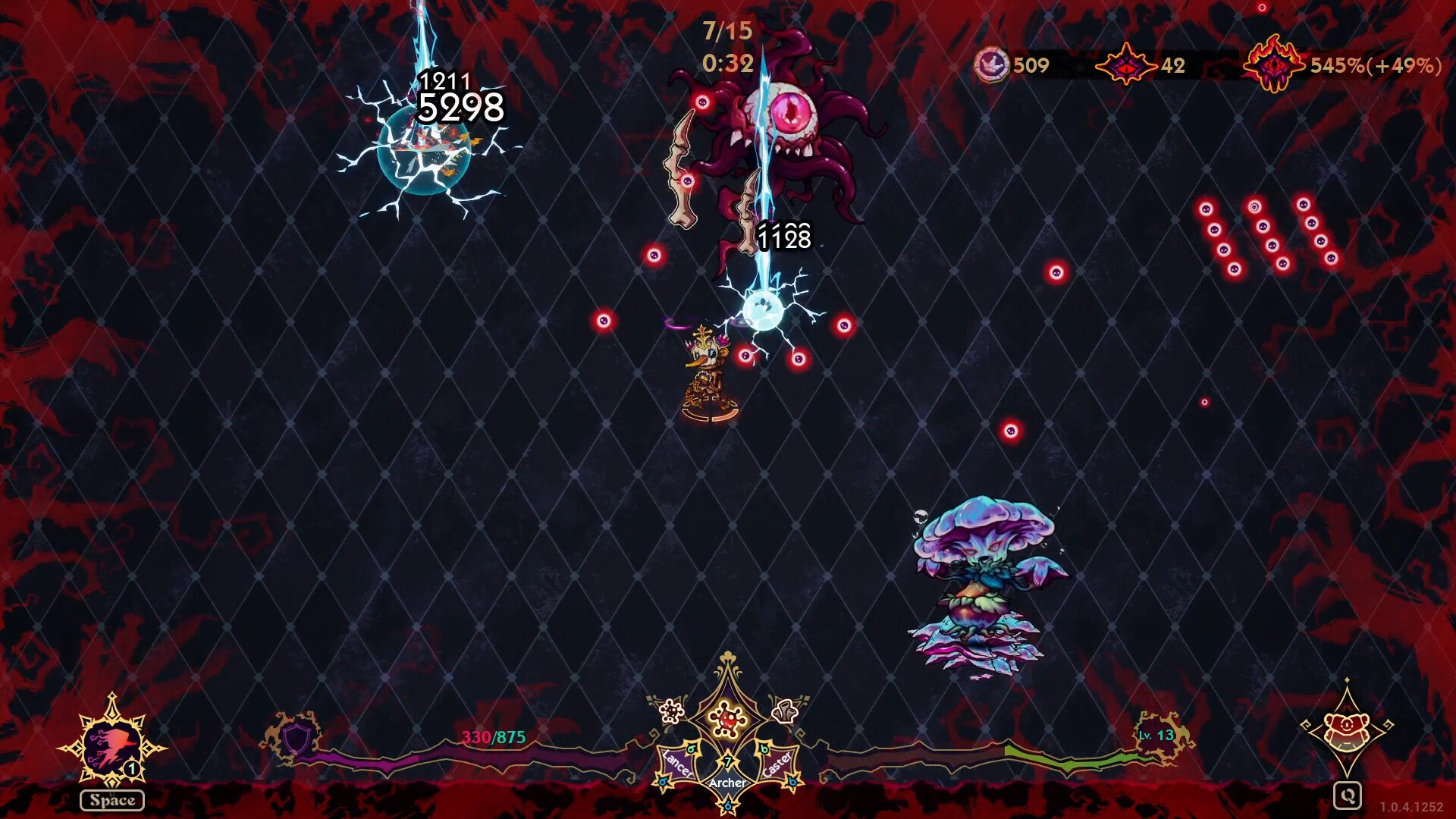
Tarot Dream stages are the moment the dream changes tense. Official features say each card brings a distinct gameplay twist, where strategy, reflexes, and observation are the difference between a shard and a rumor. The Hermit, the Hierophant, a Whisperer boss who arrived with V1.2 and a victory-condition hint because people were getting lost in the joke. Greater risks, greater rewards. That is the closest Dark Fairy Tale: Dreamland Survivors comes to a power fantasy, and I like it more than a new gun. Mastery, here, is logistics. You gather, you stash a shard, you put four identical pieces on the table, and you wake up as a Tarot Pinocchio like a person who has mail.
The map does not get smaller because the developers deleted tiles. It gets smaller because you invented commuting with a better mouth. Completing a trial can hand you a temporary card that dresses you as that Tarot Pinocchio for a while, which is a polite way of saying the costume is also a tool. Later patches merged talents and archetypes onto one upgrade page, parked the Tarot faces on the character screen, and started unlocking those faces with Dream Crystals after converting shards one to one. I will not write a patch-note novel. What I can say is that a survivors-like is a better toy when the shop keeps sending rooms.
Endless Dream Mode is the unofficial second career. Official copy asks you to unleash non-stop power and push your limits. A Demon Chest learned to show up on a timer and offer a bargain that costs silver and manners. These are not features you put on a launch trailer. They are the manners of a $4.99 game that launched in June 2025 and is still hiring in 2026.
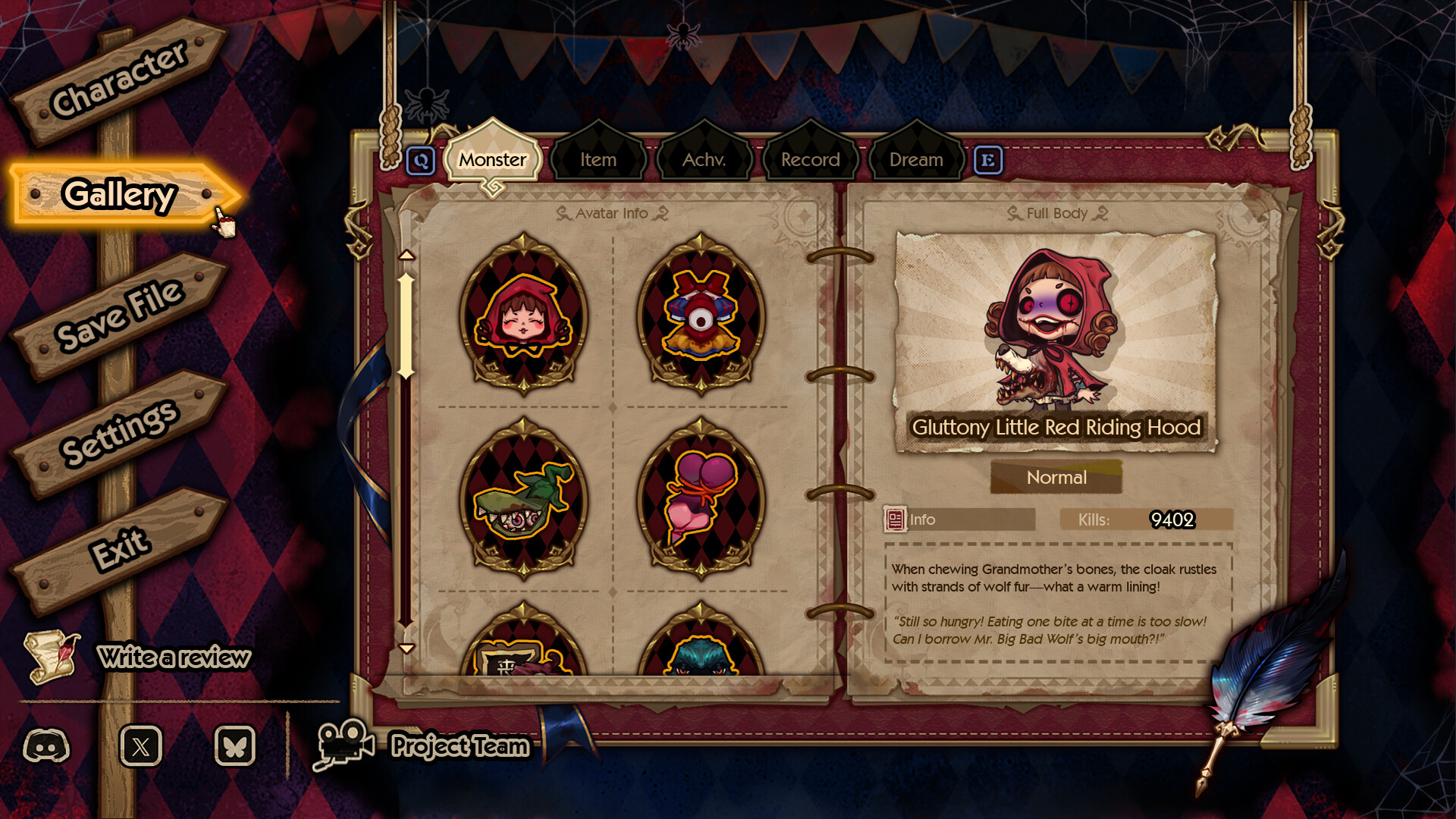
Mr. Rabbit sits in the background like a person who knows a hole. Special monsters learned health bars. Fifty achievements sit behind the loop for people who like a receipt. Names like Gluttonous Mouth and First Step into the Endless tell you the shop has a sense of humor and is not ashamed of it. None of them change the central truth. You are here to eat an egg and then find out what the egg is for.
One Hand, Many Nightmares, Rough by Habit
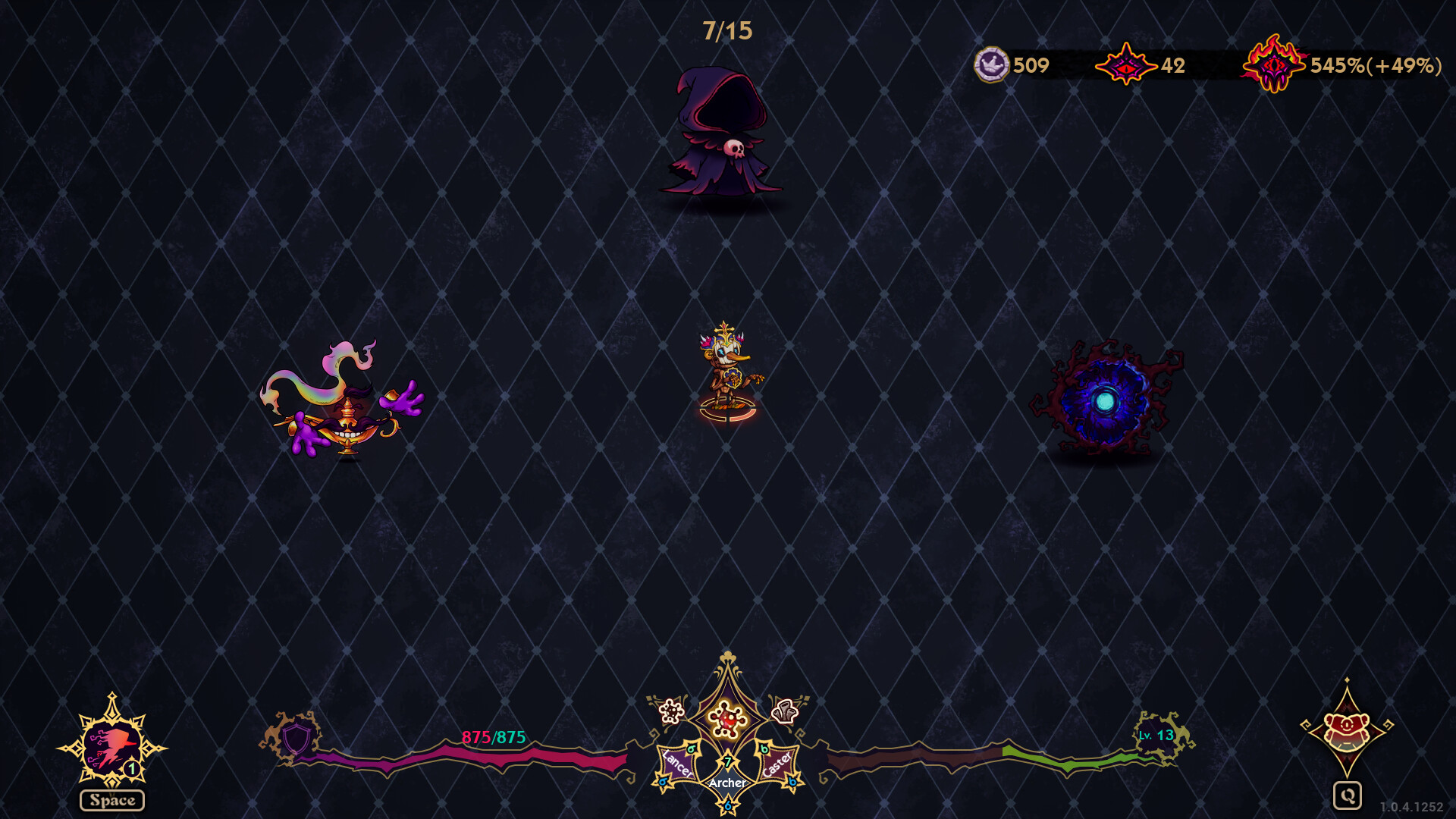
I should be clear about the friction, because it is real and it is not a footnote you hide after the score. Dark Fairy Tale: Dreamland Survivors looks like a game that was built by a small shop that wanted a fairy tale more than a showcase, then discovered the fairy tale was a whole genre. Character art can be handsome. Level art can be a single tiled texture that forgot to become a place. Attacks can arrive as a glow that blends into every other glow until the floor is a theology problem. I will not invent a frame census. I will say the dream sometimes forgets to stock the readability you need and then shrugs like weather.
The studio has a sense of humor about that weather. A community note during a sale joked that if you cannot see your character, it might not be a bug. There may just be too many bullets on the screen. That sentence is both a promise and a warning. If you want a clean silhouette and a tidy arena, you should wait or look elsewhere. If you want a place that is already a place, and the place is a mess on purpose, you are the audience.
Technical manners on a desktop build can stutter when a late floor decides to be a particle sermon. Monsters have gone invisible in the Hermit. Cursors have argued with Fate cards. Patches keep arriving, which is the tax and the courtesy of a live survivors-like. Full controller support is on the sheet. A keyboard-only option is on the sheet. I will not turn this into a localization seminar. English is one of twelve interface languages, which is how a wider audience gets in the door.
Onboarding is the other scar. Systems that are interesting on hour five are opaque on minute fifteen. Nightmare Sigils, weapon order, and the eat-or-equip fork will ask you to learn by dying, which is a genre tradition and also a way to lose a first evening. I sold patience to a bag I was sure I needed and then needed a different egg, which is the oldest inventory joke in the book and still a good one. Presentation is readable at the character level, which matters more than prestige. You can tell a wolf from a slipper from a Whisperer at a glance. If you cannot read a biome, the hunt dies and the run becomes homework. These stages are atmospheric enough to carry a scare and flat enough to carry a commute. You always know you are in a dream. You do not always know why the floor looks like the last floor.
Better With a Build Than With a Checklist
I have a rule for five-dollar survivors-likes. If a game is worse with a build than with a checklist, it is broken. If it is only good with a build, it is honest. Dark Fairy Tale: Dreamland Survivors is honest, and that honesty should sit next to the price.
A checklist night is a competent weekend. You punch the horde, you invent the mouth, you lose a bag, you walk back, you put a better egg on the joke. A build night is the version the systems were quietly designed around. Someone farms shards. Someone eats. Someone learns, too late, that a Whisperer does not respect architecture. The dream becomes a shared instrument you play with yourself instead of a commute.
The Steam sample around a game this loud is always going to look like weather. Very Positive is the official report, 527 of 589 voices, and that split is fair. Players who wanted a deeper scrap, a prettier arena, or a first hour that never hides the fork bounce off. Players who wanted a one-handed auto-shooter with a wooden boy and a bad idea about eggs stay. I am in the second camp with caveats, which is the only honest place to stand.
Compared with the giants of the deserted-clock business, Dark Fairy Tale: Dreamland Survivors is not trying to be a career you finish this week. It is trying to be a place you keep returning to. The developer said the quiet part on the store page. Inspired by Vampire Survivors. Constantly updating. Fun if you will meet the game where it lives. That is not a cop-out if the place is worth the walk. Some nights it is. Some nights the egg is a myth and the doorway is a theology problem. Both nights are Dark Fairy Tale: Dreamland Survivors.
Still Walking After the Fairy Tale
Dark Fairy Tale: Dreamland Survivors is a rare five-dollar survivors-like that understands its own joke and then has the nerve to make the joke a mouth. BINGOBELL and BeStarsGames built a dream about appetite, a puppet about teamwork you do with an egg, and a toybox that looks a little homemade and plays a lot more sincerely than that sentence suggests. The loop is the hook. The eggs are the spine. The walk from a wolf to a Tarot Pinocchio is the grin.
It is better with a build than with a checklist. The late floors can clunk in the way a live horde is clunky. Visual noise can sulk. The presentation has indie fingerprints, from the stubborn tiled arenas to the story that would rather be a silhouette than a cutscene. All of that is true, and all of that is already priced in at $4.99 on Steam, with a $1.99 egg carton if you want the bag to grow up. You are not buying a decade. You are buying a season that can turn into several seasons if you like being a coordinated disaster, or being the person who has to explain the disaster to a wooden boy.
I am scoring it 8.5, Great, because the identity is this clear and the limitations are the limitations of a focused five-dollar nightmare, not an empty one. I would recommend it to anyone who likes a workbench that has weight and a map that is allowed to be rude. Distinctive egg weather, a one-handed commute, a tarot that shrinks the horizon, and a price that respects a long week are a lot of game for the ask. The systems repeat their manners. The manners are still useful.
The dream is still out there, still hiring a night shift, still asking what the story was. After a few shards, you will understand why the job is not finished, and why you keep waking up as a puppet anyway.
We prepared this review with a digital copy of Dark Fairy Tale: Dreamland Survivors for the PC version provided by Pressengine.