Grounded 2 does not ask if you still remember the backyard. It assumes the grass already won once, then hands you a park, a saddle, and a corporation that would like a second chance at the same crime.
Obsidian Entertainment and Eidos-Montréal developed it. Xbox Game Studios publishes it. Steam Early Access and Xbox Game Preview meet the game on July 29, 2025. This review is dated to that public morning, because that is when the rest of the room is allowed into Brookhollow Park. I played the Steam version, the base game plus the Founder’s Pack that arrived with the crate. The Standard Edition during Early Access is $29.99. The Founder’s Edition is $39.99. The Founder’s Pack upgrade is $10.00. Those are the official U.S. list prices. None of them shrink you. None of them finish the story.
You are one of the teens again. Two years later. 1992. Ant-sized in a suburban park that used to be a ceremony. Official copy says something else is out there, and it has not forgotten you. That is the official sentence. The install I am grading is Act 1 of that sentence. It is already a survival adventure. It is also, honestly, a first chapter that knows the later chapters are still being written.
Brookhollow Is Not a Backyard With Extra Grass
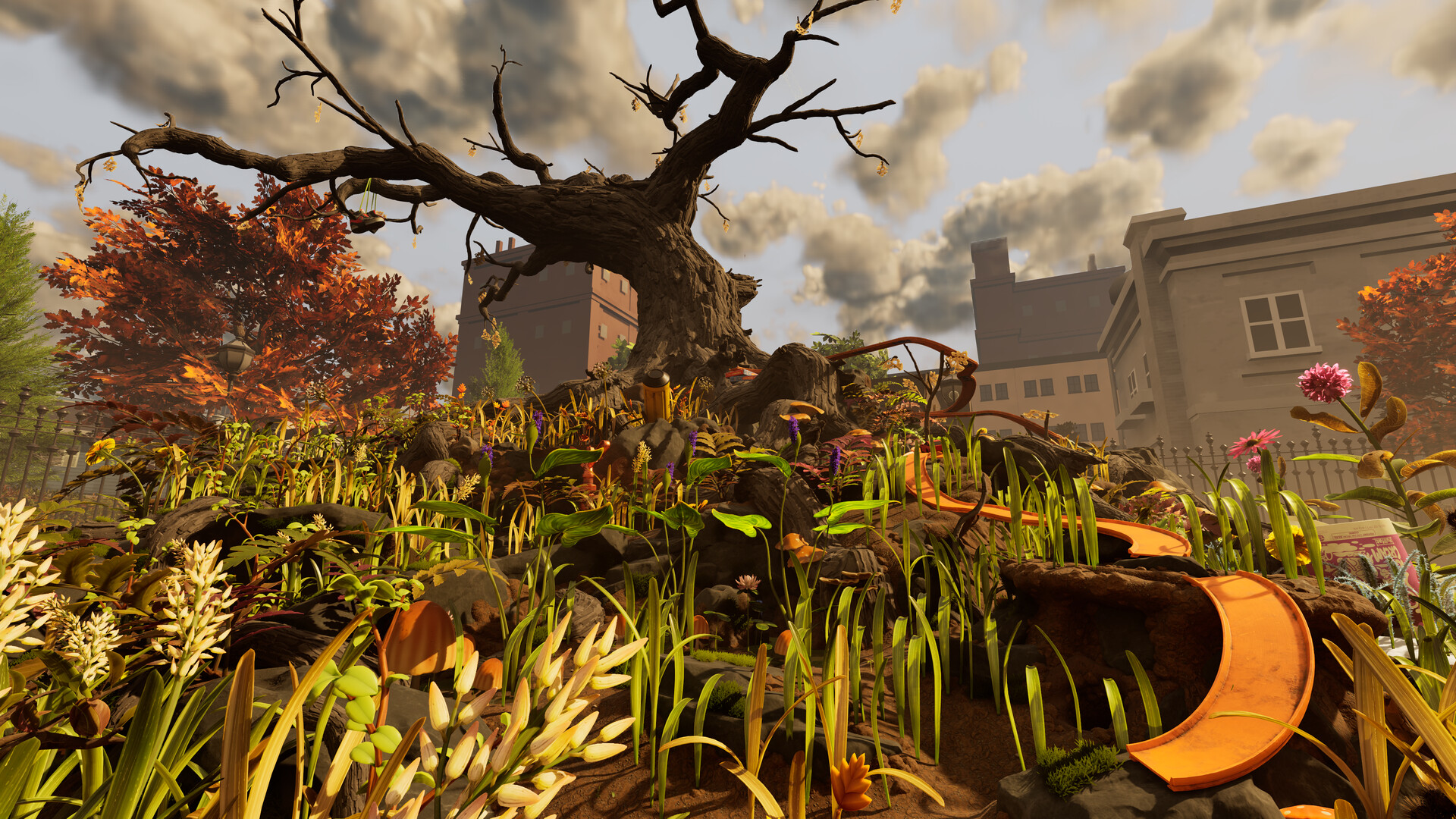
The first Grounded taught a country how to be afraid of a lawn. This one refuses to let the sequel be a museum of that lawn. Brookhollow Park is a different job: snack shacks, trash cans, a knocked-over ice cream cart, Ranger Stations that look like they were printed for people who still have knees. Official notes like to say the starting zone alone nearly matches the scale of the original backyard. What I felt was a park that already wanted a whole weekend, then admitted it was only one section of a larger map.
The teens are back. Max, Pete, Willow, Hoops. A little older, a little bolder, still the same four faces you can pick before the grass starts grading you. The character is a costume, not a class. I took Willow because I like a person who sounds like she has already filed a complaint, then built like a tourist anyway. The park did not care. It filed the complaint under inventory. The grass is still the other lead.
Ominent Practical Technologies would like you to believe the last two years were a redemption arc. The official trailer already named the public version: a statue, a ceremony, an explosion, four missing teenagers, a missing doctor, a robot who used to flip burgers and also save your life. I will not walk you through the briefing. You are looking at a park that turned a commemoration into a crime scene and deciding that the weeds are also your problem.
Punch-O is still a religion. Minotaurs and Myrmidons still have a rulebook. Yoked Girth still wants a toy aisle. The brands are how a 1992 park tells on itself. I stood under a snack shack that was also a mountain and enjoyed being a tourist. I also died to a mite pack because I treated the first clearing like a tutorial that had already ended.
This is Early Access. Official notes say you can explore a huge section of Brookhollow Park, not the finished country. The fence is visible if you go looking for it. I found an edge that wanted a later update and felt the difference between a sequel and a promise. That is the product they sold at $29.99. The park is already worth the walk. The park is also unfinished on purpose.
The Egg Hunt Is the Sequel Talking
Official copy says walking is bogus. In practice the first hours still make you walk, because a saddle is a reward, not a title screen. The hunt for a Red Ant Soldier egg is the sequel introducing itself. You need components. You need a hatchery. You need to take a fight you might have scheduled for later. Armor up. Pack a spear. Craft something that heals. Then steal an egg from a colony that does not care about your childhood.
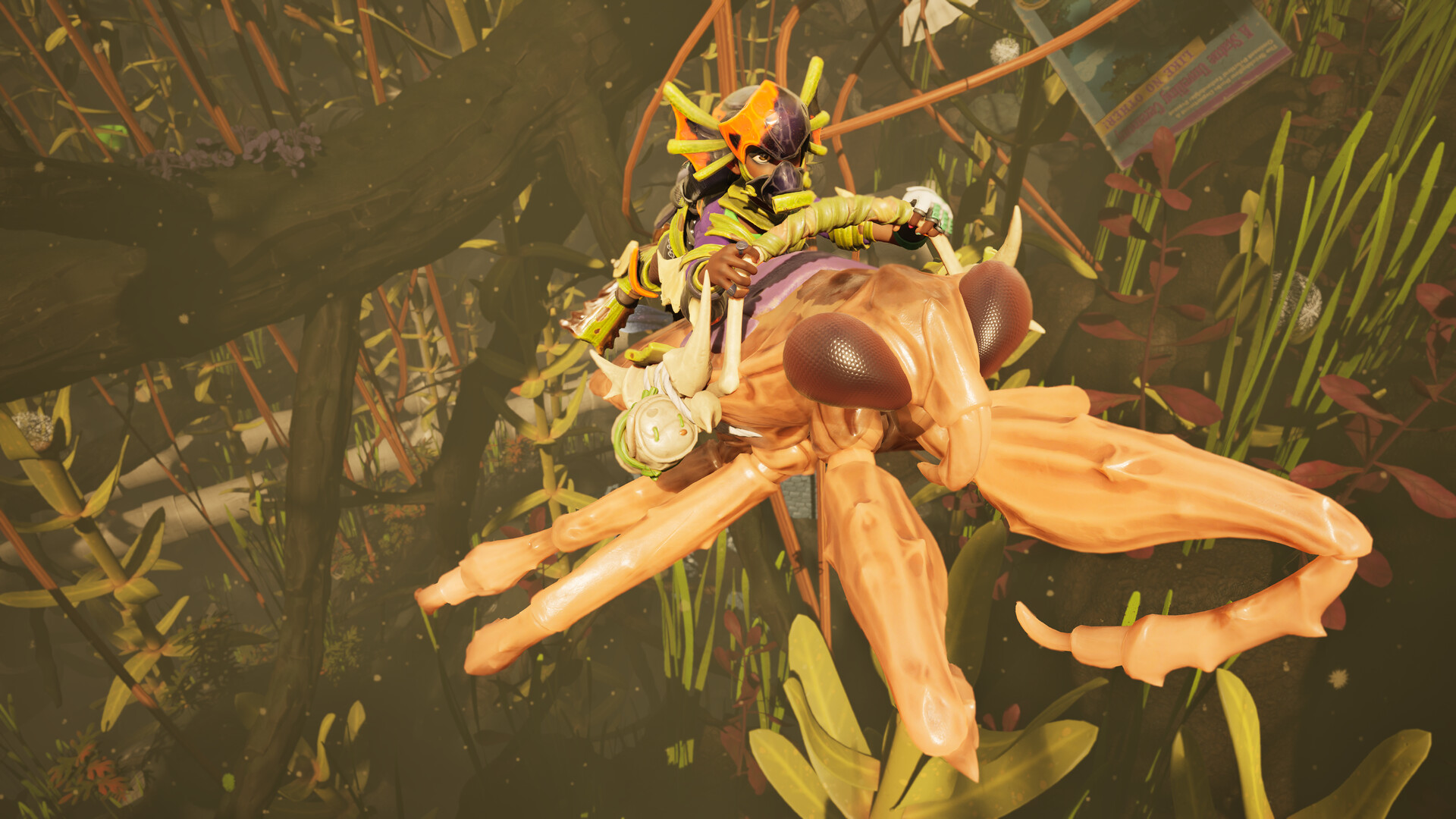
The Red Ant Soldier is the first honest sentence of Grounded 2. Hatch it. Raise it. Saddle it. Ride it through grass that used to be a commute. It carries the heavy stuff you were pretending was a personality. It fights. It gobbles the small loot so you do not have to dismount and play janitor. I grinned the first time the ant took a plank I would have dragged like a martyr. I also steered it into a spider I was not ready for, which is a polite way of saying a mount is not a difficulty slider. It is a friend with opinions and mandibles.
The Orb Weaver is the other official introduction: a web-slinging partner that stuns mid-fight and makes arachnophobia a design conversation instead of a joke. Official notes promise three Buggies at this Early Access door. I will not invent a third name to fill a press list. Call the ant when you want a construction crew. Call the weaver when you want the room to flinch. Walk when you forgot the egg hunt was the point.
Buggies were the request the first game kept hearing and could not quite answer. This one answers it in the first act. I have thrived because I let the ant do the groceries. I have barely survived because I treated the weaver like a motorcycle and not a predator I had agreed to sit on.
The Omni-Tool is the quieter revolution. Axe, shovel, hammer, wrench, one object, one backpack slot that used to be four arguments. Upgrading it costs Raw Science, which you earn by analyzing the park and by doing Ranger Challenges at stations that still believe in pamphlets. I scanned a grub hide, crafted a canteen, and felt the first game’s homework get shorter. If you came because the first game made you want a friend with six legs, the saddle is the reason the sequel exists.
Four Jobs You Can Take Off
Official copy talks about archetypes: precision, cunning, sheer strength, distinct abilities for a playstyle. In practice you do not sign a class contract. You put on a job. Armor, weapons, and the mutations that watch how you fight will name the job for you, then let you take it off when the next clearing wants a different sentence.
A spear or a bow is still the backyard dialect. A Warhammerlet is the heavy punctuation. Dual blades are the new impatience. A staff that thinks in spicy, fresh, and sour is the first time this series lets candy pretend it went to school. I started with a crude Pebblet Spear because that is how you introduce yourself to a mite. I put on Red Ant armor because I had already insulted enough ants to owe them a uniform.
Combat 2.0 is the studio’s name for a dodge that finally feels like a personality and for bugs that learned to block. A cockroach that raises a shell is a small, rude education. I swung through it like the first game was still in charge, then learned to wait. I have won a duel because I circled. I have lost a group because I treated three bugs like one bug with extra opinions.
Once you can read a lunge, the next nest is another sentence in the same dialect. The roster is not a zoo yet. Familiar lawn pests, new park rude ones, and the advertised apex names sitting on the store page like weather you have not fully met: AXL the tarantula, a lizard, a snake the copy would like you to ride and harvest, a bird that does not care about your hatchery. The park already has rooms that want preparation, and rooms still waiting for a later act to finish the threat.
I played solo and I played with a friend on the same grass. A second person turns an egg hunt into a heist and a base into an argument about doors. I have built a wall because I was lonely. I have built a wall because someone else kept dying in the kitchen. Both are the design.
Accessibility is not a later patch on a poster. Arachnophobia Safe Mode is in the crate on day one, along with colorblind options, subtitle work, Read to Me narration, adjustable reticles, and control settings that admit a park this mean should still let you stay. I turned the spiders into safer shapes for a night and still jumped, which is how you know the mode is a courtesy and not a deletion.
A Shadow Writes the First Act
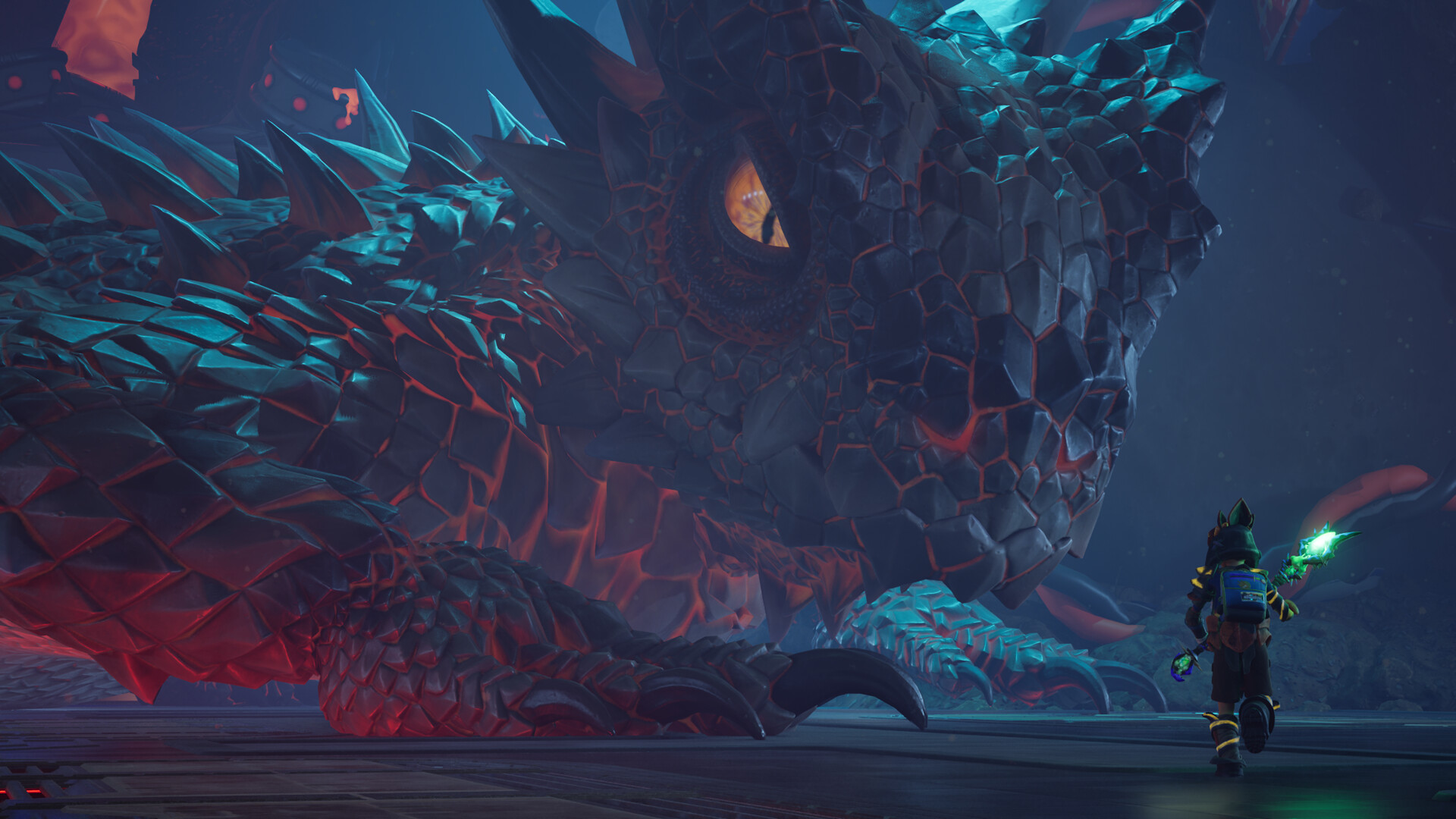
The story begins fresh, which is the official promise to anyone who never mowed the first lawn. You do not need the backyard’s homework to understand a ceremony that goes wrong. You do need the humility to treat Act 1 as Act 1. Official notes are unusually honest: they will not tell you the whole story at the launch of Game Preview, only enough to start uncovering mysteries and sharing theories. I am scoring that honesty, not a finale they have not shipped.
What is in the install is a park that wants you to analyze everything. Resource Analyzers turn junk into recipes. Ranger Stations turn Raw Science into Omni-Tool upgrades and a Science Shop that sells the cooking and furniture that make a survival game feel like a house. Notes, disks, brands that know too much: the plot is a scavenger hunt with a pulse. I will say Ominent is still a hydra. Cut off a director and the company grows a ceremony. The teens are heroes in public and inventory in the grass.
A shadow follows you. That is the store’s favorite paragraph, and for once the paragraph is the weather. You do not know where it is coming from. You only know it never leaves. The deeper you dig, the closer it gets. I have turned a corner and felt the park watch back. I have also turned a corner and found a mite, which is less poetic and more Tuesday. Both outcomes are Early Access story: enough spine to chase, not enough spine to close.
The writing is earnest, branded, a little Saturday-morning even when the science is cruel. It is better when a trash can is a dungeon and thinner when a radio wants to be a cutscene. The four teens talk. They do not replace a crew that can quit. The last rooms of Act 1 tighten around a question the marketing already named: something else is out there. I will say the game is more interested in what the teens owe a park that keeps shrinking them than in whether they can collect another director’s head. That is why the ending, such as it is, feels like a door someone leaned shut instead of locked.
Weeds, Fortresses, and a Canteen
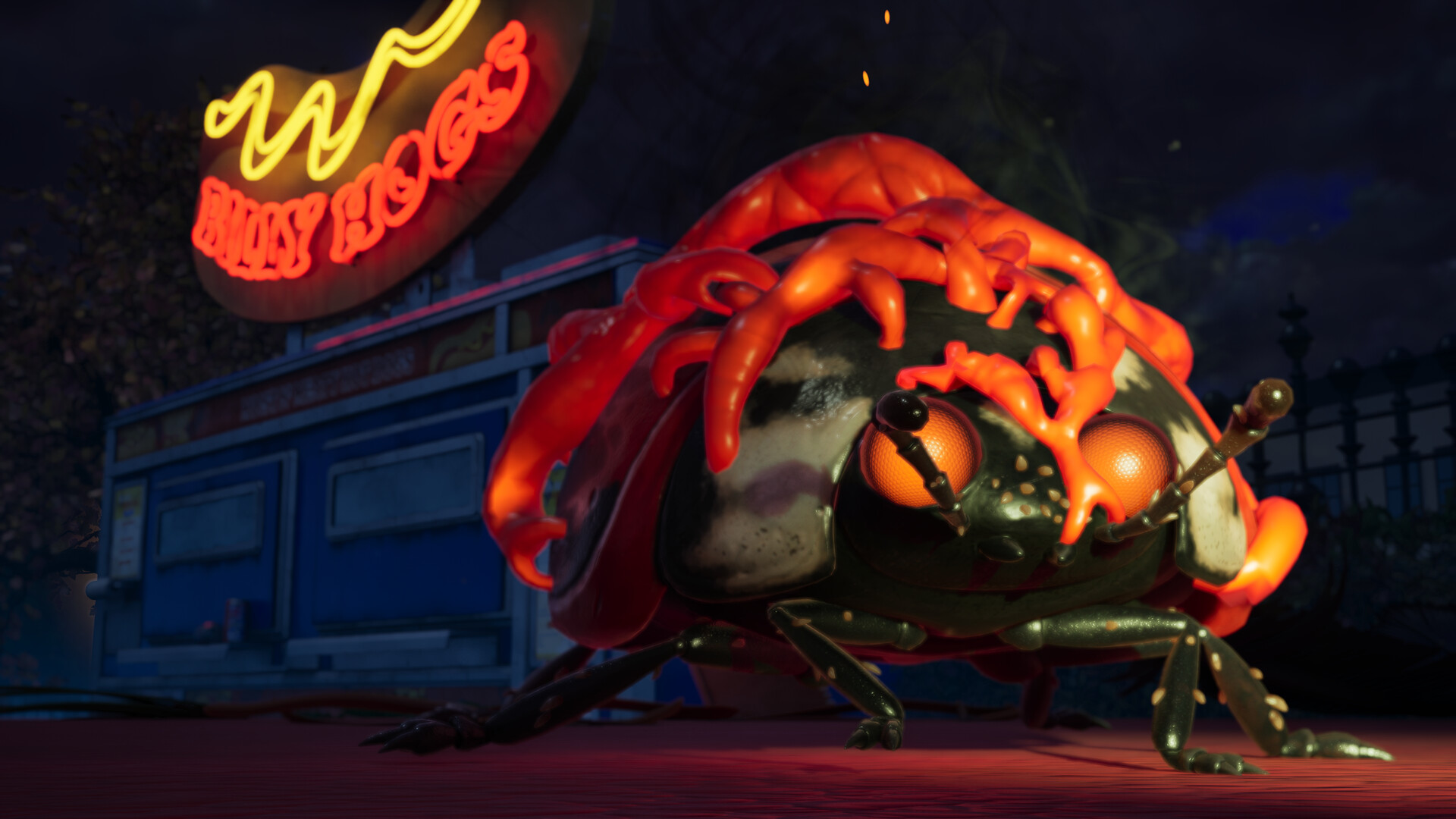
Survival is still the rent. Hunger and thirst will creep up while you are busy being a protagonist. A Roasting Spit turns bug parts into dinner. Water sits in droplets like a dare. Official advice is not to slurp the nasty water. I slurped the nasty water. I crafted the canteen after, like a person who needed the lecture. Grubs rumble underground until the Omni-Tool shovel makes them a supply chain. The story will not pause because you decided a statue mystery was more important than salt.
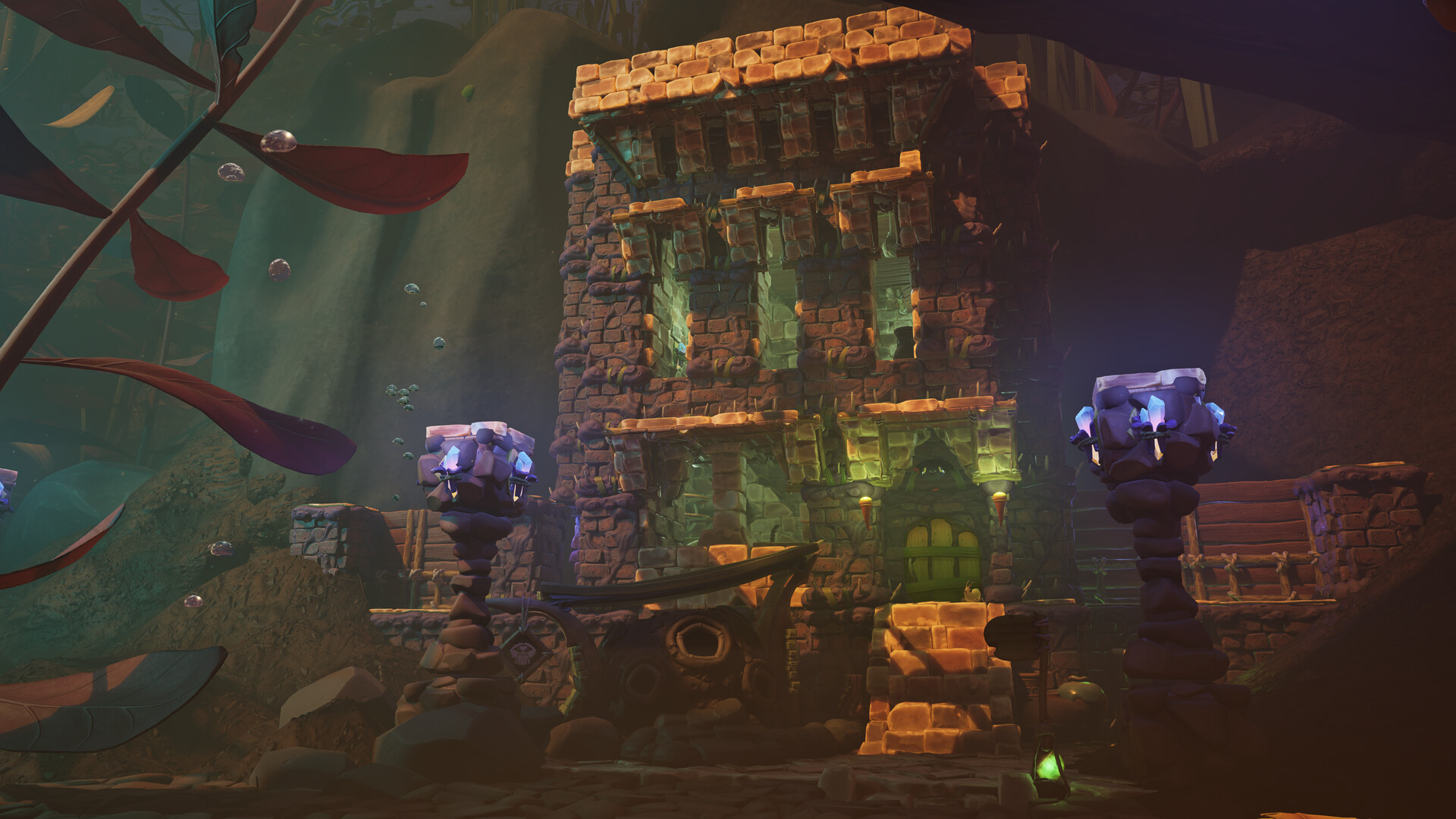
Building is the other rent. Simple shelters. Sprawling fortresses. Palisades that make a wolf spider into a neighbor with a routine. The store would also like fully underwater bases and a cozy little home in every corner. Some of that is a promise with nice lighting. What I actually built was a roof that kept the night out and a storage wall that turned planks into a personality. I have liked a house in the weeds more than I planned to. I have also logged in to find the house was a suggestion a spider disagreed with.
Playgrounds are the other poster. Official copy says you will build challenges, download community work, vote, turn the park into a place to create. That door is not the Early Access meal I am grading. I do not score a toolkit that is still in the briefing. If you came only to author a combat course for strangers, wait. If you came to survive a snack shack and argue about doors, the weeds are open.
The first game’s pleasure was always the moment a piece of trash became a town. That pleasure is intact. It is prettier. It is also, on a bad night, the same loop with a better skybox: chop, scan, craft, roof, die, move the chest. Brookhollow mostly manages the joke, because a canteen next to an ice cream glacier is funnier than a canteen next to a flower pot, and because a Buggy turning a lumber run into a parade is the sequel doing actual work.
I will not invent a frame rate. What I saw was a park that held together while I made a mess of it, with the occasional hitch when too many legs and too much pollen decided to have an opinion at once. Early Access hitching is a seam, not a personality. The grass is still the reason you keep the install.
Founders Buy Paint and a Soundtrack
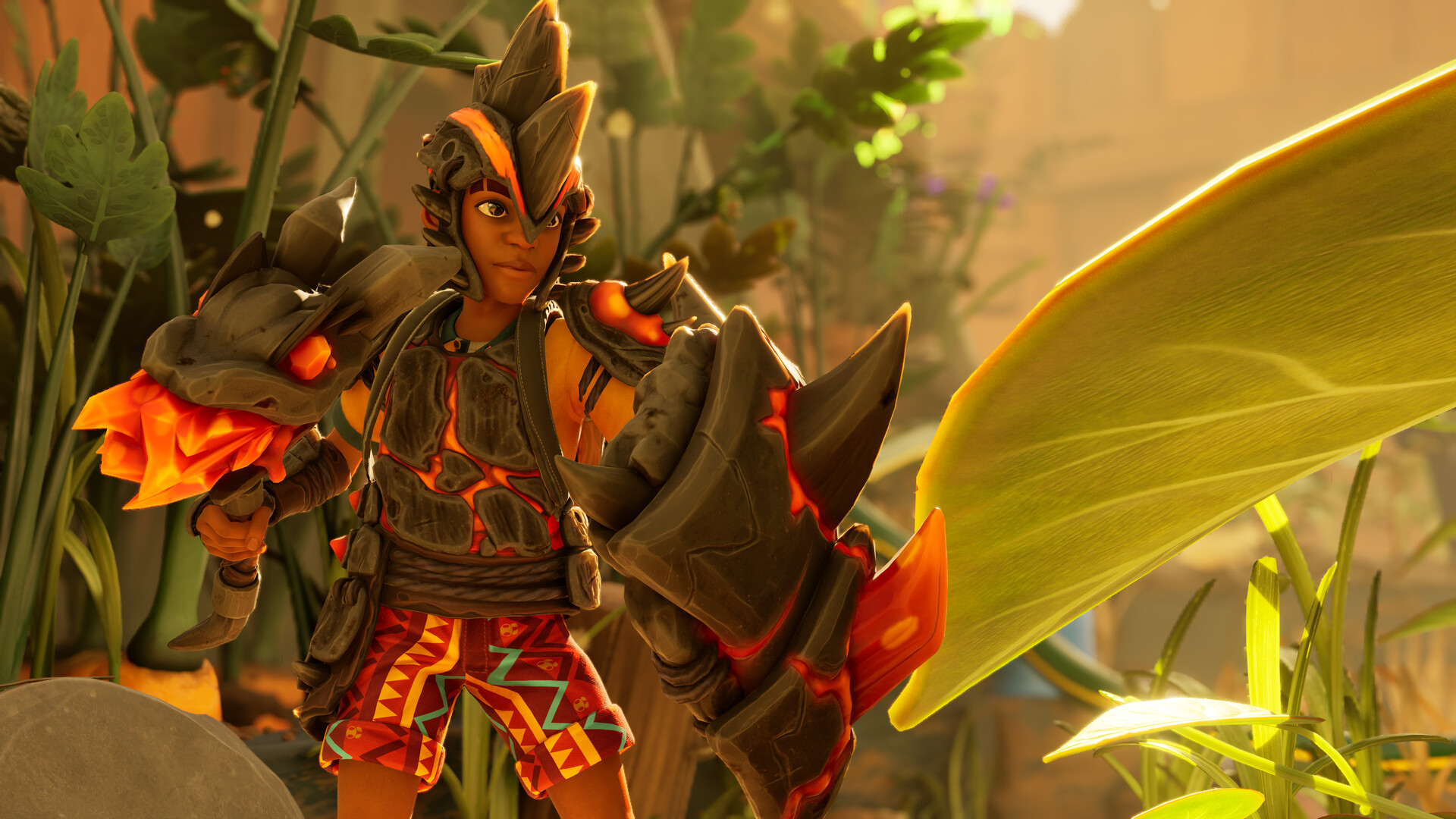
The store would like you to have a feeling about $39.99. I will give you a list instead. Standard at $29.99 is the honest object: Act 1, the section of park, the three Buggies, the archetypes, solo or online co-op, the Omni-Tool, the analyzer, the house in the weeds. Founder’s Edition is that object plus four premium skins with custom emotes (Minotaur, Myrmidon, Rogue, Mant), and ONYX-PRO, Inside the Game, a digital artbook and soundtrack the studio says it will keep updating while Early Access lasts. The $10.00 Founder’s Pack exists if you started on Standard, or on Game Pass, and then decided a Minotaur needed to be you.
Tools of Yore, the decorative tool effigies, are not a Founder’s exclusive. They are a thank-you for anyone who shows up, Game Pass included. Official copy had to correct itself on that, which I appreciate. Cosmetics do not touch progression. I wore the stoic Myrmidon for an afternoon because a park this branded deserves a costume, then took it off because a Red Ant chest piece was doing a real job. I do not score a crate of paint. If you want the artbook, buy it because you want the artbook. Do not buy it because you think Act 2 is hiding behind a skin.
Day-one Game Pass is an Xbox and PC fact. Steam is a purchase. I am reviewing the purchase.
The developers are not locking a 1.0 date. The full version is supposed to bring the complete story and content they will not drip during Early Access. The price is supposed to rise as they get closer, the same handshake the first Grounded used. That is why I am scoring a first act that already knows how to be a game, sold at the Early Access number.
Final Thoughts

Grounded 2 is the sequel that decided a backyard was not a big enough country, then had the nerve to ship the first act of that country while the rest of the park was still a meeting. Obsidian Entertainment and Eidos-Montréal brought the teens, the grass, and a saddle the first game kept requesting. Xbox Game Studios published a $29.99 Standard Edition that is already a meal: Act 1, a huge section of Brookhollow, Buggies, archetypes, co-op, an Omni-Tool that retired four arguments, and a shadow that has not finished its sentence. Founders is paint, a booklet, and a soundtrack. It is not in the install I am grading as systems.
The craft is the reason the wait was worth a second title. Combat learned to dodge and to be blocked. Analysis is still the religion. Building is still the rent. A Red Ant Soldier turning a lumber run into a parade is still one of the best things you can do with a Thursday. That is enough spine for a survival sequel. It is not a finished story.
The limitations belong to an honest Early Access object, not an empty one. The map has a fence. The story leans a door shut. Playgrounds and the underwater city the poster mentioned are later work. Nests start to rhyme. A hitch will walk in when the pollen gets political. None of that deletes the nights that work. None of that should be sold as 1.0. Bring a friend if you can, a canteen either way, and the humility to treat Act 1 as the object.
I am scoring it 7.5, Good, because the identity is this clear and the first act is this playable, and because the missing chapters are this visible. I would recommend it to anyone who wanted the backyard to grow a park and a mount. I would tell anyone waiting for the whole mystery to wait. Distinctive grass, a saddle that does chores, and a corporation that will not stay dead are a lot of product for the Early Access price.
The mites are still rude. The ice cream is still a mountain. The ant is still willing to carry the plank if you did the egg hunt like an adult. After a few rides you will understand why the poster never took the saddle off. That instinct is why I kept the install.
Score: 7.5. The park already has a saddle. The rest of Brookhollow is still growing, one honest clearing at a time.
We prepared this review with a digital copy of Grounded 2 for the PC version provided by Assembly Inc.