There is a particular kind of paid descent, rare in a genre that usually hands you a free hall and a smile, in walking into mud that has already decided the hourglass is unemployed. The roots are still roots. The insects are still insects. The first drowned spirit that tries to collect rent is not a metaphor. Halls of Torment – The Boglands, the first paid expansion from Chasing Carrots, is built on that unemployment, and the unemployment is ruder, wetter, and more useful than a $3.99 swamp has any right to be.
I played the PlayStation 5 version, the 28 October 2025 living-room drop that arrived as the first paid descent beside the free Bardcore gift. You need the base game. You gather herbs until the bog opens a door. You pick a new neighbor or an old one and you clock in. Two new heroes, the Crone and the Alchemist. A stage that scores you on corpses instead of minutes. Fifty-plus quests, three new abilities, a dozen items, six artifacts, an Earth element, and a curse called Decay that treats armor like a rumor. The Steam sample is Mixed, 59 percent of 159, which is the honest weather of a first DLC and not a dare. Great, not a second game, and very much a swamp I would recommend you clock into if you already like the hall.
The Hourglass Lost Its Job
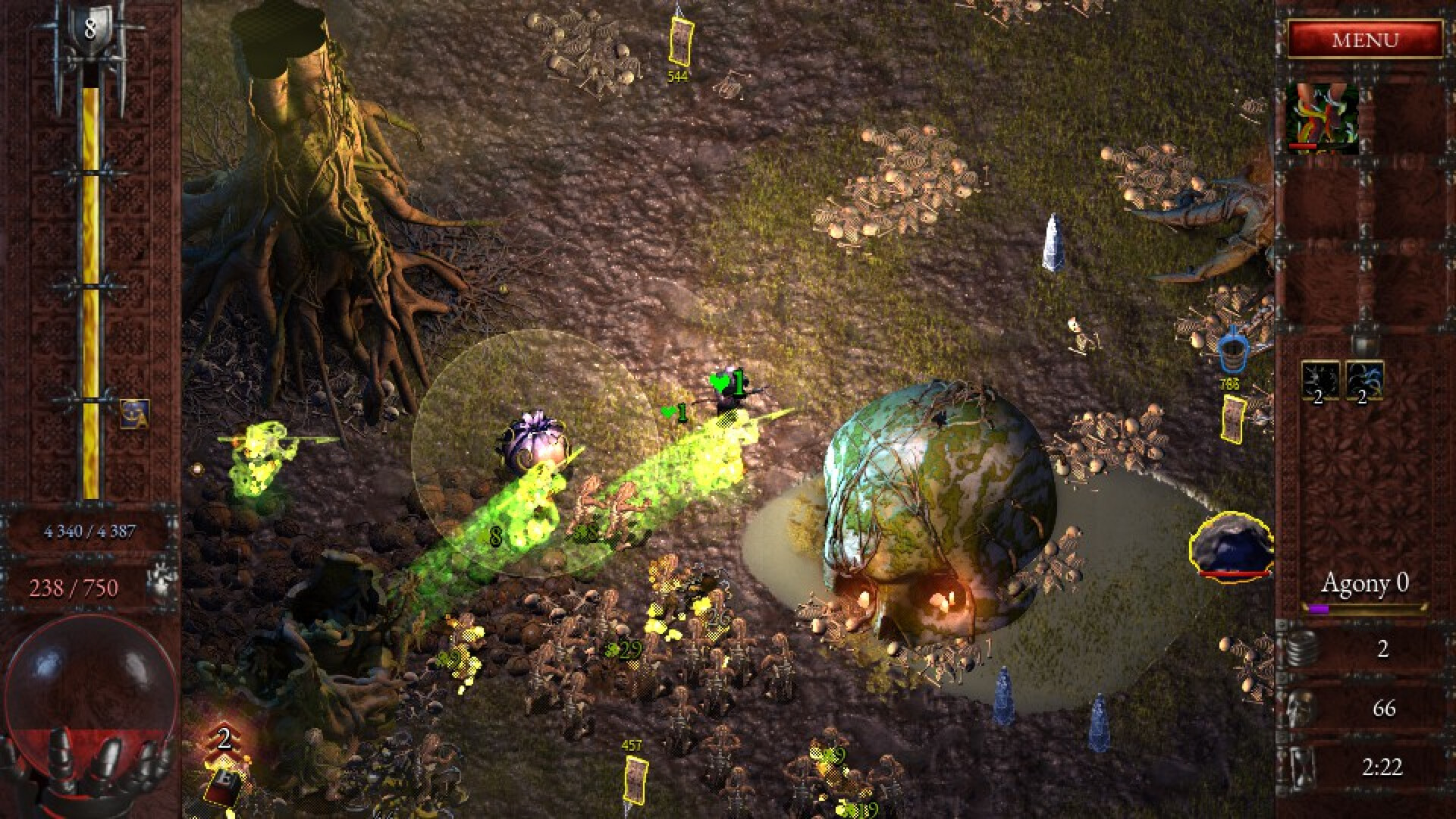
Most horde survivors sell you a kitchen clock and a smile. The Boglands sells you a pile and a dare. Official copy on Steam says time is not your enemy here. Survival is. Victory lies not in the grains of sand in the hourglass, but in the piles of slain foes. That is not flavor text. It is the design firing the timer and hiring a body count.
The base loop is still the old religion, and Chasing Carrots does not pretend otherwise. You pick a hero. You descend. Traits, abilities, and items rewrite the sentence while a swarm tries to eat the punctuation. A polite run in the original halls still wants about thirty minutes if you are polite about it. Survive until a Lord arrives, or fail trying, and the overworld keeps the receipt. Blessings stack. Items come home. The bog keeps that grammar and then crosses out the part about the bell. You stay until the mud is convinced. The Lord is not a calendar appointment anymore. The Lord is a pile you have not finished yet.
I like a premise that prices endurance as the joke and then lets you walk toward it anyway. Official copy calls the Boglands a sunken realm of creeping roots, drowned spirits, and creatures that never quite died properly. Insects. Ancient walking trees. A slowing swamp that treats movement like a rumor if you let it. Why a wetland after six halls. Why a kill count instead of a bell. The more you trudge, the more the water answers with another neighbor that would like a piece of your health globe. Story is still functional and stingy, which is the right instinct for a DLC that wants your hands more than a novella. You are not reading a new bible. You are looting a wetland that is still happening.
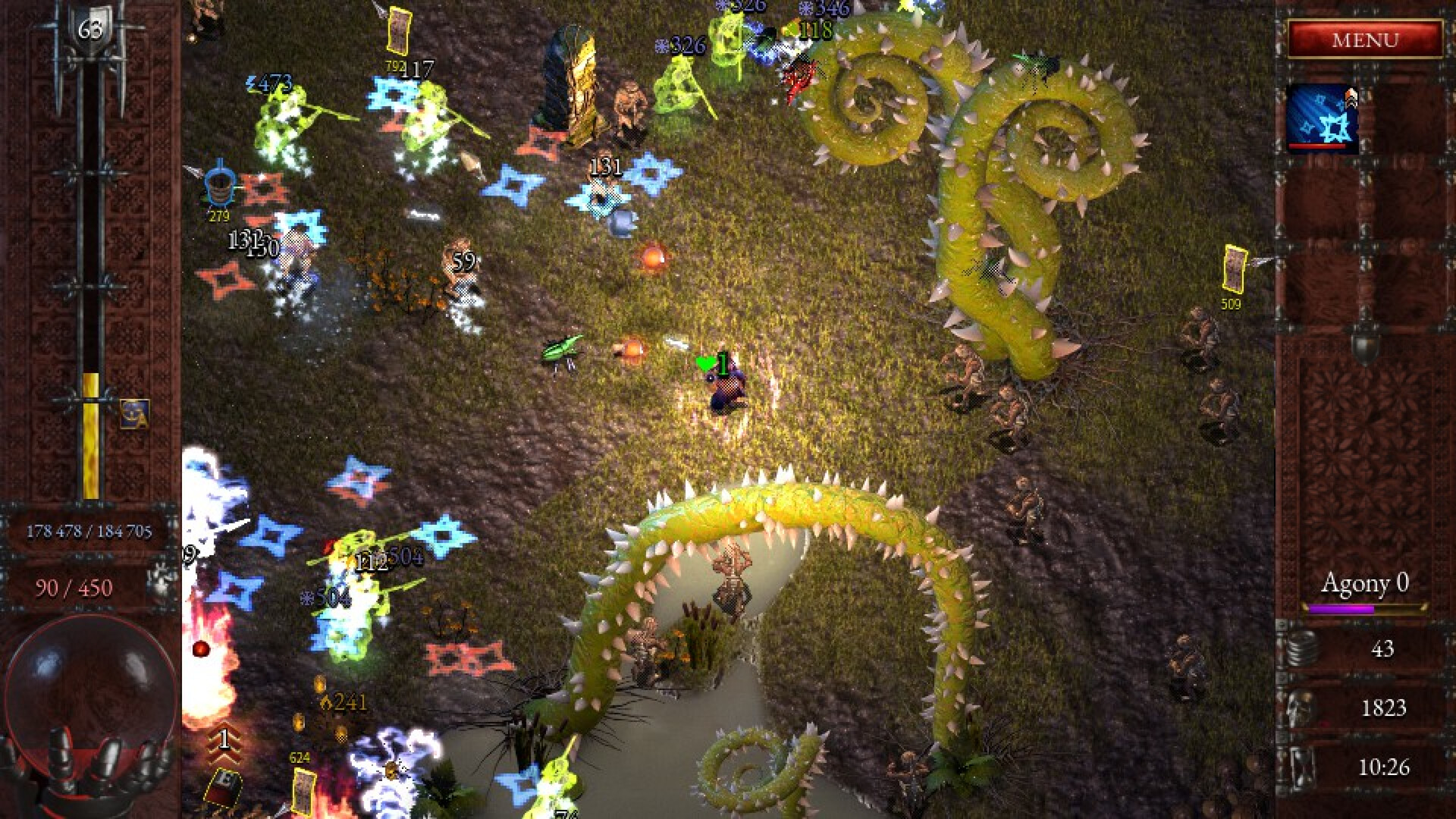
The picture is still the old handshake, which is a compliment. Pre-rendered, late-nineties, the kind of lighting that made a CRT feel expensive. The bog has handwriting. Massive skulls wear moss. Stumps keep a private fire. Vines spiral like they have been practicing. You can tell a root from a skull from a tree at a glance, which matters, because if you cannot read a swarm the build dies.
The fantasy is not mastery of a lore dump. The fantasy is competence arriving about a run after you realize the hourglass has been laid off. You will fail in ways that would be funny if the swarm were not so sincere. You leave a build on the floor. You clock in again. You become the kind of person who thinks a herb is a personality. Eleven herbs open the door, if you are counting, which of course you are. That gate is a handshake and a reminder that the base game is still the front office. Newcomers who buy the bundle will still have to learn the original halls before the swamp will hire them. Veterans will treat the herbs like a commute. Both groups are the audience. Only one group is allowed to be impatient.
The Crone Gardens; the Alchemist Mixes
The roster is why a paid descent is worth the commute. The Crone summons twisted plant life to ensnare enemies and spread Decay, a creeping affliction that weakens defense and shatters block chance. She is a gardener with a grudge. Keep the plants few and rude and the swamp starts filing complaints. She is not a reskin of the Cleric. She is a new dialect that treats the lawn like a plot. Summons that snare, lash, and sap. A curse that turns a tanky neighbor into a conversation you are winning slowly. I have a soft spot for a hero who would rather ruin a defense than win a race, and the bog is built to agree with her.
The Alchemist hurls volatile mixtures imbued with elemental powers, customizable for fire, ice, lightning, or earth. He thrives in chaos. He favors builds that harness multiple elements at once. Official copy says that out loud and then dares you to make it a habit. He is not a Warlock in a new hat. He is a person who thinks a bottle is a strategy, and the bog agrees until it does not. Stack the wrong pair and the swamp will teach you chemistry the expensive way. Stack the right pair and a late swarm becomes a laboratory accident you meant.
Both heroes unlock through the new Boglands quest board, which is the correct instinct. You do not buy a class and wear it like a sticker. You earn the neighbor by doing the job the mud invented. Three new abilities and a dozen new items are designed to synergize with the Crone’s control and the Alchemist’s raw elemental creativity. I will not invent a highlight reel with fake timestamps and tidy potion counts. The nights that stay with you are the ones where a vine held a neighbor still long enough for a mixture to finish the argument, or the ones where you stacked the fourth element because the menu looked lonely and then learned the swamp does not do refunds.
I keep coming back to the Crone, because Decay is a personality. Stack the curse, feed the plants, watch a walking tree soften like a deadline. I also keep coming back to the nights the Alchemist died because I treated four elements like a buffet and forgot the buffet eats back. Both nights were better than a run where I treated every pickup like a vending machine.
Old heroes can clock into the bog too. That is the other half of the ask. The DLC is not a gated resort for two new faces. It is a new hall that will test the Swordsman you already trust and the Exterminator you already spoil. Marks, traits, and the class-combination layer from the base game still rewrite the sentence. The mud does not care who you brought. The mud cares whether you can stay. I like a first expansion that hires the whole town instead of printing two exclusive badges and calling it a frontier.
Decay, Earth, and a Dozen New Excuses
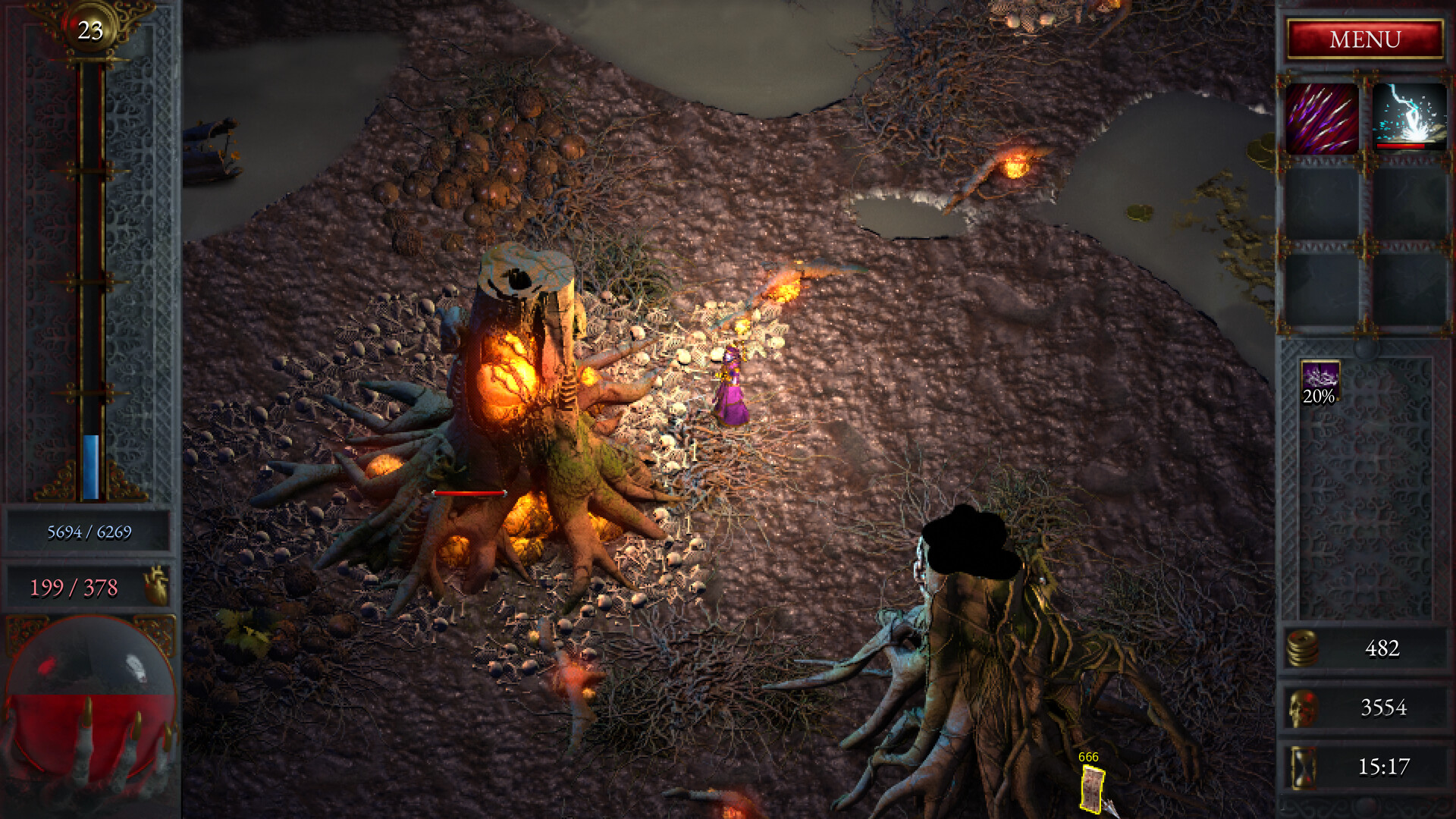
Decay is the temperature change. Official copy calls it a long-lasting, armor-cracking curse that softens even the toughest foes. In play it is the joke the new hall is telling. Without Decay, a walking tree is a commute. With Decay, the tree is a conversation. Block chance becomes a rumor. Defense becomes a suggestion. I like a mechanic that prices patience as a weapon and then lets you overdo it. You will overdo it. You will treat every elite like a wall that just needs another coat of rot. Sometimes that is genius. Sometimes that is how you die holding a vine and a theory.
Earth is the other new word. The Alchemist can dress a bottle in it. The rest of the toybox learns the dialect over a week if you let it. Potion-focused blessings and new traits wait in the files for people who like a receipt. None of that is a revolution. All of that is the sentence the rest of the swamp has to live in. Fire, ice, and lightning already had jobs in the original halls. Earth shows up late, takes a stool, and starts arguing that a curse is a damage type if you are stubborn enough. The argument is the fun.
Six new artifacts customize the rules. Risk meets reward as these ancient objects twist a run toward your favor or your demise. That is the store page’s grammar and it is honest. I left a greedy artifact on for an evening and a careful one on for another. The bog did not mind. The walking trees minded either way. Artifacts are how a thirty-minute religion becomes a night shift you designed yourself. The Boglands understands that, then charges four dollars for six more ways to lie to the loot table.
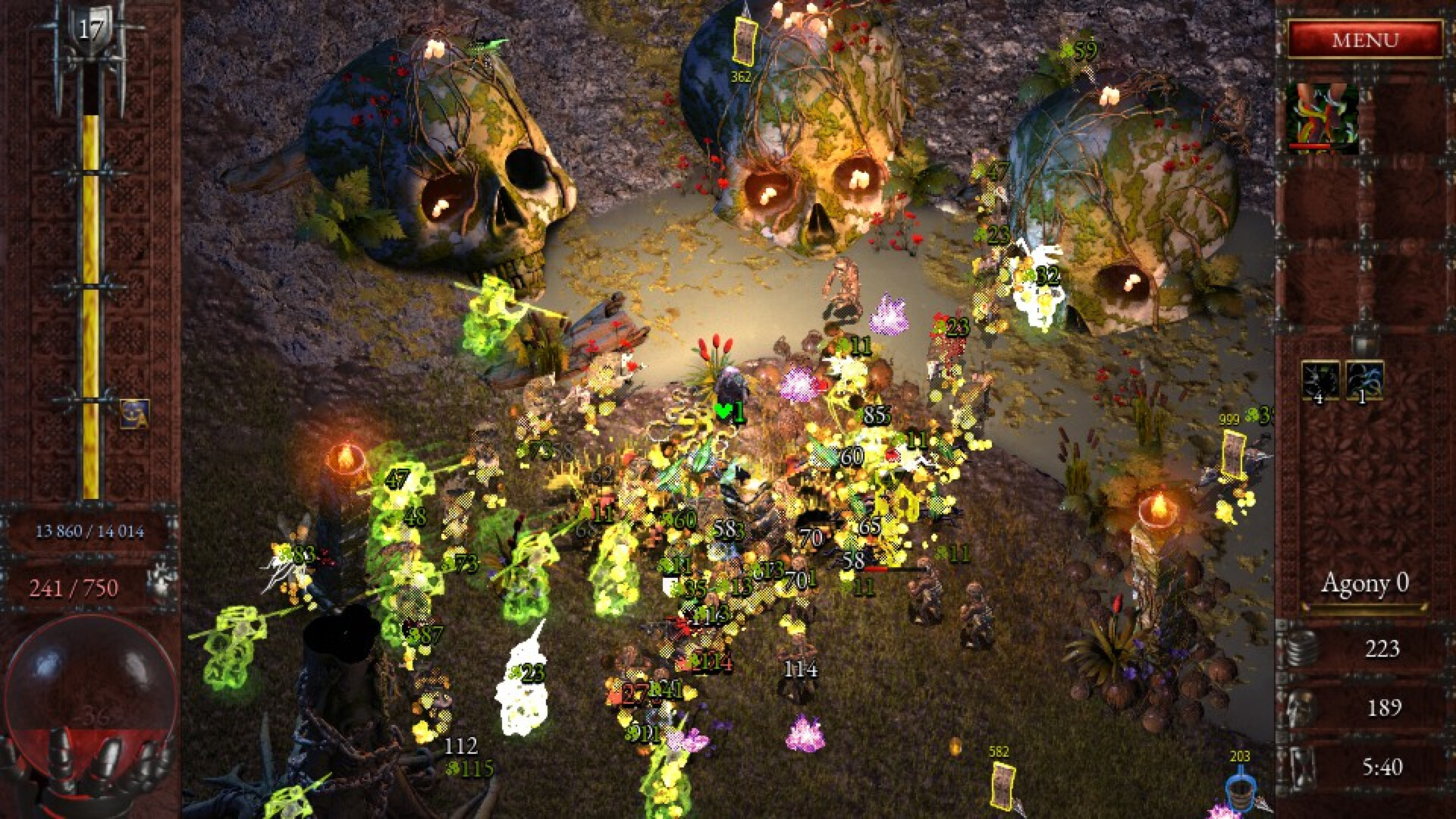
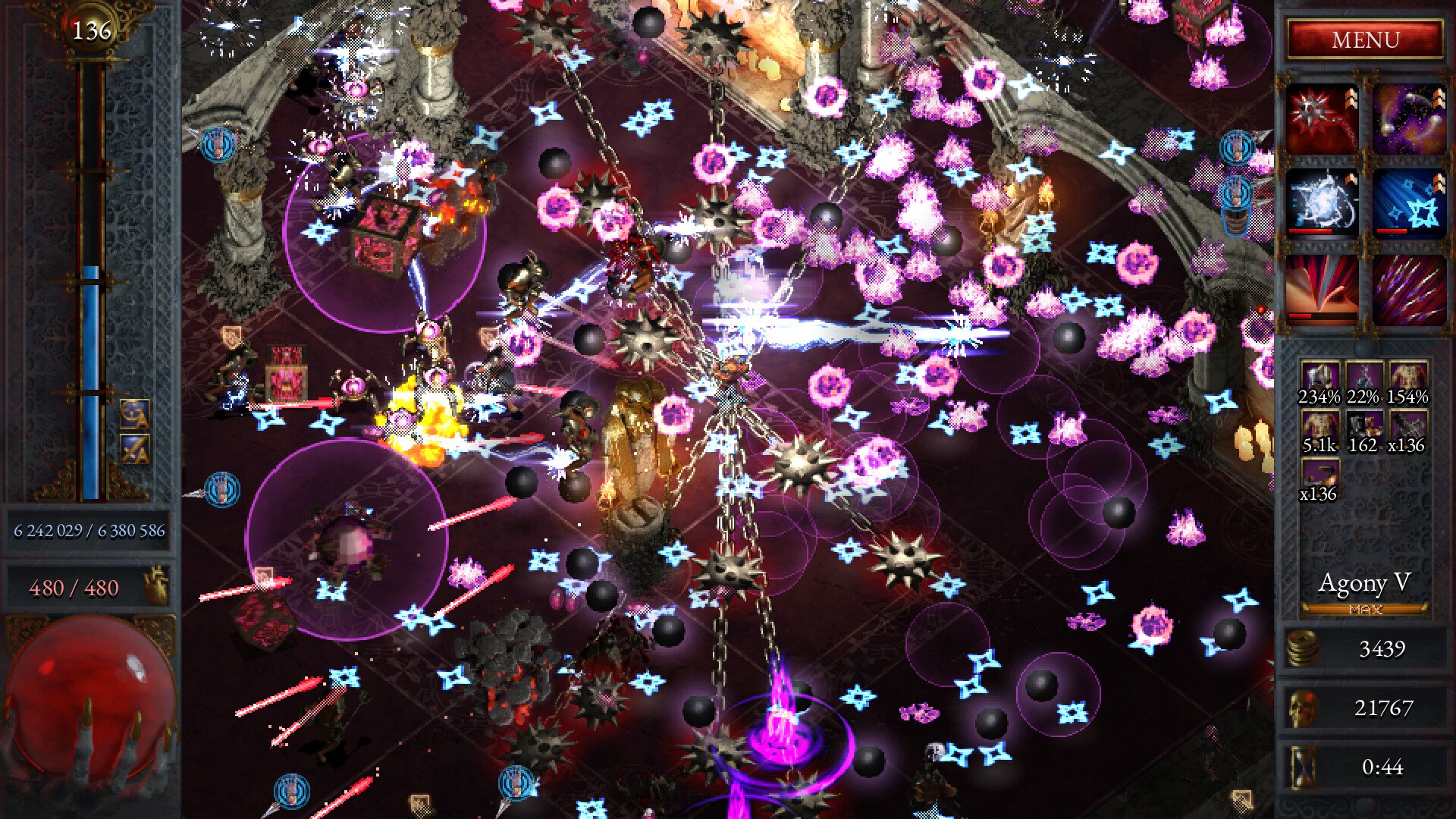
I should be clear about the friction, because it is real and it is not a footnote you hide after the score. A swamp that is this busy can become a reading comprehension test in a room that is already on fire. Traits pile up. Tooltips compete with insects. The pixel flood that thrilled you in the original halls can become weather you check out of if a strong build starts playing itself. Horde survivors rhyme by nature. The Boglands pays the tax later than a lazy reskin, because the kill-count rule and the two new dialects keep inventing a reason to stay. It does not earn a free pass on samey late swarms.
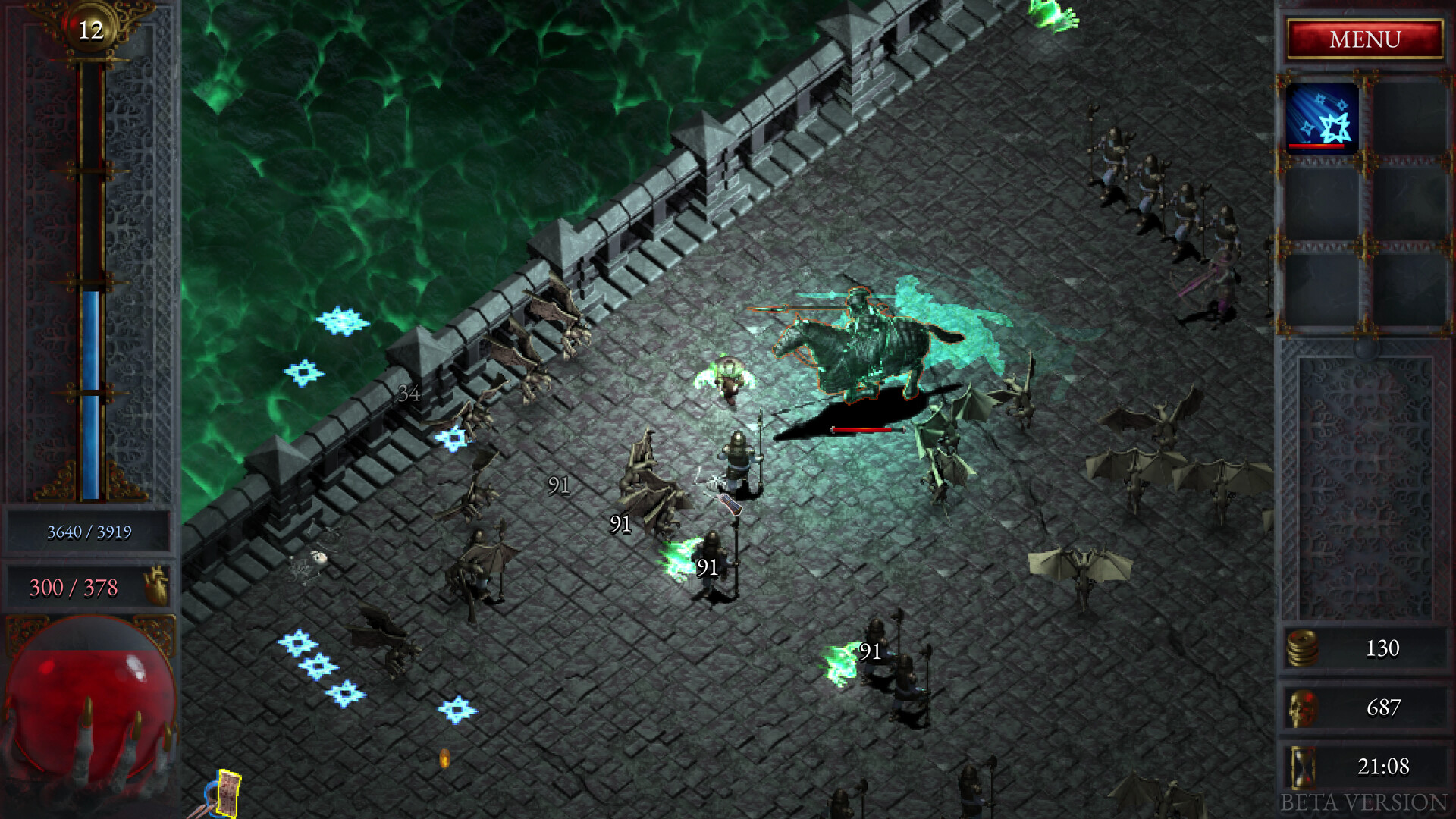
Visual clutter is the complaint the Steam sample keeps filing, and I will not pretend the complaint is invented. Roots, thorns, spirits, and a dozen damage numbers can hide the thing that is about to eat you. You get used to it. Getting used to it is still a tax. Some evenings the swamp is handsome in the way a late-nineties dungeon is handsome. Some evenings the swamp is a green weather system that ate your cursor. Both evenings are The Boglands. The handwriting is a gift and a problem, and the problem is priced into a first DLC that wanted a biome more than a cleanup pass.
Fifty Quests and a Board That Remembers Mud
Meta-progression is why I stopped resenting a paid board. Halls of Torment already made the hill a town that keeps a receipt. The Boglands opens a second window. Fifty-plus new quests ask you to experiment with Decay, brave the swamp, and master the new tools. Unlock a hero. Unlock an ability. Retrieve an item. Touch a blessing that likes potions. The quest log is still a design document you are allowed to read, and the DLC writes a new chapter instead of reprinting the old one in a wetter font.
This is the difference between a DLC you drop and a DLC you inhabit. A lot of first expansions want you to get lucky in a new coat of paint. Chasing Carrots wants you to get specific in a new climate. Kill enough in the mud. Spread enough Decay. Survive a night that does not end when a bell says so. The tasks are grind dressed as a curriculum, and the curriculum is why a $3.99 object has another month hiding in it if you are the kind of person who cannot leave a checkbox alone. I am that person some weeks. The board does not mind. The board has fifty more ideas.
The overworld chest still does the quiet work. Send a favorite back so tomorrow’s fool can wear it. The Shrine of Torment still sits at the far end as the unbeatable joke. The bog plugs into that joke instead of replacing it.
Bardcore, the free update that landed with the console doors, is not this review. The Bard is a gift: a new face, new abilities, a few metal tracks, a manual level-up if you want to stop being polite to the timer. The Boglands is a ticket. Confusing the two is how a first DLC gets a reputation it did not earn. I will say the gift makes the town feel open, and the ticket makes the town feel worth a second commute. That pairing is cleaner than a shop that charges for both and then calls the charge a community.
Quest text can still be a scavenger hunt. Some unlocks sit behind a neighbor you are not ready to meet on the hero you have. I respect a game that wants you to think. I resent a game that wants you to think while a walking tree is already in the room. If you already bounced on the original quest mountain, the bog will not convert you. If you already lived on that mountain, the bog is another trail with worse shoes and better weather.
Four Dollars and the Honest Weather
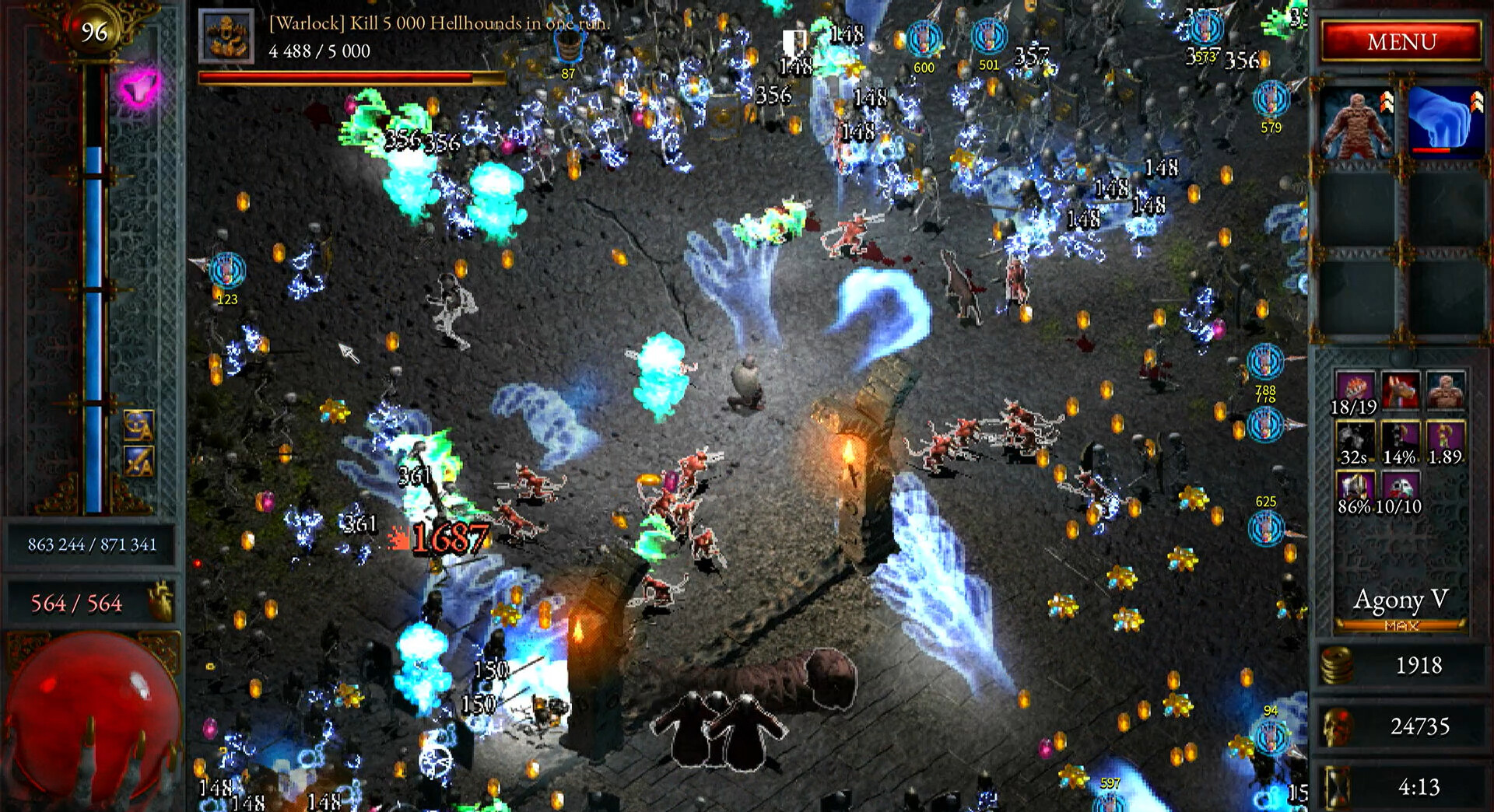
Presentation is readable until the prestige starts hiding the next hit. You can tell the bog from a cavern at a glance. The soundtrack understands the assignment: dungeon-crawler tense, no jumpscare factory. Seventeen languages sit on the Steam sheet. Full controller support is on it too. The voice of the DLC is the swamp, and the swamp talks in roots, curses, and the occasional unpaid hourglass.

I have a rule for cheap DLC. If an expansion is worse with a purpose than with a checklist, it is broken. If it is only good with a purpose, it is honest. The Boglands is honest, and that honesty should sit next to the price.
A checklist night is a competent weekend. You punch the mud, you invent the curse, you lose a run, you clock in, you put a better lock on the joke. A purpose night is the version the systems were quietly designed around. Someone farms Decay. Someone mixes four elements and learns, too late, that the fourth was a dare. Someone brings an old hero into a new climate and discovers the climate does not care about seniority. The swamp becomes a shared instrument you play with yourself instead of a commute.
Price is part of the review. $3.99 is a handshake and a thesis. The number is a small ask next to a $6.66 base. For that money you get a hall, two heroes, a mechanic, an element, a quest mountain, and a loop that can eat another month if you let it. I have paid more for a skin. I have paid more for a worse thirty minutes that still ended when a clock said so.
The Mixed sample around a first DLC this loud is always going to look like weather. Fifty-nine percent of 159 is not a dare and not a funeral. Some people found the hall busy. Some people found it short. Some people found exactly the commute they wanted. I am not hiding behind the number. The mud is real enough to argue about.
If the first swamp feels like a coat of paint, give it the Crone. If the third night feels like a vice, you are the audience. The hourglass will still be unemployed. The pile will still want a volunteer.
Still Hiring After the Water Settles
Halls of Torment – The Boglands is a rare cheap expansion that understands its own joke and then has the nerve to fire the clock. Chasing Carrots built a swamp about endurance, a curse about teamwork you do with a plant, and a toybox that looks a little like the last six halls and plays a lot more specifically than that sentence suggests. The loop is the hook. Decay is the spine. The walk from a herb to a pile is the grin.
It is better as a workshop than as a novel. The two new heroes stay the reason to recommend it. The kill-count rule stays the reason you keep the window open. The repetition is real. So is the grin when a vine and a stupid amount of Decay turn a neighbor into a story you will tell like you meant it. The clutter is real. All of that is already priced in at $3.99 on Steam. You are not buying a decade. You are buying a season in a place that fired the timer.
I am scoring it 8, Great, because the identity is this clear and the limitations are the limitations of a focused first DLC, not an empty one. At $3.99 you are buying a hall that respects another evening, a toybox with two new dialects, and a loop that refuses to charge a full-price ticket for the privilege of being buried in mud. Distinctive swamp weather, a quest mountain, and a clock that lost the argument are a lot of game for the ask. The swarms repeat their jokes. The jokes are still wet.
The mud is still out there, still hiring a night shift, still asking what the hourglass was for. After a few descents, you will understand why the bog is not finished with you, and why you keep clocking in anyway.
We prepared this review with a digital copy of Halls of Torment – The Boglands for the PS5 version provided by Pressengine.