There is a particular kind of invitation, rare in a genre that usually hands you a license and a rubber-stamped Sunday, in being asked to prove that a human mind still owns a road the machines have already painted pink. The skyline is still a skyline. The boost is still a boost. The first lamp post that tries to teach you a lesson is not a metaphor. Neon Apex: Beyond the Limit, the anime-soaked arcade racer from Repixel8 and Numskull Games, is built on that dare, and the dare is louder, pinker, and more useful than a twenty-five-dollar night circuit has any right to be.
I played the PlayStation 5 version, the 16 May 2025 launch at $24.99 that Repixel8 and Numskull Games walked onto living rooms four days before Steam caught up on the 22nd. You pick a face. You take a tutorial that already knows how to hold a drift. You earn cash, you spend it in a garage, and you try to prove humanity still rules a road that has been cracked since 2124. Thirty-eight Steam achievements sit in the spray. The English Steam sample is too small to wear a medal, five nods of six, with 16 voices across languages and 13 of them agreeing, which is the honest weather of a quiet launch and not a dare. Great, not hidden, and very much a city I would recommend you race if you like an arcade loop that knows it is a loop.
The City Does Not Hand You a Clean Line
Most racing games begin with a speech about destiny. Neon Apex begins with a shattered Earth and a sentence that treats the track as the only honest room left. Official copy on Steam says nothing is as it seems, but out on the track the truth is laid bare. Cities have cracked. Machines have risen. One truth still burns: only the best survive. That is not flavor text. It is the design refusing to pay for a licensed paddock when a night highway will do.
You start because the alternative is becoming a rumor in a league that does not keep rumors. The first stretch is staged like a welcome that forgot to be gentle. Boost pads light up. Traffic occupies the lane you wanted. A dedicated drift button will slide you if you hold it and turn, no countersteer sermon required. That is the rest of the map, and the map is a city that keeps using the same night on purpose. The shop is not hiding a secret countryside. The shop is selling a future that only comes out after dark.
I like a premise that prices curiosity as a hazard and then lets you drive toward it anyway. Human racers, cyber-enhanced challengers, and AI-driven androids share a grid that is open only to the people the league has decided are elite. Official features call that Choose Your Challenger, which is a polite way of saying the field is allowed to be a machine and still owe you a pass. Why the buildings look the same. What a corporation wants with a cup. The more you race, the more the city answers with another highway and another thing that would like a piece of your damage meter. Story is environmental and stingy in career, talkative and panel-heavy in Story Mode, which is the right instinct for a game that wants your hands more than your diary and then, in one mode, forgets.
The fantasy is not mastery of a lore bible. The fantasy is competence arriving about half a night after you invent a line through traffic. You will fail in ways that would be funny if the explosion were not so sincere. You bounce. You respawn. You become the kind of person who thinks a repair bill is a personality. Neon Apex wants you to stay because the garage is still hiring, not because a cutscene promised you a throne.
Twenty Machines and a Garage That Keeps Receipts
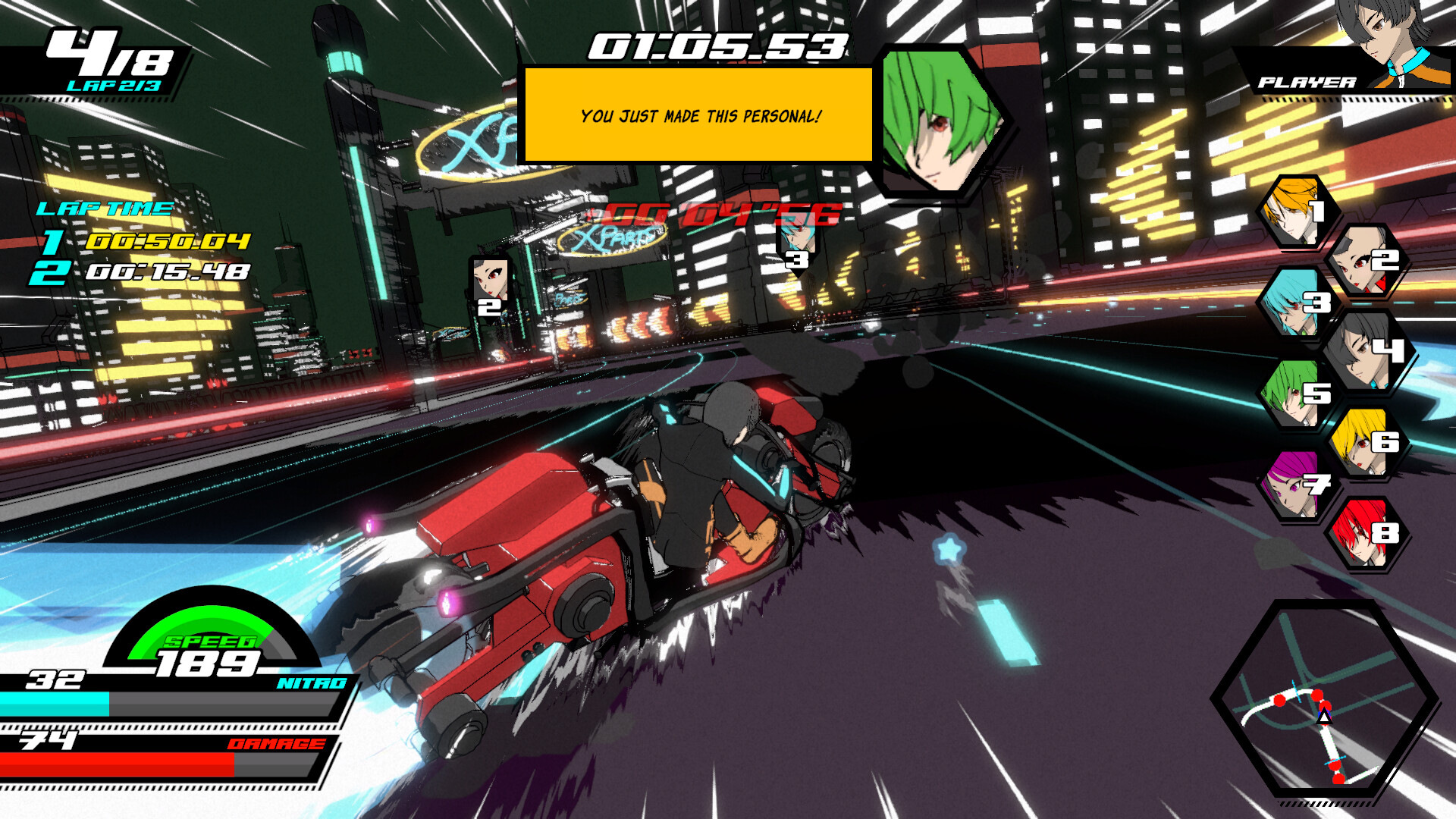
The loop is the old religion and Repixel8 does not pretend otherwise. Race. Collect the card that unlocks the next machine. Spend the winnings on engine, power, grip, and strength. Paint the thing that already looks like a comic. None of that is a revolution. All of that is the sentence the rest of the toybox has to live in.
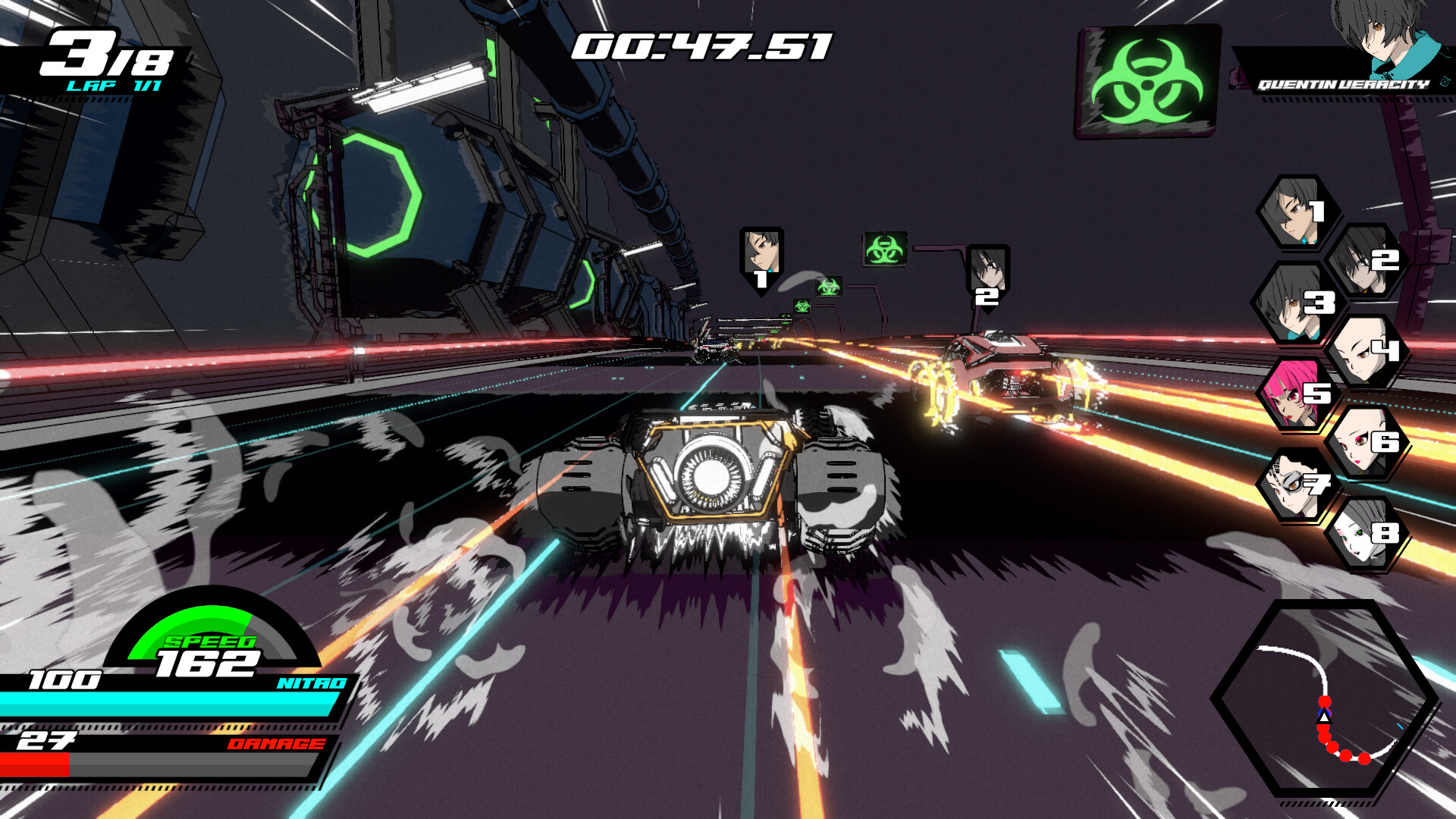
The garage is more than twenty machines, not twenty clones with new stickers. Cars that look like they were poured from a tank mold. Bikes that remember a certain midnight manga without asking permission. Hover toys that treat asphalt as a suggestion. You are not collecting a showroom. You are collecting a personality you can crash. A respray is an achievement and a mood. The later cards are the reason a quiet Tuesday still has a job.
Handling is the conversation everyone has after the first boost, and it is still the conversation that decides whether you stay. The speed is real. The weight is a rumor. A machine that feels snappy on an empty straight can feel like a pinball the moment a rival or a barrier decides to share the lane. Contact is not a conversation. Contact is a bounce. I will not pretend the bounce is a feature I asked for. I will say the dedicated drift is the shop admitting that a 200-mile-an-hour night should not also demand a lecture on countersteer. Hold the button. Turn in. The slide happens. You do not earn a degree. You earn a line.
There are no deep setups and no engineer in your ear with a degree. What you get is an arcade contract: hit a pad, spend a nitro, keep the damage meter from becoming a fire, then do it again while traffic writes its own plot. A crash that maxes the meter is a reset that costs the kind of time you cannot buy back. Sustained damage carries into the next career heat unless you pay for a repair, which is a sentence both kinder and meaner than a full reset. That sentence is a promise and a warning. If you want a sim that never asks you to bounce, you will feel underemployed. If you want a night that turns a first card into a garage, you will feel hired.
I left the greedy upgrade path on for an evening and the careful path on for another. The city did not mind. The bank minded if I entered a cup I could not finish. Cash is the door and the bandage. XP is the permission slip. Fail enough and the garage becomes a museum you can look at but not afford to take outside.
Career, Cups, and a Story Told in Panels
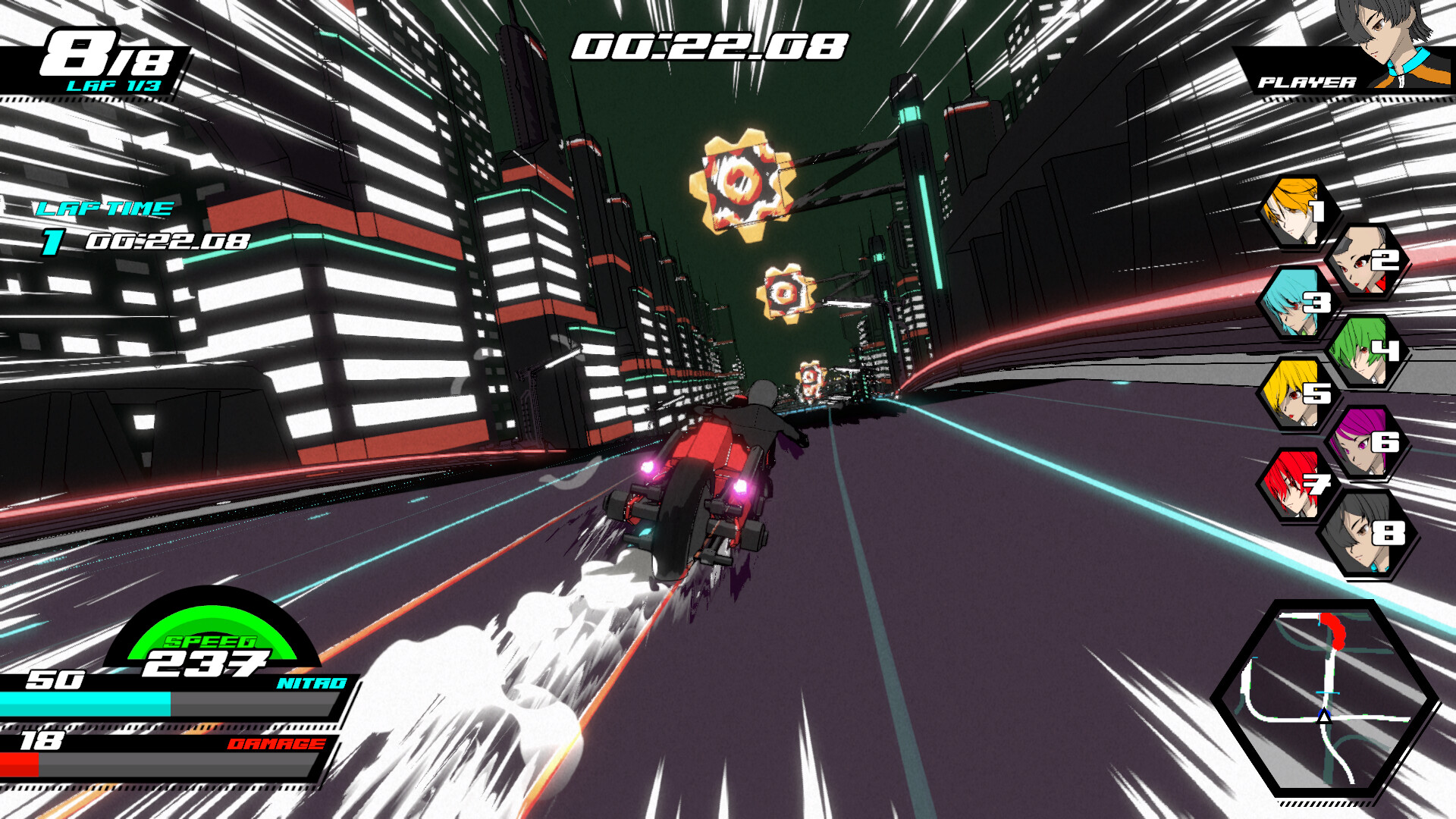
Career is the meal. You pick a race type, you pay the XP the door asks for, you try to leave with more cash than pride. Do well and the career level notices. New events arrive. Meaner machines become legal. The shop uses cards the way a Saturday used to use stickers.
The event list is how a repeating skyline stays a toybox. Standard circuits that ask you to keep a meter and a nerve. Head-to-head nights that treat a rival as the whole map. Point-to-point sprints that refuse to loop and then dump you into a finish that feels like a dare. Takedowns that ask you to hunt a target through traffic. Combined with the garage, that variety is the reason the career does not die on the third reused tree.
Championship is the other kitchen. Cups. Points. A calendar that will fund the career door if you treat it like a job. Arcade strings races together until your manners run out, a proof of prowess the menu is not shy about. Time Attack is the lonely craft, a global leaderboard, a chance to turn a lap into a receipt. Versus is the living-room argument, local split-screen, no online grid waiting in the lobby. That missing lobby is a real empty chair. The object I raced is a superb solo toybox with a stopwatch and a couch. If you need a stranger in the other car, you will feel the silence. Leaderboards are a conversation with a ghost, not with a rival in another city.
Story is the mode that wants to be a novel and then pays in panels. You play as Chase. Manga-style cutscenes, text-heavy, a science fiction that mentions corporations and underground rivalries and then asks you to finish first or stay on the page. Unlike career, first place is the only key. The standard car in that mode does not take the upgrades the garage has been selling you, which is a design choice that will strand people at a spike the shop did not advertise. I will not invent a chapter count. I will say the panels run long and the faces run thin, and the world-building is better when a highway does it. Temporary freezes in those events are the adult in the room having a cough.
Boost, Traffic, and the Cost of a Lamp Post
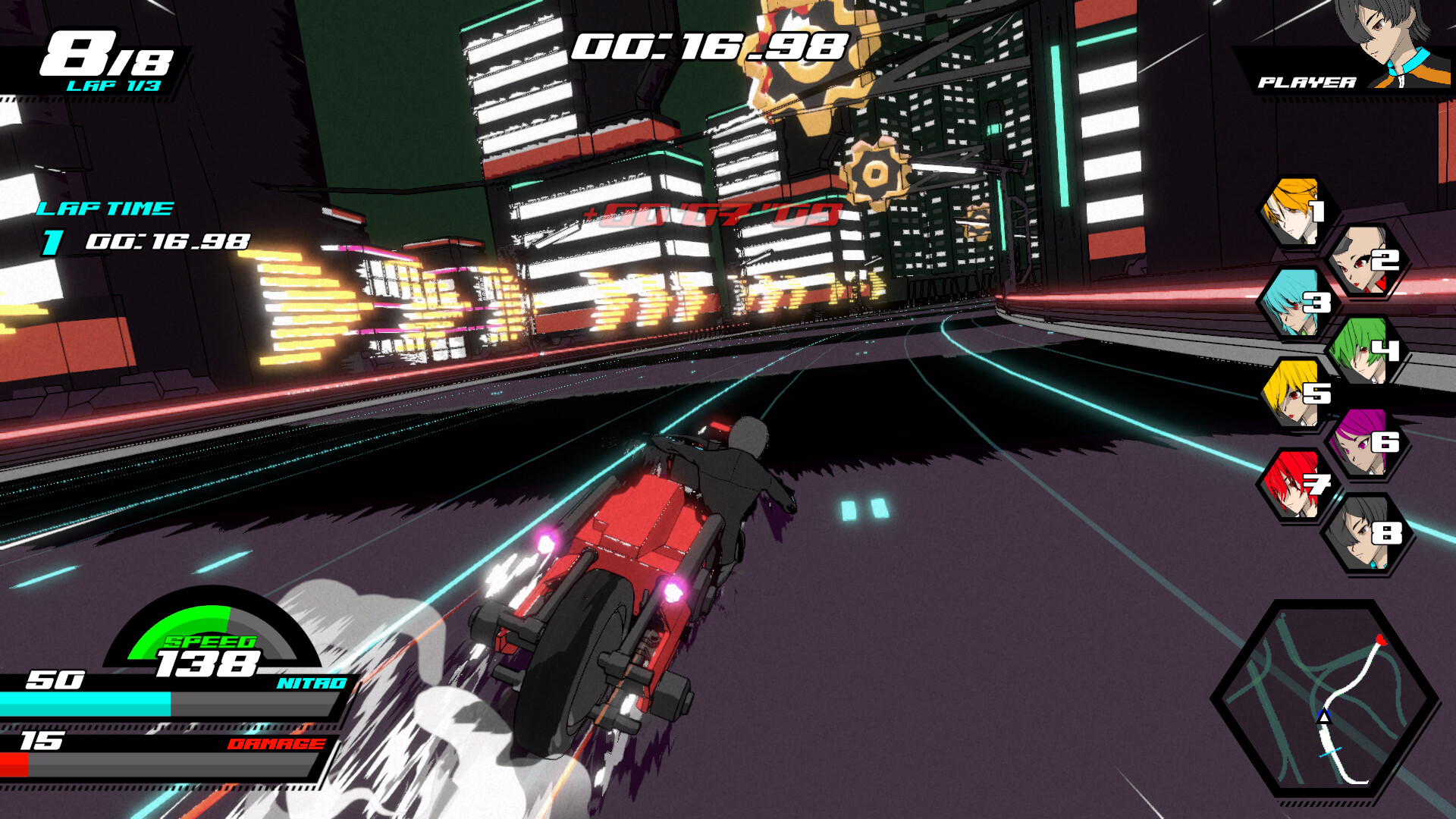
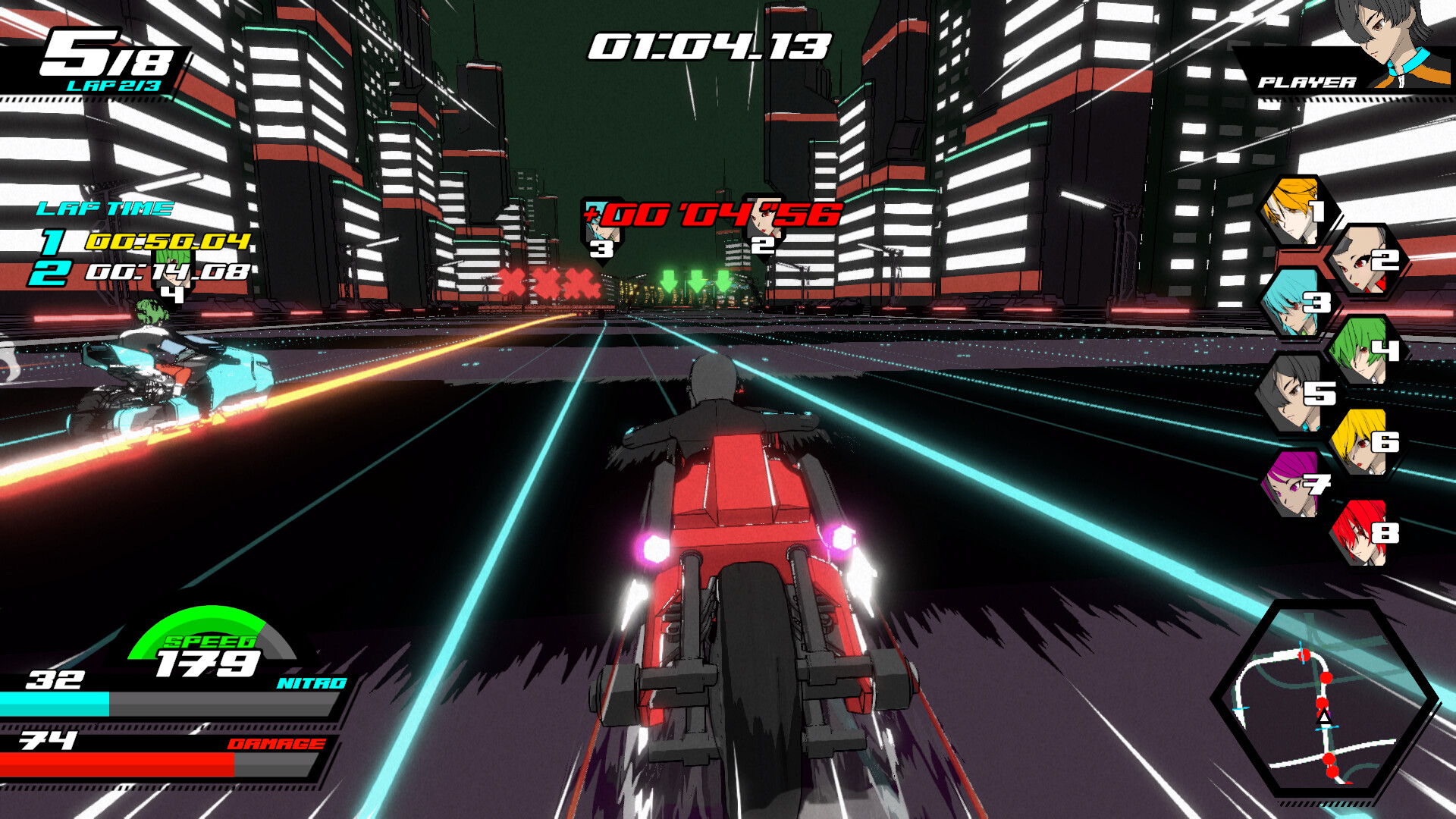
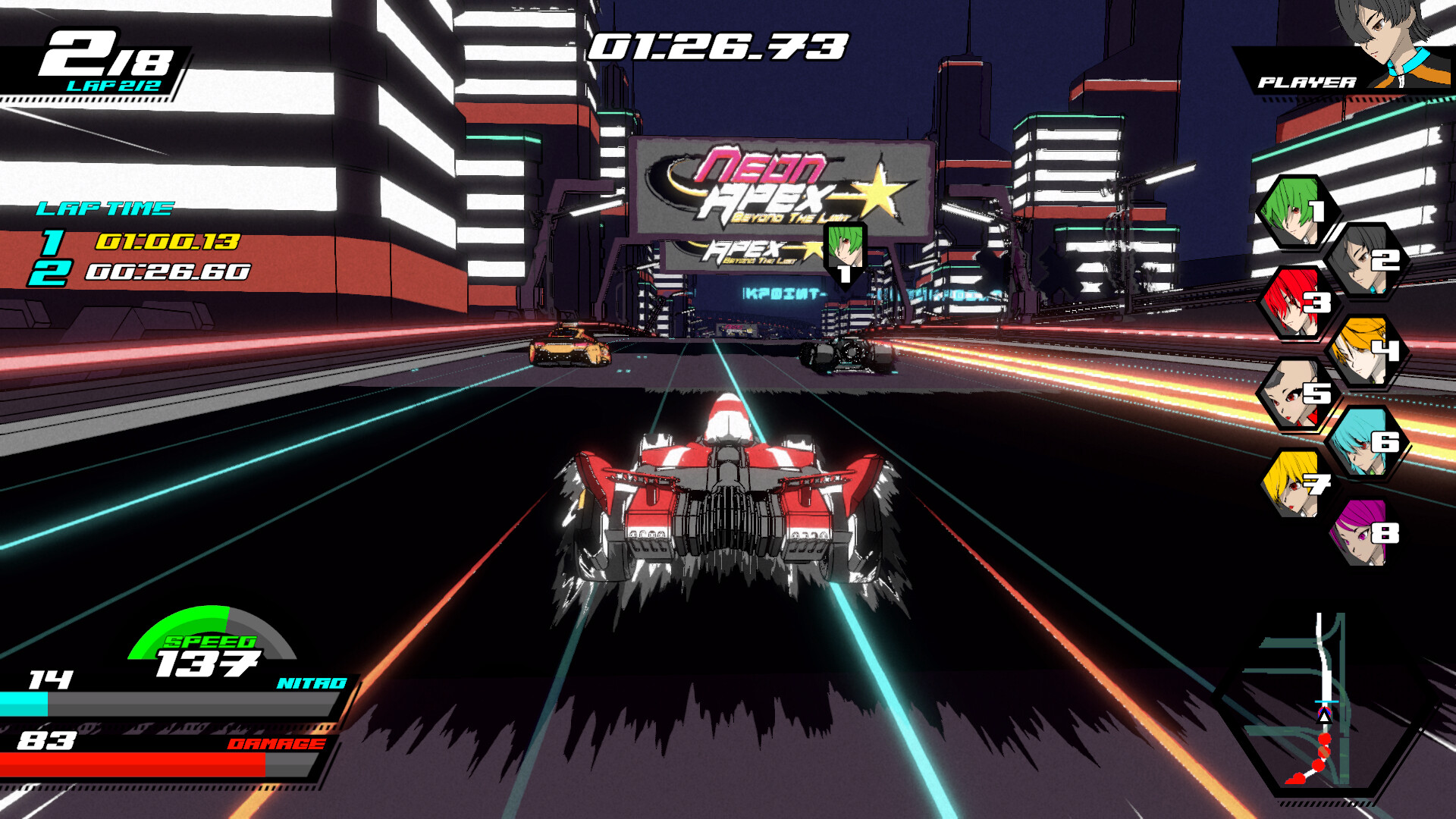
Pressure is the variety, and traffic is where Neon Apex stops pretending the city is empty furniture. Night highways, oncoming manners, a civilian that did not sign up for your nitro. Boost pads are the kindness. Nitro is the personality. One slip and the store page is not joking. The damage meter is a second race you run with your own impatience. Ignore it and a late-race machine becomes a suggestion. Watch it and a heat that looked like a sprint becomes a decision about whether the next pad is worth the wall.
A lamp post will stop you like a period. That full stop is the most honest physics joke in the build, and it is also the one that will make you look for a respawn button you wish had more manners. Getting twisted off the racing line and being unable to walk the machine back onto the asphalt is a real friction. I learned to treat a reset as a strategy, not a cowardice. Distance helps. A repair helps more. The trailer says the quiet part out loud. Hit every drift. Fight for glory at 200 miles an hour. Stay sharp. Do not blink. The lamp post is the blink.
I will not invent a highlight reel with fake lap times and tidy takedown counts. The nights that stay with you are the ones where you thought the meter was fine, then a rival turned you into a bumper, then you were on the wrong side of your own boost. Melee with architecture can feel like two objects agreeing to take turns being disappointed. That clunk is real. It is also priced into an arcade loop that would rather you drift, reset, and come back painted.
Mastery, here, is logistics with a nitro. You gather cash. You stash upgrades. You take a ridiculous little machine through a city that tried to eat your paint last cup, and you garage like a person who has mail. The map does not get smaller because the developers deleted streets. It gets smaller because you invented a line. Some stretches are handsome. Some are a commute past the same tree. Both stretches are the job. If you cannot read a corner through the speed lines, the hunt dies and the boost becomes homework.
When the Race Steps Out of the Car
I should be clear about the side mode, because it is real and it is not a footnote you hide after the score. Career will offer you a fight. Not a combat race. A fight. Two drivers, out of the machines, punching and kicking and blocking with the stiffness of a toy that learned the verbs last week. Movement lives on the d-pad. The attacks are a short list. I expected a brawl that still had wheels. I got a lobby that forgot the wheels.
That is the oddest sentence in a racer that already had enough modes. I started declining the offer the way you decline a dessert that is still frozen in the middle. The shop is allowed to be weird. The shop is not required to be good at being weird. A person who came for 200 miles an hour does not need a second genre that cannot stand up. I will not pretend the fights become deep if you practice. They do not. They are a dare the career keeps making, and the correct answer is often no. Skip them and the night is still a night.
The rest of the toybox is kinder. Thirty-eight achievements sit behind first vehicle, first win, a cup, a championship, a respray. Names like First vehicle tell you the shop is not ashamed of being literal. None of them change the central truth. You are here to spend a night proving a road still has a human on it.
Artificial intelligence is the other unfinished argument. Opponents can be bumper-car rude on a tight street and oddly gifted on a first cup you have not earned the right to lose. Cheap early fields will test a person who wanted a postcard. The bounce is still the bounce. That is why the score stays at Great instead of wandering into the next adjective.
Neon That Talks Louder Than the Apex
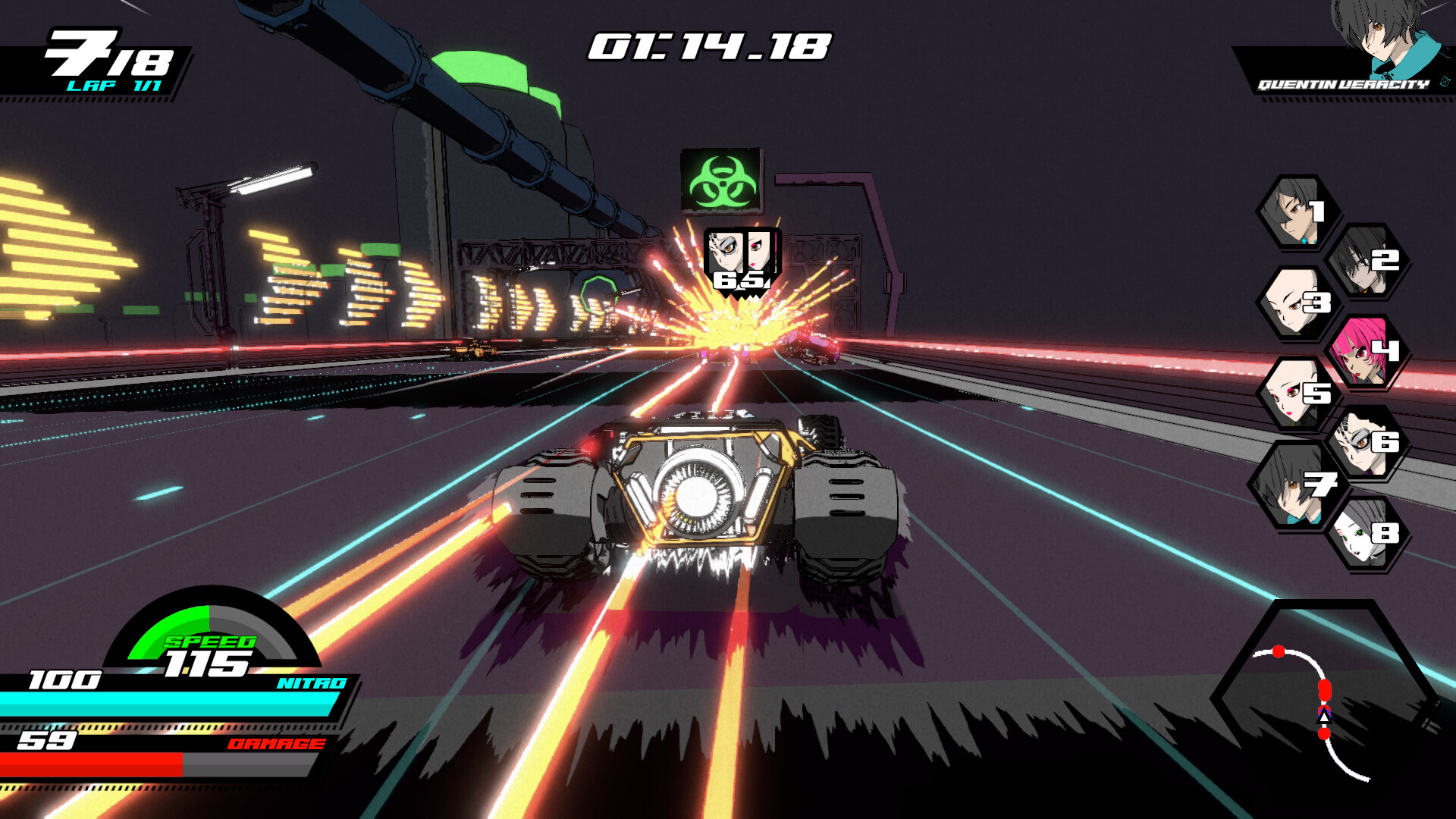
Presentation is the identity and the argument. Cel-shaded, anime-forward, a Saturday morning that grew up and bought a stopwatch. Speed lines, headlight trails, sparks, colored boosts, a camera that will cut when a nitro decides to be a personality. The look is an acquired taste. The look is also why you can tell this city from the licensed product on the other shelf at a glance. Official copy calls it looks that kill, synth-heavy beats, neon-lit skylines, stylized visuals inspired by eighties arcades. The beats do the work. The engines can sound like a dentist who learned to race. I left the volume where an arcade usually loses me, and the city did not, until a machine opened its throat.
I should be clear about the other friction, because it is not a secret. The same night keeps happening. Wide layouts. Repeated trees. Buildings that remember each other too well. Abrupt camera cuts on nitro will steal the line you just invented. Effects will hide a lamp post if you let them. Performance is generally the adult in the room. The inputs listen. Full controller support is on the Steam sheet because it is used. After a night of holding the drift, the steering was not late. It was light. Light is not the same crime.
English is the Steam language with French, German, Spanish, Japanese, and both written Chinas riding along, which is how a wider audience gets in the door. I will not turn this into a localization seminar. The voice of the game is the city, and the city talks in pads, traffic, and the occasional panel that will not sit down.
The Steam sample around a game this quiet is always going to look like weather. Positive is the official report if you count every language, 13 of 16, and that split is fair. Players who wanted a heavier machine, a prettier frame through the effects, or a story that never hid a spike bounce off. Players who wanted a cel-shaded night with a garage and a bad idea about fights stay. I am in the second camp with caveats, which is the only honest place to stand.
Still Standing After the Lights Cool
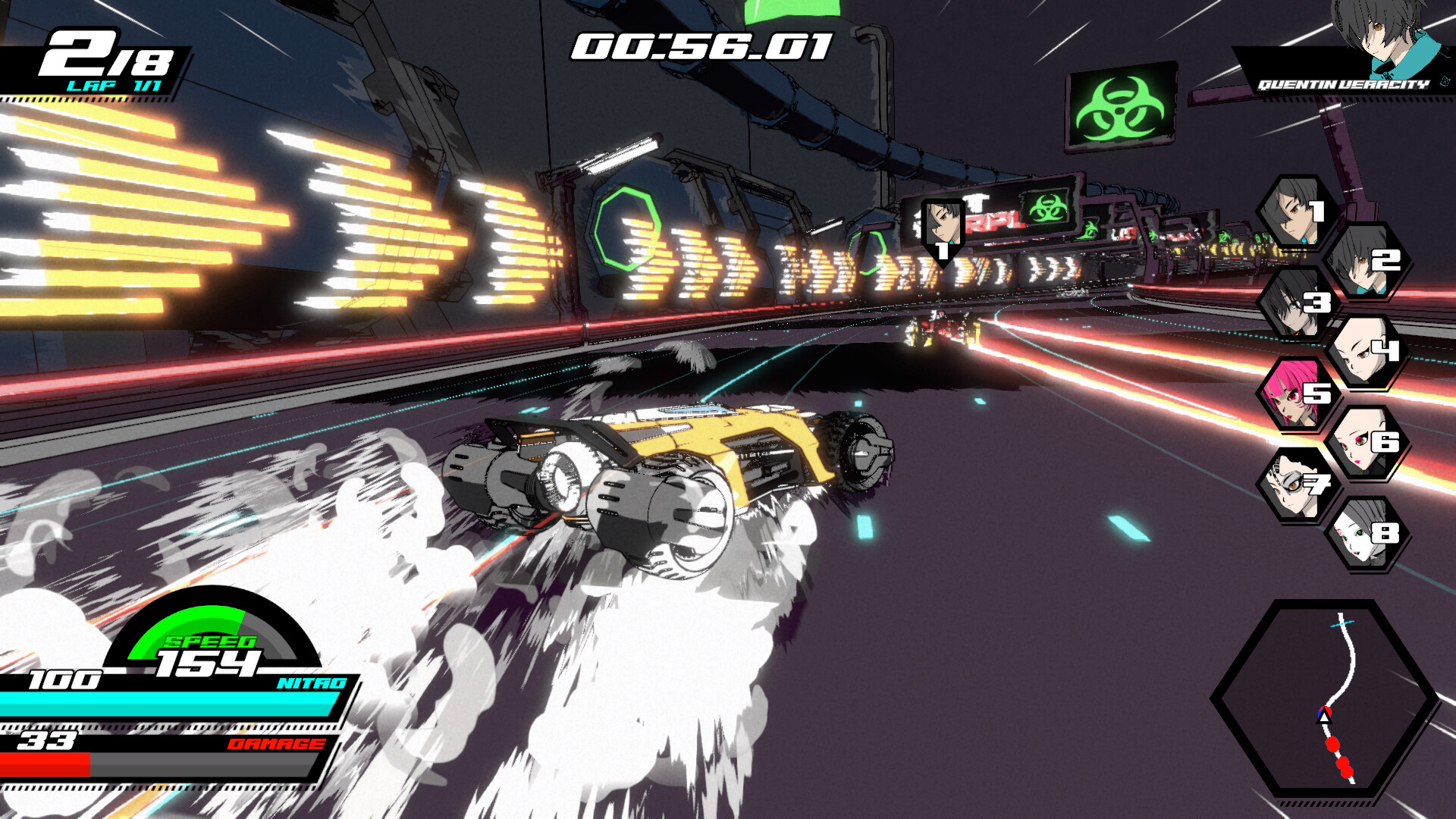
Neon Apex: Beyond the Limit is a rare mid-priced racer that understands its own joke and then has the nerve to make the joke a city. Repixel8 and Numskull Games built a night about speed, a garage about cards you earn, and a toybox that looks a little homemade and plays a lot more sincerely than that sentence suggests. The loop is the hook. The drift is the spine. The walk from a first card to a championship cup is the grin.
It is better as a career than as a scene. The event list stays the reason to recommend it. The neon stays the reason you keep quoting the skyline to people who did not ask. The handling is a dialect with a bounce. So is the grin when a bike takes a corner you used to apologize for. The field is still a rival with moods. The mode list is still a solo apartment with a couch. The fights are still a dessert you can skip. The story is still a panel that runs long. All of that is true, and all of that is already priced in at $24.99 on a launch that arrived quietly in May 2025.
I am scoring it 8, Great, because the identity is this clear and the limitations are the limitations of a focused arcade night, not an empty one. I would recommend it to anyone who likes a garage that has weight and a map that is allowed to be rude. Distinctive cel-shaded weather, a career that multiplies event types instead of addresses, a story that would rather be a panel than a cutscene, and a price that respects a long week are a lot of game for the ask. The highways repeat their manners. The manners are still useful.
The city is still out there, still hiring a night shift, still asking whether humanity owns the road. After a few cups you will understand why the job is not finished, and why you keep taking the boost anyway.
We prepared this review with a digital copy of Neon Apex: Beyond the Limit for the PS5 version provided by Pressengine.