Senua’s Saga: Hellblade II does not ask if you still remember the first boat. It assumes the voices are still in the room, then hands you a new shore and lets tenth-century Iceland finish the introduction.
Ninja Theory developed it. Xbox Game Studios publishes it. Xbox Series X|S and PC met the game on May 21, 2024. The official PlayStation 5 day is August 12, 2025, the same morning the Enhanced update arrived for everyone else. This review is dated to that public morning, because that is when the rest of the room is allowed to walk the shore. I played the PS5 version. The Standard Edition is $49.99. The Deluxe Edition is $69.99 and folds in Hellblade: Senua’s Sacrifice optimized for PlayStation 5 plus that game’s original soundtrack. Those are the official U.S. list prices. None of them quiet the Furies.
The store styling likes to shuffle the name. Steam currently files it as Hellblade II: Senua’s Saga. The official site and the Xbox line keep Senua’s Saga: Hellblade II. The product is the same either way. You play Senua, a Celtic warrior who experiences psychosis, on a brutal journey of survival through the myth and torment of Viking Iceland. She is intent on saving those who have fallen victim to the horrors of tyranny. She faces a battle of overcoming the darkness within and without. That is the official sentence, and for once the official sentence is the game.
Landfall Is Not a Welcome
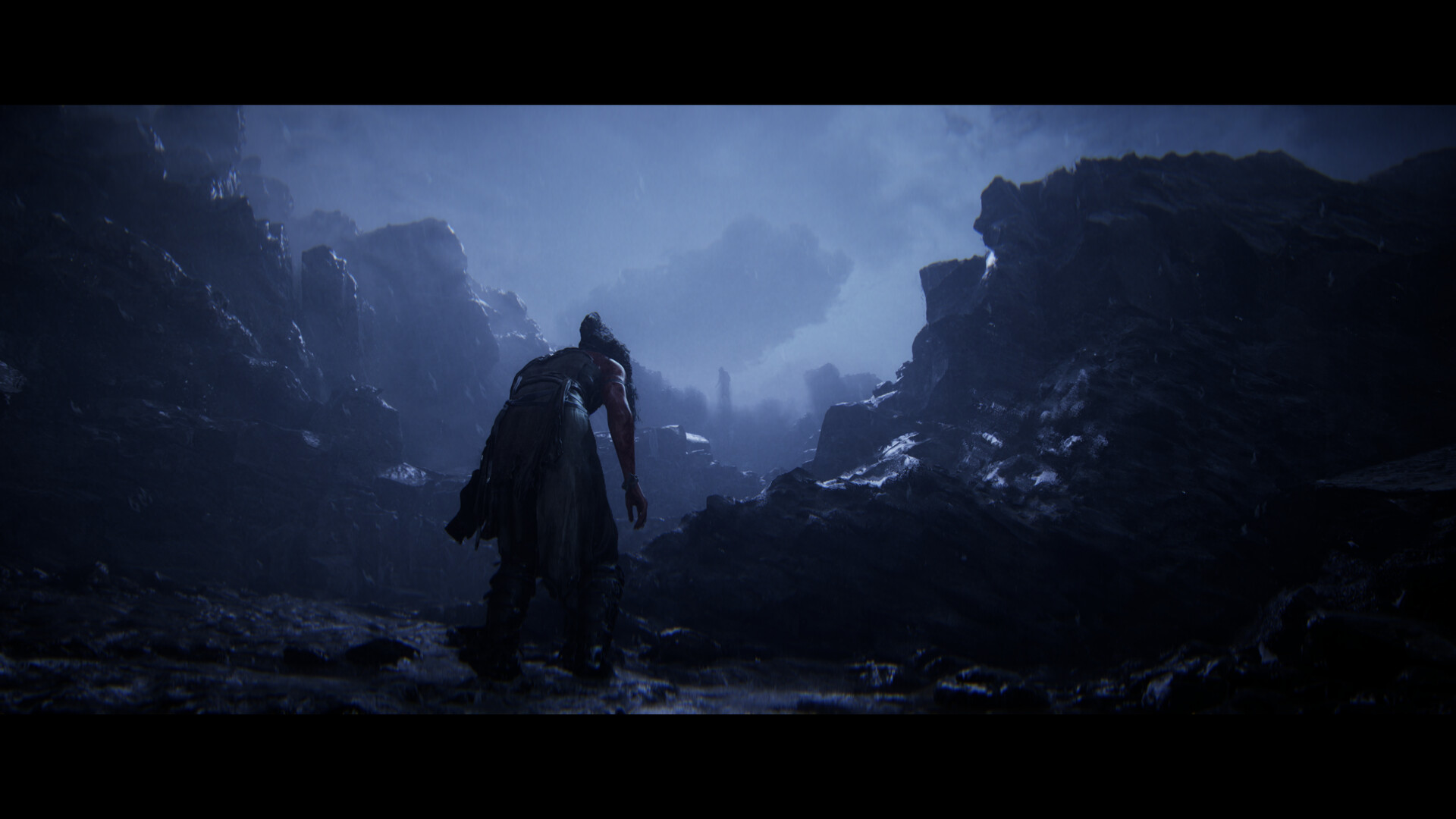
Hellblade II refuses to let the sequel be a museum of the first descent. Senua’s Sacrifice sent her into Helheim for one man. This one puts her on a slave ship, then on volcanic rock, then in the company of people who would like her to be useful. The voices come with her. They always do. They argue about the surf, the captors, the next step, and whether she is a person or a weapon. The game still treats psychosis as a perspective, not a costume. You hear what she hears. You see what she sees. The Furies are not a difficulty slider. They are the weather inside the helmet.
Chapter 1 is Reykjanesta. Landfall. A shore of slaves. A capsized ship. A slavemaster who will not stay a simple villain. I will not walk you through the briefing. The opening is wet, loud, and already moral. Senua is not collecting a MacGuffin. She is looking at a country that turns people into cargo and deciding that the darkness outside the skull is also her problem.
Melina Juergens is still Senua. That is not a recast and it is not a cameo. The motion capture, the face, the way she holds a sword like it is both a tool and a dare, are the reason the cinematic pitch does not collapse into a tech reel. The Furies, performed as a chorus that never quite agrees with itself, remain the most intimate combat the game has. They will congratulate you. They will lie. They will tell you to run when standing still is the only honest option. I have ignored them and been right. I have obeyed them and been played. Both outcomes are the design.
The sequel’s argument is broader than grief. Tyranny has a settlement. Slavery has a logistics plan. Giants have names and territories. Senua is still the woman who talks to the dead and the living at the same time. The island would like her to pick a side that is not only inside her head. That is a braver brief than a second trip to Hel.
The Sword Speaks in Short Sentences
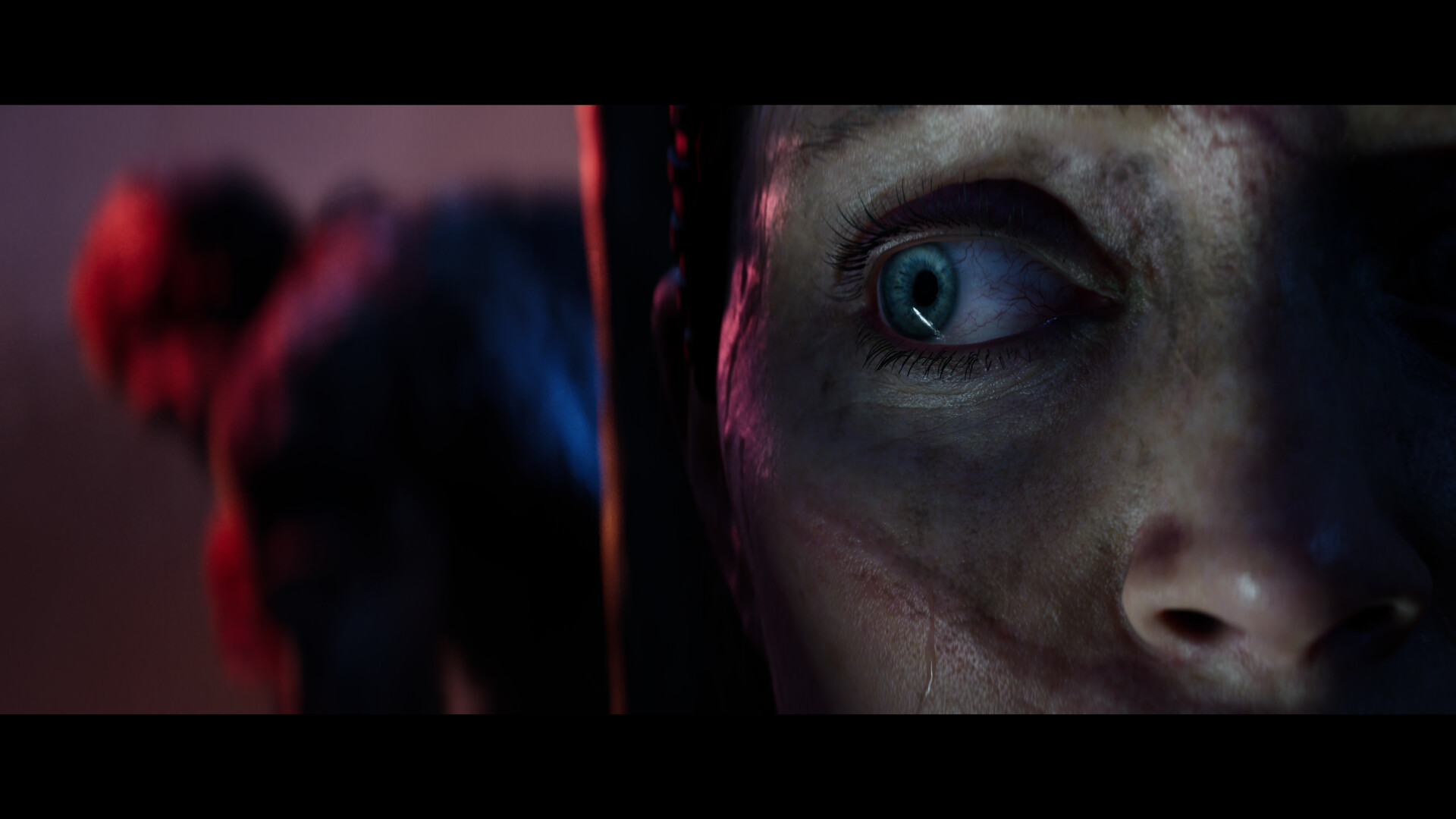
Official copy says every fight tells a story. In practice the vocabulary is small and the punctuation is heavy. Quick attack. Heavy attack. Block. Dodge. Focus. That is the whole religion. Focus slows the room and spends a meter you fill by doing the work: landing hits, turning a block into a chance, staying in a conversation that wants you on the ground. There is no skill tree pretending this is a different game. There is no shop. Senua already knows how to kill a person. The sequel wants you to feel the weight of that knowledge, not the homework of unlocking it.
The camera stands close enough that a Northman with an axe becomes architecture. Draugar bring fire and the kind of lunge that makes dodge feel like a personality. Finishers are ugly on purpose. Enemies react like meat, which is the official description with the manners taken off. I have won a duel because I waited. I have lost a group because I treated three men like one man with extra arms. The game does not scold. It just resumes being Hellblade.
The limitation is the same as the identity. Once you can read a swing, the next camp is another sentence in the same dialect. The roster is not a zoo. Northmen, draugar, the occasional larger insult, and the giants who are more encounter than opponent. Illtauga occupies the middle of the journey like a weather system that learned to walk. Sjavarrisi is the sea’s opinion. These are spectacles you survive more than puzzles you solve. I grinned at the first clean Focus window in a messy room. I also noticed, by the later chapters, that the messy room had started to look familiar.
Hellblade II is at its best when a fight is a scene. A settlement that goes wrong. A ritual that does not want an audience. A companion standing too close to a blade. It is thinner when a corridor needs a reason to exist and the reason is three more men. This one dresses the same problem in daylight and better metal, which is prettier and, some nights, ruder, because you can see how little of the toolkit changed.
I will not invent a combo list. There is not one hiding behind a pause menu. The pleasure is timing, nerve, and the moment Focus turns a bad position into a short, vicious paragraph. If you came for a campaign of loadouts, you came to the wrong island. If you came to feel a sword land, the island is available.
Hiddenfolk Ask You to Look Twice
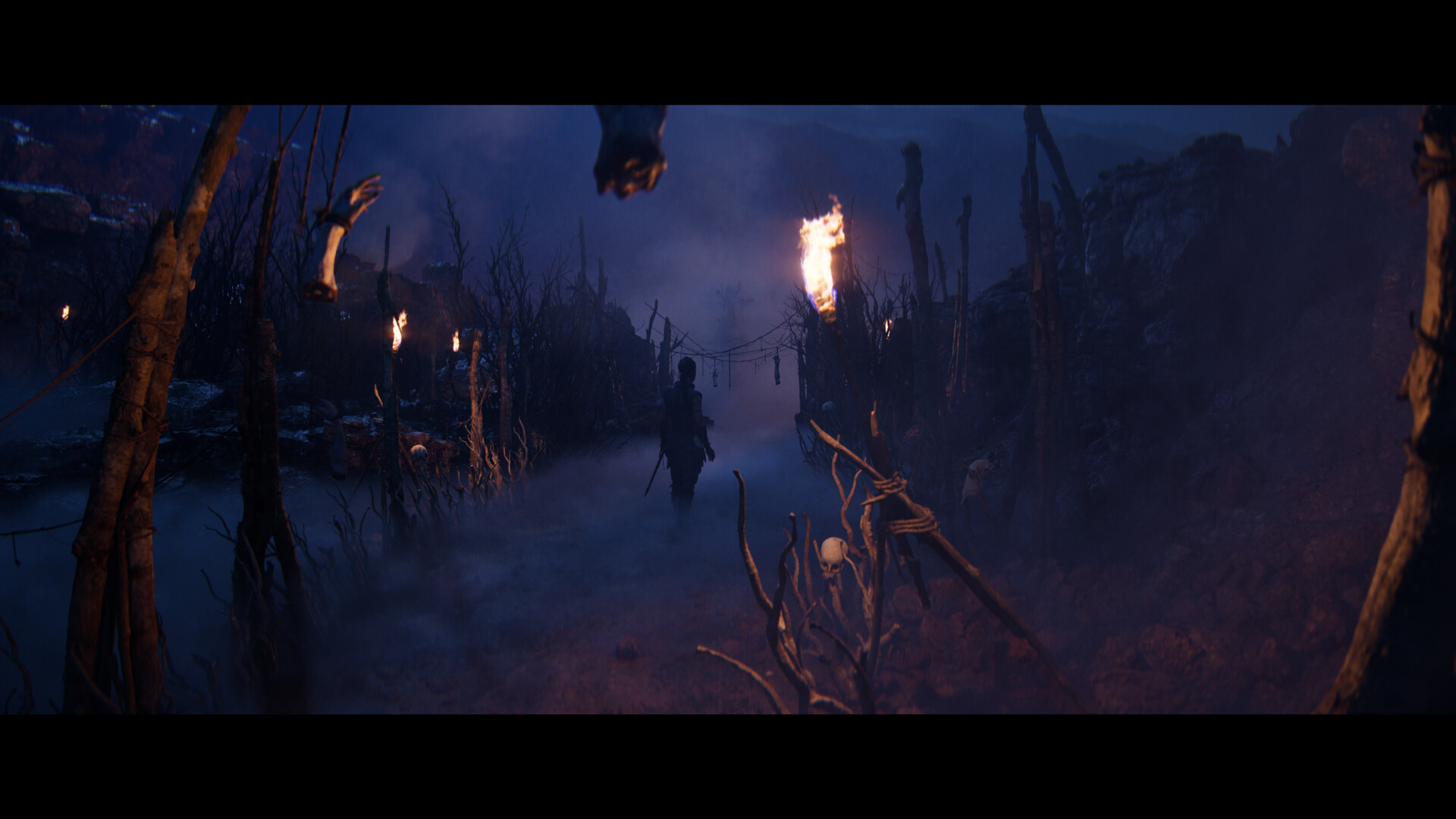
Focus is not only a combat meter. It is how Senua reads a country that refuses to stay literal. Hidden Faces sit in rock and tree the way a person sits in a crowd: obvious once you have been told they exist, invisible if you are jogging. Lorestangir, carved stones with someone else’s story, reward the walkers who still look up. Neither collectible is a second campaign. They are the game admitting the path is a path and then leaving a few windows on it.
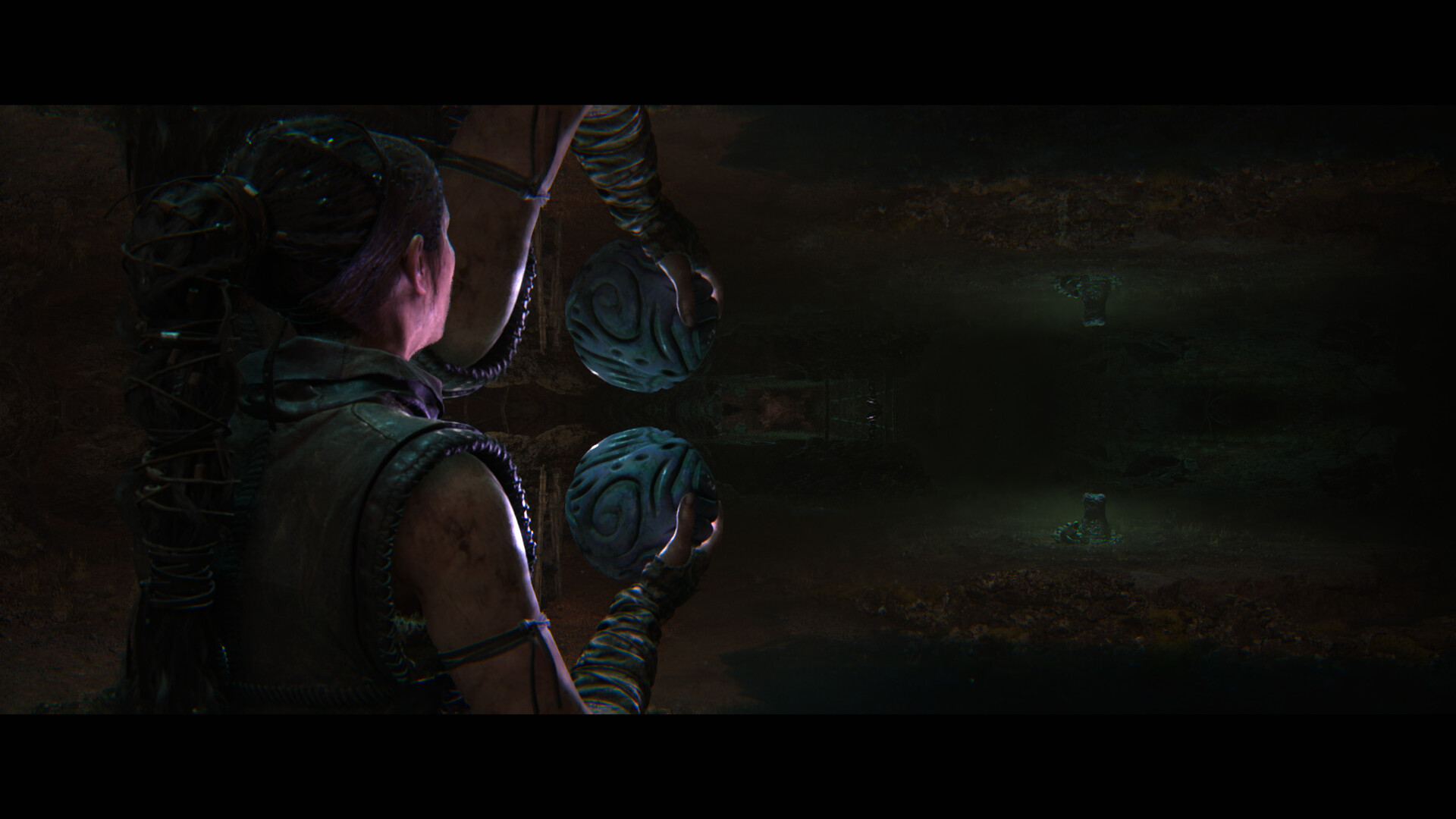
The Hiddenfolk, the huldufolk of the island’s older religion, occupy the middle chapters the way a good puzzle should: they change the job. Raudholar sends you to find them. Huldufolk drops you into their caves and asks you to think in orbs, gates, and pieces of landscape that flip when you decide they are not finished. The best of these rooms make you feel clever without making you feel like you opened a walkthrough. The lesser ones are a corridor with extra manners. I stood in a lake that was also a machine and enjoyed being a tourist. I also solved a gate by walking in a circle I had already walked, which is a polite way of saying the Hiddenfolk are not always as wise as their reputation.
Perspective work is still the studio’s handwriting. Stand in the right place. Line up a shape. Watch the world agree. The first game made a religion of that. The sequel uses it more sparingly, then spends the savings on caves that want to be films. I do not miss a tree full of runes on every ridge. I do miss the feeling that the island was a riddle I could fail in public. Hellblade II would rather you keep moving. The path is generous. The path is also the product.
Chapter select exists once you have been through a place, which is how you go back for a face you walked past while the voices were being loud. I used it. The game did not pretend I was a completionist. It just let me be a person who likes a carved stone.
The Company She Keeps
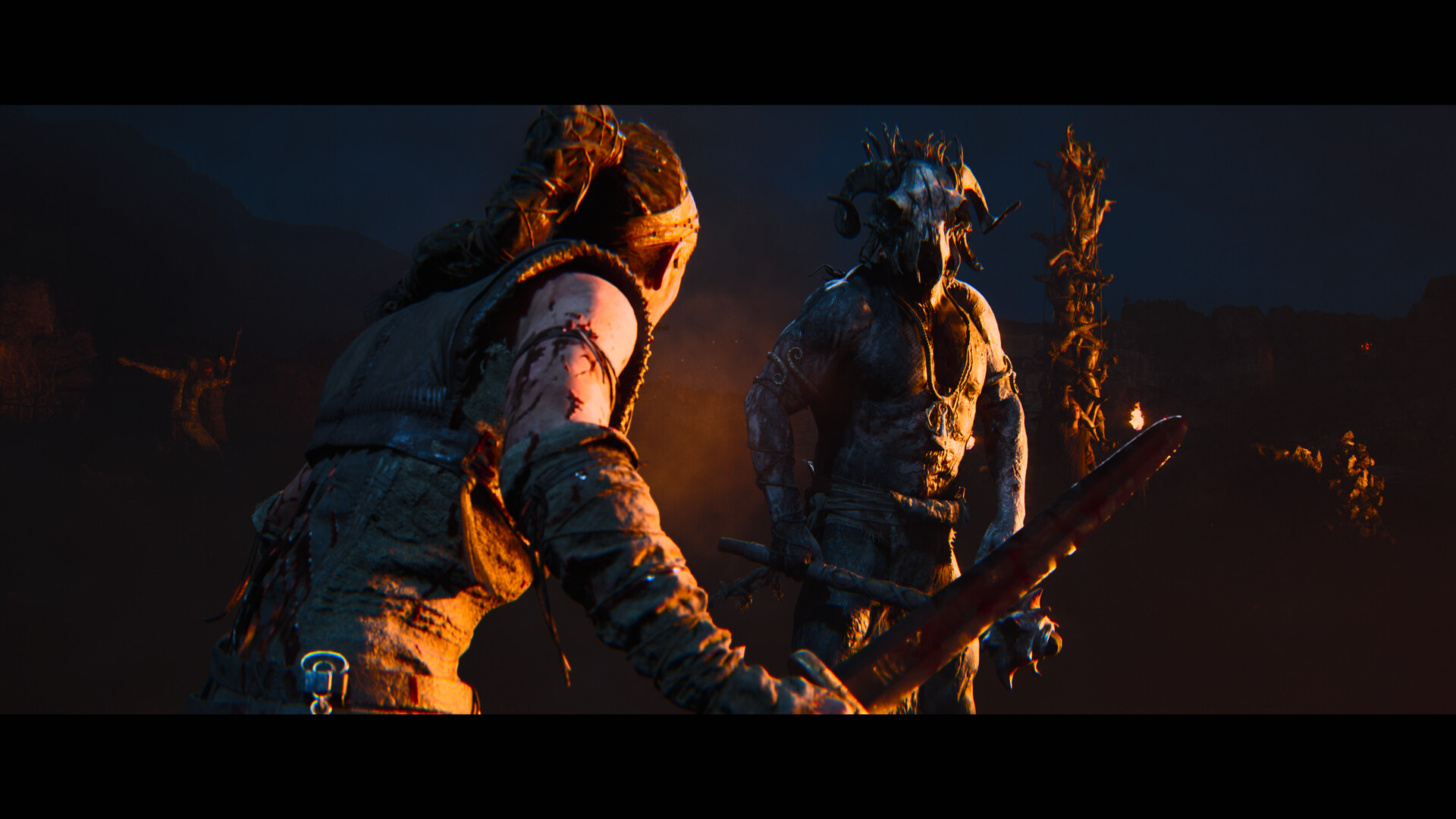
The first Hellblade was a two-hander: Senua and the dead. This one lets other living people stay in the shot. Thorgestr begins as a problem with a title and becomes a walk you did not schedule. Fargrimr is the stranger who knows the island’s older rules and is willing to say them out loud. Astridr has a settlement, a history, and the kind of competence that makes a myth look like a Tuesday. The Godi is tyranny with a pulpit. I will not introduce you to everyone by speech. The writing is earnest. It is better when a hillside finishes the sentence.
What matters is the turn. Senua is still unwell, still hearing the chorus, still capable of a kindness that looks like violence from the wrong angle. The plot asks her to care about people who are not Dillion and not a metaphor. Slavery is not tasteful here. It is a system with boats, camps, and men who have decided other people are inventory. Giants are the land’s way of agreeing that the system has gone too far, or of not caring, depending on the giant. The saga in the title is not decoration. It is a claim that this story has a country in it, not only a skull.
Companions in a linear cinematic game have a hard job. They cannot wander off and start a side quest. They walk where the camera walks. That can make a conversation feel like a cutscene that learned to use a stick. Hellblade II mostly gets away with it because the performances hold the close-ups and because Senua’s voices keep interrupting, which is a cheap trick that still works. I have liked Thorgestr more than I planned to. I have wanted Astridr to have a game of her own, then remembered that this studio writes one protagonist at a time and writes her completely.
The last chapters tighten around a choice the marketing already named: end the tyranny. Borgarvirki is a fortress and a thesis. I will not spoil the thesis. I will say the game is more interested in what Senua owes the living than in whether she can collect another god’s head. That interest is why the sequel exists. It is also why some nights the walk between speeches feels like a hallway with better fog.
The Island Is the Other Lead
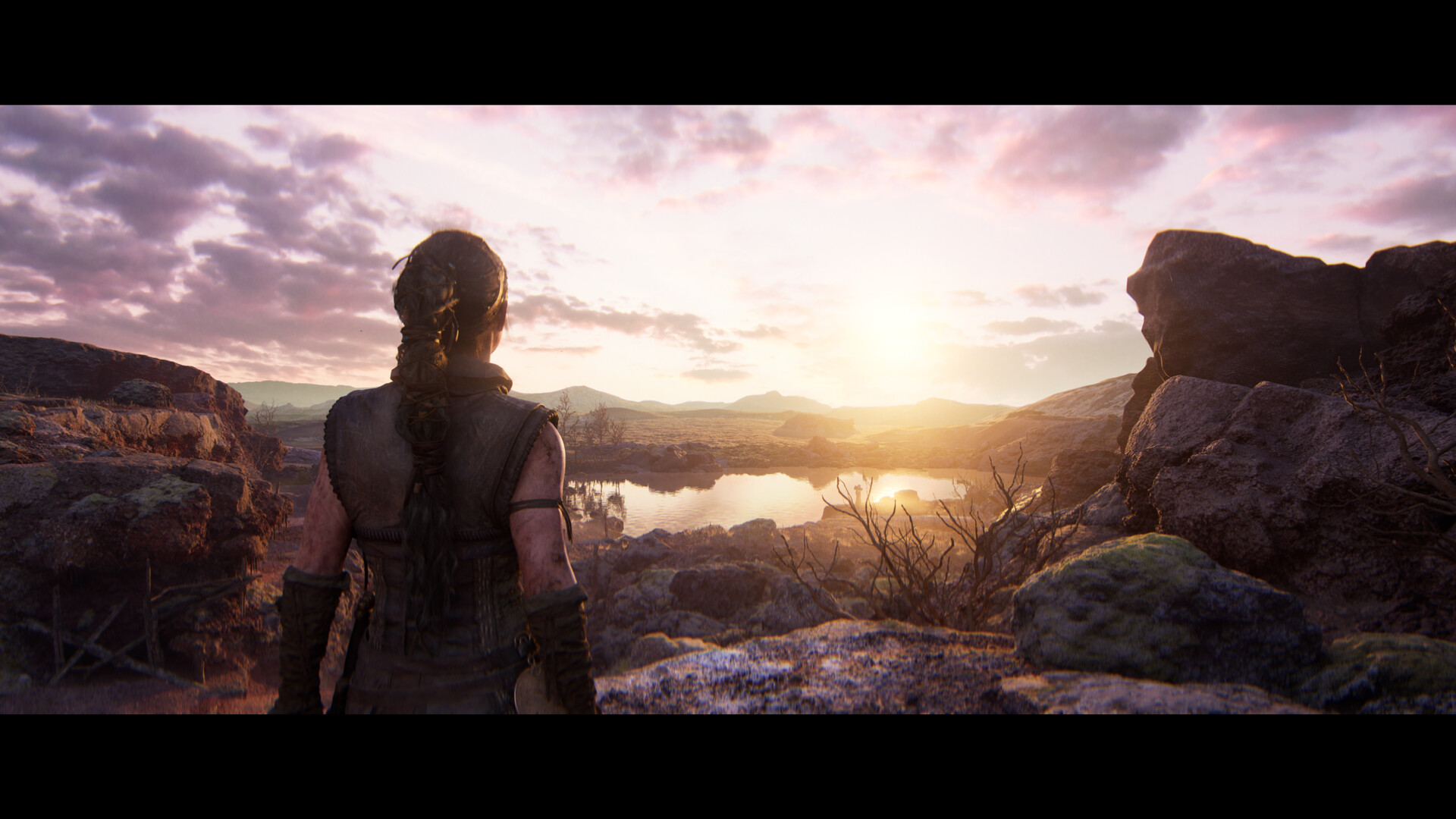
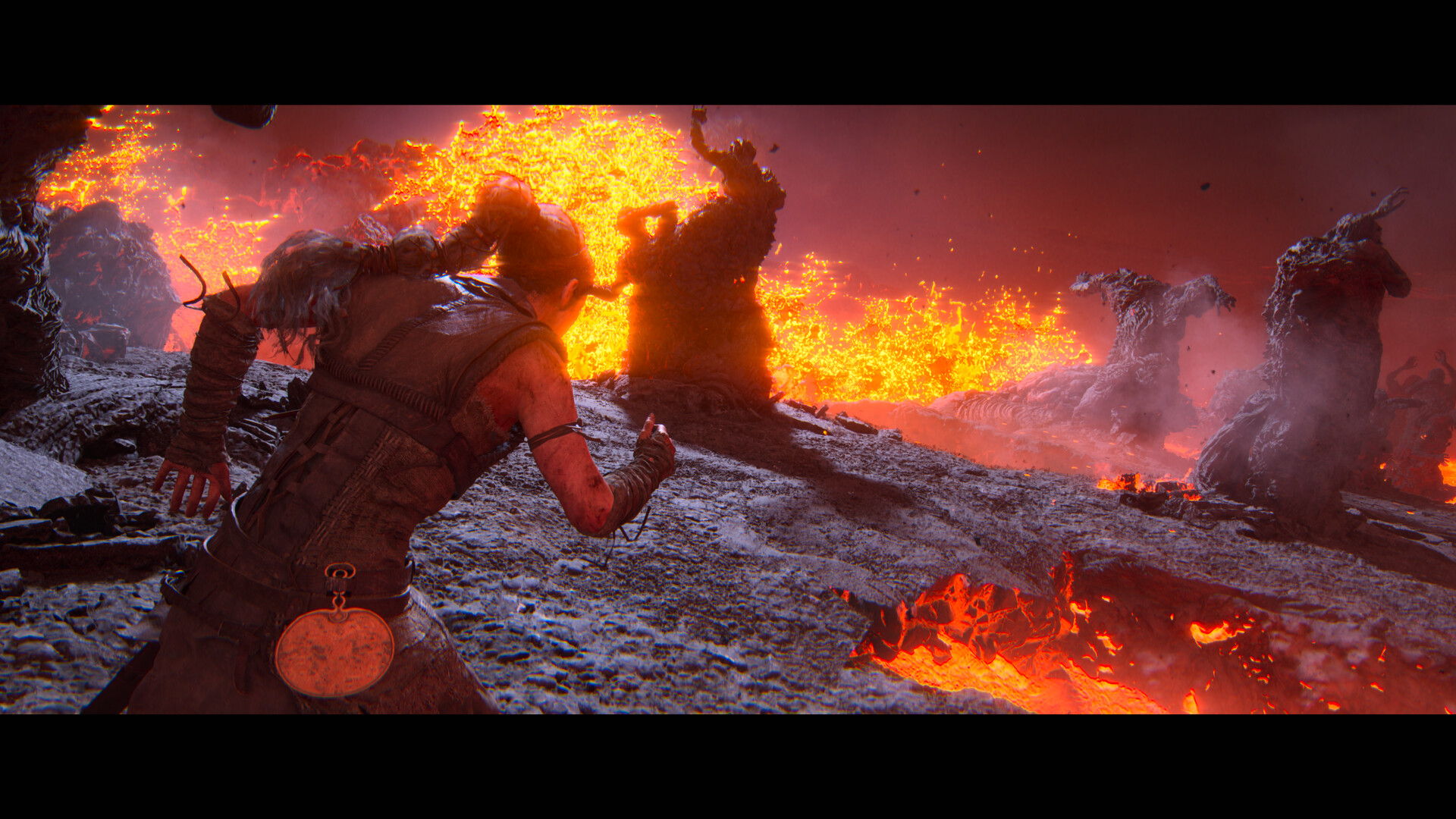
Ninja Theory rebuilt tenth-century Iceland from real locations and then let the weather act. Volcanic red. Black sand. Moss that looks expensive. Caves that swallow a torch and then hand it back as a trick of the Hiddenfolk. Characters look wet because the team spent the money on wet. Hair behaves. Skin behaves. Blood behaves in a way the ratings already filed under Mature. I will not invent a frame rate. What I saw on a living-room set was a country that held together while Senua made a mess of it, with the occasional hitch when too many bodies and too much fire decided to have an opinion at once.
The sound is the other half of the immersion the store promised. Binaural work puts the Furies in your ears as if they paid rent. Steel has weight. Wind has a job. A settlement at night sounds like a place that remembers being louder. Melina Juergens won the performance conversation for a reason, and the chorus around her is not wallpaper. Official notes talk about collaborators in depicting Senua’s experience of psychosis. You can feel that collaboration in the refusal to turn a voice into a jump scare. The game is still violent. It is not cheap about the mind.
Photo Mode is the toy a game this pretty owes the room. The Enhanced toolset adds settings and a Motion tab for cinematic capture, which is a polite way of saying the studio knows you will stop walking to stare. I stopped walking. I stared. I took a picture of a ridge that did not need me. That is not a mechanic. It is an admission.
Awards followed the 2024 launch the way awards follow a face and a mix. I do not score a statue. I score whether the craft is in the install. It is. The island is the other lead. Senua is the first. The sword is a guest who stays for dinner and sometimes does the dishes.
The Walk Grows a Second Door
August 12 is not only a new store tile. It is the Enhanced version, and on PlayStation 5 that is the whole product, not a patch you wait for. Performance Mode is the official offer of 60 frames during combat and fast-moving work. Quality Mode still exists for people who want the paint. I bounced between both. A duel prefers the smoother one. A wide shot of the red hills prefers the prettier one. I will not pretend I ran a lab.
The Dark Rot returns from Senua’s Sacrifice as an optional dare you unlock after the campaign. Fail, and the rot grows. Let it reach Senua’s head and the quest is over and the progress is gone. Official copy asks if you are up to the challenge. I opened the door, died like a civilian, and remembered that the first game used this threat as a reputation. It is not a new campaign. It is the old campaign with a worse memory. That is enough for a second night if the first night mattered.
Developer Commentary is the quieter addition: over four hours of craft talk from the ensemble, the psychosis collaborators, and the people who built the island. It unlocks after you finish. I sampled it the way you sample a director who is finally allowed to admit the cave was expensive. I will not invent a clock for how long I stayed. I stayed long enough to hear that the seriousness was not a press release.
Deluxe is a different conversation. For $20 more than Standard you get the first Hellblade, optimized for this generation, and that game’s soundtrack. I do not score a crate I was not handed. If you are new to Senua on PlayStation and you want the descent before the saga, the official $69.99 exists. If you already own Senua’s Sacrifice on PlayStation 4, the upgrade to the PlayStation 5 version is free, which is the rare honest sequel handshake. Day-one Game Pass is an Xbox and PC fact. PlayStation is a purchase. I am reviewing the purchase.
Final Thoughts
Senua’s Saga: Hellblade II is the sequel that decided a skull was not a big enough country. Ninja Theory brought the voices, the close camera, and a Celtic warrior who still experiences the world as a contest between what is there and what is speaking. Xbox Game Studios published a $49.99 Standard Edition that is the whole meal: the six-chapter walk from Reykjanesta to Borgarvirki, the sword, the Hiddenfolk, the giants, the companions, and an Enhanced door that adds Dark Rot, commentary, and a Photo Mode that knows why you bought a country this pretty. Deluxe is the first game in a nicer box. It is not in the install I am grading.
The craft is the reason the wait was worth a second title. Combat is a short language spoken at full volume. Focus is both a knife and a way of seeing. Iceland is not a backdrop. It is a co-star that happens to be a place. The story is tyranny, slavery, and a woman who agrees to care about people who can still leave the room. That is enough spine for a cinematic action game. It is not a systems sandbox. I did not need a sandbox. I needed the island to mean something besides a loading screen with moss.
The limitations belong to a confident, narrow object, not an empty one. The sword does not grow. The camps start to rhyme. Puzzles are spice, and spice can start tasting like a transition if you came only for the riddle. Companions walk the camera’s route because there is no other route. None of that deletes the nights that work. A clean Focus in a bad room is still one of the best things you can do with a Thursday. A ridge that does not need you is still one of the best things you can do with a quiet house.
I am scoring it 8.0, Great, because the identity is this clear and the craft is this complete, and because the systems are this content to stay in service of a face. Bring headphones and the humility to treat a linear walk as the object. Distinctive weather, a chorus that will not sit down, and a country rebuilt from real rock are a lot of product.
The voices are still talking. The slavers are still calling people inventory. The Hiddenfolk still have a gate if you are willing to look twice. After a few fights you will understand why the sword never needed a skill tree. After a few hills you will understand why the poster never took the island off. Both instincts are this game. Both are why I kept the install.
Score: 8.0. The voices already know the shore. The island is still available to be walked, one honest room at a time.
We prepared this review with a digital copy of Senua’s Saga: Hellblade II for the PS5 version provided by Assembly Inc.