
Avowed does not ask if you still remember Eora. It assumes the gods already filed you, then hands you a plague, a coastline that grows in the wrong direction, and a voice that talks as if you left something here on a previous life.
Obsidian Entertainment made it. Xbox Game Studios publishes it. The public day is February 18, 2025, across Xbox Series X|S, the Xbox app for Windows, Battle.net, Steam, and cloud. Premium owners unlocked it up to five days early. This review is dated to that public morning. I played the Steam version on PC. The Standard Edition is $49.99. A Premium Edition is listed at $59.99. This copy was not confirmed as Premium, so I am scoring the game you can buy for fifty dollars. Those are the official U.S. list prices. None of them quiet a god.
You are an envoy of Aedyr, sent across the water to investigate a rumor that has become a landscape. The Living Lands is an island that was supposed to be a frontier and became a patient. Settlers call the sickness the Dreamscourge. It gets into souls. It grows through bark and bone. It turns a neighbor into a sermon. Official copy says the land recognizes you and pulls you toward something greater. You arrive with a letter. The island arrives with a face.
An Envoy With Bark and a Briefcase
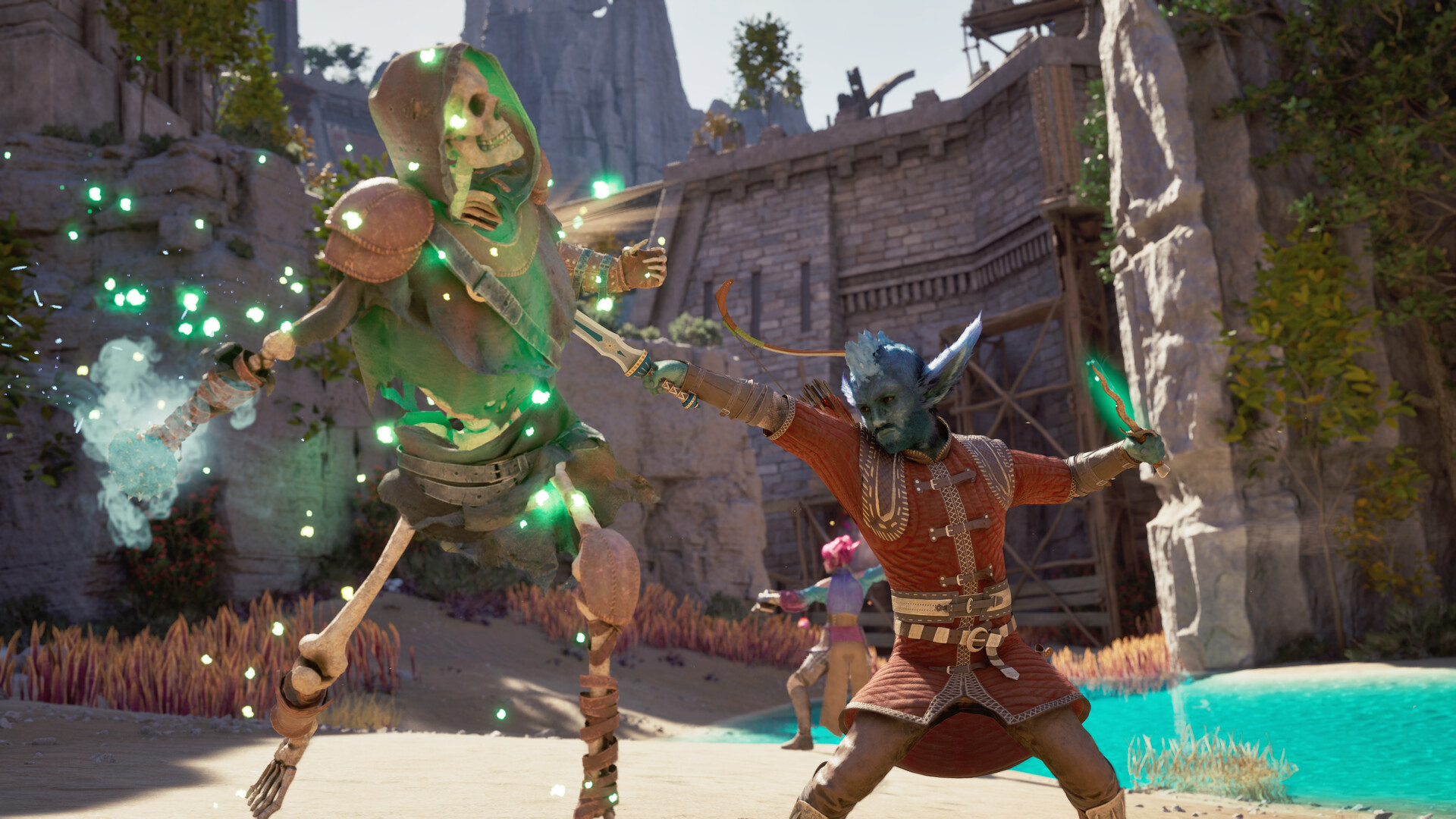
The first useful thing Avowed does is refuse to let you be a tourist in your own skin. Before Fort Northreach finishes teaching you how a sword and a spell can share a pair of hands, you pick a life Aedyr decided was useful. War Hero. Arcane Scholar. Court Augur. Noble Scion. Vanguard Scout. Each background is a door, not a costume. A conversation grows an extra branch. A soldier believes a rank you no longer hold. I took War Hero because I like an envoy who already owes the office a body count, then talked like a scholar anyway. The game noticed. It filed the contradiction under character.
You are Godlike. That is not a hat. It is a birthmark the island can read. Bark, coral, the suggestion of a shrine growing out of a person. People in Paradis will bless you, tax you, or try to burn the blessing off, depending on the street. The creator lets you decide how loud the mark is. It does not let you decide whether the mark is the plot.
Attributes sit under that dare. Might, Constitution, Dexterity, Perception, Intellect, Resolve. The usual Eoran toolkit, spoken in first person. Skills then split into trees you can dabble across: Fighter, Ranger, Wizard, and a Godlike set that does not wait for a level-up so much as a ruin. Fort Northreach is the pamphlet for the rest of the island. A fortress with a problem, a boat with a destination, a first companion who would like you to stop dying. I will not invent a clock. The fort is long enough to teach you that almost every ledge you can see has a second job, then short enough that you still want the city across the water.
That is the Obsidian imprint, quieter here than it was in the last colony joke and louder than a lot of first-person fantasy has earned. The room expects the climb, the lock, the speech check, and the stupid idea with a grimoire. I flipped a switch I did not understand and created a blight problem I then had to hire myself to solve. That is the adventure doing its actual work.
Four Regions and a Plague That Grows Faces
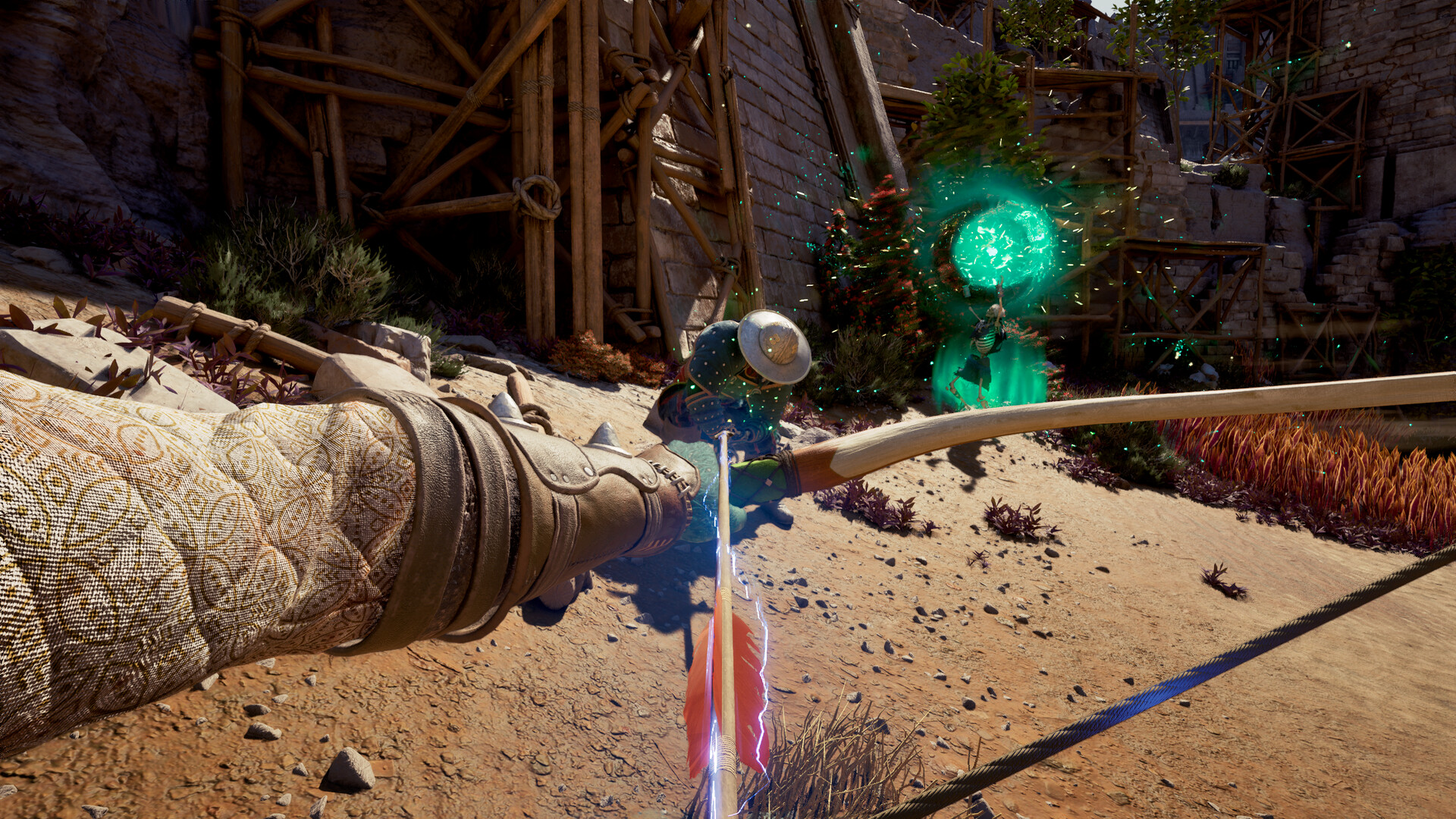
The Living Lands is not one open world with a loading screen allergy. It is four long maps and a last argument, each with its own weather and its own idea of what a settlement owes you. Dawnshore is the handshake: Paradis rising off a bay, cliffs you can actually climb, beaches that hide caves the quest marker was too proud to mention. Emerald Stair goes green and strange, a country of farms and animancers where Fior mes Ivèrno argues about science the way other towns argue about rent. Shatterscarp is heat and sandstone and a city called Thirdborn that looks like it survived by refusing to be pretty. Galawain’s Tusks is the mountain that wants you to earn the next conversation. I will not walk you through the last door. The last door is the part you should hear from a god who is lying to you.
The Dreamscourge is the plot’s weather. It spreads. It gives every faction a sermon. Aedyr wants a colony that pays. The Steel Garrote wants a faith that obeys. Animancers want a sample. Hunters want the woods to make sense again. You can pick a side. You can refuse. Towns change tone. A street that sold hope will sell quarantine by the afternoon if the blight flipped. Official notes like to say your choices ripple across the Living Lands. In practice, you are still walking into a room with a sword, a speech check, and a companion who has opinions. The room just remembers the last time you were rude.
The factions have their own ground, their own followers, their own sound. You hear the plague before you see the next checkpoint. A hymn in a Godless ruin will tell you more about the island than a briefing from the emperor who sent you.
Exploration is the other half of that sentence. Official copy promises rugged cliffs, winding rivers, ancient elemental weapons, and fragments of God Shrine Totems that assemble into a build. That promise is the best thing the maps do. A ruin off the road is often better than the road. A unique with an element you had not planned for will rewrite a loadout you were proud of. A totem piece will make a skill you had been ignoring feel like a personality. I climbed for loot I did not need and came down with a reason to respec my hands.
It is also a tour. That is the criticism I will not bury under the score. Each region is handsome, vertical, and a little too willing to point at the next shrine. When the writing is specific, a clerk in Paradis, a farmer watching a crop grow teeth, it is the best version of this studio’s weird fiction. When the writing is a plague pamphlet, you can feel the quest marker under the moss.
An Axe in One Hand and a Grimoire in the Other
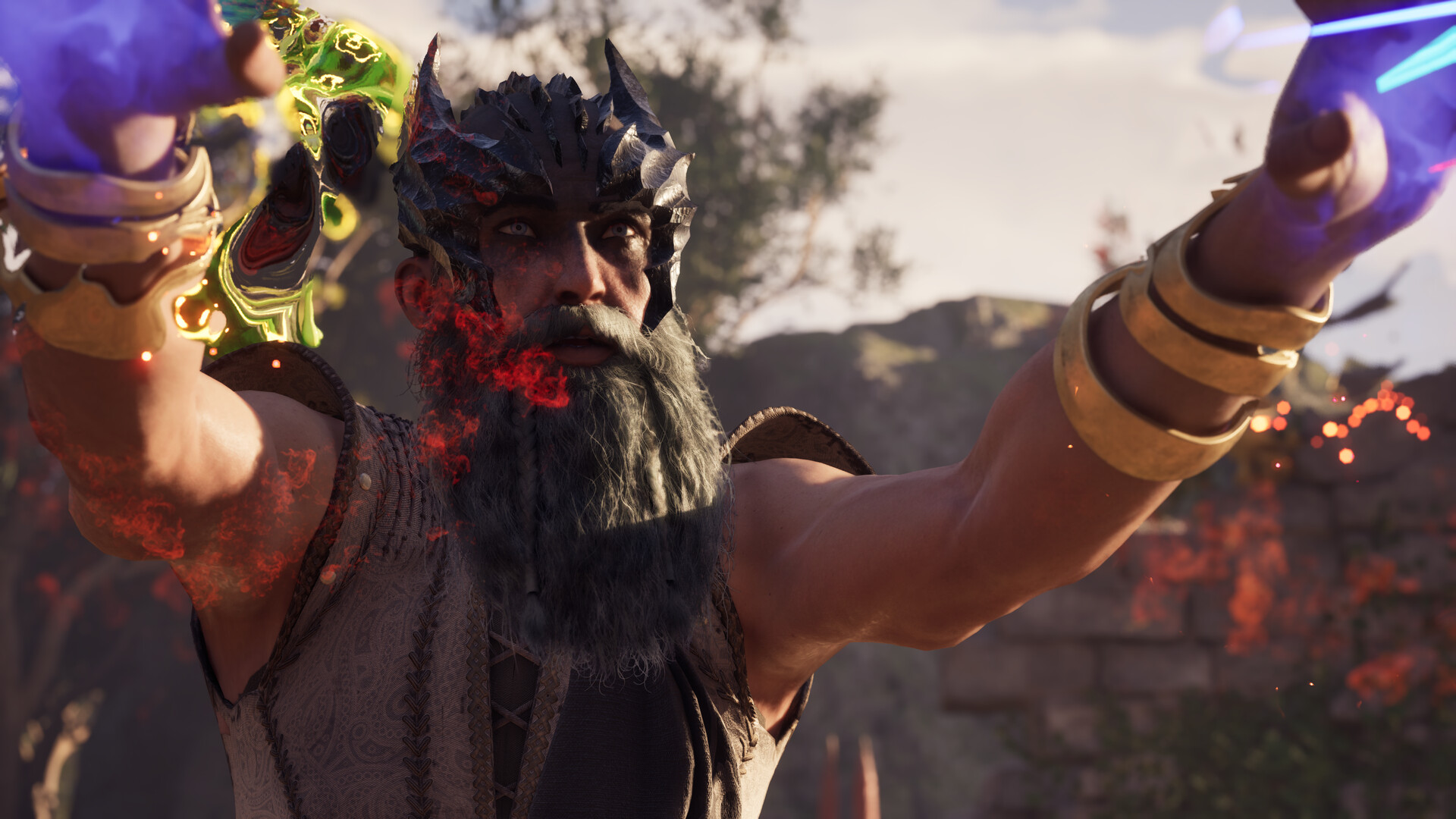
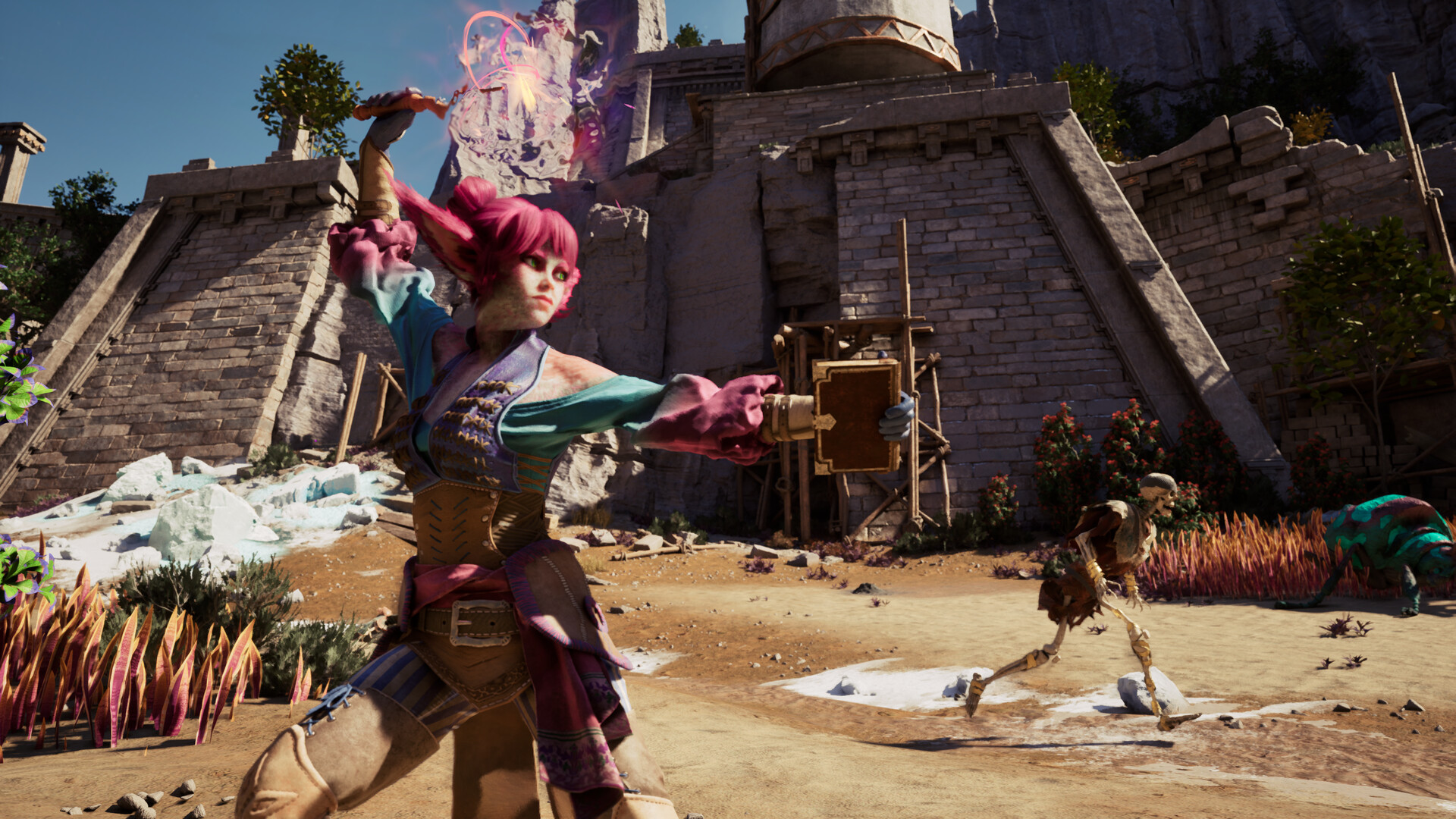
Combat is the part of a lot of first-person RPGs people politely step around. This one stopped asking for politeness. You carry two loadouts and swap them mid-sentence. Official copy offers the example I actually used: a stealthy sniper with dual pistols and a longbow, or a spell-slinging barbarian with an axe and a grimoire, or whatever combination your stubbornness invents. Swords, axes, spears, shields, wands, bows, guns that think they are still fantasy. Enchantments change the sentence. Elements do the arguing. Freeze a pack. Shatter it. Burn what is left. Or do not, and learn why a shield bash exists.
Grimoire Snap is the studio remembering that a book can be a weapon. Blood Magic is the studio remembering that a wizard should pay rent. I ran a right hand that froze and a left hand that hit, then swapped to a bow when the room got honest. Companions fill the gaps you refused to spend a point on. Kai holds a line. Marius pins a runner. Giatta keeps you from becoming a reload. Yatzli turns a crowd into a firework. The fight is better when you treat them as tools with feelings.
Stealth is a first-class citizen on paper and a useful citizen in practice. Tall grass is not wallpaper. A Godlike trick will drop you onto a back you were not invited to. Parkour is the other stealth. If you can see a ledge, you can probably ruin someone’s day from it. I did that on purpose. I also did it by accident, which the game treated as a valid playstyle.
What the shooting still is, even on a good night, is an RPG that learned to aim. It is not a dedicated action game that happens to have dialogue. Enemy variety is settlers, soldiers, xaurips, wildlife that did not read the pamphlet, and the blighted, who are the pamphlet. Difficulty can be adjusted. Saves can happen when you want them. I played it like a person who likes to talk first and reload second. The axe still had a job. The job was finishing the sentence the speech check started.
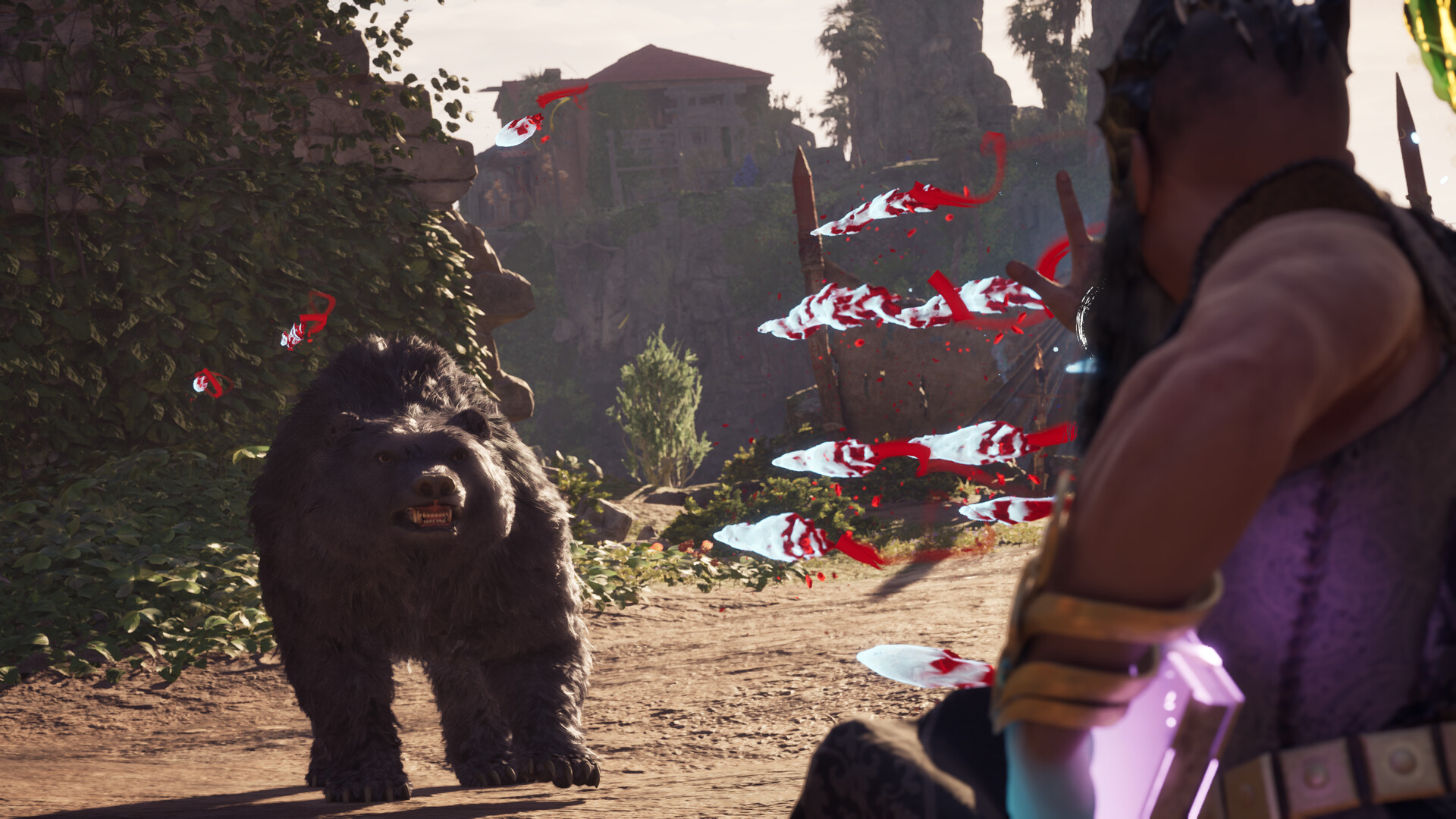
The loop can thin. After a few regions you will recognize the camp, the bear, the bandit, the blighted huddle, the unique in a chest at the top of a climb you have already congratulated yourself for. The toys stay interesting longer than the opposition does. That is not a death sentence. It is a reminder that the loadout is carrying more of the fantasy than the bestiary.
Four Opinions and a Camp That Listens
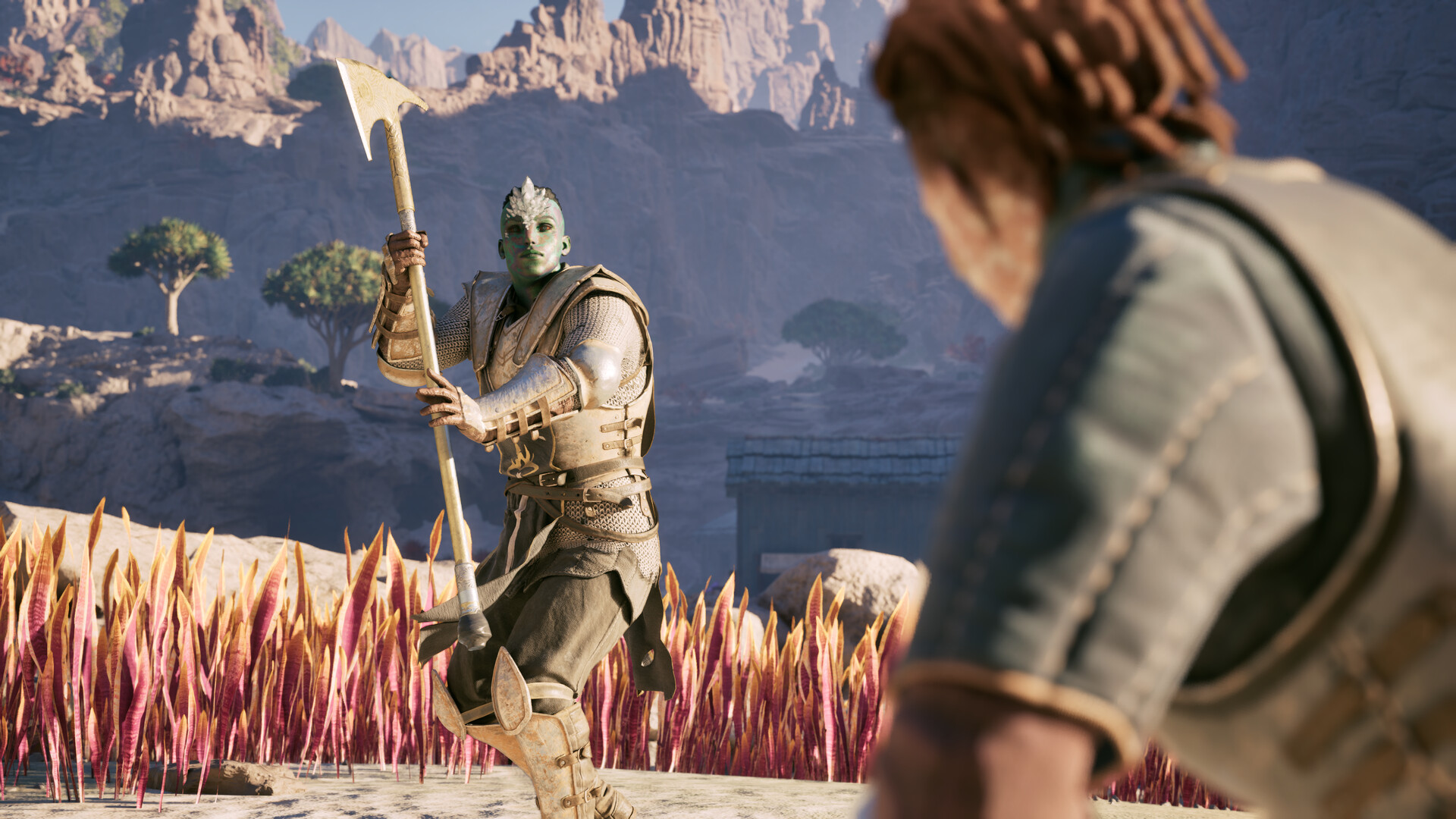
You travel with four companions. Officially they have personal stakes and abilities that change a fight. Unofficially they are the reason the camp has material. Kai is the steadfast protector, an Aumaua mercenary with a calm that sounds like a decision, good with a blade and a reason to stand in front of you. Marius is a lone-wolf hunter from the harder part of the island, a tracker with a wit that does not want to be your friend and then becomes one anyway. Giatta is an animancer who will risk a city to understand a plague, brilliant and not always kind about it. Yatzli is a Godless expert with explosive magic and a rebellious streak the gods did not approve. You take two. The other two wait at camp and have opinions about the two you took.
I took Kai and Marius into Dawnshore with a stealth gun and two arguments. Later I left Marius at the fire when I walked into Fior, then put Giatta in because I needed someone who understood why a machine that talks to souls looked like hope. The game lets you do that. It also lets the crew talk about it. One companion will ask you to spare a leader. Another will ask you to finish a ruin. How you steer them is supposed to shape them. Sometimes it does. Sometimes the camp is a loadout screen with banter.
They are not four novels. That is the other criticism I will not bury. Some arrive as a job and stay as a job. Some get a second act that is actually a person. Kai surprised me by becoming more than a shield. Yatzli is a lot of spark and not always enough argument. Marius can sound like a quest giver who learned to walk. Giatta is the one who made the plague feel like science instead of weather. Not every evening at camp felt like that. Banter is not the same as a companion who can end an island.
The Pillars crews are still the ghost in the room. This game does not owe you those faces. It owes you the sense that the person in your peripheral vision might quit, or worse, agree with you. When that lands, Avowed is the first-person fantasy it pitched. When it does not, you have a very well-voiced turret.
The Godlike Tree Is Buried in the Dirt
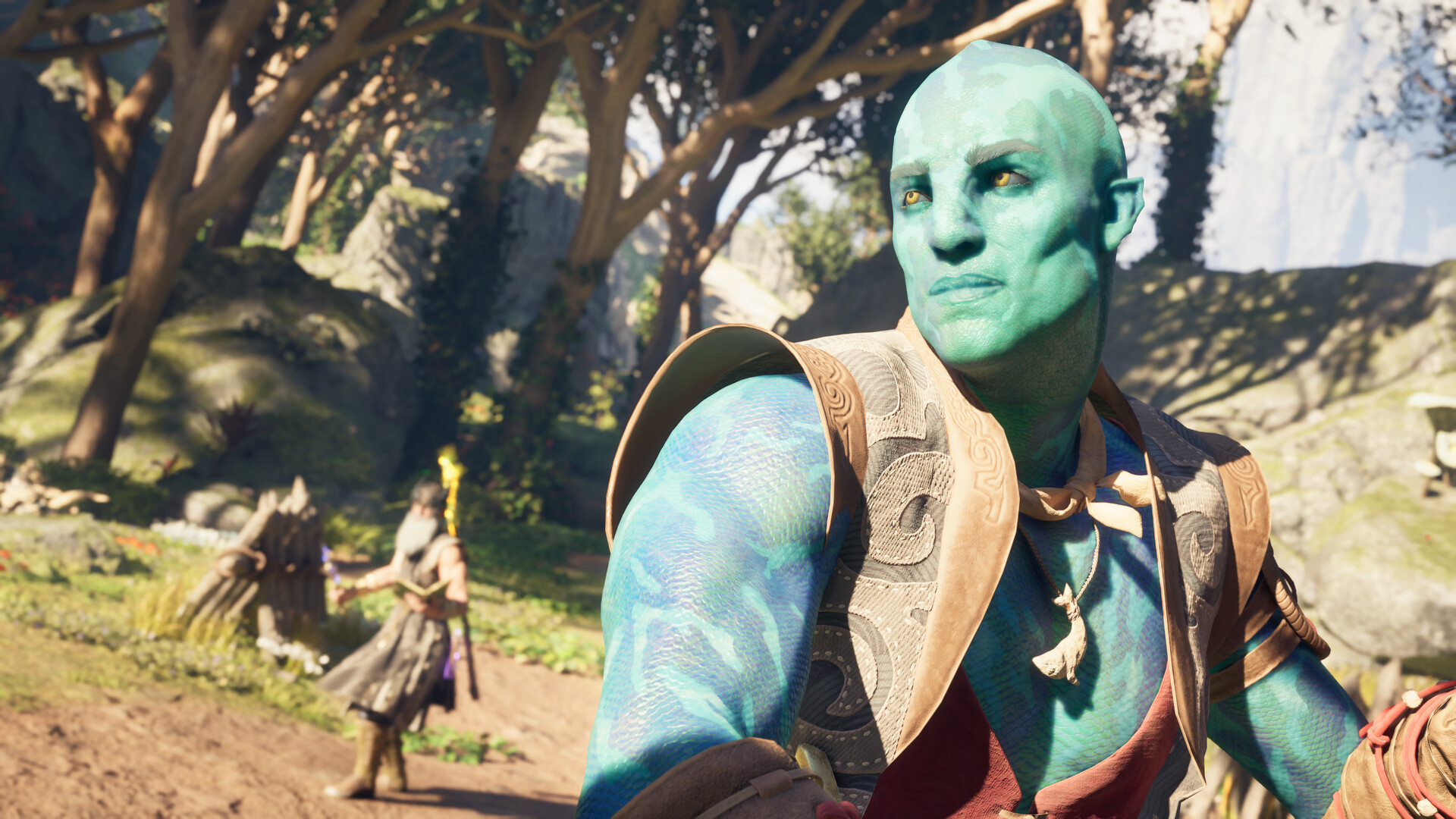
Perks in the Fighter, Ranger, and Wizard trees are the build you chose. The Godlike tree is the build the island chose back. You unlock pieces of it by walking into the story and by finding Ancient Memories the map does not underline hard enough. A remembrance is not a buff icon. It is a previous life leaving you a habit. I will not list the names like a catalog. I will say I crawled into a place I had no quest for and came out able to survive a conversation I was losing.
The Voice is the other half of that tree. A god talks. You answer. The answers change which miracles you get to keep. Official copy calls it destiny. In practice it is a dialogue tree with weather. I accepted one offer because I wanted the power. I refused another because I wanted to see if the island would sulk. It did not sulk. It remembered. That memory is the closest the plot comes to a personality. A plague is a problem. A god who keeps your receipts is a relationship.
Totems and uniques do the civilian work of the same idea. Collect the pieces of a god’s shrine and the camp becomes a workshop. Enchant a weapon and the element becomes a personality. I wore a piece of armor that made me feel like a shrine and a pair of guns that made me feel like a mistake. Both improved the afternoon.
None of this replaces the need to pick a lane. The game is generous about dabbling, then honest about the door you cannot open because you spent the point on charm. Essence is a budget. Stamina is a budget. The Voice is a budget you pay in plot.
Fifty Dollars Buys the Island
The store would like you to have a feeling about $59.99. I will give you a list instead. Standard is $49.99 and it is the island, the crew, the trees, the plague, the voice. Premium is listed at $59.99 and historically comes with early access and extras this copy was not confirmed to include. I do not score a skin pack I did not wear. I do not score an artbook I did not open. I do not score a soundtrack I did not receive. Day-one Game Pass is an Xbox and PC fact. Steam is a purchase. I am reviewing the purchase.
At $49.99, Standard is the honest object. You get four regions, a last argument, two loadouts, four companions, and a god who will not stay in the prologue. You do not get a promise of two later stories hiding behind the title screen.
Early access was real. The public day is the one that matters for a review. Cross-saves and Play Anywhere are an Xbox neighborhood the Steam copy does not owe you. I started fresh on Steam. Menus speak first-person RPG, not spreadsheet. A mouse is a native language. Full controller support is there if you want a pad.
I will not invent a frame rate. What I saw was an island that held together while I made a mess of it, with the occasional hitch when a street in Paradis had too many opinions. Official copy promises 4K on compatible machines, unlocked framerates, ray tracing on the canopy and the cavern torch, NVIDIA DLSS and Reflex on supported cards, and ultra-wide 21:9. On the machine I used, the Living Lands looks like a first-person game that spent the money on faces, fungus, and interiors that want you to read the plaques. It is prettier than a lot of grimdark and weirder than a travel ad. An ugly plague is just a quest. A beautiful plague is a place you might move to, which is the actual horror.
Final Thoughts
Avowed is the first-person fantasy Obsidian Entertainment has been threatening to make in Eora since the last time a god asked for a volunteer. Xbox Game Studios published an island that talks back, then had the nerve to let the talking change a loadout. The regions are four weathers with better lighting. The combat is the funniest systems work on the crate, a pair of hands that would like you to stop picking a class. The crew is four opinions, some of them people. The rooms still have ledges, books, blight, and a stupid idea that turns out to be a design. That is a lot of RPG for $49.99.
It is also a game that loves a chosen-one sentence a little more than the sentence can always pay back. When the writing is specific, a clerk, a hymn, a hunter who has decided you are a problem, it is the best version of this studio’s weird island. When the writing is a slogan, you can feel the pamphlet under the moss. Companions are not all novels. Combat is better than the story without becoming the only reason you bought a ticket. The maps are hubs that reward a climb and then ask you to climb the same idea again. None of that deletes the evenings that work. A good conversation in this game is still one of the best things you can do with a Thursday.
I am scoring it 7.5, Good, because the identity is this clear and the limitations belong to a confident mid-weight RPG, not an empty one. I would recommend it to anyone who wanted Eora in first person and a fight that lets you hold a contradiction. Bring a willingness to mix the toys, and the humility to treat the Standard Edition as the whole meal. Distinctive island, a build that watches you from a shrine, and a plague that still thinks growing through a neighbor is content are a lot of product.
The Living Lands is still out there, still settling, still arguing about the Dreamscourge while you decide whether to study it, burn it, or listen to the voice that got there first. After a few ruins you will understand why the climb is the point. After a few slogans you will understand why the next envoy is already forming in the creator. Both instincts are this game. Both are why I kept the install.
Score: 7.5. The island already knows your name. The plague is still available to be talked into a better mistake.
We prepared this review with a digital copy of Avowed for the PC version provided by Edelman.