There is a particular kind of partnership, rare in a genre that usually hands you a green tunic and a lonely shrine, in rescuing a monk and discovering that the entire product is a temple that refuses to open for one person. The sword is still a sword. The wolf is still a wolf. The first Void that tries to teach you a lesson is not a metaphor. Altheia: The Wrath of Aferi, the fantasy adventure from MarsLit Games, is built on that partnership, and the partnership is prettier, ruder, and more useful than a twenty-dollar legend has any right to be.
I played the PC version, the 21 August 2025 launch at $19.99 that Neon Doctrine and Game Seer Publishing and Raw Fury walked onto Steam and GOG after a demo that already knew how to share a shrine. You walk as Lili. You argue with Sadi. You open temples that will not open for one person. Thirty-eight Steam achievements sit in the paint. The English Steam sample is Mostly Positive, 79 percent of 96, which is the honest weather of a small adventure and not a dare. Great, not polished, and very much a week I would recommend you spend if you like a shrine loop that knows it is a partnership.
Atarassia Does Not Care Who the Guardian Was
Most Zelda-likes begin with a speech and a map icon. Altheia: The Wrath of Aferi begins with a refusal. Official copy on Steam says Lili lost her mother to an ancient evil, then does not want anything to do with the Guardian legacy that came with the funeral. Then she rescues a Monk-in-training named Sadi, and Sadi, with the grammar of a person who has already decided the partnership is not optional, asks her to revive the old work of Guardians and Monks and help him save their home from a corrupting Void. That is not flavor text. It is the design refusing to pay for a chosen-one cinematic when a reluctant girl and a talking argument will do.
You start walking because the alternative is becoming a rumor in a place that does not keep rumors. The first stretch is staged like a punchline that forgot to be funny. A monastery is supposed to be a delivery. The delivery becomes a theology. Something purple thinks about the grass. The script, still a little breathless, asks you to combine wits, wills, arms, and magic, then confront the god that took their families. Nobody else will. That is the rest of the map.
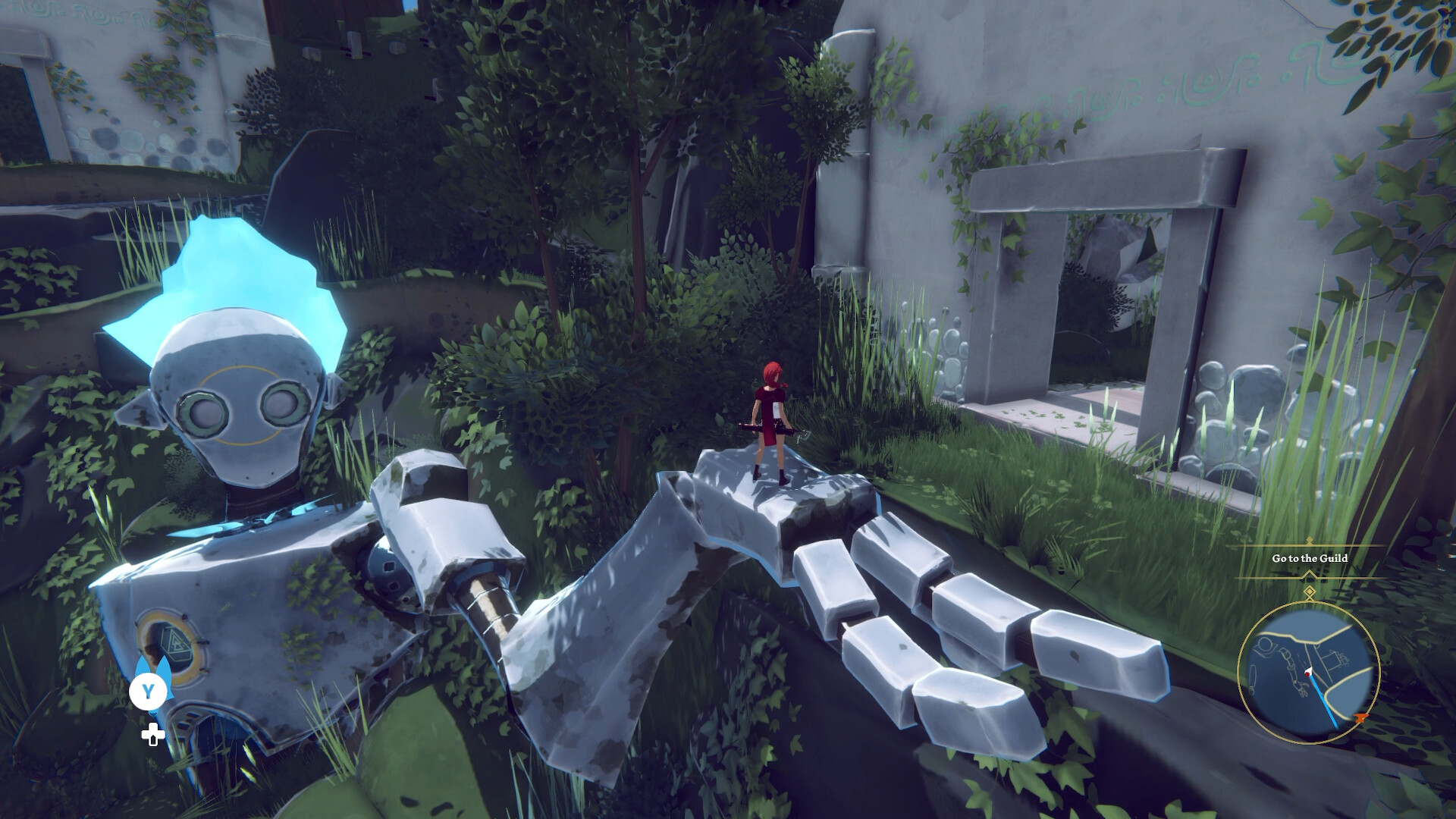
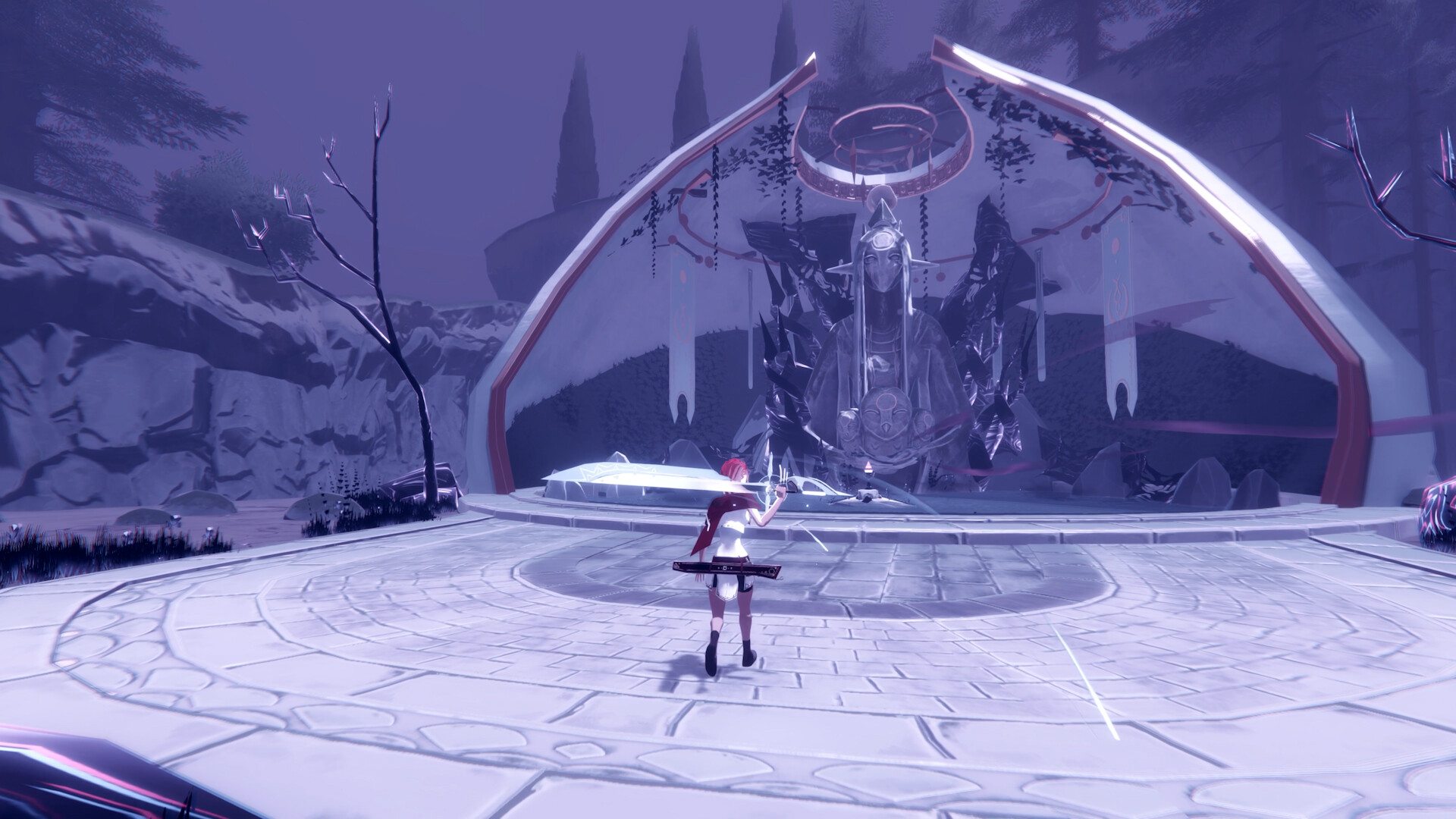
I like a premise that prices curiosity as a hazard and then lets you walk toward it anyway. Temples, shrines, and long-forgotten rooms sit on Atarassia like questions with walls. Why are there structures and no people. What was that spirit. Story is environmental and stingy at first, which is the right instinct for a game that wants your hands more than your diary. Later it finds a voice. The trailer is ruder about it. You will never pass the trials. I thought I could control the Void. That is Aferi talking, and Aferi is not a flavor villain. He is the weather the paint is arguing with.
The fantasy is not mastery of a lore bible. The fantasy is competence arriving about half a shrine after you invent a reason to let the monk press the switch. You will fail in ways that would be funny if the checkpoint were not so sincere. You leave a solved room. You walk back.
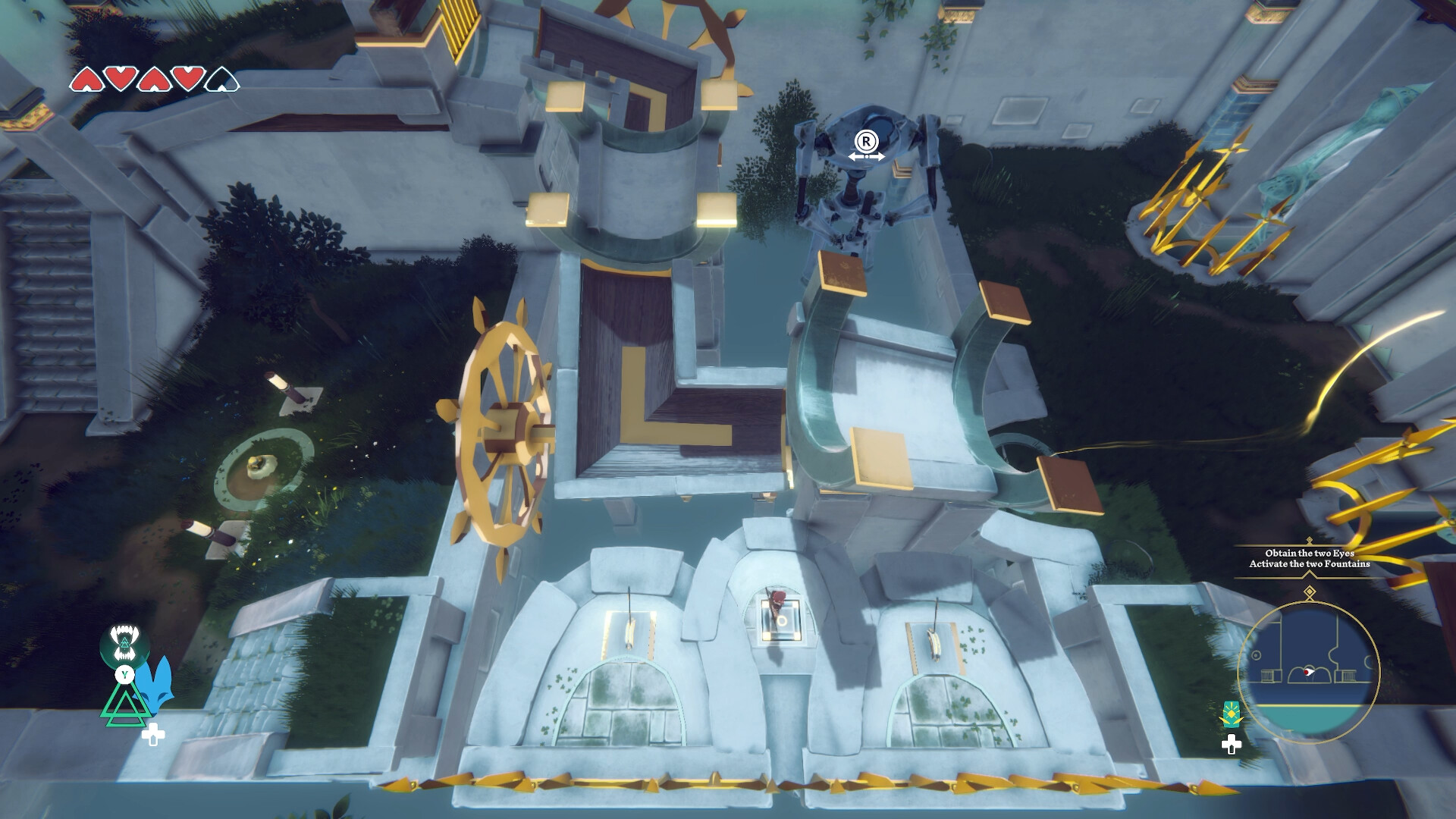
Official copy cites Studio Ghibli and Studio Chizu, which is a polite way of saying the grass is allowed to be handsome and the corruption is allowed to be rude. Soft light. Soft rivers. Then a purple that does not belong. If you want a world that never asks you to look at a sick tree, you will feel underemployed. If you want a week that turns a refusal into a partnership, you will feel hired.
Share a Shrine, Then Invent a Partnership
The loop is the old religion and MarsLit Games does not pretend otherwise. Explore winding dungeons. Solve mechanical puzzles. Battle Void monsters. Rescue friendly spirits. Befriend the ones that still live in the temples. None of that is a revolution. All of that is the sentence the rest of the toybox has to live in.
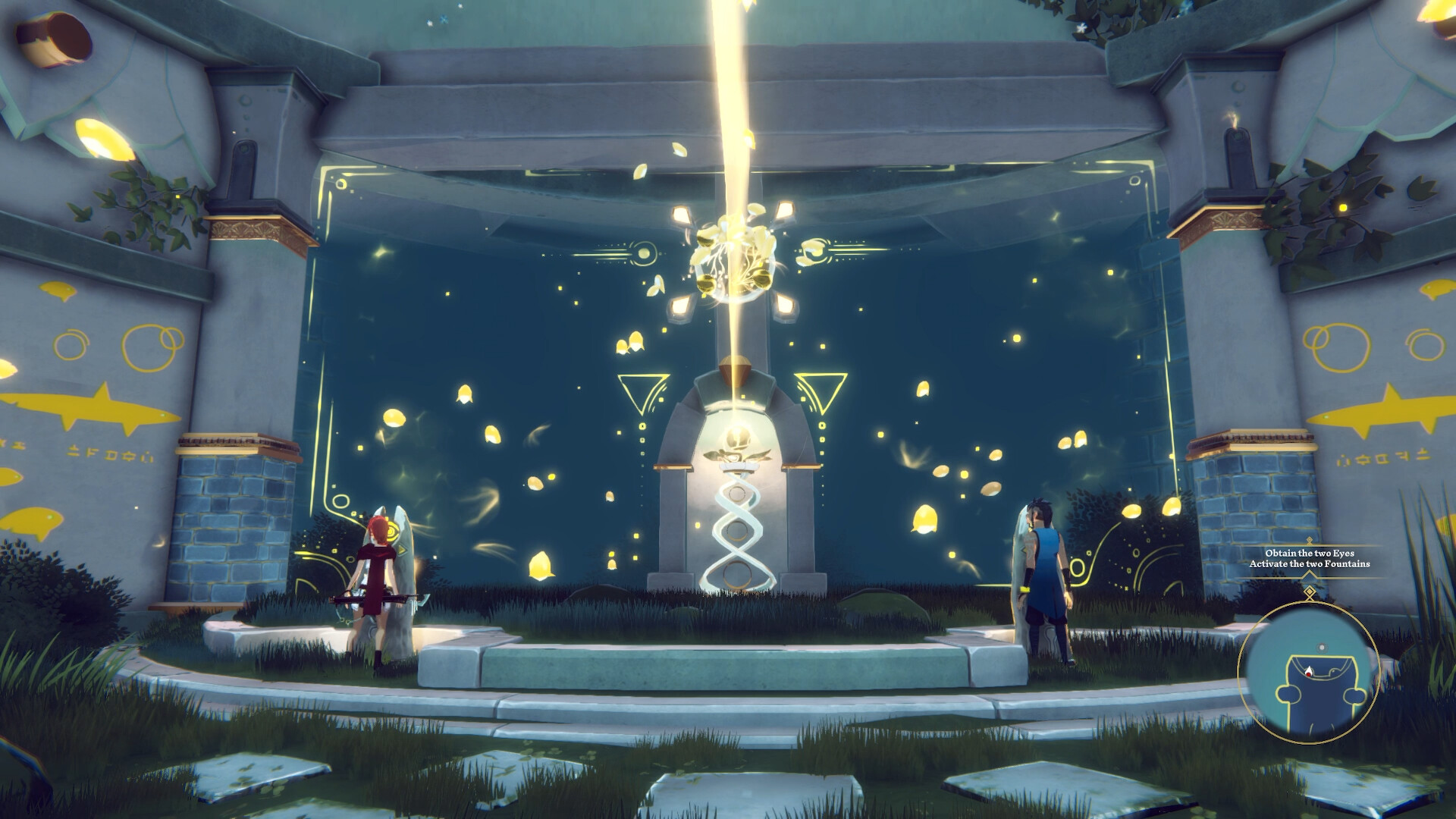
The twist is the pair. Official features ask you to combine the powers of a martial Guardian and a magical Monk to take on enemies and puzzles that cannot be beaten alone. That sentence is both a promise and a warning. If you want a hero who can finish a shrine without asking anyone for help, you will feel unemployed. If you want a toybox that turns a switch into a conversation, you will feel hired. Lili handles the sword, the bow, and the jumps. Sadi handles the bombs, the illusions, the pressure plates, and the wolf that the rest of the dungeon was designed around. You swap because the room asked you to. You swap because the room will not open otherwise.
I have played a lot of games that treat the first dungeon as a tutorial and the last dungeon as a spreadsheet. Altheia: The Wrath of Aferi is lighter than that on purpose. Early rooms teach you that a lever is a sentence and a wolf is a verb. Later rooms ask you to time a platform and remember that the monk is not scenery. You look at a gap and decide whether you have been useful enough today.
Void Cores sit on the character sheet because a Zelda-like without a shop is just a walking tour. A spirit will sell you a little more health or a little more mana if you have been looting like a person with a job. I left the greedy path on for an evening and the careful path on for another. The temples did not mind. The giant monsters minded either way.
Official copy says Lili and Sadi discover what it means to truly be partners. That is the design talking in public. You are not collecting hearts. You are collecting reasons to keep the monk in the room.
Swords, Wolves, and a Puzzle That Needs Both
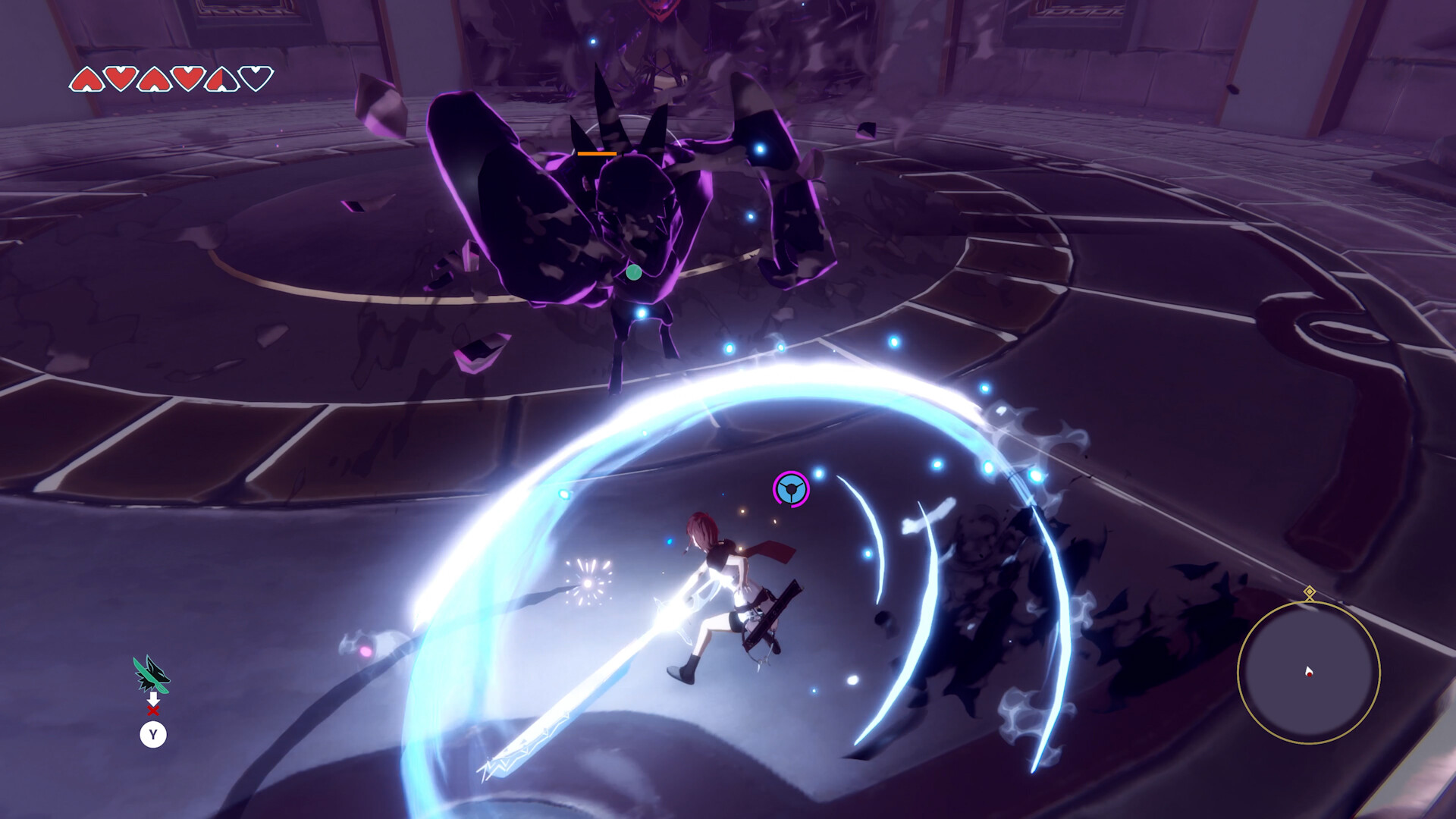
Combat is the temperature change and also the thinner half of the week. Early Void-spawned cousins establish that this is not a peaceful walking simulator with nicer lighting. They will use the room farther than pride would recommend. A sword handles the general population if the general population is polite. The later, nastier rooms will empty a health bar if you treat them like scenery. Further in, a giant monster in a deeply corrupted place would like a word, and the word is short. Getting a finishing move with actual manners takes a while. Until then, a dodge is a strategy, not a cowardice.
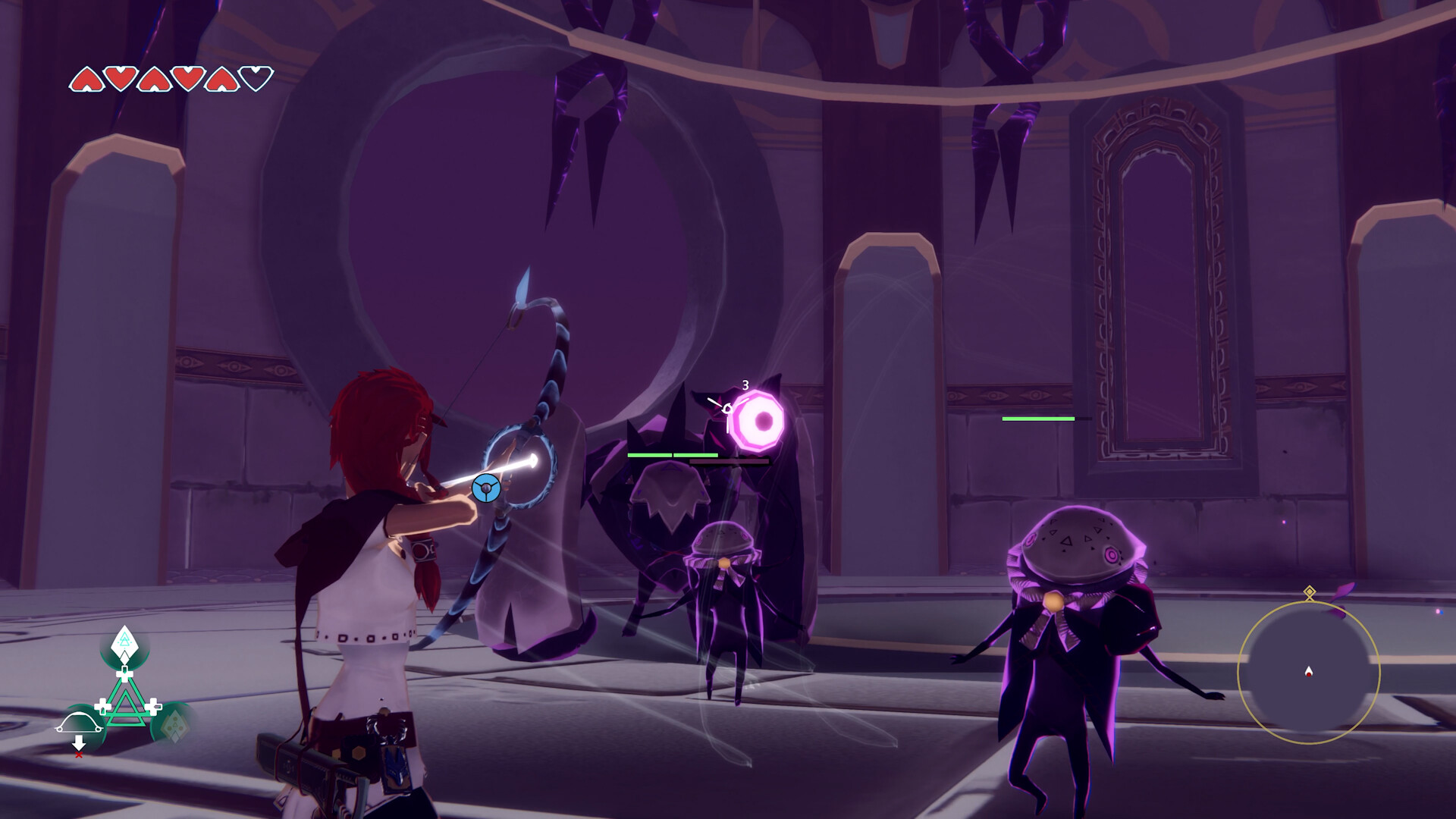
Lili is the physical half of the short description. Sword, bow, a special meter that fills if you keep showing up. Official features do not pretend she is a combo encyclopedia. She is a Guardian with a job. Sadi is the other half and the kinder half of a puzzle. He can become a shadow wolf. He can bite. He can put a bomb on a pile of rubble or on an armored idea. He can throw an illusion that looks enough like a person to make a monster waste a swing. Those two voices keep the dungeon from feeling like a nature documentary that learned to punch. They are not a raid group. They are a reminder that someone else survived long enough to stand on the other switch.
I will not invent a highlight reel with fake timestamps and tidy boss counts. The nights that stay with you are the ones where you thought the shrine was finished, then something started knocking in a rhythm that was not weather, and then you were on the wrong side of your own architecture. Swordplay can feel like two people agreeing to take turns being disappointed. That clunk is real. Hits can arrive without the thud a better-funded swing would buy. The bow can sulk when a target decides to be a moving thought. It is also priced into a combat loop that would rather you solve, retreat, and come back dressed. Distance helps. A wolf at the right plate helps more.
Bosses are the version of the fight the systems were quietly designed around. Official copy asks you to battle giant monsters in places that have been deeply corrupted by the Void and defeat them to free the surroundings at last. Those rooms treat the pair like a sentence. Lili opens a window. Sadi makes the window mean something. A weak point is a puzzle with worse manners. I like that more than a new sword. Mastery, here, is logistics. You gather, you stash a Core, you put the monk on a ledge that yesterday looked like scenery, and you land like a person who has mail.
Temples, Spirits, and the Map Getting Kinder
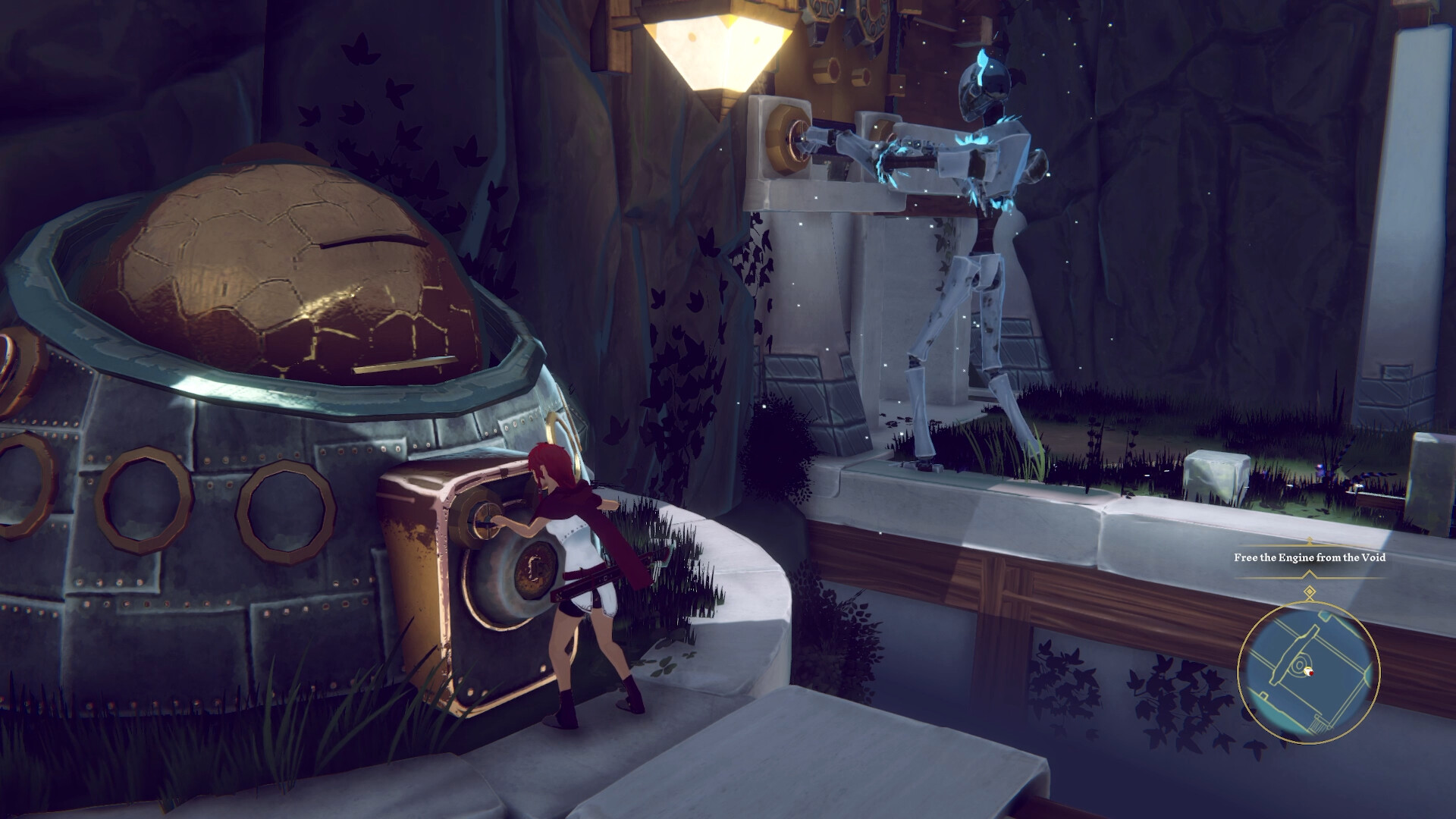
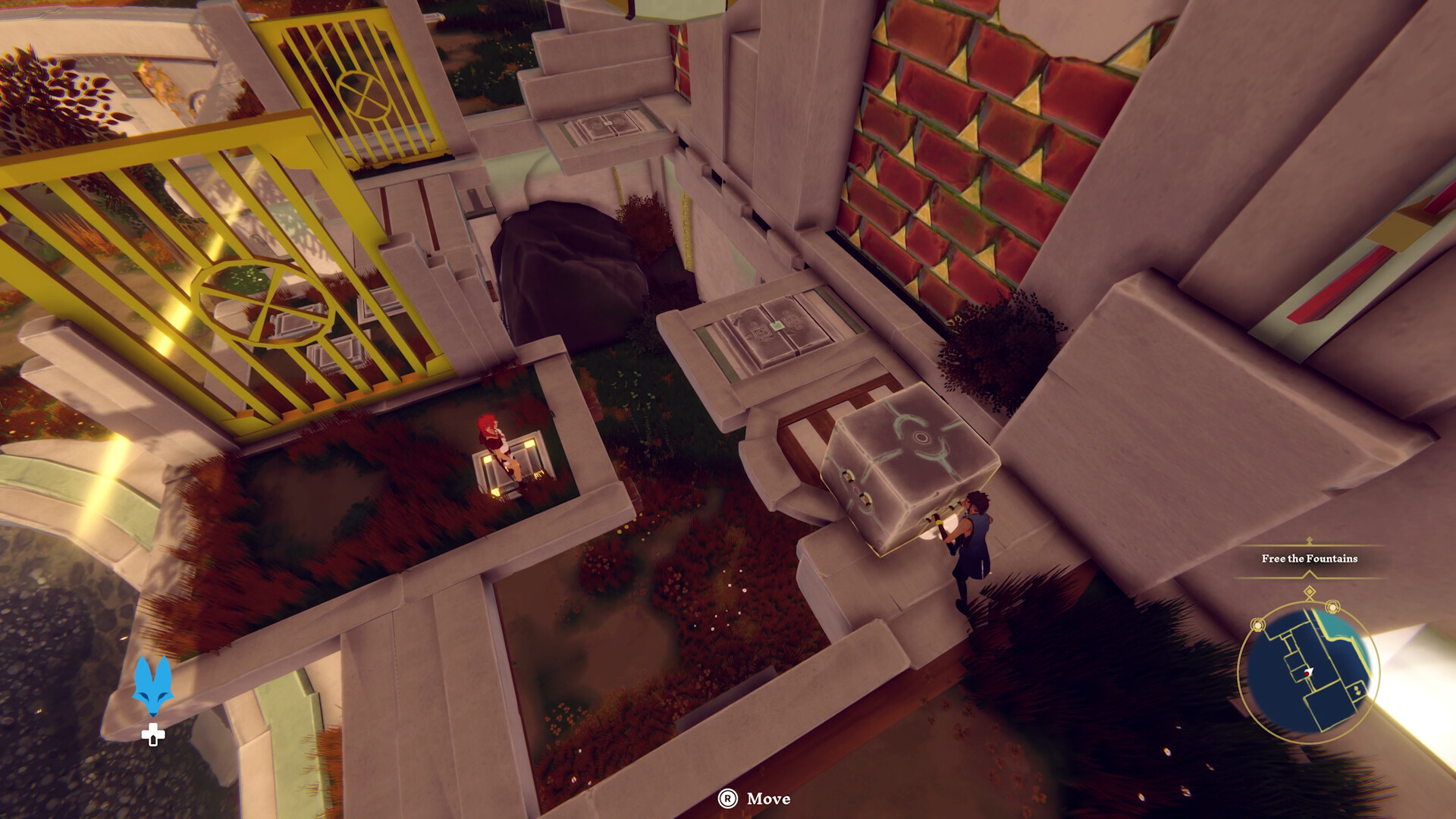
Pressure is the variety. A door that opens because both of you existed is a better reward than a new silhouette if the silhouette is just another way to lose a checkpoint. Official features list winding dungeons inspired by the classic Zelda games, temples and shrines dotted all around Atarassia. Levers rotate. Underwater switches wait. Spirit goo blocks a door until someone remembers the bomb is not only for combat. None of that is a new religion. All of that is the old religion told with a second pair of hands.
The world has history if you will walk toward it. Friendly spirits sit in the paint like questions that would like to be neighbors. You befriend them. You rescue them. You leave. You come back when you have a better reason to stand on a plate. I like a map that prices curiosity as a hazard and then lets you walk toward it anyway. Some rooms are handsome. Some rooms are a commute. Both rooms are the job.
Verticality is the ruder half of a jump. Lili does the leaping. Sadi does not. A gap that would be a shrug in a double-jump toybox becomes a commitment. The map does not get smaller because the developers deleted land. It gets smaller because you invented commuting with a partner who can hold a switch while you do something stupid and useful.
Thirty-eight achievements sit behind the loop for people who like a receipt. Names like The Beginning, Joint Combat, A Great Team, The Mine, and The Shrine of Life tell you the shop has a sense of humor and is not ashamed of a pilgrimage. None of them change the central truth. You are here to open a temple and then find out what the temple was for.
Painted by Ambition, Rough by Habit
I should be clear about the friction, because it is real and it is not a footnote you hide after the score. Altheia: The Wrath of Aferi looks like a game that was built by a small shop that wanted an adventure more than a showcase, then discovered the adventure was a whole painted country. Landscapes can be handsome. Animations can be stubborn. A swing can arrive a half-second late to its own impact. Performance can sulk when a late shrine decides to remember itself. I will not invent a frame census. I will say Atarassia sometimes forgets to stock the smoothness you need and then shrugs like weather.
Technical manners on a desktop build can stutter when a point of interest decides to be a theology problem. Cameras can get philosophical in a doorway. Inputs can cancel themselves, which is a sentence no designer writes for fun. Soft locks have a way of announcing themselves. Autosaves have a way of forgetting the room you just solved and sending you back to a version of yourself who has not met that lever yet. None of that is unique to this paint. All of that is the tax on a twenty-dollar Zelda-like that launched in August 2025 and is still hiring patches in 2026.
The save habit is the one I will not joke past. A shrine that takes a patient evening can send you home to a checkpoint that does not believe in evenings. You solve. You die. You walk the solved rooms again like a person who has been asked to prove the joke twice. That is not atmosphere. That is a manners problem. If you want a polished fight and a polite save, you should wait for another patch or wait for a different temple. If you want a place that is already a place, you are the audience, and you should pack patience next to the sword.
Presentation is readable, which matters more than prestige. You can tell a healthy field from a Void stain at a glance. If you cannot read a biome, the hunt dies and the pair becomes homework. These spaces are atmospheric enough to carry a scare and clear enough to carry a plan. You always know where you are. You do not always know why a camera is already there. Combat music can jump into the room like a person who did not knock, then leave the same way. The score underneath is handsome. The transitions can be rude.
English is the Steam language with full audio, plus Italian, German, Russian, Ukrainian, and Simplified Chinese on the interface. Full controller support is on the sheet. I will not turn this into a localization seminar. The voice of the game is the pair, and the pair talks in plates, bombs, and the occasional god who would like you to fail the trials.
Better With a Partner Than With a Checklist
I have a rule for mid-priced Zelda-likes. If a game is worse with a partner than with a checklist, it is broken. If it is only good with a partner, it is honest. Altheia: The Wrath of Aferi is honest, and that honesty should sit next to the price.
A checklist night is a competent weekend. You punch the spawn, you invent the kitchen, you lose a room, you walk back, you put a better lock on the joke. A partner night is the version the systems were quietly designed around. Someone stands on the plate. Someone jumps. Someone learns, too late, that a giant Void does not respect architecture. The temple becomes a shared instrument you play with yourself instead of a commute.
The Steam sample around a game this small is always going to look like weather. Mostly Positive is the official report, 79 percent of 96 English voices, and that split is fair. Players who wanted a deeper scrap, a prettier frame rate, or a save economy that never hides the stutter bounce off. Players who wanted a painted adventure with a monk and a bad idea about switches stay. I am in the second camp with caveats, which is the only honest place to stand.
Compared with the giants of the shrine-and-sword business, Altheia: The Wrath of Aferi is not trying to be a career you finish this month. It is trying to be a place you keep returning to for a short week. The developer said the quiet part on the store page. Combine the powers. Explore the temples. Battle the giants. Fun if you will meet the game where it lives. That is not a cop-out if the place is worth the walk. Some nights it is. Some nights the checkpoint is a myth and the doorway is a theology problem. Both nights are Altheia: The Wrath of Aferi.
Still Walking After the God
Altheia: The Wrath of Aferi is a rare mid-priced adventure that understands its own joke and then has the nerve to make the joke a temple that needs two people. MarsLit Games built a country about refusal, a monk about teamwork you do with a wolf, and a toybox that looks a little homemade and plays a lot more sincerely than that sentence suggests. The loop is the hook. The pair is the spine. The walk from a reluctant rescue to a god is the grin.
It is better with a partner than with a checklist. The late rooms can clunk in the way a small-shop scrap is clunky. Performance can sulk. The presentation has indie fingerprints, from the stubborn animations to the save habit that would rather be a rumor than a receipt. All of that is true, and all of that is already priced in at $19.99 on Steam. You are not buying a decade. You are buying a long weekend if you like being a coordinated disaster, or being the person who has to explain the disaster to a pressure plate.
I am scoring it 8, Great, because the identity is this clear and the limitations are the limitations of a focused indie, not an empty one. I would recommend it to anyone who likes a shrine that has weight and a map that is allowed to be rude. Distinctive painted weather, a pair that shrinks the puzzle, a god that turns salvage into conversation, and a price that respects a short week are a lot of game for the ask. The systems repeat their manners. The manners are still useful.
The temples are still out there, still hiring a night shift, still asking who the Guardian was. After a few shrines, you will understand why the job is not finished, and why you keep waking up next to the monk anyway.
We prepared this review with a digital copy of Altheia: The Wrath of Aferi for the PC version provided by Pressengine.