There is a particular kind of sweat, rare in a medium that usually hands you a gun and a map, in watching a gas station employee flip a sign to Closed while a pump in the dark asks whether you checked the oil stain. The boss is not a metaphor. Miss three tasks and he is outside. Before Exit: Gas Station, the anomaly-detection closer from Katowice’s Take IT Studio, is built on that audit, and the audit is ruder than a $9.99 night shift has any right to be.
I played the PlayStation 5 version, the October 23, 2025 living-room clock-in that followed the October 9 PC launch and then watched a small, warm Steam pile decide the extra continue was worth the jumpscare. Take IT Studio developed and published it, the same Polish shop behind Electrician Simulator and the earlier Before Exit shifts. You clean the workplace, take care of the last customers, shut the lights, and try to go home. Over 40 story-rich scenarios, four endings, six bonus episodes, and, for the first time in the franchise, a forecourt you can actually walk. Twenty achievements lurk in the back room. Fourteen languages sit on the box. Great, not infinite, and very much a station I would recommend you close.
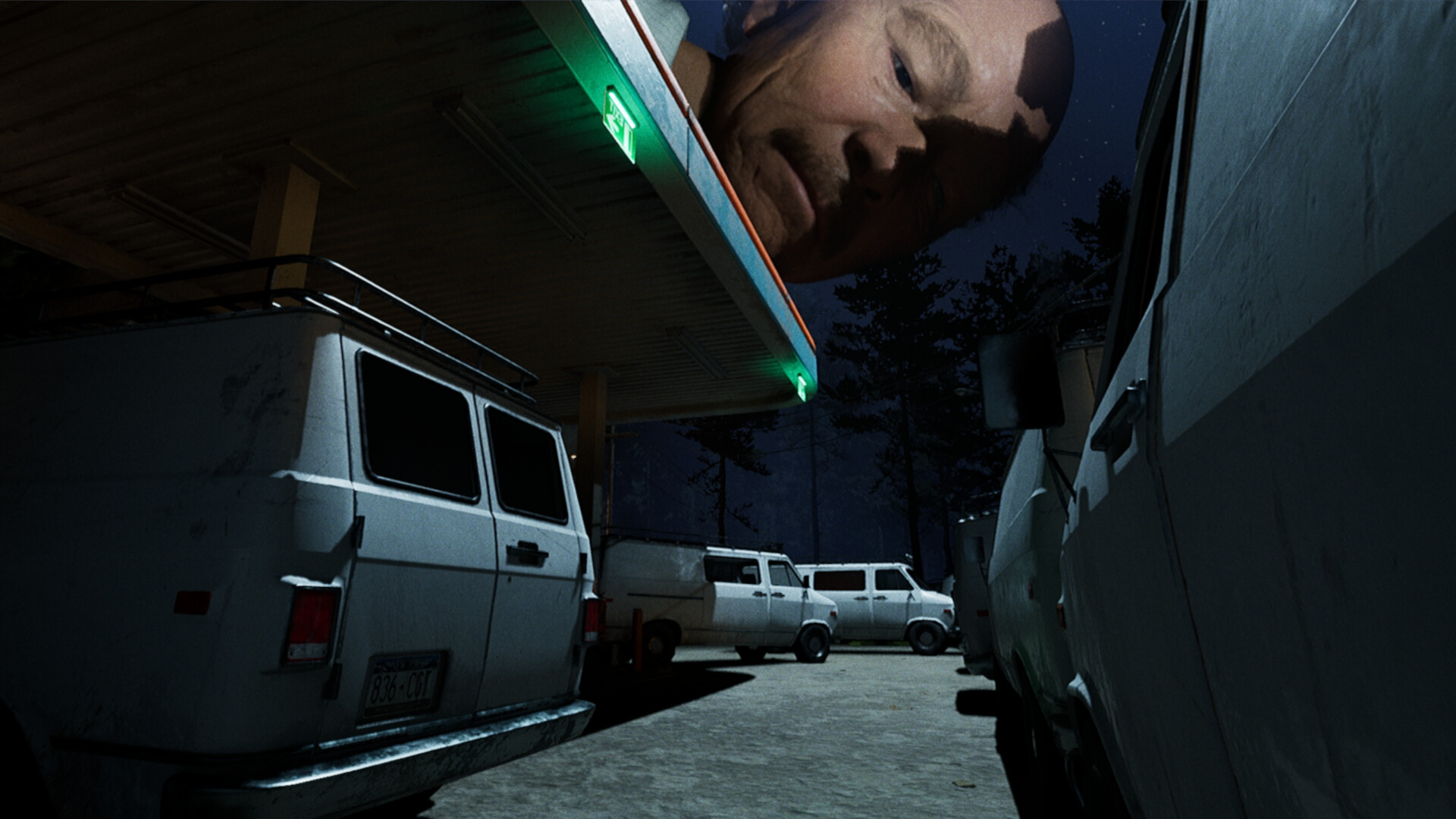
Don’t Gas Stations Stay Open at Night?
Most simulators give you a shop and a smile. Before Exit: Gas Station gives you a shop and a question the store page is happy to ask out loud. Don’t gas stations stay open at night? Not in this world. The boss is very strict and he loves to save money. When night comes, you turn off the lights, close the store, and go home. It is a station in the middle of nowhere. Why would anyone visit after dark?
The beloved employee is back, which is the franchise handshake. If you closed a different workplace in the earlier game, you already know the grammar: a checklist, a loop, a boss who would like a word if the checklist lies. If you did not, the grammar is still readable. Walk. Look. Flip. Mop. Do not get clever until the station gets clever first.
Story is doled out like a receipt. Forty-plus scenarios, each with a little unique content, stitch into a tale you will not finish in one honest week. Four endings wait. A true ending waits behind the habit of coming back. Six bonus episodes sit to the side like a keystone the campaign will not hand you for free. I will not walk you to the door and describe the revelations like a tour guide. The station is the story. The boss is the punctuation.
I like a premise that prices ordinary work as horror. A lot of anomaly games hand you a corridor and a spot-the-difference. This one hands you a job. The job is the scare. A last-minute customer is a person and a trap. An oil stain is a chore and a clue. The first time you walk out to the pumps, the franchise grows a pair of legs it did not have. The forecourt is not a loading screen. It is a second room with worse lighting.
The fantasy is not mastery of a combat system. The fantasy is competence arriving by accident, usually about half a second after you remember the back-room light. You will be warned, terminated, and sent back to the start of a day, and the correct response is to flip the sign again like a person who has bills.
The Checklist Is the Monster

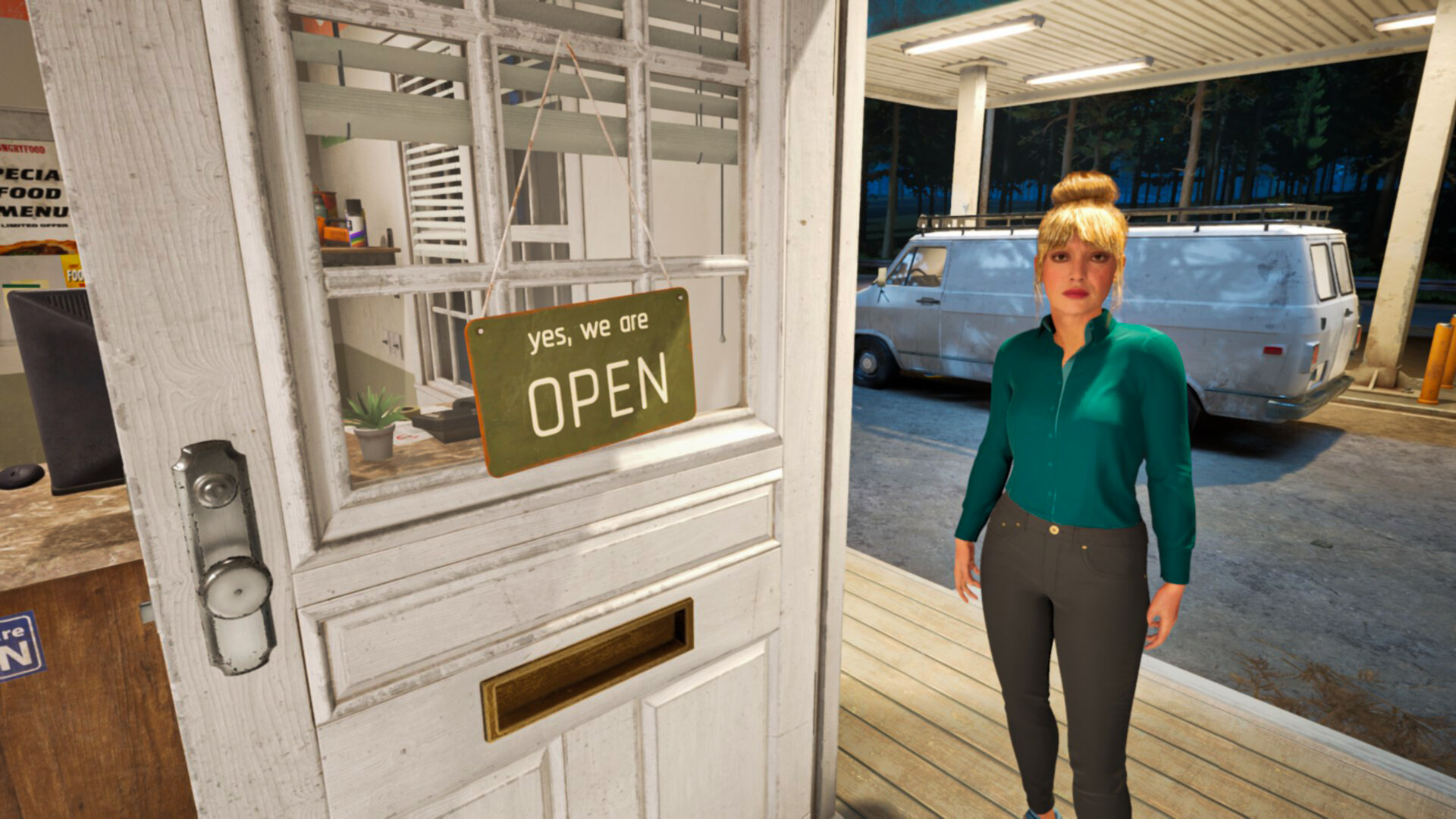
The loop is the reason the station is worth the commute. Each shift hands you a task list that looks polite. Empty the bins. Restock what the last customer ruined. Turn off the lights inside and out. Close the toilet cabin. Flip the open sign. Check the fuel dispensers. Scrub the oil. Deal with the person who thinks they can tank up at the last minute. If every task is complete, you are safe. Otherwise the boss will not be pleased.
Missing one task is a warning. Missing three is termination. You will know you messed up because he is outside when you exit, and this sequel leaned into the jumpscare of that appearance. He is more animated. He is more standoffish. He will tell you how many you missed and hint at one of them, usually the scenario’s main joke, sometimes the boring light you always forget. Then you get to repeat the day. You will not advance until the night is clean.
That binary audit is rude and fair. I have sat through plenty of cozy sims that wanted to be a hug. This one wants to be a performance review. The extra continue is the mercy, a courtesy for people who are not built to mop the same tile twelve times. I used it. I am not proud. I am employed.
Anomalies hide in the chores. A pump meter that reads wrong. A neon panel that stutters. A receipt in the gutter. A faucet in the bathroom that you could swear you turned off. Each discrepancy is a logic puzzle and a breadcrumb. Ignore it and the night is just a night. Read it and a branch opens. The station starts talking in a dialect you will only learn by failing.
I keep coming back to the open sign. I forgot it more than once, the way you forget a stove. The game knows. The boss knows. After a few successful shifts you get complacent, which is the design’s best trap. Comfort is how the station gets you. The horror, as atmosphere, is stronger when you were sure you did everything.
Forty Nights and a Forecourt That Was Off Limits

The campaign is a workweek that refuses to stay a workweek. Over forty story-rich scenarios sounds like a list. In play it is a set of costumes the same building puts on. One night the customers are the joke. One night the pumps are the joke. One night the joke is that nothing is wrong and you will not believe it. Unique content keeps the rhyme from becoming a photocopy. After enough evenings a shelf is still a commute.
The forecourt is the sequel’s best new sentence. For the first time in the franchise you can walk out of the workplace before you go home. Dispensers, oil stains, last-minute drivers, the weather if you bought the later nights: the outside is a second checklist and a second place to be wrong. I have stood under a canopy and felt the station get larger without getting lost. That is harder than it looks.
Six bonus episodes are the other map. They are not dessert. They are keystones. Solve them and fragments snap. Skip them and the true ending stays a rumor. Four endings mean the campaign is a set of combinations, not a single hallway with a credits roll. Different mixes of anomalies found, tasks completed, and episodes unlocked steer you toward different doors. Are you ready to return home? The store page asks. The honest answer is that home is a ending, not a given.
DLC already sits on the porch. Midnight adds nine scenarios past the classic week, worse weather, a boss who appears when you least want a performance review, and a deeper look at the owner. Daylight is the other hat. I reviewed the shift I was given, not the season pass. The base station is already a week of nights. The extras are for the employee who got attached.
I should be honest about the loop tax. Repeating a failed day is the genre. It is also, after the third termination over a bathroom faucet, a little uncivilized. Clues help. They do not do the mopping. If you came for a single linear ghost story, the roguelike handshake will feel like homework. If you came to live in a building until it confesses, the homework is the game.
Customers, Pumps, and the Man Who Wants You Fired

People are the other half of the personality, and they are not wallpaper. Last-minute customers upend a rhythm you had finally learned. Some want fuel. Some want to be a problem. Some want to be a clue wearing a jacket. You take care of them the way a closer takes care of a door that will not stay shut. Be polite. Be thorough. Be suspicious.
The boss is the franchise’s best character and its loudest jumpscare. He loves to save money. He is observant. You are this close to getting fired. When he appears, the night becomes a cutscene you earned by being sloppy. Several versions of that appearance exist. I will not spoil the wardrobe. I will say the sequel gave him more body language than a silhouette in a parking lot, and that the extra animation is funny until it is not.
Anomaly-detection is a cousin of the Exit 8 school, and Take IT Studio knows it. The difference is the job. You are not only spotting a glitch in a corridor. You are closing a business that might be the glitch. Logical riddles sit next to mopping. Roguelike features sit next to a walking sim. The blend is the identity. Pure spot-the-difference fans may want a cleaner test. Pure cozy fans may want fewer terminations. The station is for the person who wants both and is willing to be audited.
I have had nights that felt like a sitcom. I have had nights that felt like a threat. The swing is the point. Dense atmosphere is the store page’s phrase. In play it means the fluorescent hum, the canopy dark, the way a quiet pump is worse than a loud one. Unexpected plot-twists is the other phrase. In play it means I will not tell you the twist. I will tell you the third ending made the first two look like training.
Fourteen languages and full achievements make the shift portable. Controller support is first-class enough that I stopped thinking about the menu. A session can be one clean night or an hour of repeats because a faucet laughed at you. Twenty achievements sit in the back like a second boss. Employee of the week. So close. Termination. The names are a hint and a dare.
Fluorescent Hum and a Canopy That Knows Your Name
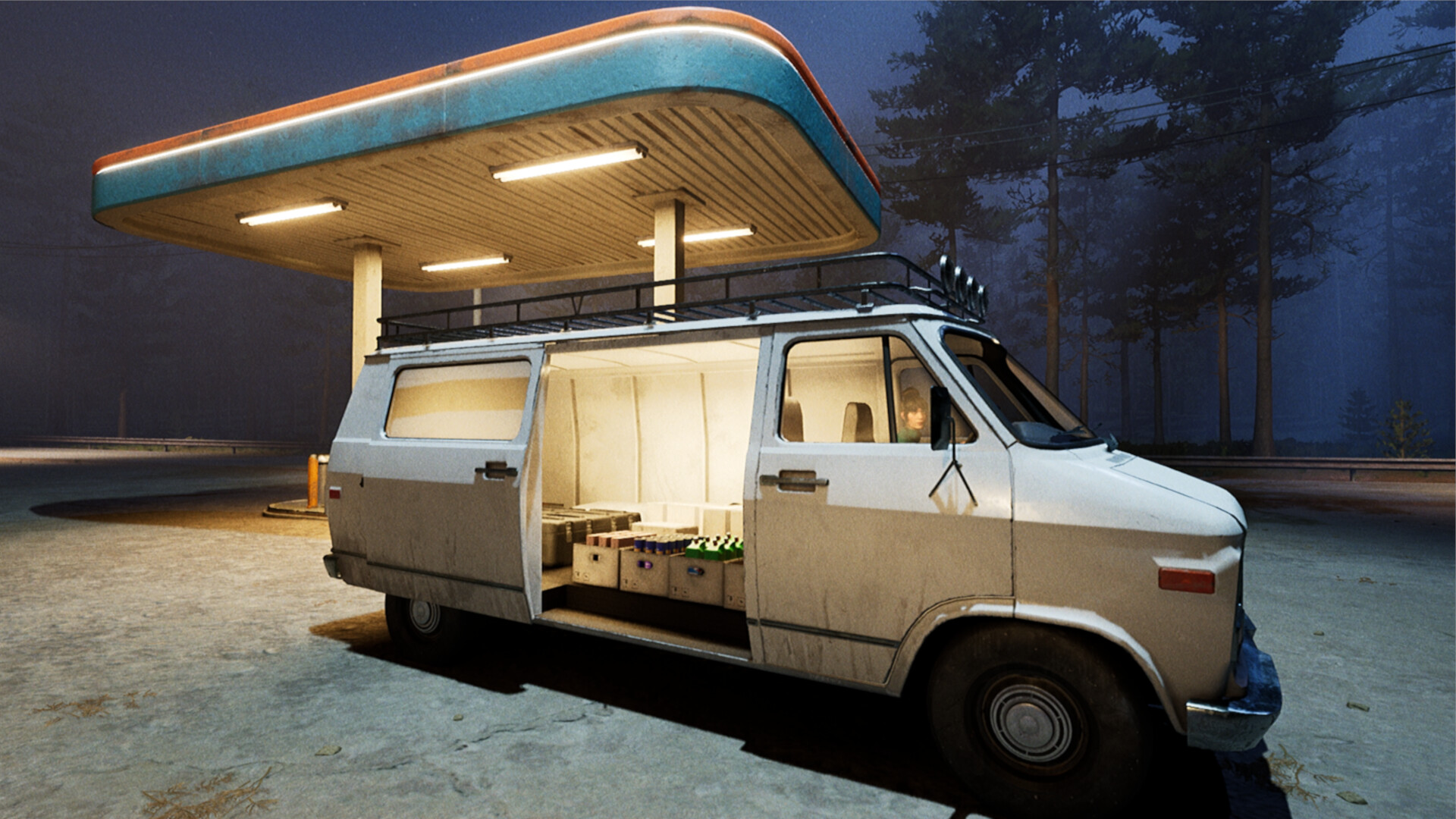
Before Exit: Gas Station does not look like a prestige horror production, and it does not need to. The station is readable, a little toy-like, and immediately itself. Shelves have a temperature. Pumps have a face. The parking lot has the bureaucratic glow of a place that has never cared about you. Lighting does the horror work a bigger budget would have spent on a second map. You always know where you are. You do not always know why the sign feels heavier than it did a night ago.
I have played a lot of cheap indies that announce atmosphere and then deliver a brown room with a sting. This room has handwriting. Animations are short and rude: a mop, a flip, a boss in a place he should not be. When a night goes clean, the station celebrates like a time clock. When it does not, the celebration is a silhouette. You do not need a cutscene. You need a list with one box empty.
Sound is the better craftsman. A pump ticking. A door you thought you locked. A customer who is still talking. The soundtrack understands the assignment. It is tense without becoming a jumpscare factory, ordinary without becoming a grocery-store loop. That matters, because the game is trying to be a horror about work, not an advertisement for a haunted house. You can hear a faucet. You can hear the canopy. You can hear the boss thinking about you.
The picture will not win a lighting award. A few edges are prouder than others. A few nights reuse a joke with a new hat. That is the cost of forty scenarios from a small studio that also ports other people’s games. I accept the trade. I do not accept it silently on the fifth identical walk to a pump I swear I already checked. The extra continue exists for that walk. Use it. Stay employed.
Come Back Tomorrow, the True Ending Is a Habit
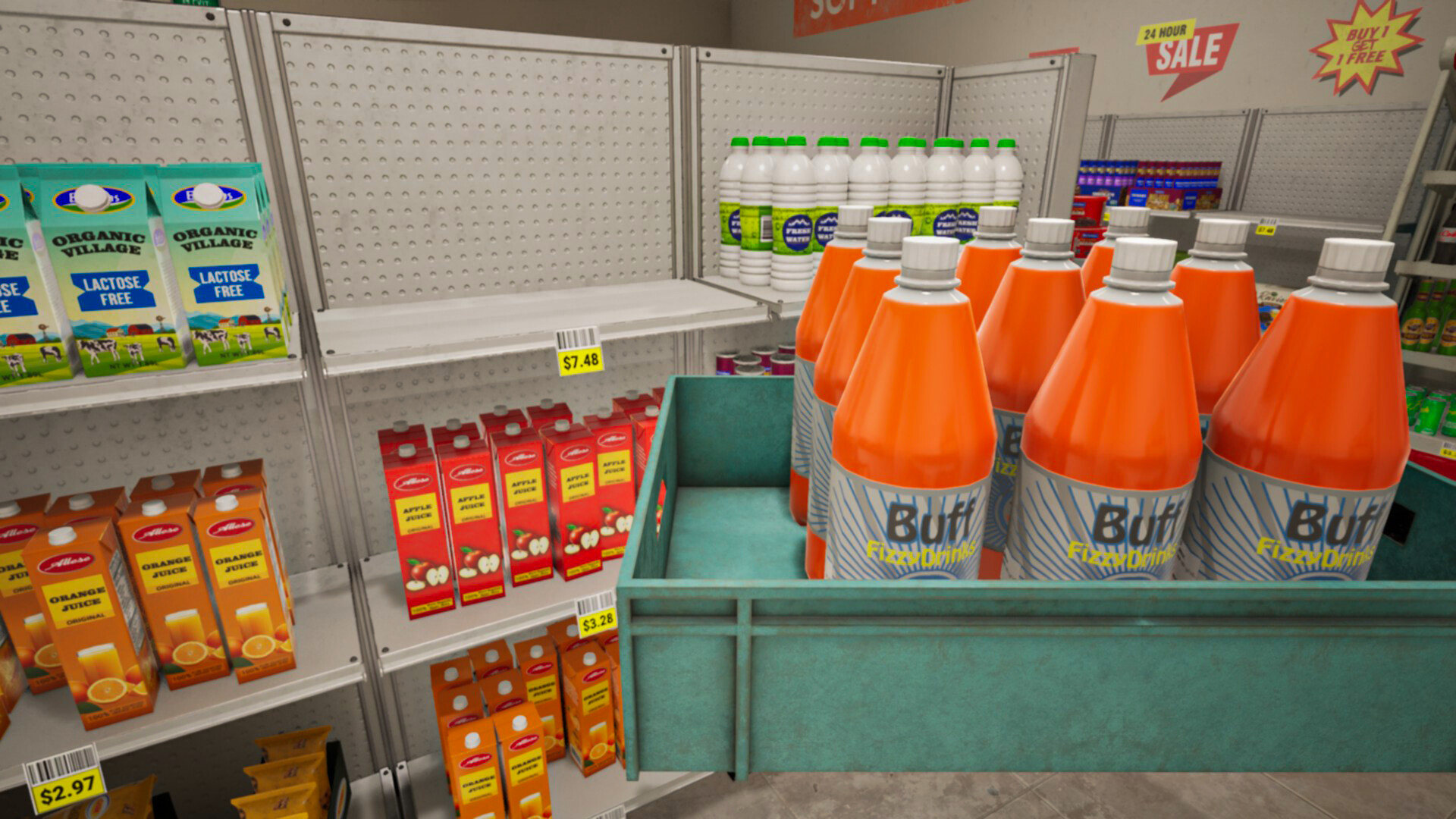
Replay is the quiet spine. The store page says you will have to play through the campaign several times to reveal all its secrets and fully understand it. The store page is not bluffing. A single honest close will give you a story. A second will give you a contradiction. A third will give you a door that was always there and a boss who would like to discuss your attendance.
That structure will irritate anyone who wanted a two-hour ghost story with a ribbon. It will please anyone who likes a building that keeps a receipt. I am in the second camp on weeknights and the first camp on Sundays. Before Exit: Gas Station is a weeknight. It wants you tired enough to miss a light and proud enough to come back.
I should be clear about the audience, because the franchise can look smaller than it is. This is not a blockbuster. The Steam pile is modest. The jokes are local. The boss is an acquired scare. If the first shift feels like a chore list, give it a second scenario. If the fifth shift feels like a vice, you are the audience. If you never want to mop a virtual tile, there is a whole industry of games that will not ask.
Price is part of the review. $9.99 is a night out that stays in. For that ask you get forty scenarios, four endings, a forecourt the last game would not let you touch, and a loop that can eat a weekend if you let the true ending become a personality. I have paid more for a worse shift. I have clocked out happier.
The station is still there after credits. That is either a kindness or a threat. Both can be true. Have a lovely time at your charming workplace.
The Lights Are Still On Somewhere

Before Exit: Gas Station is the rare cheap closer that understands its own joke and then has the discipline to make the joke a week of nights. Take IT Studio built a possession fantasy about a checklist, a boss who loves to save money, and a forecourt that was off limits until now. The hook is a station that should not close. The spine is the way tasks, anomalies, and repeat shifts turn a mop into a plan.
It is better as a habit than as a novel. The audits stay the reason to recommend it. The building stays the reason you keep the window open. The repetition is real. So is the grin when a remembered faucet and a clean sign turn a termination into a story you will tell like you meant it.
I am scoring it 8, Great, because the identity is this strong and the limitations are the limitations of a focused anomaly sim, not an unfinished one. At $9.99 you are buying a workplace that respects your evening, a toybox with forty ways to be fired, and a loop that refuses to let home be free. Distinctive closing-shift horror, a boss with better body language, and nights designed to be replayed are a lot of game for the ask. The pumps repeat their jokes. The jokes are still sharp.
The sign is still open. The boss is still observant. After a few clean closes, you will understand why the station is not finished with you, and why you keep clocking in anyway.
We prepared this review with a digital copy of the Before Exit: Gas Station for the PS5 version provided by Take IT Studio!.