
There is a particular kind of amnesia, rare in a genre that usually hands you a lore dump and a tragic flashback, in falling through magnetic storms and discovering that memory is a word with no furniture in it. The Tower is still a Tower. The jump is still a jump. The first patrolling entity that tries to interrupt you is not a metaphor. DeadCore Redux, the remastered first-person platformer from 5 Bits Games, is built on that blankness, and the blankness is ruder, funnier, and more useful than a fifteen-dollar climb has any right to be.
I played the PC version, the 15 January 2026 Steam launch that 5 Bits Games walked onto desktop at $14.99 after the 2014 original that Bandai Namco helped carry and a loyalty discount that still treats veterans like they never left the mist. You jump, you shoot a switch, you put a Dash on a line you used to walk, and you learn that the megastructure has already hired a night shift of platforms that change their minds. Sparks, Logs, music Tracks, a Gateway that sits between you and the true ending, and a rank system that grades the climb like a report card you asked for. Thirty-one Steam achievements sit in the background. The Steam sample is Very Positive, 55 positive of 58, which is the honest weather report and not a dare. Great, not glossy, and very much a weekend I would recommend you spend if you like a platformer that knows it is a route.

The Tower Does Not Care What Memory Was
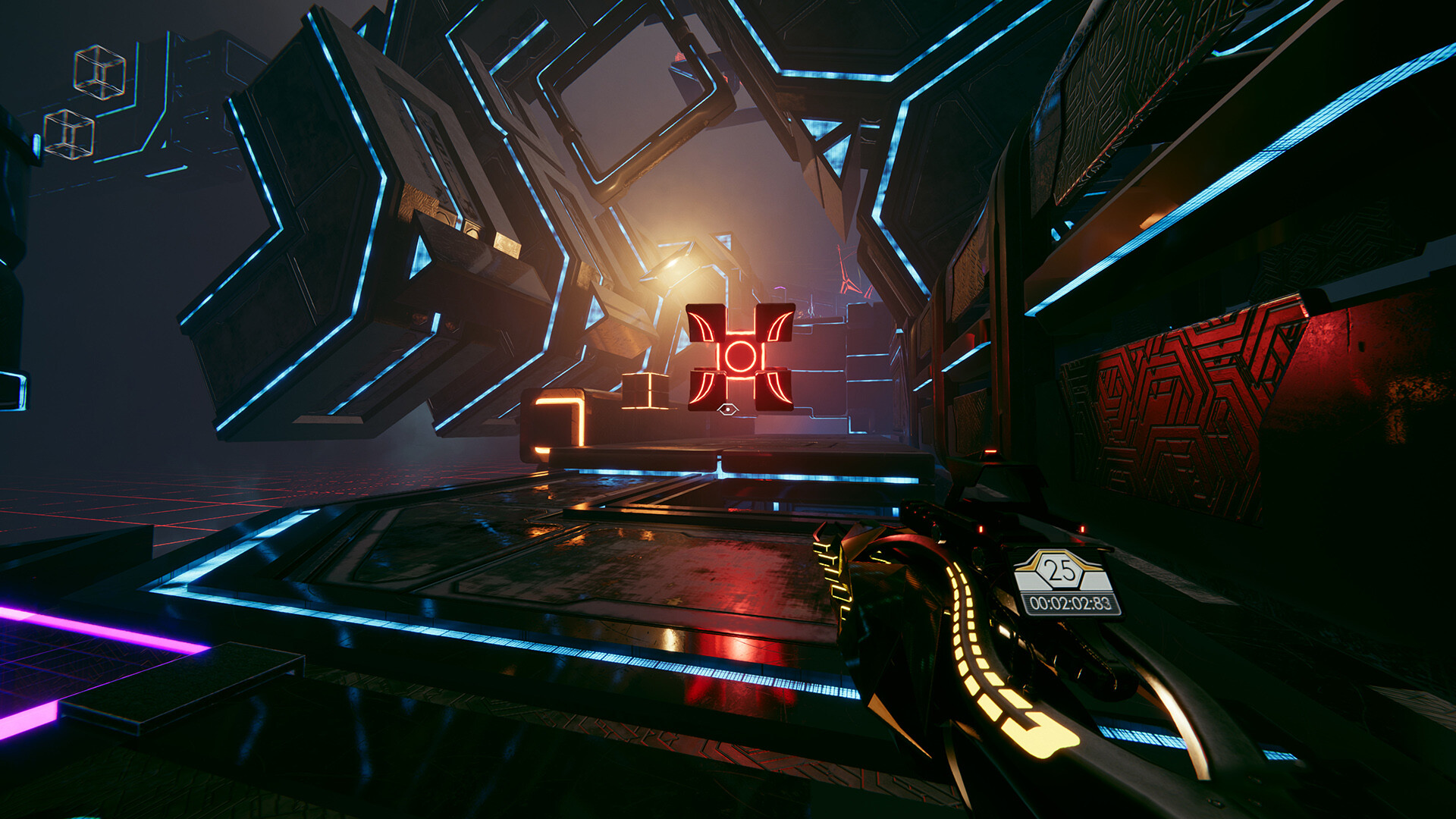
Most remasters begin with a speech about fidelity. DeadCore Redux begins with a fall. Official copy on Steam says you awaken after an endless drop through powerful magnetic storms, memory erased, until you spot the most gigantic Tower emerging from the mists. Deep inside, you know the only way to get answers is to reach its Summit. Both the 2014 script and this one agree on the next sentence. The Cycle is still running. Climbing is your only option.
That is not flavor text. It is the design refusing to pay for a cinematic when a void will do. You start chaining jumps, toggling mechanisms, and hunting hidden paths because the alternative is becoming another Log on a wall. The first Guardian is staged like a punchline that forgot to be funny. It patrols. You switch it. It is off for now. The script, still a little breathless, asks who can assure it was the only one. Nobody can. That is the rest of the Tower.
I like a premise that prices curiosity as a hazard and then lets you jump toward it anyway. Secret passages sit in the megastructure like questions with geometry. Why is there a shortcut behind a gravity field. What was that Spark. The more you explore, the more the Tower answers with another room and another thing that would like a piece of your timing. Story is environmental and stingy, which is the right instinct for a game that wants your hands more than your diary. You are not reading a novel. You are routing a disaster that is still happening.
The fantasy is not mastery of a lore bible. The fantasy is competence arriving about half a level after you invent a mid-air shot. You will die in ways that would be funny if the checkpoint were not so sincere. You leave a bad line. You walk back. You become the kind of person who thinks a Dash is a personality.
Switch the Gun, Then Invent a Line
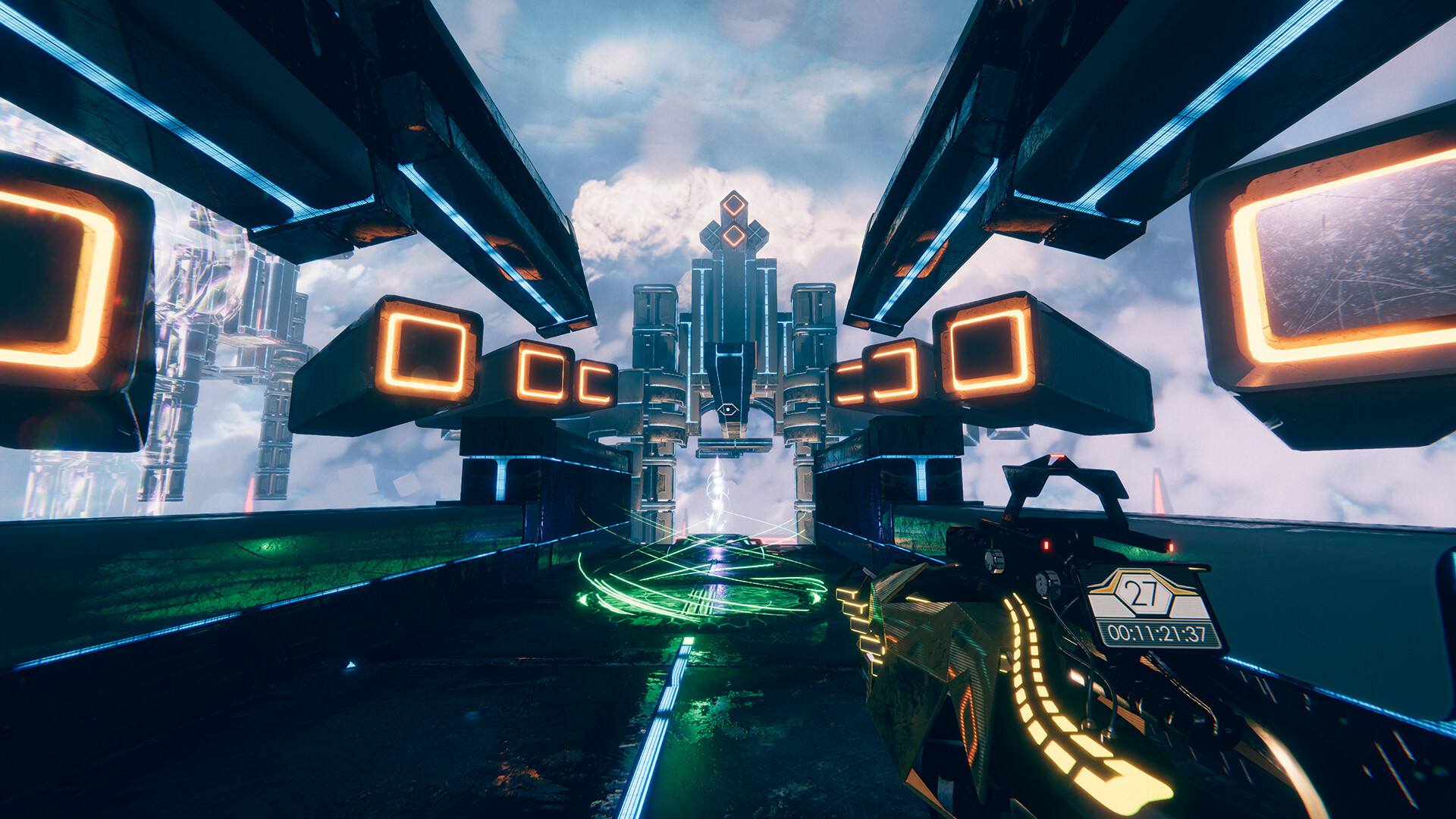
The loop is the old religion and 5 Bits Games does not pretend otherwise. Jump, double jump, land, look at a switch that is farther than pride would recommend. The SwitchGun is on the character sheet because a first-person platformer without a verb that changes the room is just a walking tour of fog. Platforms turn. Barriers drop. Gravity fields change their mind. Patrolling entities become furniture if you time the shot. None of that is a revolution if you played the original. All of that is the sentence the rest of the toybox has to live in.
Movement is straightforward in the way a good workbench is straightforward. You are not drowning in menus. You are looking at a gap and deciding whether you have been useful enough with the last upgrade. The Dash arrives like a promotion you have to earn, and then the map you thought you understood grows a second floor of shortcuts. Upgrades improve the gun and unlock new moves, which is a polite way of saying the Tower can grow up if you keep showing up.
I have played a lot of games that treat the first room as a tutorial and the hundredth room as a spreadsheet. DeadCore Redux is tighter than that on purpose. The developer wrote it into the store page with the candor of a person who has already lost the argument with feature creep. This is a remaster that would rather refresh the climb than invent a skill tree that could unionize. That sentence is both a promise and a warning. If you want an open world that remembers your horse, you will feel underemployed. If you want a weekend that turns a jump into a sentence, you will feel hired.
Collectibles keep the commute from becoming a museum. Sparks unlock extra levels tuned for people who already know the grammar. Logs hold memories of former explorers, which is how a silent Tower gets a past without hiring a narrator. Music Tracks feed a custom playlist for Speedrun Mode, which is the kind of vanity I respect. You loot a track. You leave. You come back when you have a better line. I left the story path on for an evening and the timer on for another. The Tower did not mind. The leaderboards minded either way.
Guardians, Gravity, and a Dash That Matters

Combat is the wrong word and the right temperature change. Early entities establish that this is not a peaceful parkour simulator with nicer lighting. They will occupy a platform farther than pride would recommend. A SwitchGun shot handles the general population by turning a threat into a prop. Treat a patrol like scenery and the health bar will empty with the manners of a trap, not a duel. Further up, rooms would like a word, and the word is short. Getting a clean line with actual rhythm takes a while. Until then, stopping to toggle safely is a strategy, not a cowardice.
The SwitchGun is the other half of the short description and the nastier half of a walk. Toggle platforms, gravity, the thing that is already walking toward your landing. It is why a room that felt like home at the first attempt can feel like a rumor on the fifth. Enemy variety is not a bestiary novel. It does not need to be. Pressure is the variety. A Dash that holds a line is a better reward than a new silhouette if the silhouette is just another way to lose a rank badge.
I will not invent a highlight reel with fake timestamps and tidy death counts. The nights that stay with you are the ones where you thought the room was finished, then a gravity field started arguing in a rhythm that was not the soundtrack, and then you were on the wrong side of your own momentum. Melee is not the point. Distance is the point. Timing is the point wearing a gun. Clothes do not help. A mid-air shot helps more.
Hunting secrets is good practice and a grocery run. Hidden paths, extra Sparks, the usual Tower hospitality. Vertigo happens. The store page is not shy about it. What the store page cannot tell you is how quickly you will start treating a clean section as a mood stabilizer. You land. You breathe. You put the gun down and look at the next gap like a person who has decided civilization is a shortcut.
Sparks, Logs, and the Playlist Getting Faster
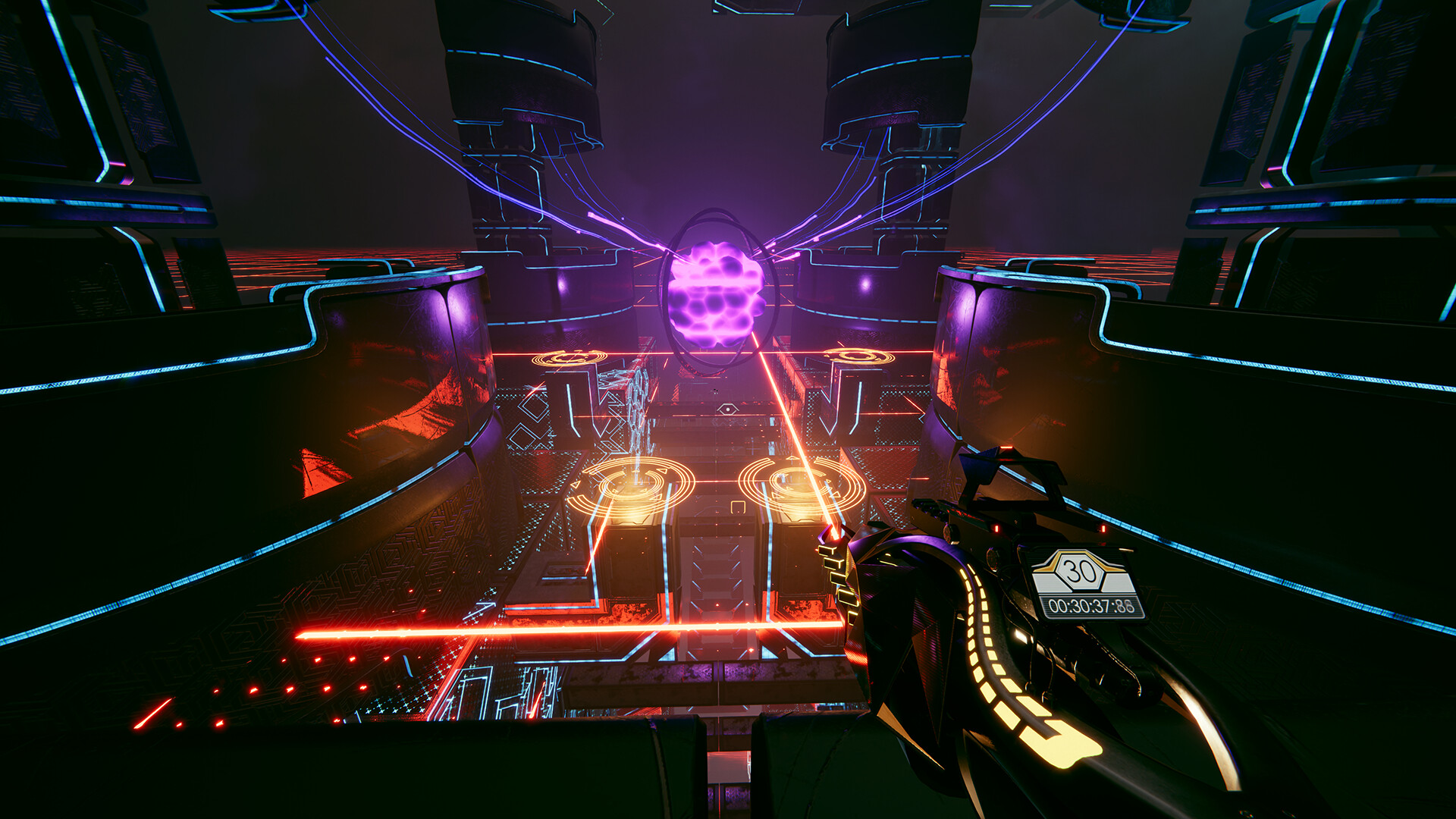
Speedrun Mode is the moment the Tower changes tense. Official features list online leaderboards, extra levels to unlock, and a tiered rank system that rates you on each stage. Those toys do not just make you faster. They make yesterday’s pilgrimage into this afternoon’s errand. A distant Spark stops being a souvenir. A story room stops being a commitment. You start thinking in lines instead of marches.
That shift is the closest DeadCore Redux comes to a power fantasy, and I like it more than a new gun model. Mastery, here, is logistics wearing sneakers. You learn a room, you stash a better route, you fly a ridiculous little Dash over a place that tried to eat you last week, and you land like a person who has mail. The map does not get smaller because the developers deleted geometry. It gets smaller because you invented commuting.
The Gateway is the other vehicle. Official copy calls it a new gigantic story level you complete before the true ending, and that sentence is doing honest work. Veterans of 2014 will feel the extra floor in their knees. Newcomers will feel it as the Tower finally admitting it had more to say. I will not write a spoiler white paper. What I can say is that the remaster would rather add a room than a cutscene, which is the right instinct for a climb that wants your hands.
Solo ranks sit next to the online board for people who like a receipt without a crowd. Badges for each level based on performance. Thirty-one achievements behind the loop. None of them change the central truth. You are here to reach a Summit and then find out what the Summit is for.
Remastered by Design, Demanding by Habit
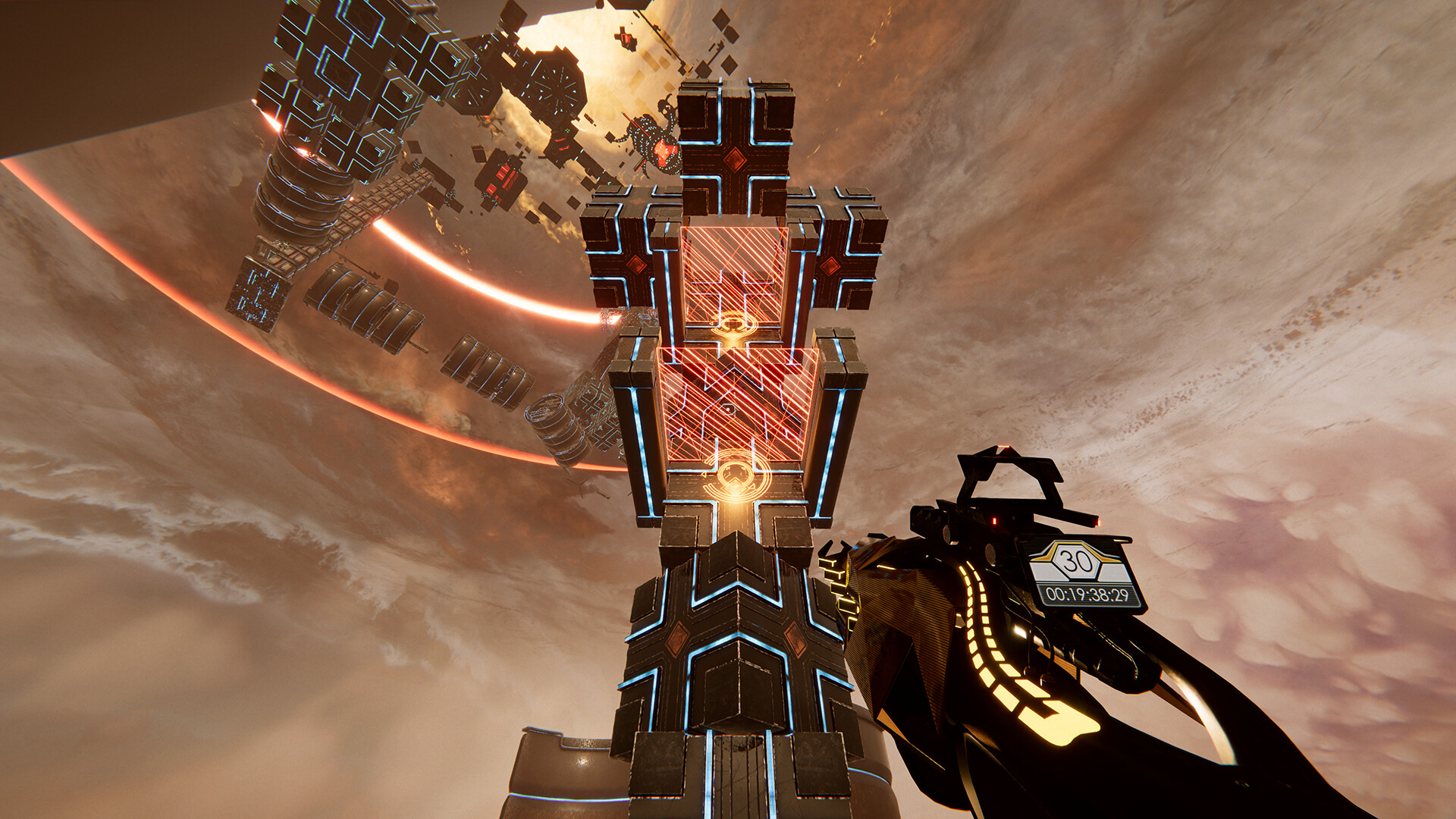
I should be clear about the friction, because it is real and it is not a footnote you hide after the score. DeadCore Redux looks like a game that was rebuilt by a small French shop that wanted a definitive climb more than a showcase reel. Landscapes can be handsome in the new Unity HDRP coat, with PBR lighting and volumetrics that make the original fog look like a rumor. Animations can still be stubborn. A jump can arrive a half-second late to its own confidence if you bring a 2014 muscle memory into a 2026 room. I will not invent a frame census. I will say the Tower sometimes asks for a precision the first hour has not paid for yet and then shrugs like weather.
Technical manners on a desktop build are cleaner than the original had any right to expect, and full controller support is on the feature list for people who would rather climb with a pad. The soundtrack has been remastered from ambient to dubstep with the sincerity of a playlist that already knew you. Sound effects were rebuilt. Mixing is clearer. None of that is unique to this remaster. All of that is the tax and the gift on a 2014 platformer that arrived twelve years later still wearing some of the same boots and a much better shirt.
Presentation is readable, which matters more than prestige. You can tell a safe platform from a trap from a secret at a glance once the lighting agrees to exist. If you cannot read a room, the route dies and the rank becomes homework. These spaces are atmospheric enough to carry a vertigo and clear enough to carry a plan. You always know where you are. You do not always know why a Guardian is already there.
English, French, German, Russian, Simplified Chinese, and Ukrainian sit on the language list, which is how a small Tower gets a bigger door. I will not turn this into a localization seminar. The voice of the game is the megastructure, and the megastructure talks in switches, storms, and the occasional Log that remembers someone else. A demo exists for people who like a receipt before fifteen dollars. None of that changes the central dare. You are here to break a Cycle and then find out whether the Cycle noticed.
Better With a Timer Than With a Checklist

I have a rule for cheap-to-mid precision platformers. If a game is worse with a timer than with a checklist, it is broken. If it is only good with a timer, it is honest. DeadCore Redux is honest, and that honesty should sit next to the price.
A story night is a competent weekend. You fall, you invent the gun, you lose a line, you walk back, you put a better Dash on the joke. A speed night is the version the systems were quietly designed around. Someone hunts Sparks. Someone builds a playlist. Someone learns, too late, that a gravity field does not respect architecture. The Tower becomes a shared instrument instead of a commute, even when you are the only person in the mist.
The Steam sample around a remaster this focused is always going to look modest in volume and loud in percentage. Very Positive is the official weather, 55 of 58 on the side of yes, and that split is fair. Players who wanted a deeper shooter, a prettier fight, or a narrative that sits you down bounce off. Players who wanted a lightweight climb with a SwitchGun and a bad idea about leaderboards stay. I am in the second camp with caveats, which is the only honest place to stand.
Compared with the giants of the first-person movement business, DeadCore Redux is not trying to be a career. It is trying to be a place. The developer said the quiet part on the store page. Exploration and speedrunning. Precision first. Fun if you will meet the Tower where it lives. That is not a cop-out if the place is worth the jump. Some nights it is. Some nights the Gateway is a theology problem and the Dash is a rumor. Both nights are DeadCore Redux.
Still Standing After the Fall

DeadCore Redux is a rare mid-priced remaster that understands its own joke and then has the nerve to make the joke a Tower. 5 Bits Games built a climb about amnesia, a gun about timing, and a toybox that looks a little homemade in 2014 and plays a lot more sincerely in 2026 than that sentence suggests. The loop is the hook. The ranks are the spine. The walk from a storm to a Summit is the grin.
It is better with a timer than with a checklist. The difficulty is real in the way a focused fight is real. Secrets can sulk. The presentation has indie fingerprints, from the stingy story to the room that would rather be a shortcut than a cutscene. All of that is true, and all of that is already priced in at $14.99, with a loyalty nod if you still own the original. You are not buying a decade. You are buying a weekend that can turn into several weekends if you like being a coordinated disaster, or being the person who has to explain the disaster to a leaderboard.
I am scoring it 8.5, Great, because the identity is this clear and the limitations are the limitations of a focused climb, not an empty one. I would recommend it to anyone who likes a jump that has weight and a map that is allowed to be rude. Distinctive Tower weather, a Dash that shrinks the horizon, ranks that turn geometry into conversation, and a price that respects your week are a lot of game for the ask. The systems repeat their manners. The manners are still useful.
The Tower is still out there, still hiring a night shift, still asking what memory was. After a few Summits, you will understand why the job is not finished, and why you keep waking up in the storm anyway.
We prepared this review with a digital copy of the DeadCore Redux for the PC version provided by Pressengine.