
There is a particular kind of optimism, rare in a genre that usually sends you down, in watching an archaeologist decide the only honest direction is up. The floor is leaving. The water is arriving. The hook in your hand is less a tool than a personality test. Pit Panic, the cartoon rogue-like platformer from Prague’s Flying Rat Studio, is built on that test, and the test is ruder than a sinking Aztec temple has any right to be.
I played the PlayStation 5 version, the July 21, 2026 launch that put a Czech Unreal Engine 5 project onto living-room hardware at $14.99 after a generous Steam demo had already argued about the hook. Flying Rat is a small Prague shop with a game director who likes slightly evil ideas and an artist who makes ruin look like a postcard you would still mail. You are a curious archaeologist trapped in a collapsing temple. You dig, swing, climb, and occasionally sell a slice of your health for a power that makes the next thirty seconds feel like a myth. More than a thousand handcrafted rooms shuffle by seed across four biomes. Two characters share the pit. Daily challenges keep a clock on people who thought escaping was the end of the conversation. Great, not gentle, and very much a climb I would recommend you take.
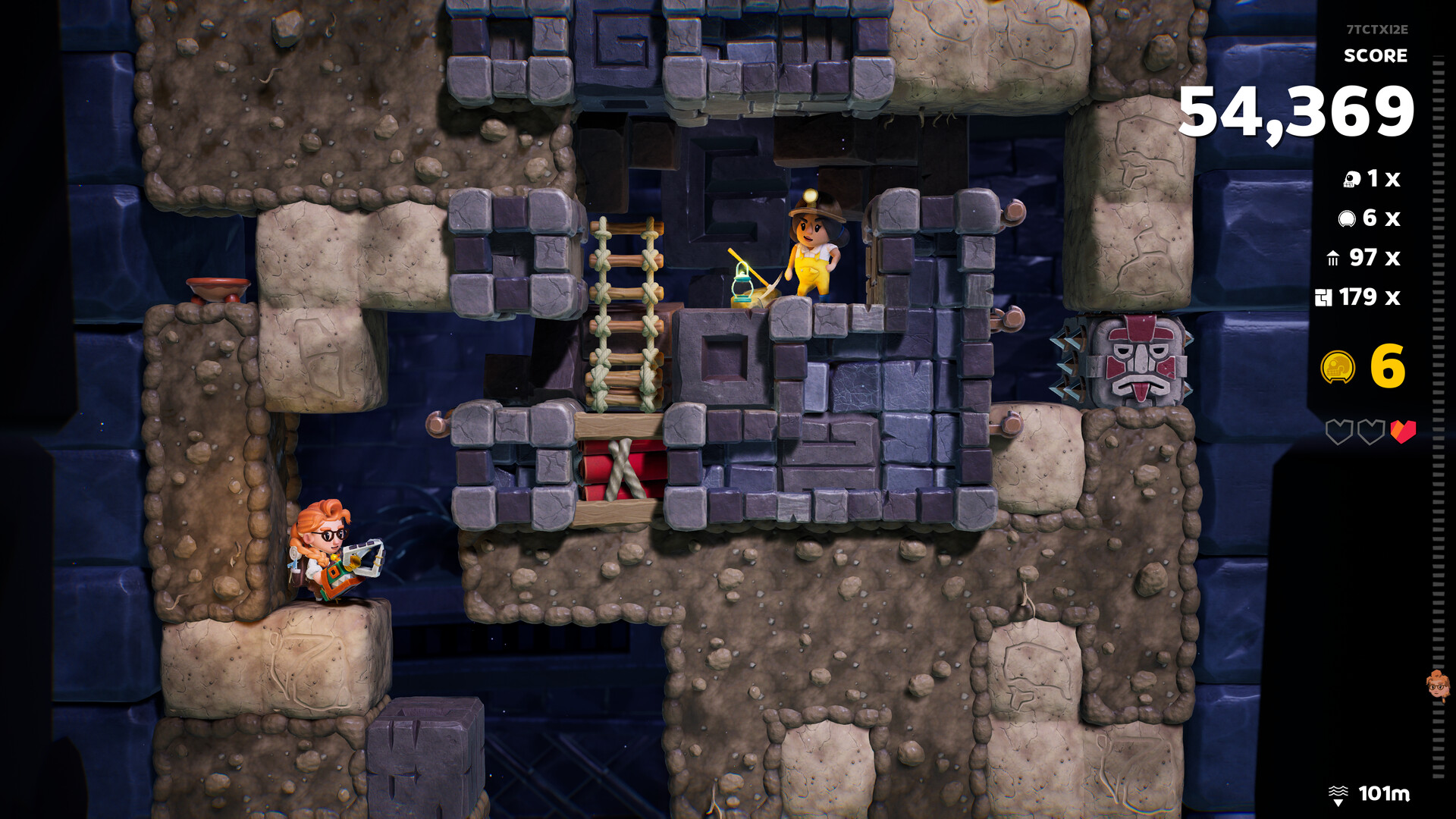
Dig Up or Get Buried
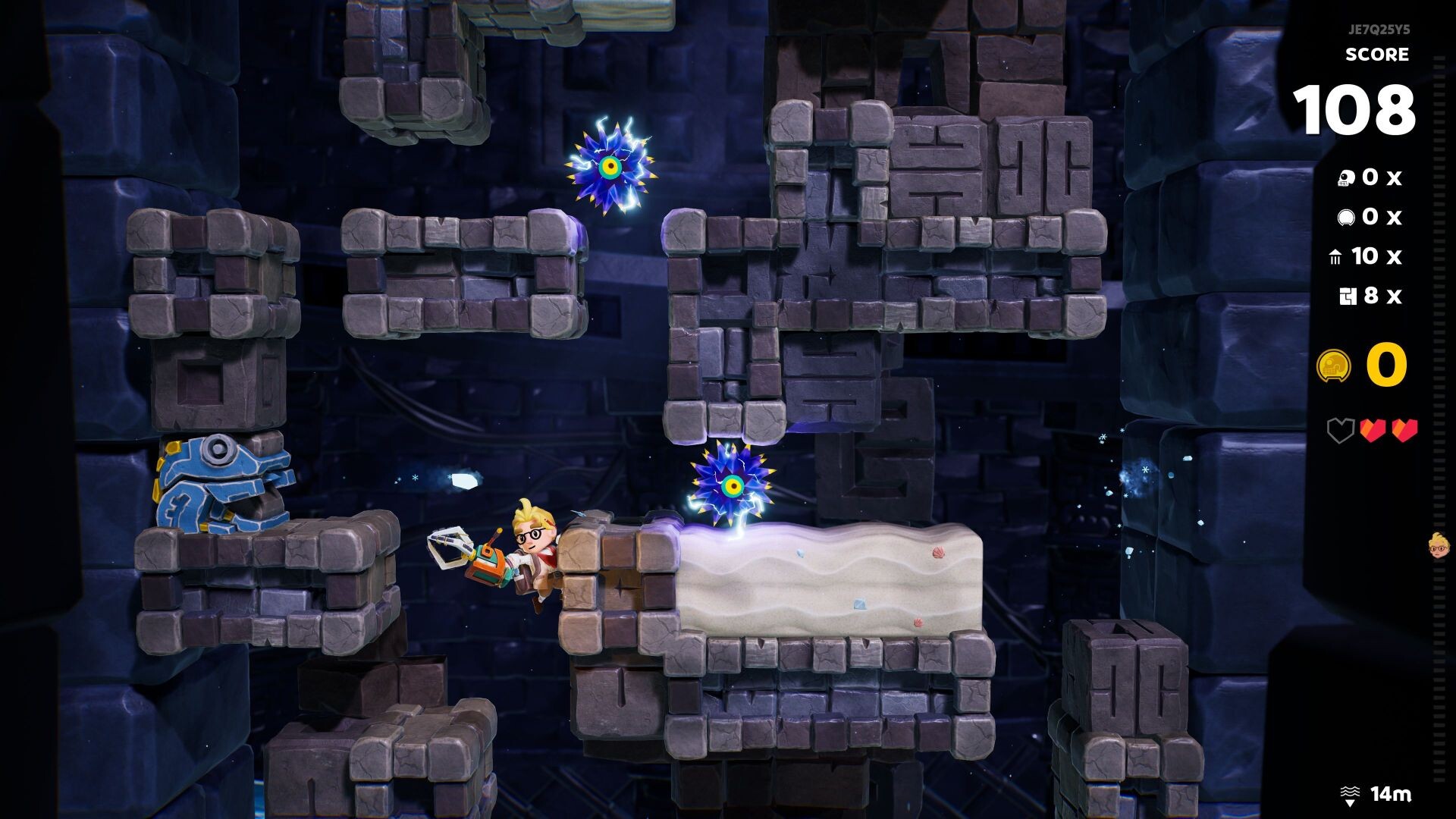
Most platformers give you a path and a reason to follow it. Pit Panic gives you a pit and a dare. The temple is sinking. The only surviving verb is up. That is not flavor text. It is the camera, the timer you feel in your shoulders, and the reason a bad jump is not a setback so much as a change of career. You will die in ways that would be funny if the water were not so sincere.
Story is environmental and stingy, which is the right instinct for a game that wants your hands more than your diary. Carved stone, trapped corridors, a frog that would like a word, bosses that remember they used to be worship. Ondrej Purchart keeps the lore in the walls and in the strange little asides, not in a seminar. You are not reading a novel. You are looting a disaster that is still happening. The two playable characters are less a narrative fork than a pair of accents on the same panic. One run feels like a professional who packed the wrong bag. The next feels like a tourist who packed confidence.
I like a premise that prices curiosity as a hazard. A lot of rogue-likes hand you a dungeon and a flashlight. This one hands you a temple that has already decided you are late. The joke is archaeological. The punchline is gravity. You came for artifacts. The temple would like you to become one.
The fantasy is not mastery of a map. The fantasy is competence arriving about half a second after a block turns into a problem. You will be crushed, drowned, toasted, and sent back to the mouth of the pit, and the correct response is to swing the hook like a person who has a reservation at the surface.
The Hook Is the Whole Sentence
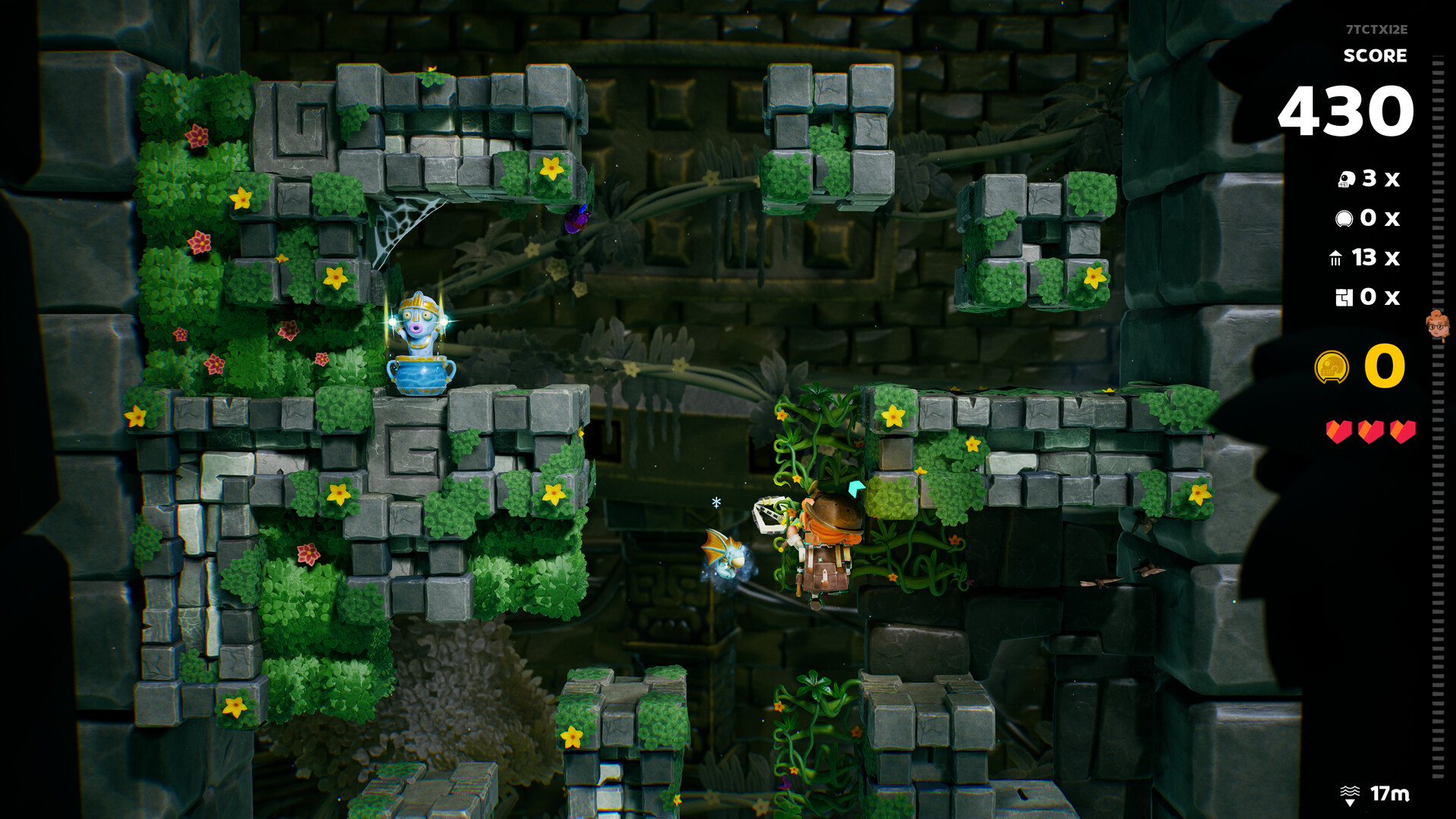
Movement is the reason the temple is worth the bruises. The mysterious hook is not a costume. It is the verb. Official copy calls it an omnitool, which is a polite way of saying it digs through blocks, swings you through air that has opinions, and unlocks the chests you would have walked past if you were a lesser tourist. Physics-driven movement is the house rule. You are not pressing jump so much as negotiating with momentum, and momentum is a landlord.
The first hour is a tutorial in not standing still. The tenth hour is a tutorial in looking like you meant the chaos. You blast interactive blocks. You turn sand into glass, jelly into fire, bridges into weapons if the room insists. Those transformations are not collectible gimmicks. They are the level speaking a language you are expected to answer in real time. A corridor that looked like a hallway last seed now looks like a throat with a pressure plate.
I have played a lot of games that borrowed a grappling hook and then treated it like a hat. Flying Rat treated it like a thesis. Digging is how you write a path that did not exist. Swinging is how you refuse the path that did. Climbing is how you admit both paths were a trap. The combination is why a room can be solved three ways and still kill you for picking the fashionable one.
Traps are readable if you are looking, which is a courtesy from a game that is otherwise happy to bury you for being polite at the wrong time. Spikes, water, fire, collapsing floors, the usual temple hospitality. The tell is fair. The window is not generous. That is the difference between a mean game and a sloppy one. Pit Panic is mean in the professional sense. If you got hit, you knew whose fault it was. Input lag is not the villain. You are.
Bosses are where the kit gets graded. Ancient, rude, and staged like a room that grew a personality. I got stuck. I changed the sentence I was speaking with the hook. I came back with less health and a worse attitude and a better line through the arena. The fights stayed fair in the way a good action game is fair. The frog will remember you. You will remember the frog.
Four Biomes, One Argument With Gravity
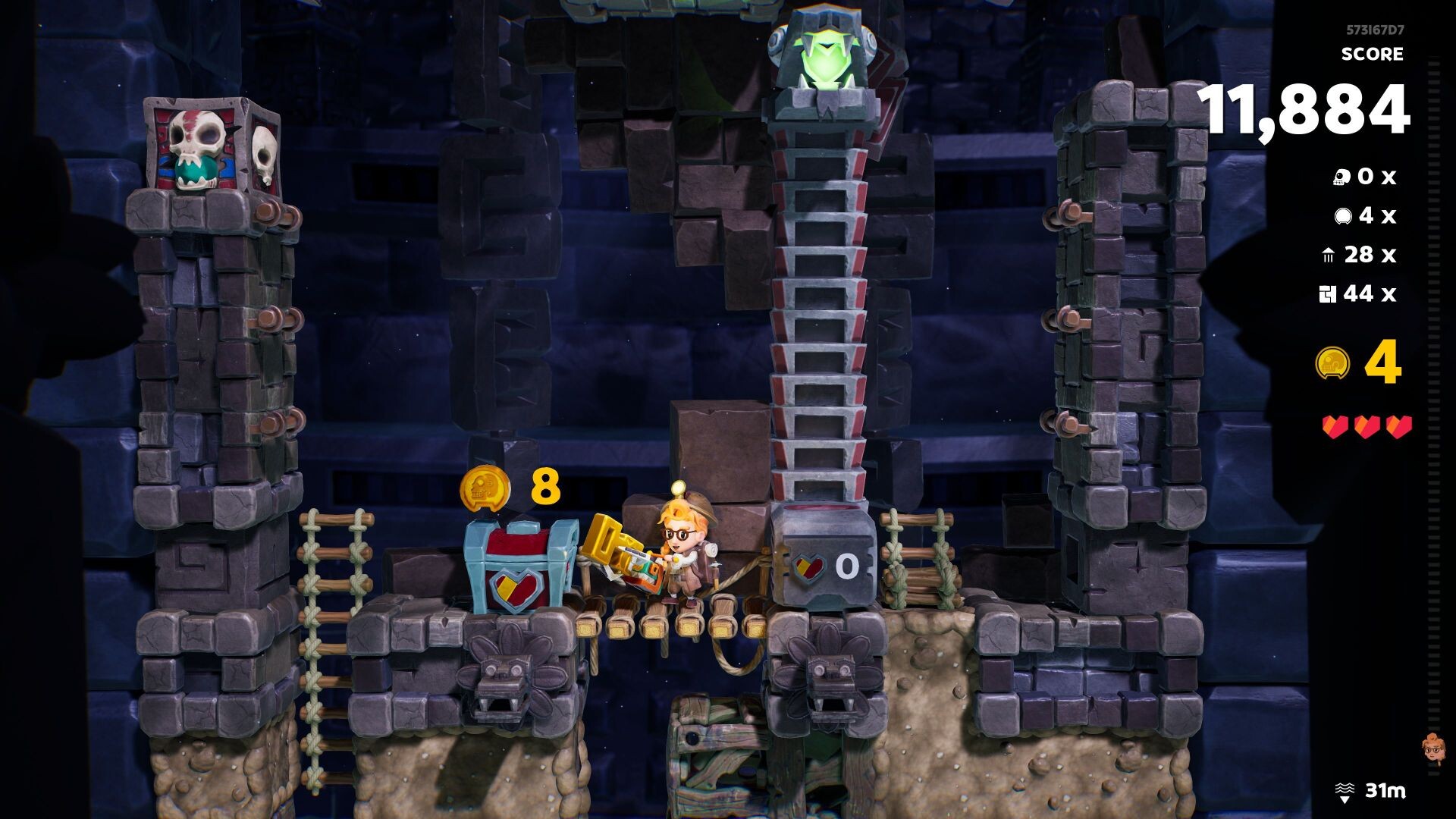
The temple is four arguments wearing one religion. Buried Grounds is tight corridors, pressure traps, and barely enough room to recover, a handshake that hurts. Flooded District lets water, fire, and vertical navigation collide in layered routes upward, which is a polite way of saying you will invent a new relationship with drowning. Excavation Site is mechanical relics and carved stone, faster lines, riskier lines, the biome for people who think they have learned the hook. Overgrown Ruins hides enemy pressure and climbing routes under lush surfaces, then asks you to make a hard choice while something leafy tries to collect you.
Those names are not flavor. They are handwriting. You can tell a biome at a glance, which matters, because if you cannot read a room the hook dies. Color and silhouette do the teaching. Martin Pelikan’s art is cartoonish without becoming a toy commercial. Ruin looks handsome. Danger looks like a joke you will not finish. Kateřina Vejdelkova’s animation keeps the archaeologist readable in a panic, which is the whole job.
Over a thousand unique handcrafted levels mix things up every time you play. That number is the official boast and, after enough nights, the official tax. The rooms are authored. The order is a seed. You are not wandering a procedural soup so much as drawing a new commute through a catalog someone actually drew. When it works, a familiar gag in a new doorway feels like the temple breathing. When it fails, a familiar gag in a new doorway feels like a commute with better lighting.
A built-in level editor sits in the back like a second temple. You can build rooms to put fellow adventurers to the ultimate test, which is the studio admitting the pit is also a toybox. I did not come to write a level-design textbook. I came to escape. The editor is there for the person who escaped and then got lonely.
Exploration still has secrets. Hidden treasures, alternate lines, the chest that only opens if the hook and a transformed block agree to cooperate. Puzzles are light and environmental. They ask you to look at a room and use the kit you already have. I like a puzzle that does not stop the climb for a quiz. These do not. They stitch the action to the map so a secret feels like a reward for paying attention, not a reward for reading a guide.
Health for Hire, Loot for Nerve
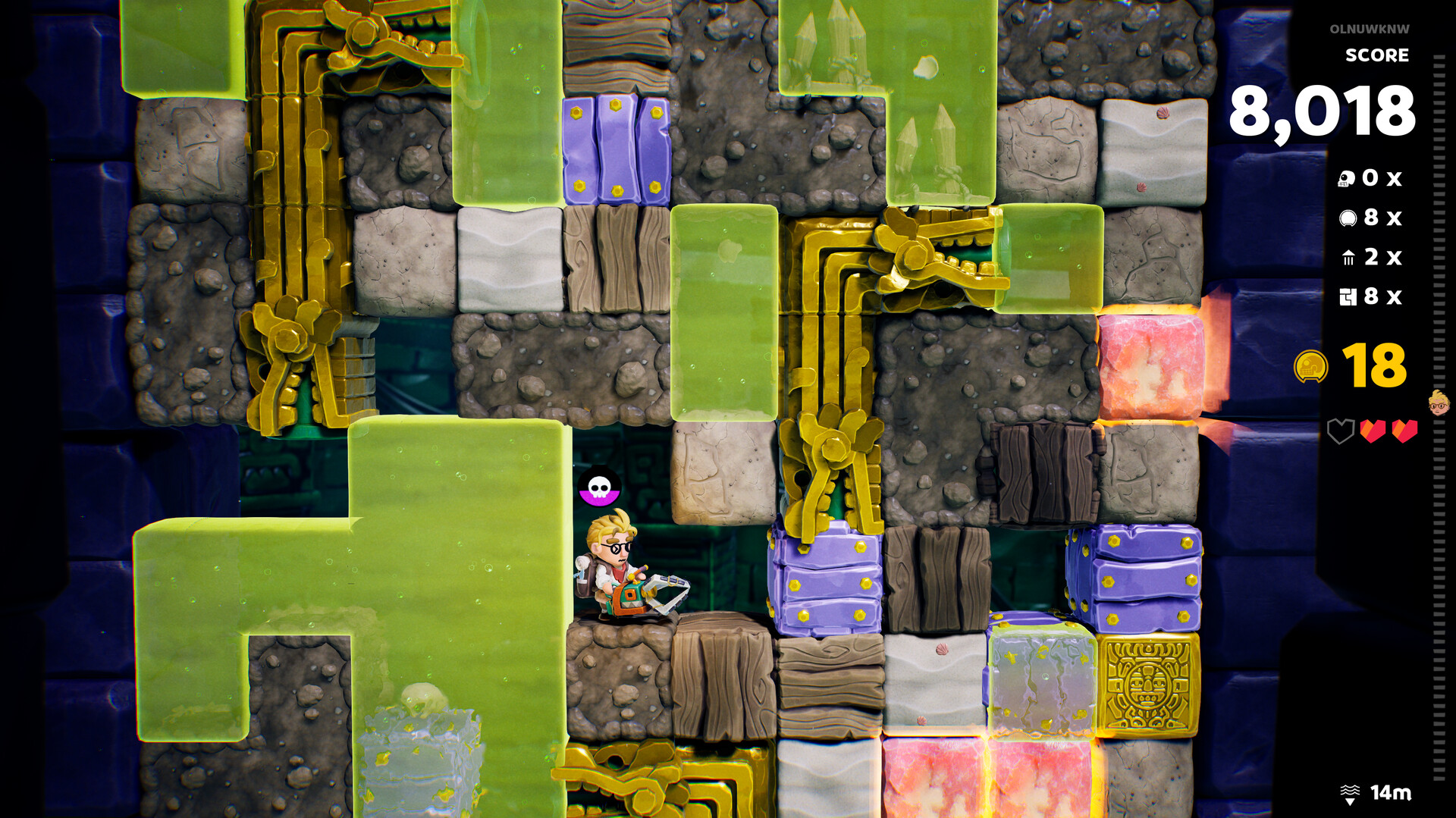
The economy is the other half of the personality, and it is not wallpaper. You hoard loot. You trade lives for god-like powers. That trade is the design’s best manners and its nastiest joke. A power-up that makes you briefly mythic is also a receipt that says you are now easier to kill. I have sat through plenty of rogue-likes that wanted to be a hug with a sword. This one wants to be a negotiation with your own pulse.
That negotiation is why I stopped resenting the structure. I am not always in the mood for a genre that asks me to roll the boulder up the same hill. Pit Panic makes the hill a temple that keeps a receipt. A failed run is still a harvest of knowledge: which block type is a liar, which biome wants a swing instead of a dig, which boss telegraphs with a sound you will hear in the kitchen later. Persistent mastery lives in your hands more than in a skill tree, which will irritate anyone who wanted a spreadsheet and please anyone who likes a craft.
Two characters keep the loop from becoming a single accent. They are not a pair of novels. They are two ways to be late. Switching is how you admit the last seed wanted a different kind of panic. Daily seed-based challenges drop a fresh layout every twenty-four hours, the same brutal pressure, a leaderboard for people who thought the surface was a retirement. Precious rewards wait for the times you can defend in public.
Thirty-nine Steam achievements sit in the background like a second excavation. Names like Tight Spaces, Out of Breath, and Watch out for the pointy ends tell you the studio has a sense of humor and a list of ways you will die. I will not turn this into a trophy guide. What I can say is that the pit is more interested in your relationship to speed than in a collectible checklist you could put on a wiki.
I keep coming back to the sacrifice. Trading health for power is a sentence most games write and then take back with a shop. Flying Rat leaves the sentence on the table. You will press it. You will regret it. You will press it again because the water is sincere and the chest is right there.
Cartoon Ruin, a Score That Hurries You, and a Frame That Listens
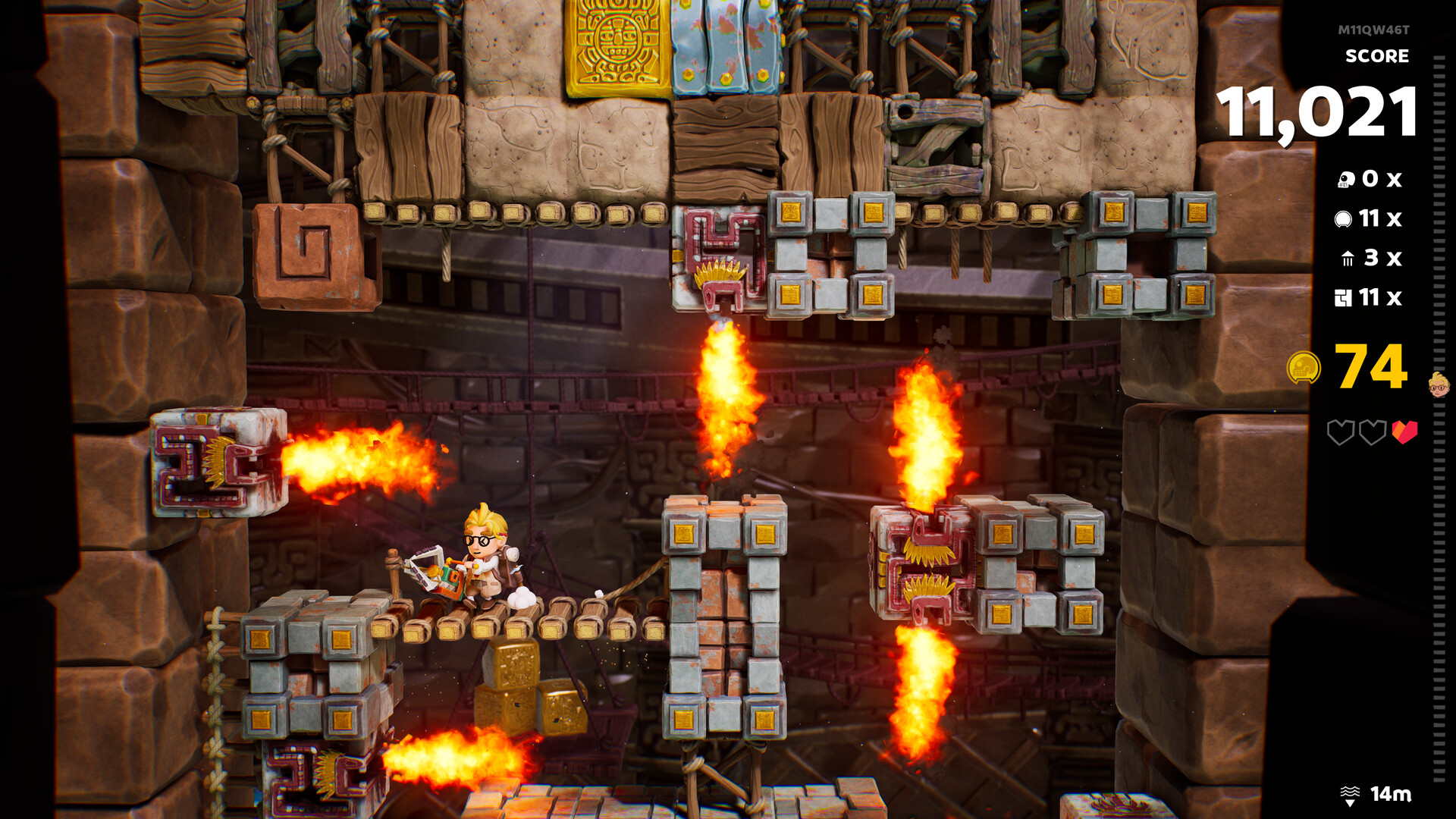
Presentation is the other reason the object feels more expensive than fifteen dollars. The look is hand-authored, high contrast, readable in a panic. Cartoon is the costume. Clarity is the craft. You can tell a safe ledge from a rude one at a glance, which is the review you want from a game that kills you for blinking. Early rooms still look like a dig site. Later rooms look like the dig site lost an argument with a god who likes practical jokes.
I have played a lot of indie platformers that announce a unique look and then deliver a pleasant palette with nicer outlines. Pit Panic’s temple has a handwriting. Buried stone, flooded color, mechanical grit, overgrown shine: four dialects, one author. Boss arenas get extra care. They feel like stages, not wider hallways. When a fight breaks and the pixels celebrate, it is not a loot explosion. It is the picture admitting you shut something ancient up.
Marek Mrkvicka’s music understands the assignment. It hurries you without becoming a metronome you resent. Biomes get a pulse. Bosses get a costume change that puts the encounter on a pedestal and makes a rematch less of a chore. Environmental audio does the rest: water that means it, stone that complains, the wet little sound of a trap that has been waiting. Hook hits land. The mix stays out of the way of the tells you need to hear.
Unreal Engine 5 is the engine, two gigabytes is the Steam ask, a GTX 1060-class card is the published floor on PC. I will not write a benchmark novella. On the nights I spent with the PlayStation 5 build the frame held, the inputs listened, and the hook arrived when I asked. That is the review you want from a physics platformer. If the swing is late, the game is over. The swing was not late.
Partial controller support is the Steam checkbox. On a DualSense the hook felt like a shoulder and the jump felt like a face button, which is how a living-room pit should feel. A run can be a clean, almost elegant escape or an onslaught that treats your plan like a rumor. That range is the promise on the box and, most nights, the promise holds.
When the Seed Starts Rhyming With Itself
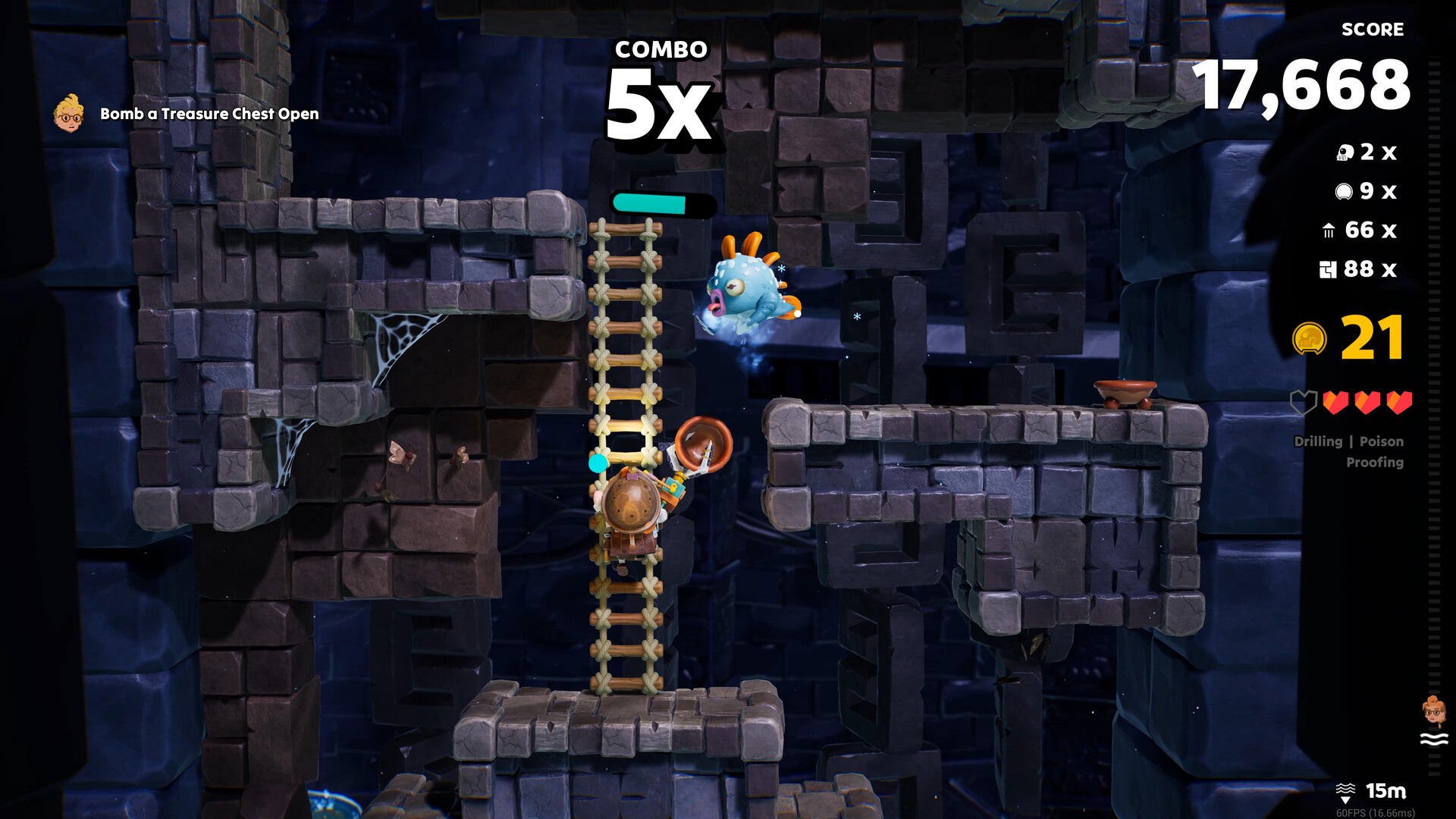
I should be clear about the friction, because it is real and it is not a footnote you hide after the score. The rooms repeat their manners. New biomes, new bosses, new ways to turn jelly into a problem, and still, after enough evenings, a corridor that is a rearrangement of an earlier corridor. A thousand handcrafted levels is a spice rack. Spice is not a meal if the recipe keeps winking the same way. When the same category of surprise sits in a new costume, the surprise becomes a commute.
That is the cost of blending authored rooms with a seed that shuffles the commute. I wanted, more than once, another twenty minutes in a beautiful line the water was about to confiscate. I also wanted, more than once, a new verb in a late biome and received a conjugation of an old one. Enemy variety thins if you live too long in the same depth. A lucky power trade can flatten a floor if the seed gods are kind. The panic, as atmosphere, is stronger than the panic as a scare. Cartoons do a lot of the lifting. Dread does less. I felt hurried. I did not often feel afraid, which is fine, because the box never promised a haunting.
Difficulty spikes are the other tax. Early runs are poor on purpose. Official copy pitches a clean campaign around ten hours and early attempts closer to forty, which matches the evenings I donated to learning the hook’s manners. A seed can hand you a room that is a lecture. None of this is a broken object. All of it is why the score stays at Great instead of wandering into the next adjective. A small Prague studio made a complete temple with a movement idea that holds, a loop that respects your time if you accept that time will be spent dying, and a visual thesis you will remember.
At $14.99 you are not buying a fifty-hour castle you can live in. You are buying a climb you will repeat, a hook you will learn, and a pit that will start to look familiar before it stops being handsome. Daily challenges and the editor are the overtime. The temple is the shift.
Still Climbing After the Floor Gives Out

Pit Panic is the rare mid-priced platformer that understands its own joke and then has the discipline to make the joke a system. Flying Rat Studio built a climb about curiosity, a hook that has to share the frame with a sacrifice, and a temple that keeps rewriting the hallway while the water remembers what you stole. The hook is an omnitool on a dying workplace. The spine is the way a failed run turns into a better line. The scar is the night the seed rhymes and you climb anyway, because the next boss has a tell you have not finished listening to.
It is better as a craft than as a novel. The movement stays the reason to recommend it. The cartoon ruin stays the reason you keep the window open. The repetition is real. So is the grin when a swing steals a room and a reckless trade turns a bad seed into a story you will tell like you meant it.
I am scoring it 8.5, Great, because the identity is this strong and the limitations are the limitations of a focused rogue-like, not an unfinished one. At $14.99 you are buying stylish physics comedy, a thousand authored rooms that agreed to be shuffled, and a loop that respects the fact that death should leave a receipt in your hands. I would recommend it to anyone who likes a tool that has weight and a map that is allowed to lie a little. Distinctive vertical panic, four biomes with handwriting, daily seeds for the restless, and a price that respects your week are a lot of game for the ask. The rooms repeat their jokes. The jokes are still sharp.
The archaeologist is still climbing a temple that will not stay still. After a few escapes, you will understand why the job is not finished, and why you keep dropping back into the pit anyway.
We prepared this review with a digital copy of the Pit Panic for the PS5 version provided by Pressengine.