There is a particular kind of invitation, rare in a genre that usually hands you a loadout screen and a lone-wolf fantasy, in being asked to pause a hallway, draw a line through it, and then walk that line like the paper was a contract. The door is still a door. The heartbeat sensor is still a heartbeat sensor. The first friendly bullet that tries to teach you a lesson is not a metaphor. Phantom Squad, the 1-4 player co-op tactical top-down shooter from Ctrl Freak and Super Rare Originals, is built on that contract, and the contract is ruder, tighter, and more useful than a fourteen-dollar raid has any right to be.
I played the PC version, the 18 July 2025 launch at $13.99 that Ctrl Freak walked onto Steam after a demo that already knew how to mark a door. You plan a strike. You mark a route. You clear a room that would like you quieter. Thirteen Steam achievements sit behind the loop. The English Steam sample is Very Positive, 80 percent of 407, which is the honest weather of a loud little tactical toy and not a dare. Great, not glossy, and very much a weekend I would recommend you spend if you like a shooter that treats a whiteboard as a weapon.
The Door Does Not Care What You Drew
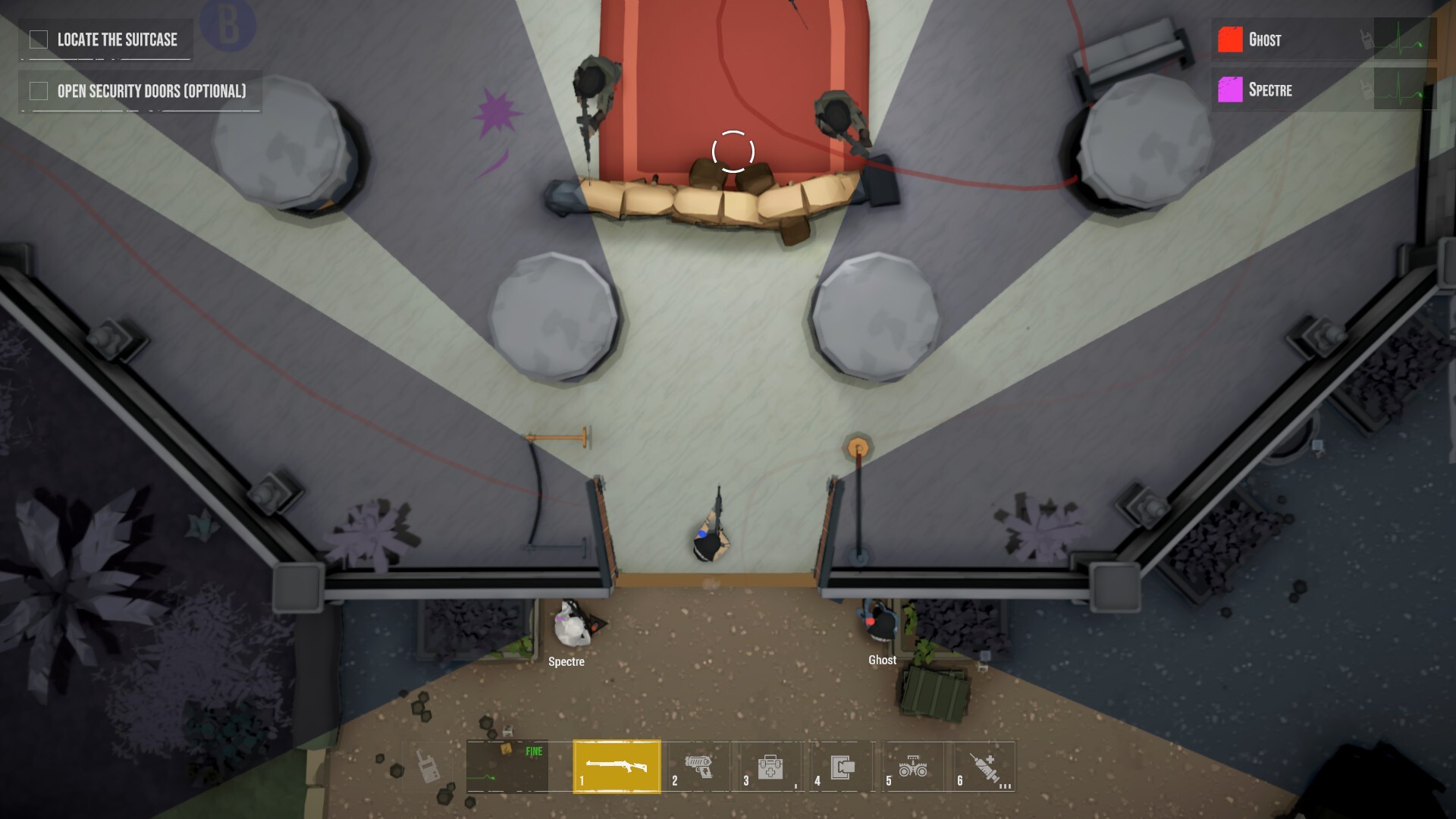
Most tactical shooters begin with a briefing and a flag. Phantom Squad begins with a pause. Official copy on Steam says you drop into the chaos of top-down tactical combat built for co-op, then asks you, with the grammar of a person who has already lost the lone-wolf argument, to squad up for 1-4 player missions where communication, coordination, and smart planning are the difference between clean execution and a total wipeout. That is not flavor text. It is the design refusing to pay for a cinematic when a doorway will do.
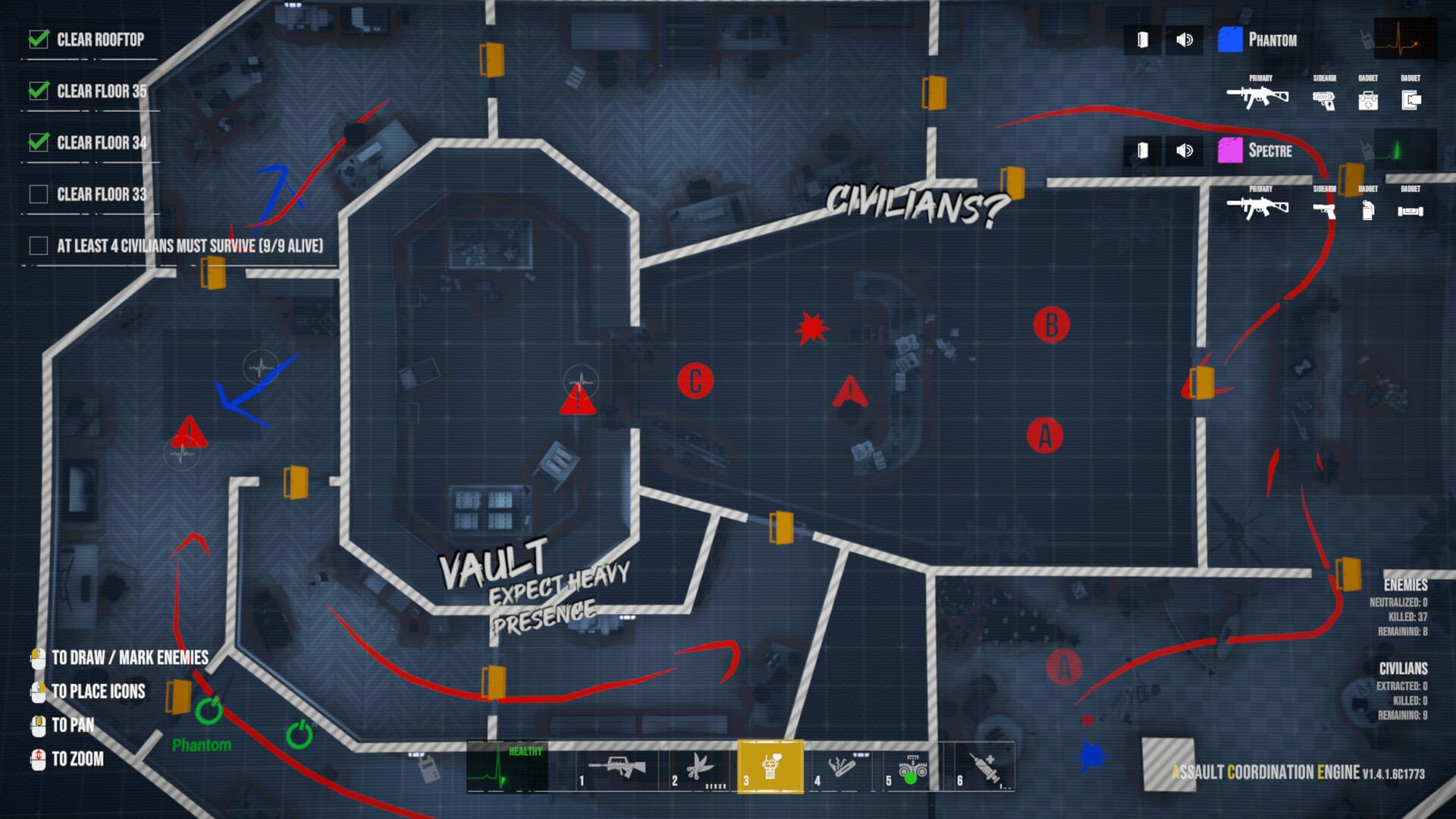
You start marking because the alternative is becoming a rumor in a place that does not keep rumors. The first stretch is staged like a punchline that forgot to be funny. You draw a path. The door thinks about it. Someone on the other side thinks about you. The script, still a little breathless, asks you to move as one unit. Nobody else will cover the angle you forgot. That is the rest of the map.
I like a premise that prices curiosity as a hazard and then lets you walk toward it anyway. Downtown buildings, jungle compounds, arctic labs, and an embassy that has already hired a night shift sit on the campaign like questions with walls. Why are there hostages and no backup. The more you play, the more the floor plan answers with another room. Story is environmental and stingy, which is the right instinct for a game that wants your comms more than your diary. You are not reading a novel. You are looting a raid that is still happening.
The fantasy is not mastery of a lore bible. The fantasy is competence arriving about half a mission after you invent a reason to watch a stair. You will die in ways that would be funny if the restart were not so sincere. You leave a teammate. You walk back. You become the kind of person who thinks a door cam is a personality. Official copy even names the cousins, Doorkickers, Ready or Not, Rainbow Six Siege, which is a polite way of saying the shop already knew how a room should argue.
Pause the Hallway, Then Invent a Breach
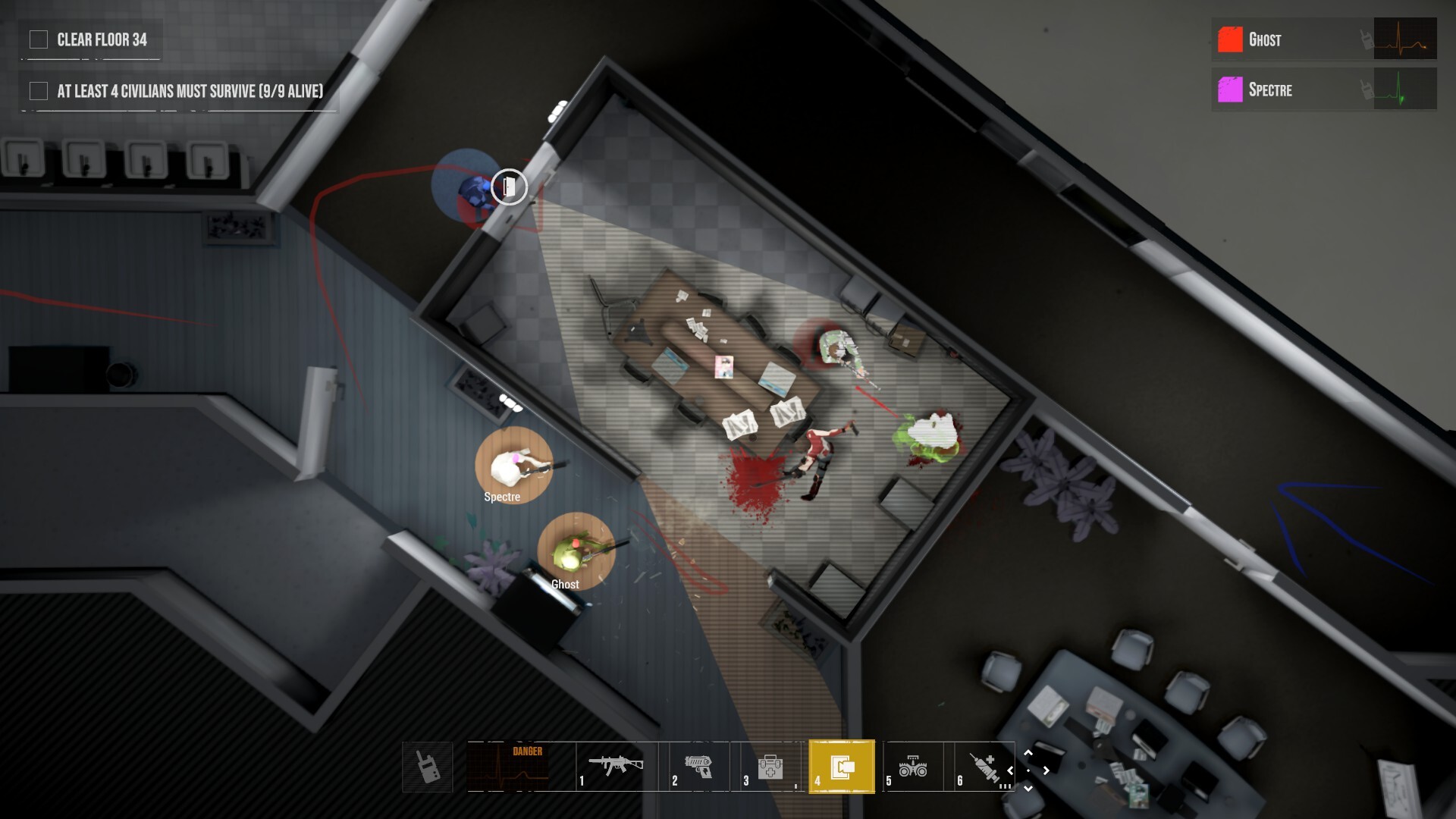
The loop is the old religion and Ctrl Freak does not pretend otherwise. Plan the entry. Mark the objective. Cover the angle. Adapt when the enemy refuses to stay on the paper. None of that is a revolution. All of that is the sentence the rest of the toybox has to live in.
The Assault Coordination Engine is the temperature change and the kinder half of a week. Official features ask you to mark routes, objectives, and entry points as the mission unfolds, then use voice chat and in-game tools to keep the paper honest. A.C.E. is the name the shop gave the pause. You freeze the hallway. You draw a path. You tag a body that has not noticed you yet. You agree, out loud, that the left door belongs to someone else. Then time comes back and the drawing has to become a person. If you want a shooter that never asks you to talk, you will feel underemployed. If you want a night that turns a whiteboard into a conversation, you will feel hired.
I have played a lot of games that treat the first door as a tutorial and the hundredth door as a spreadsheet. Phantom Squad is heavier than that on purpose. When the shooting starts, official copy says every bullet counts, and the game means it with the manners of a shop that will not sell you a second chance. One shot can make the mission. One shot can take a friend. Friendly fire is not a footnote you hide after the score. It is the joke the whole squad is telling. Stay sharp is the store page version. Do not stand in the doorway you just assigned to someone else is the version you learn.
Loadouts are straightforward in the way a good workbench is straightforward. You are not drowning in a battle pass that could unionize. You are looking at more than thirteen weapons and more than twenty specialized gadgets and deciding whether you have been useful enough today. Scouting devices, incapacitating equipment, heartbeat sensors, breaching tools, traps, door cams, flashbangs, the usual groceries of a raid that wants you quieter. Firepower is not enough, the page says, and the page is right. Master them or get left behind is both a promise and a warning.
Difficulty is the other half of a pitch this game never needed, because it shipped finished and then kept hiring. Rookie is the live-fire classroom. Normal is the sentence the rest of the toybox has to live in. Hardcore treats every enemy as a dangerous threat and then asks whether your comms can survive the compliment. I left Rookie on for an evening and Hardcore on for another. The door did not mind. The patrol minded either way.
Gadgets, Heartbeats, and a Room That Matters
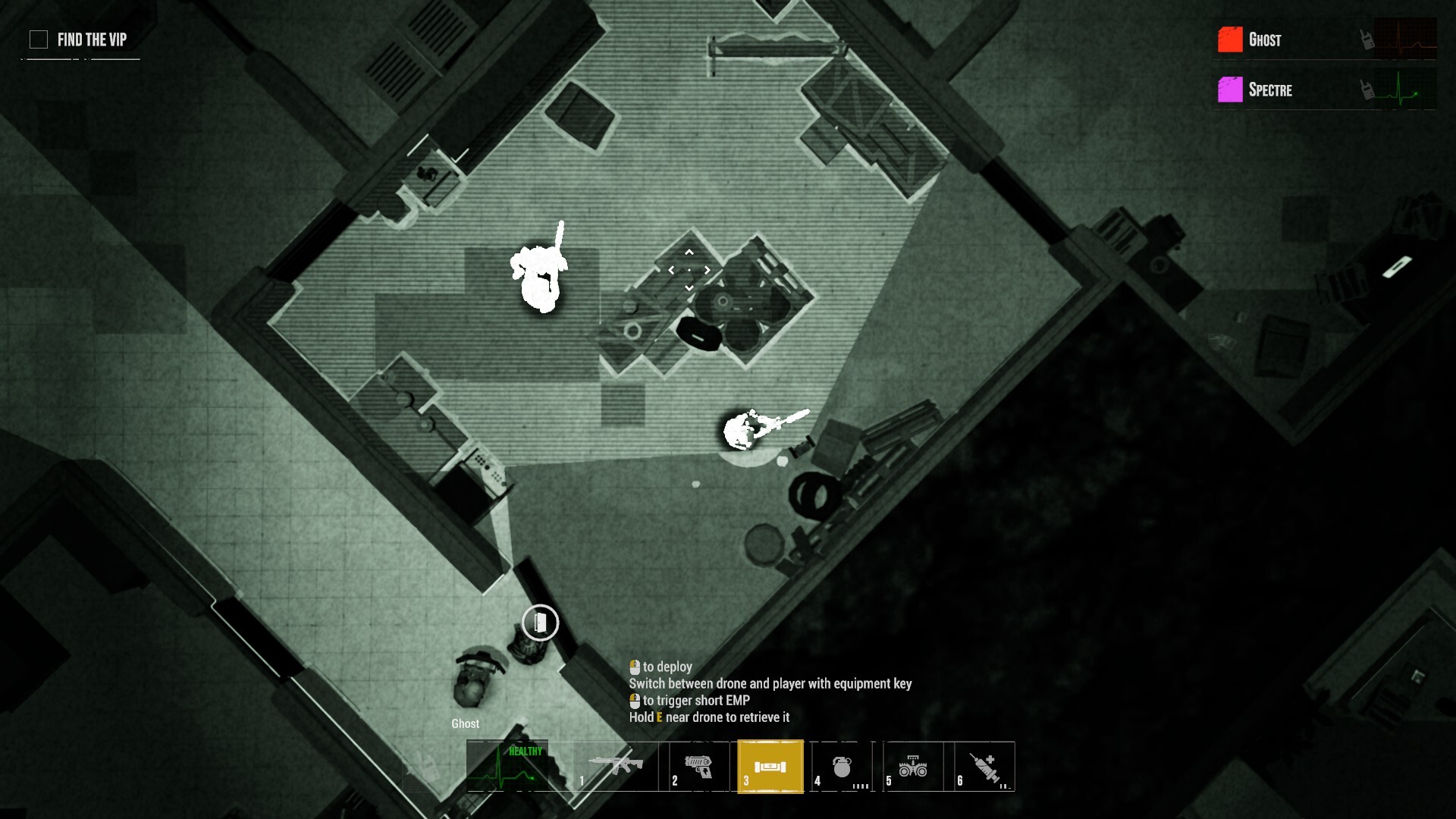
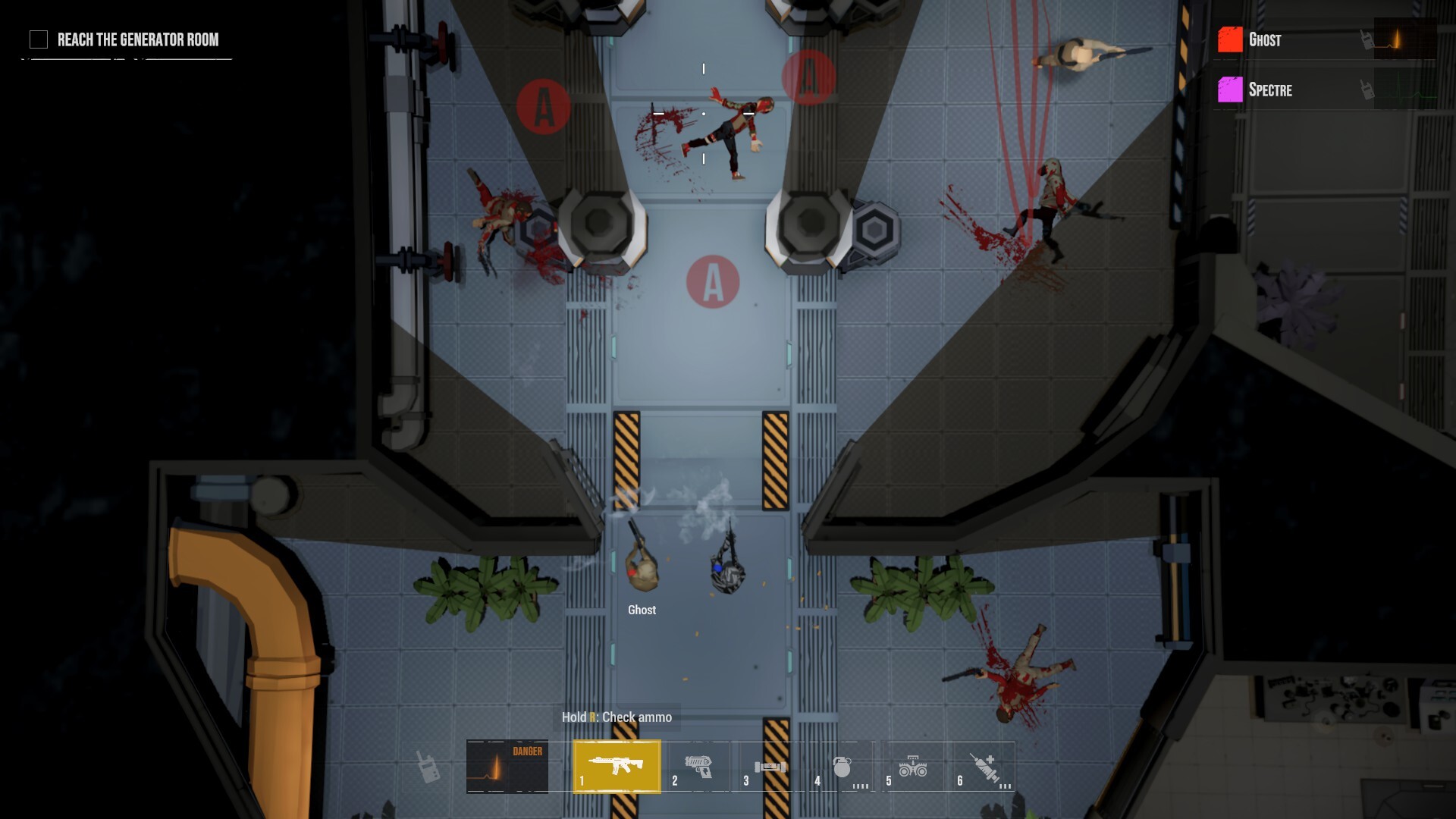
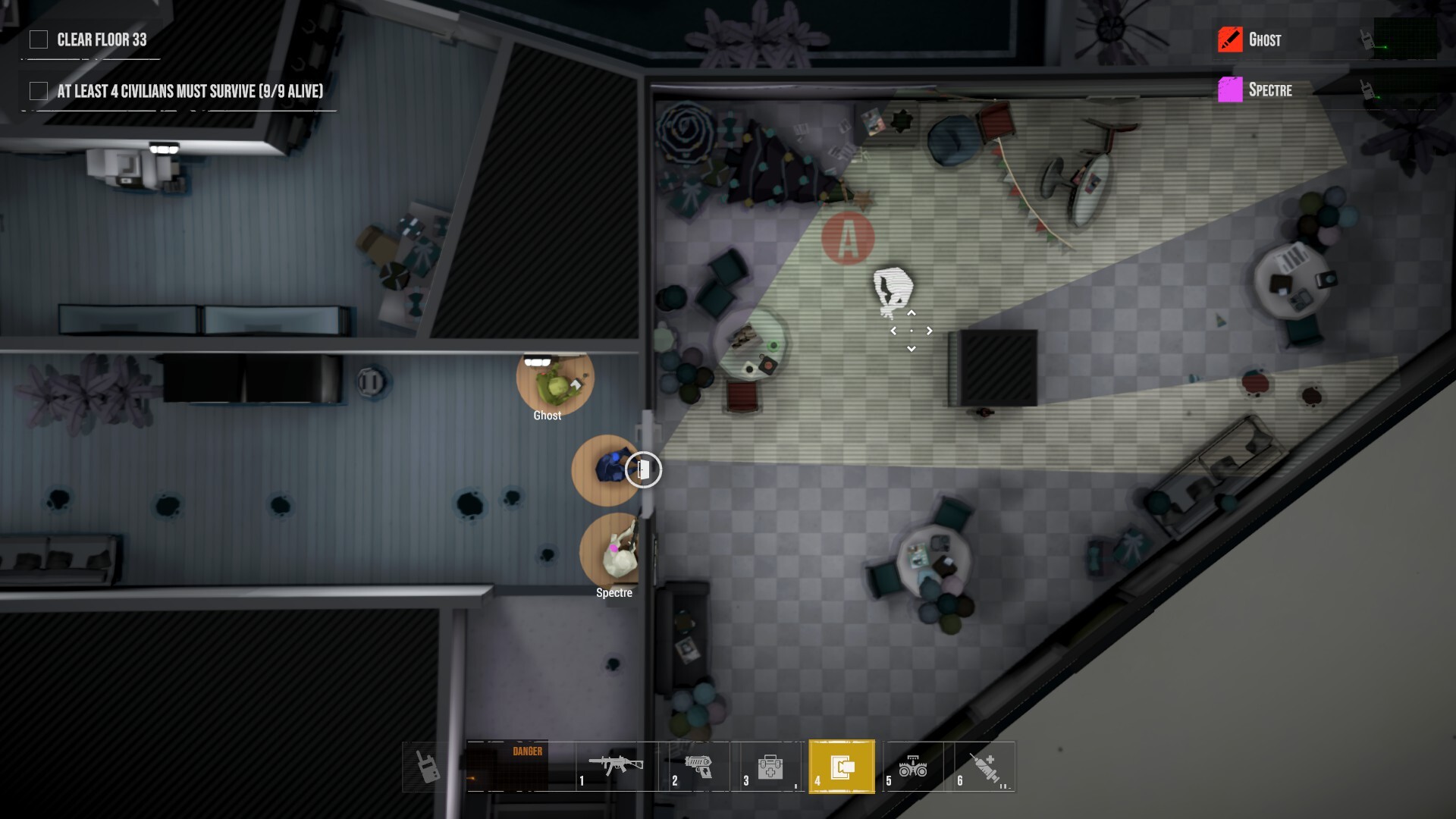
Combat is not a peaceful walking simulator with nicer lighting. A heartbeat sensor handles the general population of problems if the general population is polite enough to have a pulse. A later, nastier room will empty your manners if you treat it like scenery. Further in, a dog, a trap, or a line of sight you drew through a friend would like a word, and the word is short. Getting a silenced rifle with actual manners takes a while. Until then, positioning is a strategy, not a cowardice.
I will not invent a highlight reel with fake timestamps and tidy clear counts. The nights that stay with you are the ones where you thought the plan was finished, then something started knocking in a rhythm that was not weather, and then you were on the wrong side of your own architecture. Gunfights can feel like four people agreeing to take turns being disappointed. That clunk is real. It is also priced into a tactical loop that would rather you plan, retreat, and come back dressed. Distance helps. A working door cam helps more.
Sound is the other half of the short description. Footsteps change their mind on concrete and metal. Enemies murmur around corners like people who have not read your drawing. A silenced pop is a physical sentence. For a toy where information is half the fight, that audio craft feels like hiring.
The modes that arrived after launch keep the commute from becoming a museum. Official news lists T-Hunt, Bomb Defusal, and Hostage Rescue next to the original mission list, which is a polite way of saying a year of patches remembered that a door can have a different job. Matchmaking was the highly requested sentence. It is in the game now. You can still bring your own three. You can also jump into a random squad and discover whether strangers will treat a whiteboard as a contract. The loop is kinder when someone else is watching a stair while you argue with a lock.
During a mission, official copy says trust is your strongest weapon, and the sentence would be marketing if the friendly fire were not so sincere. You will flash a friend. You will shoot a friend. You will become the kind of person who apologizes to a hallway. All of that is the job.
Eleven Maps, Three Stars, and the List Getting Meaner
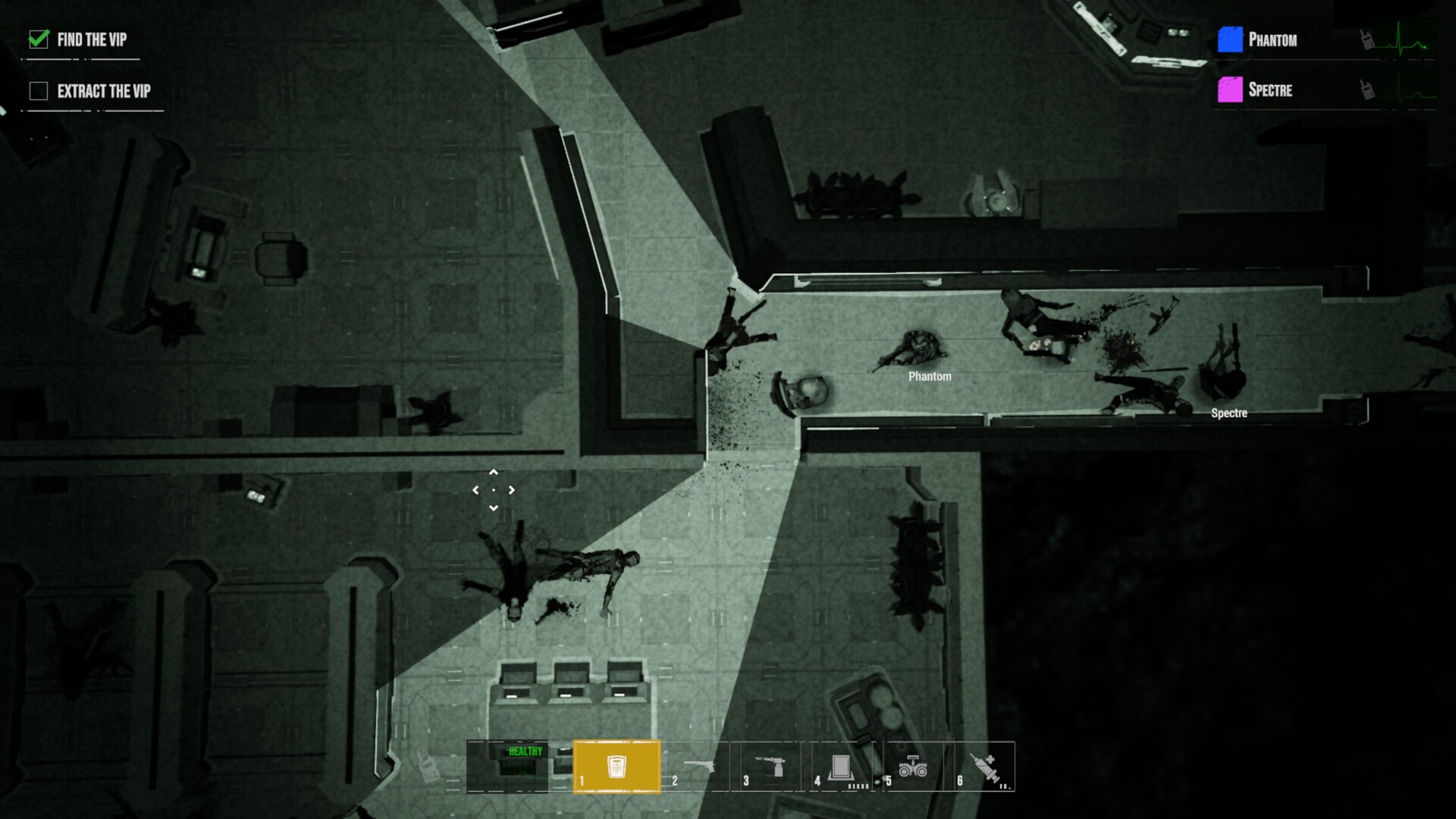
Pressure is the variety. A door that holds is a better reward than a new silhouette if the silhouette is just another way to lose a squad. Hunting rooms is good practice and a grocery run. Museums, compounds, labs, an embassy that would like you quieter, a warehouse that learned to hide traps, the usual drowned hospitality of a global threat that never bothers to explain itself. Sparks happen. The store page is not shy about it. What the store page cannot tell you is how quickly you will start treating a clean extract as a mood stabilizer. You shoot. You revive. You put the rifle down and look at the whiteboard like a person who has decided civilization is a doorway.
The launch list is eleven missions, and eleven is both a promise and a warning. The maps are hand-built, which is the right instinct for a game that wants mastery more than a generator. Enemy positions and patrols have enough habit that you can learn a floor, and enough spite that the second star will still ask you to extract every hostage or defuse every trap instead of leaving the leftover problem for the next shift. Achievement names sit on the list like receipts. Olympus Strike. Deadwire. Chemist Abduction. Chainbreaker. Party Hard. Stealth Lab. Embassy Tension. Ghost Walker. Power Down. Die Hard. None of them change the central truth. You are here to hold a doorway and then find out what holding is for.
A year on, the shop is still hiring. Leaderboards arrived with the anniversary like a person who has decided performance is no longer a matter of opinion. Patches fixed the quiet humiliations a small tactical game collects: ammo boxes that desynced, a shield that could not decide how it felt about explosions, a checkpoint that sulked if you joined Chainbreaker late, a solo mode that vanished offline. Soft flashbangs are a toggle now. I will not invent a frame census. I will say the building sometimes forgets to stock the smoothness you need and then shrugs like weather.
Presentation is readable, which matters more than prestige. You can tell a lab from an embassy from a jungle compound at a glance. If you cannot read a room, the hunt dies and the plan becomes homework. These spaces are atmospheric enough to carry a scare and clear enough to carry a plan. You always know where you are. You do not always know why a patrol is already there. The voice of the game is the hallway, and the hallway talks in heartbeats and the occasional knock of a trap you should have marked.
Solo Is Legal and Lonely
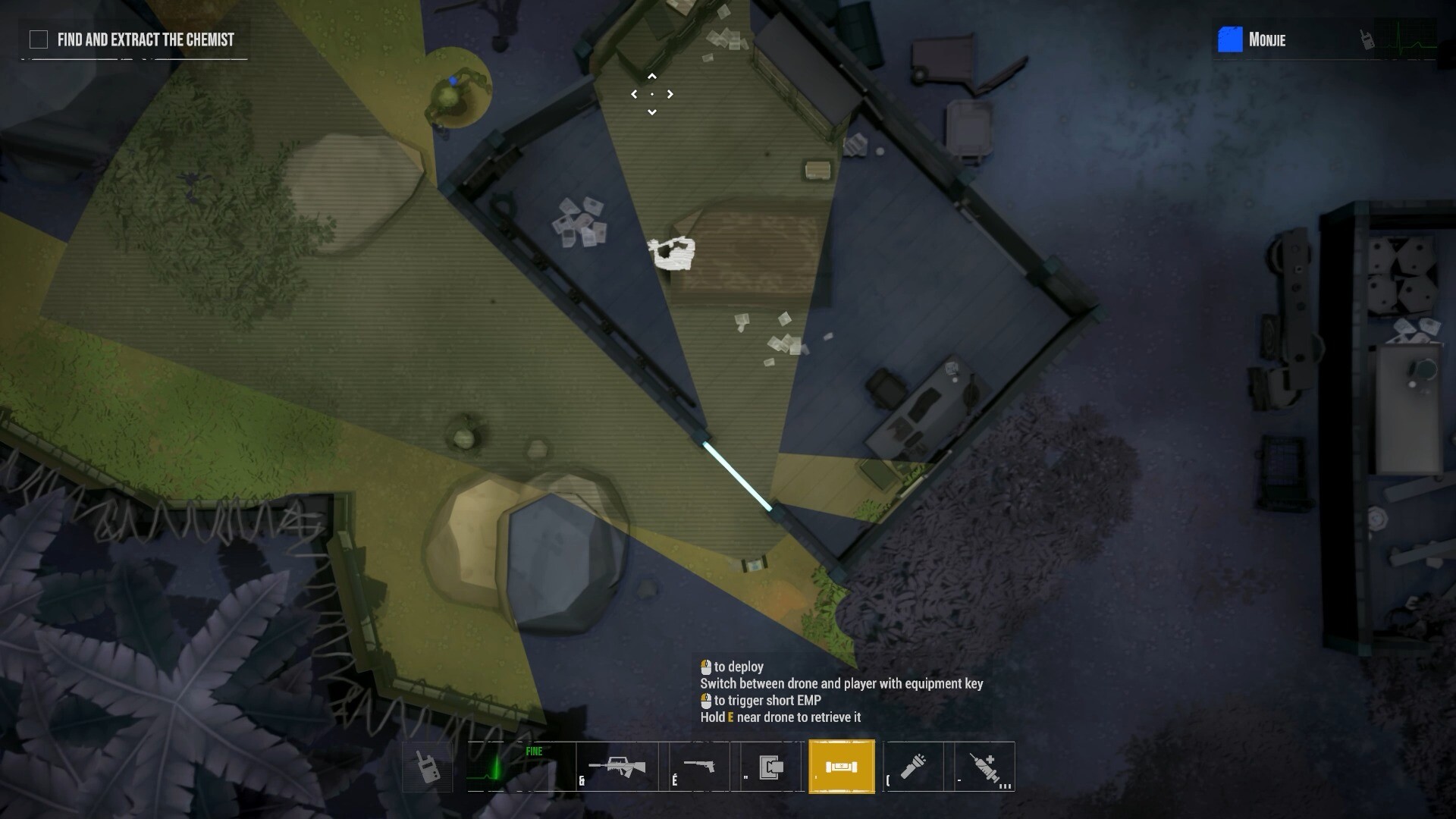
Solo is legal and lonely. Steam lists single-player next to online co-op because the campaign will let you walk in alone. The shop even built Rookie with that walk in mind, a live-fire classroom for people who would like to learn a map and test a gadget without a committee. A defibrillator gives you a short stack of self-revives, which is a polite way of saying the game will let you be wrong three times before it asks you to be serious. Gadgets feel thinner when you are the only person holding them. That is not a bug. That is the design telling you who it hired.
I should be clear about the friction, because it is real and it is not a footnote you hide after the score. Phantom Squad looks like a game that was built by a very tiny shop that wanted a raid more than a showcase, then discovered the raid was a year of doors. Landscapes can be handsome. Animations can be stubborn. A swing can arrive a half-second late to its own impact if a host is having a philosophy. Performance can sulk when a late room decides to remember itself. None of that is unique to this building. All of that is the tax on a fourteen-dollar tactical toy that launched in July 2025 and is still hiring in 2026.
The mission list is the other honest tax. Eleven hand-built raids is a weekend you will remember and a month you will finish. Modes and stars and leaderboards stretch the commute. They do not invent a second campaign. If you want a career, you should wait for whatever Ctrl Freak builds next. If you want a place that is already a place, you are the audience.
Technical manners on a desktop build can stutter when a late room decides to be a theology problem. Enemies can get philosophical in a doorway. The developers wrote the patch notes with the candor of a shop that has already lost the argument with a finished date, then kept shipping anyway. If you want a polished fight that never asks you to restart, you should wait. If you want a hallway that is already a hallway, you are hired.
Better With a Squad Than With a Checklist
I have a rule for mid-priced co-op. If a game is worse with friends than with a checklist, it is broken. If it is only good with friends, it is honest. Phantom Squad is honest, and that honesty should sit next to the price.
A checklist night is a competent weekend. You punch the door, you invent the loadout, you lose a friend, you walk back, you put a better lock on the joke. A squad night is the version the systems were quietly designed around. Someone watches a stair. Someone holds a flash. Someone learns, too late, that a trap does not respect architecture. The building becomes a shared instrument you play with three other people instead of a commute.
The Steam sample around a game this loud and this cheap is always going to look like weather. Very Positive is the official report, 80 percent of 407 English voices, and that split is fair. Players who wanted a longer campaign, a prettier frame rate, or a solo mode that never feels like a deficit bounce off. Players who wanted a top-down raid with a whiteboard and a bad idea about friendly fire stay. I am in the second camp with caveats, which is the only honest place to stand.
Compared with the giants of the tactical business, Phantom Squad is not trying to be a career you finish this week. It is trying to be a place you keep returning to with the same three people. The developer said the quiet part on the store page. No backup. No rules. Just your squad and survival. That is not a cop-out if the place is worth the walk. Some nights it is. Some nights the whiteboard is a myth and the doorway is a theology problem. Both nights are Phantom Squad. Matchmaking only changes who is holding the marker. The door does not care who you brought.
Still Standing After the Wipe
Phantom Squad is a rare mid-priced tactical toy that understands its own joke and then has the nerve to make the joke a whiteboard. Ctrl Freak built a hallway about trust, a pause about teamwork you do with a marker, and a toybox that looks a little homemade and plays more sincerely than that sentence suggests. Super Rare Originals walked it onto Steam at a price that respects a long week. The loop is the hook. The gadgets are the spine. The walk from a drawn path to a clean extract is the grin.
It is better with a squad than with a checklist. The late rooms can clunk. Performance can sulk. The presentation has indie fingerprints, from the stubborn animations to the story that would rather be a floor plan than a cutscene. The mission list is short in the way a focused list is short. All of that is true, and all of that is already priced in at $13.99 on Steam. You are not buying a decade. You are buying a season that can turn into several seasons if you like being a coordinated disaster, or being the person who has to explain the disaster to a door cam.
I am scoring it 8.5, Great, because the identity is this clear and the limitations are the limitations of a focused raid, not an empty one. I would recommend it to anyone who likes a doorway that has weight and a map that is allowed to be rude. Distinctive hallway weather, a pause that shrinks the horizon, a gadget that turns salvage into conversation, and a price that respects a long week are a lot of game for the ask. The systems repeat their manners. The manners are still useful.
The building is still out there, still hiring a night shift, still asking what the plan was worth. After a few wipes, you will understand why the job is not finished, and why you keep drawing the line anyway.
We prepared this review with a digital copy of Phantom Squad for the PC version provided by Pressengine.