Before the Beard, The Legend Learns to March
God of War Sons of Sparta is a bold little curveball from Sony Interactive Entertainment, it takes one of PlayStation’s most famously cinematic action series and translates it into a retro-inspired 2D action platformer, without sanding off what makes God of War feel like God of War in the first place.
The premise is beautifully direct, and very Spartan about it, two young cadets, Kratos and his brother Deimos, leave the brutal training grounds of the Agoge to track down a missing fellow student, and what starts as a rescue mission becomes a Greek odyssey that tests their skill, loyalty, and the kind of “duty and honor” that tends to come with a side of mythological trauma.
This is also a collaboration story worth mentioning, Mega Cat Studios, a team with a strong retro pedigree, worked alongside Santa Monica Studio to create what Sony itself frames as a canon chapter set at the earliest point in the series timeline.
Agoge Ashes, Brotherhood Steel
If you know God of War lore, Deimos is not just “also there,” he’s a loaded narrative fuse. In established canon, Kratos’ childhood training era is tied to prophecy, the kidnapping of Deimos, and the early scars that shaped Kratos long before he ever climbed Olympus.
Sons of Sparta plays with that emotional gravity, but it doesn’t drown itself in exposition. The official framing leans into brotherhood and identity, young Kratos as devout, disciplined, and still in the stage of life where “become a monster” is not yet listed under career goals, at least not on the public resume.
 The setting helps carry that tone. Instead of bouncing across the entire Greek pantheon’s greatest hits, you’re rooted in Laconia, the region surrounding Sparta, with an emphasis on traversal, secrets, and that specific kind of ancient beauty that feels like it’s daring you to enjoy the scenery before something horned, undead, or explosively divine crashes the moment.
Also, credit where it’s due, this isn’t treated like a “side story” in terms of performance and presentation. Sony highlights a strong vocal cast and a very deliberate choice to bring back legacy Kratos performers, with TC Carson returning as the narrator and Antony Del Rio voicing young Kratos, a nice continuity bridge for fans who’ve been following the Greek saga since the earlier era.
Spear School, Shield Work, Olympus Optional
The headline mechanical change is also the most thematically appropriate one. This is Spartan training, so the spear and shield take center stage, and the game leans into customization rather than trying to mimic the Blades of Chaos cadence beat for beat. Kratos’ spear and shield can be adapted with attachments that have their own upgrade paths, and there are multiple skill trees aimed at improving offense, defense, and movement, which is exactly what you want in a 2D action platformer that needs to stay expressive over time.
Then you layer in the God of War spice, the Gifts of Olympus. These divine artifacts are described as combat tide-turners with special and super attacks, including options that support ranged play or add brutal melee extensions to Kratos’ core kit. In other words, even in 2D, the series still wants you to feel like you’re one artifact away from turning a messy brawl into a mythological highlight reel.
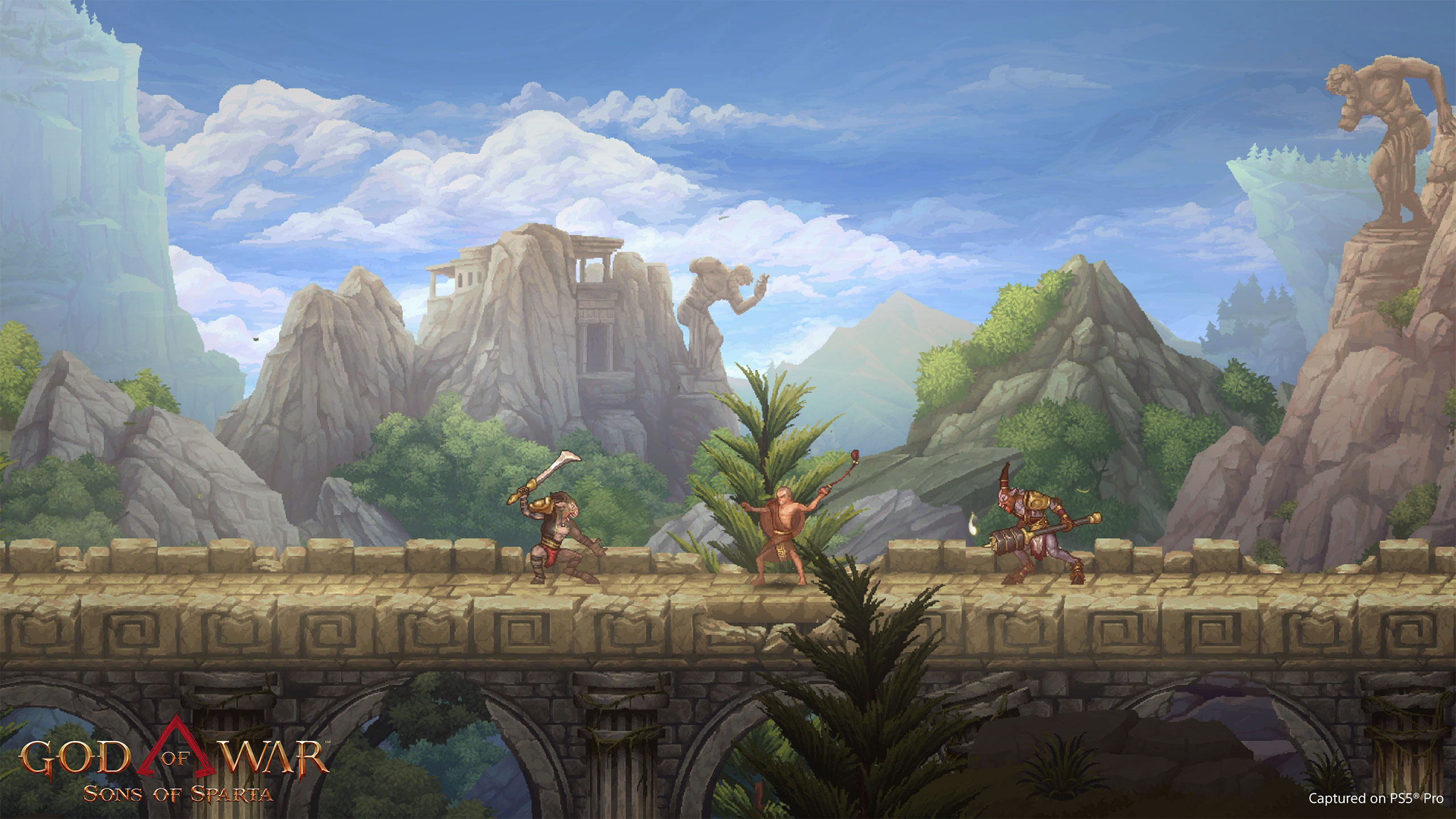 What really sells the concept is that Sony and Santa Monica are not shy about calling this “God of War combat in 2D,” and that’s a risky promise, because God of War fans are allergic to anything that feels like a watered-down imitation. Here, the pitch is that the staples translate, you still get finishers, upgrades, and a creature roster that includes classic Greek threats like minotaurs, satyrs, and undead legionnaires, plus new additions pulled from corners of Greek mythology the mainline games didn’t fully explore.
The level design approach also reads like it wants to satisfy both action platformer purists and the “but can I poke my nose into every corner” crowd. Laconia is described as full of optional quests, hidden encounters, and loot that rewards exploration, which makes the game feel closer to that modern action-adventure loop than a straight, old-school left-to-right sprint.
One small but meaningful confidence signal, the post-launch support arrived quickly. Patch v1.0.0.4 addresses progression issues like a missing interaction prompt and a potential soft lock, plus tweaks to haptics and fixes to music playback in a specific location, which is the kind of boring, responsible maintenance that keeps an action game from becoming an unintended endurance challenge.
Two Spartans, One Couch, and a Pit Full of Agonies
Sons of Sparta supports offline play and lists 1 to 2 players, and in practice the game’s co-op identity is heavily reinforced through its dedicated challenge mode, The Pit of Agonies.
 The Pit is a separate endgame roguelike mode with changing enemy and reward pools, designed to be a skill test that you can run solo or with two-player local couch co-op, explicitly framed as “offline-only” in true retro style. It also introduces “Agonies,” global difficulty modifiers that alter how a run plays, and rewards that feed into permanent upgrades between attempts, plus score tracking for anyone who enjoys quantifying their suffering.
This is a genuinely smart way to add replayability to a smaller-scope entry. You get a focused narrative experience, then a repeatable mode that invites experimentation, mastery, and the time-honored tradition of blaming your co-op partner for everything that goes wrong, even if it was, objectively, your fault.
Hi-bit Heroes, Choirs of War
Visually, the game sells its identity with confidence, vibrant high-definition pixel art, a “hi-bit” presentation, and environments meant to make Laconia feel detailed rather than flat or purely nostalgic.
On audio, the biggest flex is the name attached to the score. Bear McCreary returns, and the soundtrack is described as blending retro aesthetics with God of War’s signature orchestral and choral sweep. That combination, chiptune-adjacent texture with big mythic weight, is exactly the sort of contrast that can make a 2D spin feel premium instead of “cute.”
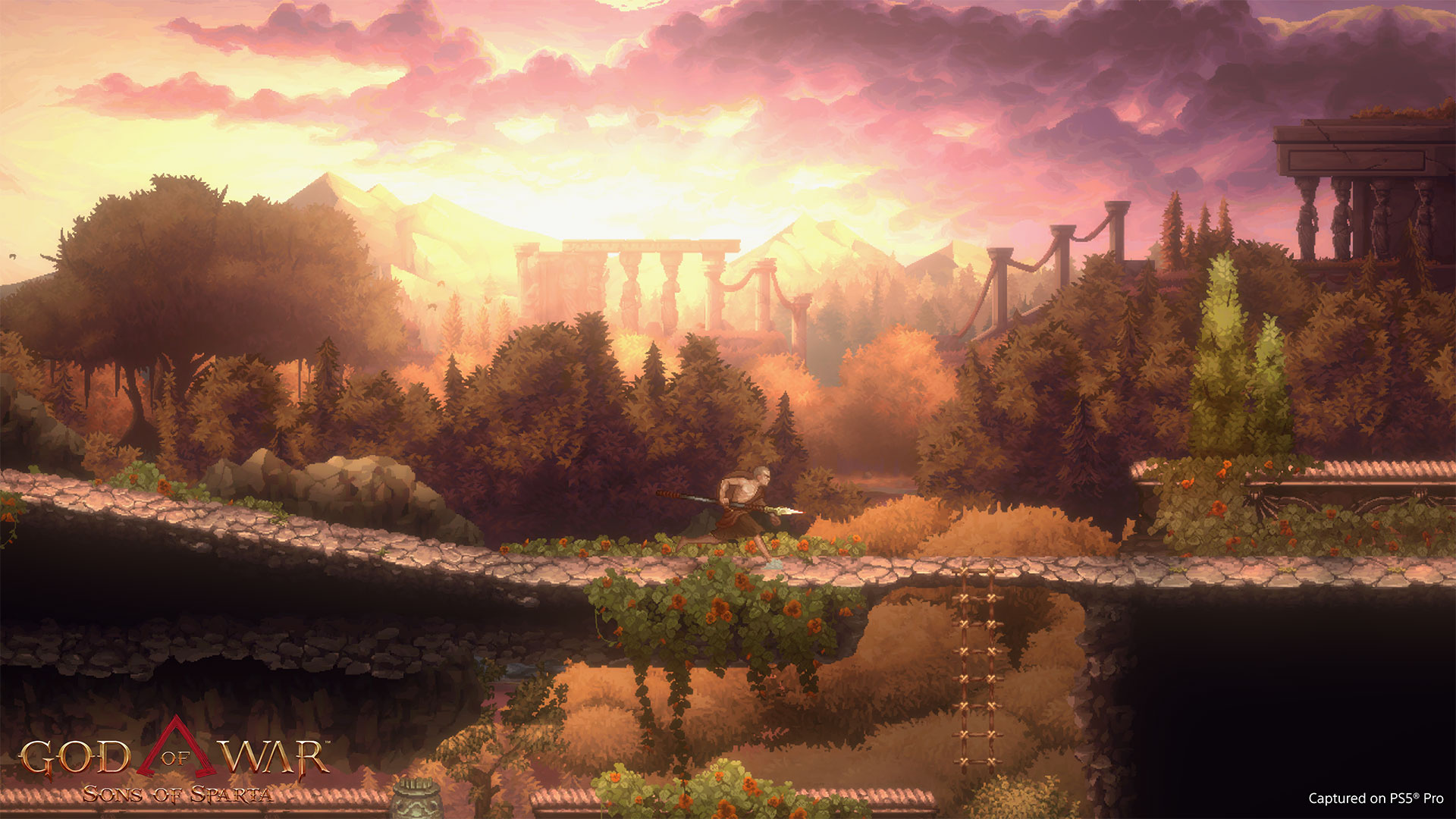 There’s also an underrated accessibility angle here. Sony lists a sizable set of accessibility features for the PS5 release, which matters because fast 2D action lives and dies on whether players can tune readability and control comfort to match their needs.
Verdict of the Agoge, Final Thoughts
God of War Sons of Sparta succeeds because it understands the assignment, it’s not trying to replace the modern, cinematic God of War formula, it’s carving out a parallel lane that honors the Greek saga’s creatures, brutality, and tragedy, while letting a 2D action platformer structure do what it does best, crisp momentum, replay-friendly builds, and secrets that reward curiosity.
Just as importantly, it treats its “retro” concept like a craft choice, not a cost-saving excuse. The pitch is specific, young Kratos and Deimos, Spartan training, spear-and-shield identity, and a world that still feels mythic, and it’s backed by meaningful series continuity through canon framing, returning performers, and collaboration with Santa Monica Studio.
And if you end up hooked, The Pit of Agonies is the kind of mode that can quietly become your “one more run” problem, especially with local co-op bringing that old-school couch energy back into a franchise that usually prefers you to contemplate fate alone.
We prepared this review with a digital copy of the God of War Sons of Sparta for the PS5 version provided by PlayStation PR.