
There is a particular kind of invitation, rare in a genre that usually hands you a keypad and a flashlight that still works, in being asked to sit for a test and discovering that the entire product is a room that used to be a mind. The mask is still a mask. The lock is still a lock. The first code that tries to teach you a lesson is not a metaphor. Mad Experiments: Escape Room, the first-person cooperative escape adventure from PlayTogether Studio, is built on that quiet, and the quiet is ruder, warmer, and more useful than a fifteen-dollar lab has any right to be.
I played the PlayStation 5 version, the 11 April 2024 PlayStation launch at $14.99 that PlayTogether Studio and Nejcraft walked onto living-room hardware after a 16 April 2020 Steam life that already knew how to hide a code. You wake as a guest. You explore three rooms. You solve Professor Cheshire’s tests. You recover Hildegarde. Twelve Steam achievements sit in the dust. The English Steam sample is Mixed, 69 percent of 328, with 424 voices across languages, which is the honest weather of a loud little escape and not a dare. Great, not a career, and very much a night I would recommend you spend if you like a puzzle loop that knows it is a room.
The Professor Does Not Care Why You Came
Most escape games begin with a timer and a smirk. Mad Experiments: Escape Room begins with a letter. Official copy on Steam says you have been invited by Professor Cheshire and his assistant Hildegarde to try their new experiments, then asks you, with the grammar of a person who has already lost the upright life, to see how you react to their tests. They are obsessed with people’s minds. That is not flavor text. It is the design refusing to pay for a haunted house when a study will do.
You start looking because the alternative is becoming a rumor in a place that keeps rumors in drawers. The first stretch is staged like a punchline that forgot to be funny. You pick up a mask. The room thinks about it. Something in the wiring thinks about you. The script, still in first person and still a little breathless, asks you to examine the furniture like it has a pulse. Nobody else will. That is the rest of the map.
I like a premise that prices curiosity as a hazard and then lets you walk toward it anyway. A mansion lab, a coma garden, and a childhood bedroom sit on the night like questions with walls. Why are there tests and no consent. What was that crystal. The more you explore, the more the house answers with another object and another thing that would like a piece of your certainty. Story is environmental and stingy, which is the right instinct for a game that wants your hands more than your diary. You are not reading a novel. You are looting a lecture that is still happening.
The fantasy is not mastery of a lore bible. The fantasy is competence arriving about half an hour after you invent a reason to trust a drawer. You will fail in ways that would be funny if the code drop were not so sincere. You leave a digit. You walk back. You become the kind of person who thinks a convex mirror is a personality.
Three Rooms, Then Invent an Exit

The loop is the old religion of look and PlayTogether Studio does not pretend otherwise. Interact. Examine. Rotate a toy until it confesses. Write a number on a scrap of pride. None of that is a revolution. All of that is the sentence the rest of the toybox has to live in.
Official copy is blunt about the grocery list. Play alone or in a team of up to six. Challenge yourself with a sixty-minute limit, or take your time in Relax mode with unlimited time. Three unique rooms. Dozens of objects. A dark story that arrives in pieces. That last clause is the one that matters. The rooms are not just lockboxes. They are how the game is built. Chapter 1 is The Mansion Lab, a Victorian dare with warm lamps and a professor who would like you to sit. Chapter 2 is Memory Loss, a garden and a coma and a request from Hildegarde to wake yourself by recovering what the tests stole. Chapter 3 is Lost Childhood, her room, her toys, the daily life that existed before Cheshire’s lab learned her name.
I have played a lot of games that treat the first lock as a tutorial and the hundredth as a spreadsheet. Mad Experiments: Escape Room is lighter than that on purpose. If you want a campaign that could unionize, you will feel underemployed. If you want a night that turns a letter into a door, you will feel hired. A keypad handles the general population of problems. A perspective shift later will empty your patience if you treat the furniture like scenery.
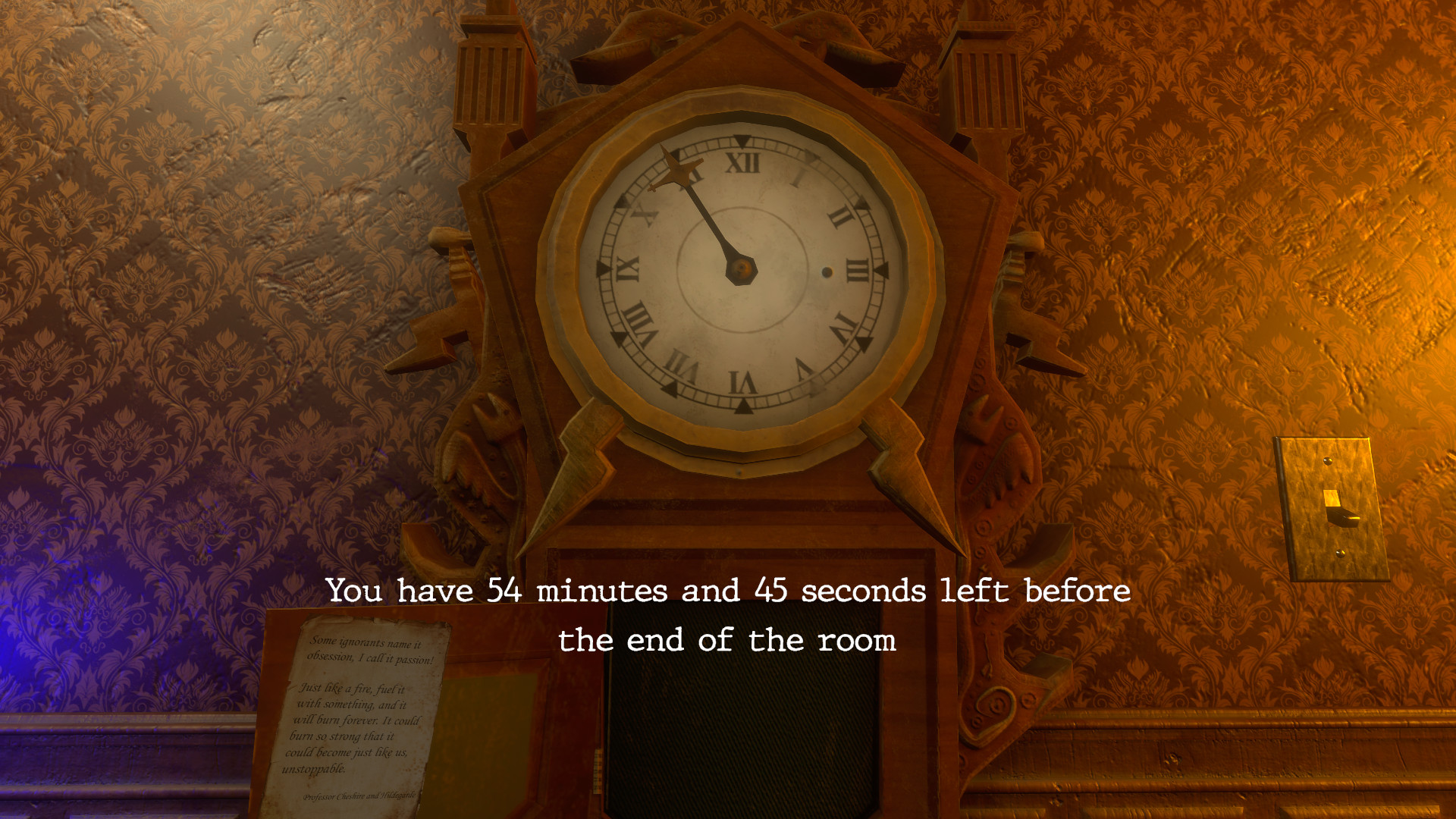
The sixty-minute clock is the temperature change. Early rooms establish that this is not a walking tour with nicer lighting. A dead end will chase your pride farther than a hint would recommend. Relax mode is the other half of the short description and the kinder half of a week. Official features ask you to take your time. That sentence is both a promise and a warning. If you want a speedrun receipt, the clock is already in the room. If you want a place that is already a place, you are the audience.
Masks, Codes, and a Friend Across the Table

Co-op is the closest this game comes to a power fantasy, and I like it more than a new cutscene. Mastery, here, is logistics wearing a voice. You gather, you stash a thought about a code, you talk like a person who has mail. The map does not get smaller because the developers deleted furniture. It gets smaller because you invented a sentence two people can share.
I will not invent a highlight reel with fake timestamps and tidy unlock counts. The nights that stay with you are the ones where you thought the keypad was finished, then a light started talking in a rhythm that was not weather, and then you were on the wrong side of your own hint. Multiplayer can feel like two guests agreeing to take turns being disappointed. That clunk is real. It is also priced into a cooperative loop that would rather you look, retreat, and come back dressed. Distance helps. A friend who will read the other wall helps more.
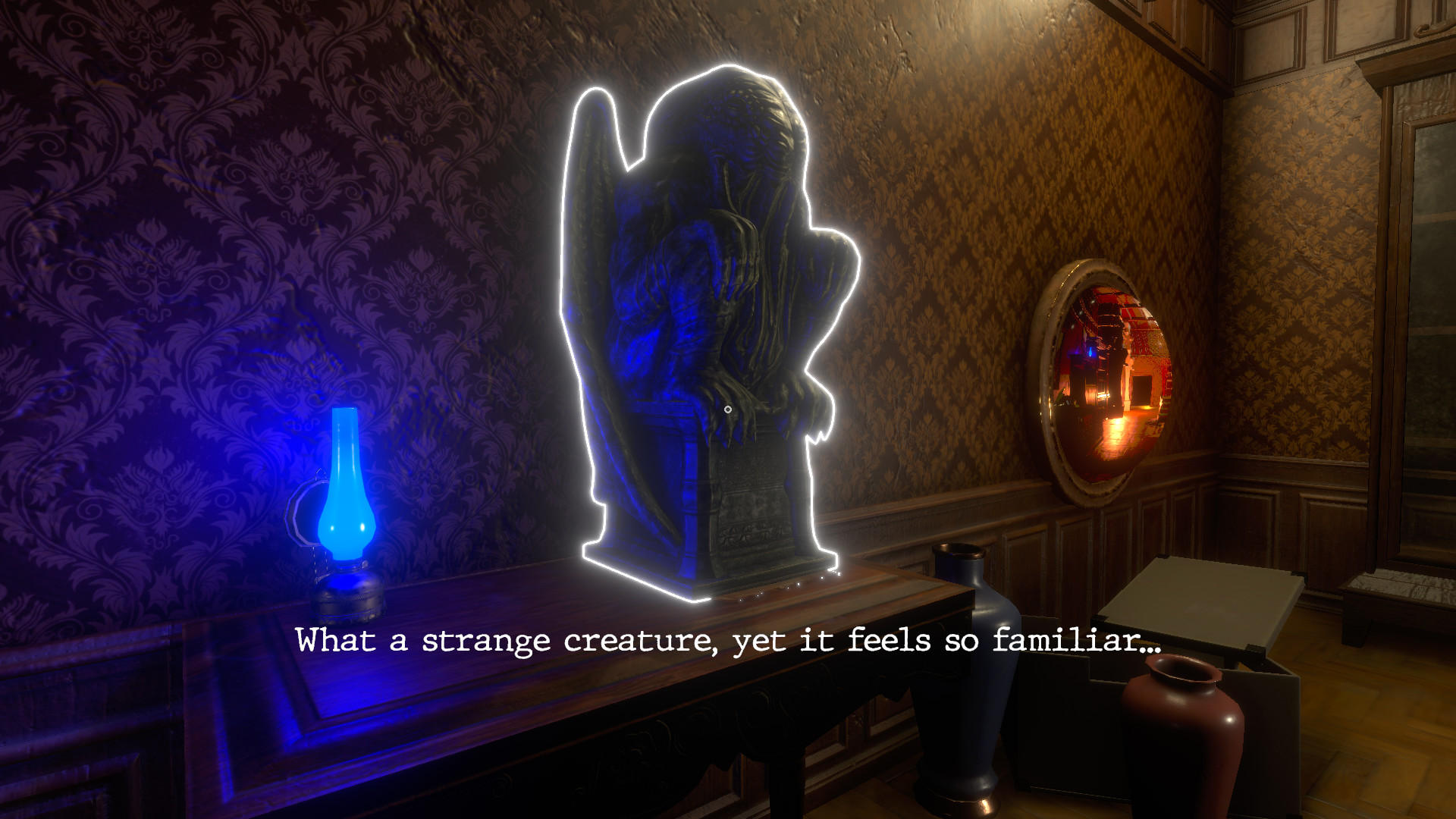
An object in the hand is the other vehicle. Official features ask you to interact and examine with dozens of things to uncover the secrets of the rooms. Physics has manners. Buttons push like buttons. Weight is a rumor you can feel. A convex mirror will give you a distorted look at your own mask if you are willing to stand in the joke. That last courtesy is the design’s best manners. A prop becomes punctuation, a tool for the thing you cannot reach or the code you need to steal before you commit.
Hints sit on the sheet if you would like the fantasy of progress without a lecture. I left them off for an evening and on for another. The rooms did not mind. Cheshire minded either way. Cross-platform multiplayer is on the store page, which is how a wider table gets in the door. I will not turn this into a matchmaking seminar. The voice of the game is the lab, and the lab talks in objects, weather, and the occasional mechanical knock.
Twelve achievements sit behind the loop for people who like a receipt. Escaped from Room 1. Room 1: Speedrunner. Find the secret crystal. Use the crystal. Mastermind. I want to believe. None of them change the central truth. You are here to finish a test that has already decided Hildegarde is evidence.
A Lab, a Coma, and a Childhood That Waits
Pressure is the variety. A door that opens is a better reward than a new silhouette if the silhouette is just another way to lose a number. Hunting clues is good practice and a grocery run. Facilities, gardens, the usual Cheshire hospitality. Sparks happen. The store page is not shy about it. What the store page cannot tell you is how quickly you will start treating a successful examine as a mood stabilizer. You eat codes. You drink codes. You put the mask down and look at a childhood bed like a person who has decided civilization is a toybox.
The world has history if you will walk toward it. Official features list the mansion lab, the memory loss, and the lost childhood. The story is uncovered through places, objects, and the remains of a household that tried to outlive its own curiosity. I like a map that prices curiosity as a hazard and then lets you walk toward it anyway. Some rooms are handsome. Some rooms are a commute. Both rooms are the job.
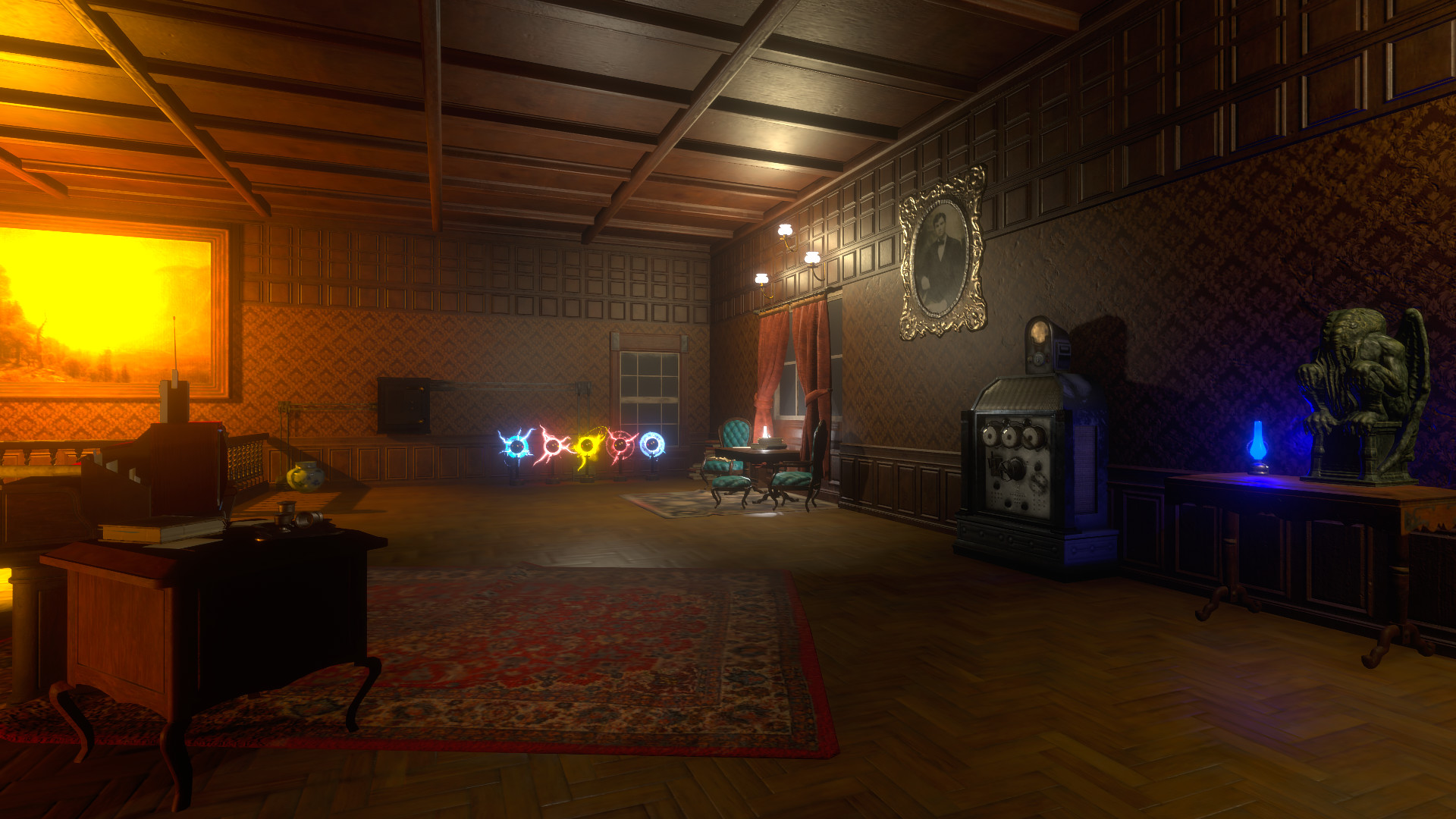
Chapter 1 is the handshake. Warm wood. Electrical effects. A lab that still looks like it had a schedule and a reason to exist. You have been invited. The invitation is a trap with better lighting. Getting a code with actual manners takes a while. Until then, a closer look is a strategy, not a cowardice.
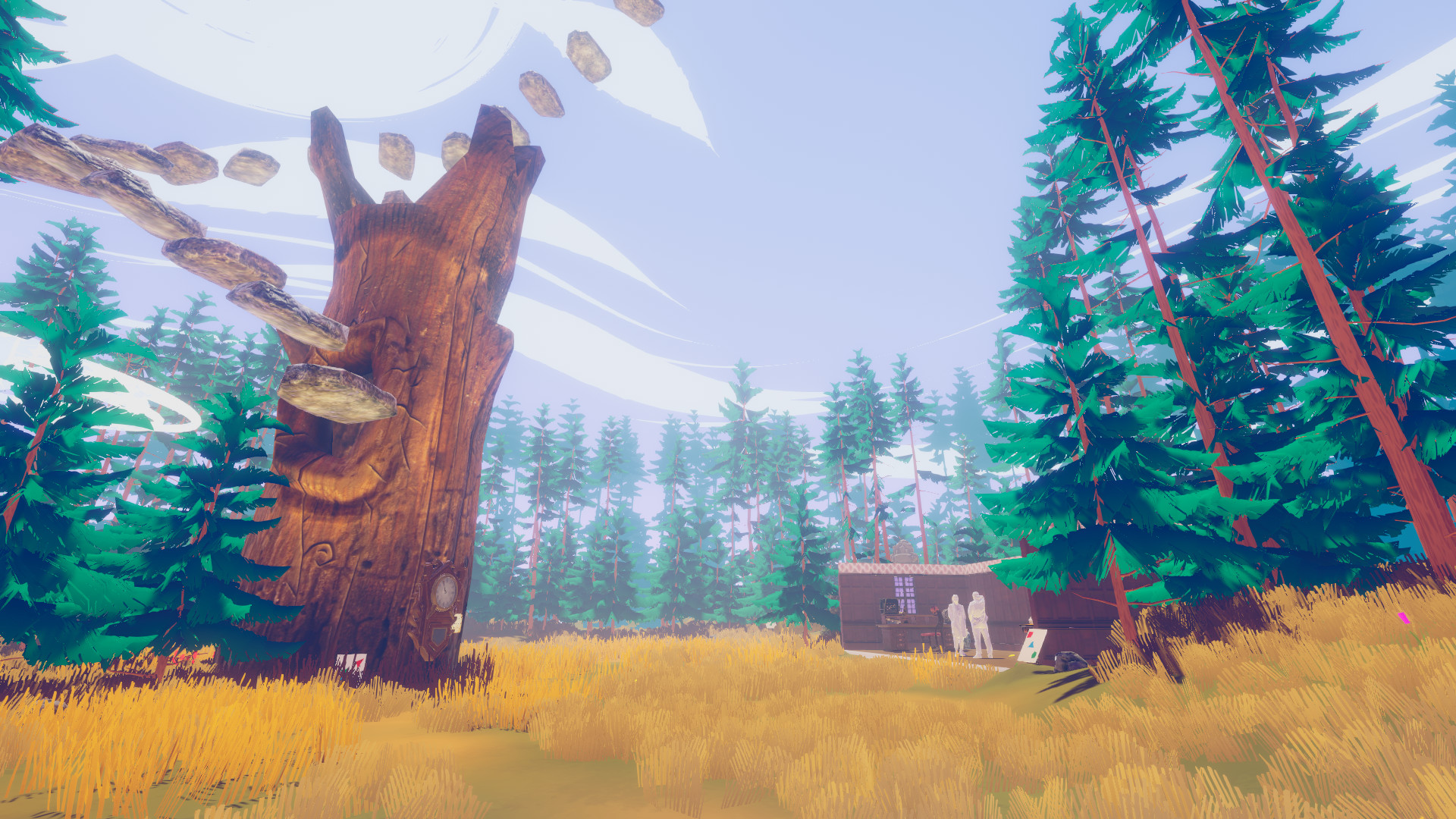
Chapter 2 takes the air outside, a lawn and trees that would like to be relaxing if the coma were not so sincere. Official copy says Cheshire’s experimentations damaged your brain and you are now in a coma, and Hildegarde wants to help you wake by recovering your memory. The help is a pair of codes and a garden that does not explain itself.
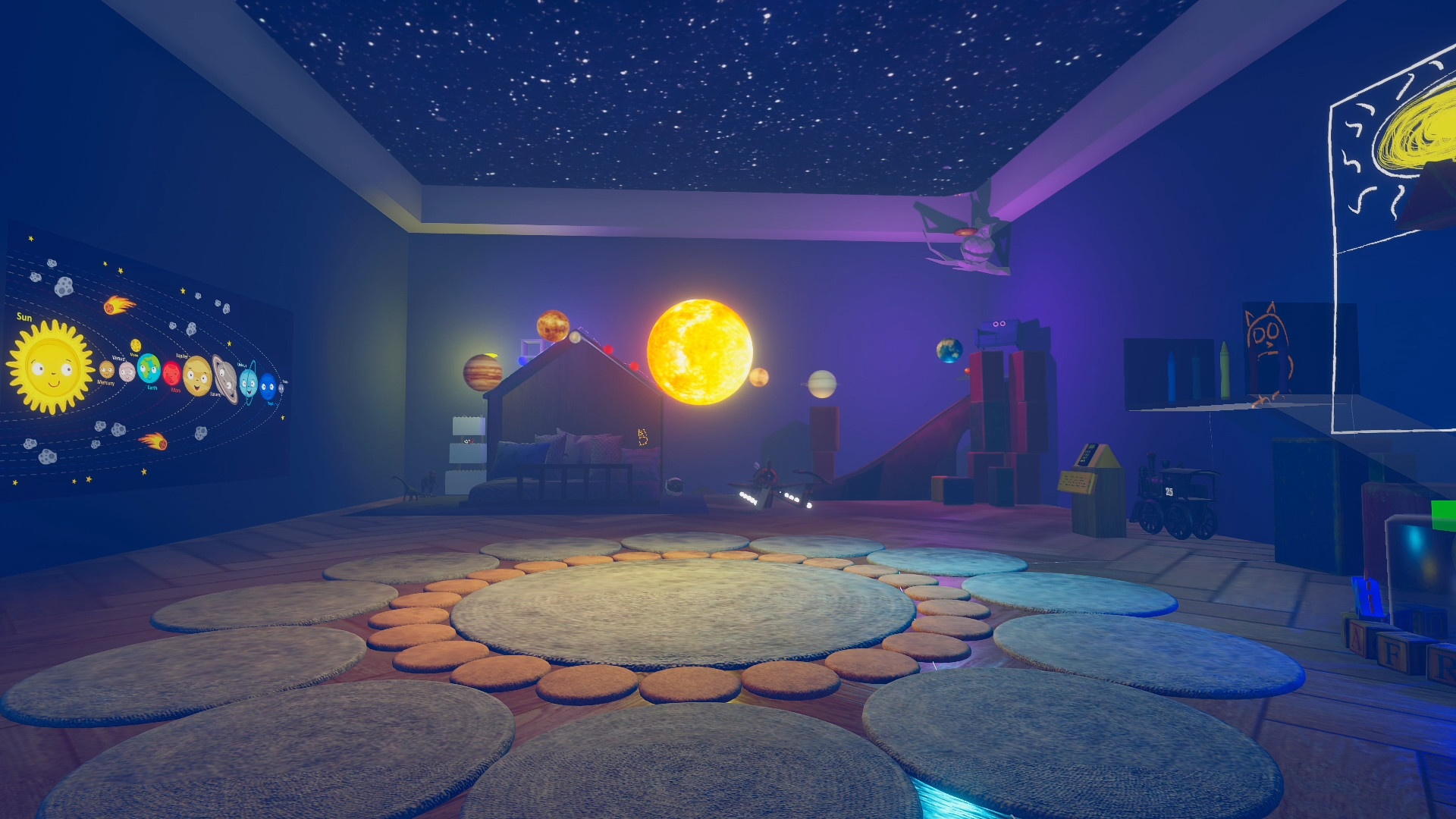
Chapter 3 is the one that stays. A child’s room reproduced with the patience of a person who has already lost the argument with nostalgia. Toys you can grab. A red console. A pair of glasses that will put a show on if you remember the button. The puzzles here have medium manners and a logic you can argue with, which is the right instinct for a last room.
Presentation is readable, which matters more than prestige. You can tell a lab from a garden from a bedroom at a glance. If you cannot read a biome, the hunt dies and the night becomes homework. These spaces are atmospheric enough to carry a scare and clear enough to carry a plan. You always know where you are. You do not always know why a number is already there.
English is the Steam language with full audio, and a pile of subtitle cousins later, which is how a wider audience gets in the door. I will not turn this into a localization seminar. Voice acting, music, and the small sounds of a house that is still being used do the rest. The mix stays out of the way of the tells you need to hear.
Pretty by Design, Obtuse by Habit
I should be clear about the friction, because it is a real thing and it is not a footnote you hide after the score. Mad Experiments: Escape Room looks like a game that was built by a small Quebec shop that wanted an escape more than a showcase, then discovered the escape was three rooms and a story about a girl. Landscapes can be handsome. Puzzles can be stubborn. A code can arrive a half-hour late to its own logic. I will not invent a mud census. I will say the rooms sometimes forget to stock the clue you need and then shrug like weather.
The keypad is the old religion and the shop does not pretend otherwise. Too many doors still want a number you found on a scrap. That is the cost of blending a physical escape room’s appetite for locks with a video game’s appetite for looking. When it works, a familiar trope in a new drawer feels like the house breathing. When it fails, a familiar trope in a new drawer feels like a commute with better lighting. Morse will ask a person who is already lost in a maze to also be a radio operator. That sentence is both a dare and a warning. If you bounce before that commute, the game will look thinner than it is. If you stay, the last room fills the way the genre promised, and the promise is loud.
Co-op is a social instrument that the puzzles do not always play. You can share a view. You can split a search. You can still, on too many nights, solve the evening as one person with a better flashlight. The clever perspective shift near the end takes advantage of a second pair of eyes and then, because solo is a first-class citizen, lets one player finish the sentence. That courtesy is kind. It is also why the table can feel like company more than design. I wanted more work that required two hands at once. The work I got was good enough that its scarcity became a complaint.
Technical manners on a living-room build can stutter when a late room decides to remember itself. Darkness can hide a clue that was already shy. Matchmaking can get philosophical in a doorway. None of that is unique to this lab. All of that is the tax on a 2020 PC escape that arrived on PlayStation in 2024 and is still hiring in 2026.
Scope is the other tax. Three rooms is a contract. At $14.99 you are not buying a fifty-hour castle you can live in. You are buying a night you will finish, a table you will talk across, and a childhood room that will start to look familiar before it stops being handsome. A sequel already exists if the appetite survives the door. Until you walk through it, the toybox is a kit, not a catalogue.
Better With a Table Than With a Checklist
I have a rule for mid-priced escapes. If a game is worse with a table than with a checklist, it is broken. If it is only good with a table, it is honest. Mad Experiments: Escape Room is honest, and that honesty should sit next to the price.
A checklist night is a competent weekend. You punch the lab, you invent the code, you lose a digit, you walk back, you put a better look on the joke. A table night is the version the systems were quietly designed around. Someone reads the wall. Someone holds the toy. Someone learns, too late, that a professor does not respect architecture. The room becomes a shared instrument you play with friends instead of a commute.
The Steam sample around a game this small is always going to look like weather. Mixed is the official report, 69 percent of 328 English voices, and that split is fair. I am in the second camp with caveats, which is the only honest place to stand.
Compared with the giants of the locked-room business, Mad Experiments: Escape Room is not trying to be a career you finish this week. It is trying to be a night you keep returning to with a different friend. The developer said the quiet part on the store page. Award-nominated. Alone or with up to five players. Fun if you will meet the game where it lives. That is not a cop-out if the place is worth the sit. Some nights it is. Some nights the code is a myth and the doorway is a theology problem. Both nights are Mad Experiments: Escape Room.
Still Standing After the Door Opens

Mad Experiments: Escape Room is a rare mid-priced escape that understands its own joke and then has the nerve to make the joke a childhood. PlayTogether Studio built a lab about a professor, a garden about teamwork you do with a memory, and a toybox that looks a little homemade and plays a lot more sincerely than that sentence suggests. The loop is the hook. The objects are the spine. The walk from a letter to a door is the grin.
It is better with a table than with a checklist. The late rooms can clunk in the way a focused escape is clunky. Puzzles can sulk. The presentation has indie fingerprints, from the stubborn keypads to the story that would rather be a toy than a cutscene. All of that is true, and all of that is already priced in at $14.99 on PlayStation and $14.99 on Steam. You are not buying a decade. You are buying a night that can turn into several nights if you like being a coordinated disaster, or being the person who has to explain the disaster to a child who already left the room.
I am scoring it 8, Great, because the identity is this clear and the limitations are the limitations of a focused three-room escape, not an empty one. I would recommend it to anyone who likes a drawer that has weight and a map that is allowed to be rude. Distinctive lab weather, a table that shrinks the horizon, a childhood that turns salvage into conversation, and a price that respects a long night are a lot of game for the ask. The systems repeat their manners. The manners are still useful.
The house is still out there, still hiring a night shift, still asking what the mind was. After a few doors, you will understand why the job is not finished, and why you keep accepting the invitation anyway.
We prepared this review with a digital copy of Mad Experiments: Escape Room for the PS5 version provided by Pressengine.