There is a moment, about four minutes into your first race, when you realize the other person is not a teammate so much as a weather system. They lean left. You lean right. The elastic between you stores that disagreement like a grudge, then spends it all at once. One of you is suddenly airborne. The other is face first in a hazard you both saw coming. Fling to the Finish, the co-op racer from SplitSide Games and Daedalic Entertainment, is built on that physics joke, and the joke is sturdier than it has any right to be.
I played the PlayStation 5 version, the living-room edition that arrived on 4 September 2025 after a PC 1.0 launch on 18 January 2024 and a long Early Access stretch that began in August 2021. SplitSide started as a small student team out of Drexel University. Two characters, tethered by a stretchy elastic rope, bounce, roll, and fling their way through obstacle courses that refuse to sit still. At $19.99 it is priced like a party game you can leave on the shelf between gatherings, which is both the compliment and the warning. This is a chaotic rope racer that gets funnier and smarter the moment a second human is in the room. Items keep races close. The courses keep changing their minds. The rope, on a bad night, will fight you like a third player who never agreed to the plan. Great, not gentle, and much better with a friend.
The Elastic Has a Personality
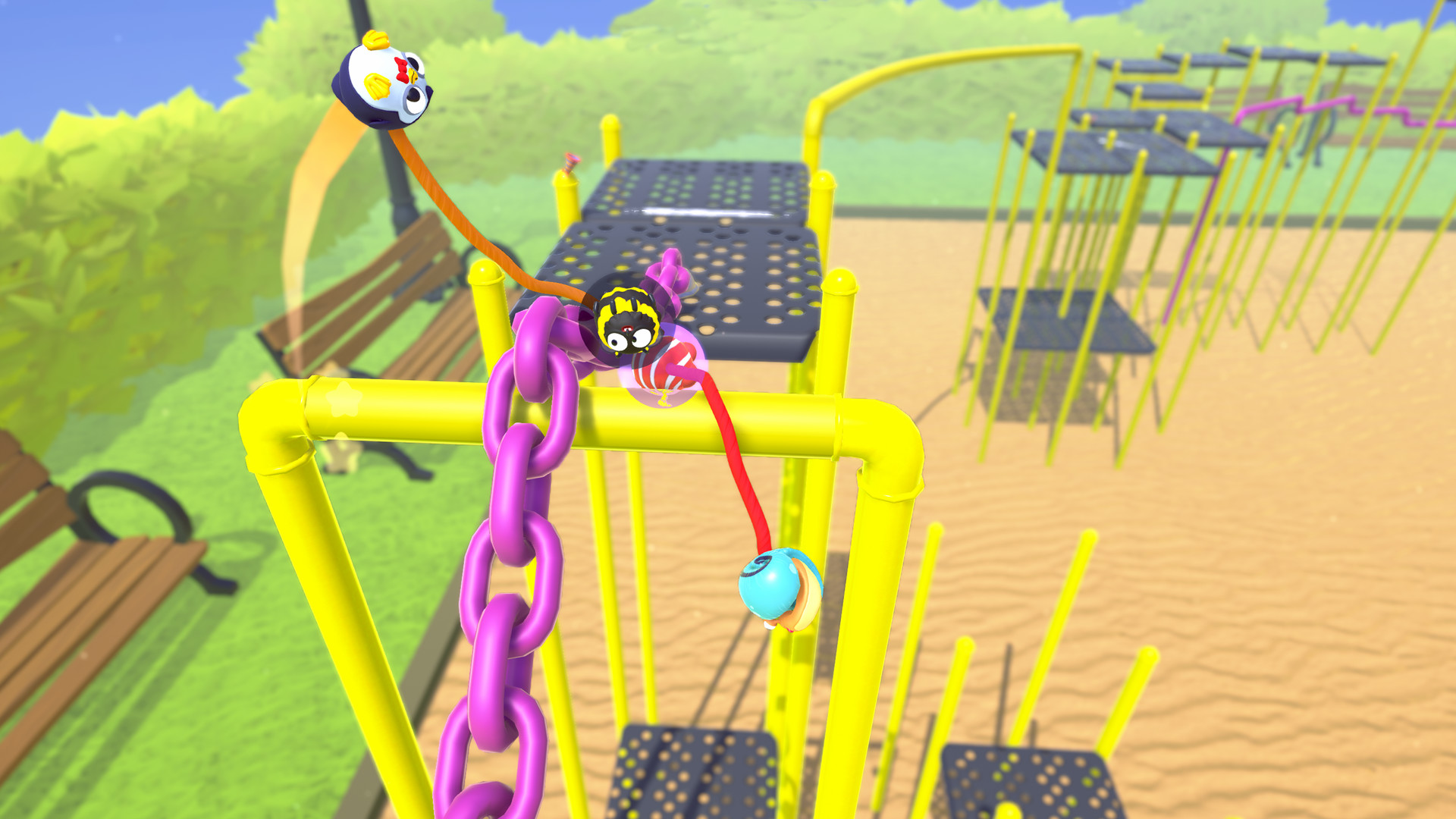
Most racing games treat the vehicle as the star and the other people as traffic. Fling to the Finish treats the tether as the star and the other person as half of the engine. You are not driving a kart. You are managing a relationship that happens to have a spring constant. Get close and the pair becomes nimble. Drift apart and the rope loads up, a silent argument that will eventually throw somebody. That throw can be a save. It can also dump both of you into a pit you had already cleared.
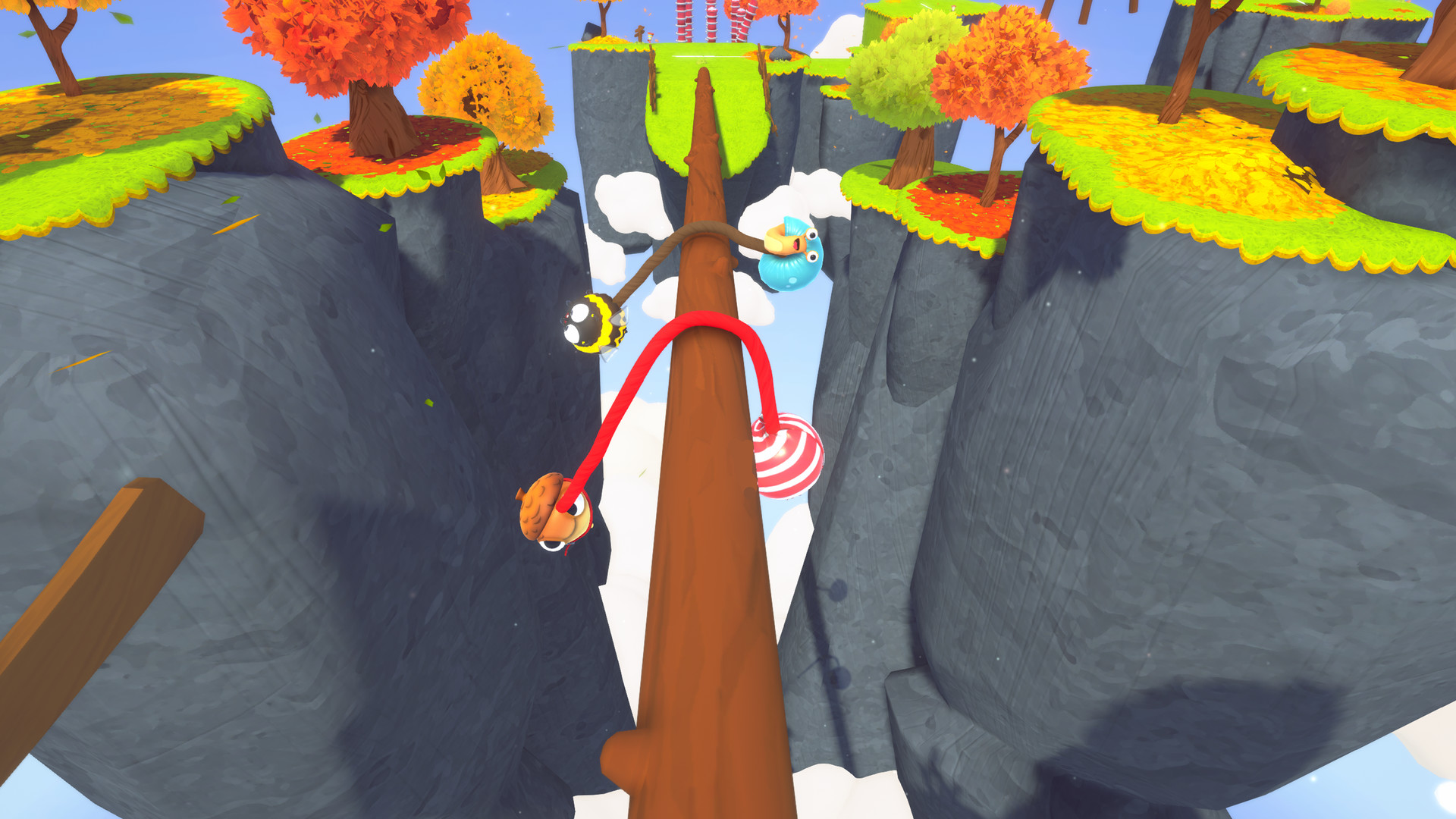
The first hour is a tutorial in humility. The rope snags on practically everything you pass, posts, corners, the optimistic geometry of a jump you thought you understood. Beginners do not so much race as negotiate a moving knot. Communication is not flavor text here. It is the difference between a slingshot and a lawsuit.
The rope never becomes a gimmick you forget after the novelty fades. It is the verb. Swing around a perilous obstacle and you feel the game click. Fling your partner up a ledge before they fall and you feel like a person who has learned a language. Master the stretch and the pair can pull off acrobatic feats that no solo platformer would greenlight, because no solo platformer has a second center of gravity arguing with the first. The fantasy is not speed. The fantasy is coordination that looks, from the outside, like luck.
The humour is physical, not written. The comedy arrives on its own, usually about half a second after someone says, with confidence, that they have the jump. Distance is a resource. Too much of it and you become a catapult with no aim. Too little and you become a lump that cannot clear the next lip. The rope does not care about your intention. It cares about your position, and it will grade that position in public.
Beginners Tangle, Veterans Become Catapults
The skill curve is honest, which is a polite way of saying it will embarrass you in public. Early races are about not dying to your own enthusiasm. Later races are about using the very thing that killed you. The same stretch that yanked you off a platform becomes the tool that slings your partner onto a higher one. SplitSide designed every obstacle to force a new use of the rope, and that mandate is the game’s best idea. You are not learning a track. You are learning a vocabulary of pulls, slacks, and timed releases.
Experienced pairs look like a different species. They do not run so much as they trade momentum. One player plants, the other flies. The finish line, in those hands, is a joint project rather than a footrace with a visual gag attached. A beginner treats the rope as an enemy that keeps interrupting a normal platformer. A veteran treats the rope as the platformer. The reveal is that you were the obstacle.
Solo play exists, and it is the game wearing a different expression. One person can take both characters, a left-hand and right-hand arrangement that turns a pad into a small orchestra you are not qualified to conduct. It works as a practice tool and as a way through the campaign if your friends are busy being alive. It is also, I will be frank, work. The comedy thins when both bodies are your fault.
The campaign is useful. It is not why you buy the game. You buy it because a race with other teams turns the rope from a puzzle into a performance. Local and online races let you show off, then immediately demonstrate why showing off was a mistake. Several teams can share a course. Your private argument is now public, and someone with a plunger is watching. A full 1.0 set of modes gives the evening more than one costume. Cosmetics, skins, stickers, a roster of a dozen characters, sit on top of that kit. I did not develop a main. I developed a partner. The face you pick is decoration. The person on the other end of the elastic is the build.
Parks, Casinos, and Asteroids That Keep Rewriting Themselves
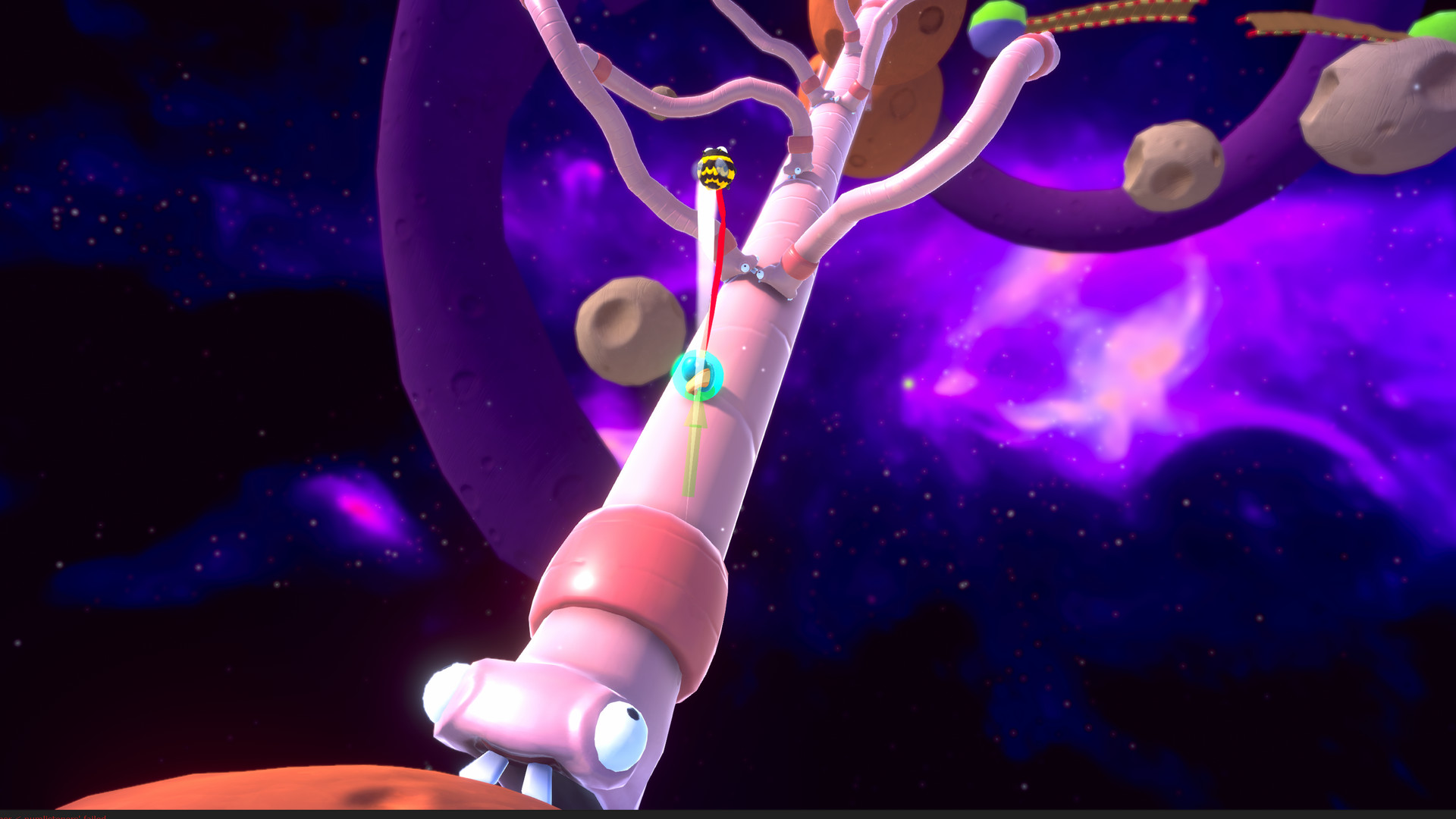
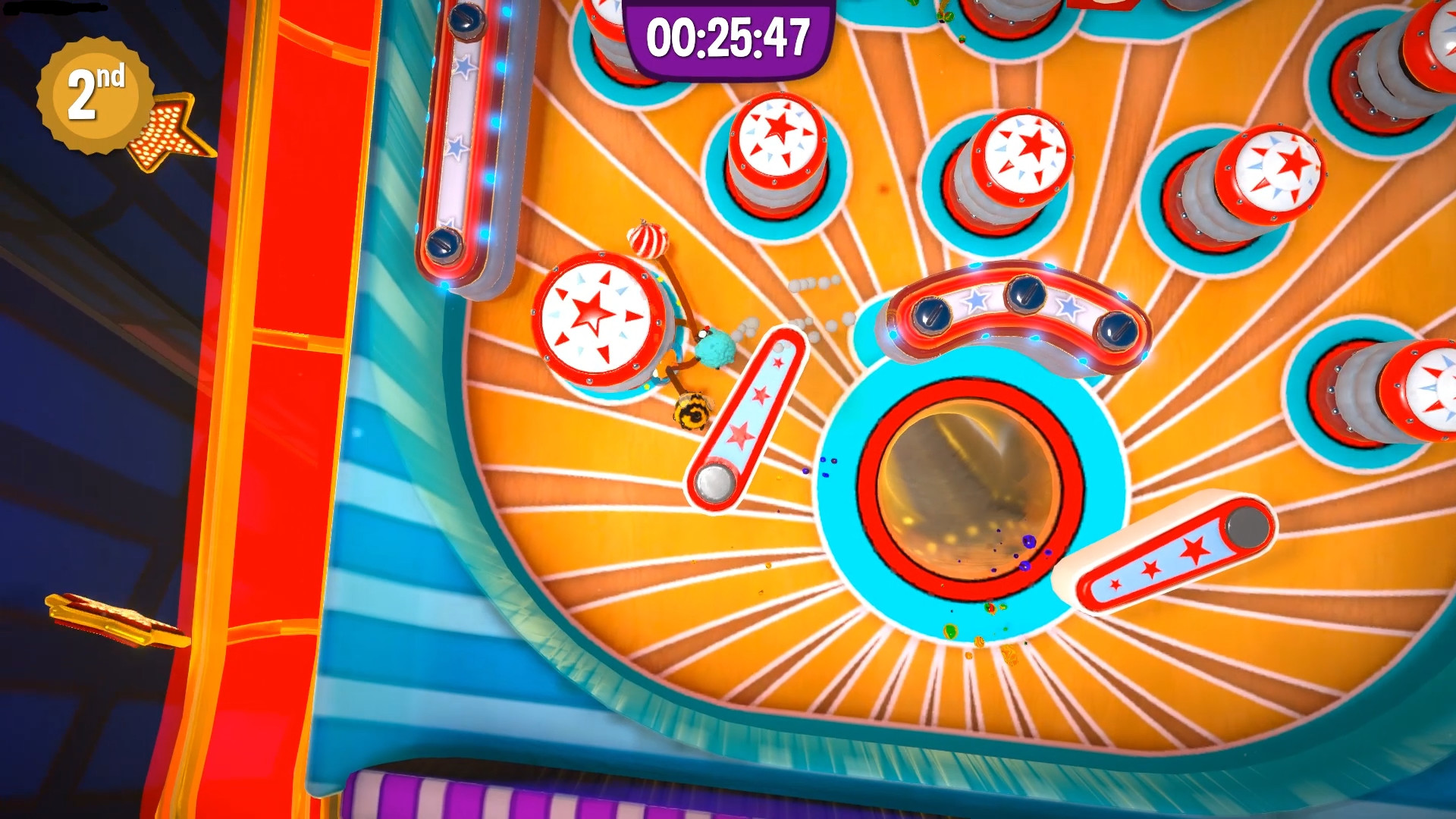
The courses are the other half of the personality, and they are not wallpaper. Every track has a theme and a style, and the themes are willing to be weird. You race through floating parks that treat gravity as a suggestion, giant casinos that look like someone lost a bet with architecture, and worm-filled asteroid fields that make you grateful the rope is the only thing you have to understand. Caves, carts, lasers, fans, all of it staged so the tether has something new to catch on. You always know where the finish wants you to go. You do not always know whether you and your friend have agreed on the method.
What keeps the tracks from becoming a commute is the evolution. The race track changes as you play. Platforms shift. Obstacles arrive that were not in the first stretch’s vocabulary. A line that worked becomes a line that dumps you, and the dump is the point. You will not know which weird obstacle is next, which is irritating in a serious time trial and delightful in a game about two people failing together.
I like a course that teaches a new rope trick without pausing to lecture. A ledge that is just too high unless you fling. A gap that is just too wide unless you stretch and release. Those lessons land because they are physical. You feel the solution in the elastic before you can name it. The memorable moments are the times you invented a save, or invented a disaster that looked, for one gorgeous second, like a save.
Seventeen courses is a healthy party spread, not a career. Combined with a handful of modes, it is enough to keep a group from doing the same joke in the same costume all night. A new partner resets the vocabulary. A familiar partner starts looking for cleaner flings. Both are valid evenings.
Presentation is bright, chunky, and unashamed of being a party object. Characters read at a glance. Hazards read at a glance. The rope is always visible, a bright opinion drawn across the frame. Parks ask about air and timing. Casinos ask about spectacle and bad decisions. Worms ask whether you can keep a conversation going while the scenery tries to eat it. You are not running the same sentence in different fonts. You are running different sentences that share a grammar.
Plungers, Weights, and the Mercy of Falling Behind
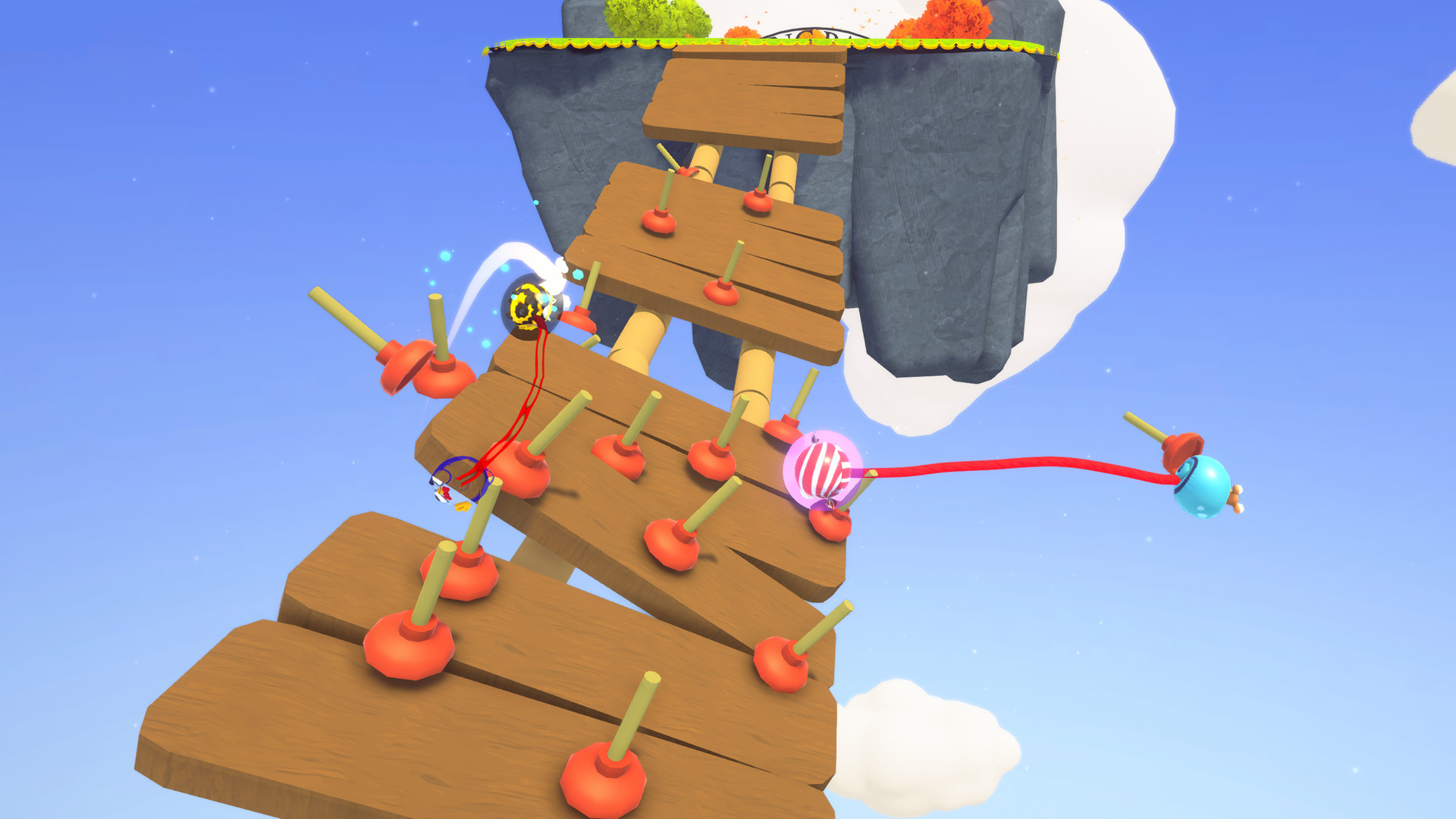
Rubber-band racing, in the old kart sense, is a design people love to complain about and then miss when it is gone. Fling to the Finish is more literal about it. If you fall behind, the game hands you tools. Hails of plungers. Sinking weights. Lasers with bad manners. The item layer exists to keep a race interesting and to even the score when one pair has more hours than the other. That last part is not a side benefit. It is the social contract.
I have been the experienced half of a lopsided pair. I have been the person eating lasers because I got cocky on a casino jump. Both roles are funnier than they are fair. A race that is over at the first corner is a race that stops being a conversation. Items keep the conversation going, which, in a living room, is the actual product you purchased.
The comedy of a plunger volley is cheap and I will not pretend otherwise. Cheap is not the same as useless. A well-timed weight can sink a confident pair at the worst possible lip. A laser can turn a clean stretch into a panic stretch. Good pairs still win more than bad pairs. The items delay the coronation. They do not cancel it. If you wanted a friend who is worse than you to still have a night, the kit is on your side.
Catch-up tools can feel like the game taking the wheel. On a night when the rope is already fighting you, a laser from behind can feel like piling on. I felt that. I also felt the alternative, a race that ended when the better pair remembered how to fling, and I know which evening I would buy again. The items are not a participation trophy. They are a delay, a chance, a rude little invitation to stay in the frame. Take them. The other team would.
One Couch, One Pad, or a Friend on the Other End of the Line
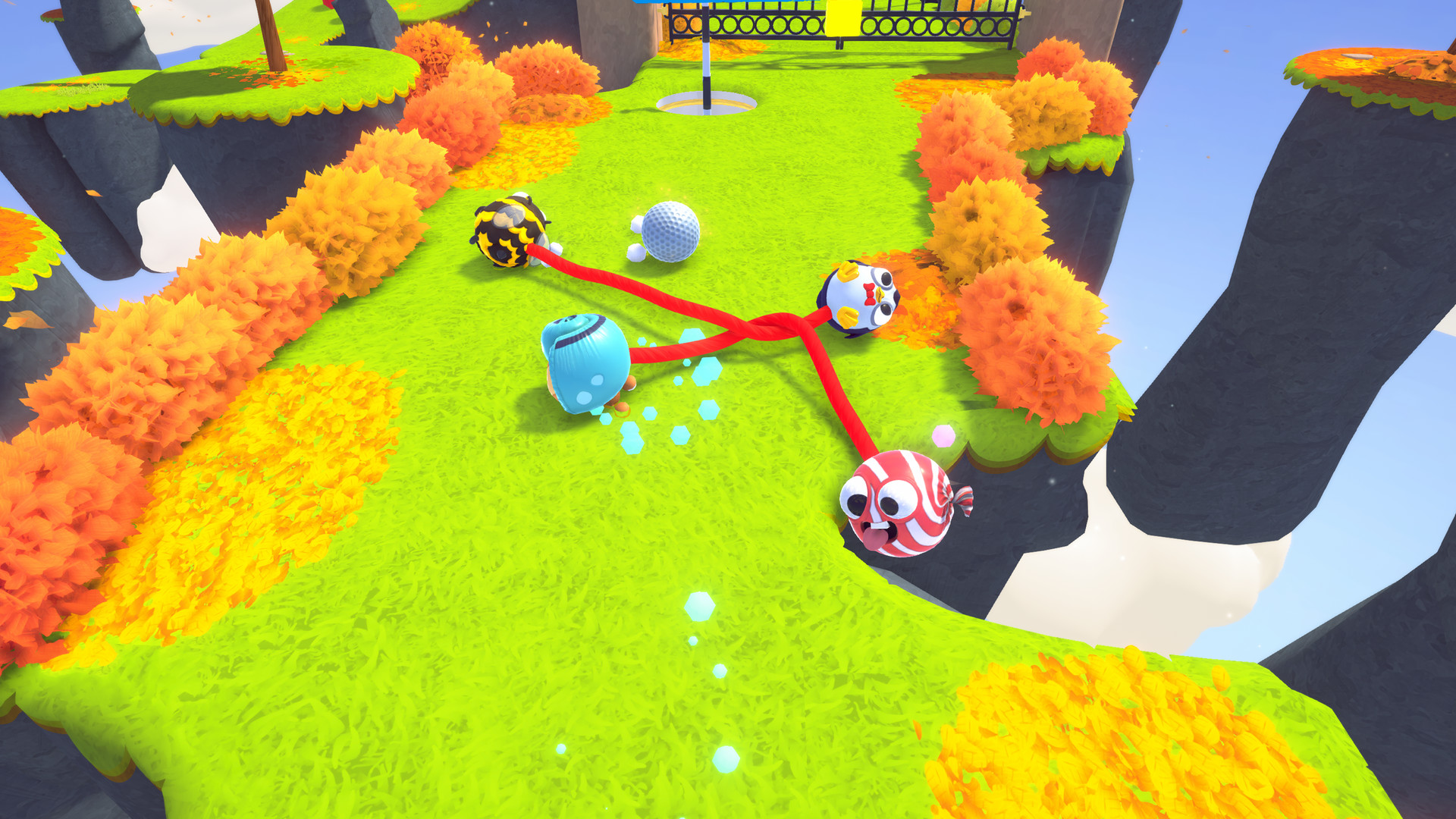
The ways to play are the other quiet success. Local races, online races, split screen, a campaign you can share, and the slightly mad option of sharing a single controller so two people operate one pair with one pad. That last mode is not a footnote. Because you are literally attached in the fiction, sharing a pad becomes a second tether, a real-world version of the joke. You push and pull on screen. You try not to do the same on the couch. I have sat close enough to a co-pilot to smell their shampoo and their bad decisions. It is a good time if you like the person. It is a documentary if you do not.
Full controller support is the default language, as it should be on a console. Split screen lets a house full of people race without inventing extra hardware. Remote play together covers the friend who could not come over but is still willing to be flung. Cross-play between the PC crowd and the living-room crowd means the Early Access veterans and the console newcomers can share a lobby, which is generous and, occasionally, humbling.
Online, the connection on my nights behaved like a guest who showed up on time and did not break a lamp. If the tether lies, the game is over. It did not lie. Twenty-two achievements sit in the background for people who like a checklist with their chaos. People who found a friend to fling with tend to like the game. People who wanted a solo racer tend to bounce.
If it is only good with friends, a party game is honest. Fling to the Finish is honest. A random lobby can still produce a story. A living room produces a better one. A friend in another city can still be the other half of your engine. Stretch, call the jump, fling, apologize. Silence is the one modifier the design cannot buff.
When the Rope Argues With You
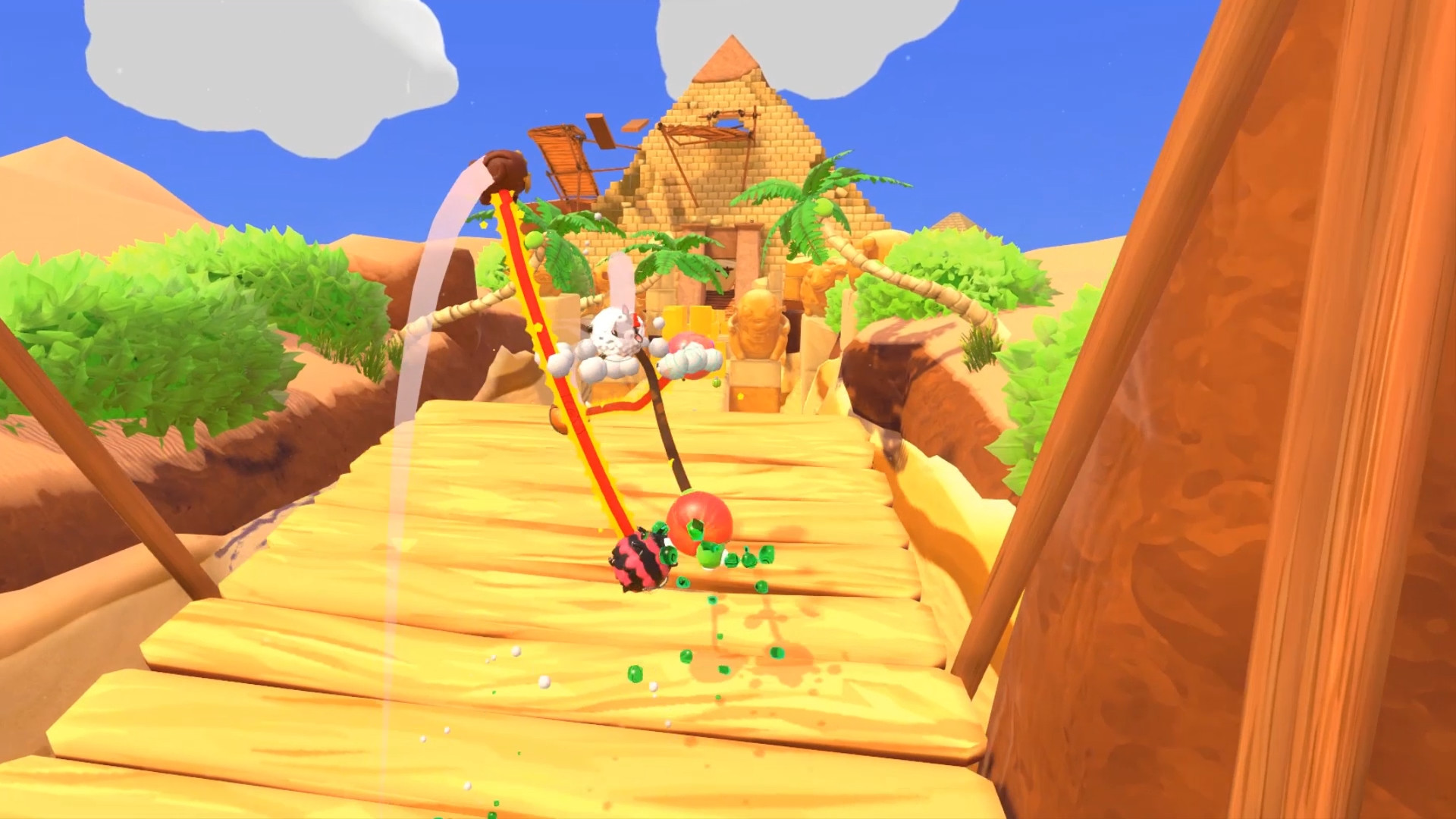
I should be clear about the frustration, because it is real and it is not a footnote you hide after the score. There are stretches, sometimes whole courses, when the elastic decides it knows the line better than you do. You jump together. You land apart. The rope yanks the lead player into a wall the trailing player never meant to share. You try the same idea with more courtesy, and the courtesy is what kills you, because the game wanted a fling and you offered a handshake.
That fight is the cost of a physics comedy that is actually a physics comedy. If the rope were polite, the acrobatics would be a menu. Because the rope is rude, the acrobatics feel invented. I accept the trade. I do not accept it silently on the fifth identical yeet into a casino sign. The game is better when you are in conversation with the tether. It is worse when you are in a custody battle. Some nights the battle wins, and those nights are why the score stays at Great.
Solo concentrates that problem. Two characters, one brain, one pad, and a rope that still wants a second opinion. It is playable. It is not the show. If you only ever play alone, you will get a competent obstacle-course toy and a lingering sense that someone is missing. Someone is. The other limit is scope. This is not a racer you move into. It is a racer you take out. After enough nights the course list becomes familiar and the pleasure shifts from discovery to execution. That is fine at this price. The object has edges. The edges are why it works, and why it will occasionally make you put the pad down and ask, with great courtesy, what your friend thought they were doing.
I would rather have a rude rope than a decorative one. This rope remains a character after you know every park and every worm that wants a snack. The frustration is the tuition. You pay it in public. You start flinging on purpose.
Still Tied at the Tape
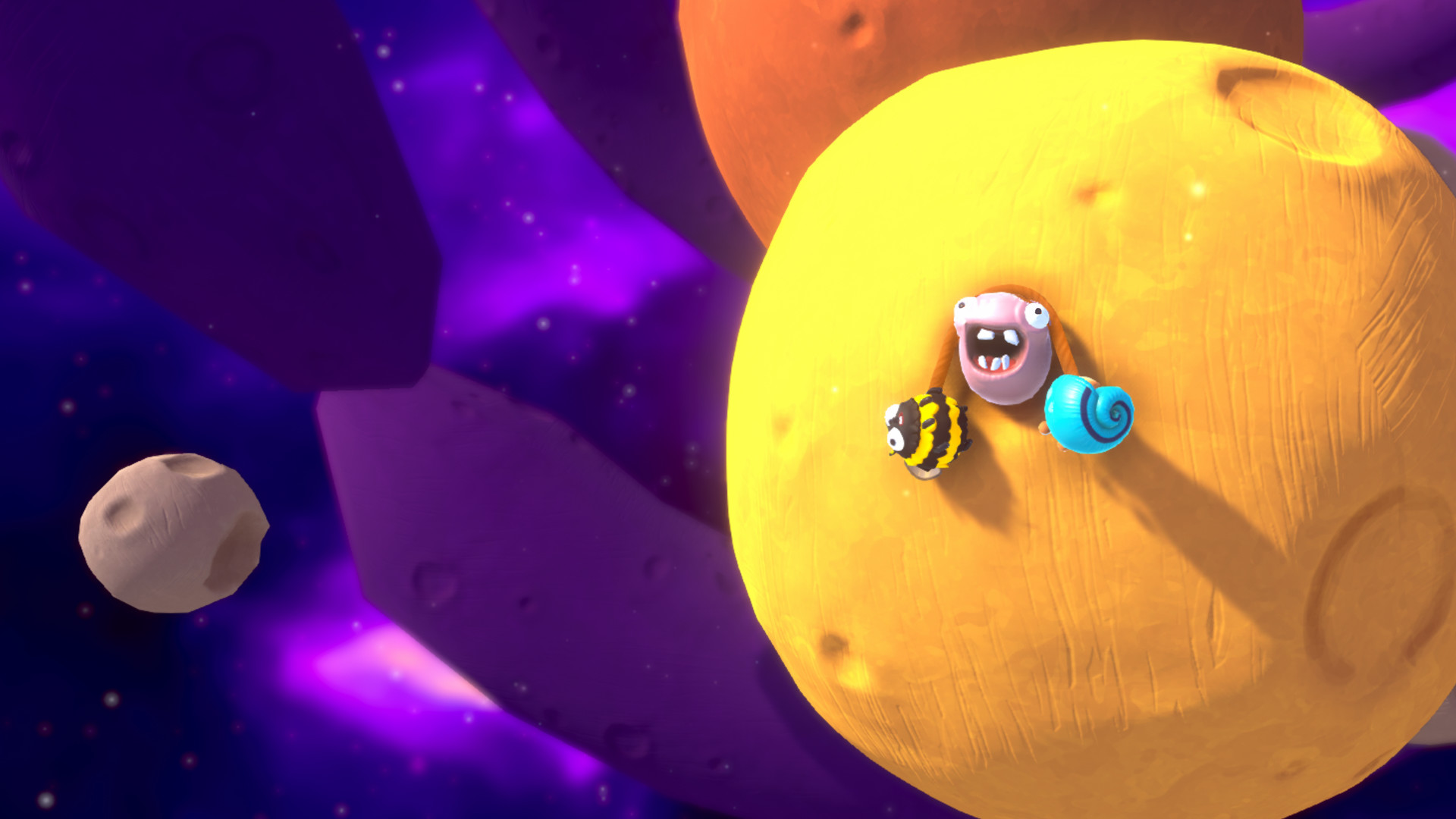
Fling to the Finish is a rare mid-priced party game that understands its own joke and then has the discipline to make the joke a system. SplitSide Games built a racer about communication, a tether that can save you or sue you, and courses that keep rewriting the punchline while you are still delivering it. The hook is two people sharing one elastic. The spine is the way that elastic becomes a language. The scar is the night the language fails and you both fall anyway, laughing.
It is better with a friend than with a theory. The items keep lopsided pairs in the same race, which is why a mixed-skill group can last an evening instead of a single humiliation. The courses have enough costume changes to prevent the second hour from feeling like the first. The frustration is real when the rope fights the plan, and that frustration is also the tuition.
I am scoring it 8, Great, because the identity is this strong and the limitations are the limitations of a focused party object, not an unfinished one. At $19.99 you are not buying a season. You are buying a night that can turn into several nights if your group likes being a coordinated accident. I would not recommend it as a solo main course. The conversation is the content. I would recommend it to any pair that has worn out the obvious couch racers and wants a physics toy with teeth enough to embarrass.
Bring someone who can talk. Stand close enough that the stretch means something. Use the rope on purpose as soon as you are able, because treating it like an enemy is how you stay a beginner. Take the plungers without shame. Laugh when the asteroid worms win. And if your partner starts to fly in a direction you did not authorize, do not let go of the idea. The finish line is a joint project. So is the fall.
We prepared this review with a digital copy of the Fling to the Finish for the PS5 version provided by Daedalic Entertainment.