There is a particular kind of dread that only arrives when a chair slides three inches to the left and nobody in the room will admit they did it. Prop Haunt, the budget 4v1 horror game from Raleigh indie Silent Forest Games, is built entirely on that feeling. It is not a hunt through a cursed manor with a flashlight and a prayer. It is a night spent watching everyday objects misbehave, while four people on the other side of the lobby try to make the house look innocent until it is too late.
That pitch sounds like a party game because it is one. It also sounds like a joke until you sit in the investigator’s chair and realize the joke has a pulse. Silent Forest Games spent Early Access from 29 August 2025 through a full release on 12 February 2026 proving that a five-euro haunt can still make a grown adult stare at a toaster. The studio is small, the maps are few, and some of the furniture looks like it arrived in a digital shopping cart. None of that stops the loop from working. Four ghosts possess the house. One investigator tries to last the night. Everybody talks over voice chat. Somebody always overplays their hand.
Possession Is a Group Project

Most asymmetric horror asks one monster to bully a crowd. Prop Haunt flips the math. You are not a towering killer with a unique power and a terror radius. You are a spirit with three colleagues, a floor plan, and a shared interest in making a lamp look untrustworthy. The 4v1 split is ghosts versus investigator, not the other way around, and that choice changes the temperature of every match.
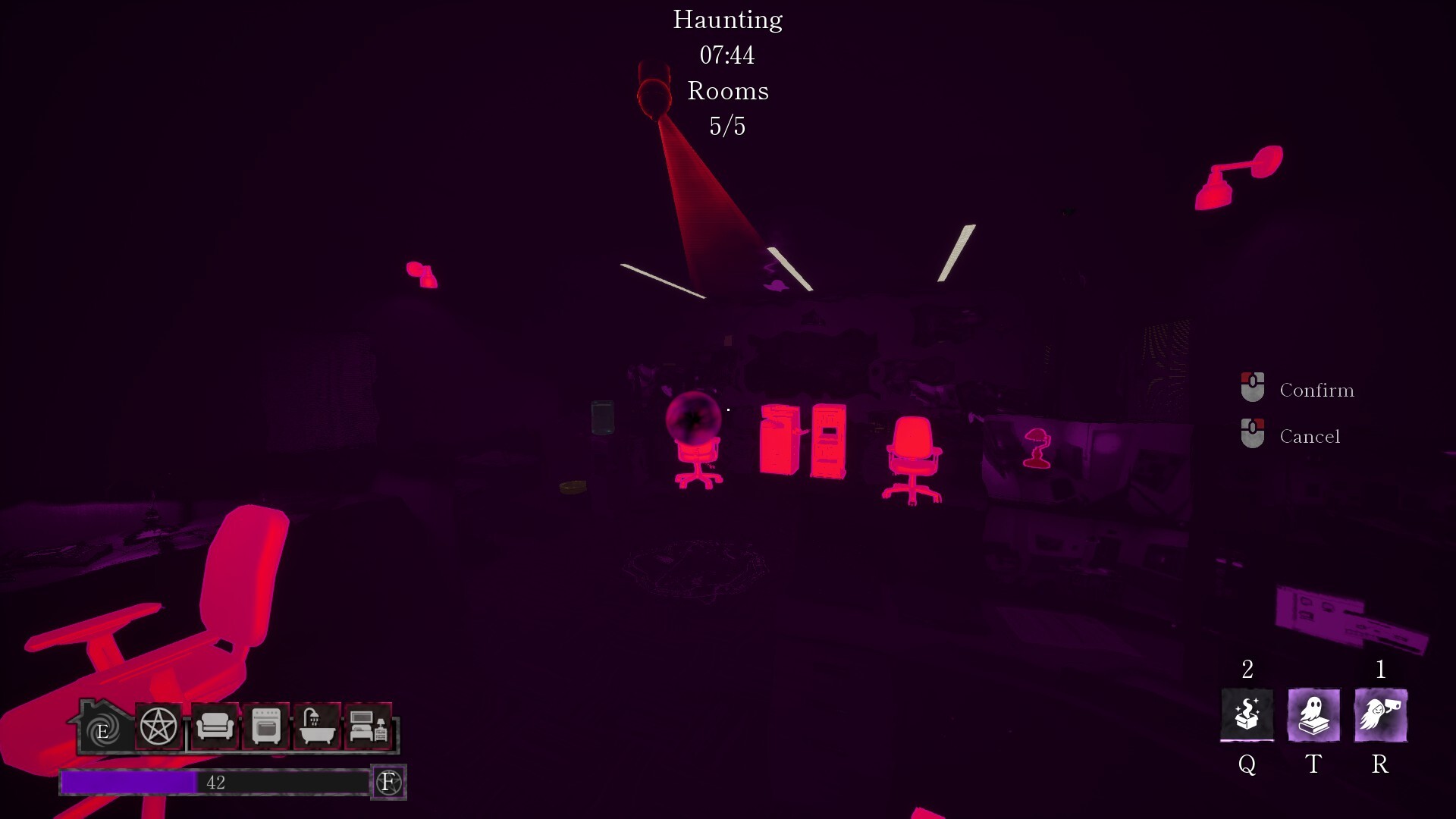
The ghosts haunt everyday objects. A chair that was facing the wall is now facing the door. A toaster lifts off the counter as if it has somewhere better to be. Those moments are funny when you are the one doing them. They are not funny when you are logging them on a bank of cameras. Psychological horror, here, is not a fog machine. It is the slow realization that a room you already know is being edited by people who think your fear is a group activity.
There are four unique ghost characters, a small roster on paper and a useful one in practice. You are not picking a fighter from a select screen. You are picking a personality to smuggle into a living room. The fantasy is possession, not predation. You teleport between rooms, settle into an object, and decide how loud you want to be. Subtlety is not flavor text. Flail every prop in sight and you hand the investigator a map of your bad habits. Stay too quiet and you starve the team of energy. Activity feeds power. Power feeds the nastier tools. Those tools decide whether the house stays a puzzle or becomes a demolition site.
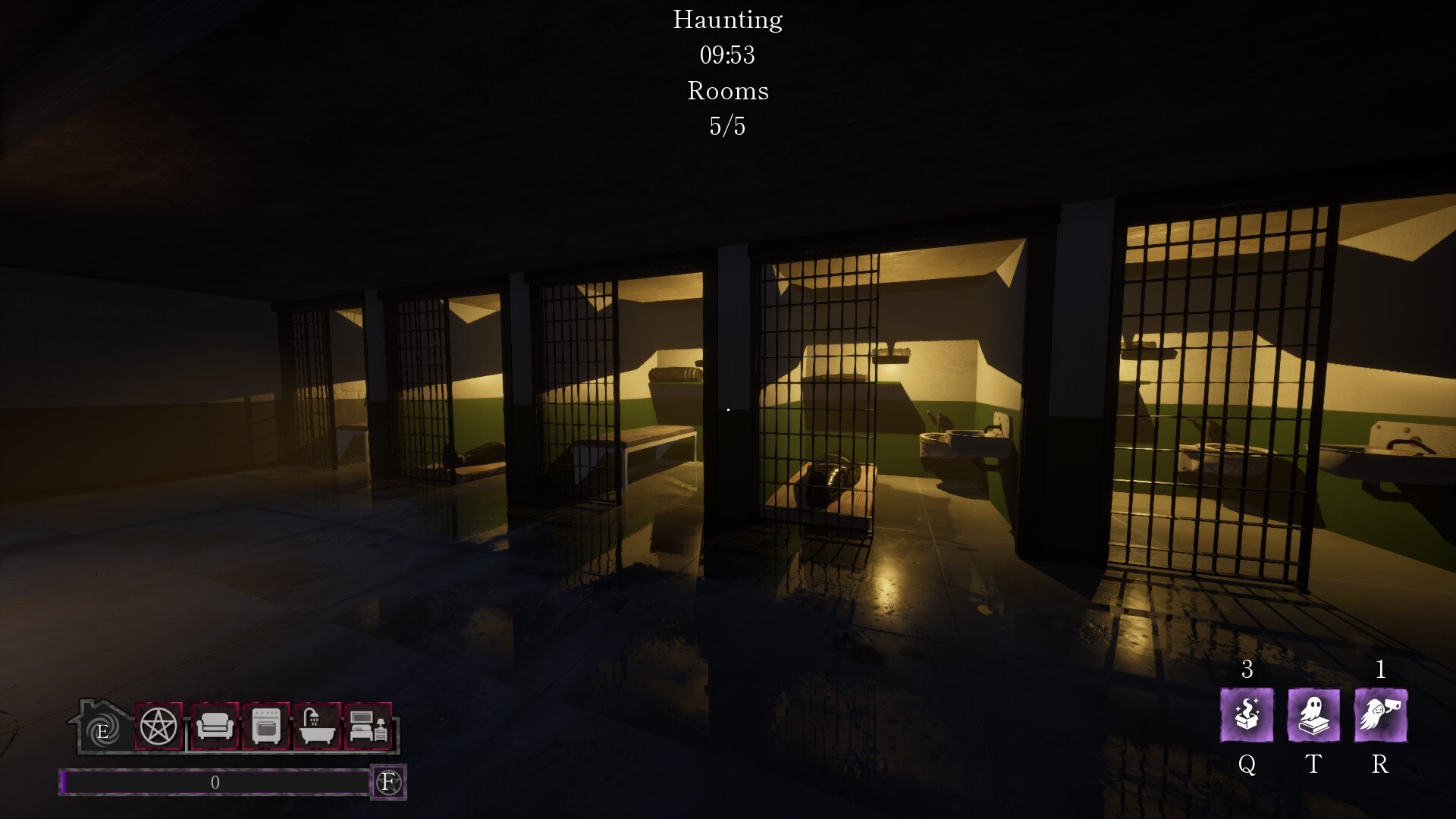
That last part matters more than the jumpscares. Ghosts can kill the lights, crack open a garage door to stall the work, throw a shock through the investigation, and wreck rooms until cameras become useless in them. Destroy enough of the house and the ghosts win outright. It is a clean win condition and a slightly cruel one. The investigator is not only hunting haunted objects. The investigator is racing a renovation in reverse.
I have played both sides enough to feel the argument the design is making. As a ghost, you are a saboteur with a sense of humor. As the investigator, you are a professional being evicted from the idea of professionalism. Action, indie, and strategy all apply, and the strategy piece is not garnish. Ghosts who win treat the house like a shared instrument. The investigator who lasts reads a room the way a good editor reads a sentence, looking for the word that does not belong.
Subtlety Is the Real Superpower

The ghost loop is hide-and-seek with a union card. You possess, you nudge, you vanish, you appear somewhere else. The temptation, especially with friends on voice, is to turn every haunt into a bit. The toaster becomes a comedian. The chair becomes a dancer. The garage door becomes a punchline. All of that is allowed. All of that is also how you lose the night you thought you were winning.
Energy is the tax on showmanship. The more you haunt, the more you earn, and the more you can spend on the house-wide tricks that actually change the tempo. A blackout is not a jumpscare with the lights off. It is a reset of the investigator’s confidence. Opening the garage is not spectacle. It is delay dressed as architecture. Room destruction is the endgame plan wearing vandalism as a costume. You are not trying to be the scariest ghost in a highlight reel. You are trying to make the investigation expensive enough that it collapses under its own caution.
The best ghost play looks almost boring from the outside. A prop moves just enough to register as wrong. A teammate takes the attention. Someone else starts cooking energy in a room the cameras have already cleared. Then the lights die, a scare lands at the worst possible moment, and a room the investigator needed is suddenly a write-off. Four people coordinating a haunting is funnier than one person coordinating a hunt, and more interesting, because the team can argue about taste in real time.
There is a party-horror generosity here that I did not expect to respect as much as I do. You can play loud and still have a night. You can play quiet and still have a night. The game does not punish personality so much as it prices it. Prop Haunt lets you be ridiculous, then asks whether you can afford the bill. A stack of friends will always look like geniuses compared with strangers who just discovered the scare button.
The ghosts are not invincible, which is why the loop does not collapse into griefing. The investigator can zap a haunt, stun you, lock you in a room, and turn a clever possession into a time-out. Overcommit and you become evidence. Undercommit and you become furniture. The line between those two failures is where the game lives. Teleporting between rooms feels like a privilege until you realize you have been drawing a dotted line across the floor plan. The investigator is watching for patterns. Your job is to have one without looking like you do.
I keep coming back to the ordinary objects. Big haunt productions want a ritual and a named entity with a lore paragraph. Prop Haunt wants a kitchen. It wants you to care about a chair the way a magician cares about a coin, not because the chair is special, but because you already believe you understand chairs. When that belief breaks, the room gets smaller.
The Desk Job From Hell

If the ghost side is a group project, the investigator side is a night shift that keeps rewriting the job description. You start at a desk with cameras, scanning rooms for paranormal nonsense, trying to tag haunted objects before the house eats itself. The tools are simple on purpose. You look. You zap. You survive. The simplicity is the trap.
Cameras make you feel like a professional, and like a person who has agreed to watch four other people misbehave from a safe distance, which is a lie the game is happy to tell. The investigator can stun ghosts and lock them down when a haunt is caught cleanly. That power is real. It is also the kind of power that makes you lean forward, which is exactly when the house starts leaning back.
The role is hard. I will not dress that up for a friendlier score. Anyone who bounces between sides will tell you the same thing within an hour. Playing ghost is social and mischievous. Playing investigator is lonely even when the lobby is full, because the information is incomplete and the threats are plural. You are not tracking one predator with a tell. You are auditing a building with four authors. Every cleared room is a rumor. Every blackout is a rewrite. Every destroyed room is a camera you no longer get to trust.
Then the game takes the desk away. As the ghosts get stronger, the investigator can be forced off that supposedly safe station and into first-person horror, walking the same rooms that were, a minute earlier, just rectangles on a monitor. That transition is the meanest idea in the design and the best one. It turns a surveillance puzzle into a survival problem without asking you to learn a second game. You already know the layout. You just no longer get to watch it from the ceiling.
I will not invent a highlight reel with fake timestamps and tidy scores. The nights that stay with you are the ones where you thought you had the pattern, then the garage opened, then a room you needed went dark for good, and then you were on your feet. The scares are not all elegant. Some are blunt in the way a stock stinger is blunt. They still work, because you spent the first half of the night treating the house like a dataset. The second half reminds you it is a place.
A demo exists if you want to feel that shift before you spend the price of a bad sandwich. Take that offer if your group is picky. The investigator role is the one that sorts people. Some will love the slow erosion of certainty. Some will hand the desk to whoever drew the short straw and go back to being a chair.
Two Addresses and a House Full of Borrowed Parts

Prop Haunt does not look like a prestige horror production. Rooms have a downloaded-asset neatness, the slightly too-clean geometry of objects that have lived in other projects first. Audio sometimes leans on stock nerves, the kind of sting you recognize before you can name it. The interface can clunk when you want it to disappear. Silent Forest Games is a small studio in Raleigh, North Carolina, and the game looks like it was made on a budget that would not cover a single cinematic in a larger project. That is not an insult. It is the frame.
The good news is that the rooms are readable. If you cannot tell a kitchen from a garage at a glance, the haunt comedy dies and the investigation becomes homework. These spaces are atmospheric enough to carry a scare and clear enough to carry a plan. You always know where you are. You do not always know why the toaster is in a different mood than it was thirty seconds ago.
Early Access launched on 29 August 2025 with two maps, and that limited floor plan is still the content conversation that matters. Two houses will not sustain a year of strangers in public matches. They will sustain a friend group that likes a specific joke and wants to tell it again with better timing. The studio talked, during Early Access, about more maps, more ghost powers, more investigator tools, procedural props, and leaderboards. I will not invent a third address I cannot confirm. The four ghost characters and the two-map skeleton are the product you should assume you are buying, plus whatever extra rooms and toys the studio has bolted on since 1.0. If you need a new street every month, this is the wrong haunt.
There is a single-player listing, useful for learning the tools and less useful as the reason to own the game. English ships with full audio. French, German, Spanish, and Japanese cover the interface, enough to get a mixed group into a lobby. Eighteen achievements sit in the background for completionists. None of those extras change the central truth. You are here for the 4v1, or you are here by mistake.
Compared with the bigger ghost-hunting fantasy, where a crew walks into a house and tries to identify the dead, Prop Haunt is the opposite daydream. You are the dead. The house is your instrument. The living person is the minority, and the minority has the cameras. Compared with the other famous 4v1 shape, where four survivors run from one killer, the power fantasy is inverted again. The crowd has the supernatural. The singleton has the job. That inversion is the whole review, if you want it in one line. Everything else is furniture, which, in this game, is a compliment.
Better With a Stack Than With Strangers
I have a rule for cheap party horror. If a game is worse with friends than with randoms, it is broken. If it is only good with friends, it is honest. Prop Haunt is honest, and that honesty should be on the box next to the price.
Public and private lobbies both exist, and in-game voice chat is part of the kit rather than an afterthought. Voice is how the ghost team becomes a band instead of four soloists competing for the same lamp. Voice is also how the investigator’s night gets worse, because you can hear people enjoying your misery. The game is casual party horror with real scares, especially on the investigator side, and voice is the seasoning that makes both halves taste like the same dish.
A stack of friends will coordinate haunts, bait zaps, and time a blackout like a prank they have been planning since dinner. A lobby of strangers will open the garage because it is there, dump energy into the loudest scare, and then wonder why the investigator looks calm. The design does not forbid the second group. It simply refuses to pretend that group is the intended audience. If you queue alone, you can still have a night. You will have a better one if you bring people who already know how you laugh.
The player sample around a game this small and this cheap is always going to look tiny. The tone of that sample, from the nights I have run, is mostly positive. Players who found the possession fantasy like the fantasy. Players who wanted a deeper content well, a prettier house, or a kinder investigator difficulty bounce off. That split is fair. Prop Haunt is a €4.99 indie that knows what it is.
Clunky menus and stock-leaning presentation will bother players who come in from glossier horror. They bothered me in the first hour, then receded once the loop took over. The roughness is not what you remember when a room you needed is gone. Prop Haunt has something to say. It just says it with furniture.
The Lights Come Back. The Feeling Does Not.
Prop Haunt is a rare cheap game that understands its own joke and then has the nerve to make the joke frightening. Silent Forest Games built a possession fantasy about teamwork, an investigator role about isolation, and a house that looks a little store-bought and plays a lot better than that sentence suggests. The 4v1 structure is the hook. The energy economy is the spine. The walk from the desk into the dark is the scar.
It is better with friends than with strangers. The investigator is tense and hard in a way that will delight one kind of player and exhaust another. The map list is thin. The presentation has asset-store fingerprints, from the too-tidy props to the audio that sometimes arrives pre-scared. All of that is true, and all of that is already priced in at about €4.99. You are not buying a career. You are buying a night that can turn into several nights if your group likes being a coordinated haunting, or being the person who has to explain the haunting into a camera.
I would not recommend it as a solo main course, even with a single-player option on the box. The conversation is the content. I would recommend it to any group that has worn out the obvious party-horror shelves and wants a role inversion that still has teeth. Play the demo if your friends are skeptics. Take the investigator seat at least once, even if you hate it, because the ghost side is only half the argument. Stay subtle until you can afford not to. Destroy the room when the investigation is getting too competent. And if the toaster starts floating, do not negotiate with it. The house is not haunted in the old-fashioned sense. The house is staffed, it is working late, and it is keeping score.
We prepared this review with a digital copy of the Prop Haunt for the PC version provided by Silent Forest Games.