
There is a particular kind of invitation, rare in a genre that usually hands you a hero and a quest log, in sitting above a village and discovering that the entire product is a soap opera that used to be a strategy map. The farms are still farms. The moon is still a moon. The first rumor that tries to teach you a lesson is not a metaphor. Ruinarch, the evil god sandbox from Maccima Games LLC, is built on that meddling, and the meddling is ruder, funnier, and more useful than a twenty-five-dollar catastrophe has any right to be.
I played the PlayStation 5 version, the 7 December 2023 launch at $24.99 that Klabater walked onto living-room hardware after Maccima Games LLC and Squeaky Wheel Studio Inc left a 25 August 2020 Early Access and shipped 1.0 on Steam on 24 April 2023. You pick an archetype. You upgrade a portal. You turn a loving husband into a headline and a hero into a wolf. Twenty-eight Steam achievements sit behind the loop. The English Steam sample is Mixed, 60 percent of 1,105, with 1,416 purchasers across languages, which is the honest weather of a finished sandbox that still argues with its own menus and not a dare. Great, not polite, and very much a village I would recommend you ruin if you like a god game that remembers it is also a joke.

The Village Was Never Yours to Save
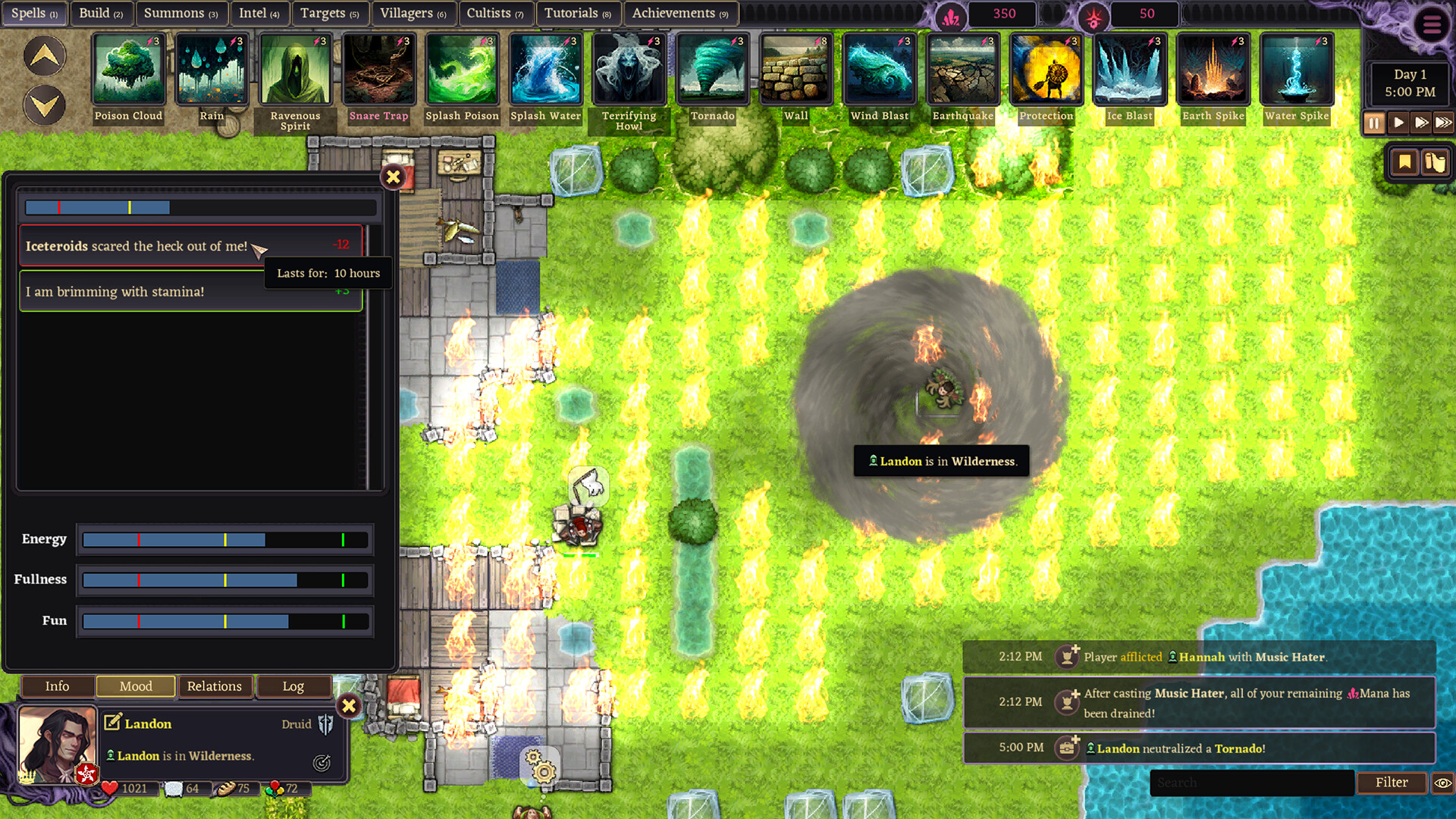
Most god games begin with a speech about stewardship. Ruinarch begins with a chair that faces the wrong direction. Official copy on Steam says you use all the infernal tools at your disposal to manifest conflicts and toy with people’s lives in procedurally generated fantasy worlds, then asks you, with the grammar of a person who has already lost the argument with mercy, to flip the table on the story generators that taught you to keep a colony alive. You are the one weaving tales full of drama and dark comedy. That is not flavor text. It is the design refusing to pay for a hero when a rumor will do.
You start meddling because the alternative is becoming a rumor in a place that does not keep rumors. The first stretch is staged like a tutorial that forgot to be a sermon. You open a portal. The village thinks about dinner. Something in the woods thinks about you, or you think about the woods, which is the same sentence from the other side of the cloud. The script, still a little breathless, asks you to produce Chaotic Energy and spend it like a person who has decided civilization is a prop. Nobody else will. That is the rest of the map.
I like a premise that prices curiosity as a hazard and then lets you walk toward it anyway. Factions sit on the map like questions with jobs. Why is there a knight and a shaman and a potion that already wants to be stolen. What is that cult for. The more you watch, the more the village answers with another marriage and another thing that would like a piece of your patience. Story is emergent and stingy in the early hours, which is the right instinct for a game that wants your hands first and your diary second. You are not reading a novel. You are writing a disaster that is still deciding who the disaster is about.
The fantasy is not mastery of a lore bible. The fantasy is competence arriving about half a day after you invent a lie. You will fail in ways that would be funny if the empty portal were not so sincere. You spend the energy too early. You watch the village recover. You become the kind of person who thinks a Beholder is a personality.
Three Ways to Ruin a Map
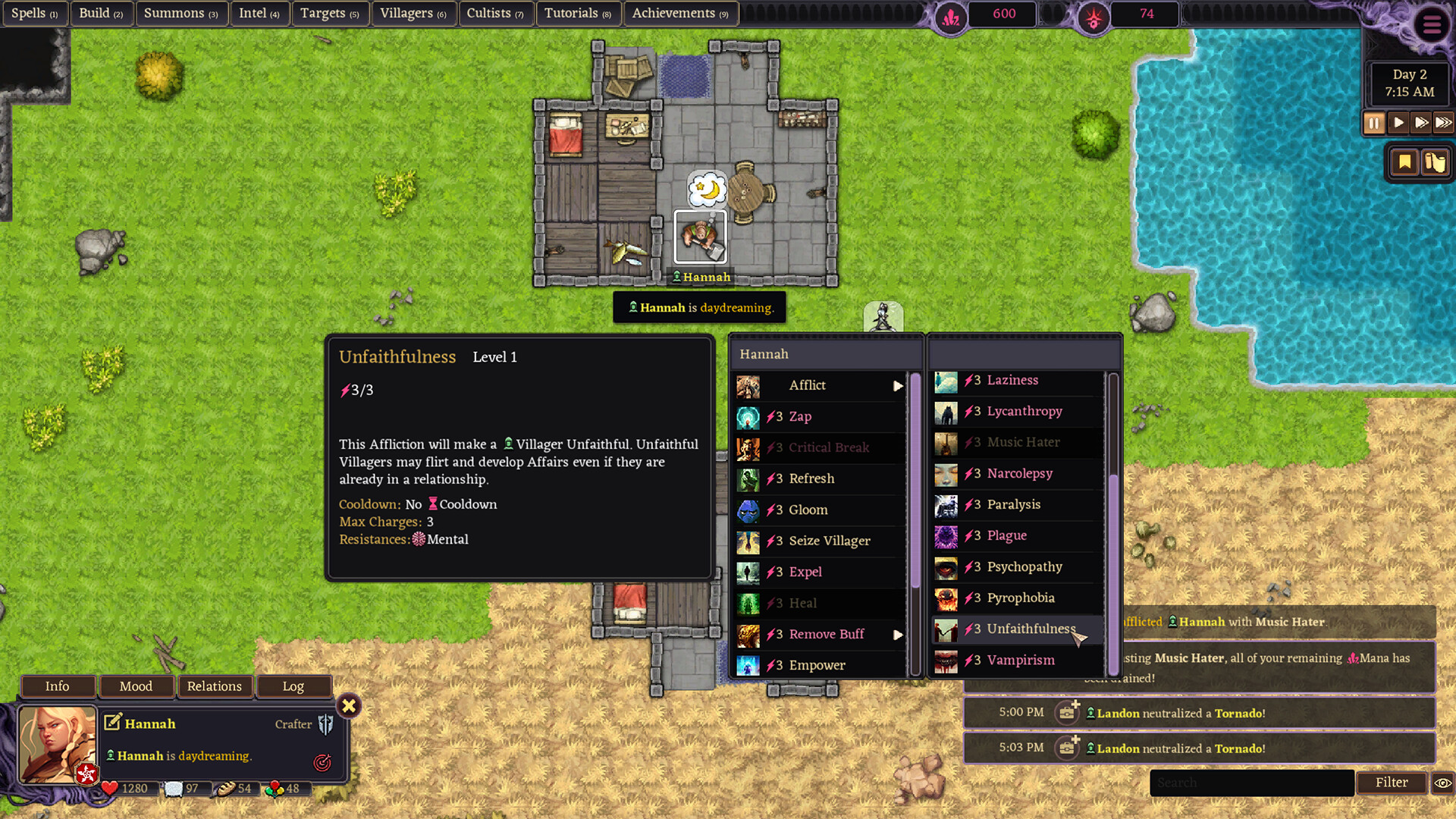
The loop is the old religion of a sandbox and Maccima Games LLC does not pretend otherwise, then it hands the religion three masks and asks you which kind of problem you would like to be. Official copy is not shy about it. There are many ways to be evil. Choose from three overlord Archetypes, each one a different playstyle. Do you want sheer destruction or a more subtle puppetmaster approach. Mix and match your spells. Make a cocktail. None of that is a revolution. All of that is the sentence the rest of the toybox has to live in.
The Lich is the temperature change if you like a disease that learns your name. Spread plague. Raise the dead. Watch a street become a commute for people who have already left. The Puppetmaster is the temperature change if you like a secret more than a crater. Temptation, gossip, the long joke of telling a wife what you made her husband do. The Ravager is the temperature change if you would rather the map be honest about fire. Earthquakes. Lightning. A meteor that treats a puddle like an invitation. Official copy asks what happens when you hurl a meteor at a poisonous puddle. Poisonous meteor explosions, that is what. That sentence is both a promise and a warning.
I have played a lot of games that treat the first night as a tutorial and the hundredth as a spreadsheet. Ruinarch is heavier than that on purpose, and lighter than a war game on purpose. There is no army to unionize. There is a village that can forgive you if you are sloppy and then write you a worse story if you are precise. I left the careful path on for an evening and the greedy path on for another. The portal did not mind at first. The moon minded either way.
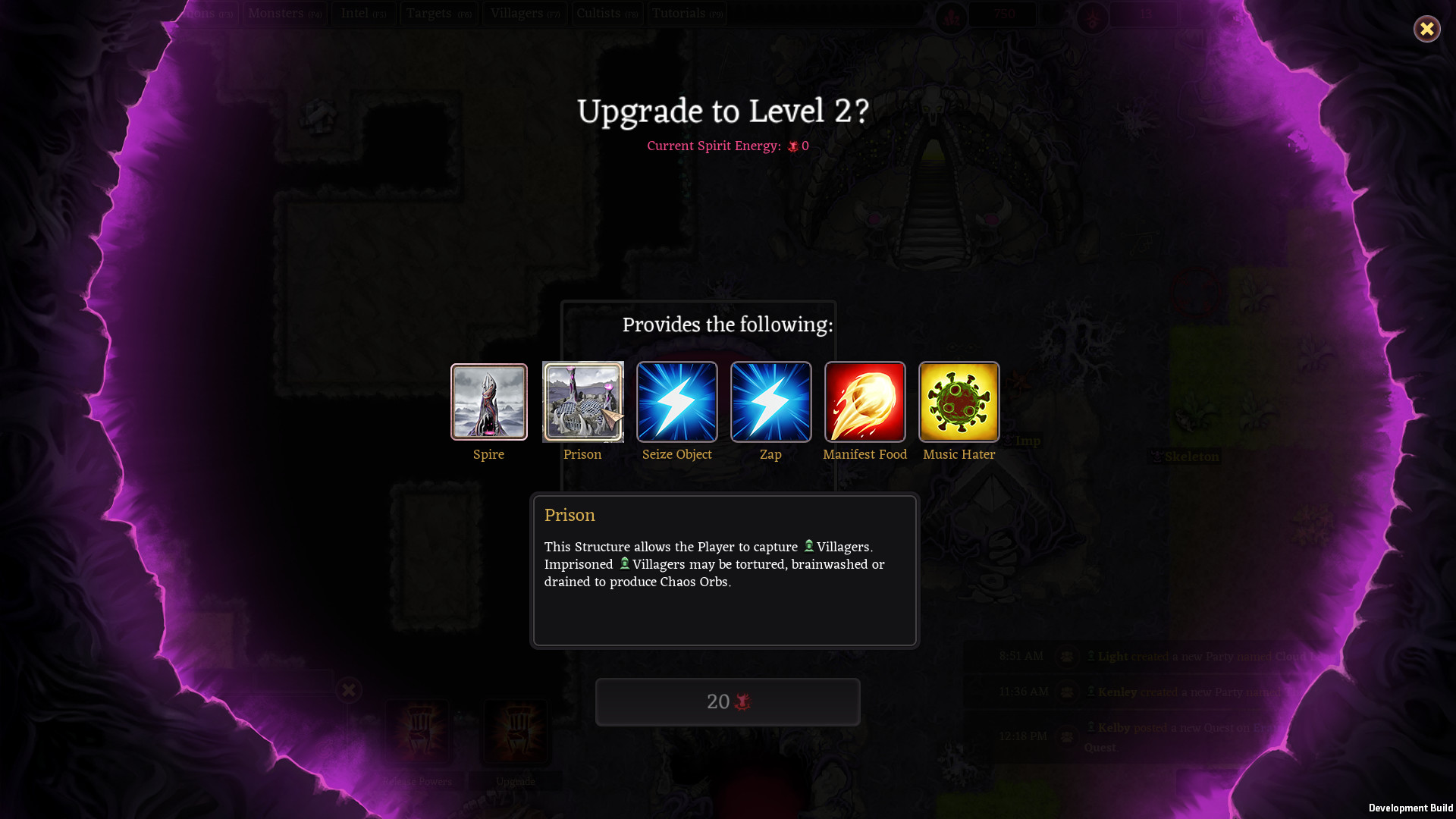
If you want a god game that never asks you to watch a marriage, you will feel underemployed. If you want a month that turns a rumor into a hunt, you will feel hired. Map size is the other half of the short description. Small to extra large. More villagers means more ways to combine the joke. A short map is a weekend. A large map is a soap opera that has decided you are the writer. Portal upgrades are how the joke gets permanent. Spend Chaotic Energy. Unlock the next heinous Power. Stay long enough that the village starts to remember your silhouette.
Gossip, Moons, and a Cocktail of Bad Ideas
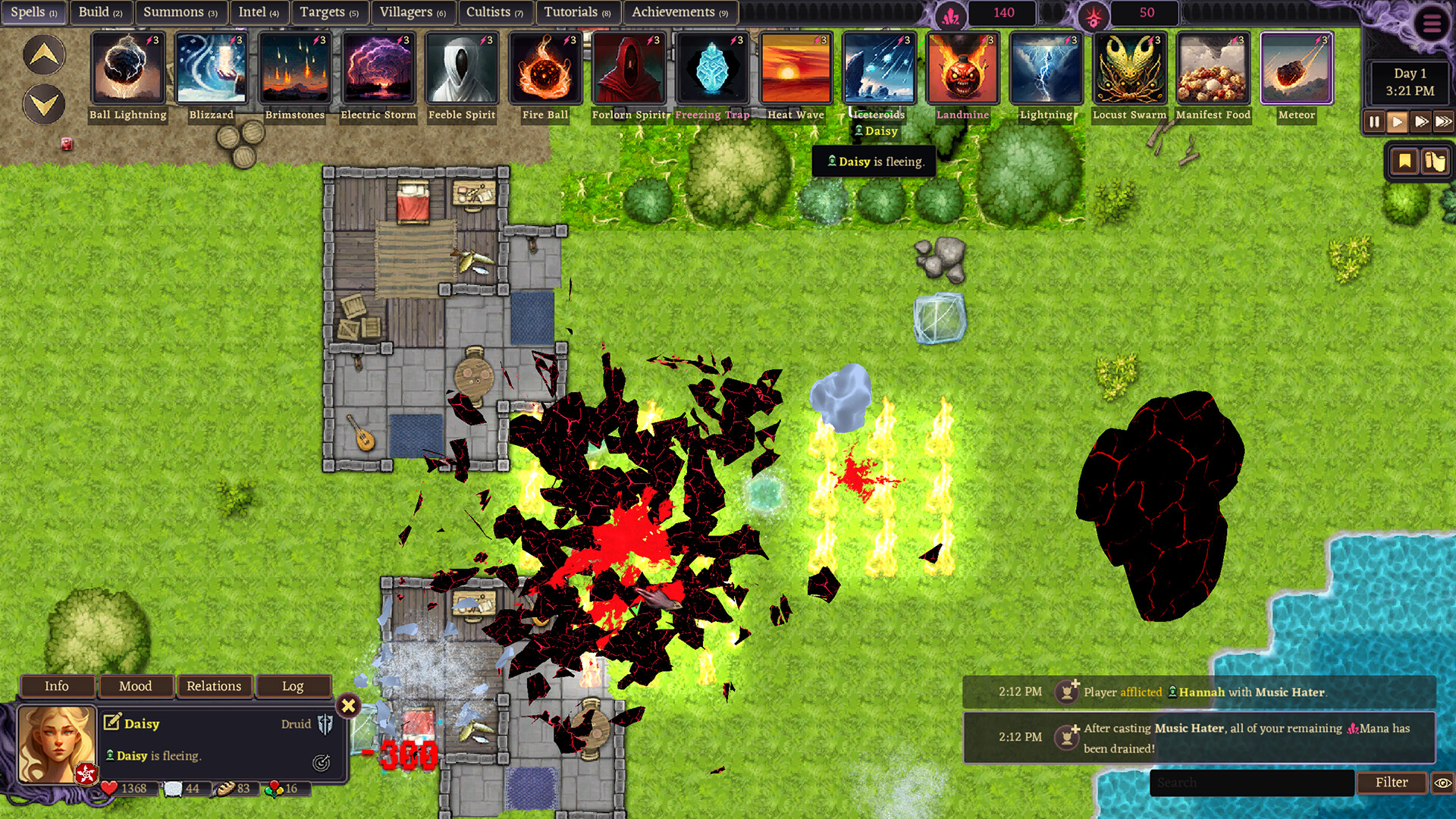
Spells are the old religion’s first hymn. Cast an earthquake if you would like the general population of buildings to remember gravity. Cast lightning if you would like a person to remember they are wet. Combine elements if you would like the puddle to have opinions. None of this is a feature list you tick. It is the joke the whole mission is telling. Without chaos, the portal is a rumor. Without the portal, you are trapped in a sky that has not hired you yet.
Afflictions are the variety. Official copy puts it in the open. Afflict the local hero with Lycanthropy and watch childhood friends turn when the full moon rises. Afflict a previously loving husband with Unfaithfulness and then tell his wife. That is not a cutscene. That is the systems agreeing to take turns being disappointed in a person. Vampirism is a cousin. The village will eventually fight back and start hunts, which is the closest Ruinarch comes to a power fantasy that has manners, and I like it more than a new crater. Mastery is not a bigger explosion. Mastery is a conversation you have with a street that can organize.
I will not invent a highlight reel with fake timestamps and tidy body counts. The nights that stay with you are the ones where you thought the rumor was finished, then a knight stole a potion, and then you were on the wrong side of your own intelligence. The Beholder structure lets you spawn Eyes, store Intel, and walk a fact across town like a person who has mail. You have seen a Knight steal a Shaman’s Potion. Store it. Tell the Shaman. The store page is not shy about that sentence. What the store page cannot tell you is how quickly you will start treating a successful piece of gossip as a mood stabilizer. You watch. You file. You put the Eye down and look at the village like a person who has decided civilization is a rumor mill.
I sold my dignity to a meteor on day two and then needed the meteor for a puddle, which is the oldest overlord joke in the book and still a good one. Distance helps. A working rumor helps more. A puddle without a plan is scenery. A puddle with a meteor is a paragraph the village will still be discussing after the fire has gone out.
Kennels, Cultists, and the Joke Getting Personal
Monsters are the other half of the short description and the ruder half of a week if you treat them like furniture. Official features ask you to snatch or seize a roaming monster and breed it in a Kennel for very specific functions, then unleash parties to snatch villagers or raid villages. That is groceries with teeth. A kennel before you are ready is a dare. A kennel after you are ready is a commute. Lose a party on a raid and the joke is funny until you needed those claws for a hero who has already learned your name.
The Prison is the other vehicle. Incarcerate. Torture in ways the shop is not ashamed of calling ridiculous. Afflict random flaws. Perhaps someone comes home with mental anguish and becomes a Serial Killer, which is a sentence no designer writes for a cozy afternoon. Brainwash the same guest and they return as a secret cultist who will quietly worship you and aid your return. Cultists are not a city. They are a reminder that someone else survived long enough to leave a note, and the note is about you.
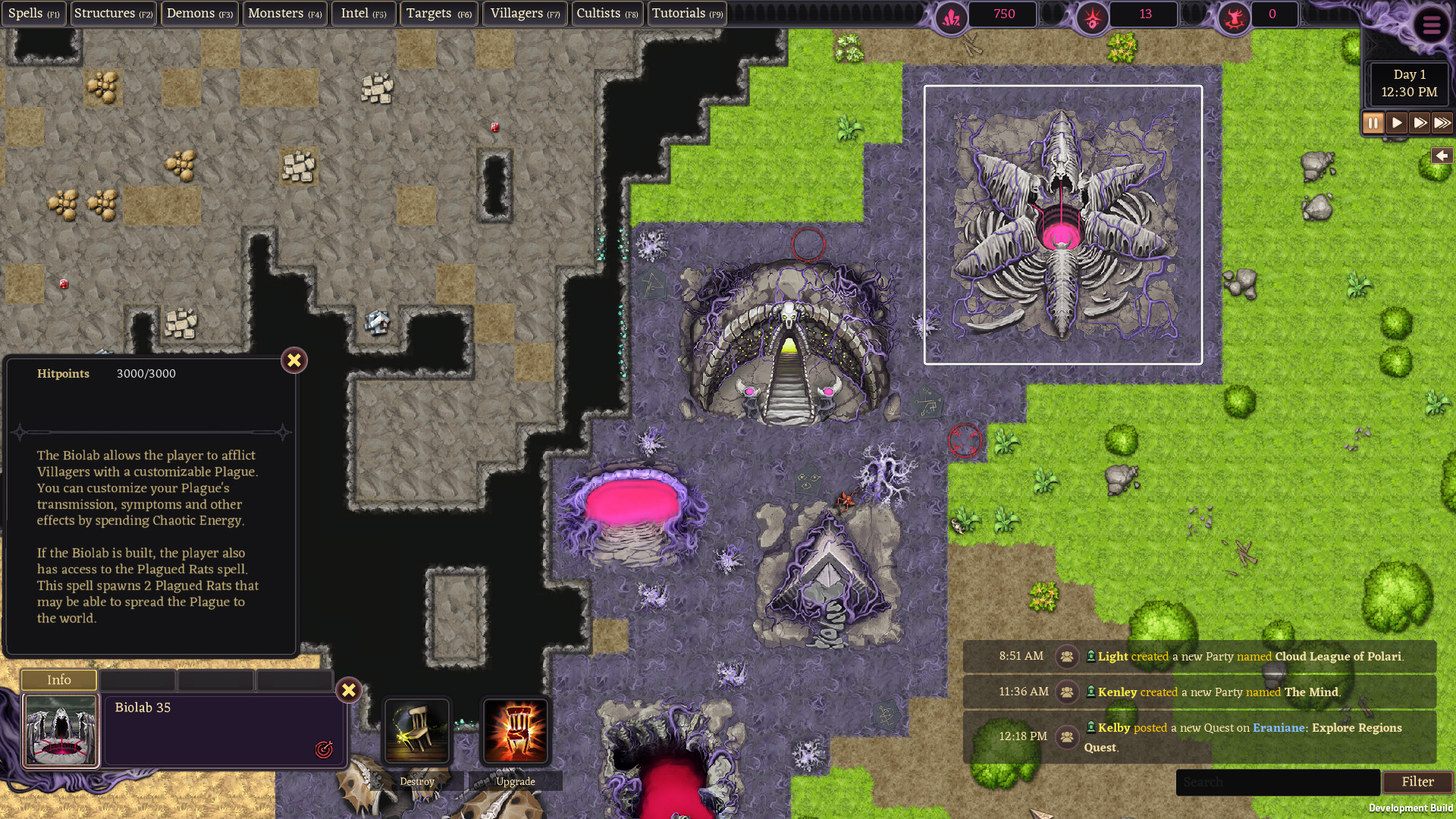
Plague is the long joke. Build a Biolab. Afflict villagers. Summon Plagued Rats. Upgrade symptoms. Improve virulence. Make the dead explode, or make the dead rise, or make the risen bite the living until the street is a theology problem. Official copy says soon the entire village will be filled with nothing but shambling zombies. That sentence is a promise if you are a Lich and a warning if you thought you were still doing a puppet show.
Twenty-eight achievements sit behind the loop for people who like a receipt. Names like You Like Slow Deaths, I Am The Boogeyman, You Sneaky Bastard, Is That You Lucifer, Kneel Before Me, and A Good Ol Destruction tell you the shop has a sense of humor and is not ashamed of it. None of them change the central truth. You are here to ruin a village and then find out what the ruining is for.
Sandbox by Design, Rough by Habit
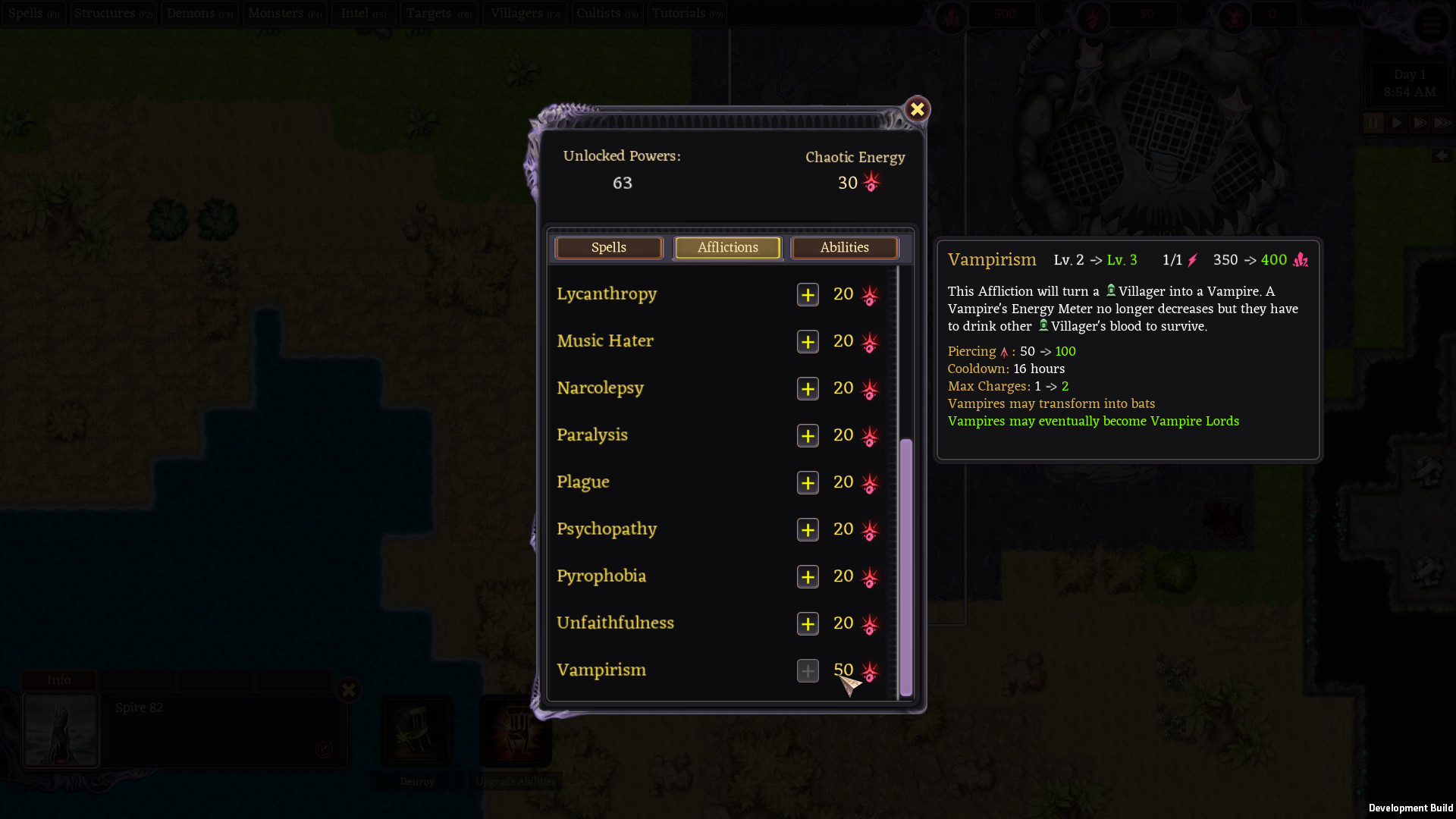
I should be clear about the friction, because it is real and it is not a footnote you hide after the score. Ruinarch looks like a game that was built by a small Manila shop that wanted a story generator more than a showcase, then discovered the generator was a whole village and later a living room. Landscapes can be handsome in that two-dimensional, slightly homemade way. Menus can be stubborn. A selection can arrive a half-second late to a person you were sure you pointed at. Targeting a single villager in a crowd can feel like pointing at bushes one at a time in a genre that has already invented a lasso. Tutorials can explain a portal and then shrug about a marriage. I will not invent a frame census. I will say the village sometimes forgets to stock the smoothness you need and then shrugs like weather.
Technical manners on a living-room build can stutter when a late map decides to be a theology problem. Paths can get philosophical. Eyes can get lost. Autosaves have a way of announcing themselves. None of that is unique to this flood of chaos. All of that is the tax on a sandbox that spent from 25 August 2020 to 24 April 2023 in Early Access, learned an audience, and arrived on consoles in December still wearing some of the same boots.
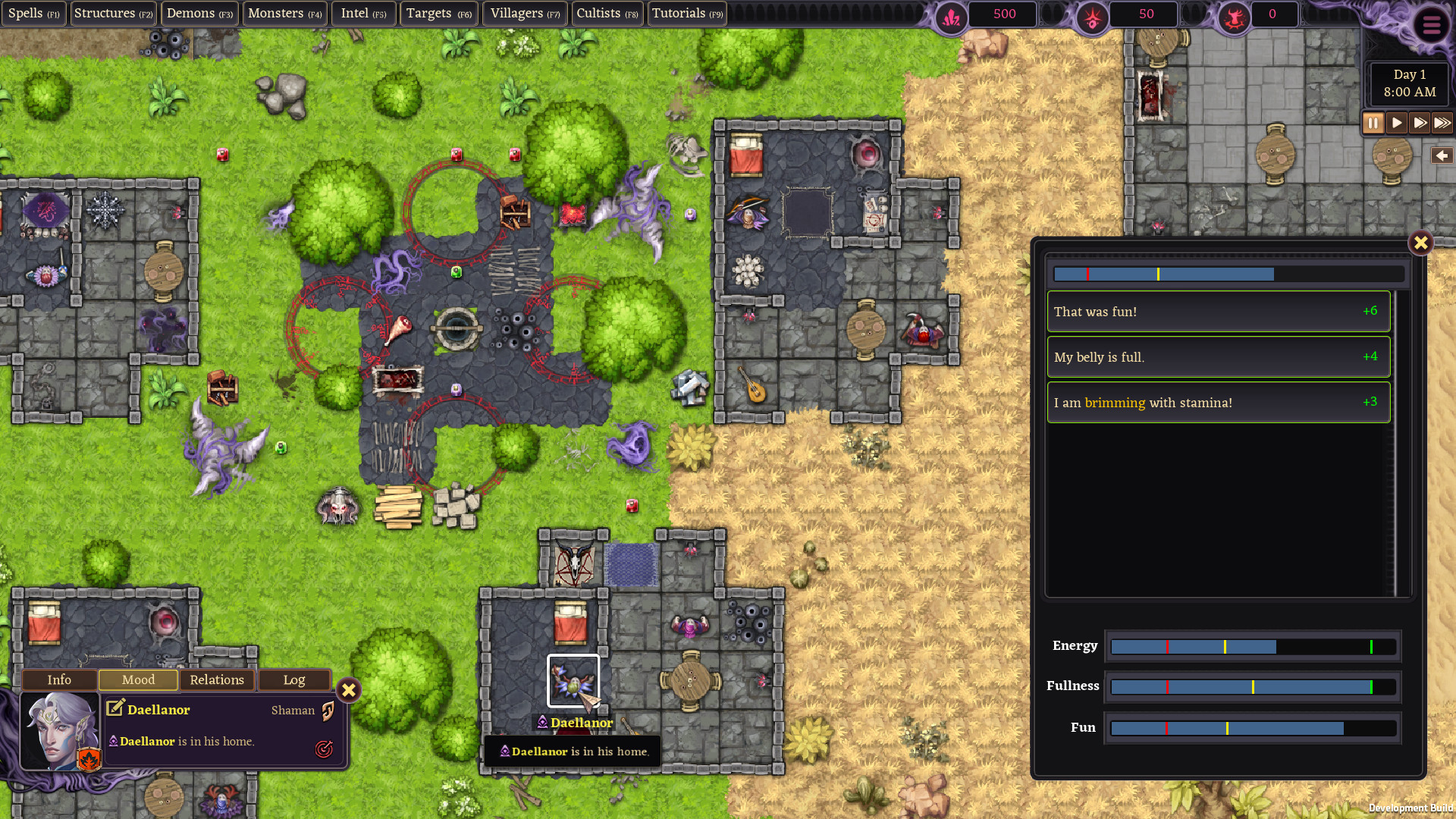
Presentation is readable, which matters more than prestige. You can tell a farm from a keep from a woods at a glance. If you cannot read a villager, the hunt dies and the god game becomes homework. These spaces are atmospheric enough to carry a scare and clear enough to carry a plan. You always know where you are. You do not always know why the moon is already there. The art is a 2D sandbox picture book that learned to be cruel, which is a fancy way of saying the village looks like a toy and then refuses to stay a toy.
English is the Steam language with a long list of interface cousins, which is how a wider audience gets in the door. Full controller support is on the sheet. I will not turn this into a localization seminar. The voice of the game is the village, and the village talks in rumors, weather, and the occasional knock that is a werewolf.
The Steam sample around a game this argumentative is always going to look like weather. Mixed is the official report, 60 percent of 1,105 English voices, 890 of 1,416 across languages, and that split is fair. Players who wanted a prettier cursor, a kinder tutorial, or a resource economy that never hides the stutter bounce off. Players who wanted a god game with a bad idea about marriage stay. I am in the second camp with caveats, which is the only honest place to stand.
Better With a Scheme Than With a Checklist
I have a rule for mid-priced sandboxes. If a game is worse with a scheme than with a checklist, it is broken. If it is only good with a scheme, it is honest. Ruinarch is honest, and that honesty should sit next to the price.
A checklist night is a competent weekend. You punch the portal, you invent the meteor, you lose a monster, you watch the village rebuild, you put a better plague on the joke. A scheme night is the version the systems were quietly designed around. Someone watches. Someone files Intel. Someone learns, too late, that a hero with Lycanthropy does not respect a pretty plaza. The village becomes a shared instrument you play with yourself instead of a commute.
Compared with the giants of the keep-them-alive business, Ruinarch is not trying to be a career you finish this week. It is trying to be a place you keep returning to so you can ruin it differently. The developer said the quiet part on the store page. Emergent storytelling. Mix your own cocktail. Fun if you will meet the game where it lives. That is not a cop-out if the place is worth the sit. Some nights it is. Some nights the rumor is a myth and the doorway is a theology problem. Both nights are Ruinarch.
There is a parasite path if you would like the fantasy of extraction without the sermon, except here the parasite is the point and the sermon is optional. Live as a spectator, or live as a problem the village has not learned to hunt. Trust is not a resource they give you. Chaos is. Both of them invoice you in the same font. I left a cultist in a house I was sure I did not need and then needed the house, which is the oldest prison joke in the book and still a good one.
Still Standing After the Village Falls
Ruinarch is a rare mid-priced sandbox that understands its own joke and then has the nerve to make the joke a god who would like a word with your marriage. Maccima Games LLC built a village about meddling, a portal about teamwork you do with a rumor, and a toybox that looks a little homemade and plays a lot more sincerely than that sentence suggests. The loop is the hook. The gossip is the spine. The walk from a puddle to a hunt is the grin.
It is better with a scheme than with a checklist. The late maps can clunk in the way a finished indie generator is clunky. Performance can sulk. The presentation has shop fingerprints, from the stubborn menus to the story that would rather be a rumor than a cutscene. All of that is true, and all of that is already priced in at $24.99. You are not buying a decade. You are buying a season that can turn into several seasons if you like being a coordinated disaster, or being the person who has to explain the disaster to a shaman.
I am scoring it 8.5, Great, because the identity is this clear and the limitations are the limitations of a focused sandbox, not an empty one. I would recommend it to anyone who likes a workbench that has weight and a map that is allowed to be rude. Distinctive village weather, a portal that shrinks the horizon, a rumor that turns salvage into conversation, and a price that respects a long week are a lot of game for the ask. The systems repeat their manners. The manners are still useful.
The village is still out there, still hiring a night shift, still asking whether you will live as a spectator. After a few hunts, you will understand why the job is not finished, and why you keep sitting above the farms anyway.
We prepared this review with a digital copy of Ruinarch for the PS5 version provided by Pressengine.