There is a particular kind of quiet that only exists on a space station after the people have stopped being people. Lights flicker like they are trying to remember a schedule. A corridor that looked like a hallway last run now looks like a throat. You are Naut, a cybernetic cleanup specialist with a katana and a job description that stopped being honest the moment the distress call went unanswered. Katanaut, the Metroidvania-inspired action roguelite from Voidmaw and Acclaim, is built on that cleanup job, and the job is ruder than a pixel station has any right to be.
I played the PC version, the September 10, 2025 launch that put a one-person Godot project onto Steam at $17.99 and then watched a few hundred players decide the ride was worth the bruises. Voidmaw is Eugene working under a studio name, three years of solo labor, and a taste for cosmic horror that prefers gore and flickering corridors to a lore dump on a loading screen. You descend through a station that is spiraling out of control. Once-human inhabitants have been twisted into terrors. Time-manipulation yanks you back whenever your bio-metrics go dark. Memory fragments from the fallen become skills. Elevators carry that progress downward. Pathways change. The combat is souls-like in the honest sense: it wants timing, not button soup. The station is stylish, the blade is the star, and the runs, after enough nights, start to rhyme with themselves. Great, not flawless, and very much a descent I would recommend you take.

Cleanup Duty on a Dying Star
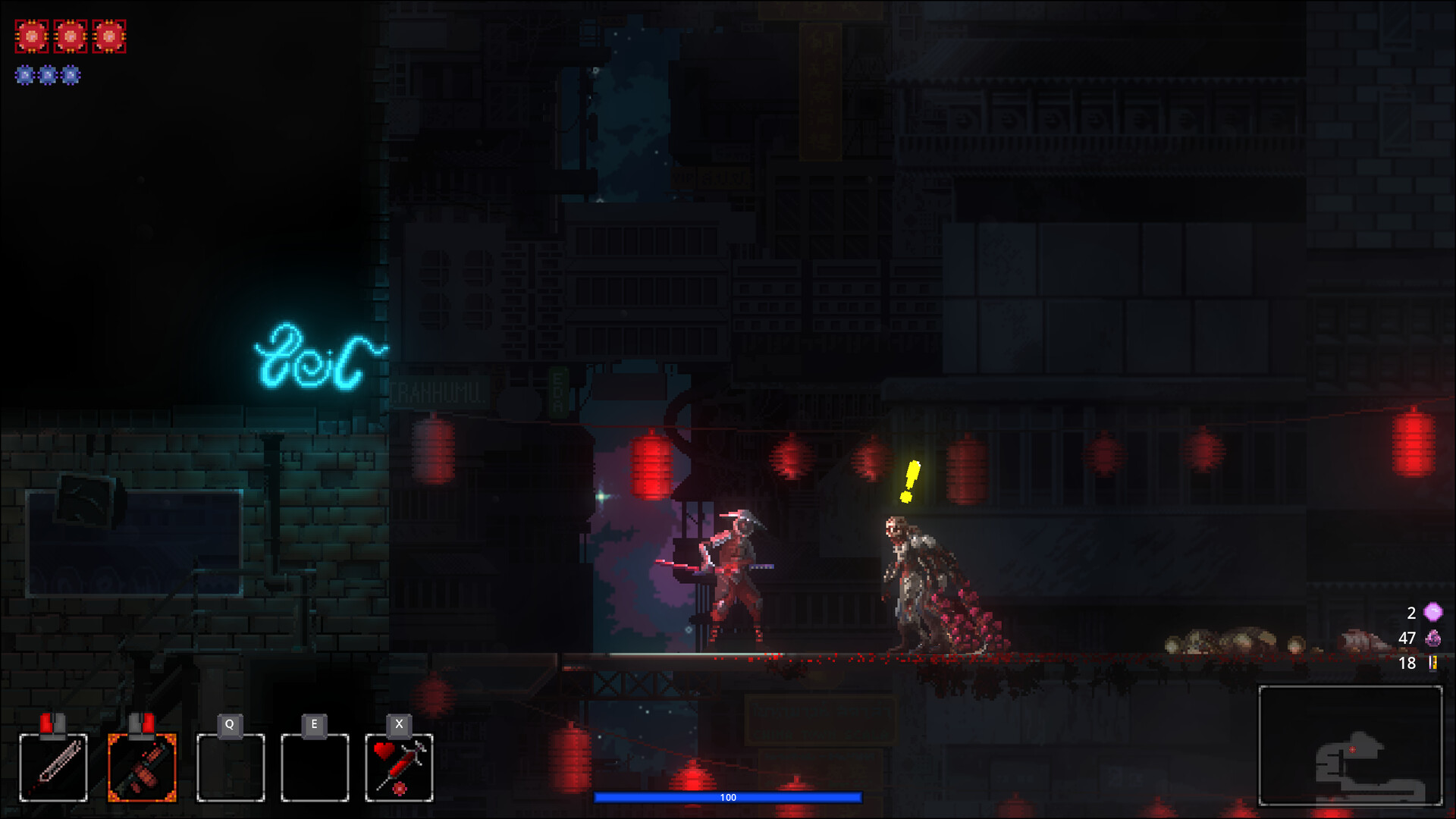
The premise is a distress call that arrived too late and a specialist who still has to walk the halls. Naut is not a chosen one with a prophecy. Naut is the unlucky person with a blade, a sidearm, and a team that is still, in pieces, somewhere in the wreck. The station was vibrant once. You can feel that in the early rooms, the ones that still look like they had a cafeteria and a schedule and a reason to exist. The deeper you go, the less human the architecture becomes, and the less human the things that used to clock in.
Story is environmental and stingy, which is the right instinct for this kind of object. Bloody hallways, flickering lights, strange machines, glimpses of lives that ended mid-sentence. Memory fragments do double duty as loot and as testimony. You are not reading a novel. You are scavenging a disaster. The hub gives the loneliness a few faces. The Keeper minds the fragments. The Specialist hands you new skills. The Weaver slots implants. Captain Chop keeps an eye on the things that should not be living in the walls. They are vendors with personality, not cutscene machines, and that is enough.
I like a horror game that does not stop the action to explain the horror. Katanaut leans on gross-out cosmic rot more than existential dread. Tendrils, maws, bodies that forgot how many limbs were standard. The tragedy of human arrogance and experiments that went feral sits in the background like a stain. You feel it. You do not get a seminar about it.
Naut’s past arrives in short interactive flashes and team conversations, hints of a bloody history the game is in no hurry to plate. I wanted more of those flashes. The ones I got were good enough that their scarcity became a complaint. The camera likes the blade more than the biography, and most nights I agreed with the camera.
The Blade Has Weight, the Dodge Has Manners
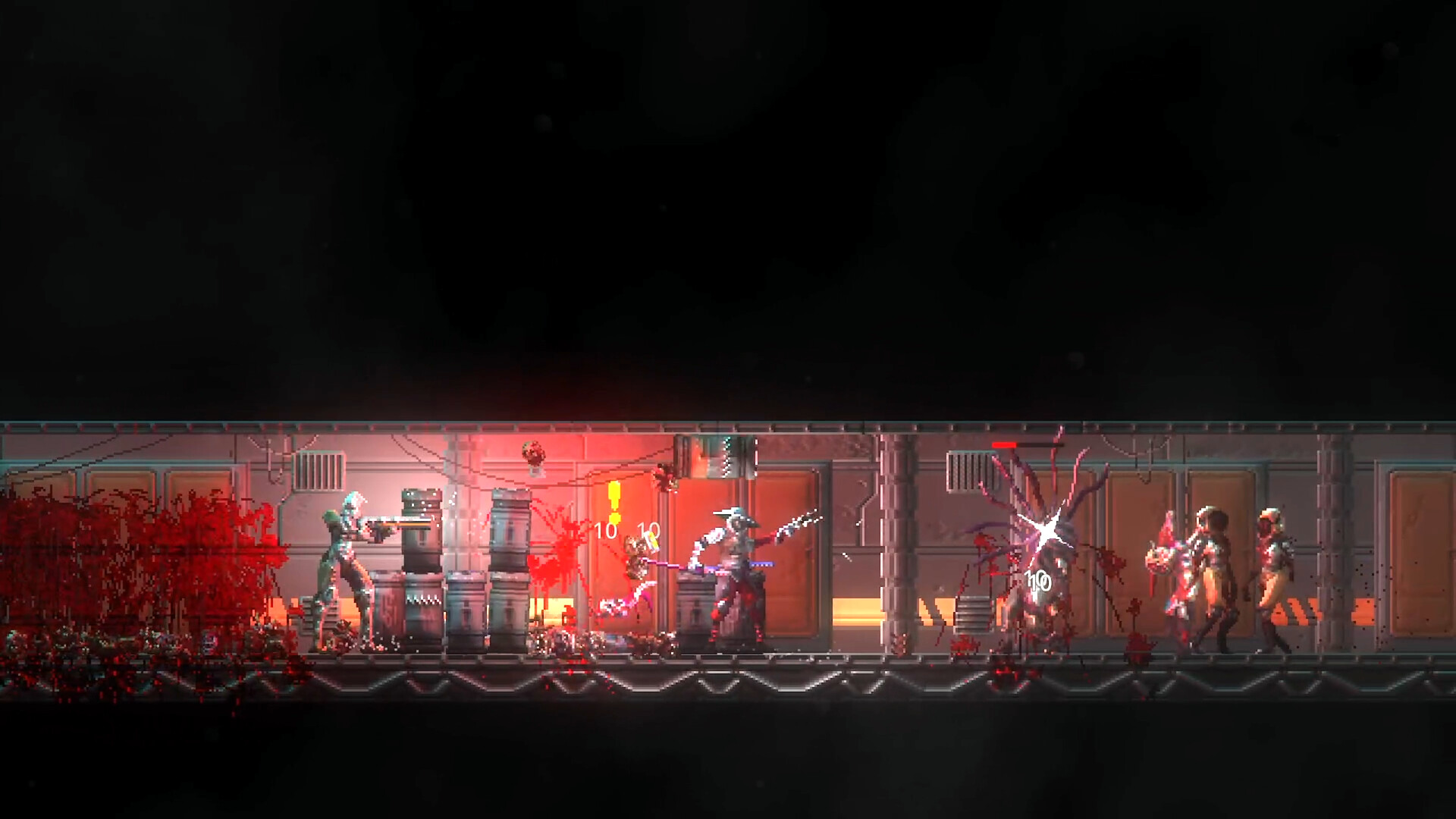
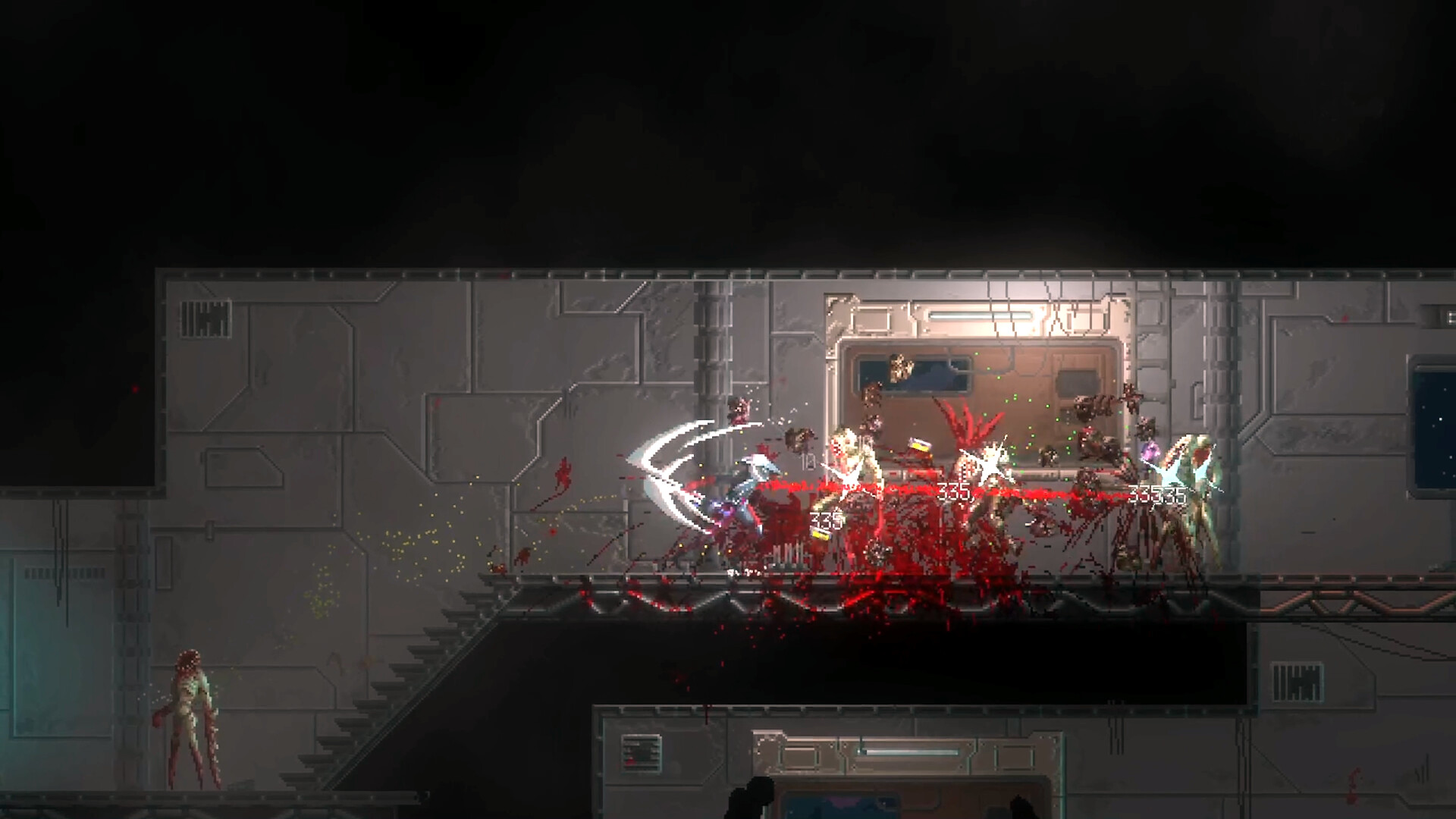
Combat is the reason the station is worth the commute. The katana is not a costume. It is the verb. Swings have weight and a readable arc. Dodges and slides get you through a crowd without turning you into a smear. Parries, on the right blade, turn an enemy’s enthusiasm into a counter that feels like you stole their turn. Telltale marks sit over heads when a punish is available, a little courtesy from a game that is otherwise happy to kill you for being polite at the wrong time.
You are choosing a line through space, not just an attack. Attacks keep a slice of your velocity. Air control is generous. Cancel windows exist so an escape or a parry feels earned rather than granted. Enemies telegraph with light and audio so you can react while you are already moving. The first hour is a tutorial in not standing still. The tenth hour is a tutorial in looking like you meant the chaos.
Guns are the other half of the sentence, and they are not allowed to replace the blade. Ammunition is a conversation with the katana. You slash to keep the magazine honest. That rule is the design’s best manners. A sidearm becomes punctuation, a tool for the thing you cannot reach or the elite you need to stagger before you commit. Subweapons branch into guns, extra steel, shields, even a crowbar, because a collapsing station is still a place with tools. Skills sit on short cooldowns and reward timing over spam. Some are active tantrums. Some are passive habits.
Syringes stack and push damage, stamina, loot luck, crits, ammo. Perks last until you die and rewrite the rules of a run, sometimes by making you stronger, sometimes by letting you use the room as a weapon. Kick a barrel, send it into a crowd, then arrive like you planned it. Implants are the loadout you buy before the elevator, the kit you equip within a limited number of slots. That slot cap is a real constraint. It will irritate anyone who wanted to wear the whole toybox at once. It will please anyone who likes a build that has to make a point.
Bosses are where the kit gets graded. They are specialized, rude, and scored by unique music that makes a rematch feel like a concert you failed last week. I got stuck. I changed the sentence I was speaking with the blade. I came back with a better implant and a worse attitude. The fights stayed fair in the way a good action game is fair: if you got hit, you knew whose fault it was. Controls are tight. Input lag is not the villain. You are.
Fragments You Steal From the Dead
The fiction of the revive is the cleanest idea in the kit. In this future, people download abilities on demand. When your bio-metrics vanish, time-manipulation puts you back together. The station is littered with memory fragments from the fallen, each one a lost skill or talent waiting to be unlocked. Death is not a lecture. Death is a download that did not finish.
That is how the roguelite loop earns its keep. A failed run is still a harvest. Fragments feed the hub. The Keeper, the Specialist, the Weaver, and the rest of the leftover staff turn that harvest into a slightly better Naut. New katanas. New guns. More syringe capacity. A fatter health pool. Another implant slot if you have been diligent.
The blend of run loot and meta progress is why I stopped resenting the structure. I am not always in the mood for a genre that asks me to roll the boulder up the same hill. Katanaut makes the hill a station that keeps a receipt. Skills and perks and pretty weapons can vanish when you drop. Implants and unlocks do not. The next attempt is not a reset so much as a revision. That is the difference between a loop that feels like homework and a loop that feels like a craft.
Shops between realms, drops from elites, chests in rooms that did not exist last time: the economy is familiar and well-tuned. You will find a skill that summons something unspeakable and a perk that makes a hallway into a bowling alley. You will also find a dead end and a crowd that does not care about your new toy. Builds are the toybox. Melee purity. Gun punctuation. Ability greed. The game wants you to experiment and then, because slots are finite, to commit.
One hundred and ten achievements sit in the background like a second station. Steam’s player sample, 437 recommendations deep when I wrote this, leans warm. A critic aggregate sitting at 75 is the colder twin of that warmth. Both numbers describe the same object: a stylish, sharp, slightly repetitive descent that people who like this genre tend to finish arguing with rather than abandon.
Elevators, Warped Halls, and a Map That Lies
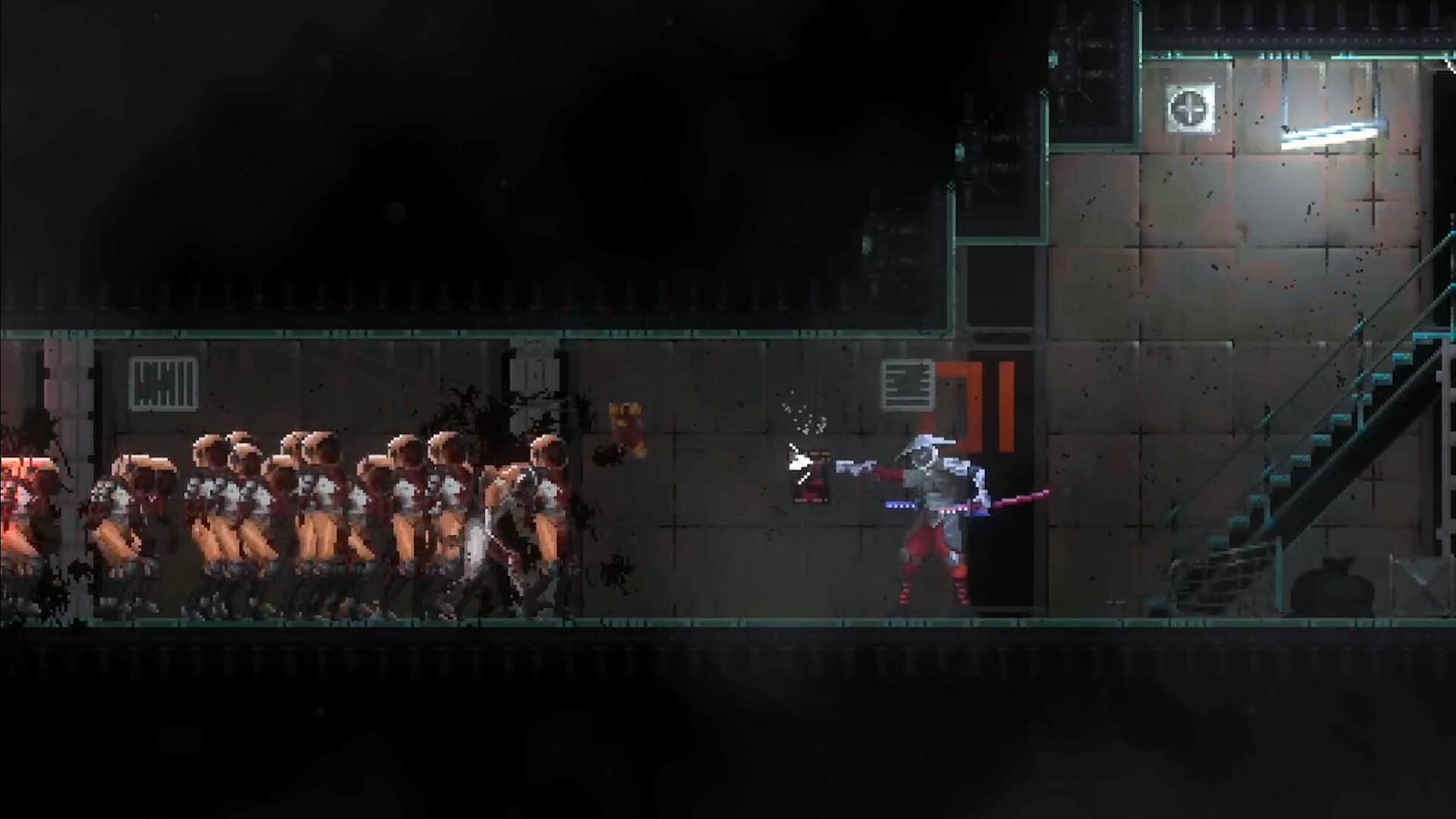
The station is a Metroidvania that agreed to be shuffled. Handcrafted rooms, the ones with a joke or a secret or a piece of architecture you will remember, sit inside a procedural argument that rearranges the commute. Pathways change. A door that was a shortcut becomes a dare. A portal dumps you into a biome you thought you had cleared. The early floors are tense and readable. The deeper floors get darker, weirder, less interested in remaining a workplace.
Elevators are the other thesis, and they are not flavor. Each ride down carries the progress you scavenged. The fiction is a descent. The mechanic is a checkpoint with manners. You are not wandering an open castle so much as committing to a lower floor with a bag of stolen memories. That commitment is why a run has a shape. You can feel the station getting worse because you agreed to go further.
Exploration still has Metroidvania bones. Hidden rooms, elite challenges, doors that only open when a fragment and a skill agree to cooperate. Puzzles are light. They ask you to look at a room and use the kit you already have. I like a puzzle that does not stop the blade for a quiz. These do not. They stitch the action to the map so a secret feels like a reward for paying attention, not a reward for reading a guide.
The mixture of authored space and shuffled space is the design’s proudest tightrope. When it works, a familiar room in a new doorway feels like the station breathing. When it fails, a familiar room in a new doorway feels like a commute with better lighting. For the first several hours the tightrope holds. You learn a biome’s handwriting. You learn which crowds want a parry and which crowds want a gun and a barrel. You learn that the map is allowed to lie a little, and that the lie is the point.
Full controller support is there if you want it. Keyboard is a first-class citizen. I spent most of my serious time on a pad because the dodge felt like a shoulder and the blade felt like a face button, then swapped to keys when I wanted the precision of a parry window I could blame on myself. Either language works. The station does not care which hand you use to fail. A run can be a quick, clean descent or an onslaught that treats your build like a rumor. That range is the promise on the box and, most nights, the promise holds.
Pixel Gore and a Synthwave Pulse
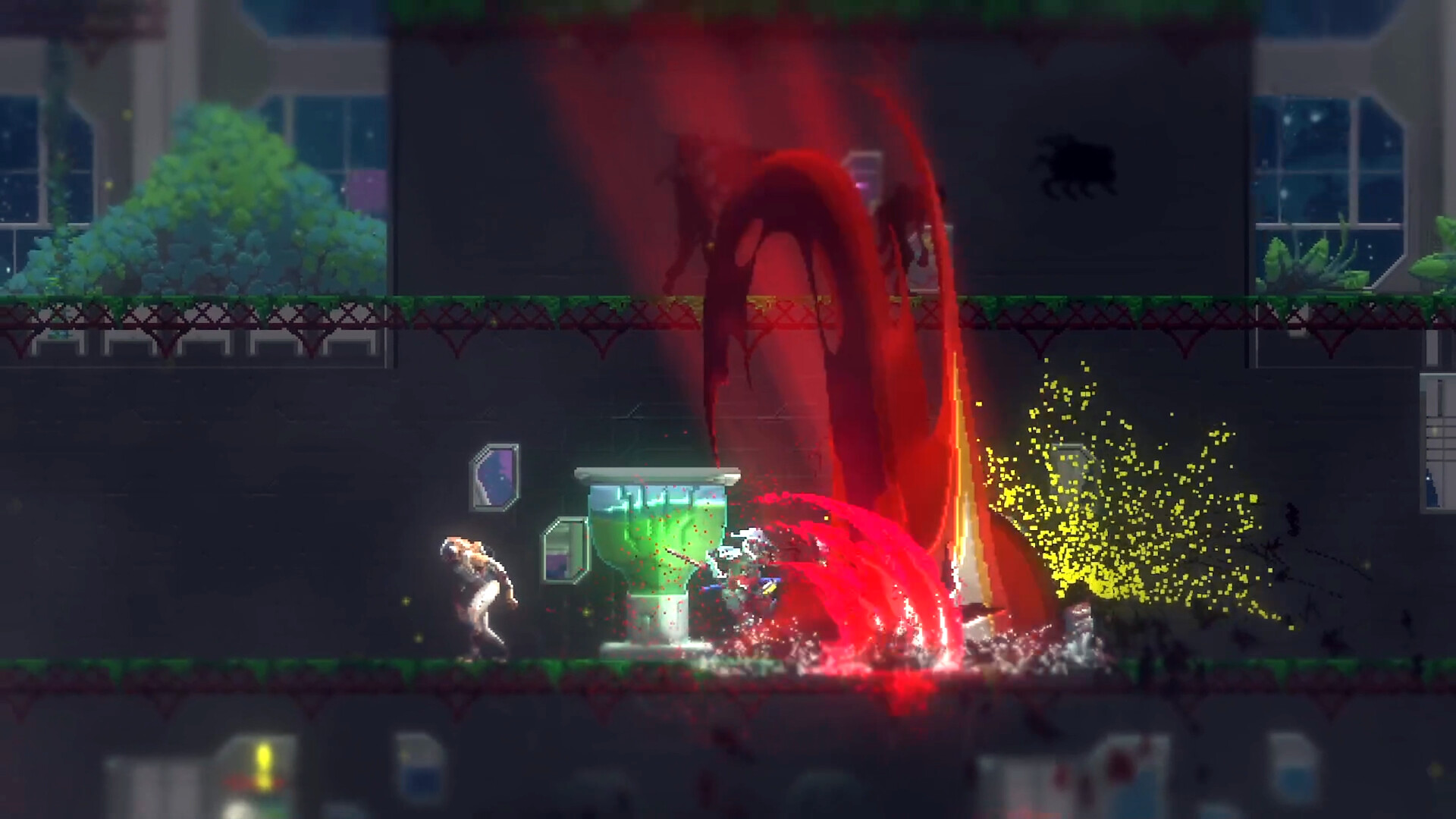
Presentation is the other reason the object feels more expensive than eighteen dollars. The pixel art is hand-authored, high contrast, readable in a panic. Blood is a texture, not a filter. Enemies animate with a grotesque fluidity that stays fair: you can see the windup inside the nightmare. Early rooms still look like a workplace. Later rooms look like the workplace lost an argument with something that does not clock in. Color and lighting do the horror work. Flicker, stain, void through an airlock, a sudden quiet that is worse than a sting.
I have played a lot of indie action games that announce a unique look and then deliver a pleasant palette with nicer outlines. Katanaut’s station has a handwriting. You can tell a medical wing from an industrial gut at a glance, which matters, because if you cannot read a room the combat dies. Boss arenas get extra care. They feel like stages, not wider hallways. When a fight breaks and the pixels celebrate, it is not a loot explosion. It is the picture admitting you shut something up.
The soundtrack is synthwave with a mean streak, chill in the dark corners, techno and trance when a crowd arrives, chiptune grit when the station wants to sound like an older kind of doom. Bosses get orchestral weight, a costume change that puts the encounter on a pedestal and makes a rematch less of a chore. One musician, per the official boast, and you can believe it. The score has a single personality. Environmental audio does the rest: vents, distant metal, the wet sound of a thing that used to be a colleague. Blade hits land. Guns bark. The mix stays out of the way of the tells you need to hear.
Godot is the engine, Vulkan is the ask, a dedicated GPU and a gigabyte of disk. I will not write a benchmark novella. On my nights the frame held, the inputs listened, and Compatibility Mode sat in the options like a spare key I did not need. That is the review you want from a pixel action game. If the blade is late, the game is over. The blade was not late.
When the Run Starts Rhyming With Itself
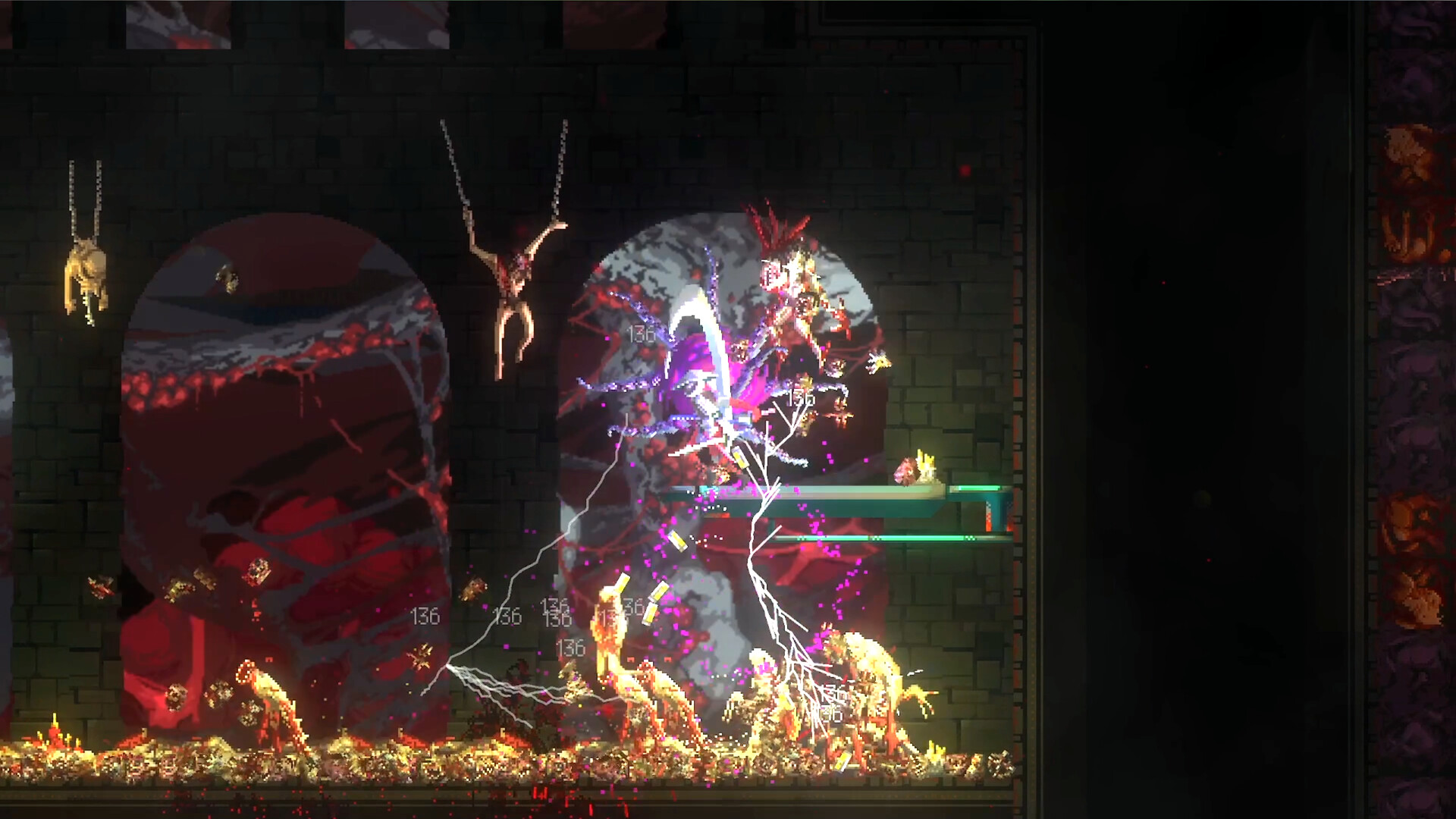
I should be clear about the friction, because it is real and it is not a footnote you hide after the score. The runs repeat their manners. New biomes, new elites, new boss music, and still, after enough evenings, a hallway that is a rearrangement of an earlier hallway. Procedural pathways are a spice. Spice is not a meal. When the same category of surprise sits in a new costume, the surprise becomes a commute.
That is the cost of blending a Metroidvania’s appetite for lingering with a roguelite’s appetite for resetting. I wanted, more than once, another twenty minutes in a beautiful room the elevator was about to confiscate. I also wanted, more than once, a new verb in a late biome and received a conjugation of an old one. Enemy variety thins if you live too long in the same depth. Ability combinations can flatten a floor if you get lucky and the slot gods are kind. The horror, as atmosphere, is stronger than the horror as a scare. Gore does a lot of the lifting. Dread does less. I felt watched. I did not often feel afraid.
Difficulty spikes are the other tax. Early runs are poor on purpose. Random generation can hand you a crowd that is a lecture. Warp floors are mean by design. None of this is a broken object. All of it is why the score stays at Great instead of wandering into the next adjective. A solo developer made a complete station with a combat idea that holds, a progression loop that respects your time, and a visual thesis you will remember. The limitation is the limitation of a focused run-based action game, not an unfinished one.
At $17.99 you are not buying a fifty-hour castle you can live in. You are buying a descent you will repeat, a blade you will learn, and a station that will start to look familiar before it stops being handsome.
Still Riding After the Lights Fail
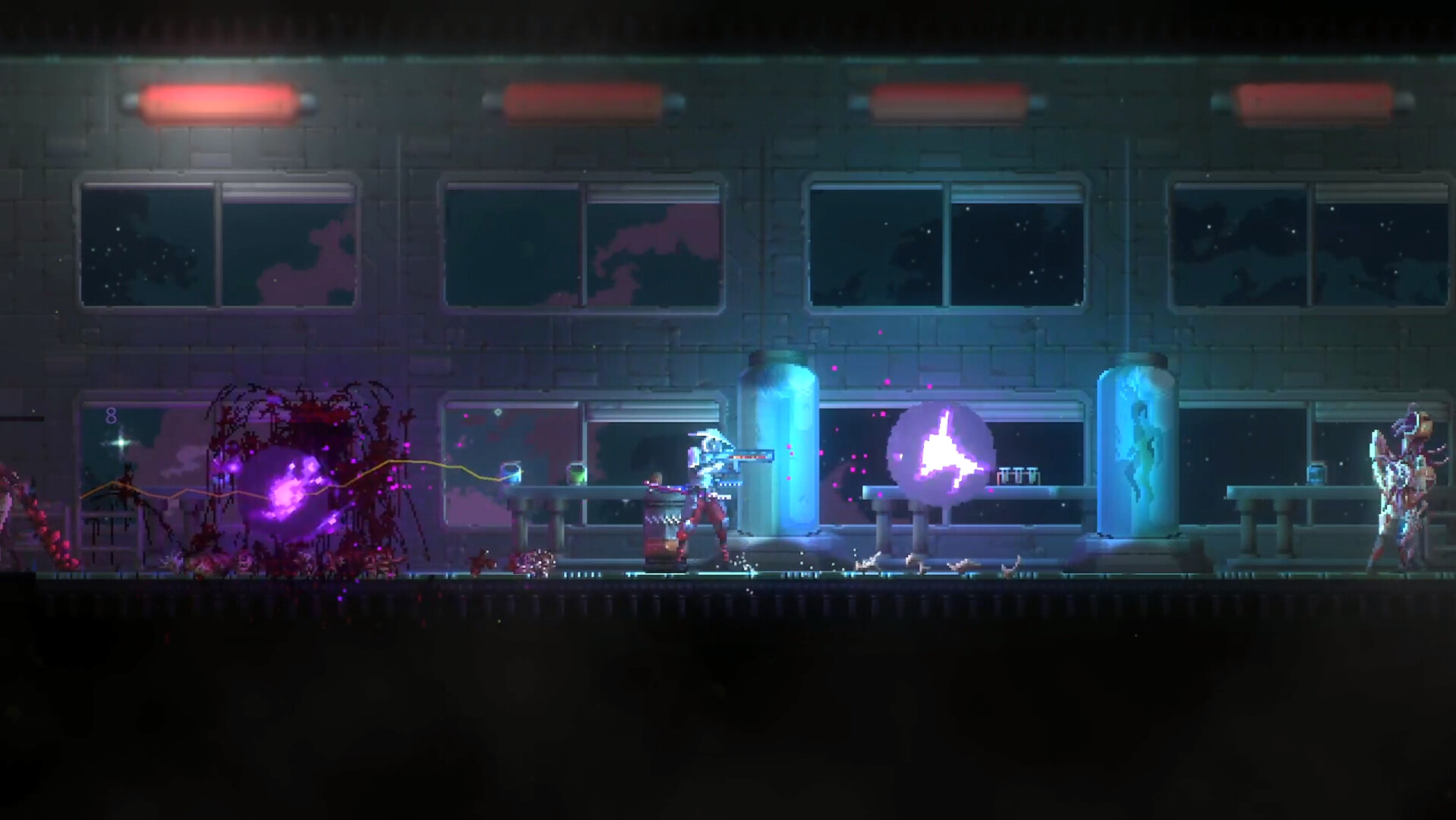
Katanaut is the rare mid-priced action game that understands its own joke and then has the discipline to make the joke a system. Voidmaw built a descent about cleanup, a blade that has to share the frame with a gun and a cooldown, and a station that keeps rewriting the hallway while the elevator remembers what you stole. The hook is a katana on a dying workplace. The spine is the way memory fragments turn a failed run into a better Naut. The scar is the night the pathways rhyme and you ride down anyway, because the next boss has a song you have not finished listening to.
It is better as a craft than as a novel. The combat stays the reason to recommend it. The pixel station stays the reason you keep the window open. The repetition is real. So is the grin when a parry steals a crowd and a syringe turns a bad floor into a story you will tell like you meant it.
I am scoring it 8.5, Great, because the identity is this strong and the limitations are the limitations of a focused roguelite, not an unfinished one. At $17.99 you are buying stylish pixel combat, a Metroidvania station that agreed to be shuffled, and a loop that respects the fact that death should leave a receipt. I would recommend it to anyone who likes a blade that has weight and a map that is allowed to lie a little. Distinctive cosmic-horror presentation, souls-like timing, a hub that turns fragments into a build, and a price that respects your week are a lot of game for the ask. The runs repeat their jokes. The jokes are still sharp.
Naut is still cleaning a station that will not stay clean. After a few descents, you will understand why the job is not finished, and why you keep hitting the elevator anyway.
We prepared this review with a digital copy of the Katanaut for the PC version provided by Acclaim.