
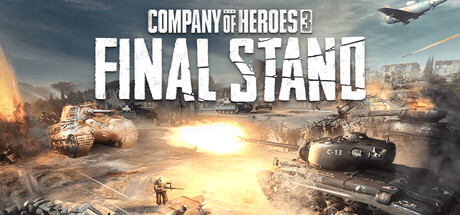
There is a particular kind of confidence, rare in a series that usually hands you a campaign map and a week, in watching a commander decide the only honest job is to keep one building alive. The road is arriving. The boss is a silhouette with a name. The engineers you just trained are already late. Company of Heroes 3: Final Stand, Relic Entertainment’s standalone roguelite wave-defense spin on its own war machine, is built on that job, and the job is ruder than a twelve-round evening has any right to be.
I played the PC version, the July 29, 2026 launch that put a $29.99 standalone on Steam without asking you to own any previous Company of Heroes title. Relic is still Relic: cover that means something, suppression that has manners, a battlefield that rewards the person who thought about a wall two minutes ago. You pick one of four factions, one of five battlegrounds, and one of eight difficulties, then you try to keep a headquarters from becoming a rumor. Twelve escalating waves, thirty-six boss units, eighteen dynamic events, a battlegroup you assemble from randomized offers after each round, and faction trees that remember you between runs. Two-player co-op if you want a friend to share the panic. Endless Mode if twelve was a warm-up. Great, not a new campaign, and very much a stand I would recommend you take.

Hold the Line or Become the Line
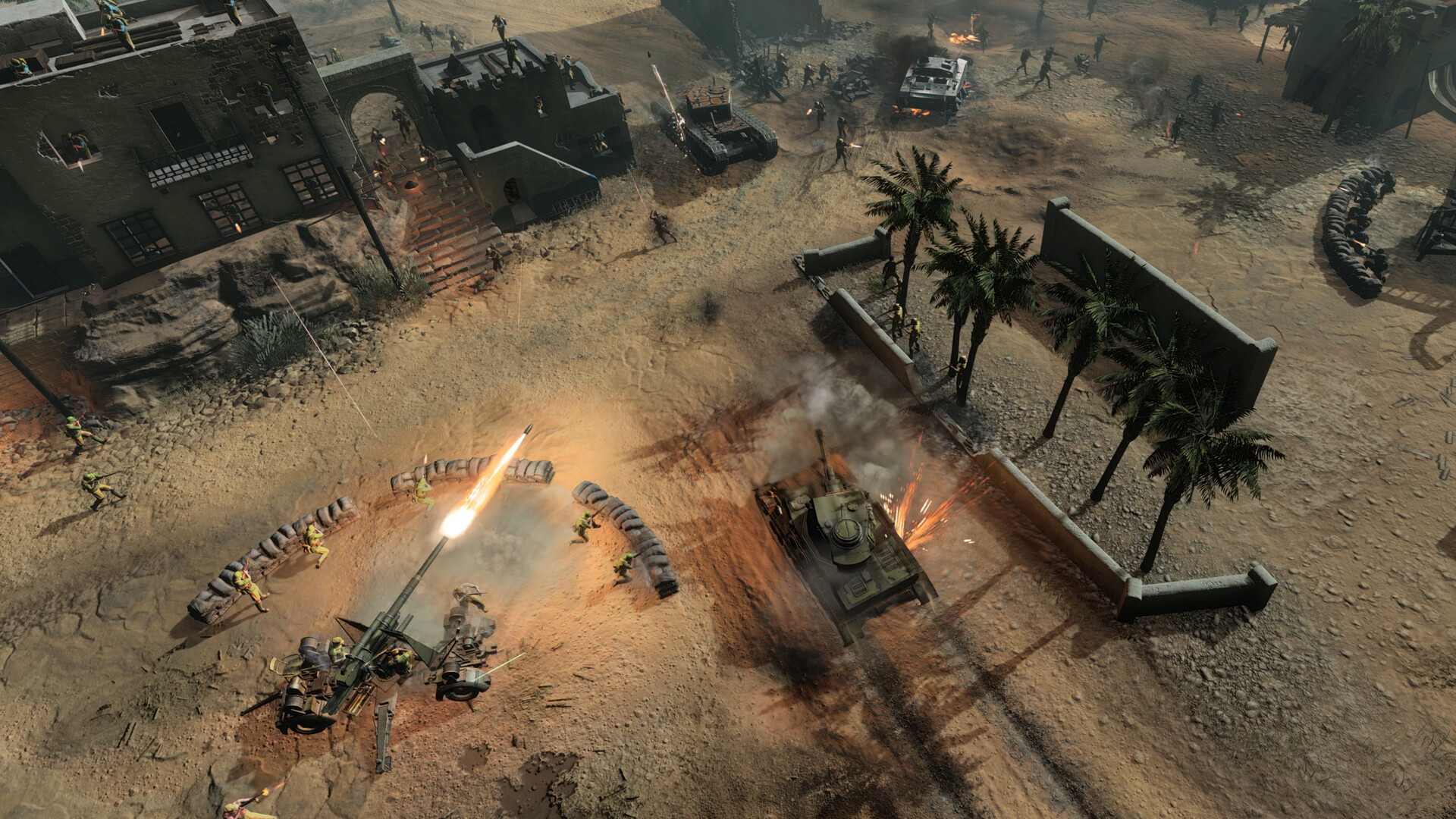
Most Relic evenings give you a map and a reason to take it. Final Stand gives you a headquarters and a dare. The enemy is coming in waves. The only surviving verb is hold. That is not flavor text. It is the camera, the clock you feel in your shoulders, and the reason a sloppy retreat is not a setback so much as a change of career. You will lose a barracks and discover the building was the plot.
Story is environmental and stingy, which is the right instinct for a mode that wants your hands more than your diary. North African dust, Italian stone, a depression that remembers armor, an alpine wall that would like you to respect elevation. You are not reading a novel. You are staging a disaster that is still arriving. The four factions are less a narrative fork than four accents on the same panic. US Forces feel like a toolbox that talks back. British Forces feel like patience with a 25-pounder. Wehrmacht feels like doctrine wearing better coats. Deutsches Afrikakorps feels like heat and mobility arguing in public.
I like a premise that prices preparation as a personality. A lot of wave-defense games hand you a tower and a shop. This one hands you Company of Heroes and then asks the engine to behave like a siege. The joke is historical. The punchline is the twelfth wave. You came for a skirmish. The map would like you to become a wall.
The fantasy is not mastery of a continent. The fantasy is competence arriving about half a second after a Panzer decides the outpost is a suggestion. You will be overrun, reset, and sent back to the faction select, and the correct response is to place the next sandbag like a person who has a reservation at dawn.
Four Accents, One Argument With a Wave
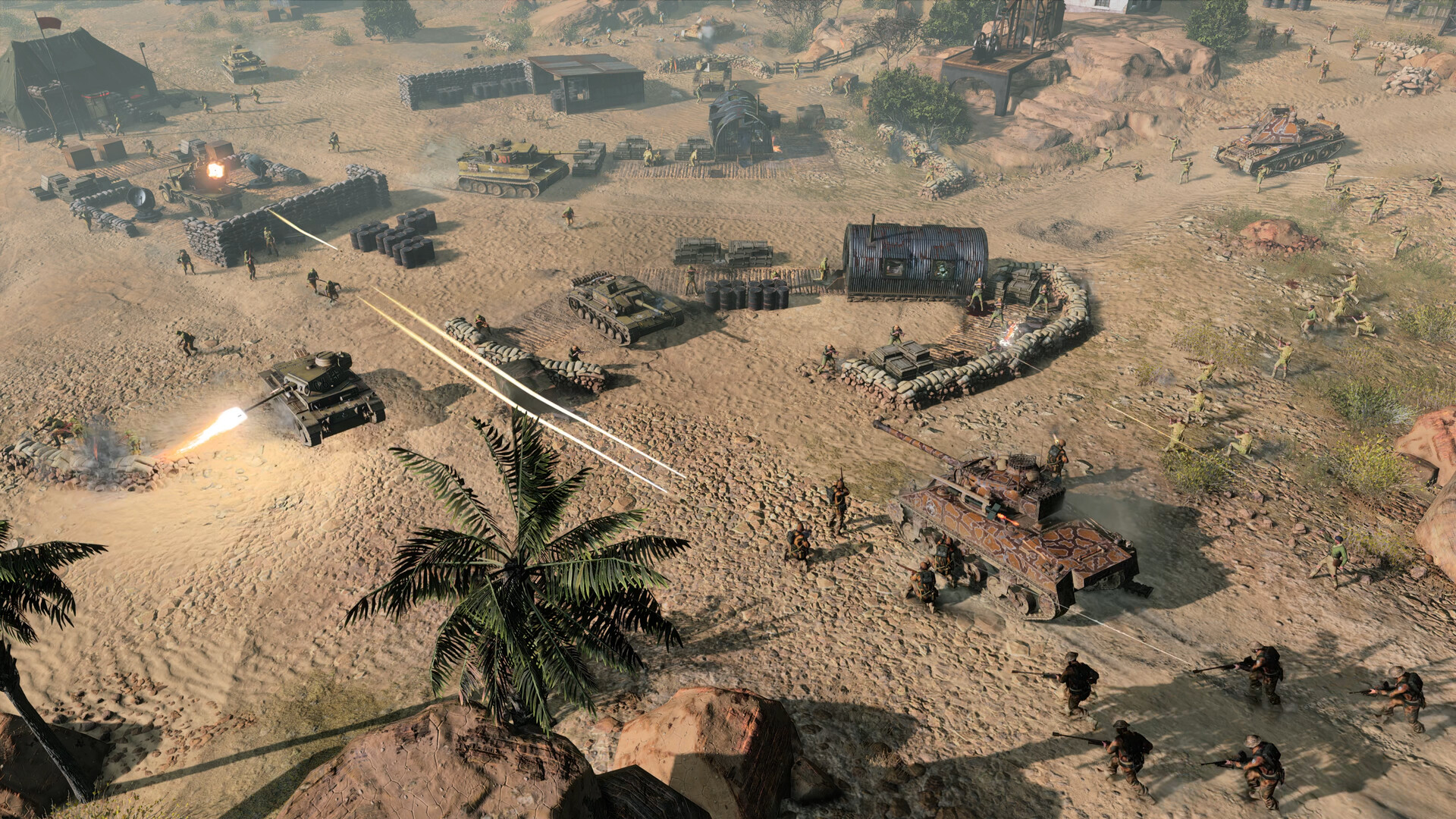
Command is the reason the evening is worth the bruises. You start lean: engineers, anti-tank, infantry, the three honest classes, each faction conjugating them differently. US bazooka teams are not British guns. Afrikakorps mobility is not Wehrmacht stubbornness. That difference is the design’s best manners. You are not painting four palettes on one roster. You are picking a language.
The first hour is a tutorial in not chasing kills. The tenth hour is a tutorial in looking like you meant the chaos. You mine a road. You garrison a building that has a future. You let an outpost do the boring work of shooting and healing because the official fiction of this mode is layered defense, not a hero blob. Outposts sit on the main roads and chokepoints. They fire. They patch the wounded. They are the sentence the map keeps repeating until you learn to listen.
I have played a lot of Relic games that wanted a front line and then treated defense like a pause. Final Stand treats defense like the verb. Cover still matters. Suppression still has weight. A retreat is still a tool, not a confession. The difference is the clock. A campaign mission lets you breathe between objectives. A wave does not send a calendar invite. You are choosing a line through space and time, not just an attack.
Co-op is the other half of the sentence, and it is not allowed to replace the brain. Two players share a stand. The panic becomes a conversation. I spent serious nights alone because the mode is honest that way, then handed a friend a faction and watched the plan become an argument. Either language works. The headquarters does not care which of you failed to mine the east road.
Bosses are where the kit gets graded. Thirty-six of them, officially, special abilities and rewards attached like a dare. A sniper team that would like you to stop standing in a line. A tank that would like you to remember what anti-tank is for. I got stuck. I changed the sentence I was speaking with the battlegroup. I came back with a different pick after wave four and a worse attitude. The fights stayed fair in the way a good Relic game is fair. If you got flattened, you knew whose fault it was.
After the Wave, the Shop of Bad Ideas
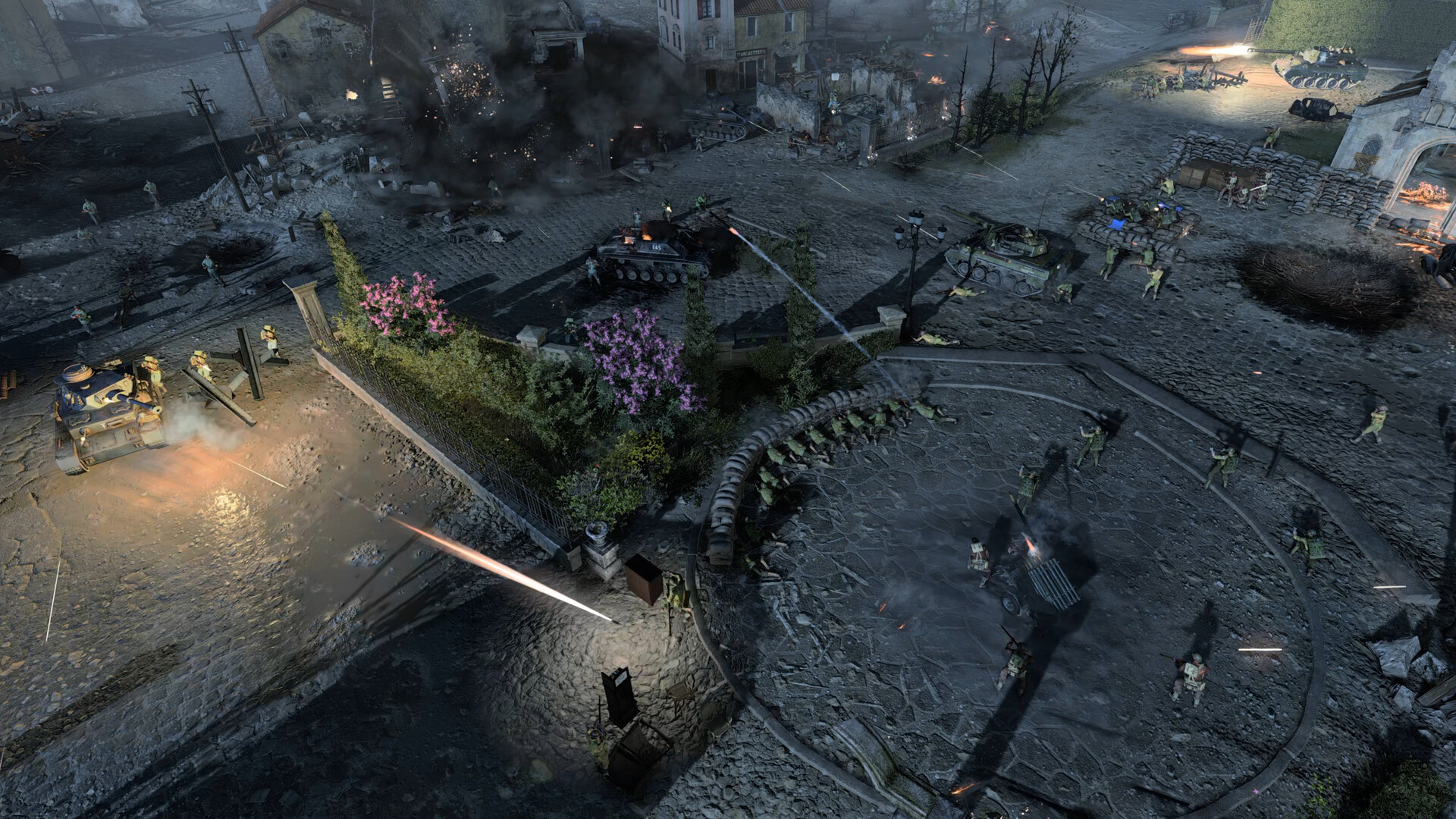
The roguelite loop is the other thesis, and it is not flavor. After each wave you choose between randomized units or abilities that persist for the duration of the run. That sentence is the store page and, after enough nights, the store page is correct. No two playthroughs feel the same if you are paying attention. They feel like cousins if you are not.
You construct a custom battlegroup from the ground up, suited to a style you claimed at the menu and then abandoned at wave six because the offer was a tank and you are not a monk. The offers are the toybox. A unit you did not plan to parent. An ability that makes a chokepoint into a thesis. A dead end that does not care about your new toy. Builds are the conversation. Infantry greed. Armor punctuation. Ability panic. The mode wants you to experiment and then, because the headquarters is finite, to commit.
Between runs the other economy wakes up. Persistent upgrades, powerful perks, unique abilities, faction-specific progression trees. These are the official words and they are not a smear of plus-two damage. The trees meaningfully change how a faction plays, which is the difference between a loop that feels like homework and a loop that feels like a craft. You unlock a habit. The next stand is not a reset so much as a revision.
I am not always in the mood for a genre that asks me to roll the boulder up the same hill. Final Stand makes the hill a headquarters that keeps a receipt. A failed run is still a harvest: which event wrecks a plan, which boss wants focus fire, which tree node would have made wave nine a story instead of a lecture. Merit and unlocks sit in the background like a second army. Twelve achievements keep a short list. Steam’s player sample, 911 recommendations deep when I wrote this, is the only public temperature I will cite. I will not invent a critic choir.
I keep coming back to the offer after the wave. A lot of roguelites hide the shop in a room. This one puts the shop in the breath between disasters. You will pick badly. You will pick well. You will pick the funny option because the announcer is new and the night is young.
Five Maps, Eighteen Events, and Weather That Has a Union
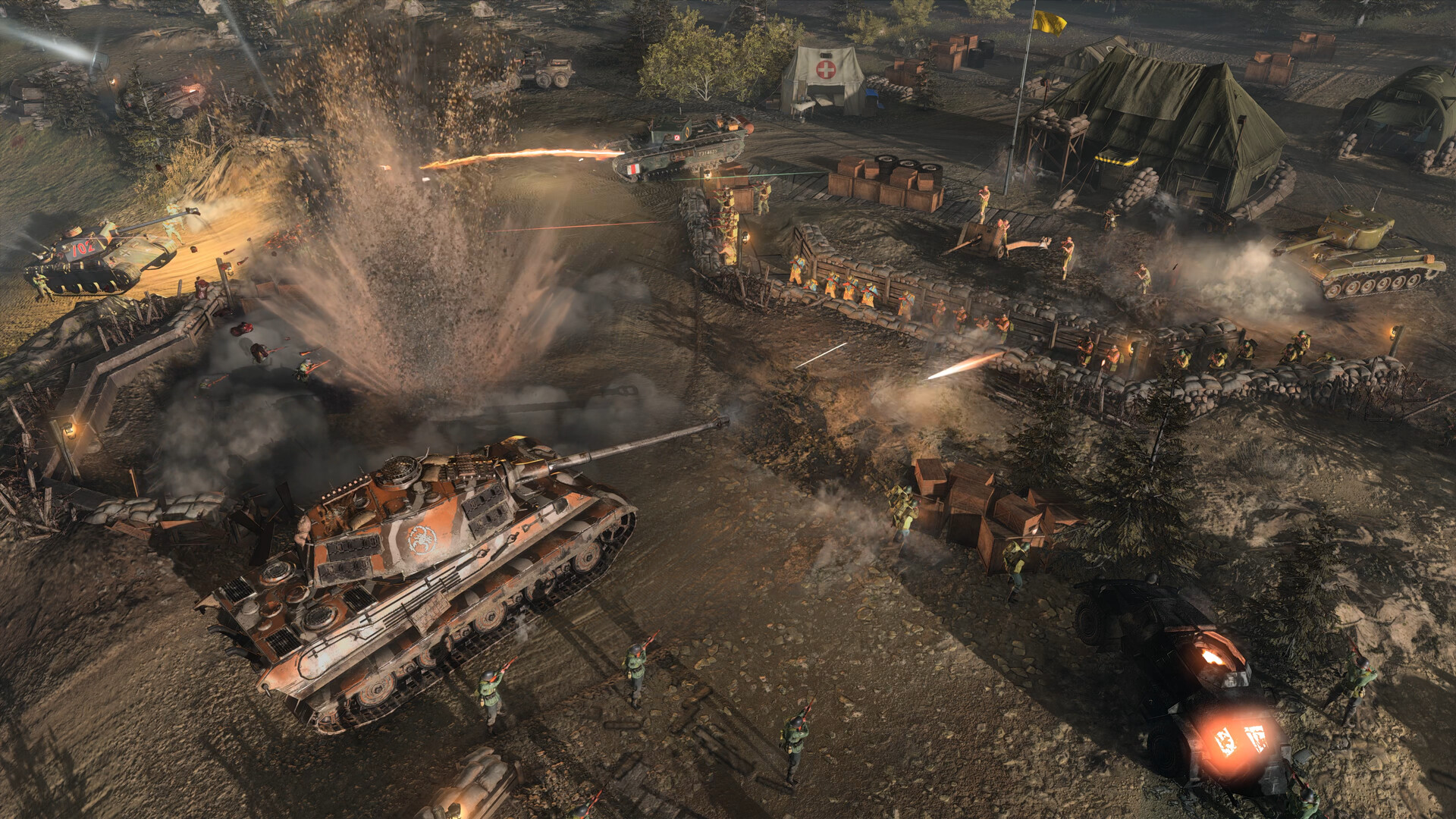
The catalog is five battlegrounds designed for wave defense, and that number is both a promise and a bill. Fall of Sousse, Gela Beachhead, Qattara Depression, The Alpine Wall, Torrente Ruins: five handshakes, five ways to be late. Terrain is not wallpaper. Elevation, cover, the number of outposts, the roads that want a mine: each map is a different argument about where the line should live. A beachhead is not a depression. An alpine wall is not a ruin you can bluff.
Eighteen dynamic events are the spice Relic sprinkled on the siege. Smoke artillery. Airdrops that arrive like rude weather. The kind of interruption that makes a beautiful plan look like a first draft. Difficulty changes the strength of the waves and the appetite of the events. Five standard tiers run from casual to expert. Three additional expert variations sit on top for the person who thought expert was a personality. Eight levels from newcomer to veteran, officially. The box is not shy.
I should be honest about the five. A campaign Relic game feeds you a theater. Final Stand feeds you a playlist. When it works, a familiar road in a new faction’s mouth feels like the war breathing. When it fails, a familiar road in a new faction’s mouth feels like a commute with better lighting. For the first several evenings the playlist holds. You learn a map’s handwriting. You learn which crowd wants a mine and which crowd wants a gun and a prayer. You learn that the event table is allowed to lie a little, and that the lie is the point.
Endless Mode is the other thesis for people who think twelve is a warm-up. Survive the structured stand, or take the ultimate challenge and find out where your battlegroup becomes a rumor. I like a mode that admits the structured run is a song and the endless run is a dare. Both are the product. The song is how I would introduce a friend. The dare is how I would spend a night I did not need.
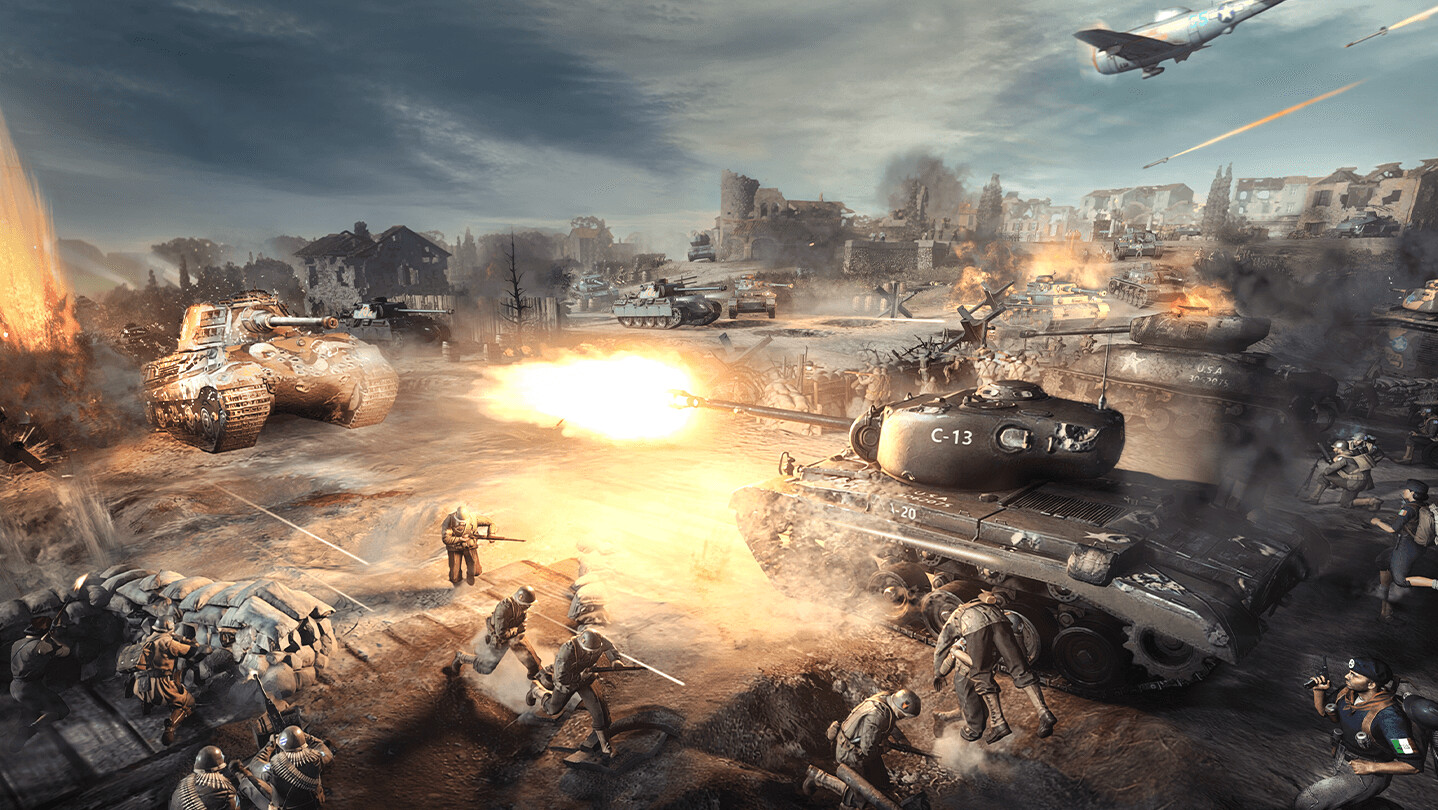
Presentation is still Company of Heroes 3, which is to say the dirt has a temperature and the vehicles have weight. New announcer performances bring the stand to life, officially, and you can believe it. A good callout is a tool. A great callout is a personality. Four premium cosmetic skin packs, one per faction, sit in the shop for the commander who wants the wall to look expensive. I reviewed the fight I was given. The skins are hats. The fight is the job.
Trees That Remember, Friends Who Argue, and a Price That Asks
Progression is why I stopped treating the mode like a skirmish playlist. Faction trees are not a smear of percentages. They are habits. A perk that changes how you hold a road. An ability that makes a retreat into a plan. Long-term mastery is the official pitch and, after enough stands, the official feeling. You are not grinding a battle pass so much as teaching a faction a new accent.
Co-op deserves a second mention because the design is lonely in a way that improves with a witness. One player minds the east. The other minds the idea that the east was a trap. The randomized offers become a conversation you will have in the kitchen later. I have played cooperative defenses that wanted a hero and a sidekick. This one wants two commanders who can stand the sight of each other after wave ten.
The price is part of the review. $29.99 is not a snack. For that ask you get a complete standalone, four factions, five maps, a roguelite loop with persistent trees, bosses and events enough to keep a month honest, and the courtesy of not requiring the base game. I have paid more for a campaign mission pack that was a weekend. I have also wanted, on a second week, a sixth map. Relic knew the tax. Endless Mode and the trees are the refund. A new battleground would have been a better refund.
System requirements are the published floor: Windows 10, an i5-class four-core, eight gigabytes of memory, a GTX 950-class card, forty gigabytes of disk, DirectX 12. Recommended steps up to eight cores, sixteen gigabytes, a GTX 1660-class card. I will not write a benchmark novella. On my nights the frame held, the inputs listened, and the pause I needed to think was the one I took, not the one the engine took. That is the review you want from a Relic game. If the click is late, the stand is over. The click was not late.
In-app purchases exist as a Steam checkbox. Cosmetic packs are the obvious guest. I will not turn this into a store lecture. The stand you buy at $29.99 is already a complete evening. The extras are for the commander who got attached to a particular coat.
When the Twelfth Wave Starts Rhyming With Itself
I should be clear about the friction, because it is real and it is not a footnote you hide after the score. The stands repeat their manners. New bosses, new events, new tree nodes, and still, after enough evenings, a road that is a rearrangement of an earlier road. Five maps are a spice rack. Spice is not a meal if the recipe keeps winking the same way. When the same category of surprise sits in a new costume, the surprise becomes a commute.
That is the cost of blending Relic’s appetite for texture with a roguelite’s appetite for resetting. I wanted, more than once, another twenty minutes in a beautiful hold the wave was about to confiscate. I also wanted, more than once, a new verb in a late tree and received a conjugation of an old one. Enemy variety thins if you live too long on the same battleground. A lucky offer can flatten a mid-run if the seed gods are kind. The war, as atmosphere, is stronger than the war as a scare. Spectacle does a lot of the lifting. Dread does less. I felt hurried. I did not often feel haunted, which is fine, because the box promised a stand, not a ghost.
Difficulty spikes are the other tax. Early runs are poor on purpose. A veteran seed can hand you a boss and an event in the same breath, which is a lecture. None of this is a broken object. All of it is why the score stays at Great instead of wandering into the next adjective. Relic made a complete standalone with a defensive idea that holds, a progression loop that respects your time if you accept that time will be spent restarting, and a visual thesis the series already owned and then focused.
At $29.99 you are not buying a fifty-hour theater you can live in. You are buying a stand you will repeat, a faction you will teach, and a headquarters that will start to look familiar before it stops being handsome. Co-op and Endless Mode are the overtime. The twelve waves are the shift.
Still Holding After the Last Wave Breaks
Company of Heroes 3: Final Stand is the rare mid-priced strategy experiment that understands its own joke and then has the discipline to make the joke a system. Relic Entertainment built a siege about preparation, a battlegroup that has to share the frame with a random offer, and a headquarters that keeps rewriting the road while the wave remembers what you mined. The hook is a wall on a dying workplace. The spine is the way a failed stand turns into a better tree. The scar is the night the map rhymes and you dig in anyway, because the next boss has a tell you have not finished listening to.
It is better as a craft than as a novel. The defense stays the reason to recommend it. The Relic dirt stays the reason you keep the window open. The repetition is real. So is the grin when a mine steals a road and a reckless offer turns a bad wave into a story you will tell like you meant it.
I am scoring it 8.5, Great, because the identity is this strong and the limitations are the limitations of a focused wave-defense roguelite, not an unfinished one. At $29.99 you are buying stylish tactical comedy, four factions that agreed to be taught, and a loop that respects the fact that death should leave a receipt in a skill tree. I would recommend it to anyone who likes a hold that has weight and a map that is allowed to lie a little. Distinctive defensive panic, bosses and events with handwriting, co-op for the restless, and a standalone price that does not demand a previous receipt are a lot of game for the ask. The roads repeat their jokes. The jokes are still sharp.
The commander is still holding a line that will not stay still. After a few stands, you will understand why the job is not finished, and why you keep dropping back onto the battleground anyway.
We prepared this review with a digital copy of the Company of Heroes 3: Final Stand for the PC version provided by Pressengine.