There is a particular kind of oath, rare in a genre that usually hands you a healthy sprite and a cheerful magnet, in swearing on a Dawnstone and discovering the horde has already booked a king for your coordinates. The swarm is still a swarm. The skill tree is still a career. The first thing that tries to eat you is not a metaphor. Soulstone Survivors, the action roguelite from Game Smithing Limited, is built on that oath, and the oath is ruder, louder, and more useful than a fifteen-dollar apotheosis has any right to be.
I played the PlayStation 5 version, the 17 June 2025 launch that Digital Bandidos walked onto living-room hardware the same day Steam left Early Access, a stay that began on 7 November 2022, and asked $14.99 on both sides of the aisle. You hunt, you stack, you put a curse on a run, and you learn the void has already hired a night shift of Lords who keep a tab. Twenty-two playable Void Hunters at 1.0, with a Machinist in a mech and a Samurai the community asked for. Hundreds of skills. More than a hundred weapons. A Void King who would like a word. Four hundred eighty-three Steam achievements sit in the background like a dare. The Steam sample is Very Positive, 24410 positive of 26720, which is the honest weather report and not a dare. Great, not glossy, and very much a weekend I would recommend you spend if you like a survivors-like that remembers it is also an RPG.
The Oath, Then the Horde
Most survivors-likes begin with a healthy walk. Soulstone Survivors begins with an oath and a pile of stones that used to belong to something with a title. Official copy on Steam says you face the Lords of the Void and their endless minions, collect their Soulstones, and become a god. Both versions agree on the next sentence. There is no time for panicking. Hunting is your only option.
That is not flavor text. It is the design refusing to pay for a sequel speech when a field will do. You start stacking skills, forging weapons, and unlocking faces because the alternative is becoming a rumor the void already filed. The first Lord is staged like a punchline that forgot to be funny. They spawn. You delete. They are dead for now. The script, still a little breathless, asks you to carve a legend and then hands you another quota. Nobody can assure this Lord was the only one. That is the rest of the map.
I like a premise that prices competence as a rumor and then lets you earn it back one stone at a time. Void Fields sit on the mode list like a job. Eliminate a crowd. Eliminate the Lords that the crowd paid for. Repeat until the field is a receipt. Story is environmental and stingy, which is the right instinct for a game that wants your hands more than your diary. You are not reading a novel. You are looting a disaster that is still happening, and the disaster has a skill tree.
The fantasy is not mastery of a lore bible. The fantasy is competence arriving about half a run after you invent a synergy. You will die in ways that would be funny if the stone drop were not so sincere. You leave the field. You walk back. You become the kind of person who thinks a curse tier is a personality.
Twenty-Two Faces and a Skill Tree That Unionizes
The loop is the old religion of auto-fire and Game Smithing Limited does not pretend otherwise, then it straps a career to the religion and asks the religion to file taxes. You steer. The skills do the talking. Experience drops. A level-up offers a new toy or a better version of an old one. Between runs the skill tree takes your stones and pretends to be a decade. None of that is a revolution. All of that is the sentence the rest of the toybox has to live in.
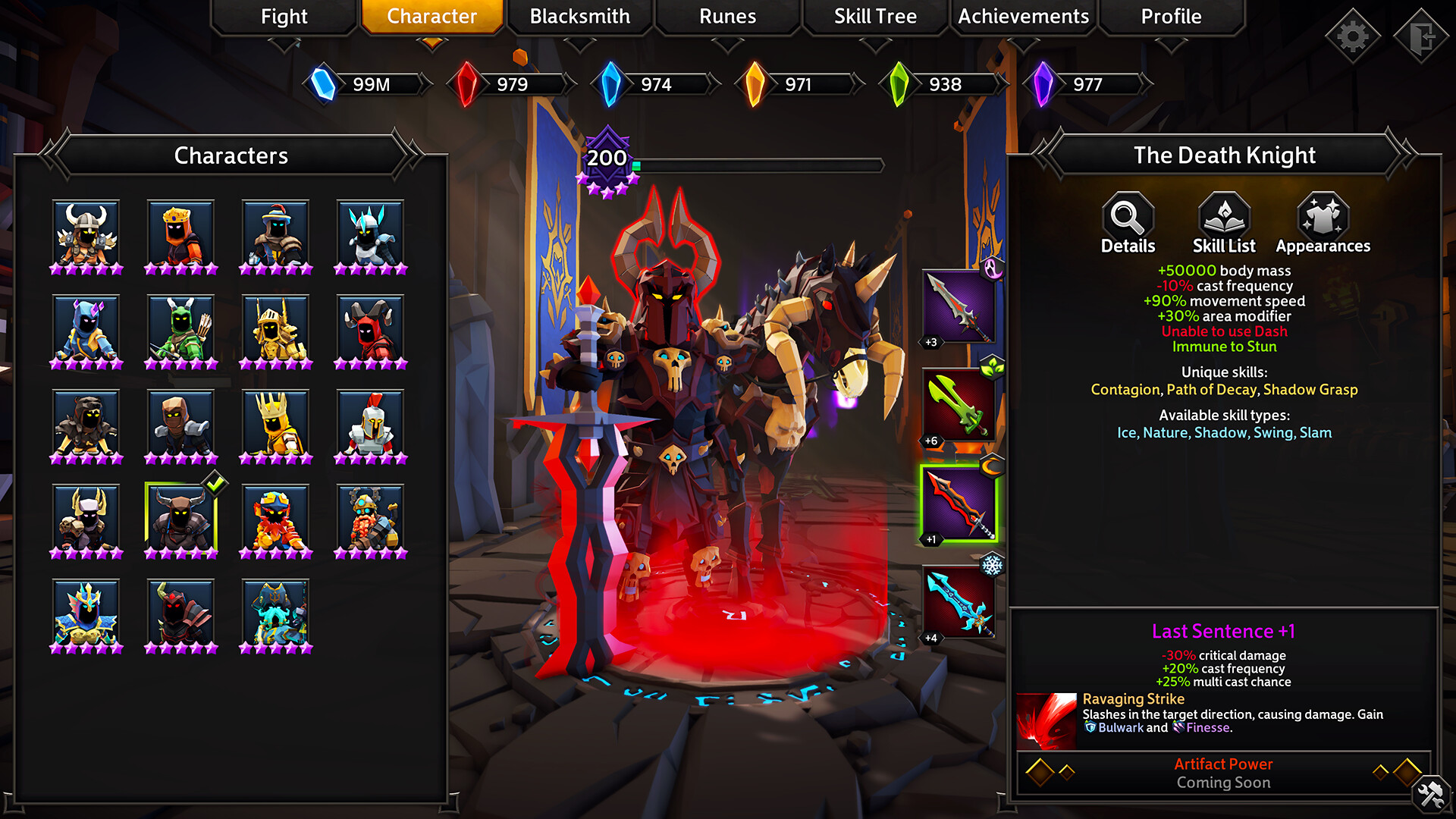
Twenty-two faces at 1.0 is a long sentence and a real one. Each Void Hunter starts with a weapon, an attitude, and an Ascension that arrives later like a god who has mail. Five forgeable weapons per face, common through legendary, with a relic step that unlocks an Artifact Power if you are the kind of person who finishes a homework assignment. The Machinist drives a mech. The Samurai is the community’s receipt. I swapped and stayed swapped. Differentiation is real enough that a night with the wrong face feels like wearing someone else’s coat.
I have played a lot of games that treat the first character as a tutorial and the tenth as a spreadsheet. Soulstone Survivors is heavier than that on purpose. If you want a roster that could unionize, you will feel hired. If you want a weekend that turns a limp into a loadout and then goes home, you will feel overemployed, which is the compliment. The tree is vast. Permanent upgrades sit behind stones. Ascension is the temperature you turn up when a field has already decided you are a problem.
Presentation is readable, which matters more than prestige. You can tell a field from a cathedral from a titan hunt at a glance. If you cannot read a biome, the hunt dies and the run becomes homework. These spaces are atmospheric enough to carry a scare and clear enough to carry a plan. You always know where you are. You do not always know why a Lord is already there.
Curses, Maps, and a King Who Keeps a Tab

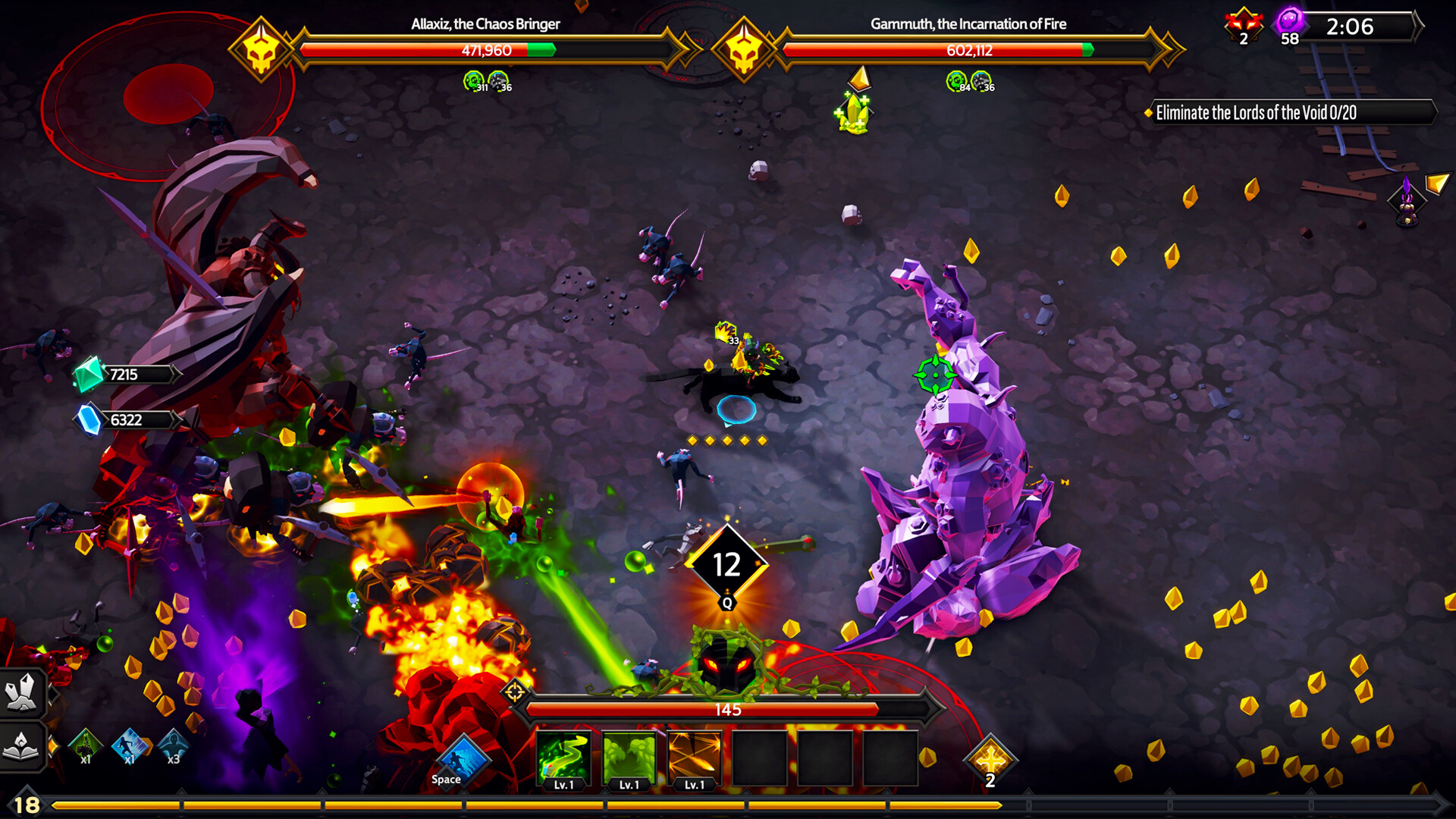
Difficulty is the temperature change. Early fields establish that this is not a walking tour with nicer lighting. Minions will fill a lane farther than pride would recommend. A starter skill handles the general population. The Lord that arrives when the quota gets rude will empty a health bar if you treat them like scenery. Further in, curses would like a word, and the word is stacked. Getting a clean line through seven tiers takes a while. Until then, picking your poison is a strategy, not a cowardice.
Curses are the other half of the short description and the nastier half of a walk. Official copy says increase the risk, reap the rewards. Each tier introduces new manners. More Lords. Worse crowds. Better stones. I turned the dial up because I like a receipt, not because the next room refused to exist without it. A run that felt like home at tier one can feel like a rumor at tier five. Enemy variety is not a bestiary novel. It does not need to be. Pressure is the variety. A curse that holds is a better reward than a new silhouette if the silhouette is just another way to lose the stones.
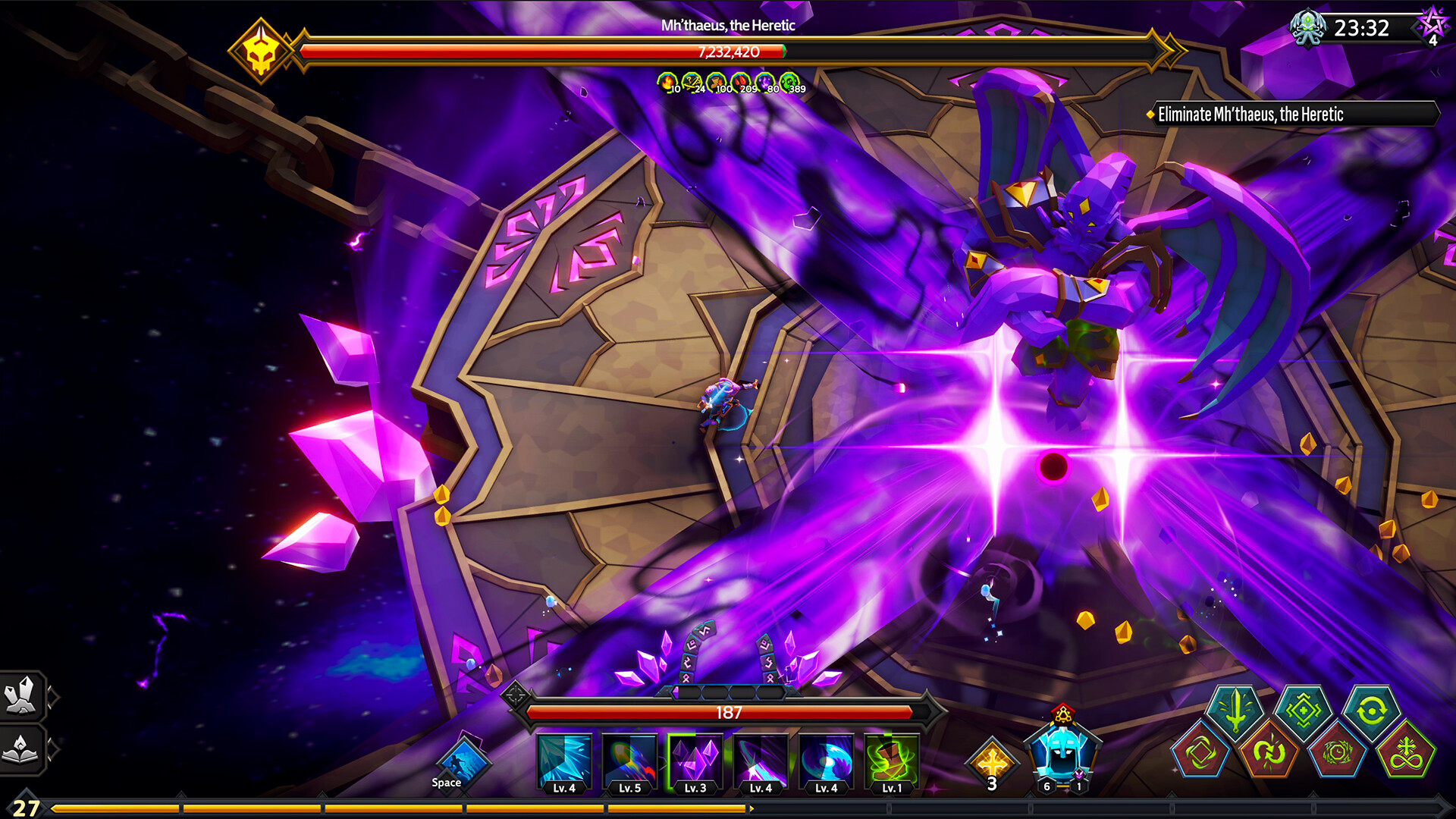
I will not invent a highlight reel with fake timestamps and tidy kill counts. The nights that stay with you are the ones where you thought the field was finished, then a Titan and a Cathedral lit up at the same time, and then you were on the wrong side of your own greed. Modes are the map getting smaller. Void Fields are the job. Unholy Cathedral is the argument. Titan Hunt is the appointment. The Void King is the invoice 1.0 finally agreed to send.
What the store page cannot tell you is how quickly you will start treating a successful curse stack as a mood stabilizer. You hunt. You stack. You put the skill down and look at the tree like a person who has decided civilization is a node. I have abandoned a pretty map because the curse was a better critic than I was. Pride is not a build.
Forge the Weapon, Then Break the Build

Weapons are the moment the void changes tense. Official features list more than a hundred unique weapons, and they do the job weapons are supposed to do in this genre. They do not just make you louder. They make yesterday’s horizon into this afternoon’s errand. A distant synergy stops being a pilgrimage. A run stops being a commitment. You start thinking in loops instead of marches.
That shift is the closest Soulstone Survivors comes to a power fantasy, and I like it more than a new cutscene. Mastery, here, is logistics. You hunt, you stash, you forge a ridiculous little relic over a place that tried to eat you last week, and you land like a person who has mail. The map does not get smaller because the developers deleted land. It gets smaller because you invented commuting.
Hundreds of skills are the other vehicle. Active, passive, secret spells if you are nosy. Synergies that the store page is happy to call game-breaking, with the candor of a shop that has already lost the argument with balance mains. I will not write a theorycraft white paper. What I can say is that the loop is kinder when a build finally agrees with itself. Stacking buffs until the screen is a language is the co-op fantasy you have with your own hands. So is the moment a Lord that would have ended a solo walk becomes a group project with worse manners.
Voice work arrived at 1.0 for the hunters, which is a polite way of saying the roster finally has a throat. I will not turn this into a localization seminar. The voice of the game is the swarm, and the swarm talks in stones, curses, and the occasional royal knock. Four hundred eighty-three achievements sit behind the loop for people who like a receipt. None of them change the central truth. You are here to become a god and then find out what the god is for.
Chaos That Reads as a Language

I should be clear about the friction, because it is real and it is not a footnote you hide after the score. Soulstone Survivors looks like a game that was built by a tiny shop that wanted a career more than a showcase, and then accidentally built both. Fields can be handsome. Effects can be stubborn. A late run can arrive as a blizzard of numbers that would like you to remember what your own skills are called. I will not invent a particle census. I will say the void sometimes forgets to stock the readability you need and then shrugs like weather.
Technical manners on a living-room build can stutter when the game decides to remember itself. Hordes can get philosophical in a doorway. Menus can announce themselves. None of that is unique to this void. All of that is the tax on a roguelite that left Early Access in 2025 after two and a half years of community arguing and arrived on PlayStation the same day still wearing some of the same boots, plus a king.
The tree can feel like two people agreeing to take turns being employed. That depth is real. It is also priced into a loop that would rather you hunt, retreat, and come back dressed. Runes help. Distance helps more. If you want a thirty-minute postcard and a polite goodbye, you will feel overemployed. If you want a weekend that turns a stone into a decade, you will feel hired.
I have a rule for mid-priced survivors. If a game is worse with a tree than with a checklist, it is broken. If it is only good with a tree, it is honest. Soulstone Survivors is honest, and that honesty should sit next to the price. A solo night is a competent weekend. You pick a face, you invent the stack, you lose a run, you walk back, you put a better curse on the joke.
A Million Players and a Tiny Shop

The Steam sample around a game this loud is always going to look like a city. Very Positive is the official weather, 24410 of 26720 on the side of yes, and that split is fair. Players who wanted a quieter screen, a shorter tree, or a horde economy that never hides the particle bounce off. Players who wanted a lightweight adventure with a king and a bad idea about godhood stay, then stay longer than they planned. I am in the second camp with caveats, which is the only honest place to stand.
Compared with the giants of the thirty-minute business, Soulstone Survivors is not trying to be a postcard. It is trying to be a place. The developer said the quiet part on the store page, then thanked the community with the candor of a tiny team that chose to stay independent. Hundreds of skills. A tree per face. Fun if you will meet the game where it lives. That is not a cop-out if the place is worth the walk. Some nights it is. Some nights the stack is a myth and the doorway is a theology problem. Both nights are Soulstone Survivors.
A clean night is a competent weekend. You meet the quota, you bank the stones, you put a better relic on the joke. A cursed night is the version the systems were quietly designed around. Someone forges. Someone ascends. Someone learns, too late, that a Void King does not respect architecture. The field becomes a shared instrument with yourself instead of a commute.
Over a million players is the boast and the weather. I will not invent a census. I will say a tiny shop that keeps showing up is a better review than a trailer, and the trailer still slaps.
Still Hunting After the Void

Soulstone Survivors is a rare mid-priced roguelite that understands its own joke and then has the nerve to make the joke a career. Game Smithing Limited built a void about an oath, a tree about teamwork with yourself, and a toybox that looks a little homemade and plays a lot more sincerely than that sentence suggests. The stack is the hook. The curses are the spine. The walk from a stone to a king is the grin.
It is better with a plan than with a checklist. The screen is loud in the way a late run is loud. Trees can sulk. The presentation has indie fingerprints, from the stubborn particles to the story that would rather be a Lord than a cutscene. All of that is true, and all of that is already priced in at $14.99. You are not buying a weekend. You are buying a month that can turn into several months if you like being a coordinated disaster, or being the person who has to explain the disaster to a skill tree.
I am scoring it 8.5, Great, because the identity is this clear and the limitations are the limitations of a deep survivors-like, not an empty one. I would recommend it to anyone who likes a workbench that has weight and a map that is allowed to be rude. Distinctive void weather, a roster that shrinks the boredom, curses that turn risk into conversation, and a price that respects your week are a lot of game for the ask. The systems repeat their manners. The manners are still useful.
The void is still out there, still hiring a night shift, still asking you to swear on a Dawnstone. After a few kings, you will understand why the job is not finished, and why you keep walking into the field anyway.
We prepared this review with a digital copy of the Soulstone Survivors for the PS5 version provided by Pressengine.