There is a particular kind of hunger, rare in a medium that usually hands you a health bar and a map, in watching a blood gauge tick down while a crypt asks you to go faster. The floor is a suggestion. The wall is a runway. The knight in front of you is not a fight so much as a fuel stop that happens to scream. Bloodthief, the ultra-fast melee dungeon-runner from Blargis, is built on that hunger, and the hunger is ruder than a low-poly castle has any right to be.
I played the PC version, the September 22, 2025 launch that put a one-person Godot project onto Steam at $19.99 and then watched 961 recommendations decide the ride was worth the bruises. Blargis is Jake Bedard working under a studio name, years of public devlogs, and a taste for first-person speed that prefers a slide to a cutscene. You are a vampire. You parkour through haunted crypts and castles. You drink the undead so you can move like a rumor. Thirty main levels plus extras, twenty collectable weapons, more than a hundred secrets, Workshop maps, and ghost racing against anyone in the world. A demo still sits on the store page if you want to taste the gauge before you buy the thirst. Twenty-two achievements lurk in the background. Great, not tidy, and very much a castle I would recommend you rob.
The Gauge Is the Plot
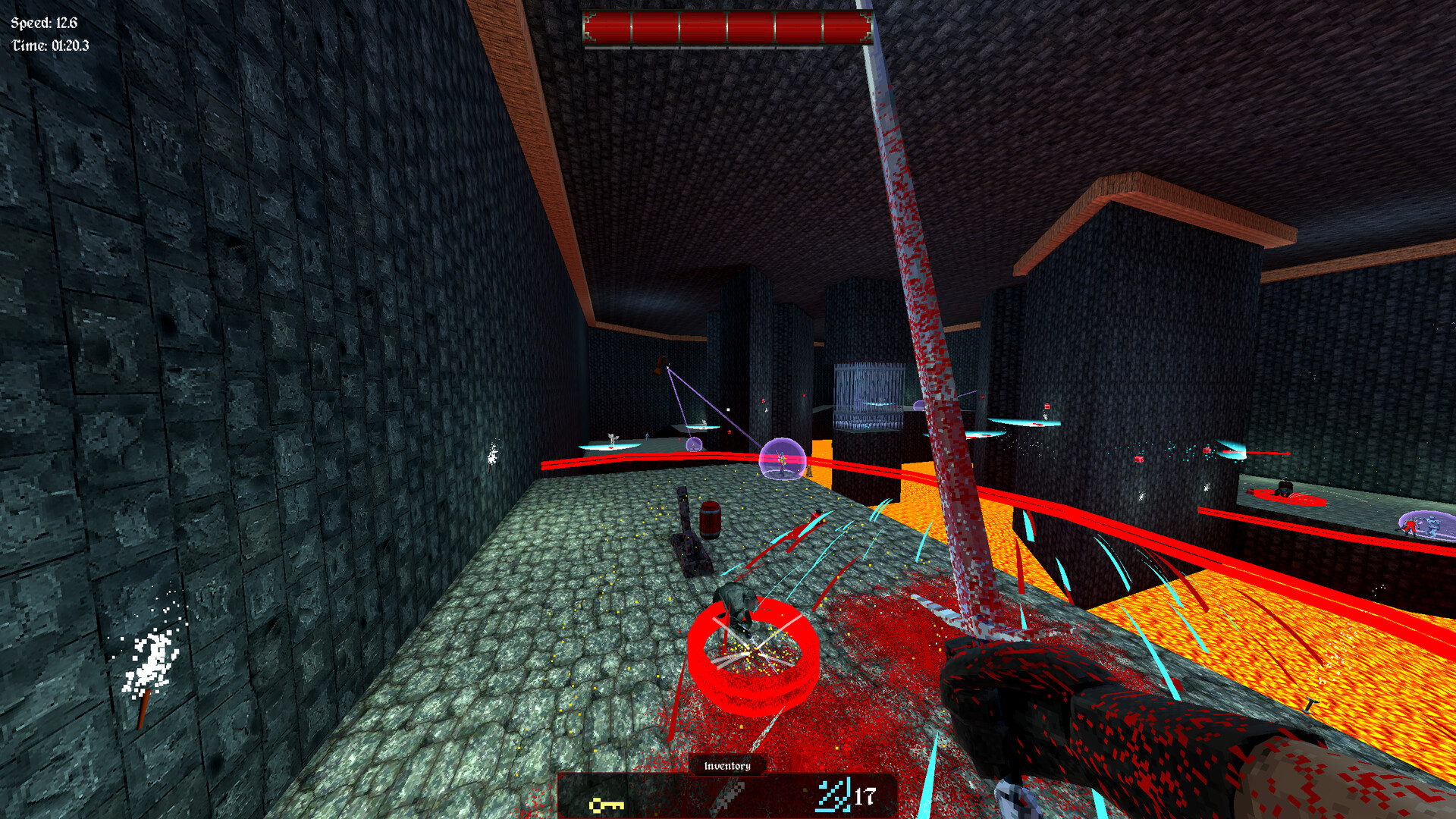
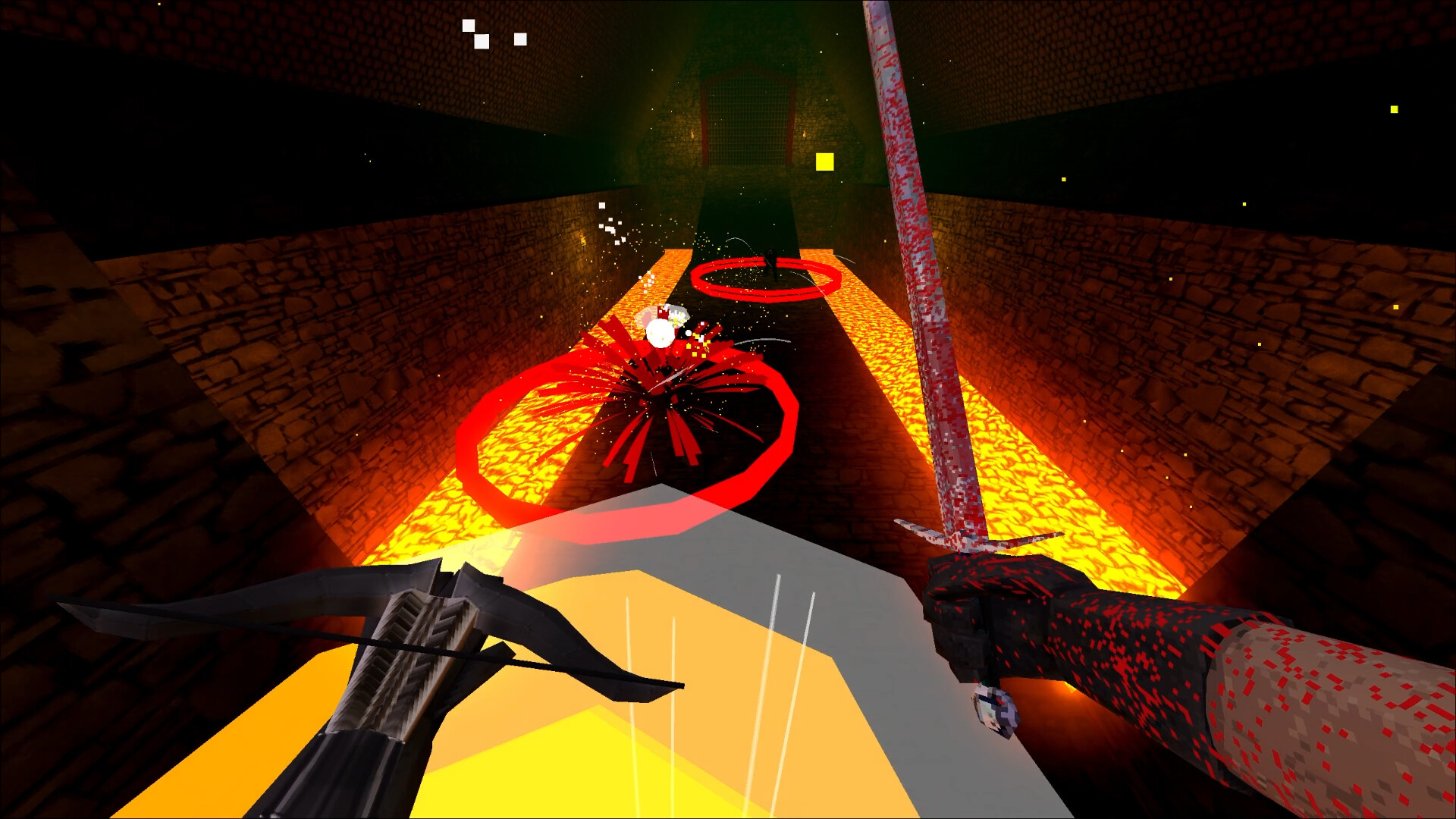
Most action games treat health as a polite number in the corner. Bloodthief treats blood as the plot. The gauge at the top of the screen is constantly leaking. Every kill tops it up. Every vial you clip on a wall-run is a sip you stole from the architecture. Spend it on a slide, a homing leap, a greedy dash, and the bar drops like a confession. Let it empty and the fantasy collapses. One hit will kill you. The parkour tricks that made you feel immortal become a rumor you can no longer afford.
That rule is the design’s best manners. Aggression is not flavor. Aggression is rent. Standing still is how you starve. A room full of undead is not a chore list. It is a pantry that happens to swing swords. I have played plenty of melee games that ask you to clear a crowd so the next door will open. Bloodthief asks you to clear a crowd so you can survive the next wall. The distinction sounds cute until you miss a vial, botch a parry, and feel the gauge go quiet in a hallway that suddenly remembers gravity.
You play as a vampire with a taste for vengeance and a schedule that only makes sense at illegal speeds. The blood of undead foes fuels abilities and propels you into the kind of velocity that turns a corridor into a suggestion. Movement and combat are the same sentence. You fight so you can run, and you run so the next fight is a landing rather than a conversation.
I like a system that prices showmanship. The slide eats blood the way a sports car eats fuel. The homing leap costs a sip and grants a sliver of invulnerability while you fly at a target. Empty the gauge and that leap is just a fall into the dark. Do you massacre the room for speed, or do you risk the skip and hope the next vial is where you remember it? Both answers can put you back at a checkpoint with a new opinion about your own bravery. The first hour is a tutorial in thirst. The tenth is a tutorial in looking like you planned it.
Slide First, Then Argue With Gravity
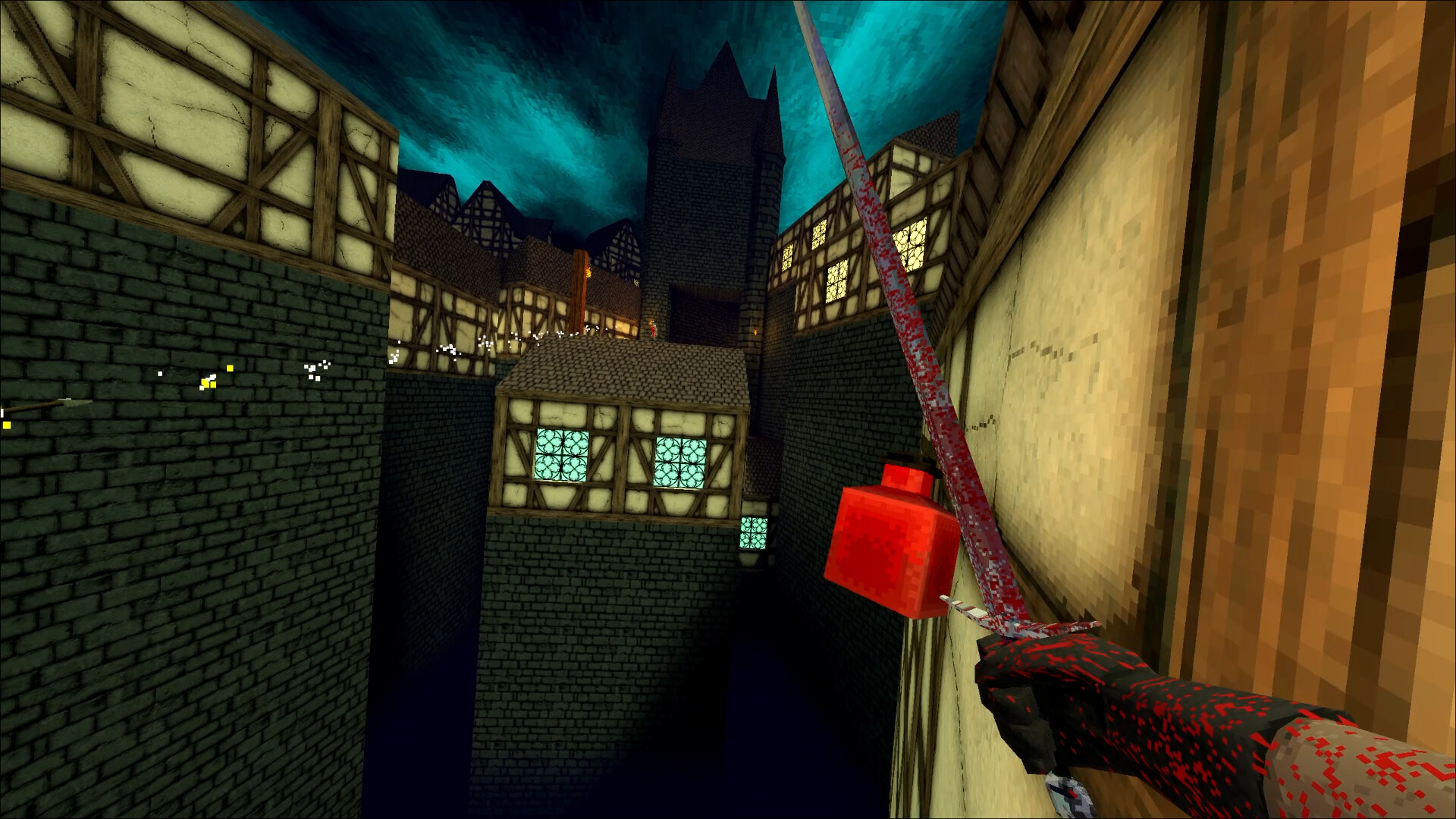
The movement kit is the reason the castle is worth the commute. Wall-runs turn vertical stone into a lane. Vaults skip the furniture. Air dashes stitch a bad jump to a better idea. Ground pounds turn a descent into a punchline that also happens to be a kill. The blood slide is the star, the verb you will describe to a friend who did not ask. You drop into a slide, the world stretches, you leap out of it like a rumor, you land back into another slide, and a room that wanted a fight becomes a commute you decorated with corpses.
Chaining those pieces is the craft. A slide into an aerial slash into a ground pound into a bounce that steals extra height is not a combo list on a loading screen. It is a sentence you learn to speak. The leaping strike is how you cross a gap that would otherwise be a lecture. You are invulnerable in that flash, which is a courtesy, and you are spending the resource that keeps you alive, which is a tax. I have missed the lock, watched the gauge shrug, and fallen into a pit I could have walked around if I had been a more boring person.
Parries are the other half of the conversation. Archers and the spell-casting white wizards will punish anyone who treats the castle like a straight line. A clean parry pays you in blood and turns a projectile into an invitation. The audio cue is the real teacher. A bowstring speaks, you answer, the knight who thought he had a plan becomes a snack. Black wizards ask for a different rhythm. Ogres ask whether you still believe speed is a personality. Learn the tempos and the rooms start to look like sheet music.
Checkpoints sit just before the notorious bits, which is either mercy or a dare. You tell yourself this time the wall-run will clip the vials, this time the air dash will catch the wizard on the ledge, this time the slide will be a decision rather than a panic. Then you do it, or you do not, and the checkpoint is still there, patient and slightly smug. Mastery takes time. The first playthrough can feel confusing until your hands agree with your eyes. Bloodthief is not cruel about the learning. It is particular, and particular is harder to fake.
I will not invent a highlight reel with fake timestamps and tidy medals. The nights that stay with you are the ones where a fifteen-second stretch asks you to slide an incline, punch a wall open, vault a lava pit, and thread spike walls that are already closing. That stretch could only exist in this game. That is the compliment.
Twenty Blades and a Hundred Hidden Doors
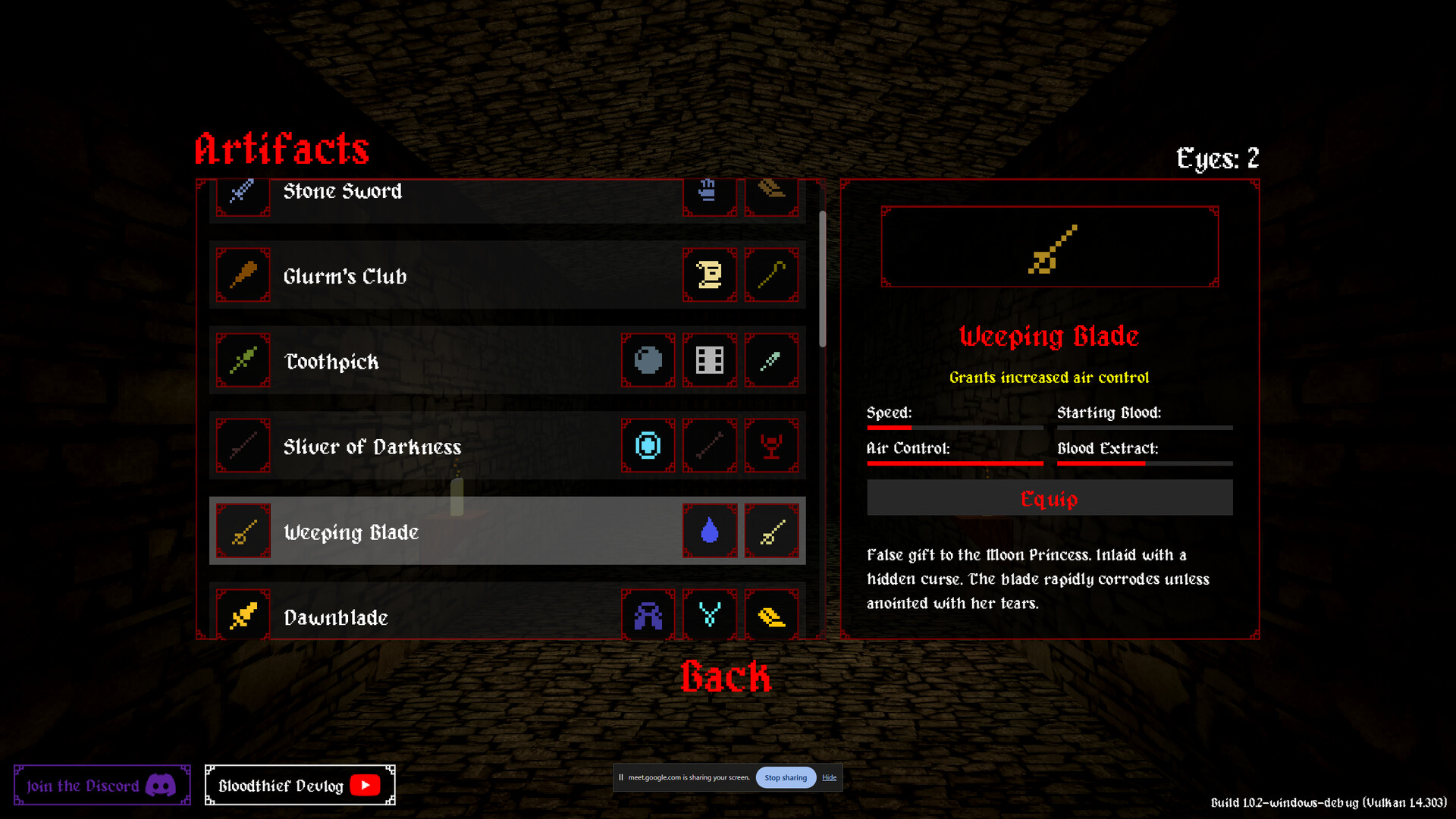
Twenty collectable weapons with unique perks is not a toybox for its own sake. It is a set of dialects. The starting steel teaches the grammar. Later blades, bows, and rude surprises rewrite the sentence. One weapon wants you closer. One wants you to spend blood like a tourist. One, if you have been nosy enough to find the artifacts that unlock it, wants you to treat a wall as a suggestion you can explode. A loadout change is a personality change. You swap because a shortcut you found last night wants a different kind of greed.
Secrets are the other economy. More than a hundred of them hide in the masonry, and the levels reward the person who looks away from the obvious line. A hidden corridor skips a headache. An artifact unlocks a toy. A secret floor reminds you that the campaign is a castle, not a hallway with better lighting. Branching paths and shortcuts are the real loot. Find the perfect line through a labyrinth and the timer starts to look like a dare you wrote yourself.
I like a game that treats curiosity as a skill. Going out of bounds is sometimes the intended joke. A blood bath tucked behind a texture, a vial route that only exists if you wall-run like a show-off, a door that opens because you were rude to the architecture: those are the moments the design grins. There is even a tool, later, that helps you hunt the things you missed, which is either a kindness or an admission that a hundred secrets is a lot of masonry. Both can be true.
Speed medals grade your manners. A leveling system doles out further rewards and, on a first pass, can gate the next set of stages until you have gone back and become the vampire the castle wanted. I clocked a gate that asked me to be better than I was, restarted earlier crypts, and felt like a minor god in rooms that had bullied me the day before. The gate made me a better player. It also made me sigh. Thirty main levels plus extras is a real campaign for twenty dollars. It is a set of tracks that want to be learned, then broken, then learned again with a different blade.
Crypts That Teach You How to Be Rude

Level design is the author. Blargis built these spaces the old way, with a mapper’s patience and a speedrunner’s sense of humor, and you can feel the handwriting in the way a corridor offers three answers and only one of them is polite. Early crypts teach the verbs. Mid-game castles stack those verbs until a room is a paragraph. Late stages stop asking whether you understand the language and start asking whether you can recite it while something tries to kill you in the air.
The airborne arenas are the tax. A handful of rooms want you to stay off the floor for what feels like a thesis defense. They are fair in the technical sense. They are also the stages I am least excited to see again. Exhausting is the honest word. Vaulting those hurdles was still a thrill when the last enemy folded, which is why the score does not collapse over them. I respect the commitment. I do not always love the commute.
Lore is environmental and stingy, which is the right instinct. Dark secrets sit under the masonry. You feel a vengeance and a reason the vampire is this angry, and you do not get a seminar about it. The camera likes the slide more than the biography, and most nights I agreed with the camera. A little more story would have been welcome. The story I got was enough to keep the crypts from feeling like a gym.
Difficulty is a conversation with your own hands. Checkpoints keep it from becoming a grudge. Medals keep it from becoming a stroll. The first playthrough can wander, because a movement language this dense looks like noise until it looks like music. Anyone who bounces off the first two hours should take the demo’s offer seriously. The demo is the argument in miniature.
The friction is real, and it is not a footnote you hide after the score. Some later combat encounters spike harder than the movement puzzles around them. The leveling gate can feel like a bouncer at a party you already paid to enter. The flash, when a room fills with effects and blood and speed lines, can be a lot for eyes that wanted a cleaner picture. None of this is a broken object. All of it is why the score stays at Great instead of wandering into the next adjective.
Low Poly, High Pulse

Bloodthief looks like a memory of a 90s first-person game that went to the gym and came back with a personality. Low-poly castles, chunky knights, lighting that prefers mood to fidelity. The style is evocative in a way a prettier engine sometimes fails to be, because you can read a room at a glance while traveling at a speed that would turn a realistic corridor into mush. Readability is the real graphic setting. If you cannot tell a ledge from a trap, the slide dies. These ledges hold.
The picture can also shout. Long sessions lean bright and busy. Blood is a texture and a weather system. I am glad the options include ways to tone the gore and a mode for anyone who did not come here to negotiate with spiders. Those are not marketing checkboxes. They are how a violent, fast game stays hospitable. I never wanted less speed. I sometimes wanted less spray.
Sound is the other teacher. Occams Laser wrote a pulse that understands the assignment: synth with a mean streak, a score that makes a crypt feel like a night drive. Hits land. Slides whoosh. A parried arrow has a schwing you will start to listen for in other games. Soldiers bark like they have been dead long enough to forget the script, which is funny until it is useful. When the soundtrack and the gauge agree, the castle feels expensive.
Godot is the engine, Vulkan is the ask, a few gigabytes of disk. I will not write a benchmark novella. On my nights the frame held, the inputs listened, and the blade was not late. If the slide is late, the game is over. The slide was not late.
Ghosts in the Workshop
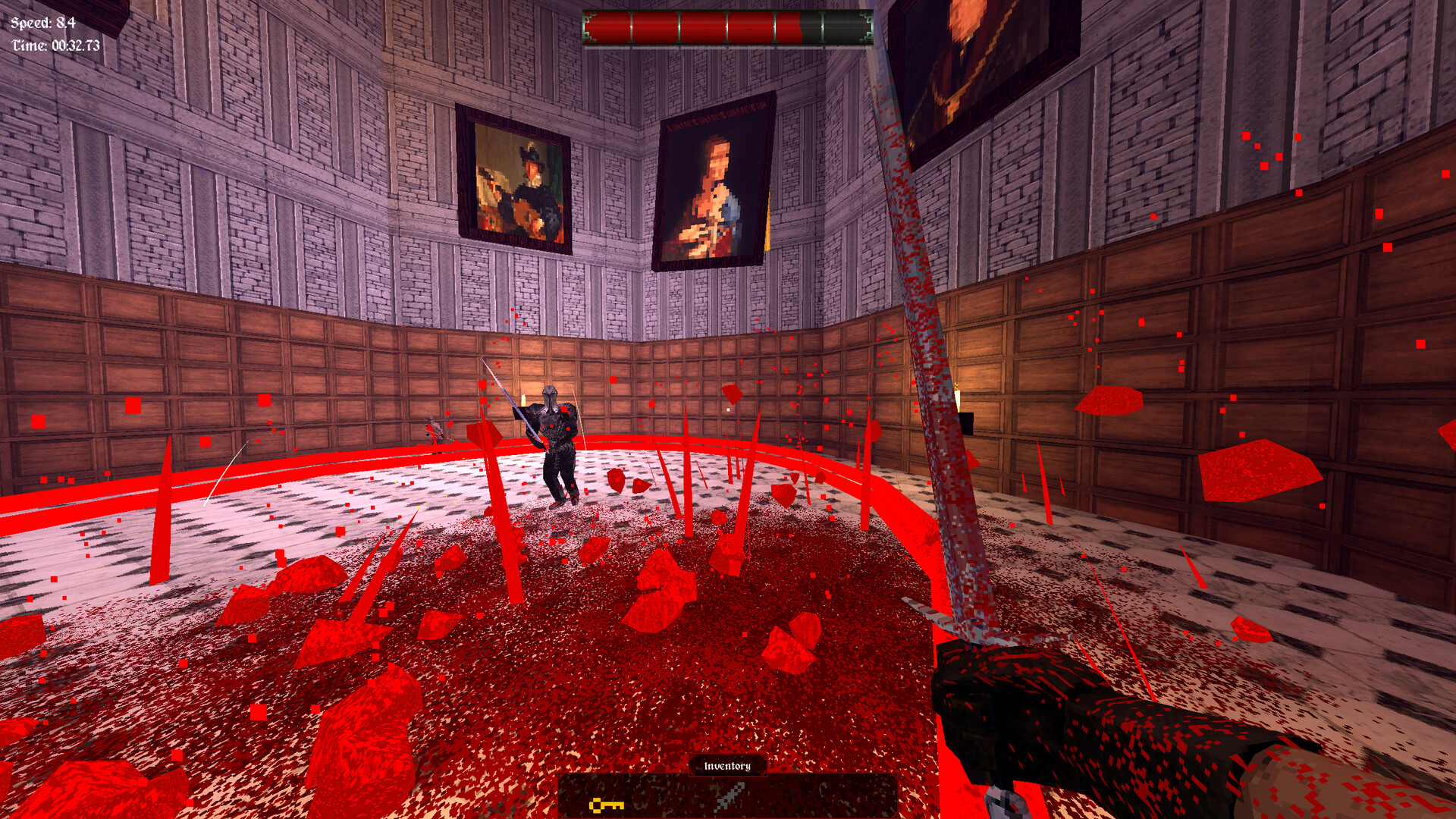
Bloodthief is built to be repeated, and the kit around the campaign is how that repetition stays a hobby instead of a chore. Ghost racing lets you run against a friend, a stranger, or a better version of yourself. The ghost is a teacher that does not talk. It takes the line you thought was clever and shows you the line that was actually clever. I have chased my own ghost through a crypt I believed I understood and come out with a new religion about a single corner.
Workshop support is the other future. Custom maps are not a footnote on a 1.0 box. They are a promise that the movement language can live outside the campaign Blargis wrote. A good movement game without a map scene is a novel. A good movement game with one is a scene. Bloodthief wants to be a scene. The leaderboards, the medals, the way players already talk about tech that looks illegal, all point in the same direction.
The player sample is small next to a blockbuster and loud next to a hobby project. 961 recommendations, overwhelmingly warm, is the tone of people who found the fantasy and kept it. Players who wanted a deeper story, a kinder first hour, or a less flashy picture bounce off. That split is fair. A $19.99 indie that knows what it is should not pretend to be a different object.
Twenty-two achievements sit in the background for anyone who likes a checklist with their blood. Languages cover a wide net, English with full audio, enough interface support to get a mixed group into the same castle. A demo remains the correct first move if your hands have not spoken this dialect before. The gauge will tell you, within twenty minutes, whether this is your kind of thirst.
Still Thirsty After the Last Checkpoint
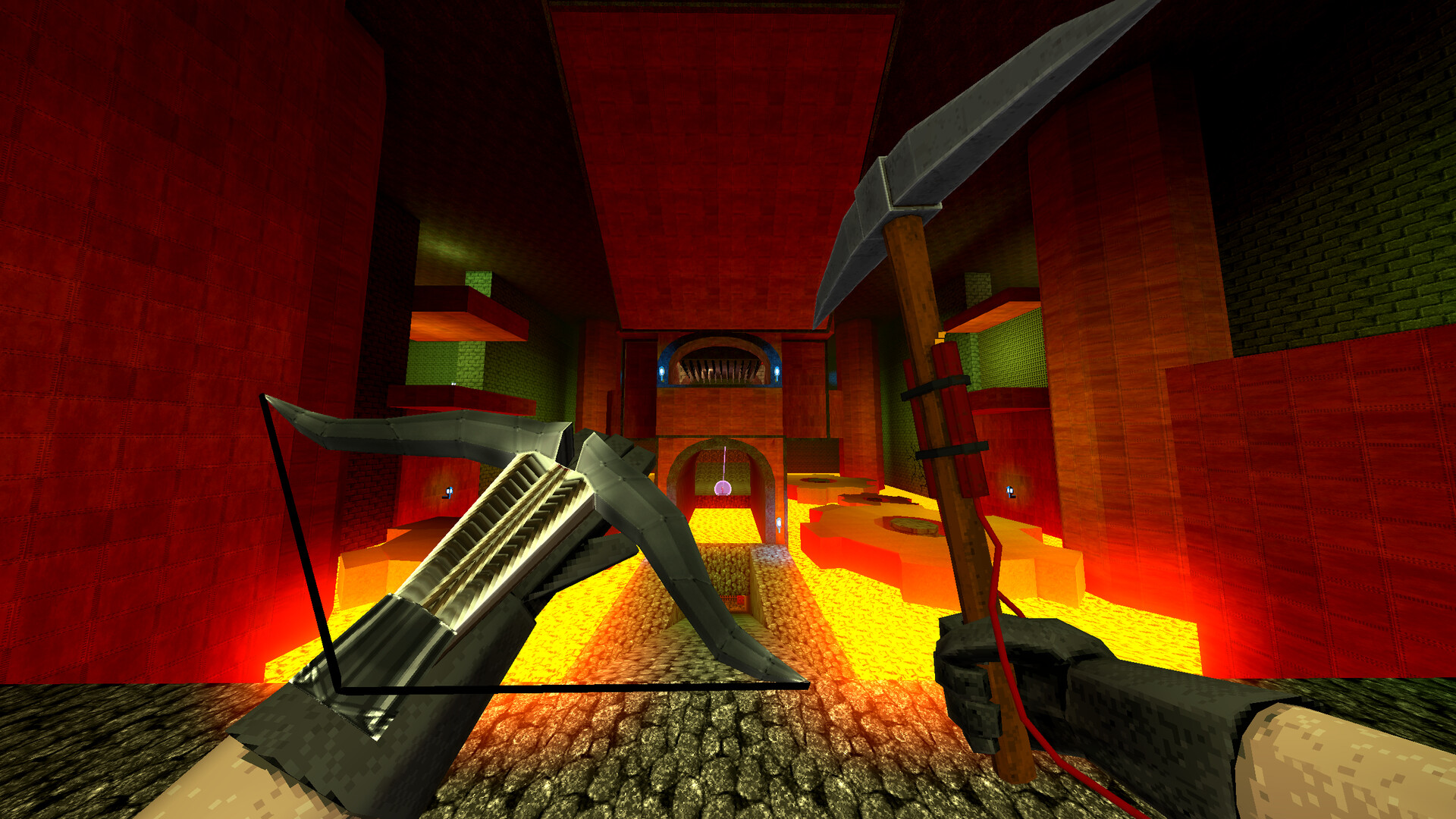
Bloodthief is the rare mid-priced action game that understands its own joke and then has the discipline to make the joke a system. Blargis built a vampire fantasy about momentum, a blood gauge that turns aggression into rent, and a set of crypts that look a little like a memory and play a lot better than that sentence suggests. The hook is drinking the room so you can leave it faster. The spine is the way movement and combat refuse to be separate hobbies. The scar is the night a fifteen-second stretch asks you to be perfect and you almost are.
It is better as a craft than as a novel. The slide stays the reason to recommend it. The secrets stay the reason you keep the window open. The late airborne arenas are real. So is the grin when a parry turns an archer into fuel and a wall-run clips a vial you used to miss on purpose.
I am scoring it 8.5, Great, because the identity is this strong and the limitations are the limitations of a focused speed game, not an unfinished one. At this price you are buying a movement language, a castle full of second chances, and a loop that respects the fact that a good line should be stolen from yourself. I would recommend it to anyone who likes a melee game that treats standing still as a moral failure. Distinctive low-poly presentation, a soundtrack with teeth, workshop maps, ghost races, and a demo that tells the truth are a lot of game for the ask. The rooms repeat their jokes if you live in them long enough. The jokes are still sharp.
The gauge is still leaking. After a few nights, you will understand why you keep topping it up, and why the castle, which only respects speed, keeps letting you back in.
We prepared this review with a digital copy of the Bloodthief for the PC version provided by Blargis.