
There is a particular kind of panic, rare in a medium that usually hands you a health bar and a map, in watching a number on an ATM climb while a slot machine in a rusty cell asks you to pull the lever one more time. The floor is not a metaphor. Miss the deadline and the grating opens. You fall. CloverPit, the rogue-lite slot machine horror from Panik Arcade and Future Friends Games, is built on that fall, and the fall is ruder than a ten-dollar cell has any right to be.
I played the PC version, the September 26, 2025 launch that put a rusty room onto Steam at $9.99 and then watched 24,319 recommendations decide the ride was worth the bruises. Panik Arcade is the studio behind Yellow Taxi Goes Vroom, now working a meaner joke. Future Friends Games published it. The store page calls CloverPit the demonic lovechild of Balatro and Buckshot Roulette, and that is the game’s own comparison, not a critic’s costume. You are locked in a cell with a slot machine and an ATM. You pay the debt at the end of each deadline or you go through the floor. More than 150 items and synergies wait to break the reels. Meta-progression, seeded runs, unlockable modifiers, and an Endless Mode sit behind the first escape. A demo still sits on the store page if you want to taste the lever before you buy the cell. Thirty achievements lurk in the drawers. This is not real-money gambling. The machine is designed to be broken, and it will never ask you for a credit card. Great, not infinite, and very much a cell I would recommend you sit in.
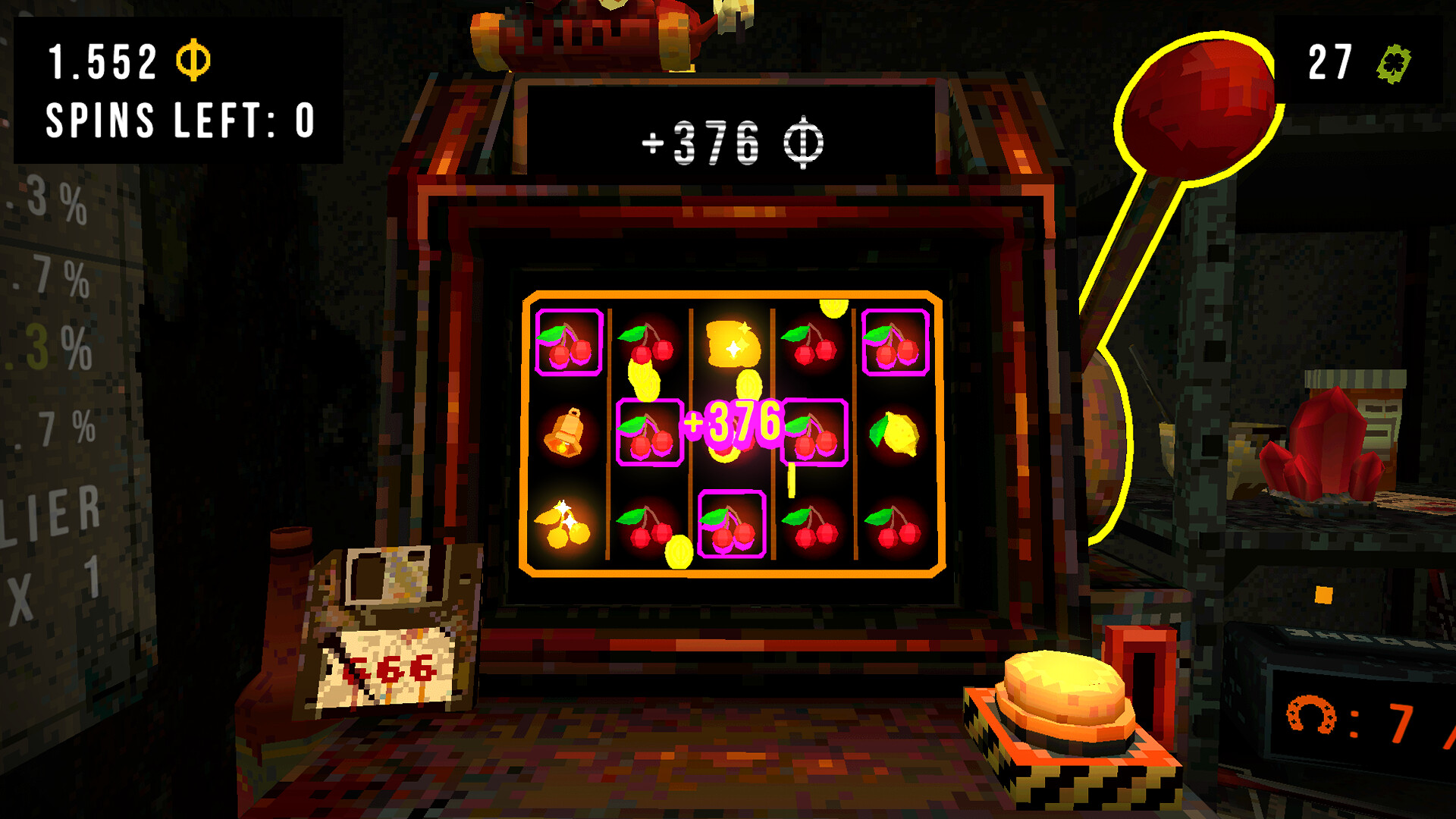
The Cell Has Two Machines and One Joke
Most horror games give you a hallway and a flashlight. CloverPit gives you a room. The room is rusty, tight, and furnished like a joke that got out of hand: a slot machine that wants to be your friend, an ATM that wants to be your landlord, a red telephone that wants to be your priest, and a floor that wants to be a hole. You do not explore a dungeon. You inhabit a sentence. The sentence is: pay, or fall.
That is the whole map, and it is enough. The cell is not a level. It is a pressure cooker. The first-person view puts your hands on the lever and your face in the rust. Drawers wait like a filing cabinet for bad decisions. The ATM glow is the only honest light in the room. You can hear yourself decide that one more spin is a plan.
A lot of indie horror spends its budget on a second corridor. CloverPit spends it on making one corridor feel like a career. You start with a handful of coins and a couple of tickets, and the first debt is already waiting: seventy-five coins, three rounds, a little starter cash already deposited. The generosity is fake. The next deadline is two hundred. Then six hundred sixty-six. Then the numbers stop being numbers you can hold in your head and start being weather.
The joke is gambling without a wallet. The store page asks the question so you do not have to: is this gambling? Hell no. CloverPit is a rogue-lite horror game, not a slot simulator that wants your paycheck. The reels are a puzzle dressed as a vice. The machine is designed to be bent, broken, and eventually overcome. You are not depositing real money. You are depositing attention, and attention is the only currency the cell actually accepts.
I have sat in plenty of rooms that wanted to be casinos. This one wants to be a trap that you can solve.
Deadlines, Interest, and the Floor That Waits
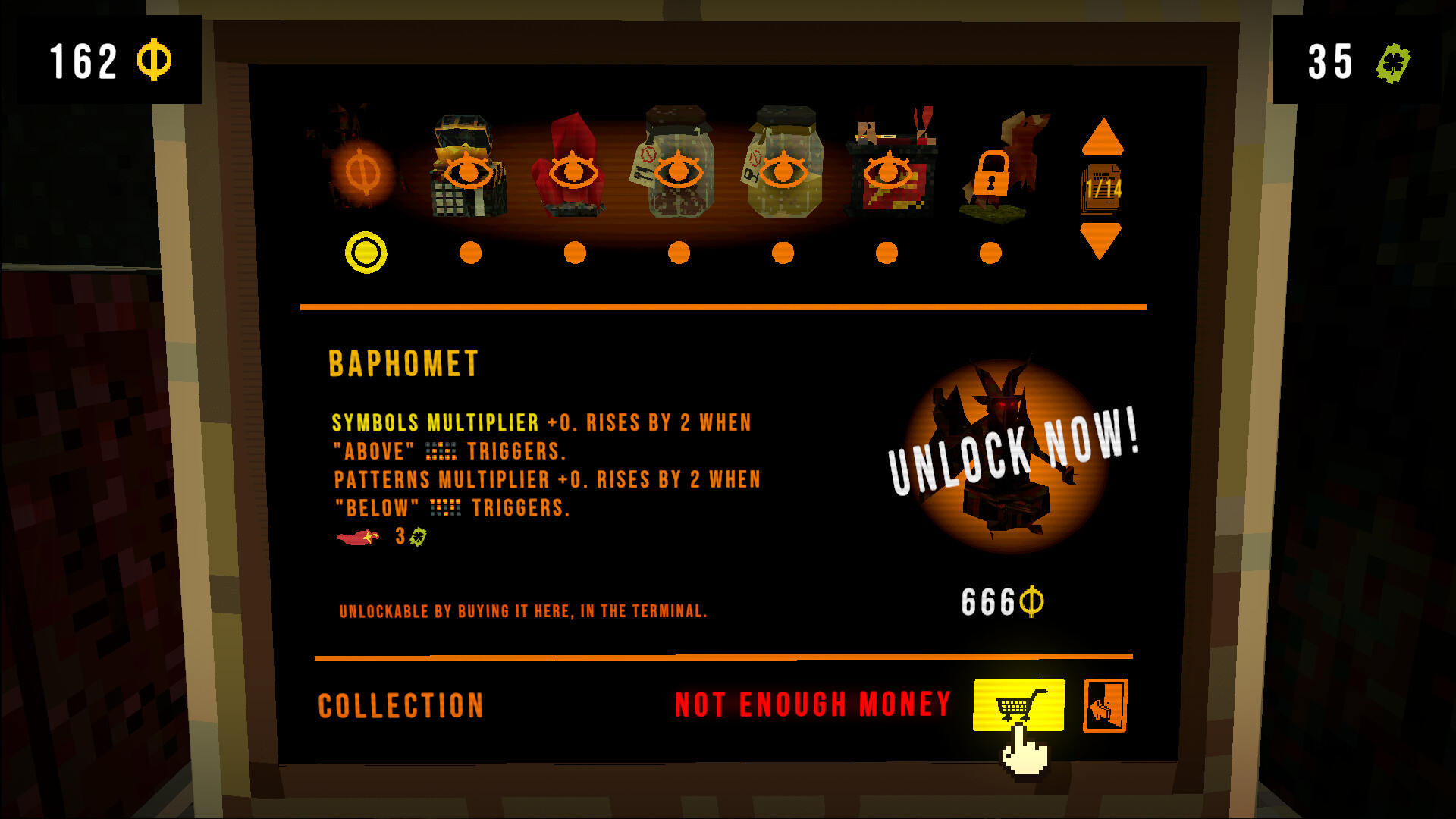
A deadline is three rounds. A round is a handful of spins, seven if nobody has rewritten the rules. You pull the lever. Symbols land. Patterns pay. At the end of the round, interest drips out of the machine you have been feeding. At the end of the deadline, you pay the debt or you learn what the grating is for.
The ATM is the second game hiding inside the first. Deposit coins and they start working while you spin. Interest begins as a polite drip and becomes the engine that late deadlines actually run on. Keep too much in your pocket and you look rich for a round. Park it in the machine and the cell starts paying you rent. Skip a round when the debt is already covered and you walk away with extra tickets. Stay and spin because you are hungry, and you might print a fortune. You might also print a 666 and watch the pile evaporate.
That 666 is not flavor text. From the third deadline onward, the devil has a seat at the table. A bad roll can wipe the round. Later, it can wipe everything you are holding. It can stuff a cadaver piece into a drawer and sour the phone call that comes after. It is a small percentage and a large personality. I have had runs that felt immortal until a triple six arrived like a bill I had already opened.
Luck is not a vibe. Luck is a stat with sparks on the lever and a sound that tells you the next spin has been arranged. You can read the machine. You cannot fire it. Deadline four wants thousands. Later ones want numbers that look like a calculator having a religious experience. The floor is still the same floor. The joke does not get kinder because the font got smaller.
Fail and the cell keeps its promise. The grating opens. You fall into a dark that does not care about your build. A rogue-lite that slaps your wrist is a toy. A rogue-lite that opens the floor is a roommate.
Charms, Combos, and the Art of Breaking a Slot
The slot machine would be a novelty if it stayed a slot machine. CloverPit refuses. Lucky Charms are the kit, more than 150 items and synergies that turn a pull into a sentence you wrote on purpose. Some charms make lemons show up like a bad habit. Some gild a cherry so scoring it raises the symbol’s value for the rest of the run. Some pay you a slice of your own interest when a token lands. Some want the red button, a little act of violence you spend charges on, then wait for the rounds to refill. Pictures of fruit, clovers, bells, diamonds, treasures, sevens: each one is a vote for the symbol you have decided is the protagonist tonight.
You buy them with tickets. You store the ones you cannot wear in drawers. Equip the loud ones and the machine starts shouting your name. Equip the quiet ones and the interest starts doing the shouting for you. Charm space is a real constraint. It will irritate anyone who wanted to wear the whole toybox. It will please anyone who likes a build that has to make a point.
This is where the Balatro comparison earns its keep, and where it starts to leak. Both games ask you to break a scoring system until the numbers become comedy. CloverPit is wetter, meaner, and more interested in the room than in the elegance of a poker hand. You are not building a deck. You are dressing a machine that lives in a cell. A fruit-heavy table with the right pictures and an interest engine can turn a timid round into a parade. A 666 can still kick the parade into the hole.
Memory Cards are the other hat. Unlock the right drawer and you start finding packs that rewrite the run before the first spin. Fewer shop slots and free restocks. A thinner charm board and a permanent discount. Traits glued to everything on the table. Beat the cell with a card equipped and it goes golden holographic. Beat it again on Hard Mode, which doubles the debts, and it goes rainbow.
I keep coming back to the red button. Press it and the picture charms start campaigning for their symbol. Press it at the wrong time and you have spent a resource you needed for the round that actually mattered. The button is a tempo tool, not a win condition. After enough nights you will recognize the charm families. Recognition is not the same thing as boredom, but it is the cousin who shows up early.
The Phone Rings in Red and White
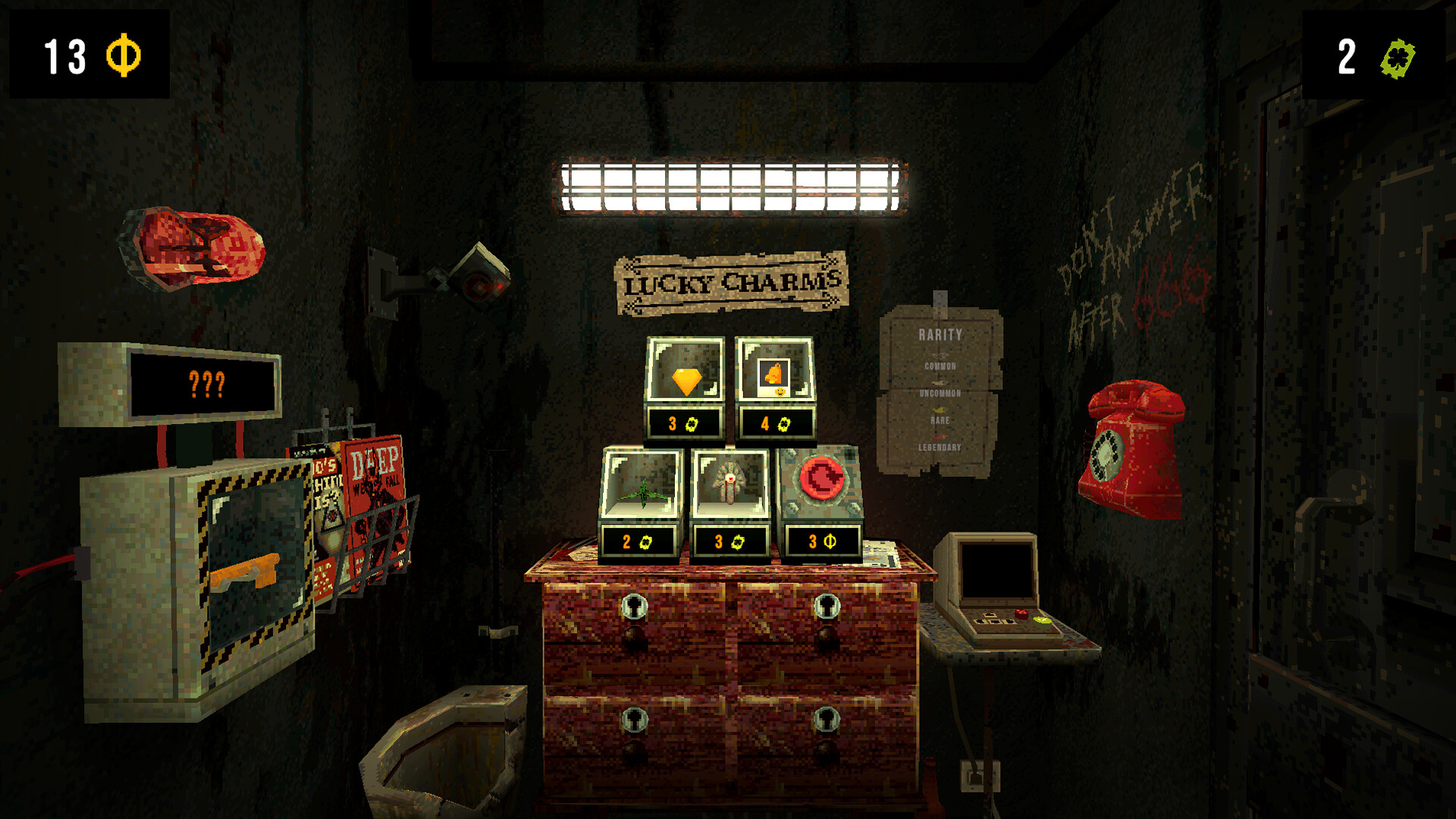
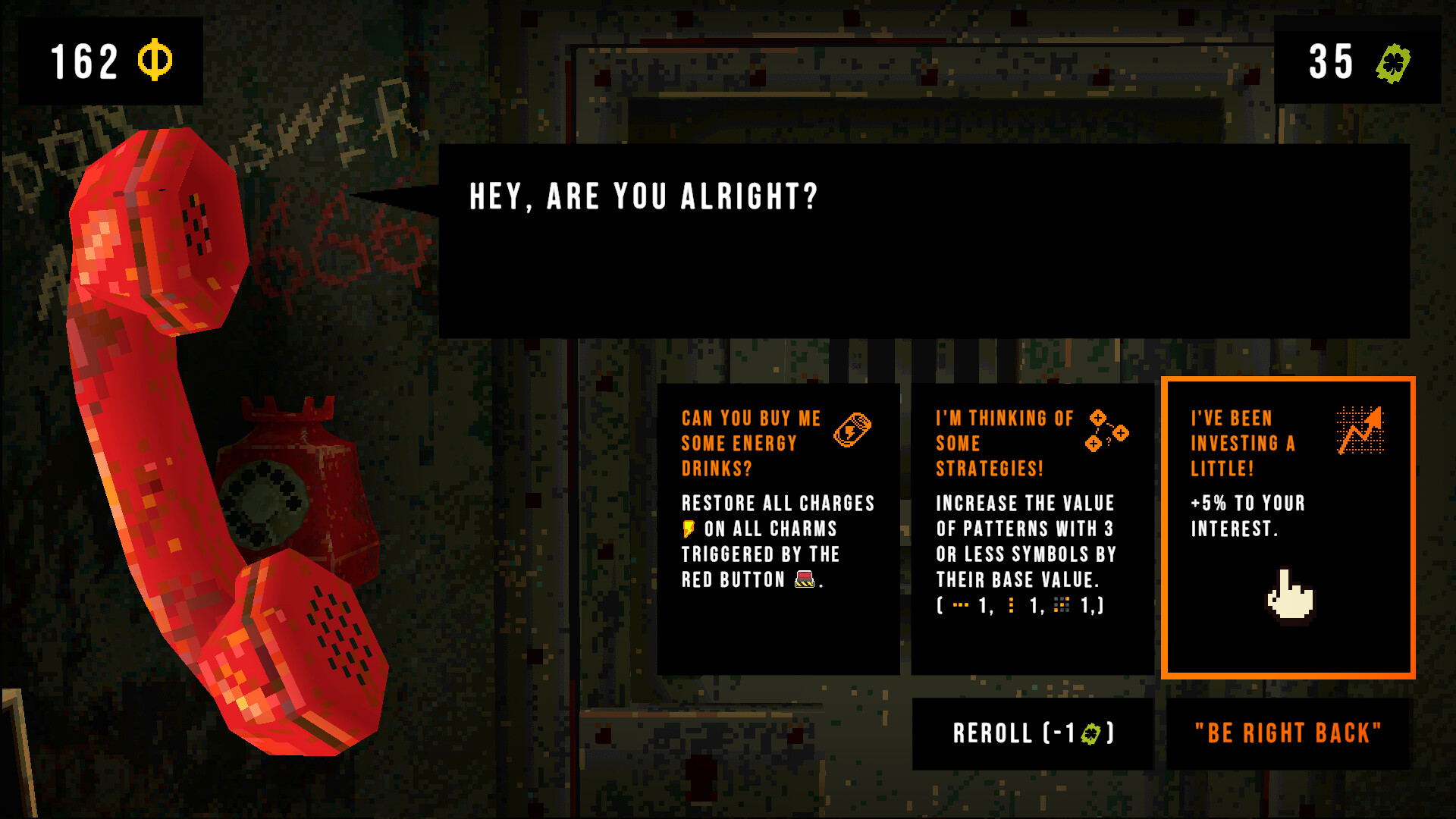
A telephone waits to become the most important object in the room. It rings when a deadline ends. It offers a choice: a perk, a trade, a permanent nudge to a symbol’s weight, an extra charm space, a gift that has a hook in it. You can see the history of your answers on a little voicemail strip on the machine, a scrapbook of the person you have decided to be in this particular cell.
Most calls are ordinary temptation. Take the lemon weight. Take the extra space. Then the text goes red. An Evil Call arrives after a 666, or on deadlines that have already decided you need a sermon, and the perks are juicier because the price is a soul you will not get back. Accept one and the good ending is gone for the run. Refuse three and the phone changes color. Sacred Mode is a different weather system: white plastic, holier options, a path that treats restraint as a build.
I will not walk you to the door and describe the two endings like a tour guide. One is an escape. One is not. The telephone is the story, a series of yes-or-no questions asked by something that already knows how you spin. The captor stays a voice and a debt and a set of rules that get ruder. Addiction is the theme the game is willing to say out loud. Escape is the theme it is willing to make mechanical.
The Buckshot Roulette half of the store-page joke lives here more than it lives in the reels. That game made a table, a gun, and a stranger into a moral temperature. CloverPit makes a phone, a floor, and a deadline into the same kind of sweat. You are not pulling a trigger. You are agreeing to a term. The difference is that CloverPit lets you come back tomorrow with a better memory card and a worse attitude.
Low-Poly Hell With a Pulse
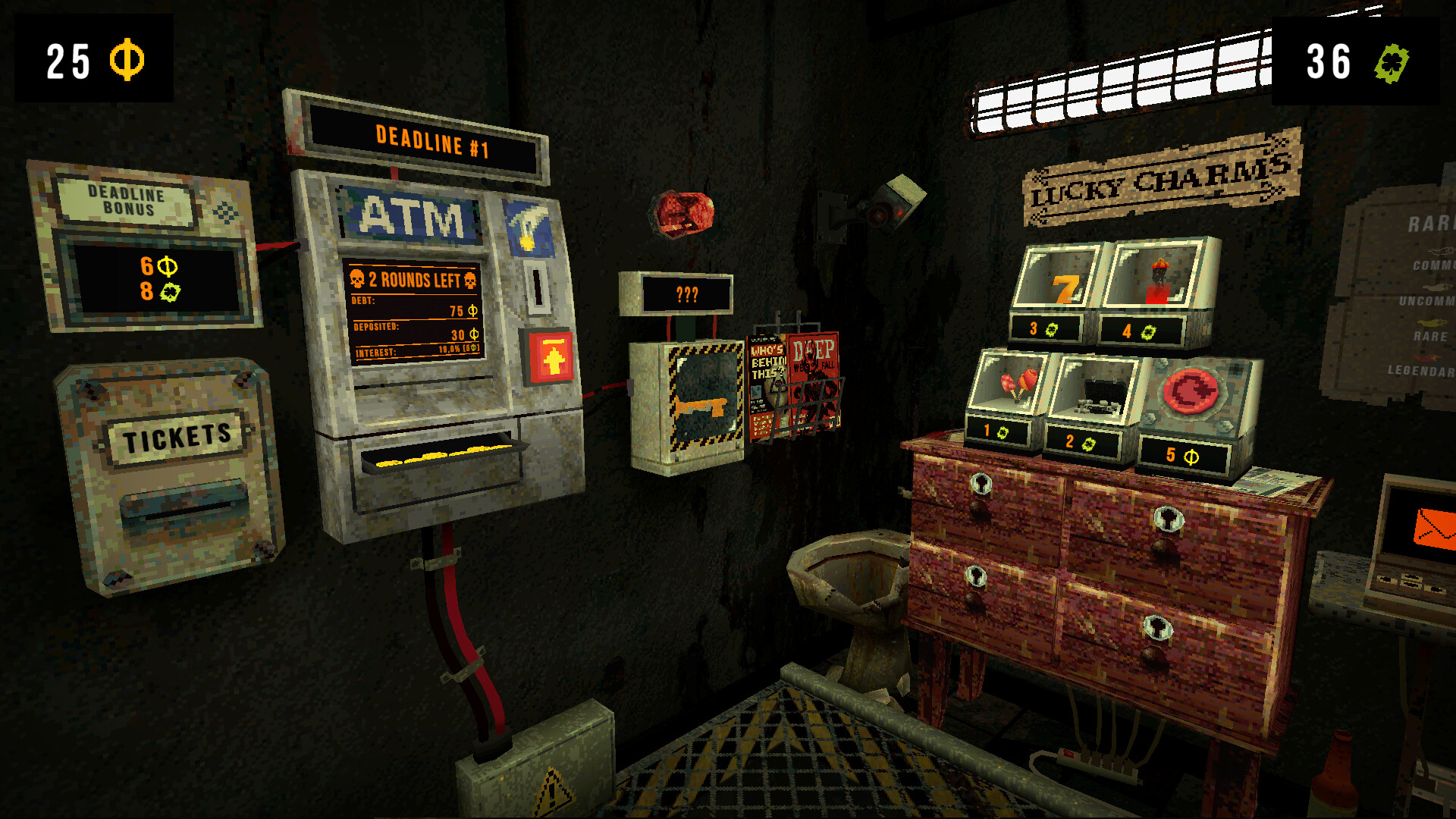
CloverPit does not look like a prestige horror production, and it does not need to. The cell is low-poly, grimy, and readable, a little escape-room diorama that would be cute if it were not also a threat. Rust has a color. The slot machine has a face. The ATM has the bureaucratic glow of a machine that has never cared about you. Lighting does the horror work that a bigger budget would have spent on a second map. You always know where you are. You do not always know why the lever feels heavier than it did a round ago.
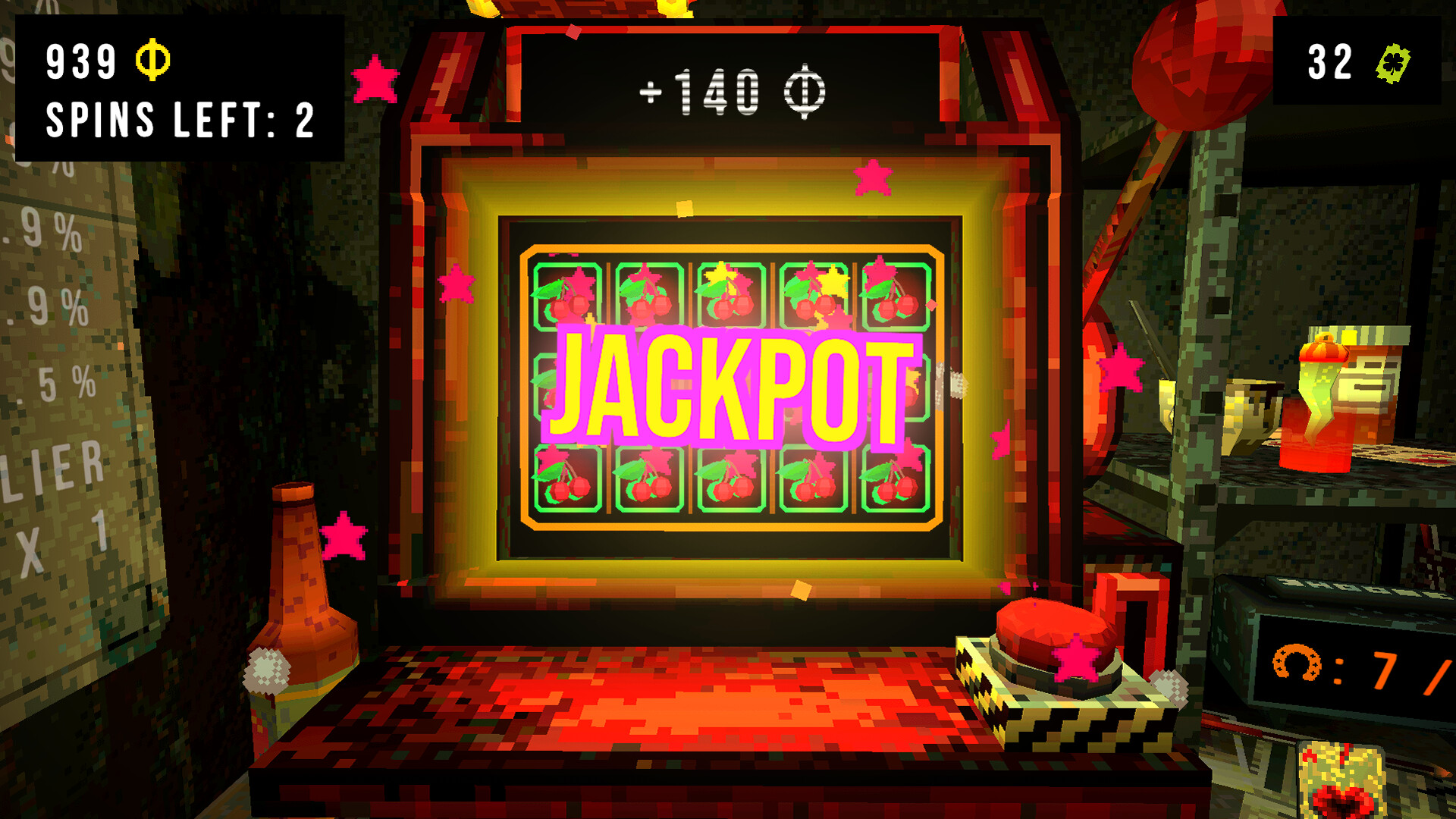
I have played a lot of cheap indies that announce atmosphere and then deliver a brown room with a sting. This room has handwriting. Animations are short and rude: a spin, a payout, a drawer, a fall. When a jackpot lands, the machine celebrates like it is proud of you, which is the most suspicious emotion in the cell. When a 666 lands, the celebration curdles. You do not need a cutscene. You need a sound and a number disappearing.
The soundtrack, from Clement Panchout, understands the assignment. It is tense without becoming a jumpscare factory, catchy without becoming a slot-floor loop you would hear in a real casino. That matters, because the game is trying to be a horror about compulsion, not an advertisement for one. You can hear a lucky spark. You can hear the phone. You can hear the floor thinking about you.
Full controller support is there if you want it. Keyboard is a first-class citizen. Either language works. A run can be a twenty-minute escape or an hour of Endless Mode that treats your charm board like a rumor. Thirty achievements sit in the background like a second cell. Steam Cloud keeps the meta so a failed night is still a receipt. The demo is the right length to tell you whether the room agrees with your nervous system. If the first deadline feels like a toy, give it a second. If the third deadline feels like a vice, you are the audience.
One More Run, Then One More After That
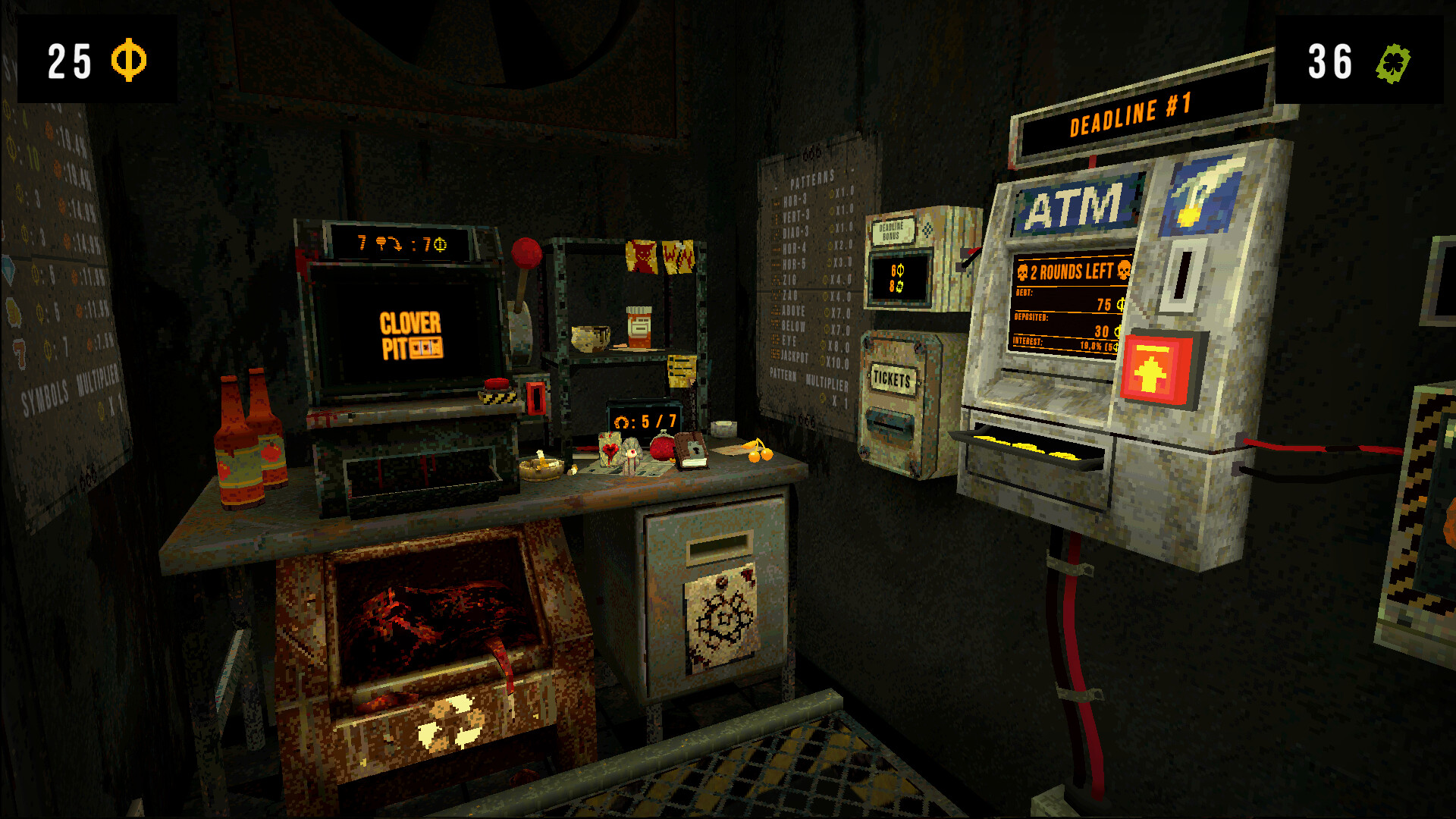
The meta-progression is why I stopped resenting the structure. CloverPit makes the hill a cell that keeps a receipt. Charms and modifiers unlock. Drawers open. Memory Cards accumulate personalities. Run modifiers wait for the player who has already escaped once and wants the escape to be ruder. Hard Mode doubles the debts for a card you have already beaten, which is a simple sentence and a long evening.
Endless Mode is the other hobby. Beat the shape of the story, or simply refuse to leave, and the debts keep climbing until the ATM is a scoreboard. A well-built table can print comedy for a long time. A poorly-built table dies the moment the next zero arrives. Seeded runs let you share a disaster or retry one you almost solved. The player sample is tens of thousands of recommendations, still arguing about fruit versus interest versus the devil. That argument is the content.
I should be clear about the friction, because it is real and it is not a footnote you hide after the score. The cell is one cell. After enough evenings the rust is a commute. Charm families start to rhyme. A late deadline can become a waiting room for the one spin you need. Randomness is the house style. A clean plan still dies to a 666, and a sloppy plan still prints a jackpot. The horror, as atmosphere, is stronger than the horror as a scare. I felt watched. I did not often feel hunted. The story is a telephone and a set of drawers, the right instinct and a thin one if you came here for a novella. Compared with the card-game cousin on the store page, the long-term workshop is smaller. You will see the edges of the toybox sooner. That is the cost of a focused ten-dollar object that knows what it is, and it is already priced in at $9.99.
The House Collects Until You Teach It Otherwise
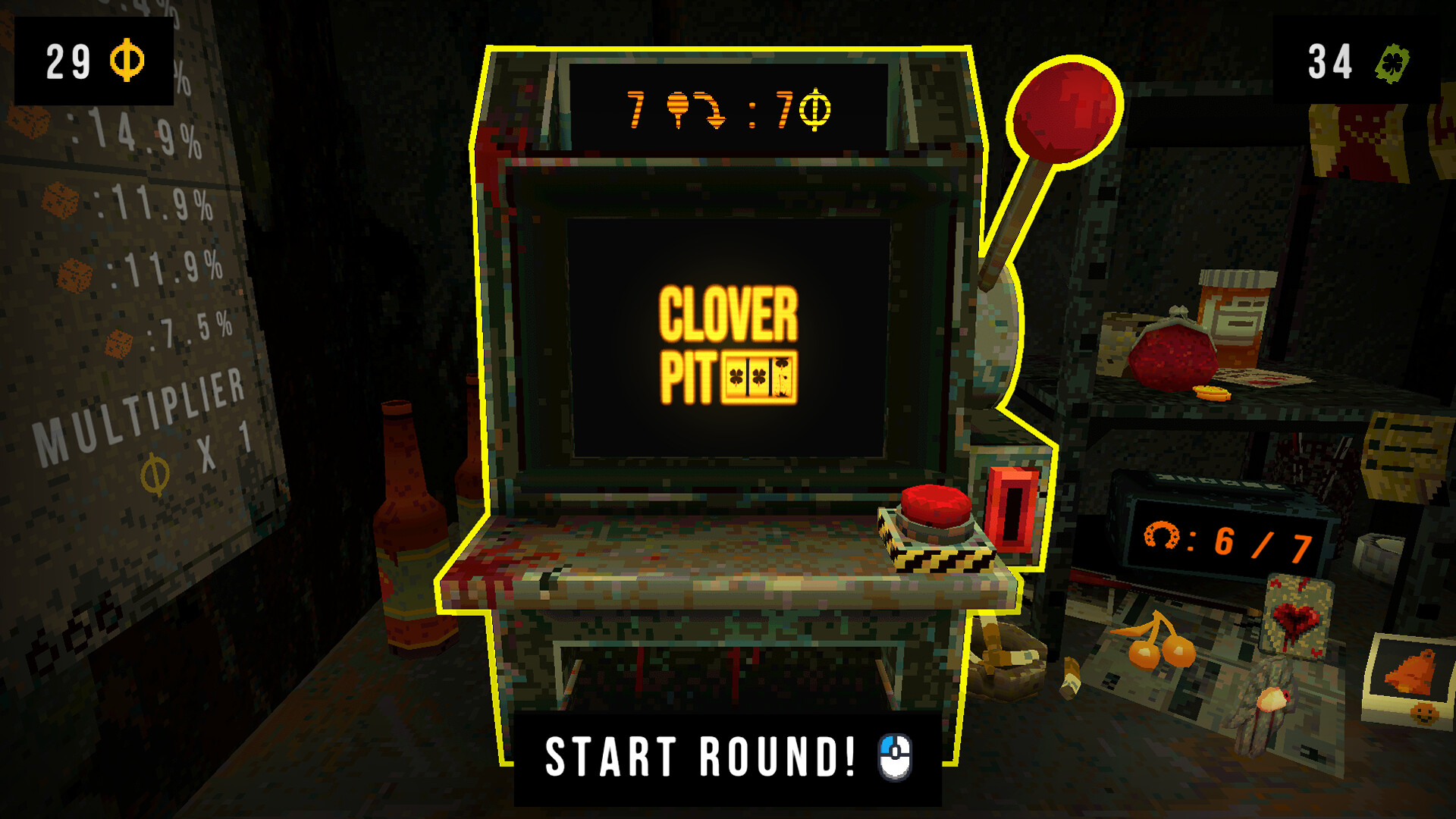
CloverPit is the rare cheap game that understands its own joke and then has the discipline to make the joke a system. Panik Arcade built a possession fantasy about a slot machine, an ATM that turns patience into a weapon, and a telephone that asks what kind of prisoner you want to be. The hook is a rusty cell with two machines. The spine is the way charms, interest, and deadlines turn a pull into a plan.
It is better as a craft than as a novel. The synergies stay the reason to recommend it. The room stays the reason you keep the window open. The repetition is real. So is the grin when a red button and a stupid amount of interest turn a deadline into a story you will tell like you meant it.
I am scoring it 8.5, Great, because the identity is this strong and the limitations are the limitations of a focused rogue-lite, not an unfinished one. At $9.99 you are buying a cell that respects your evening, a toybox with more than 150 ways to misbehave, a demo if you are shy, and a loop that refuses to charge you real money for the privilege of being ruined. Distinctive escape-room horror, a debt that climbs like weather, and a machine designed to be overcome are a lot of game for the ask. The runs repeat their jokes. The jokes are still sharp.
The lever is still there. The ATM is still hungry. After a few escapes, you will understand why the cell is not finished with you, and why you keep sitting down anyway.
We prepared this review with a digital copy of the CloverPit for the PC version provided by Future Friends Games.