
There is a particular kind of exile, rare in a genre that usually hands you a flat plain and a cheerful granary, in being forced out of the lowlands and discovering the mountain has already hired a night shift of weather. The slope is still a slope. The caste is still a caste. The first thing that tries to bury you is not a metaphor. Laysara: Summit Kingdom, the mountain city builder from Quite OK Games, is built on that slope, and the slope is ruder, prettier, and more useful than a twenty-five-dollar pilgrimage has any right to be.
I played the PlayStation 5 version, the 27 February 2026 launch that Nejcraft walked onto living-room hardware the same day Steam left Early Access, a stay that began on 10 April 2024, and asked $24.99 on both sides of the aisle. You plan, you lift, you put a wall on a red zone, and you learn the peak has already hired a night shift of avalanches that do not negotiate. Three castes. Fifteen campaign missions. A sandbox if you would like the mountain without the syllabus. Forty-eight Steam achievements sit in the background. The Steam sample is Very Positive, 1198 positive of 1465, which is the honest weather report and not a dare. Great, not glossy, and very much a weekend I would recommend you spend if you like a city builder that remembers it is also a cliff.
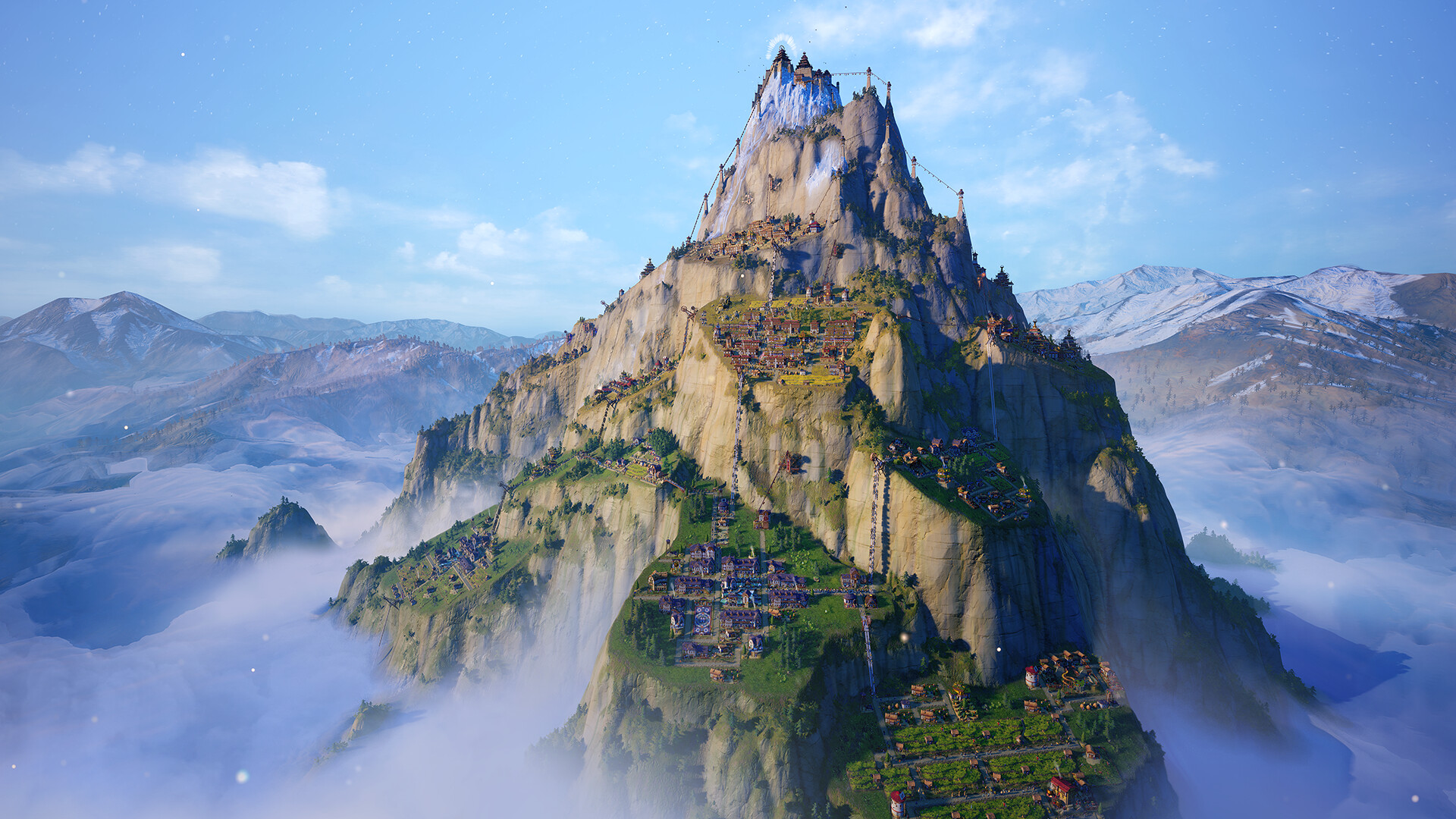
Forced Out of the Lowlands
Most city builders begin with a speech and a flat map. Laysara: Summit Kingdom begins with an eviction. Official copy on Steam says you create a new home for people forced out of the lowlands, then asks, with the grammar of a person who has already packed the yaks, whether you are skilled enough to make a town thrive. Both versions agree on the next sentence. There is no time for panicking. Building is your only option.
That is not flavor text. It is the design refusing to pay for an army when a slope will do. You start placing houses, planning chains, and learning the difference between a lowland farm and a glacier mine because the alternative is becoming a rumor the snow already filed. The first mountain is staged like a tutorial that forgot to be flat. You farm. You lift. You ship. The script, still a little breathless, asks you to rebuild the Kingdom of Laysara. Nobody can assure the next peak is kind. That is the rest of the map.
I like a premise that prices curiosity as a hazard and then lets you walk toward it anyway. Mountains sit on the campaign like questions with weather. Why are there people and no lowlands. What is that red zone. The more you explore, the more the peak answers with another ridge and another thing that would like a piece of your granary. Story is environmental and stingy, which is the right instinct for a game that wants your hands more than your diary. You are not reading a novel. You are looting a disaster that is still happening, and the disaster has a contour line.
The fantasy is not mastery of a lore bible. The fantasy is competence arriving about half a mission after you invent a lift. You will fail in ways that would be funny if the buried district were not so sincere. You leave the slope. You walk back. You become the kind of person who thinks a yak is a personality.
Three Castes, One Mountain, No Army
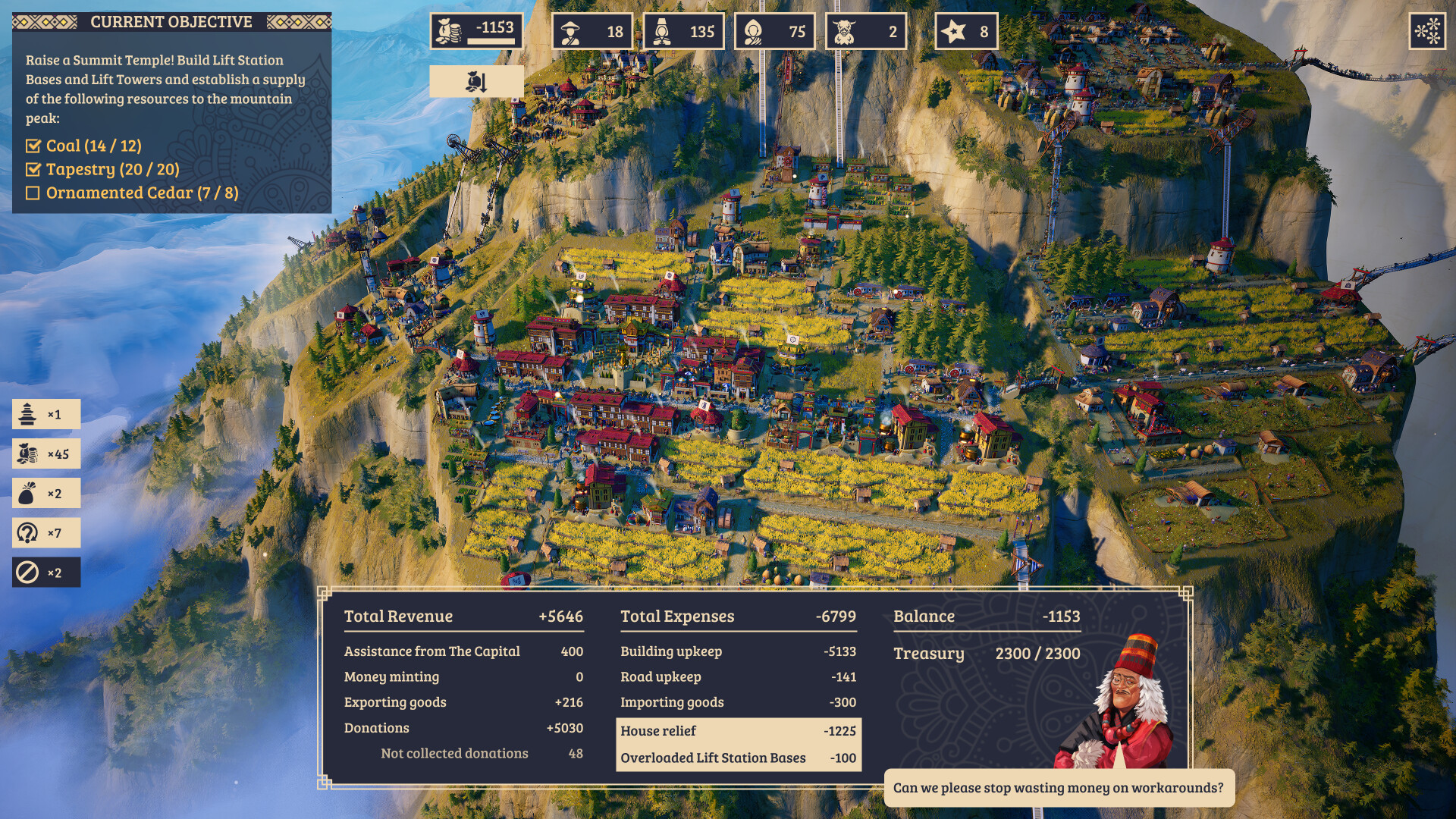
The loop is the old religion of production and Quite OK Games does not pretend otherwise, then it straps a caste system to the religion and asks the religion to climb. Lowlanders work. Artisans refine. Monks research. Houses want baths and walls and a kind of happiness that is not a slogan. Chains are on the character sheet because a city builder without a stomach is just a walking tour. Day turns into weather. None of that is a revolution. All of that is the sentence the rest of the toybox has to live in.
Needs are straightforward in the way a good workbench is straightforward. You are not drowning in menus if you are paying attention. You are looking at a caste and deciding whether you have been useful enough today. Tsampa and cheese keep the lowlands polite. Baths keep the artisans from writing a complaint. Monastery walls keep the monks from remembering they could leave. Upgrading houses is the temperature you turn up when a royal emissary has already decided you are a problem.
I have played a lot of games that treat the first district as a tutorial and the tenth as a spreadsheet. Laysara is heavier than that on purpose, and lighter than a war game on purpose. Official copy says the quiet part at the bottom of the page. Pure city building. Economy, resources, surviving the inhospitable. No combat. No military aspects. That sentence is both a promise and a warning. If you want a barracks that could unionize, you will feel underemployed. If you want a weekend that turns a slope into a kitchen, you will feel hired.
Vegetation zones keep the commute from becoming a museum. Green lowlands if the mountain is kind. Breeding and minerals if the mountain is a critic. I left a farm in the grass for an evening and a mine near a glacier for another. The mountain did not mind. The avalanche minded either way.
Avalanches That Do Not Negotiate
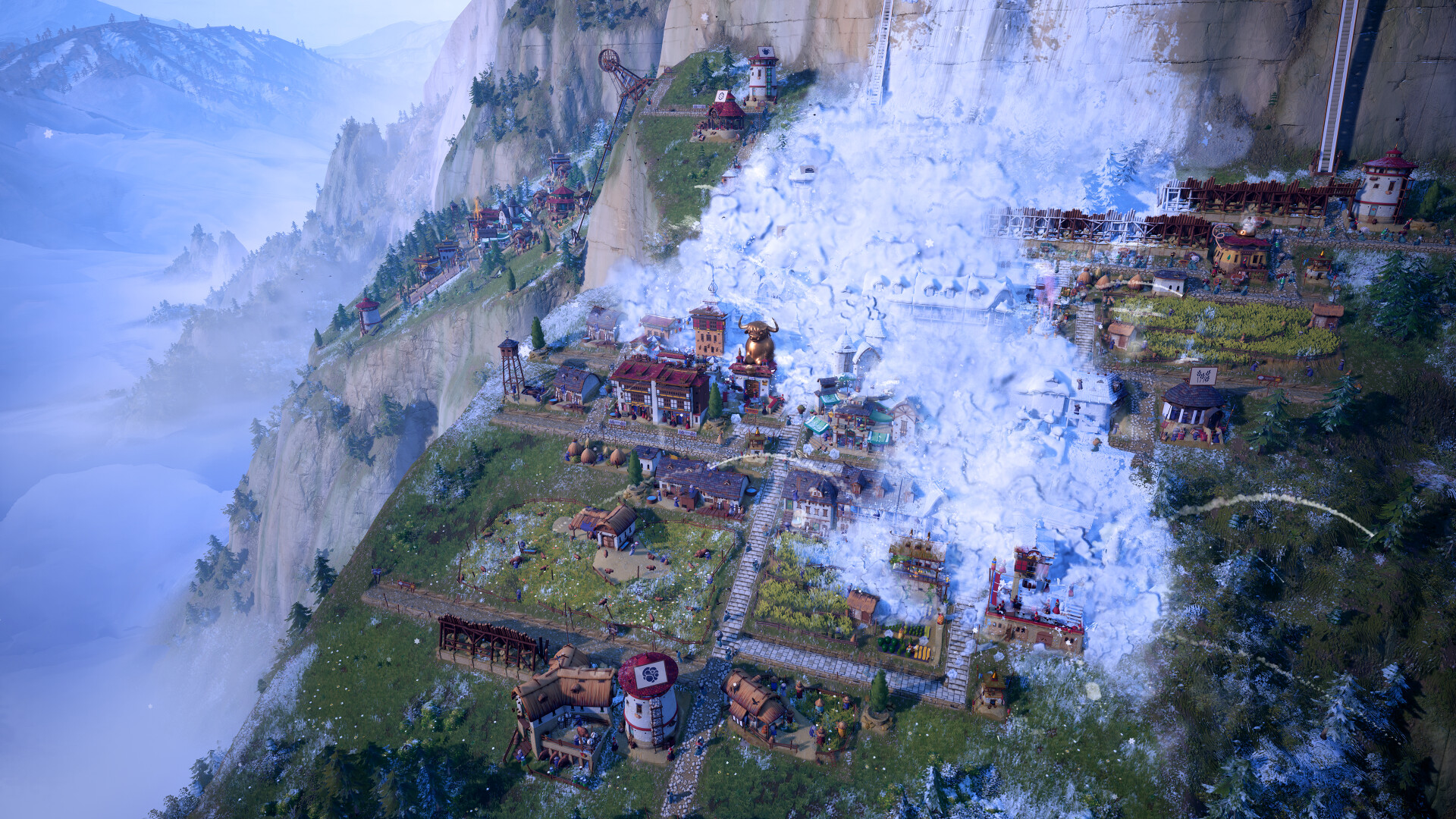
Weather is the temperature change. Early slopes establish that this is not a peaceful postcard with nicer lighting. Snow will fill a lane farther than pride would recommend. A forest handles the general population. The slide that arrives when you treat a red zone like scenery will empty a district if you built like a tourist. Further up, weather breakdowns would like a word, and the word is short. Getting a clean line through a Level 3 takes a while. Until then, triggering early is a strategy, not a cowardice.
Avalanches are the other half of the short description and the nastier half of a walk. Official copy says you cannot stop them, but you can take precautions. Afforest the key areas. Build artificial barriers. Trigger the slide while it is still manageable. Use the snow if you are the kind of person who has made a plan on purpose. Fail and find your city buried and devastated, which is a polite way of saying the mountain does not do refunds.
I will not invent a highlight reel with fake timestamps and tidy snow counts. The nights that stay with you are the ones where you thought the wall was finished, then a thaw lit up like a dare, and then you were on the wrong side of your own architecture. Intensity comes in three levels. Level 1 is a rumor. Level 3 is a theology problem. Pressure is the variety. A wall that holds is a better reward than a new silhouette if the silhouette is just another way to lose the granary.
What the store page cannot tell you is how quickly you will start treating a successful diversion as a mood stabilizer. You plant. You wall. You put the trigger down and look at the slope like a person who has decided civilization is a fence. I have abandoned a pretty terrace because the red zone was a better critic than I was. Pride is not a build.
Roads, Shafts, and Glamorous Yaks
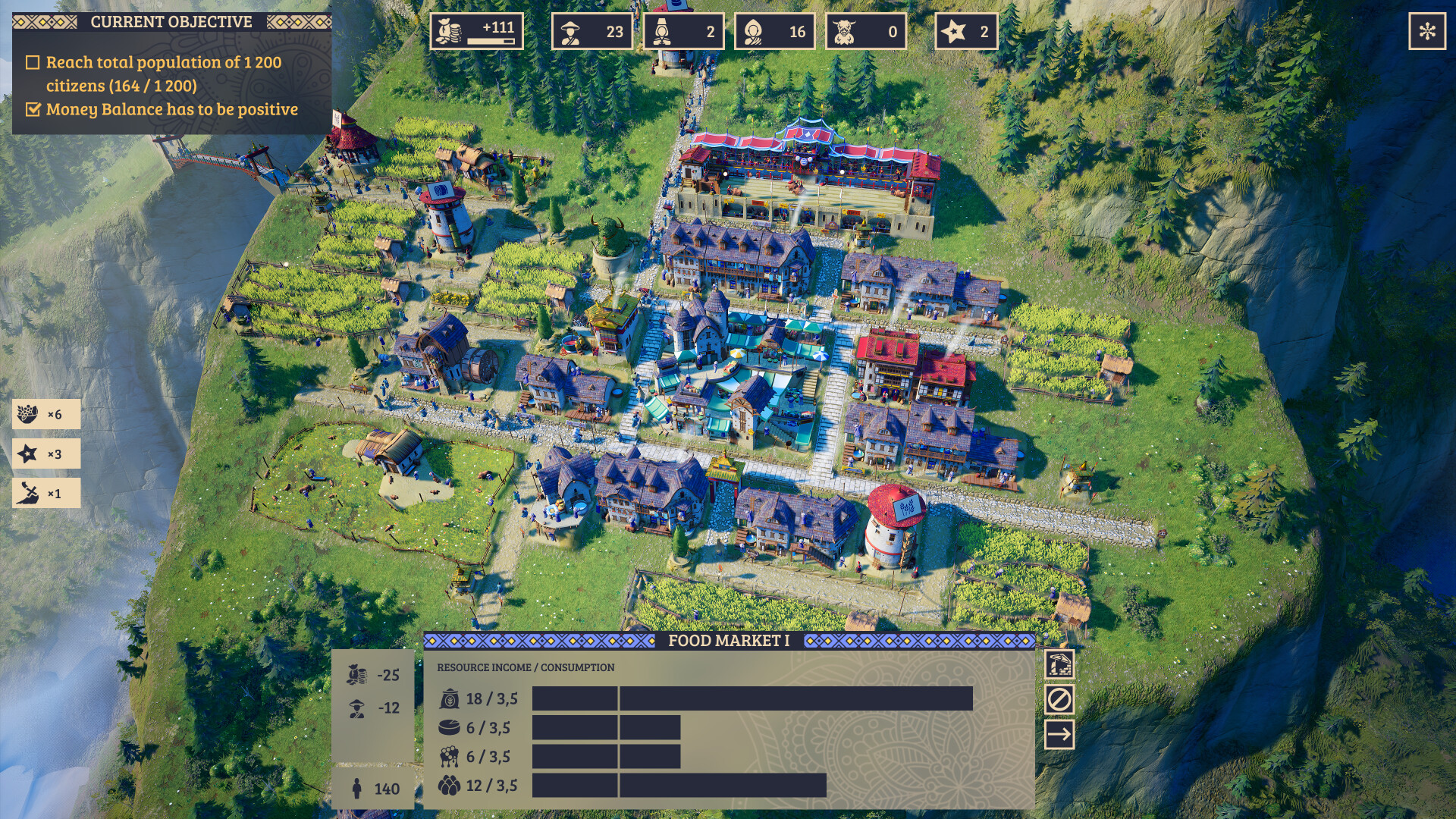
Transport is the moment the mountain changes tense. Official features list roads, bridges, shafts, paved upgrades, lifting constructions, and glamorous yaks, and all of them do the job vehicles are supposed to do in this genre. They do not just make you faster. They make yesterday’s horizon into this afternoon’s errand. A distant mine stops being a pilgrimage. A copper run stops being a commitment. You start thinking in loops instead of marches.
That shift is the closest Laysara comes to a power fantasy, and I like it more than a new building. Mastery, here, is logistics. You gather, you stash, you send a ridiculous little yak over a place that tried to bury you last week, and you land like a person who has mail. The map does not get smaller because the developers deleted land. It gets smaller because you invented commuting.
So, transporting goods is easy, right. Official copy asks the question so you cannot pretend you missed it. Your destination lies on the other side of the mountain, a few hundred meters higher, behind cliffs, ridges, canyons and rivers. Lifts move ore down to smelters. Shafts argue with gravity. Cable cars want maintenance tools or they become a rumor. A legacy path is the backup the avalanche will someday invoice. I sold my dignity to a yak post on mission three and then needed the capacity for wheat, which is the oldest logistics joke in the book and still a good one.
Towns co-exist in symbiosis. That is the other vehicle. Establish a settlement, specialize it, trade with the last one, revisit when the network has a hole. I will not write a networking white paper. What I can say is that the loop is kinder when someone else is growing food while you argue with a glacier. Multitasking is the campaign fantasy. So is the moment a shortage that would have ended a solo mountain becomes a group project with worse manners and a caravan.
Fifteen Missions and a Network of Towns
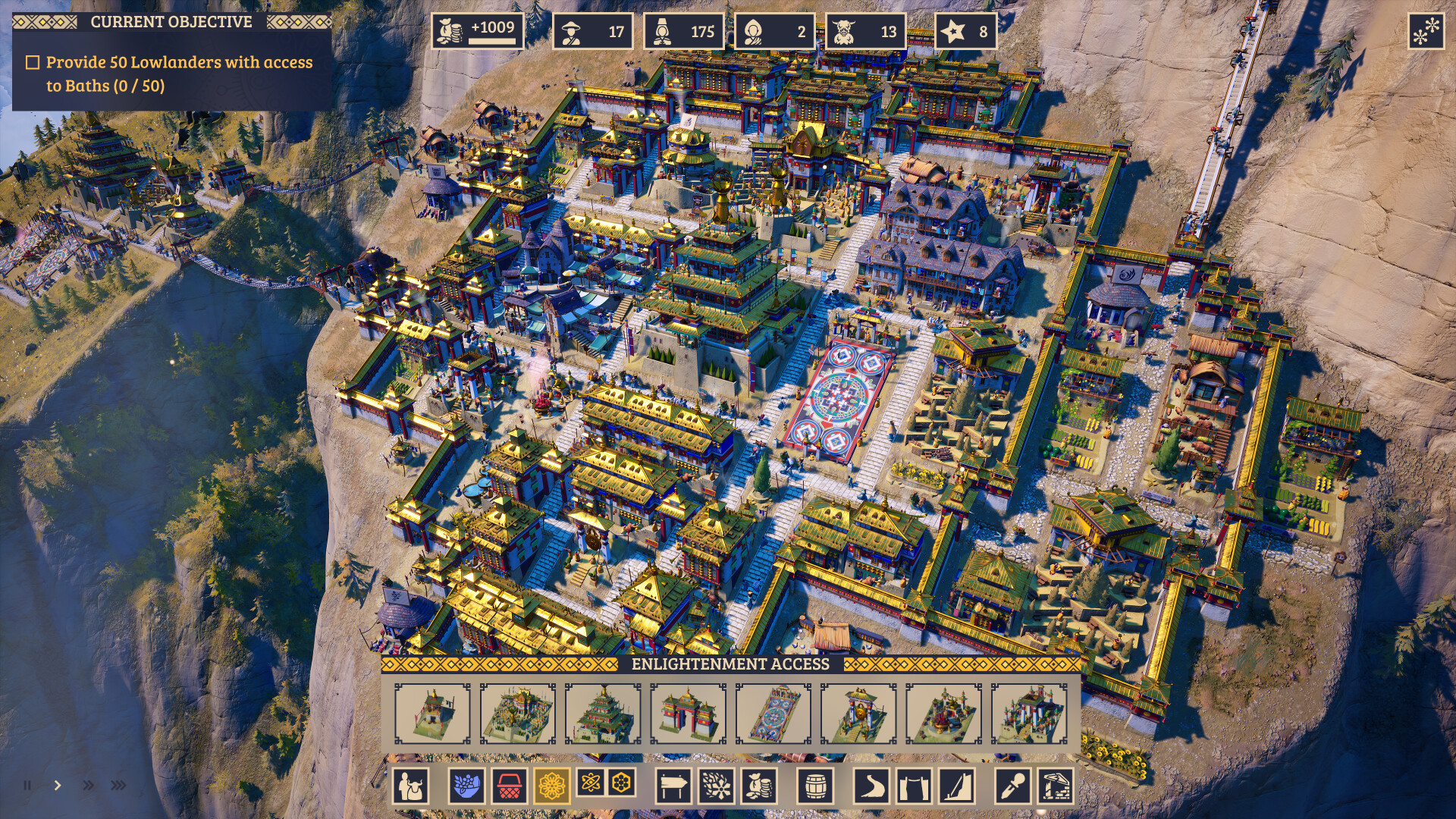
The campaign is the syllabus 1.0 finally agreed to send. Fifteen missions. Two tutorials that will not let you pick a difficulty, then a choice, Adept by default, for the rest of the climb. Rivergreen Knoll teaches food and enlightenment. Hopespark Hill teaches artisans, monks, taxes, bridges, shafts, and a small avalanche that would like to be taken seriously. Splintered Soul asks for a real city. The later peaks ask for a kingdom.
I have a rule for mid-priced builders. If a game is worse with a campaign than with a sandbox, it is broken. If it is only good with a campaign, it is honest. Laysara is honest, and the campaign is the version the systems were quietly designed around. A sandbox night is a competent weekend. You punch the slope, you invent the kitchen, you lose a district, you walk back, you put a better wall on the joke. A campaign night is the version the trade network was quietly designed around. Someone farms. Someone lifts. Someone learns, too late, that a summit temple does not respect a late caravan.
The temple is the invoice. Official copy says if you endure the dangers, build the chains, and satisfy the people, there is only one more thing to be done. Conquer the peak. Establish safe routes. Bring enormous amounts of building resources into weather that is as deadly as ever. Ornamented cedar. Polished stone. Butter lamps. Incense. Copper ornaments. I will not invent a shopping list the mountain did not write. I will say the final effect is an act of logistics dressed as courage, which is the most honest ending a city builder has written in a while.
Presentation is readable, which matters more than prestige. You can tell a lowland from a highland from a glacier at a glance. If you cannot read a biome, the hunt dies and the town becomes homework. These spaces are atmospheric enough to carry a scare and clear enough to carry a plan. You always know where you are. You do not always know why the snow is already there.
A Builder That Refuses to Hire an Army
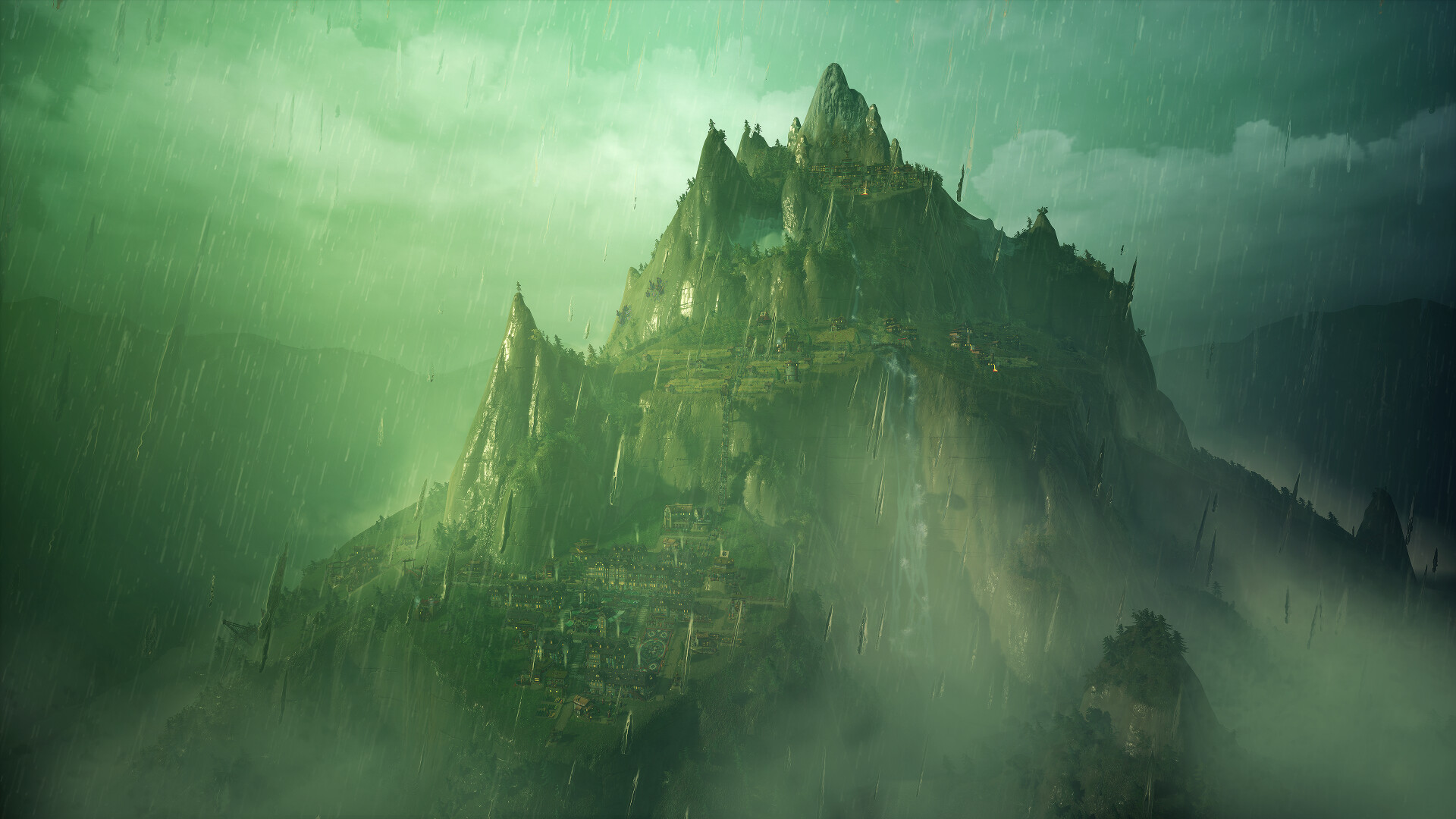
I should be clear about the friction, because it is real and it is not a footnote you hide after the score. Laysara looks like a game that was built by a small shop that wanted a mountain more than a showcase. Slopes can be handsome. Menus can be stubborn. Carriers can arrive a half-second late to their own lift, or a half-hour late, which is worse. Resources that the recipe assumes are common can play hide and seek until a copper mine becomes a rumor. I will not invent a yak census. I will say the mountain sometimes forgets to stock the ingredient you need and then shrugs like weather.
Technical manners on a living-room build can stutter when the game decides to remember itself. Paths can get philosophical in a doorway. There is a pause, which is a sentence every designer writes for fun and then needs. Autosaves have a way of announcing themselves. None of that is unique to this peak. All of that is the tax on a builder that left Early Access in 2026 after two years of community arguing and arrived on PlayStation the same day still wearing some of the same boots, plus a campaign.
English carries the voice. The listing adds interface languages, which is how a console audience gets in the door. I will not turn this into a localization seminar. The voice of the game is the mountain, and the mountain talks in zones, weather, and the occasional buried knock. Forty-eight achievements sit behind the loop for people who like a receipt. None of them change the central truth. You are here to build a temple and then find out what the temple is for.
The Steam sample around a game this focused is always going to look modest. Very Positive is the official weather, 1198 of 1465 on the side of yes, and that split is fair. Players who wanted a war, a flatter map, or a resource economy that never hides the copper bounce off. Players who wanted a lightweight adventure with a yak and a bad idea about peaks stay. I am in the second camp with caveats, which is the only honest place to stand.
Still Standing After the Snow
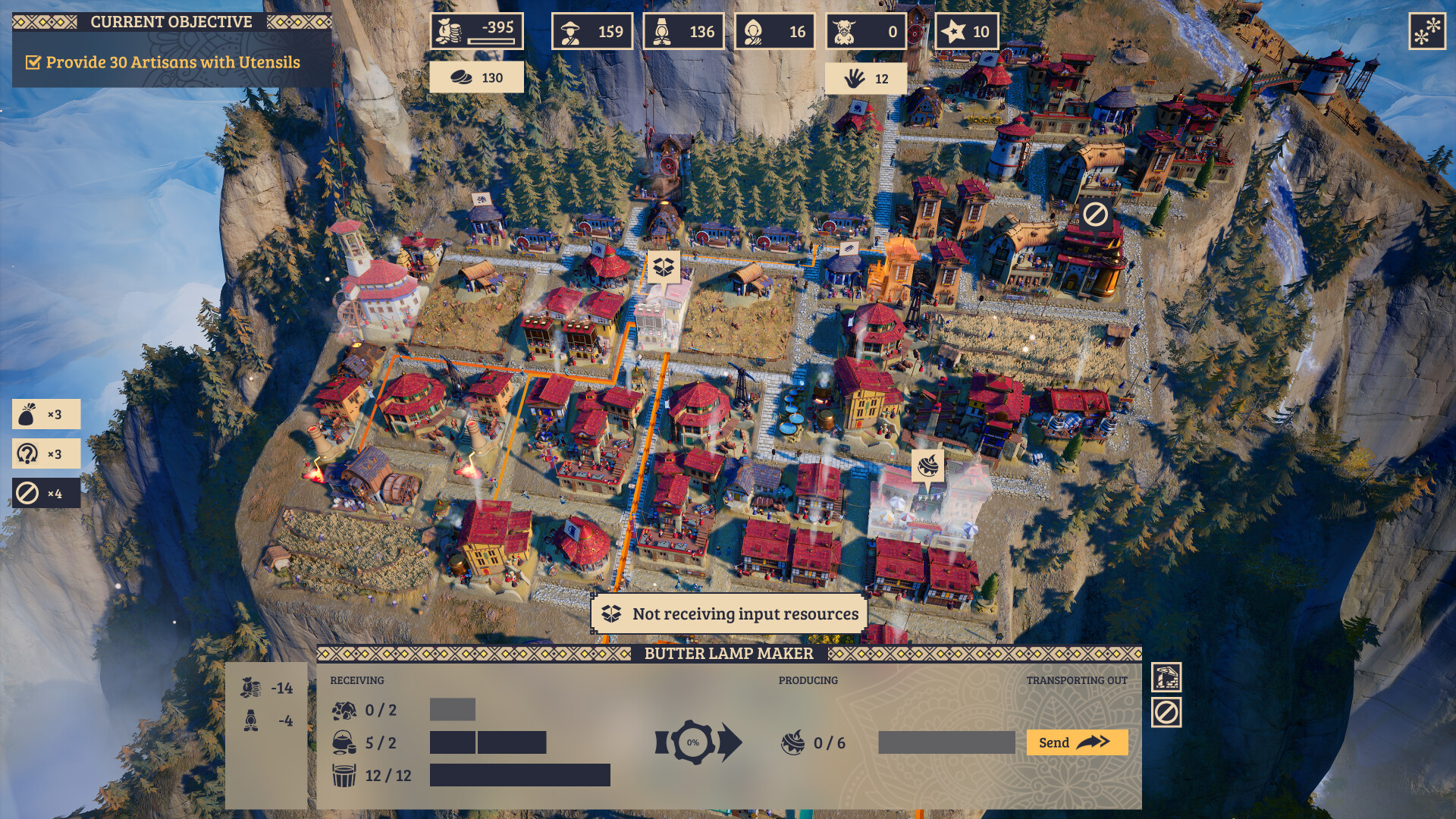
Laysara: Summit Kingdom is a rare mid-priced builder that understands its own joke and then has the nerve to make the joke a mountain. Quite OK Games built a kingdom about exile, a yak about teamwork, and a toybox that looks a little homemade and plays a lot more sincerely than that sentence suggests. The slope is the hook. The castes are the spine. The walk from a farm to a temple is the grin.
It is better with a plan than with a checklist. Logistics are clunky in the way a vertical chain is clunky. Resources can sulk. The presentation has indie fingerprints, from the stubborn paths to the story that would rather be a contour than a cutscene. All of that is true, and all of that is already priced in at $24.99. You are not buying a decade. You are buying a month that can turn into several months if you like being a coordinated disaster, or being the person who has to explain the disaster to a yak.
I am scoring it 8, Great, because the identity is this clear and the limitations are the limitations of a focused builder, not an empty one. I would recommend it to anyone who likes a workbench that has weight and a map that is allowed to be rude. Distinctive mountain weather, a network that shrinks the horizon, avalanches that turn snow into conversation, and a price that respects your week are a lot of game for the ask. The systems repeat their manners. The manners are still useful.
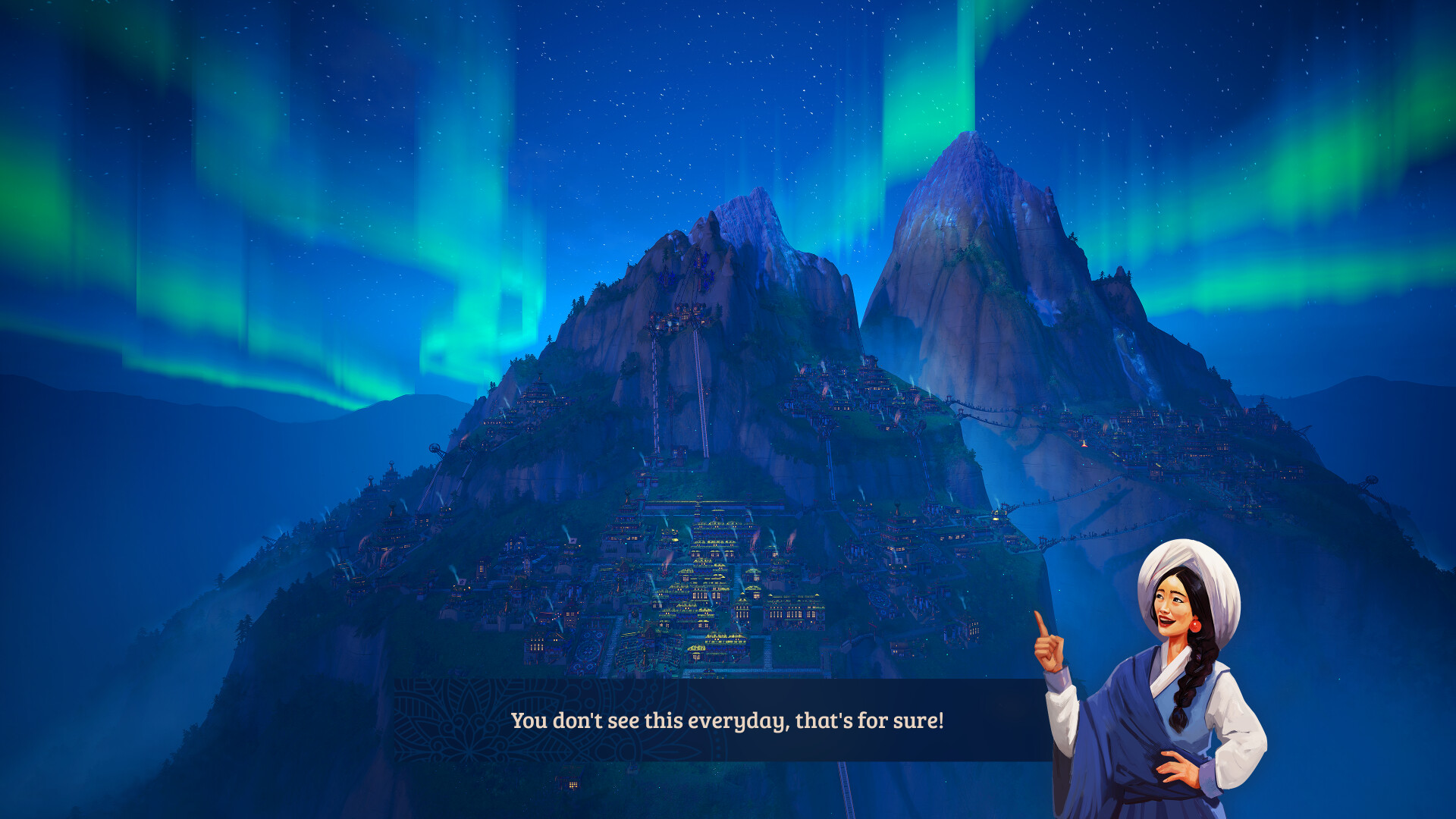
The peak is still out there, still hiring a night shift, still asking whether you are skilled enough to make a town thrive. After a few temples, you will understand why the job is not finished, and why you keep walking out of the lowlands anyway.
We prepared this review with a digital copy of the Laysara: Summit Kingdom for the PS5 version provided by Pressengine.