There is a particular kind of greed, rare in a genre that usually hands you a ship and a spread, in watching a mechanical snake decide that every new segment is both a gun and a problem. The cores are arriving. The doctor is not subtle. The tail you just built is already late for its own funeral. Mechaconda, the top-down bullet-hell from solo shop Nato Games and publisher QUByte Interactive, is built on that greed, and the greed is ruder than a seven-dollar arena has any right to be.
I played the PlayStation 5 version, the July 30, 2026 launch that put a 2024 game-jam idea onto living-room hardware at $7.99 after a Steam demo had already argued about the tail. Nato Games is one person with a fondness for classic Snake and a willingness to bolt auto-cannons onto the joke. QUByte, the Sao Paulo publisher that has made a habit of walking small, strange things to consoles, walked this one. You pilot a bio-mechanical combat serpent on a mission to dismantle the army of Dr. EVIL, a villain who spells his name like a poster. Campaign, Roguelike, Boss Rush. More than thirty ability cards. More than ten serpent heads. Grow, install, dodge, repeat. Great, not huge, and very much a slither I would recommend you take.
Eat, Grow, Disappoint the Doctor
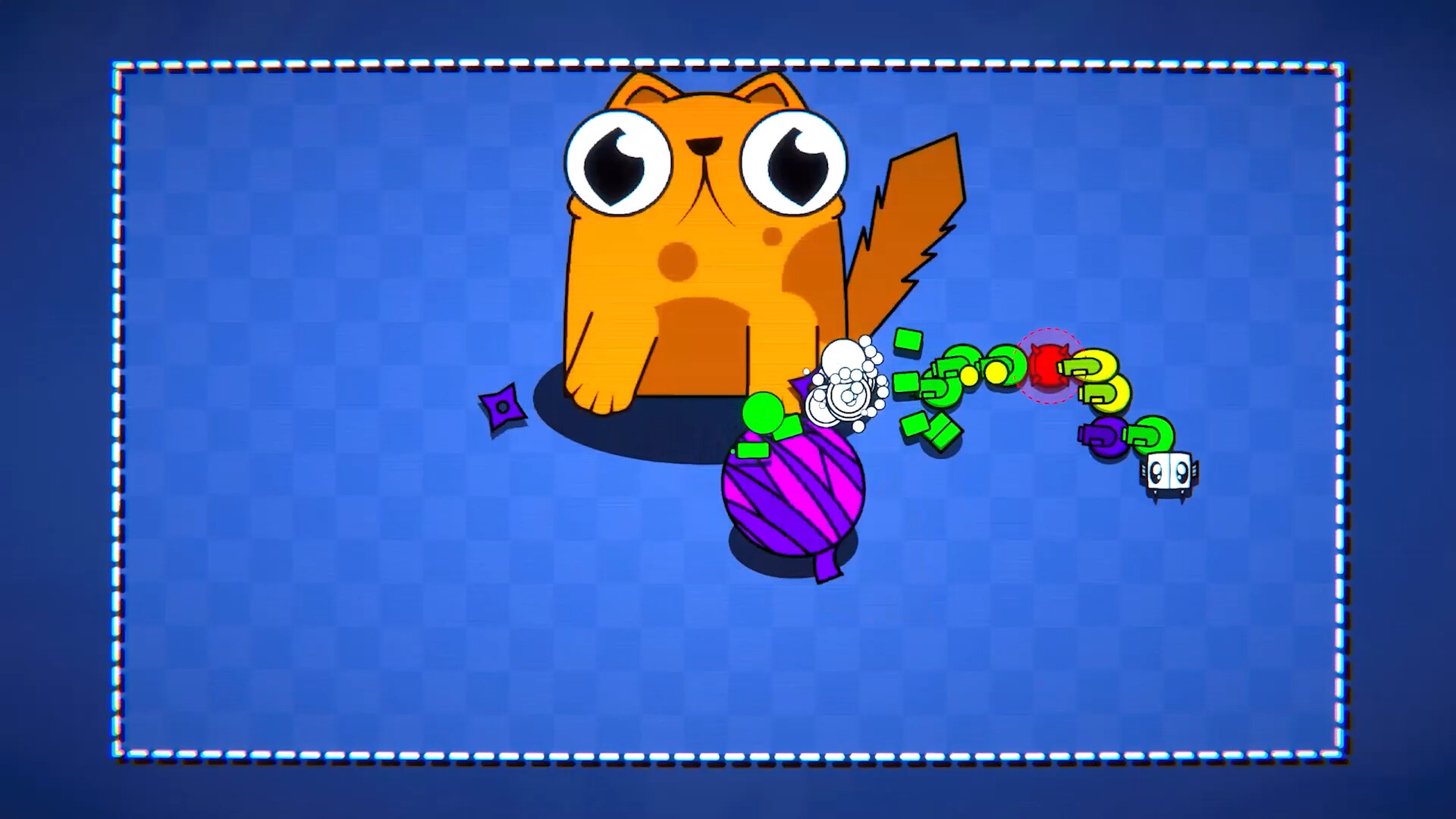
Most arena shooters give you a ship and a reason to stay small. Mechaconda gives you a snake and a dare. Energy cores are food. Food is a new segment. A new segment is a hardpoint. A hardpoint is a gun, a laser, a shield, a personality. That chain is not flavor text. It is the camera, the hitbox you feel in your shoulders, and the reason a greedy bite is not a setback so much as a change of career. You will become a fortress and discover the fortress is also a target.
Story is environmental and stingy, which is the right instinct for a game that wants your hands more than your diary. Dr. EVIL sends waves. You send a tail. The campaign sketches a mission with the sincerity of a Saturday cartoon and then gets out of the way. You are not reading a novel. You are eating a disaster that is still arriving. The three modes are less a narrative fork than three accents on the same hunger. Campaign is the handcrafted sentence. Roguelike is the sentence with the words shuffled. Boss Rush is the sentence that starts at the shout.
I like a premise that prices growth as a hazard. A lot of Snake cousins hand you a wall and a high score. This one hands you a war and then asks the tail to behave like a loadout. The joke is arcade. The punchline is geometry. You came to get longer. The arena would like you to get in the way of yourself.
The fantasy is not mastery of a map. The fantasy is competence arriving about half a second after a card turns a humble noodle into a problem for the doctor. You will be shredded, reset, and sent back to the hangar, and the correct response is to pick the next head like a person who has a reservation at the next wave.
The Tail Is the Whole Sentence
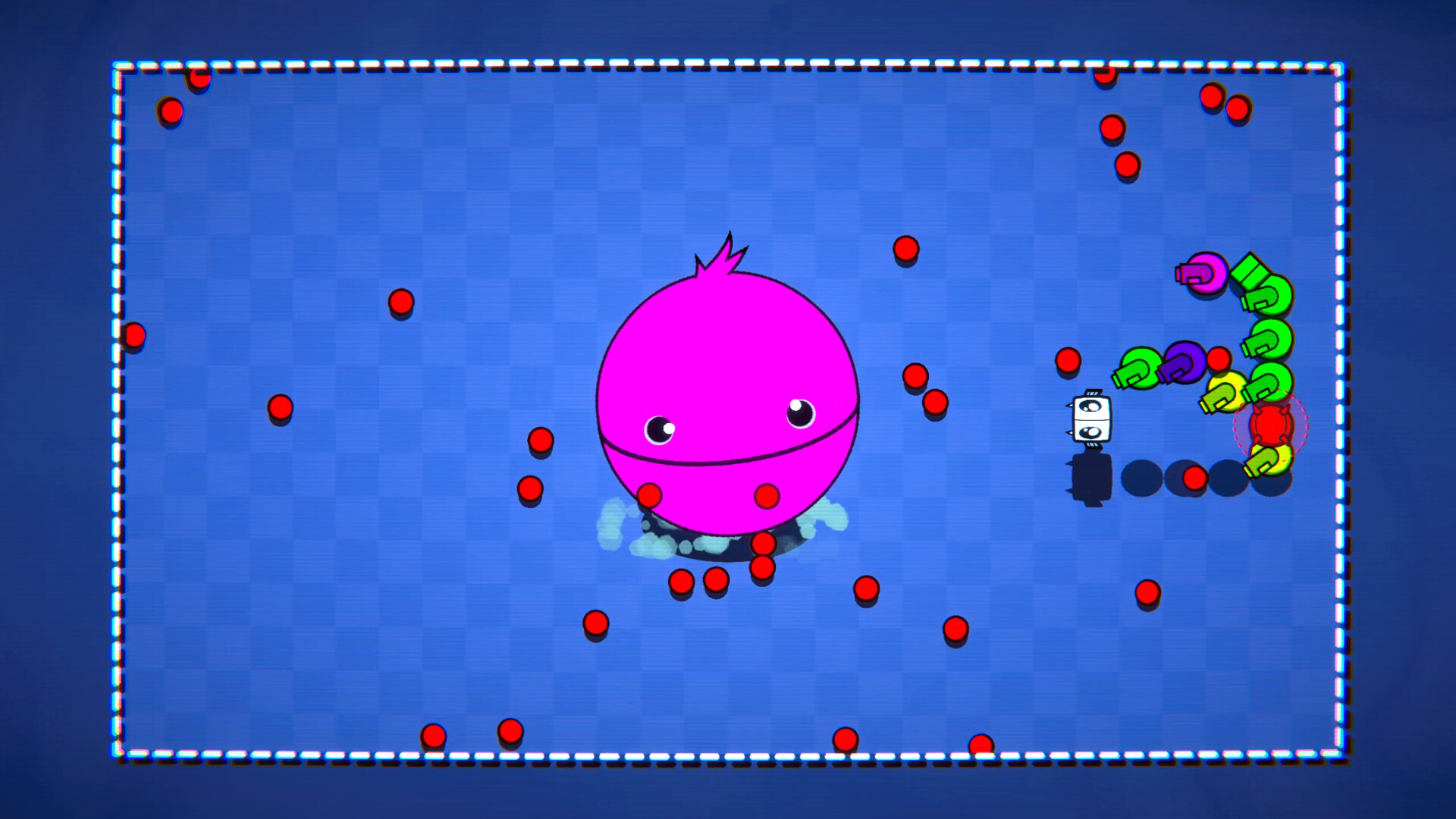
Movement is the reason the arena is worth the bruises. You are a snake, which means the front is a decision and the back is a memoir. Classic Snake made the memoir a death sentence. Mechaconda makes the memoir a weapons bay. Official copy is almost shy about it: collect cards that add unique ability upgrades to the body. The body is the verb. Auto-cannons, plasma lasers, energy shields, the usual Saturday hardware, bolted onto segments you just grew because you were hungry.
The first hour is a tutorial in not biting your own argument. The tenth hour is a tutorial in looking like you meant the chaos. You weave through traps. You dodge the kind of projectile count that would make a traditional ship blush. You protect the trailing length because the trailing length is also the budget. High risk, exponential reward is the published pitch and, after enough nights, the published feeling. A short snake is a scalpel. A long snake is a parade that learned to shoot.
I have played a lot of games that borrowed Snake and then treated length like a hat. Nato treated it like a thesis. Growing is how you write a loadout that did not exist. Dodging is how you refuse the loadout that did. Installing a card is how you admit both loadouts were a trap you liked. The combination is why a run can be solved three ways and still kill you for picking the fashionable one.
Heads are the other half of the sentence, and they are not allowed to replace the tail. More than ten serpent heads, each with unique effects, officially. A head is a playstyle wearing a face. Swap it and the arena becomes a different argument. Cards are the toybox, thirty-plus unique body abilities, mix and match, the usual roguelite promise told with better geometry. I got greedy. I changed the sentence I was speaking with the tail. I came back with a duller head and a better attitude. The fights stayed fair in the way a good arena game is fair. If you got hit, you knew whose fault it was. The tail was late. You were later.
Campaign, Shuffle, and the Doctor’s Recital
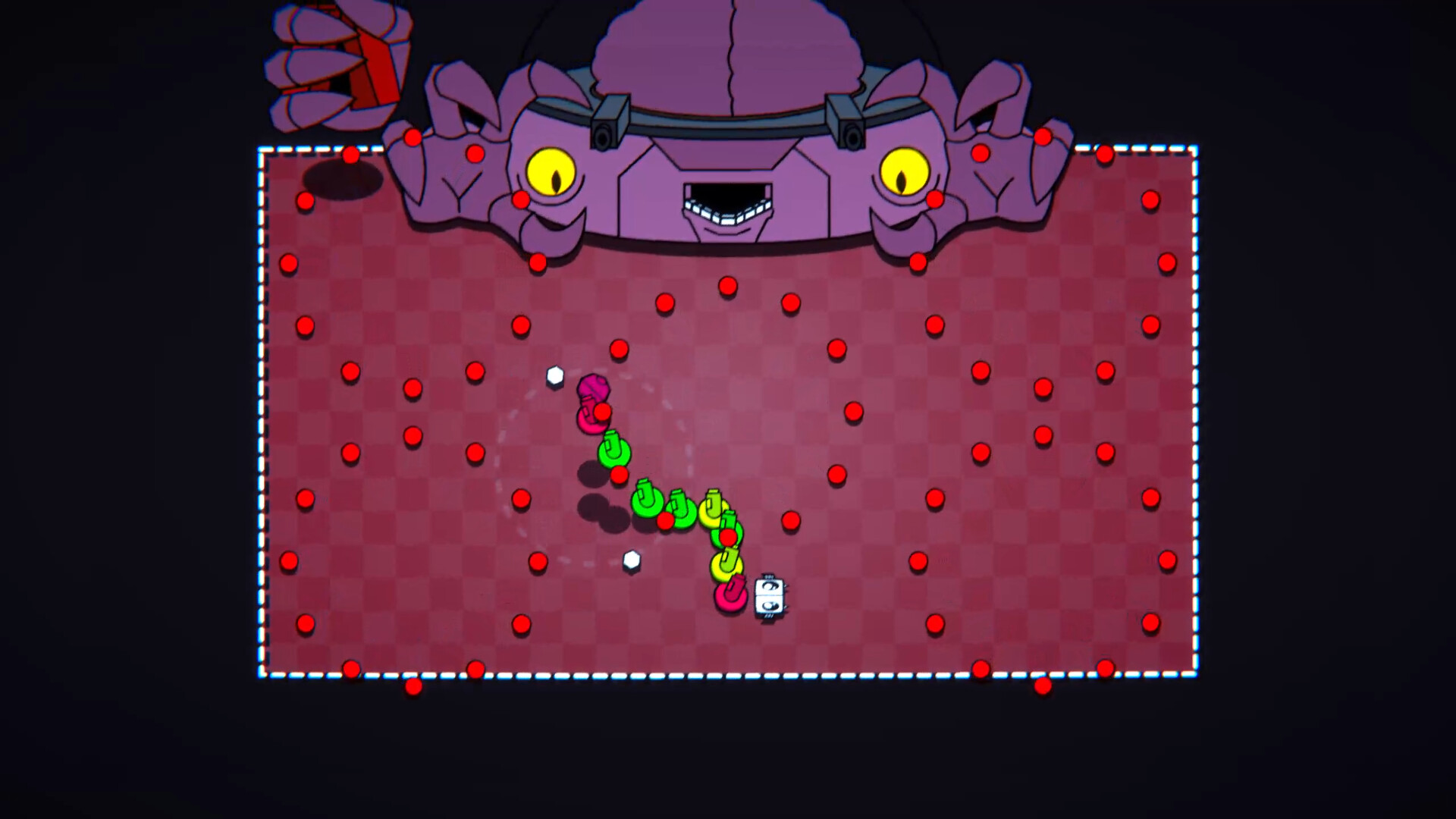
Three modes keep the loop from becoming a single accent. Campaign is the handcrafted tour, stages with a sense of order, the doctor introducing his toys like a host who will not leave. Roguelike is the mode that hands you randomized modules and asks you to be an adult about it. Boss Rush is the mode that skips the small talk and puts the multi-phase machines on a pedestal. I did not come to write a mode-select essay. I came to grow. The select screen is there for the person who grew and then got bored of the same introduction.
Campaign is the thinnest accent, and I should say that before the score starts looking like a hug. A handcrafted path is a courtesy. It is also, in a game whose best idea is a shuffled tail, a commute with better lighting. The stages do their job. The job is to teach the grammar and then point you at the other two doors. I spent my serious nights in Roguelike because the offers were the joke I paid for, then donated an evening to Boss Rush because the machines deserved a clean look without the opening act.
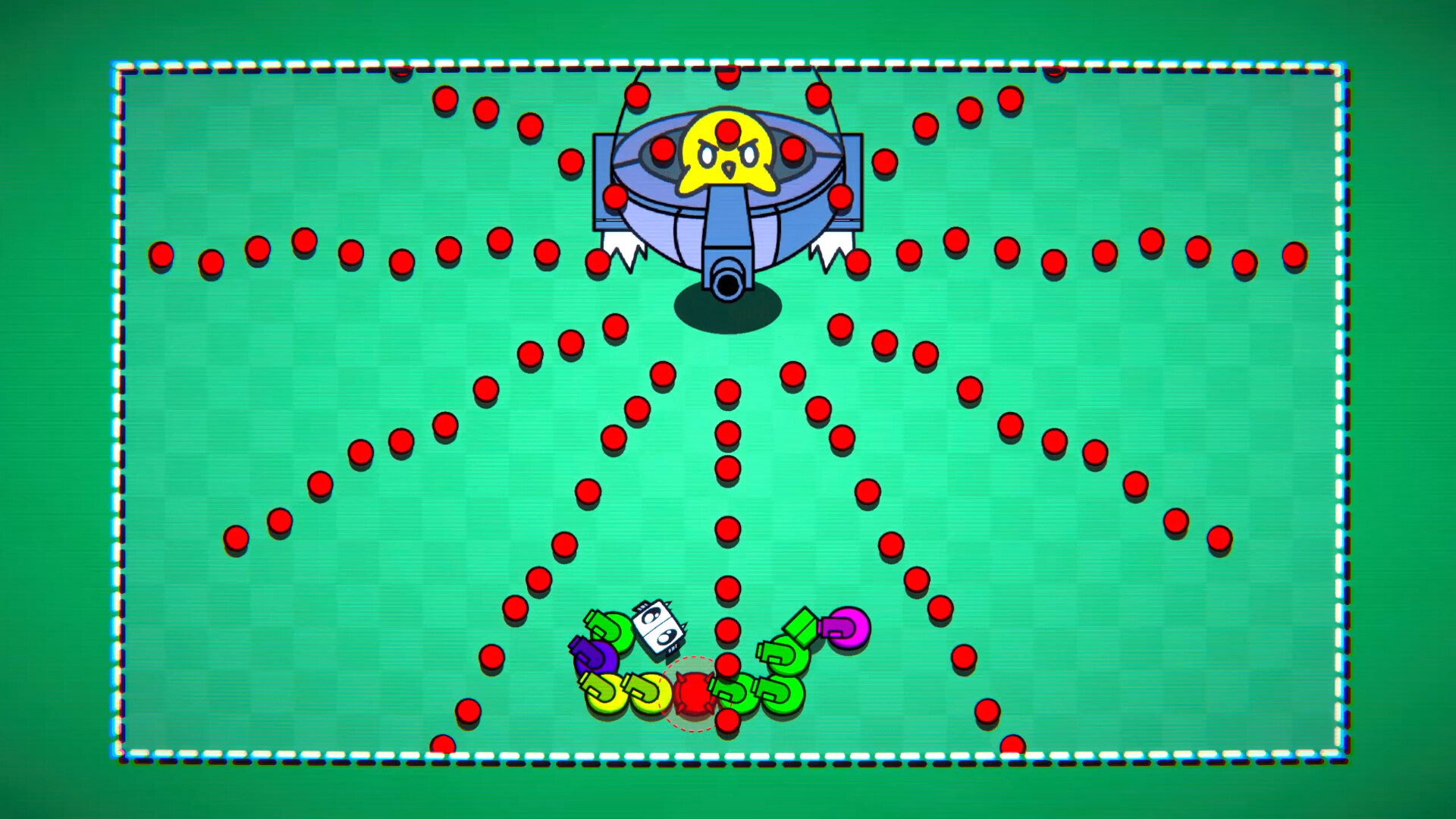
Bosses are where the kit gets graded. Multiple of them, officially, created by a doctor who never learned the word enough. Multi-phase, rude, staged like arenas that grew a personality. A machine that wants you short. A machine that wants you long. A machine that wants you to remember the tail is also a hitbox. I got stuck. I changed the head. I came back with a card I had been snubbing and a worse attitude. The rematch felt like a concert I failed last week, which is the right feeling for a seven-dollar war.
Traps sit in the waves like punctuation. They are readable if you are looking, which is a courtesy from a game that is otherwise happy to turn you into confetti for being polite at the wrong time. The tell is fair. The window is not generous. That is the difference between a mean game and a sloppy one. Mechaconda is mean in the professional sense. The cartoon smile does not refund the projectile.
Thirty Cards, Ten Faces, and a Jam That Grew Up
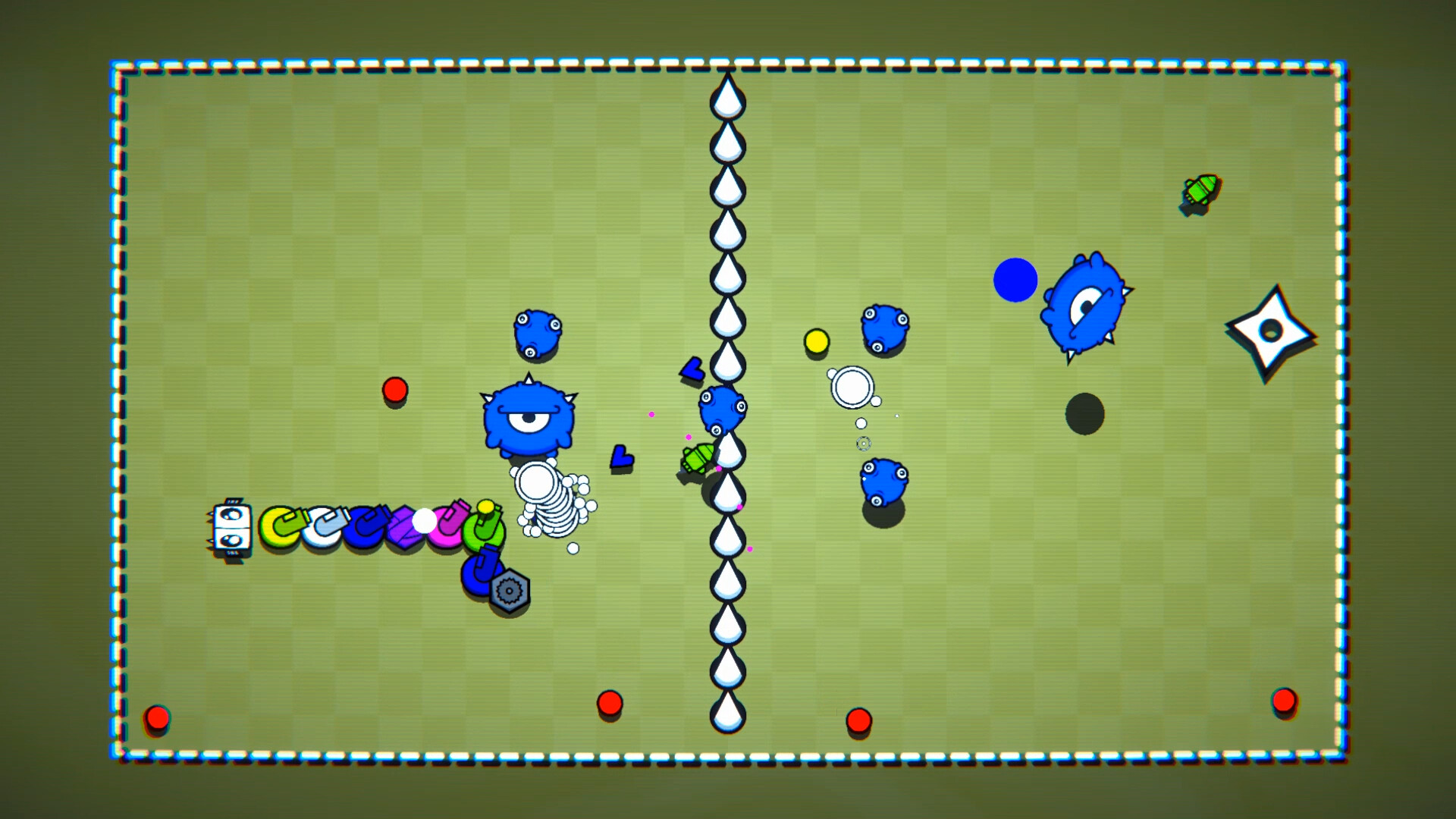
The economy is the other half of the personality, and it is not wallpaper. Cards drop. Heads unlock. A run is a sentence you write with both. That writing is the design’s best manners and its nastiest joke. A card that makes you briefly mythic is also a receipt that says you are now easier to thread a needle through. I have sat through plenty of roguelites that wanted to be a hug with a gun. This one wants to be a negotiation with your own silhouette.
That negotiation is why I stopped resenting the structure. I am not always in the mood for a genre that asks me to roll the boulder up the same hill. Mechaconda makes the hill an arena that keeps a receipt. A failed run is still a harvest of knowledge: which head wants a short body, which card turns a crowd into a grocery list, which boss telegraphs with a color you will see in the kitchen later. Persistent mastery lives in unlocks and in your hands, which will irritate anyone who wanted a fifty-node tree and please anyone who likes a craft that fits in an evening.
Thirteen achievements sit in the background like a second hangar. Waves Survivor. Boss Hunter. Enemy Breaker. Novice, Amateur, Expert, the usual ladder with honest names. I will not turn this into a trophy guide. What I can say is that the arena is more interested in your relationship to length than in a collectible checklist you could put on a wiki.
The origin story is part of the charm and part of the bill. A 2024 game jam, a solo developer, a publisher that knows how to walk a small thing to a store page without sanding off the strangeness. You can feel the jam in the best way: one idea, pursued until it became a product. You can also feel the jam in the way a late campaign stage starts to rhyme with an earlier one. Focus is a virtue. Focus is also a ceiling.
I keep coming back to the bite. Eating is how most Snake games end you. Eating is how this one employs you. That inversion is worth the seven dollars by itself. The rest of the toybox is how the inversion becomes a week instead of a night.
Cartoon Steel, a Mix That Barks, and a Pad That Understands a Snake

Presentation is the other reason the object feels more expensive than eight dollars. The look is colorful, stylized, 2D cartoon with a mechanical grin. Readable in a panic, which is the whole job. You can tell a core from a bullet at a glance, which is the review you want from a game that kills you for blinking. Early arenas still look like a toy commercial. Later arenas look like the toy commercial lost an argument with a doctor who likes practical jokes.
I have played a lot of indie shooters that announce a unique look and then deliver a pleasant palette with nicer outlines. Mechaconda’s serpent has a handwriting. Segments read as inventory. Projectiles read as weather. Bosses read as posters. When a fight breaks and the colors celebrate, it is not a loot explosion. It is the picture admitting you shut something expensive up.
Sound understands the assignment. Guns bark. Lasers complain. A pickup has a little fanfare that would be embarrassing if it were not also useful. The mix stays out of the way of the tells you need to hear, then leans in when a boss arrives so the rematch has a costume. I will not pretend a jam-born solo project hired an orchestra. I will say the audio does the job a bigger budget would have spent on a second metaphor.
Full controller support is the Steam checkbox, DualShock and DualSense called out by name, and on a pad the snake felt like a stick and the fire felt like a shoulder, which is how a living-room serpent should feel. Keyboard is a first-class citizen on PC. I spent my serious time on a DualSense because the weave wanted analog and the panic wanted a trigger. Either language works. The doctor does not care which hand you use to fail.
Storage is 350 megabytes on the published Steam card, an i3-class floor, Intel HD 4440 as the shy minimum. I will not write a benchmark novella. On the nights I spent with the PlayStation 5 build the frame held, the inputs listened, and the tail arrived when I asked. That is the review you want from a geometry shooter. If the turn is late, the game is over. The turn was not late.
When the Tail Starts Rhyming With Itself
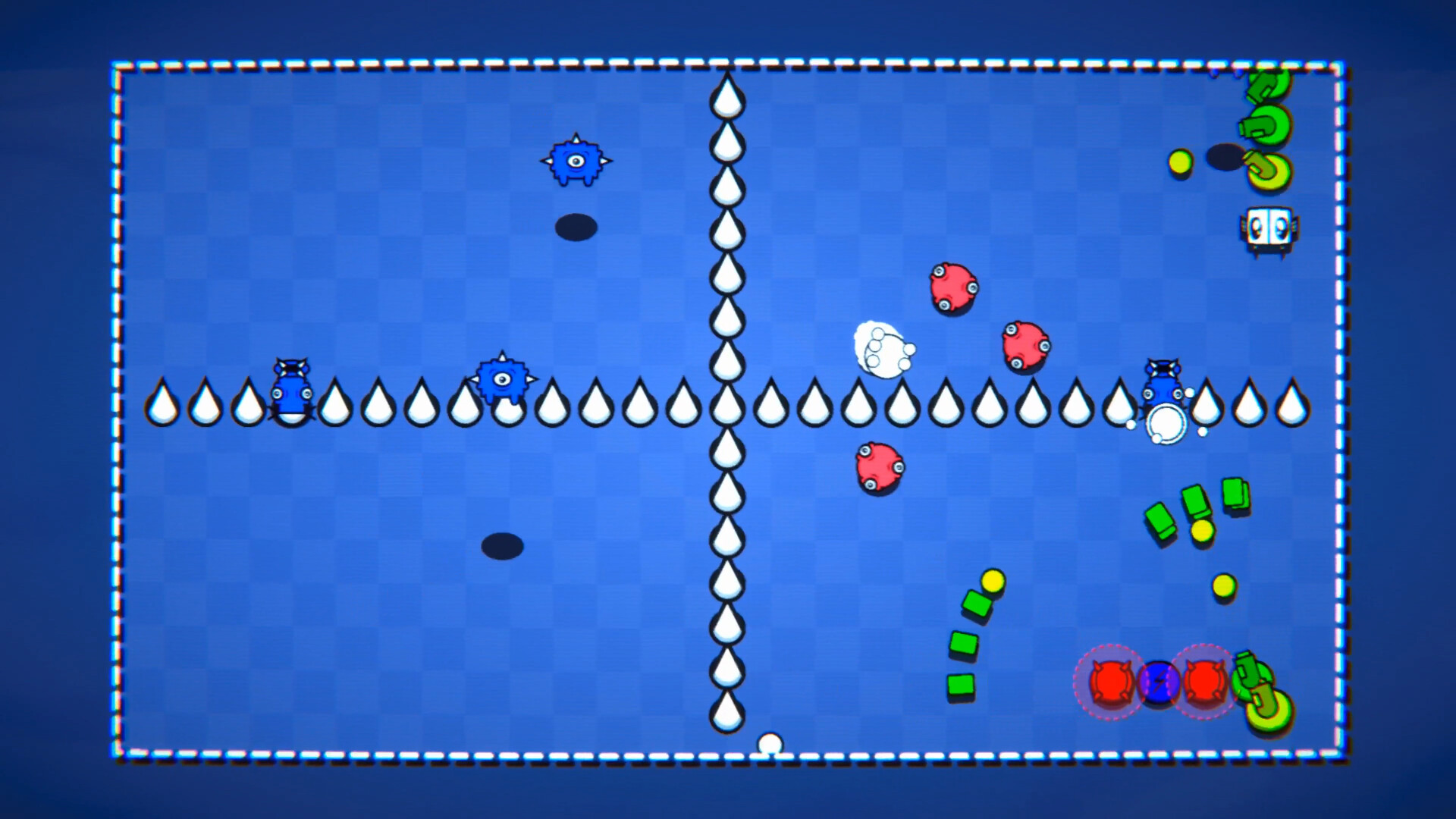
I should be clear about the friction, because it is real and it is not a footnote you hide after the score. The arenas repeat their manners. New heads, new cards, new bosses, and still, after enough evenings, a wave that is a rearrangement of an earlier wave. Thirty cards are a spice rack. Spice is not a meal if the recipe keeps winking the same way. When the same category of surprise sits in a new costume, the surprise becomes a commute.
That is the cost of blending Snake’s appetite for a single joke with a roguelite’s appetite for resetting. I wanted, more than once, another twenty minutes in a beautiful line the doctor was about to confiscate. I also wanted, more than once, a new verb in a late campaign stage and received a conjugation of an old one. Enemy variety thins if you live too long in the same mode. A lucky card can flatten a floor if the seed gods are kind. The war, as atmosphere, is stronger than the war as a scare. Cartoons do a lot of the lifting. Dread does less. I felt hurried. I did not often feel afraid, which is fine, because the box promised a snake, not a haunting.
Campaign pacing is the other tax. The handcrafted path teaches, then lingers, then teaches the same thing with a different poster. Roguelike and Boss Rush are where the idea is happiest. None of this is a broken object. All of it is why the score stays at Great instead of wandering into the next adjective. A solo developer made a complete arena with a growth idea that holds, a loop that respects your time if you accept that time will be spent dying, and a visual thesis you will remember in the shop later.
At $7.99 you are not buying a fifty-hour war you can live in. You are buying a slither you will repeat, a tail you will learn, and a doctor who will start to look familiar before he stops being funny. Three modes are the overtime. The bite is the shift.
Still Growing After the Arena Empties
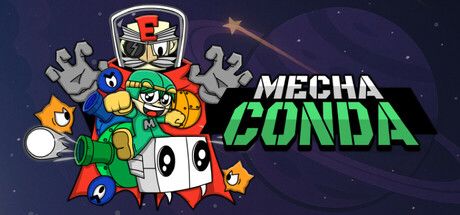
Mechaconda is the rare snack-priced shooter that understands its own joke and then has the discipline to make the joke a system. Nato Games built a war about hunger, a tail that has to share the frame with a hitbox, and an arena that keeps rewriting the wave while the doctor remembers what you installed. QUByte Interactive walked it to the door. The hook is a snake on a dying workplace. The spine is the way a failed run turns into a better sentence. The scar is the night the cards rhyme and you grow anyway, because the next boss has a tell you have not finished listening to.
It is better as a craft than as a novel. The movement stays the reason to recommend it. The cartoon steel stays the reason you keep the window open. The repetition is real. So is the grin when a weave steals a wave and a reckless card turns a bad seed into a story you will tell like you meant it.
I am scoring it 8, Great, because the identity is this strong and the limitations are the limitations of a focused jam-born arena, not an unfinished one. At $7.99 you are buying stylish geometry comedy, thirty cards that agreed to be shuffled, and a loop that respects the fact that death should leave a receipt on your tail. I would recommend it to anyone who likes a body that has weight and a map that is allowed to lie a little. Distinctive eat-and-arm panic, three modes for the restless, heads with handwriting, and a price that respects your week are a lot of game for the ask. The waves repeat their jokes. The jokes are still sharp.
The serpent is still growing in an arena that will not stay still. After a few hunts, you will understand why the job is not finished, and why you keep dropping back into the doctor’s yard anyway.
We prepared this review with a digital copy of the Mechaconda for the PS5 version provided by Pressengine.