There is a particular kind of resurrection, rare in a genre that usually hands you a tragic flashback and a licensed sword, in dying on a street and discovering that home is now a lonely ship with a garden of zombies. The blood is still blood. The joke is still a joke. The first fugitive who tries to unmake you is not a metaphor. ROMEO IS A DEAD MAN, the ultra-violent science fiction action adventure from GRASSHOPPER MANUFACTURE INC., is built on that resurrection, and the resurrection is ruder, funnier, and more useful than a fifty-dollar paradox has any right to be.
I played the PlayStation 5 version, the 11 February 2026 launch that Grasshopper Manufacture walked onto living-room hardware as its first self-published title, after a Steam date of 10 February 2026 at $49.99. The console ask is the same $49.99. You cut, you shoot, you put a mask called Deadgear on a man who was already leaving, and you learn that space-time has already hired a night shift of criminals. Chapters with bosses, side missions at your own pace, a pixel ship that cooks curry, a garden that grows Bastards, a Bloody Summer that heals you while it paints the room, and a 2D arcade called Deadgear Cannonball that quietly rewrites your stats. Forty-four Steam achievements sit in the background. The Steam sample is Very Positive, 1904 positive of 2159, which is the honest weather report and not a dare. Great, not glossy, and very much a weekend I would recommend you spend if you like an action game that knows it is a fever.
Space-Time Does Not Care What Romeo Was
Most action games begin with a briefing. ROMEO IS A DEAD MAN begins with a death that refuses to stay finished. Official copy on Steam says space-time itself was shattered by a certain incident, then adds, with the grammar of a person who has been awake too long, that Romeo Stargazer was on the brink of life and death when a new kind of super technology dragged him back. The official site prefers a genius scientist screwing around and a time paradox that saved him mere seconds before the end. Both versions agree on the next sentence. He is recruited for the FBI’s Space-Time Police as a special agent. He wanders the cosmos looking for criminals who took advantage of the situation. He looks for Juliet. He puts on the mask.
That is not flavor text. It is the design refusing to pay for a sober origin when a corpse with a job will do. You start swapping swords and guns because the alternative is becoming a rumor the continuum already filed. The first fight is staged like a punchline that forgot to wipe the floor. You attack. The room answers in red. He is a dead man for now. The script, still a little breathless, asks what awaits him at the edges of space-time. Nobody can assure the next era is kind. That is the rest of the map.
I like a premise that prices love as a hazard and then lets you walk toward it anyway. Juliet’s disappearance sits on the plot like a question with a pulse. Official copy says you quickly come to find both her vanishing and the destruction of space may be more linked than he thought. The more you hop eras, the more the game answers with another chapter and another fugitive who would like a piece of you. Story is theatrical and stingy in the same breath, which is the right instinct for a studio that wants your hands more than your diary. You are not reading a novel. You are looting a romance that is still happening.
The fantasy is not mastery of a lore bible. The fantasy is competence arriving about half a chapter after you invent a combo. You will die in ways that would be funny if the checkpoint were not so sincere. You leave a mess. You walk back. You become the kind of person who thinks a mask is a personality.
Swords, Guns, and a Summer That Heals
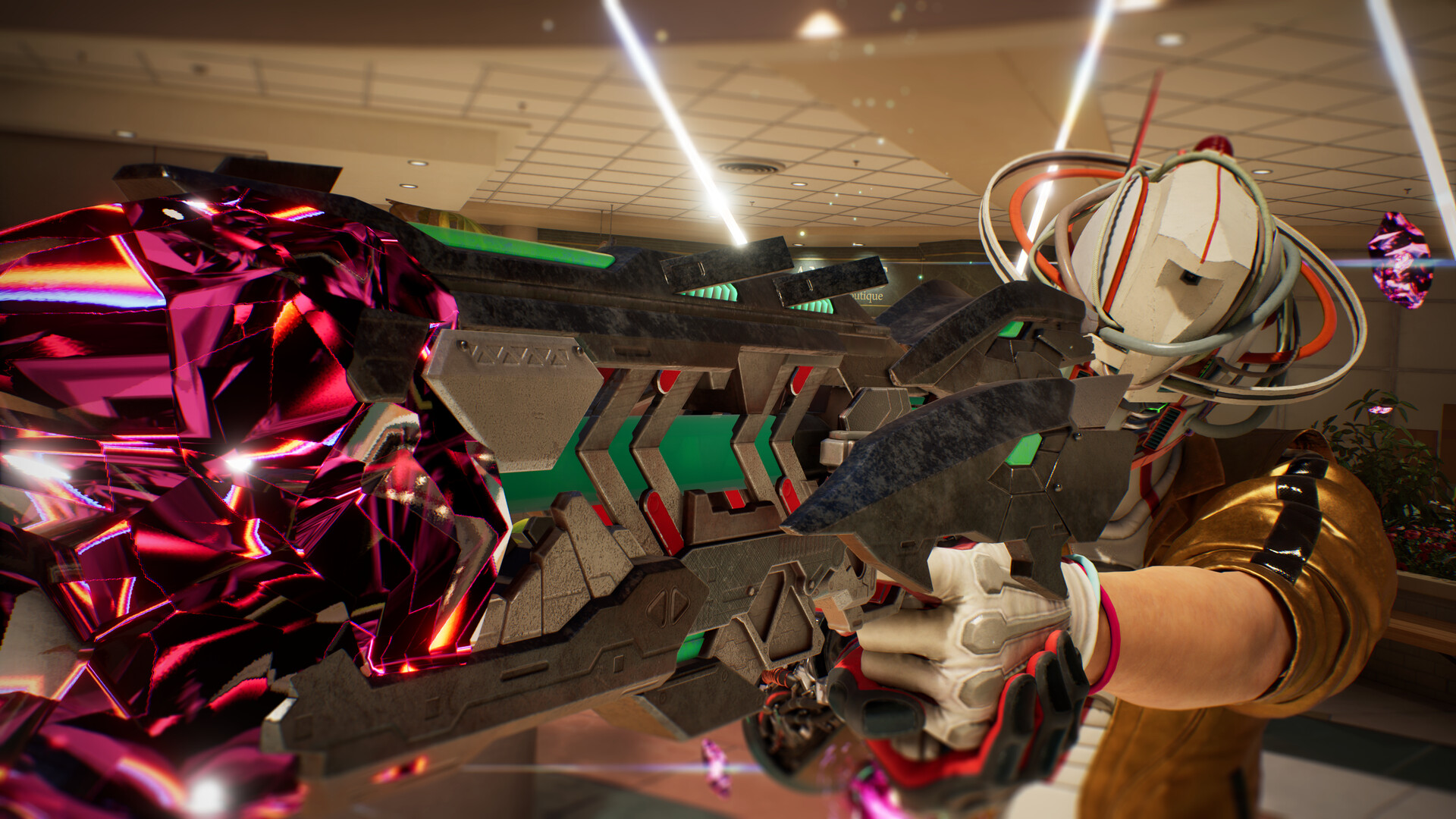
The loop is the old religion of character action and Grasshopper Manufacture does not pretend otherwise. Light, heavy, a dodge that would rather be a dance than a parry. Official copy says Romeo switches between swords and guns to fight, wipes out waves, and takes down the fearsome space-time criminals that await. None of that is a revolution on paper. All of that is the sentence the rest of the toybox has to live in.
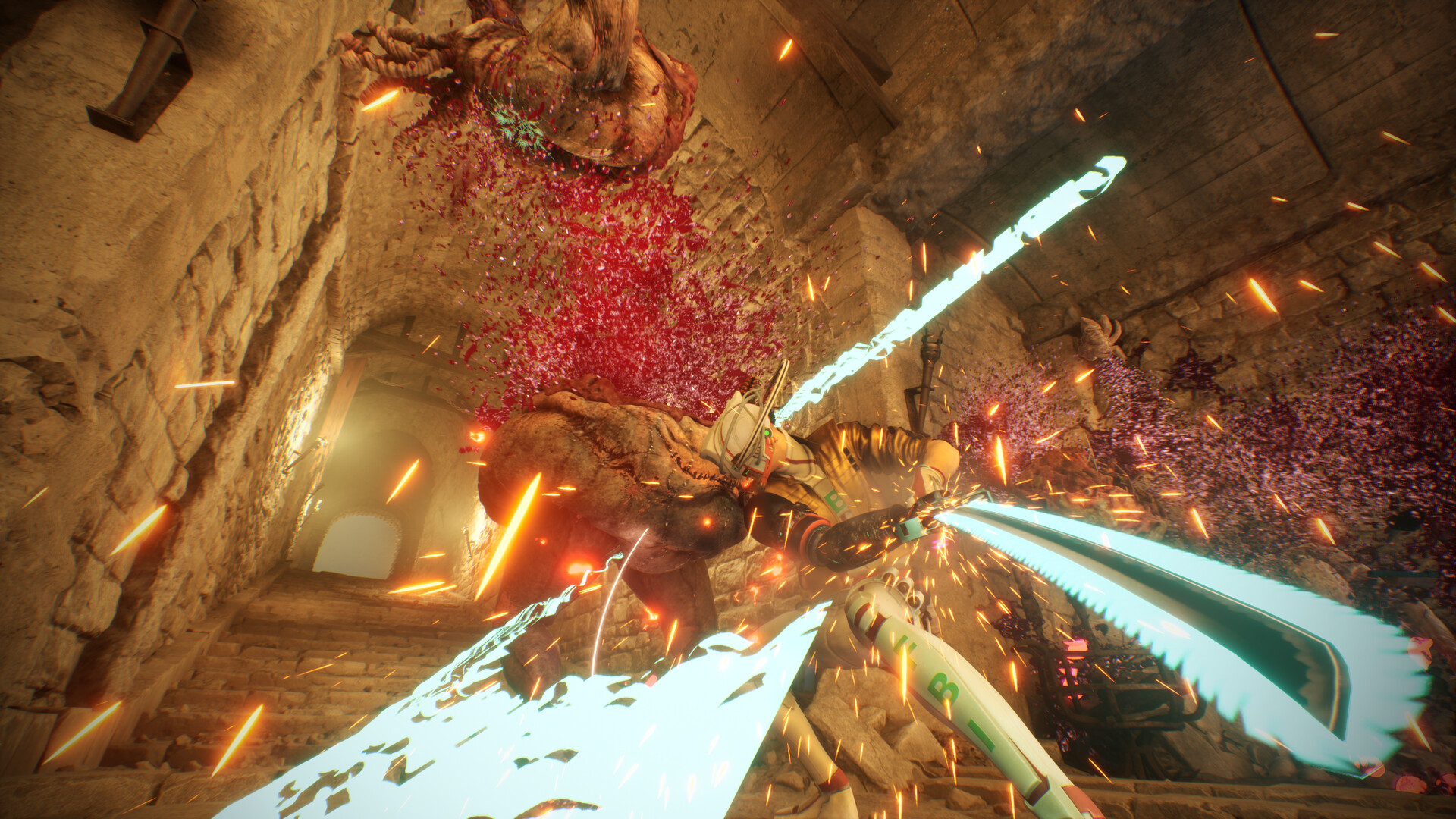
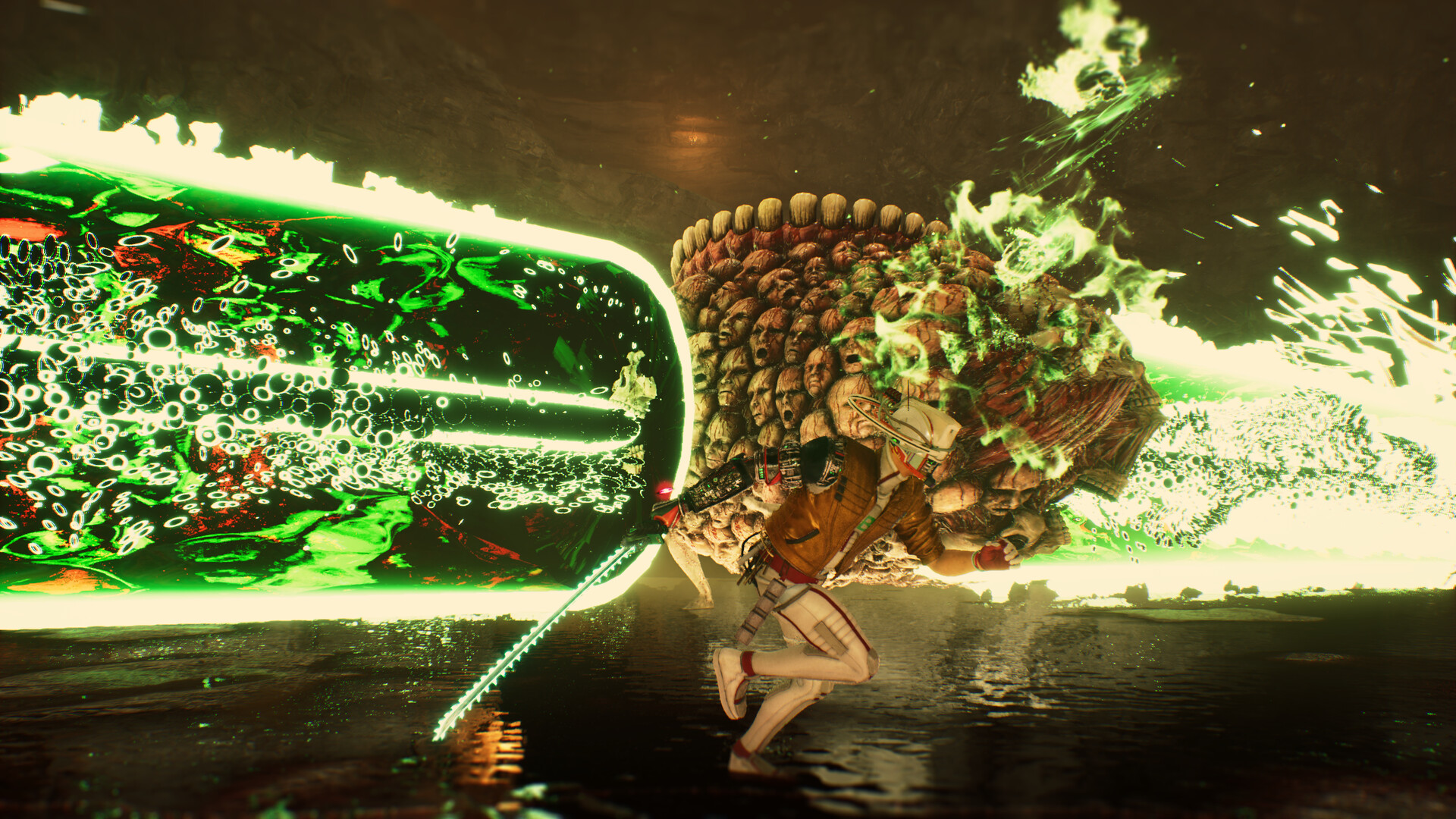
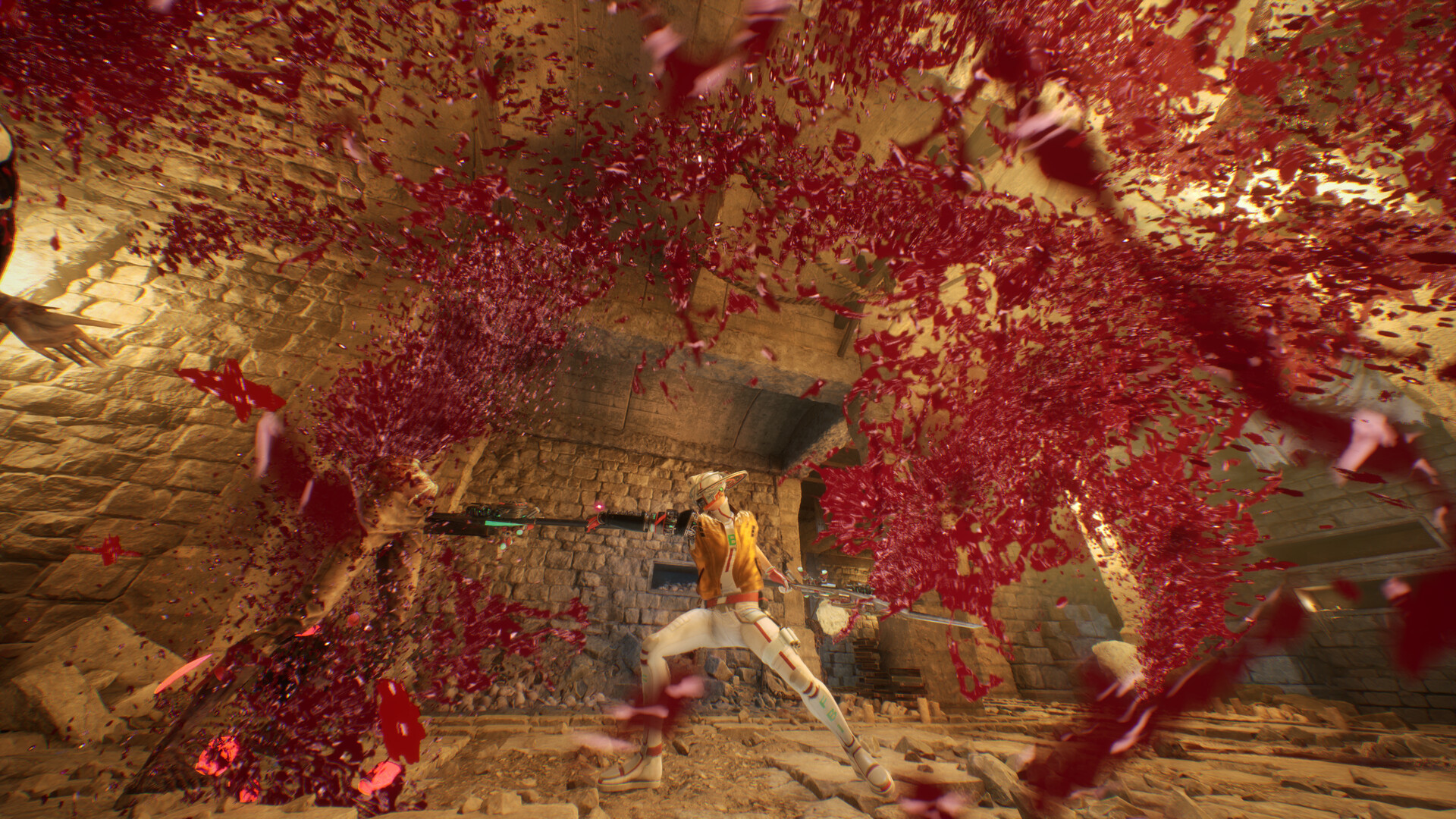
Melee is the conversation. A katana that behaves like a buzzsaw, gauntlets, a lance, the usual Grasshopper groceries that make a hallway into a buffet. Jump attacks snap a string open. Combos are not a novel. They are a toolkit you will still be using in the last chapter, which is both a kindness and a warning. If you wanted a move list that could unionize, you will feel underemployed. If you wanted a weekend that turns a street into a red room, you will feel hired.
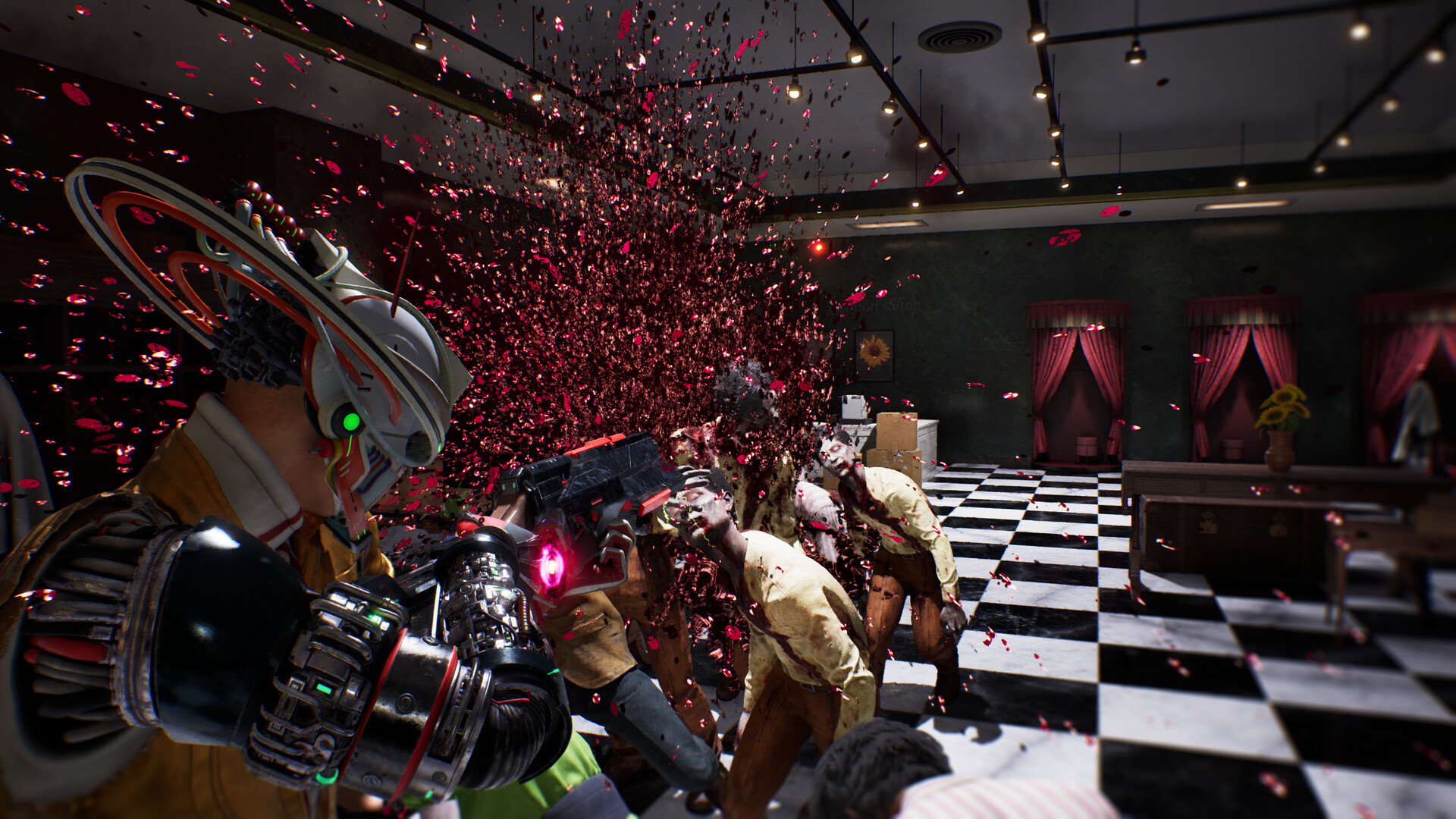
Ranged is the other half of the short description and the fussier half of a fight. Guns ask you to find glowing weak points on tankier Rotters and pop them like punctuation. The synergy is real when a sword opens a crowd and a shot finishes the argument. It is less real when a reload wants you to aim down sights in a particle storm and the camera becomes a theology problem. I learned to live with it. I will not invent a highlight reel with fake timestamps and tidy kill counts. The nights that stay with you are the ones where the room was too small, the horde was too sincere, and then Bloody Summer arrived like a receipt.
Bloody Summer is the temperature change. A pink gauge fills when you land hits. Unleash it and the current weapon writes a super across the floor, health comes back, and a boss who was mid-sentence learns manners. Official copy calls it capable of turning any situation around. That sentence is not marketing. It is the design admitting that the special is the star. Save it for the moment the health bar looks like a dare. Spend it early and you will learn why the garden exists.
Bastards in the Garden, Curry in the Kitchen
The ship is the moment the game changes tense. Between assassination chapters you hang out in a pixelated spaceship that looks like a different product and plays like the reason you bought this one. Personalities on board are big. Cream soda, hold the soda. Names that sound like paint chips and band t-shirts. A kitchen where Romeo’s mother cooks katsu curry that will later power a fight. A garden where you plant Bastard Seeds and grow your own Rotters, then make them stronger by having them fight to the death, because this studio has never met a joke it would rather leave unwatered.
Those Bastards are not a collectible for a trophy case. They are a second health plan. Deploy them in a fight to restore you, fire lasers, or otherwise behave like a workforce that used to be a punchline. Combining them is a side activity that pays off the first time a chapter gets too intense and your homemade zombie remembers it has a job. I sold a plan I was sure I needed and then needed it, which is the oldest garden joke in the book and still a good one.
Side missions sit between chapters like dares you can refuse. Official copy says they suit the player’s pace. That is both a promise and a warning. If you want a campaign that never looks sideways, you can march the critical path and still get the romance, the fugitives, and the bosses. If you want the ship to feel like a life, you will loot tesseracts, harvest Sentries to feed the arsenal, and come back dressed. The checklist can be a kindness. I left it on for an evening and off for another. The continuum did not mind. The Rotters minded either way.
I have played a lot of games that treat the hub as a menu with a carpet. ROMEO IS A DEAD MAN treats the hub as a second art style that is allowed to be funnier than the blood. That shift is the closest the game comes to a power fantasy that is not a super. Mastery, here, is logistics. You gather Emerald Flowsion, you stash Sentries, you cook, you plant, you walk back into an era that tried to eat you last chapter, and you land like a person who has mail.
Deadgear Cannonball and the Stats That Stick
There is an arcade machine on this ship and it is not a toy you ignore after the screenshot. Deadgear Cannonball is a 2D maze you play as a purple alien, spending Emerald Flowsion to pick up permanent buffs for Romeo. HP. Melee. Ranged. Reload. Aim. Extra Bloody Summer charges if you walk far enough. The improvements stick once you clear the route. You can reset a path and get a refund, which is a sentence no designer writes unless they want you to experiment instead of save-scum a spreadsheet.
That minigame is the moment the campaign stops being a string of rooms and starts being a build. I will not write a routing white paper. What I can say is that the first extra Bloody Summer charge changes your manners. You stop dumping the gauge the second it fills. You start thinking in reserves. A boss that used to be a wall becomes a conversation you can interrupt. Clothes help. Distance helps. A second summer helps more.
Weapon strengthening is the other half of the short description. Official copy says Romeo’s various weapons can be strengthened and altered as the story moves forward as he takes on even stronger enemies. Sentries harvested from tesseracts and side spaces feed that loop. Four melee options and four ranged options show up earlier than pride would recommend, which is a kindness. Unlock them, find the sweet spot between slow-and-rude and quick-and-polite, and stop pretending the starter katana is a personality forever.
I should be clear about the friction inside this toybox, because it is real and it is not a footnote you hide after the score. The upgrades mostly make you louder, not stranger. Meter, damage, capacity. The moves you learn in chapter one are still the moves you trust in chapter eight. That is a focused action game being honest. It is also why a player who wanted a style system that could file taxes will bounce. I am in the camp that wanted a weekend of bloody science fiction with a ship that cooks. The cannonball is how that weekend gets a spine.
Chapters, Side Jobs, and a Juliet That Keeps Moving
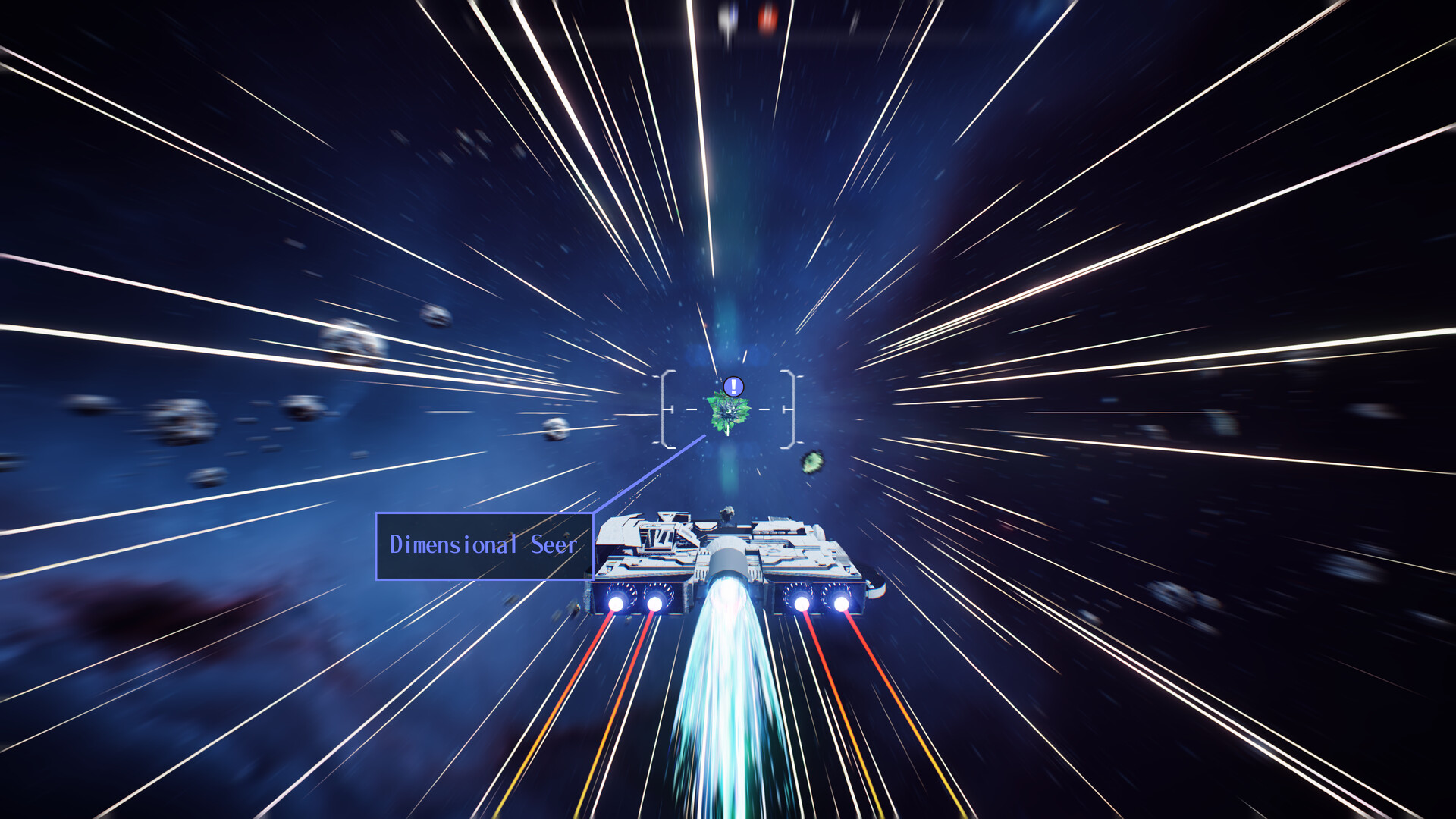
The campaign is split into chapters the way a good variety show is split into sketches. Each one dumps you into an era, a dimension, or a joke with architecture, then asks you to hunt a fugitive who took advantage of the shattered continuum. The art direction changes its mind more often than a weather report. One minute you are in a bloody third-person brawl that would like to be a cousin of the studio’s older punk. The next you are in a pixel ship arguing with a garden. The next you are in a 2D arcade spending currency like a person who has decided civilization is a maze.
That restlessness is the identity. I have my annoyances with a game that refuses to get comfortable with a single idea. I also have a score that exists because the refusal is the point. Official copy promises a brand new unpredictable title that stands atop decades of experience. The decades are visible. The unpredictability is visible. The experience is the part that keeps a messy chapter from becoming an empty one.
Juliet is the thread that stops the variety show from being only a buffet. You look for clues. You find out the disappearance and the destruction of space may be more linked than a love story usually budgets for. I will not spoil the tears of time. I will say the script has the nerve to be sincere in a game that is otherwise a blood fountain with a soundtrack. Scha Dara Parr shows up like a dare. The launch presentation is buried under a layer of hip hop and gushing red stuff. Both versions of Romeo, the man and the title, agree that romance is a combat modifier.
Bosses are the other temperature change. They are fearsome in the store copy and samey in the third rematch, which is the honest weather. Weak points, summers, a dodge that has no parry and does not want one. The studio said the quiet part in a launch-day chat. This game contains no parrying. It is full of dodge action. That sentence is a design document. If you wanted a perfect-guard religion, you will feel unemployed. If you wanted a dance that turns a health bar into a timing joke, you will feel hired.
Stylish by Design, Samey by Habit
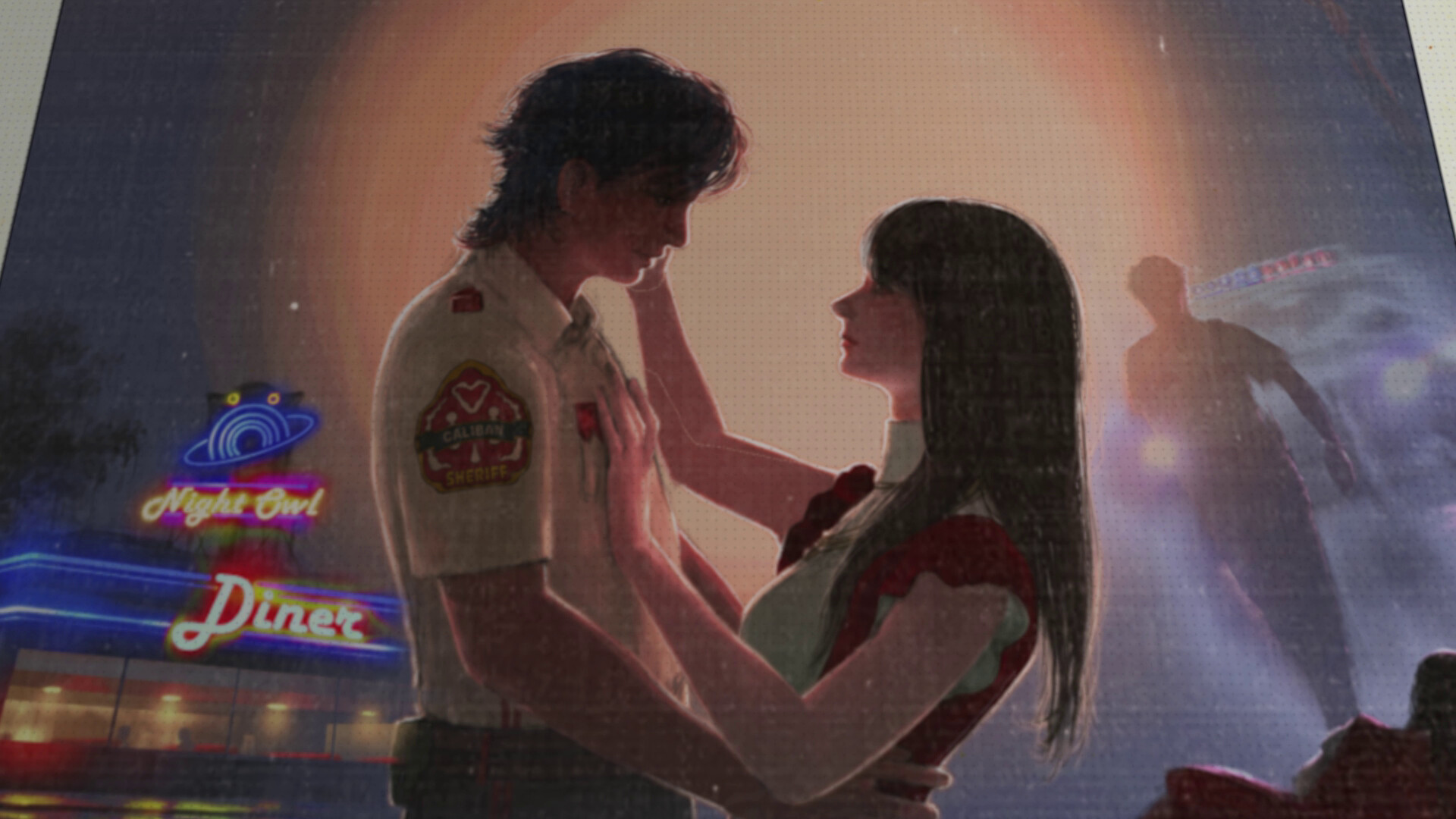
I should be clear about the friction, because it is real and it is not a footnote you hide after the score. ROMEO IS A DEAD MAN looks like a game that was built by a shop that wanted an adventure more than a showcase that would please a focus group. Landscapes can be handsome. Particle storms can be stubborn. Combat can arrive a half-second late to its own impact when the room decides to remember itself. Guns can feel underbaked next to a katana that already knew its job. I will not invent a mud census. I will say the continuum sometimes forgets to stock a new idea and then shrugs like weather.
Technical manners on a living-room build can stutter when the game decides to celebrate itself. Enemies can get philosophical in a doorway. Autosaves have a way of announcing themselves. None of that is unique to this ship. All of that is the tax on a first self-published Grasshopper title that arrived in February still wearing some of the same boots as the studio’s louder, older nights.
Presentation is readable, which matters more than prestige. You can tell a street from a palace from a pixel kitchen at a glance. If you cannot read a biome, the hunt dies and the chapter becomes homework. These spaces are atmospheric enough to carry a scare and clear enough to carry a plan. You always know where you are. You do not always know why a fugitive is already there.
English is among the Steam languages, with Japanese and a full set of others riding along, and full audio on English and Brazilian Portuguese. I will not turn this into a localization seminar. The voice of the game is the ship, and the ship talks in curry, cannonballs, and the occasional undead knock. Forty-four achievements sit behind the loop for people who like a receipt. None of them change the central truth. You are here to wear a mask and then find out what the mask is for.
Still Standing After the Paradox
ROMEO IS A DEAD MAN is a rare full-price action game that understands its own joke and then has the nerve to make the joke a spaceship. Grasshopper Manufacture built a campaign about a dead man, a summer about teamwork with a gauge, and a toybox that looks a little homemade and plays a lot more sincerely than that sentence suggests. The loop is the hook. The hub is the spine. The walk from a corpse to a Bloody Summer is the grin.
It is better as a fever than with a checklist. Combat is familiar in the way a focused fight is familiar. Guns can sulk. Bosses can repeat their manners. The presentation has studio fingerprints, from the stubborn art swaps to the story that would rather be a garden than a cutscene. All of that is true, and all of that is already priced in at $49.99. You are not buying a decade. You are buying a weekend that can turn into several weekends if you like being a coordinated disaster, or being the person who has to explain the disaster to a merchant of curry.
I am scoring it 8.5, Great, because the identity is this clear and the limitations are the limitations of a focused action game, not an empty one. I would recommend it to anyone who likes a dodge that has weight and a plot that is allowed to be rude. Distinctive era weather, a summer that shrinks a health bar, a ship that turns wood into conversation, and a first new IP in years that respects your appetite are a lot of game for the ask. The systems repeat their manners. The manners are still useful.
The continuum is still out there, still hiring a night shift, still asking what Juliet was worth. After a few doors, you will understand why the job is not finished, and why you keep waking up on the ship anyway.
We prepared this review with a digital copy of the ROMEO IS A DEAD MAN for the PS5 version provided by Pressengine.