There is a particular kind of loyalty, rare in a medium that usually hands you a nameless marine and a red key, in watching a furious American drifter empty a shotgun because someone took his dog. The castle is not a metaphor. The pie is not a metaphor either. Darkenstein 3D, the bullet-dodging retro shooter from Rowye and MicroProse, is built on that rescue, and the rescue is funnier and meaner than a free download has any right to be.
I played the PC version, the October 21, 2025 launch that put a four-year solo project onto Steam at the honest price of free and then watched a Very Positive pile decide the bruises were worth the beer. Rowye is a digital artist from Badalona who learned game development the long way and then built a full campaign as a love letter to Wolfenstein, Doom, and the late nineties habit of not explaining the flamethrower. MicroProse published it. You are the Hobo Guy. Gunther has been taken. Thirteen handcrafted levels wait with keys, secrets, aliens, and a rat that wants a job. Thirty-seven achievements lurk in the masonry. No microtransactions, no battle pass, no second currency. Great, not tidy, and very much a fortress I would recommend you rob.
Gunther Was Taken, So the War Gets Personal
Most retro shooters give you a war and a flag. Darkenstein 3D gives you a dog. It is 1940s Germany. You are a furious American drifter lost in enemy territory, armed with a shotgun and a grudge that does not care about geopolitics. A Nazi raid took Gunther. The rest of the campaign is the sentence that follows that theft. This is not about justice. The store page says it out loud. It is personal.
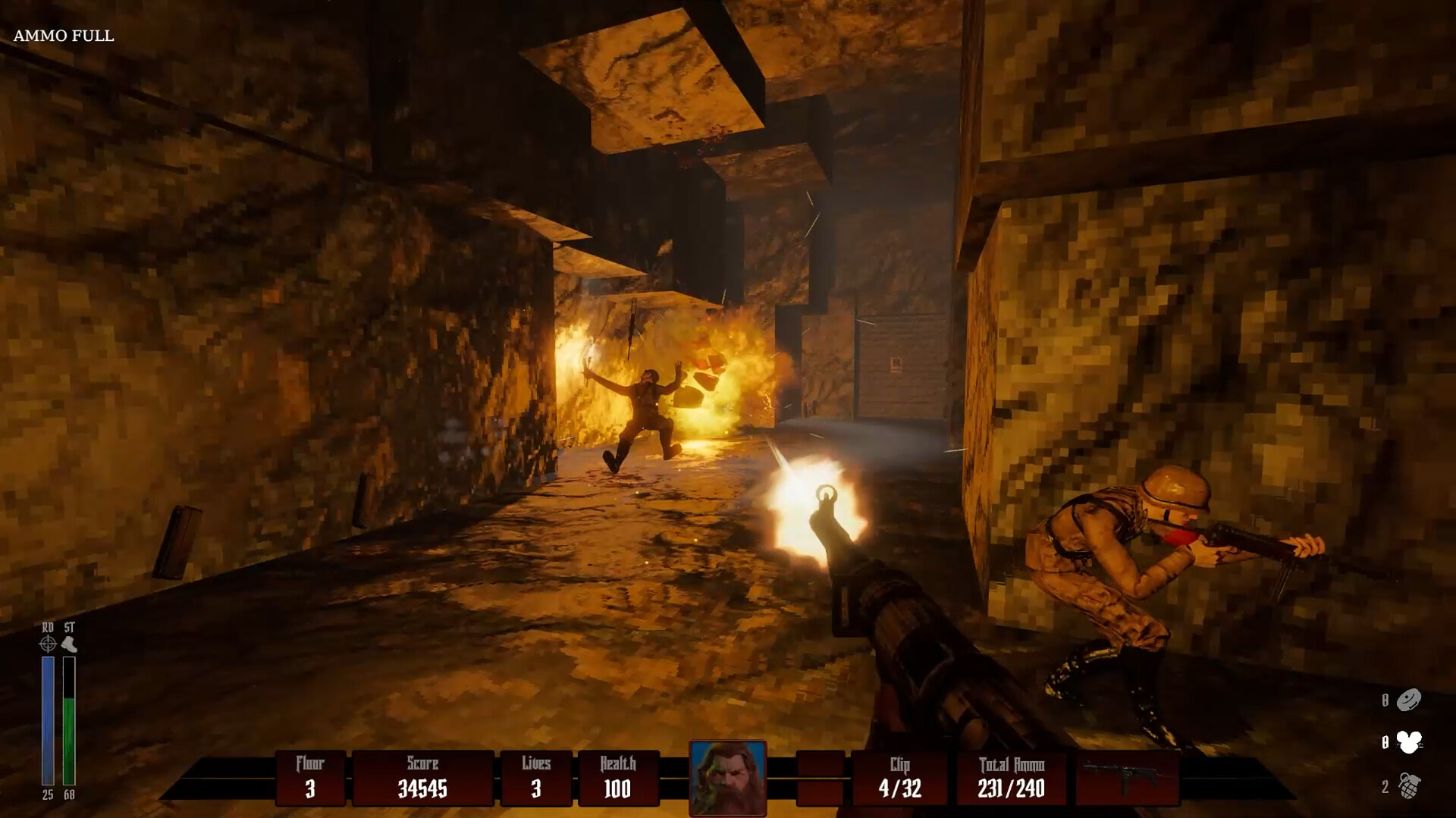
The tone is a wink with shrapnel in it. You will eat pie. You will drink beer. You will throw a rat. You will hunt aliens and zombies because the Axis, in this telling, has been moonlighting as a science fair. A button can answer with a chicken cluck. A secret can be a joke. The violence is not a joke. Gibs fly. Ragdolls negotiate with gravity and lose. The content notes mention blood, enemy gibs, and wartime symbology, and they are not being theatrical.
Story is functional and stingy, which is the right instinct for this kind of object. You are not reading a novel. You are scavenging a rescue that happens to have a punchline. Castles, bunkers, caves, valleys, desert towns, laboratories, industrial guts: the neighborhoods change and the motive does not. Get the dog. Make the people who took him regret architecture.
I like a campaign that refuses to apologize for being a cartoon. Hobo Guy is not a silent protagonist so much as a mood. He is angry enough to shoot first and never ask questions, which is a terrible foreign policy and a perfect FPS fantasy. The legal text on the store page is a little bow: one person made this to learn, for fun, and to pay homage. Similarities are coincidental. The homage is the product. Anyone who has circle-strafed a corridor since 1992 will feel the ghost in the wallpaper.
The fantasy is not mastery of a modern sandbox. The fantasy is competence arriving by accident, usually about half a second after a grenade that should have killed you and instead opened a shortcut. You will be roasted, exploded, bitten by a shepherd, and flattened by a room that did not knock, and the correct response is a laugh rather than a patch note.
Strafe, Dodge, and Never Ask for Cover
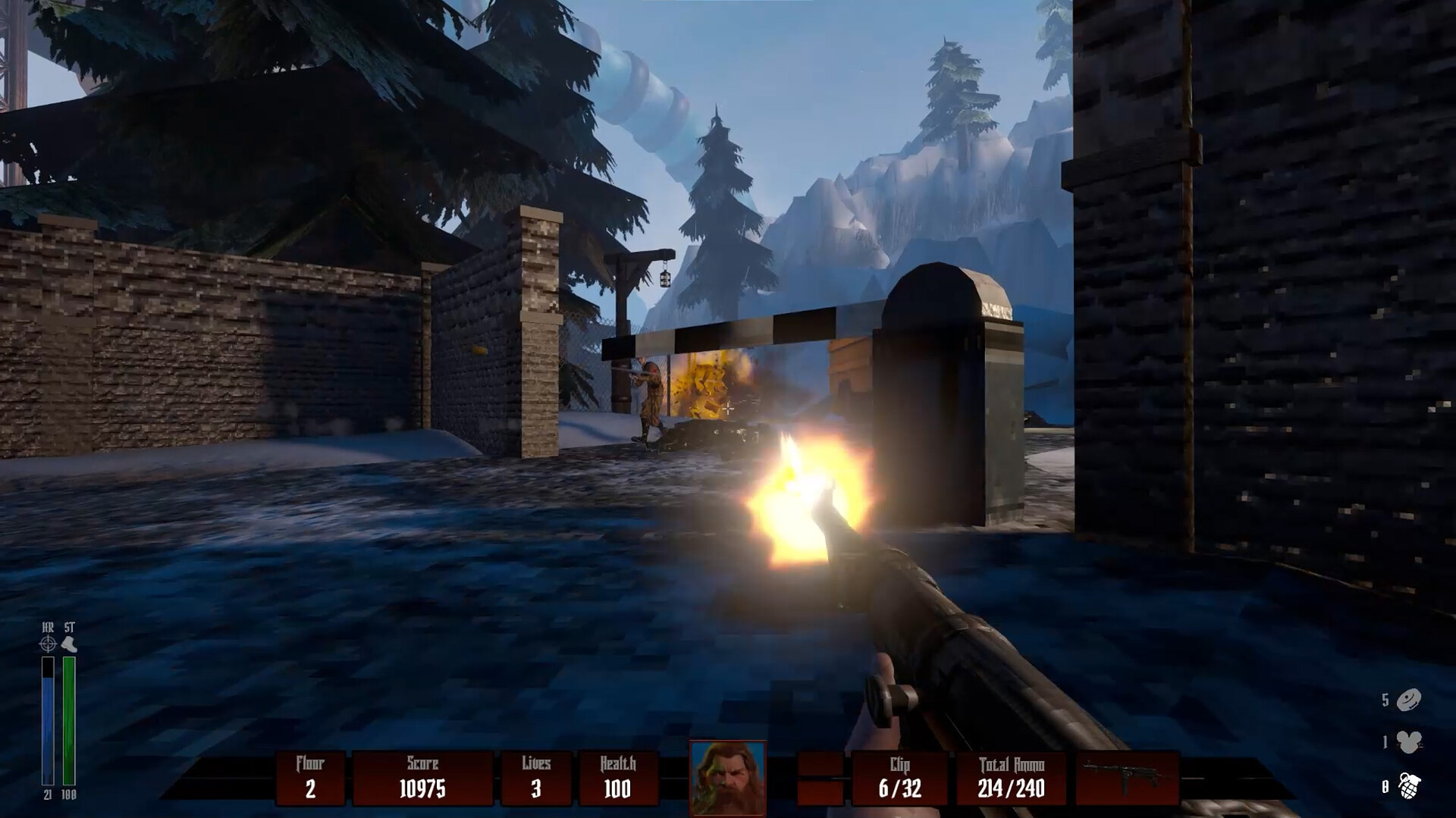
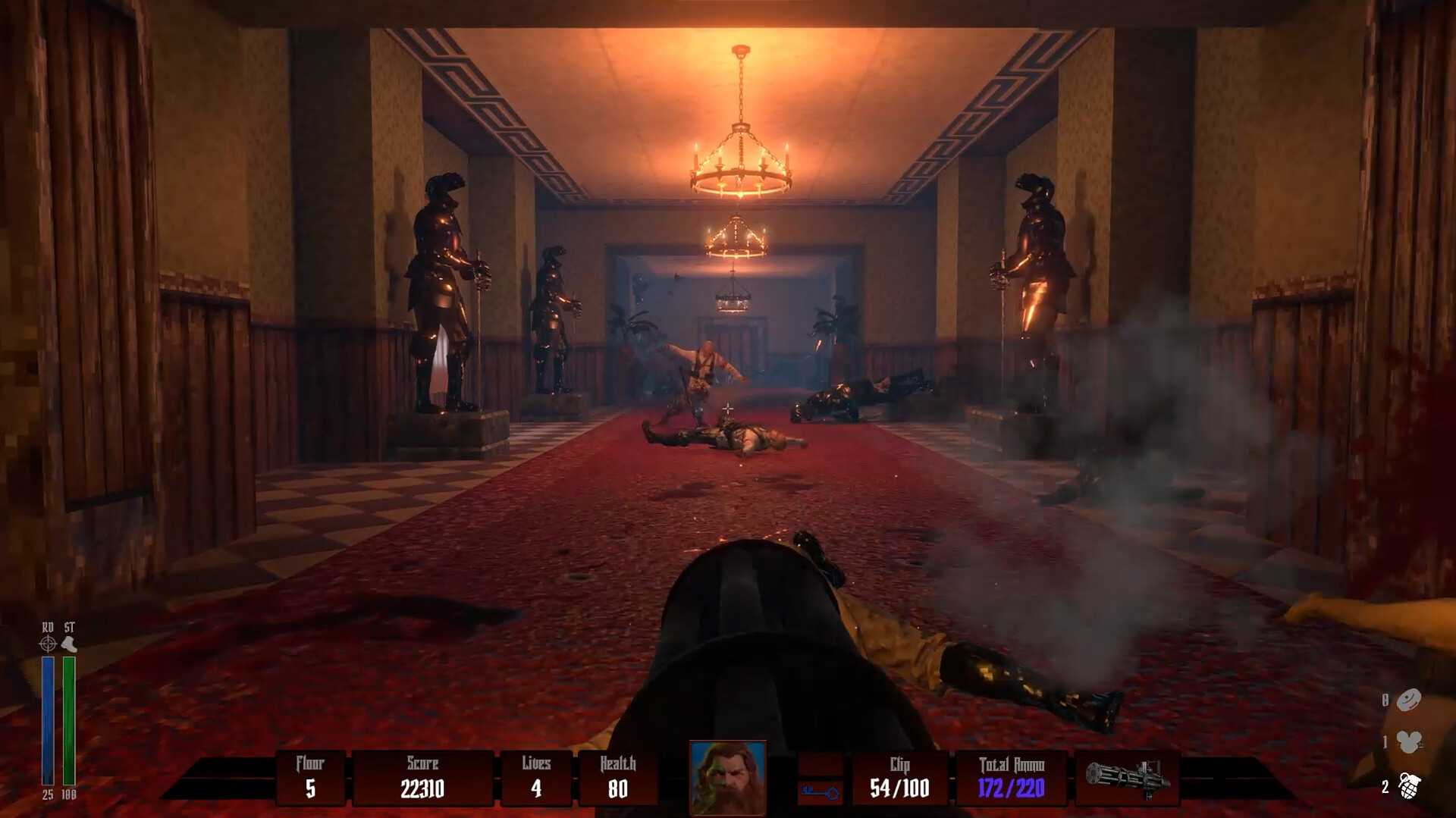
Combat is the reason the fortress is worth the commute. Darkenstein 3D does not hold your hand. There is no cover system. There is no aim assist. Enemy projectiles can be dodged, which sounds polite until a room decides to teach geometry. Survival is sharp movement, precise aim, and the kind of thinking you do with your feet. Every fight is a dance of strafes and corners. The store page calls it a deadly dance. The store page is not wrong.
The arsenal is familiar on purpose. Shotguns, machine pistols, rifles, explosives, a flamethrower that wants to be a personality, a crossbow that does not care that it brought manners to a gunfight. Each weapon has weight. The tactile satisfaction of a shot is at least as important as the number it subtracts. Crouch tightens the aim and lets you punish the smaller pests, the zombified soldiers and the dogs that did not get the memo about Gunther being the only good boy in this country.
Grenades are the rude option, hilariously overpowered in the way a nineties shooter always wanted them to be. Mines turn a doorway into a thesis. The rat is the other thesis. He is small, angry, and always hungry. Throw him and he lunges. Combine him with explosives and a room becomes a rumor. I have played plenty of companion systems that wanted to be a second player. This one wants to be a grenade with opinions.
I should be clear about the friction. Some rooms throw an overwhelming number of enemies with no warning, which is either authenticity or a missing designer note, depending on your mood. Checkpoints are the safety net. There is no polite manual save in the modern sense. Die and you learn the room again. That loop is the genre. It is also, after a nasty ambush, a little uncivilized. I respect uncivilized. I do not always enjoy repeating a corridor because a shepherd spawned in my pocket.
Stamina and movement have opinions. You are not a statue with a mouse. You are a person who has to keep dancing. Circle-strafe is not flavor text. It is rent. Stand still and the lot collects. Keep moving and the campaign starts to feel like a song you almost remember from a machine in a pizza place.
Thirteen Handcrafted Arguments
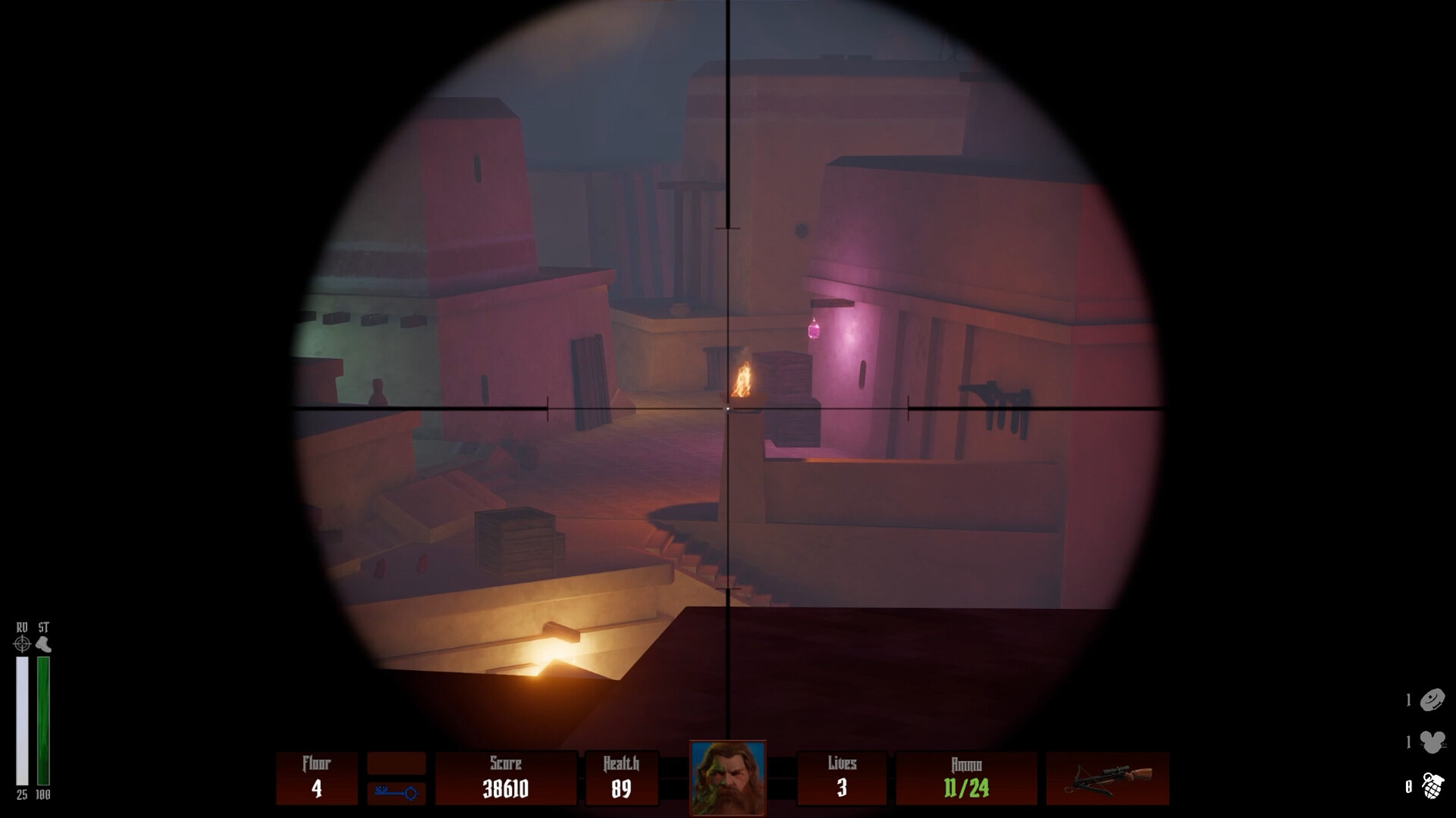
The climb is thirteen handcrafted levels, and handcrafted is the word that earns the free price. These are not procedural corridors with a filter. Fortresses, bunkers, caves, deserts, laboratories, industrial complexes: each stage has a tone and a set of overlapping paths. Walls that look solid hide optional chambers. Alternate routes offer shortcuts or loot. A level is a space to traverse and a puzzle to understand.
Keys still matter. Colored locks still matter. Treasure still matters. The campaign raises the stakes without pretending it invented the grammar. You always know you have changed neighborhoods. You do not always know whether the neighborhood has agreed to let you leave. A desert town after a castle is a costume change that also happens to be a new argument about sightlines.
Secrets are the other economy. Hidden health, extra lives, bonus weapons, the cheeky surprise behind a crate you should have smashed: curiosity is a skill. I like a game that treats looking away from the obvious line as the intended joke. There is a tax. Sometimes a level ends the moment you step into a tunnel, cutting a secret hunt short without a courtesy warning. That still happens. It is the one habit I wanted a patch to teach some manners.
Variety across the board is why starting a level from a checkpoint does not always feel like a kick in the teeth. Familiarity is why, after enough evenings, a shuffled ambush can still feel like a commute with better lighting. Thirteen is still thirteen. Anyone who wanted a secret fourteenth country will feel the loop. Anyone who wanted a modern eight-hour campaign with side quests and a skill tree walked into the wrong decade.
I will not invent a highlight reel with fake timestamps. The nights that stay with you are the ones where a room asks you to dodge a volley, feed the rat, crack a wall, and find a key you could have walked past if you had been a more boring person. That room could only exist in this game. That is the compliment.
A Rat, a Flamethrower, and Pie for Breakfast
The personality is the other half of why a free shooter does not feel like leftover meat. Darkenstein 3D is hard, funny, and a little unhinged in the specific way a solo developer gets unhinged when nobody is in the meeting to say no. Eat pie and drink beer. Go nuts with a flamethrower. Hunt aliens because the war has a subplot. Throw the rat because the rat asked for it.
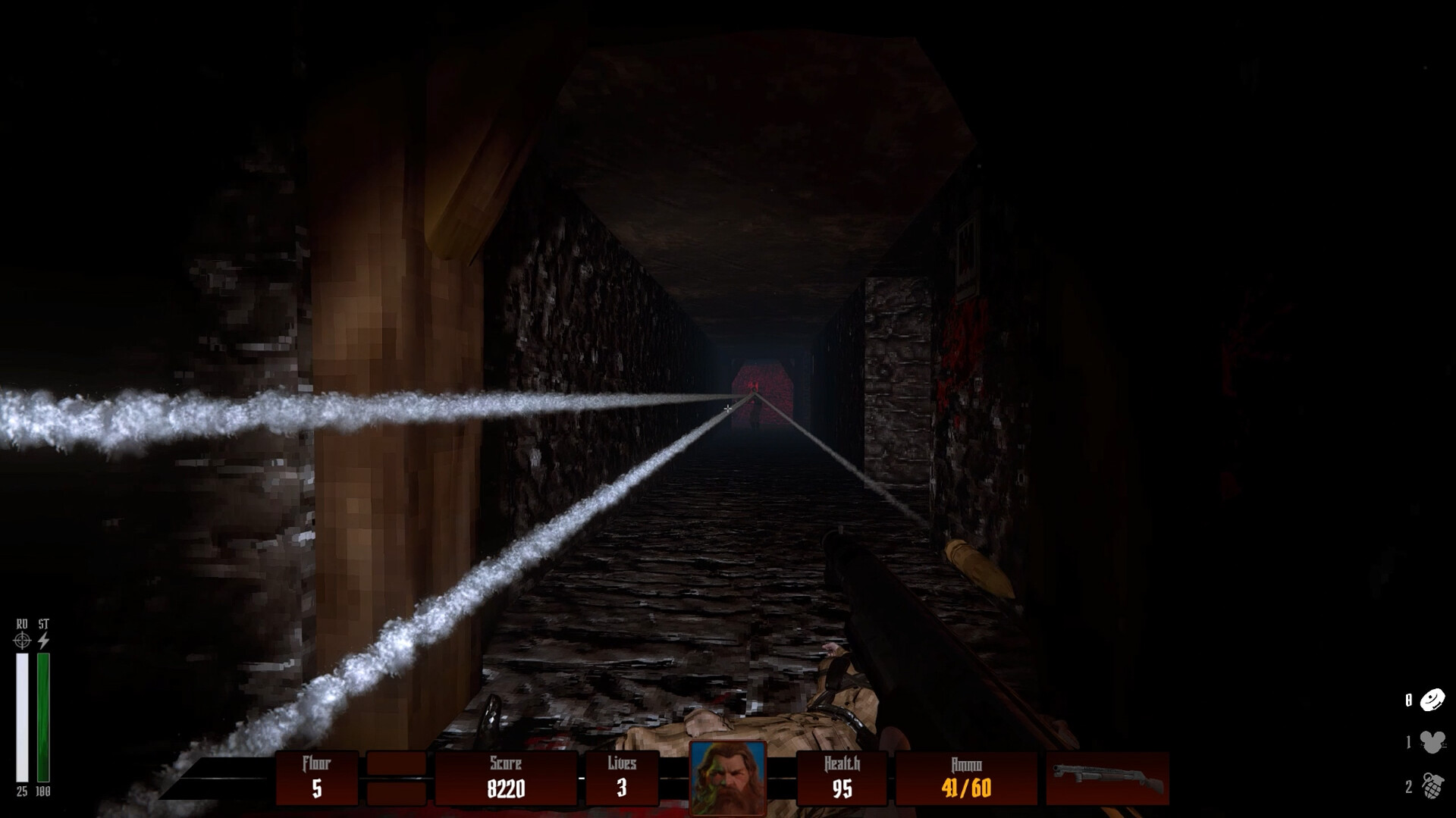
Gore is a feature, not a warning you hide in a submenu. Enemies fly, gib, and collapse in carnage as the battlefield crumbles. Explosive physics make debris a participant. Every shot feels heavy. Every kill looks painful. If you wanted a tasteful historical drama, MicroProse has a different shelf. This shelf is the one with the ketchup.
The soundtrack slaps in the correct, uncool sense. Thundering drums and wild guitar riffs fuel the tempo, especially in those crowded ambush rooms where everything is exploding and the rat is biting ankles. I zoned into the noise more than once, which in a retro FPS is a compliment. Audio cues do the teaching a tutorial would have ruined. A bark, a reload, a cluck behind a wall: the level is talking.
Full controller support is there if you want it. Mouse and keyboard remain the native dialect, as they should. Thirty-seven achievements sit in the background like a second campaign: Finders Keepers, Detective Hobo, Class of ’92, Greedless. Steam Cloud keeps the bruises. The whole object is one complete standalone shooter. No currencies. No season. No polite reminder that a horse armor is on sale.
I keep coming back to the pie. Healing as a snack is a nineties courtesy and a personality test. You are not a soldier on a ration. You are a drifter who packed lunch for a war. That joke would collapse if the shooting were soft. The shooting is not soft. The joke gets to stay.
Secrets, Keys, and the Scoreboard That Never Sleeps
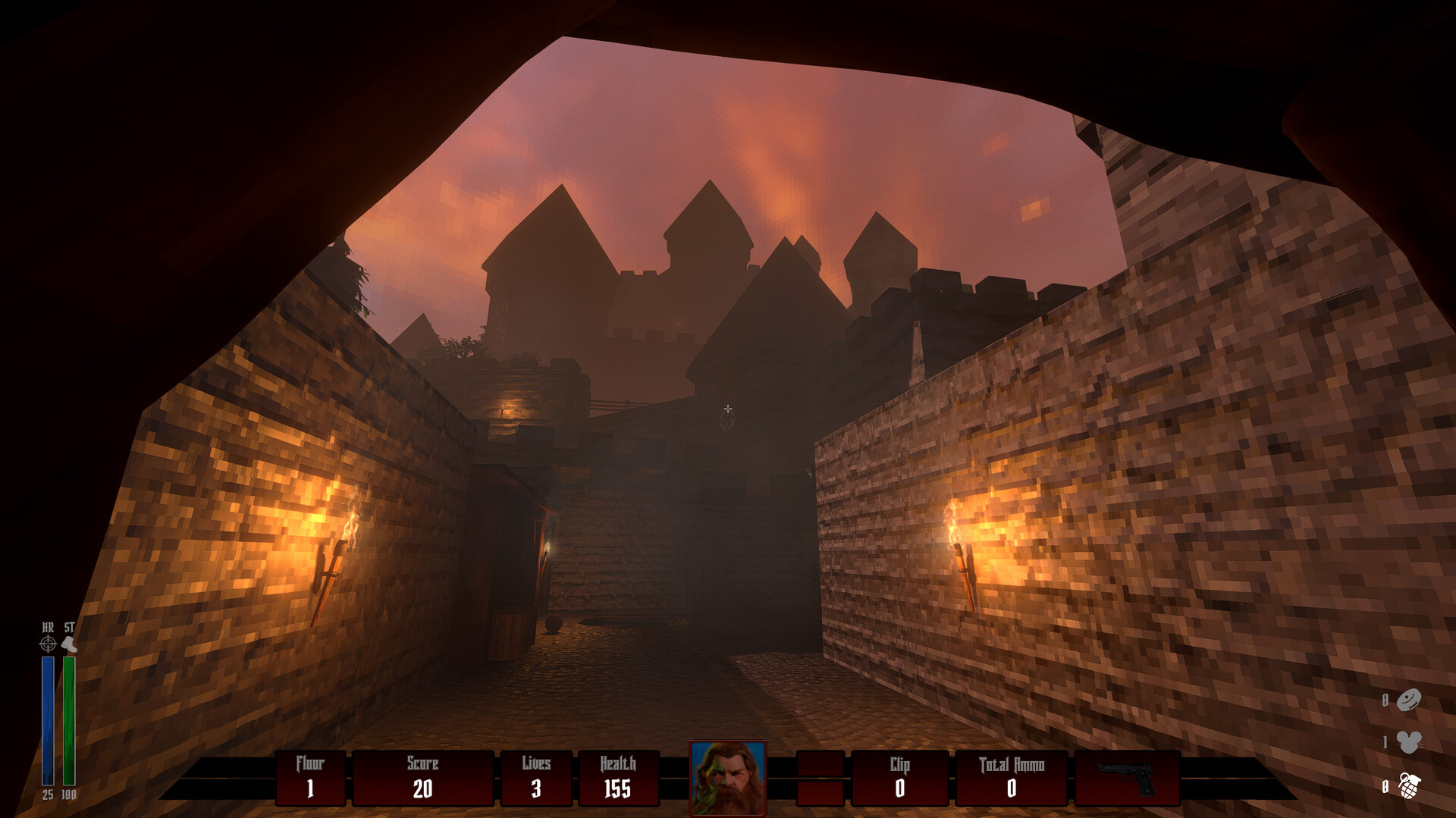
Replay is the quiet spine. Push your score higher. Hunt the treasure you walked past because a shepherd was having a moment. Learn a line through a labyrinth until the timer starts to look like a dare you wrote yourself. Darkenstein 3D is packed with hours of carnage if you are the kind of person who cannot leave a question mark on a map.
Difficulty is a personality, not a submenu with a single slider that lies. The game is tough, fast, and demands skill in the way those old-school shooters did. Adjustable difficulty and a pile of accessibility toggles (camera comfort, custom volume, playable without timed input if you need it) sit in the options like a peace offering from a campaign that otherwise wants you to dance. I played it the rude way. I died the rude way. Both are the product.
The solo-dev tax is real and it is not a footnote you hide after the score. Some textures are prouder than others. Some enemy placements feel like a first draft that learned to throw. A level ending that steals a secret hunt is a small betrayal. The story is a dog and a set of laboratories, the right instinct and a thin one if you came here for a novella. Compared with the modern retro cousins that had a team and a marketing department, the long-term workshop is smaller. You will see the edges of the toybox sooner. That is the cost of a focused free object that knows what it is.
I should also say the quiet part. Free can be a trap. Free can mean a tutorial for a shop. Darkenstein 3D is free in the old sense. You download a campaign. You keep it. The DLC door exists for people who want more, and it is not standing on your neck during the first thirteen maps. Rowye spent four years making a thing he wanted to play. MicroProse put a famous logo on a first game and then had the good taste not to turn the logo into a cash register.
If the first bunker feels like a museum, give it a second. If the fifth desert feels like a vice, you are the audience. The scoreboard will still be there, patient and slightly smug.
Free, Finished, and Slightly Uncivilized

A lot of modern retro shooters want to be a brand. Darkenstein 3D wants to be a Friday night. That distinction is why I am comfortable recommending a game whose corners still have sanding left. The identity is loud. The campaign is complete. The price is an argument-ender.
I have a soft spot for objects that refuse the live-service handshake. I have a harder spot for objects that confuse refusal with roughness. This one lives on the correct side of that line more often than not. When it slips, it slips like a person who learned an engine alone in Badalona and then shipped anyway. I can live with that slip. I cannot live with another shooter that charges sixty and then asks me to unlock the shotgun.
The homage is accurate enough to feel like time travel and personal enough to feel like a new scar. Return to Castle Wolfenstein’s pace is in the bones. Doom’s forward motion is in the feet. The rat is in neither, which is why the rat is the tell. A copy would not have invented the rat. A love letter would.
Thirteen maps, a kidnapped dog, a flamethrower, and a score that wants to be chased: that is a Friday. The museum closing time is real. So is the grin when a secret wall and a well-thrown rodent turn a bunker into a story you will tell like you meant it.
The Dog Is Still Waiting
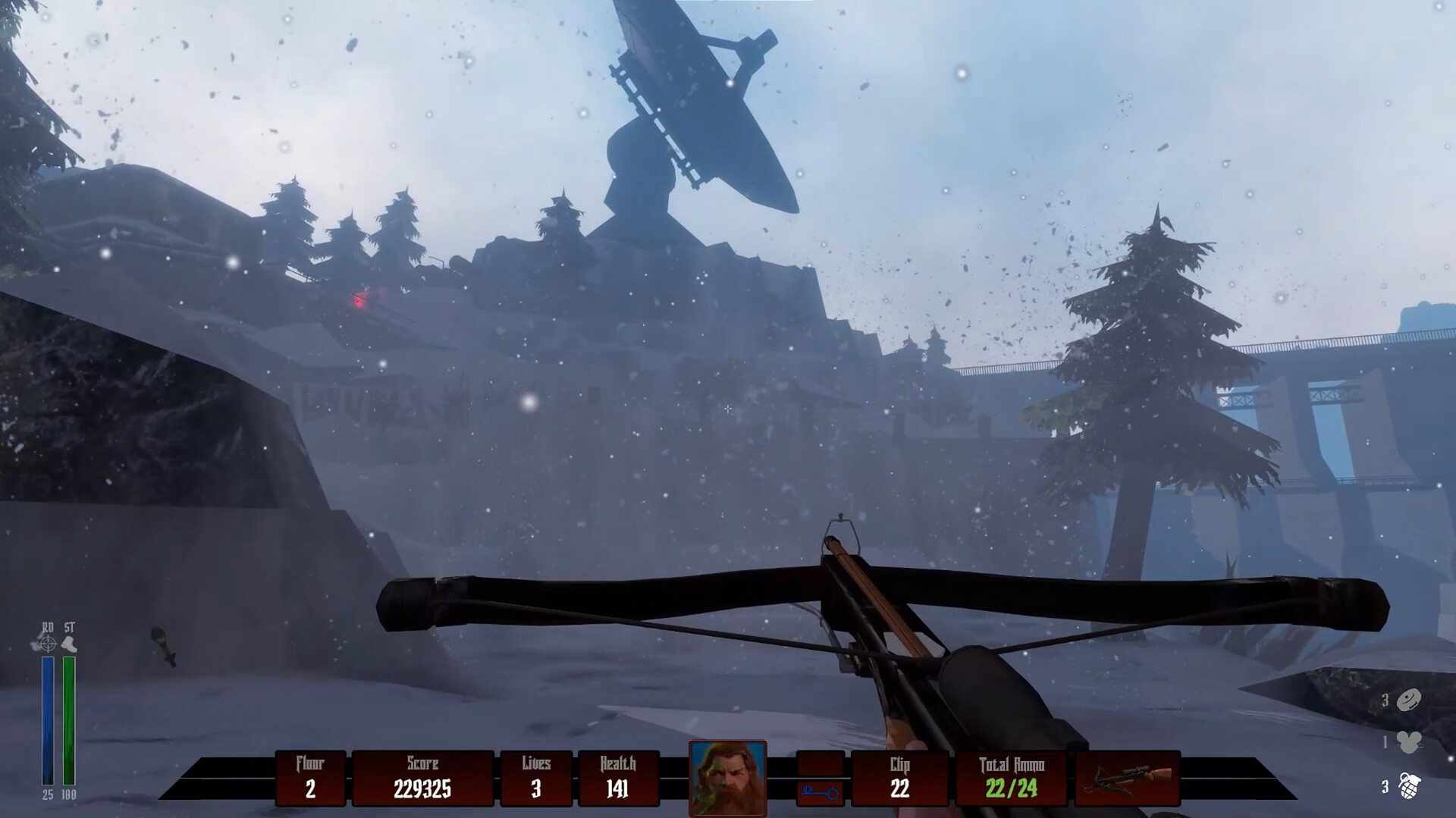
Darkenstein 3D is the rare free game that understands its own joke and then has the discipline to make the joke a campaign. Rowye built a possession fantasy about a drifter, a dog that got stolen, and a rat that wants hazard pay. MicroProse put it on the porch and did not charge admission. The hook is 1940s Germany with aliens in the basement. The spine is the way strafing, secrets, and a heavy shotgun turn a corridor into a plan.
It is better as a craft than as a novel. The gunfeel stays the reason to recommend it. The handcrafted maps stay the reason you keep the window open. The roughness is real. So is the grin when a flamethrower and a piece of pie turn a bad room into a story.
I am scoring it 8, Great, because the identity is this strong and the limitations are the limitations of a focused solo shooter, not an unfinished one. At free you are buying nothing and receiving a fortress that respects your evening, a toybox with thirteen arguments, and a loop that refuses to sell you a battle pass for the privilege of being exploded. Distinctive retro pace, a dog worth the war, and a campaign designed to be replayed are a lot of game for the ask. The bunkers repeat their jokes. The jokes are still sharp.
The shotgun is still there. Gunther is still waiting. After a few rescues, you will understand why the fortress is not finished with you, and why you keep walking in anyway.
We prepared this review with a digital copy of the Darkenstein 3D for the PC version provided by MicroProse Software.