There is a particular kind of career advice, rare in a genre that usually hands you a gun and a skill tree, in being told to break someone’s arm and then beat them with it. The arm is still an arm. The gun is optional. The next alien is less a monster than a catalogue. SWAPMEAT, the third-person roguelite shooter from One More Game, is built on that catalogue, and the catalogue is ruder, funnier, and more strategic than a sixteen-dollar butcher shop has any right to be.
I played the PC version, the 17 June 2026 1.0 that walked a 21 October 2025 Early Access onto a finished campaign at $16.49 after months of Meat Lab testers arguing about which head belongs on which legs. One More Game is a small shop with a fondness for screwball aliens and the nerve to hire Austin Wintory to score a turkey cannon. You are Squishy, a shape-shifting operative of Rangus Corp. Harvest a head, a torso, a pair of legs. Triple-jump. Drop a turret. Launch a grenade from a face that used to belong to dinner. One to four players. Four difficulties, Casual to Nightmare. Permanent upgrades back at HQ. A final boss that Early Access spent months promising. Thirty-four achievements and a deck of trading cards. The Steam sample is Very Positive, 314 of 359, which is the weather report and not a dare. Great, not gourmet, and very much a run I would recommend you take if you like a build that can change its mind mid-sentence.
Squishy Reports for Dismemberment

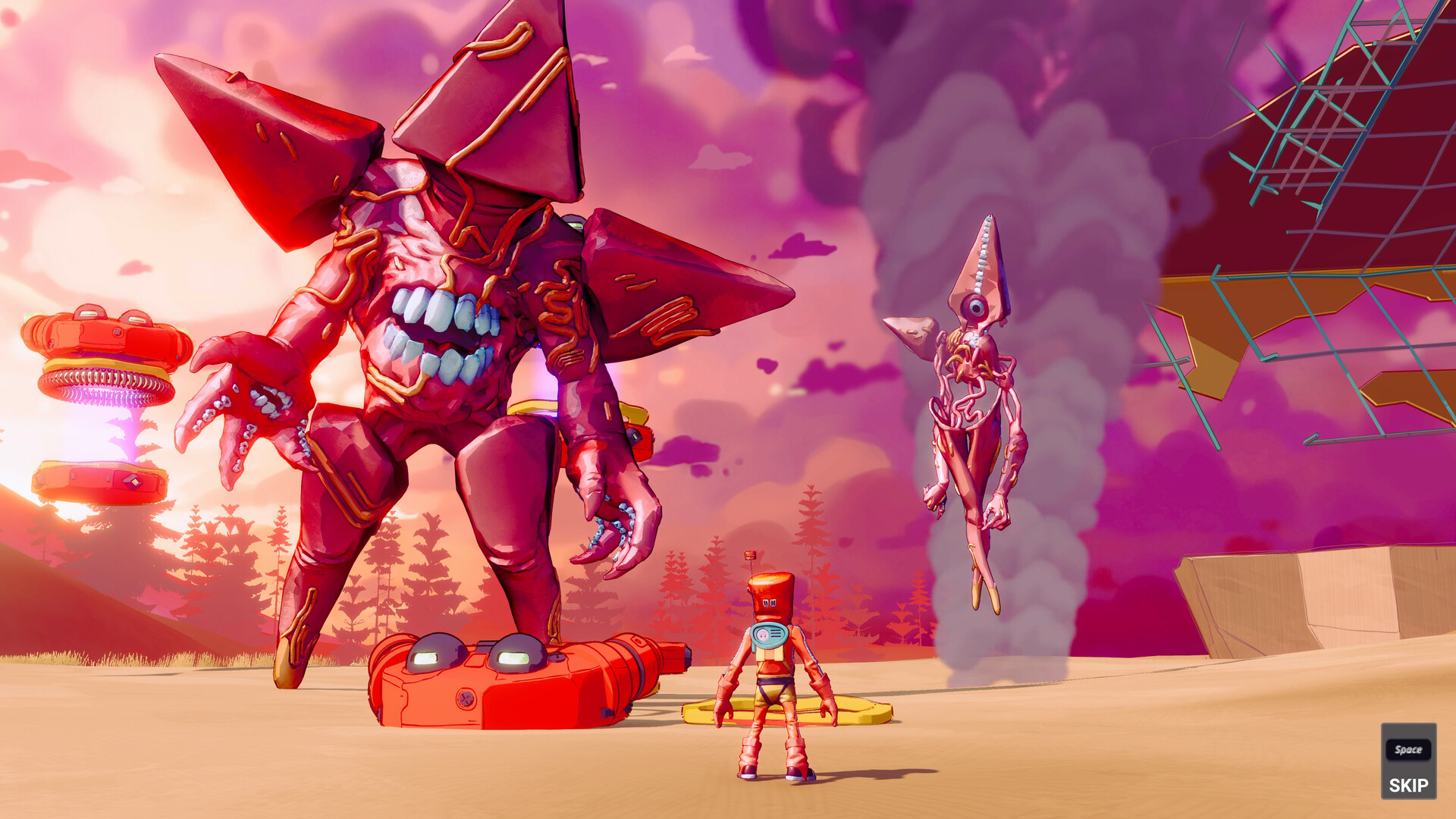
Most roguelites begin with a class and a blessing. SWAPMEAT begins with a body that is already a negotiation. Official copy says you are Squishy, a shape-shifting operative of Rangus Corp, which is a polite way of saying your employer would like you to steal the competition and wear it. Heads, torsos, legs. Each piece arrives with a power. Together they make a sentence the next room has not read yet. Thousands of combos is the boast. Improvisation is the product.
Story is corporate and stingy, which is the right instinct for a game that wants your hands more than your diary. Rangus Corp has a mission. The planets have a cookout problem. Galactic capitalism left ruins and a nineties reference on the lawn. I will not invent a lore bible the loading screens did not write. The lore wrote a joke and then handed you a turkey head. That is enough plot for a run.
I like a premise that prices curiosity as a hazard and then makes the hazard the toy. A lot of third-person shooters want a cover system and a tragic captain. This one wants a corpse that is also a shop. You are not hunting a monster. You are auditioning its knees. The monster, if you need one, is the version of you that refused to swap because the current legs were fine.
Rangus Corp is the right kind of joke for this aisle. Not a villain with a speech. A payroll. You go out, you come back with research, you go out again wearing something that used to chase you. The company does not need a cutscene. It needs a sink for your stubbornness and a planet that keeps hiring new staff. I smiled at the name Squishy the first time and then stopped smiling when Squishy started making sense as a job title.
The fantasy is not mastery of a single loadout. The fantasy is competence arriving about half a second after a drop turns your plan into a rumor. You will die in ways that would be funny if the timer were not so sincere. Objectives tick. Waves arrive. The correct response is to steal the next idea like a person who has a reservation at the boss.
Steal the Arm, Then Beat Them With It
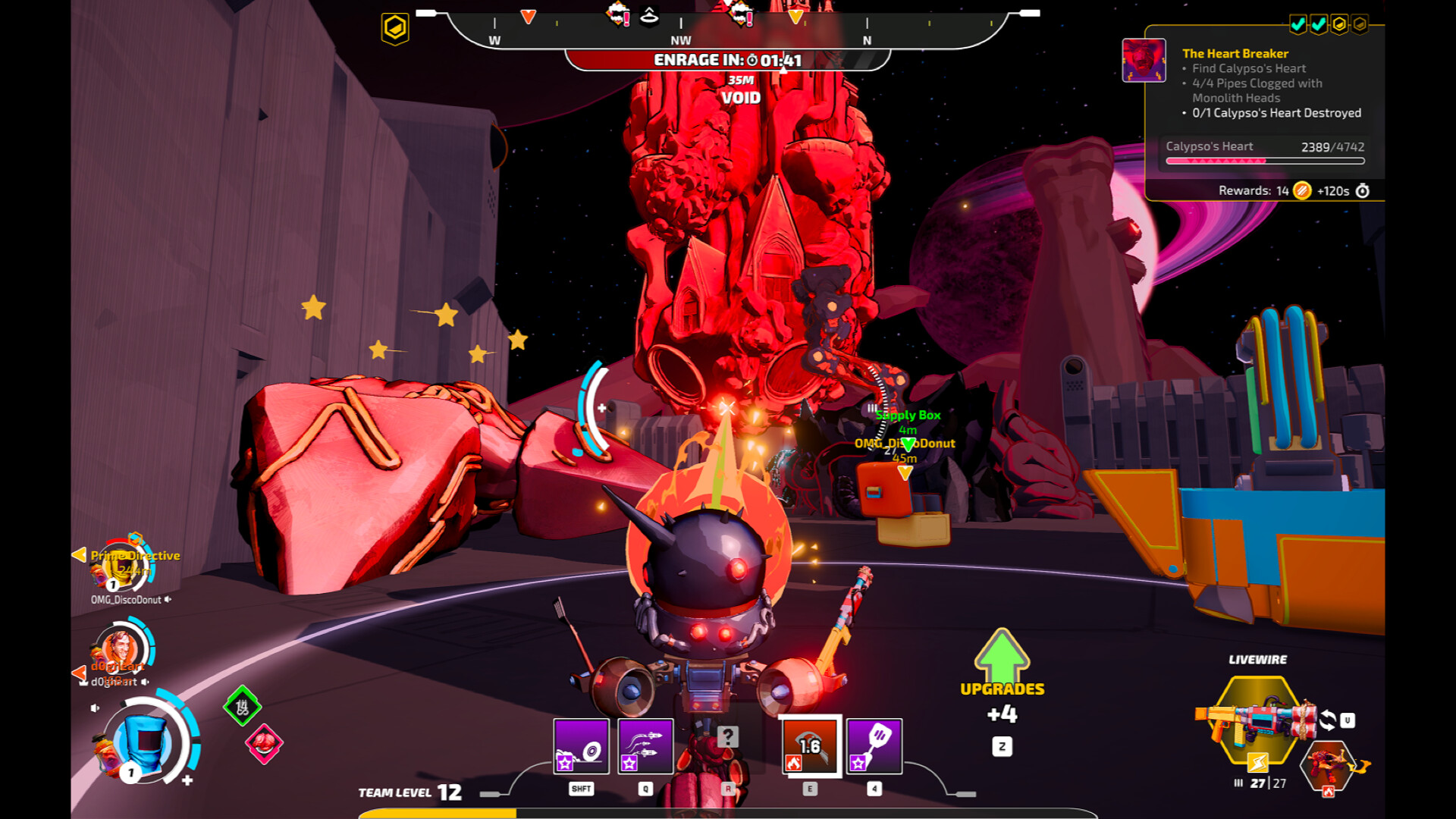
The swap is the thesis, not a costume. Official copy makes the threat explicit. If you have ever promised to break someone’s arm and beat them with it, this is that mechanic, and it is the game for you. Every limb changes the strategy instantly. Squat Daddy legs let you jump and butt-slam. An Octo Swirl head shoots in all directions. A turret-dropping torso turns a retreat into a part-time job. A grenade-launching turkey head is the sentence I did not expect to respect and then could not stop repeating.
Mid-combat is the important half of the pitch. You do not pause in a menu and become a new person. You become a new person while the old person is still being shot. Rapid adaptation is the key, the store page says, and for once the marketing is not lying. A good run is a conversation with the floor. A bad run is a conversation you refused to have because you liked your current face.
I have played a lot of roguelites that borrowed a mutation and then treated the mutation like a hat you pick at a campfire. One More Game treated it like a reload. Weapons can be stolen too. Waves of screwball enemies threaten to overwhelm you, and every one of them is also a catalogue. Dodge, shoot, swap. The speed of the gunplay harks back, the developers say, to arena shooters and chaotic co-op, with a nod to the genre neighbors anyone in this aisle already knows. I will not name the neighbors like a homework assignment. The feeling is fast, readable, and slightly disgusting in the useful way.
Objectives keep the chaos from becoming a sandbox that forgot to be a game. A timer at the top of the thought process pushes you toward the next Prime, the next defense, the next thing the corp would like done before the planet finishes eating the schedule. I will not invent a mission census. What I can say is that the jobs are the genre’s usual errands wearing a better joke. Go here. Shoot that. Hold this. The joke is that you will do it with a new pelvis.
Planets That Look Like a Garage Sale on Fire
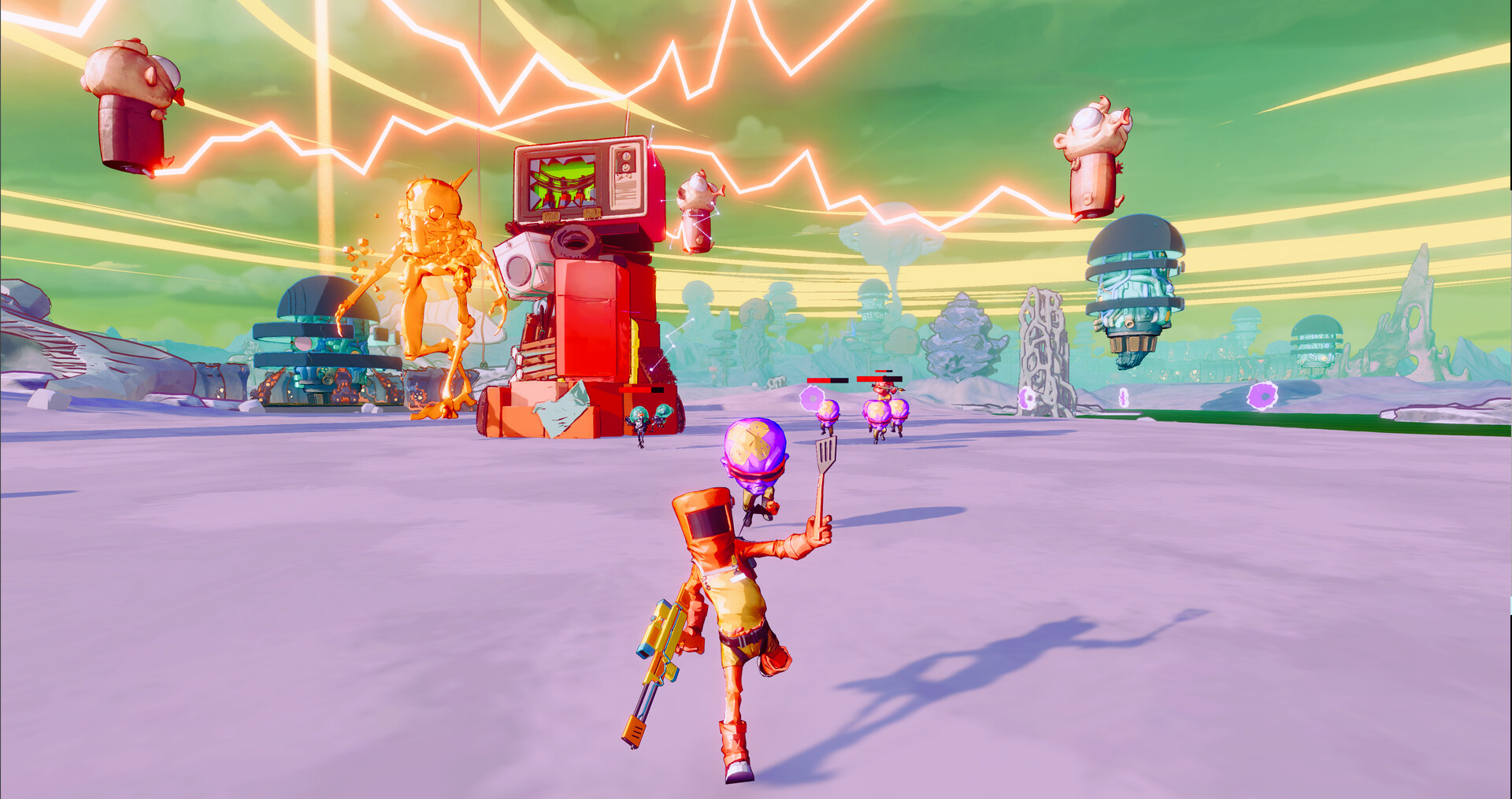
Hostile alien worlds are the other half of the personality, and they are not wallpaper. Official copy promises an urban speedway thick with hungry mutant speedsters and a planetary cookout overrun by hostile aliens. Wackadoodle is the studio’s word. Vivid landscapes, ruins of galactic capitalism, ancient tech, nineties references left on the lawn like a dare. You can tell a planet at a glance, which matters, because if you cannot read a biome the swap dies and the run becomes homework.
The 1.0 launch added fresh planets, new mutations, quality-of-life manners, and the final boss Early Access spent a season pointing at. I will not invent a planet count. I will say the map got bigger in the way a finished roguelite is supposed to get bigger. More places to be late. More ways to be a worse sentence. A proper end to the campaign, then a Random Solar Systems mode for people who thought the credits were retirement.
I have sat through plenty of indie shooters that announce a unique look and then deliver a pleasant palette with nicer goo. SWAPMEAT has a handwriting. Enemies look modular because they are modular. You can read a harvest from a silhouette, which is the whole job of the art. When a swap lands and the body celebrates, it is not a loot explosion. It is the picture admitting you shut a species up and wore it.
Random events keep a familiar planet from becoming a commute. No two runs are the same is the oldest roguelite promise in the book. Here it is almost true, because the parts are the run. A speedway you already finished can still be a different argument if the floor drops a torso you have been avoiding. Death teaches you something new, the page says. Sometimes it teaches you that you should have swapped sooner. Sometimes it teaches you that a turkey was a lifestyle.
Four Difficulties and a Corp That Keeps a Tab
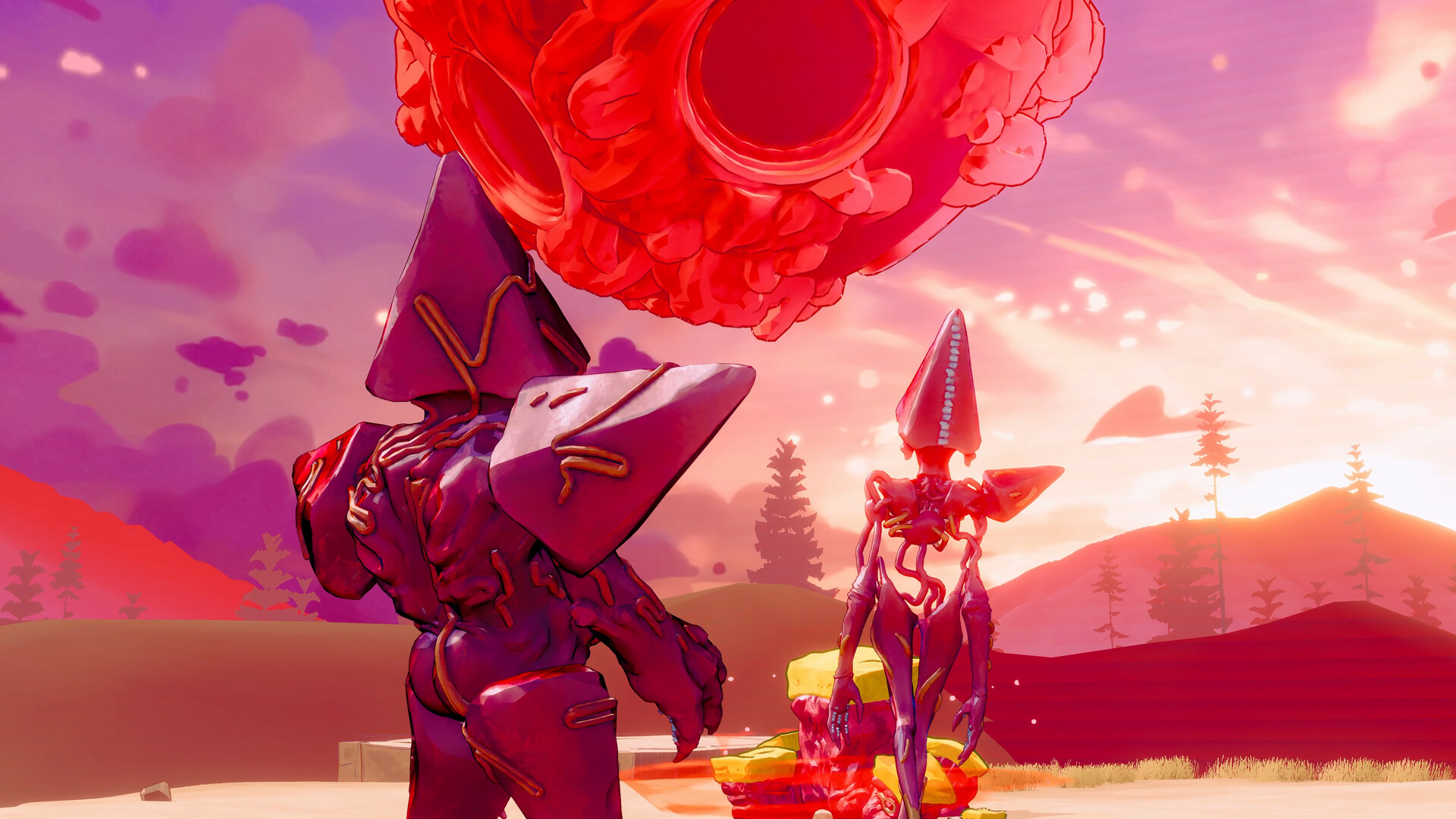
The meta is the other religion. Bring research back to HQ. Cash it in for weapon unlocks, perks, company-approved improvements. Over time you get more powerful between runs, which is how a roguelite pretends it is also a job. I like a job that pays in better mistakes. Permanent upgrades keep a failed night from feeling like a refund. You still died. You still came home with a receipt.
Four difficulties sit on the box, Casual to Nightmare. That range is the courtesy. Casual is how you learn the catalogue without being graded by a speedster. Nightmare is how you discover whether your favorite legs were a personality or a crutch. I will not print a modifier list I cannot confirm. What I can say is that the dial is real and the corp does not mind if you turn it down. Dynamically scaling co-op is the other dial. The game gets harder when friends join and easier when they leave, which is a polite way of saying the planet has a headcount.
Thirty-four achievements and Steam trading cards sit in the background like a second HQ. I will not turn this into a trophy guide. The list is more interested in your relationship to swaps and stubbornness than in a collectible checklist you could put on a wiki. A Founder’s Edition lived through Early Access and retired at 1.0, which is a sentence for the people who were already in the meat locker. The rest of us buy the finished butcher shop.
I keep coming back to the research sink. A lot of roguelites hide the grind in a tree that looks like homework. SWAPMEAT hides it in a company that thinks your corpse is a quarterly report. That joke stays funny longer than it should. You will tell yourself you are only unlocking one more perk. You will unlock three. You will go back out wearing a head that should be illegal in several systems.
Bring Three Friends, Scale the Chaos
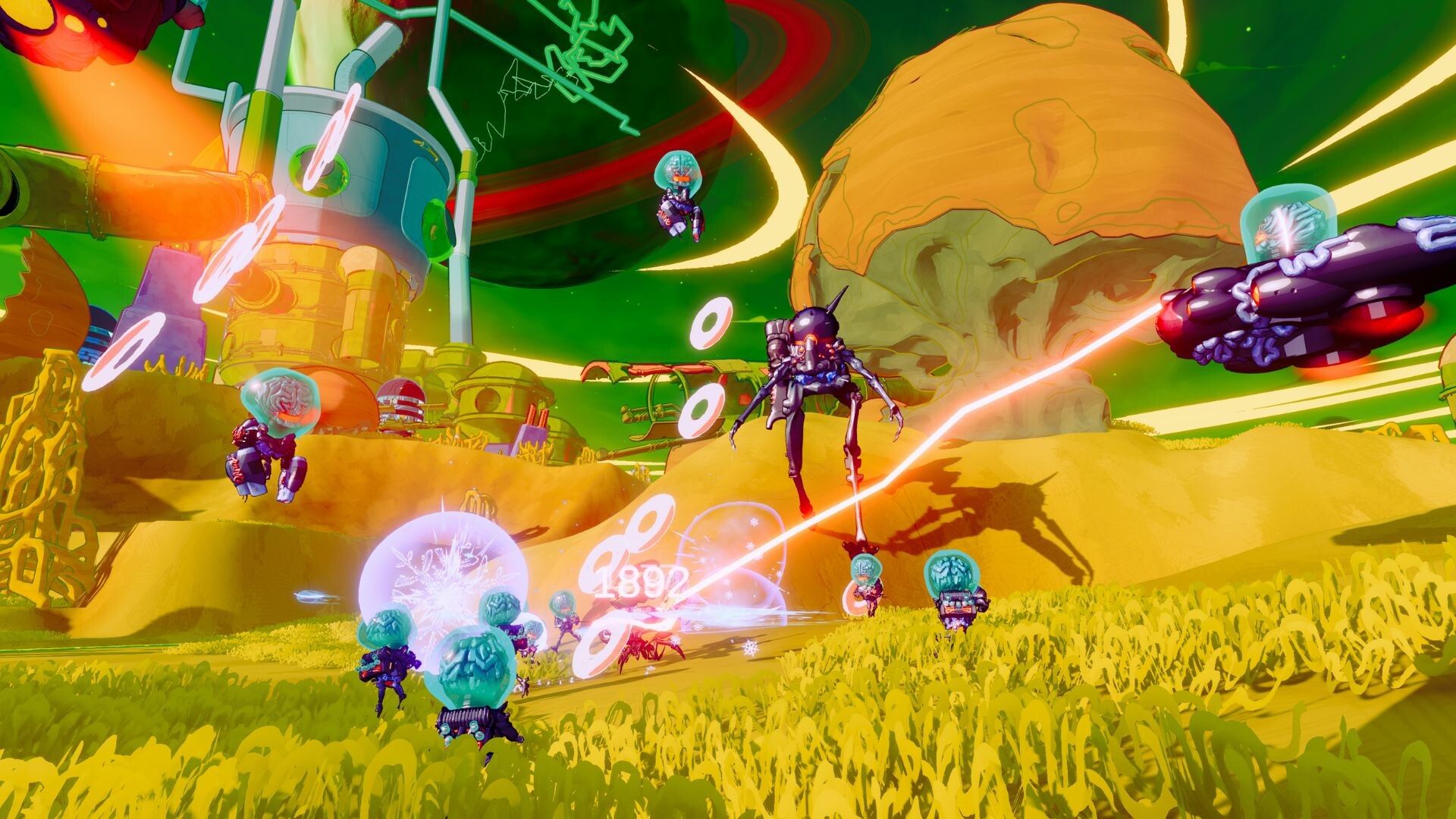
Co-op is the other vehicle. Official copy says survive alone or recruit up to three friends to destroy aliens and swap their meat alongside you. Online, cross-platform, a lobby that can look like a medical accident. I have a rule for cheap-to-mid chaos. If a game is worse with friends than with a catalogue, it is broken. If it is only good with friends, it is a party. SWAPMEAT is good both ways and honest about the tax.
Solo is where the craft lives, because every limb is your fault. Four-player is where the comedy lives, because one of you is always the reason the squad is a smear. Difficulty scales with the headcount, so a friend is not free labor. A friend is a new problem who also brought a gun. When someone leaves, the planet exhales. When someone joins, the planet hires more staff. That scaling is the difference between a co-op mode and a co-op idea.
A stack of people who already know how the other laughs will invent builds that look like genius and sound like a deli. A stack of strangers will invent a story they will tell at dinner. Both outcomes are the feature. I would not recommend public chaos as the only way in. I would recommend it as the way you find out whether your friendship can survive a stolen torso.
The Steam sample around a game this loud is no longer tiny. Very Positive is the official weather, 314 of 359 on the side of yes, and that split is fair. Players who found the swap like the swap. Players who wanted a deeper mission novel, a prettier gunfeel, or a campaign that never repeats an errand bounce off. That is honest. SWAPMEAT is a $16.49 indie that knows what it is.
Wintory in the Meat Locker
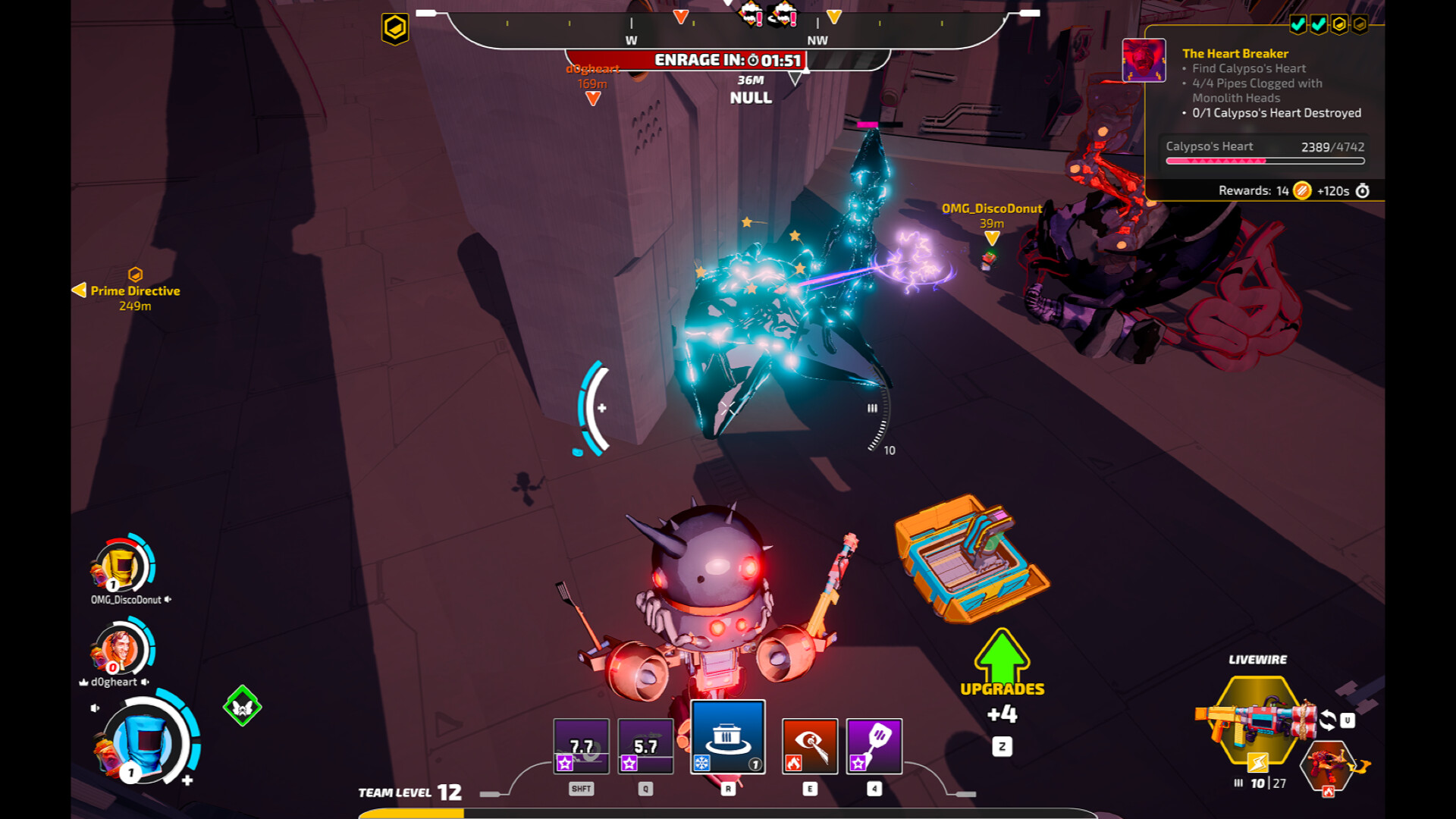
Presentation is the other reason the object feels more expensive than sixteen dollars. The look is cartoon-gross, high contrast, readable in a panic. Goo is the costume. Clarity is the craft. You can tell a harvest from a threat at a glance, which is the review you want from a game that kills you for blinking. Early planets still look like a joke. Later planets look like the joke lost an argument with a corporation that likes neon and meat.
Austin Wintory scored the thing, which is a sentence that would be a flex on a forty-dollar box and is almost a prank at this price. The man who made quieter games feel like prayers is in here making a turkey head feel like a motif. Official notes say the music changes when you swap, which is the kind of detail a composer adds when the mechanic is the story. I noticed. I grinned. I swapped again to see if the score would confess. It did.
I am not writing an album review. I am saying the butcher shop sounds like a place you would like to fail in. Gunshots land. Drops land louder. The mix stays out of the way of the tells you need to hear. English ships with full audio. Portuguese from Brazil, Latin American Spanish, Japanese, Korean, and Simplified Chinese cover the rest, enough to get a mixed corp into the same lobby.
Full controller support is the Steam checkbox, and the game is verified for handheld play on a Steam Deck. Windows and Mac are both on the box. I will not write a benchmark novella. On the nights I spent with the PC build the frame held, the inputs listened, and the swap arrived when I asked. That is the review you want from a game whose verb is mid-combat. If the limb is late, the joke is over. The limb was not late.
Still Swapping After the Glizzy
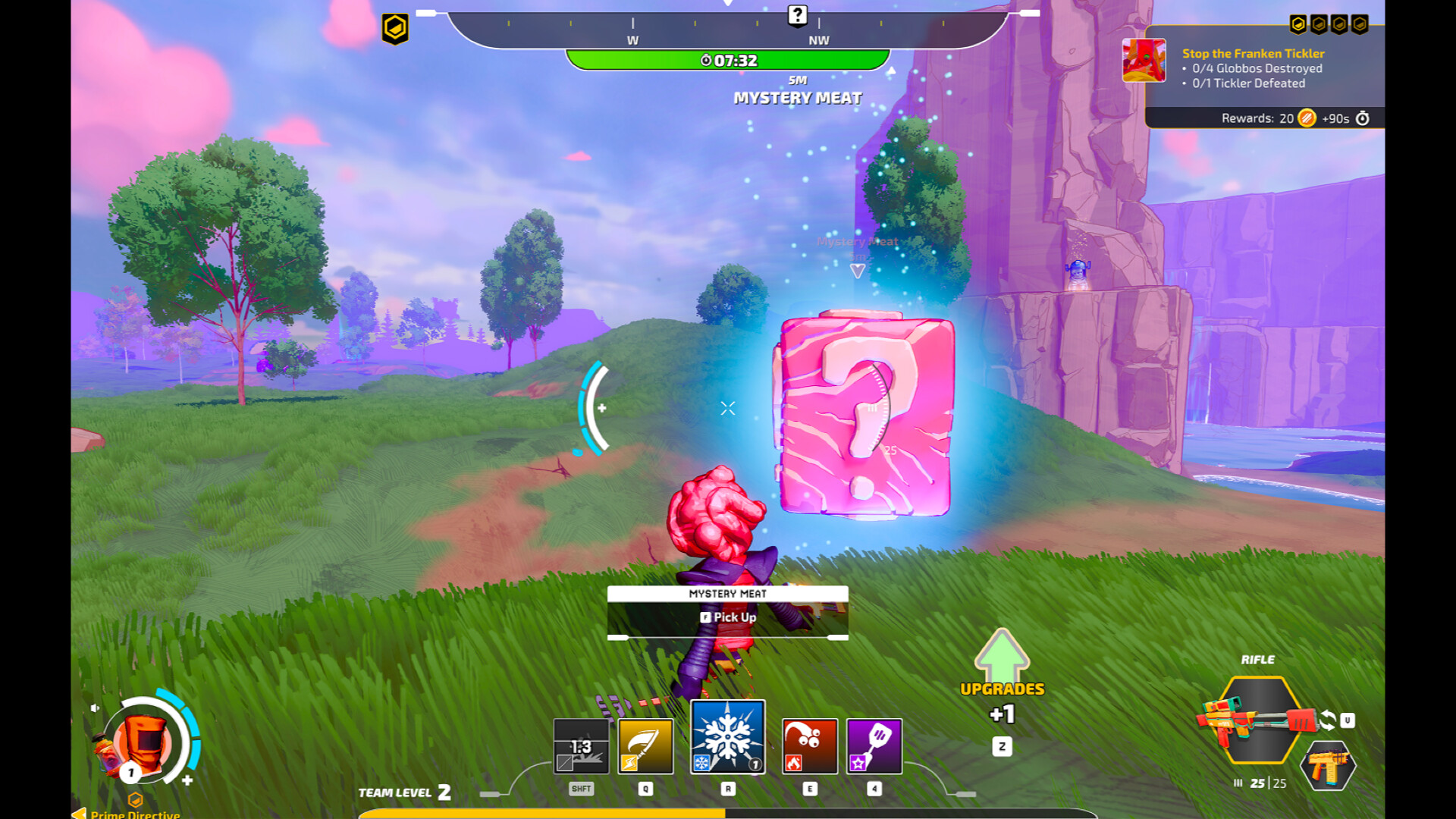
SWAPMEAT is a rare mid-priced roguelite that understands its own joke and then has the discipline to make the joke a loadout. One More Game built a corp about improvisation, a planet about groceries, and a toybox that looks like a garage sale and plays like a craft. The swap is the hook. The research sink is the spine. The night you finally mean a turkey head is the grin.
It is better as a catalogue than as a novel. The movement stays the reason to recommend it. The Wintory score stays the reason you keep the window open. The missions repeat their manners. So does the grin when a stolen torso turns a bad minute into a story you will tell like you meant it.
I am scoring it 8.5, Great, because the identity is this strong and the limitations are the limitations of a focused roguelite, not an unfinished one. At $16.49 you are buying stylish body-shop comedy, a finished 1.0 with a boss at the end of the sentence, and a loop that respects the fact that death should leave a receipt on your legs. I would recommend it to anyone who likes a build that has nerve and a planet that is allowed to be disgusting. Distinctive mid-combat swapping, four difficulties for the restless, co-op that scales like a threat, and a price that respects your week are a lot of game for the ask. The errands repeat their jokes. The jokes are still sharp.
Squishy is still reporting to a corp that pays in limbs. After a few clean extractions, you will understand why the job is not finished, and why you keep putting on a new head anyway.
We prepared this review with a digital copy of the SWAPMEAT for the PC version provided by Pressengine.