
There is a particular kind of invitation, rare in a genre that usually hands you a crewmate color and a vent, in walking into a castle and discovering that the entire product is a vote that used to be a village. The task is still a task. The night is still a night. The first whisper that tries to teach you a lesson is not a metaphor. Castle of Blackwater, the 2D social-deduction party from Castle of Blackwater, is built on that quiet, and the quiet is ruder, louder, and more useful than a free-to-play castle has any right to be.
I played the PC version, the 25 March 2025 launch that Castle of Blackwater walked onto Steam as a paid village and then opened the doors for free on 23 July 2025 after a demo that already knew how to lie next to a Book of Tasks. You are one of ten strangers. You draw a faction. You complete tasks or sabotage them. You vote. Twenty-nine Steam achievements sit in the torchlight. The English Steam sample is Very Positive, 91 percent of 81, with 179 voices across languages, which is the honest weather of a small, loud village and not a dare. Great, not a stadium, and very much a castle I would recommend you enter if you like a deduction loop that knows it is a conversation.
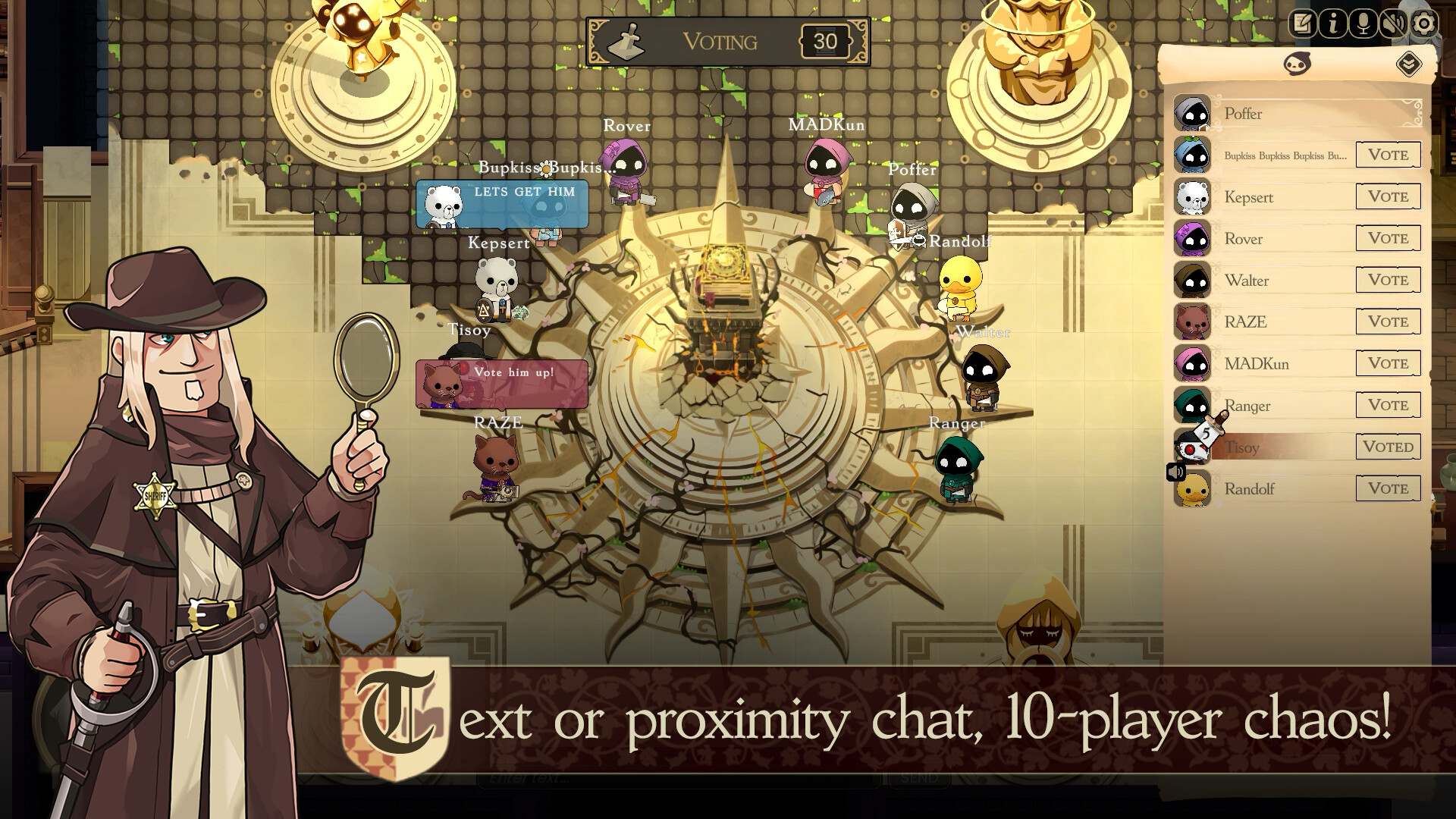
The Castle Does Not Care Who You Were

Most social deduction games begin with a color and a chore. Castle of Blackwater begins with a role reveal and a clock that already intends to charge you rent. Official copy on Steam says up to ten strangers are trapped in a castle filled with danger, deception, and dark forces, then asks you, with the grammar of a village that has already lost a few scholars, whether you will fight to survive or betray and eliminate. That is not flavor text. It is the design refusing to pay for a spaceship when a courtyard will do.
You start walking because the alternative is becoming a rumor in a place that does keep rumors, and then hangs them on a body. The first stretch is staged like a punchline that forgot to be funny. You pick a task from a book. The castle thinks about it. Someone in the hall thinks about you. The script, still in third person and still a little theatrical, asks you who you will trust. Nobody else will answer first. That is the rest of the map.
I like a premise that prices curiosity as a hazard and then lets you walk toward it anyway. Official lore says almost a thousand years have passed since Earlwind Axelot found a castle that was not built so much as it appeared, and that magic itself started inside the walls. Challengers still flock to Blackwater Village to study, to form a temporary alliance, and to attempt a quest that pays in gifts if you live. Failure is not a respawn joke. Failure is how the village gets its cautionary tales. Story is environmental and stingy, which is the right instinct for a game that wants your voice more than your diary. You are not reading a novel. You are looting a debate that is still happening.
The fantasy is not mastery of a lore bible. The fantasy is competence arriving about half a match after you invent a lie you can stand on. You will fail in ways that would be funny if the vote were not so sincere. You leave a fingerprint on a body. You walk back. You become the kind of person who thinks a Book of Tasks is a personality.
Three Factions and a Bell That Names You
The loop is the old religion and Castle of Blackwater does not pretend otherwise. Protectors complete tasks, form alliances, and expose the Satanic. The Satanic sabotage, eliminate, and talk like neighbors. The Forgotten play both sides and stir the pot like people who have been studying too long. None of that is a revolution. All of that is the sentence the rest of the toybox has to live in.
Roles are physical in the way a good costume is physical. You are not only drowning in a menu. You are looking at a Sheriff who follows a bloody trail, a Record Keeper who shares a notepad if they die on schedule, a Nightwatcher who treats secret passageways like a commute, a Vigilante who can assassinate a suspect and then discover that choosing wrong is a career decision. On the other side of the joke sit a Silencer who can shut a mouth mid-discussion, a Psychic who traps a room and vanishes, and a Werewolf who waits for night the way a tide waits for the moon. Official features call that ten unique characters. I call it a reason to stay for another lobby.
I have played a lot of games that treat the first night as a tutorial and the hundredth night as a spreadsheet. Castle of Blackwater is heavier than that on purpose. Official copy says in the everlasting battle between good and evil, only one side will survive to claim the castle. That sentence is both a promise and a warning. If you want a hidden-role toy that never asks you to defend yourself on a stage, you will feel overemployed. If you want a night that turns a vegetable-slicing mini-game into evidence, you will feel hired.
Dynamic faction math is the other half of the pitch. A Protector majority is a choir that can still hang the wrong soprano. A Satanic minority is a pair of knives that have to sound like homework. A Forgotten wildcard can help, hinder, or collect souls like a person who never picked a church. I left the honest path on for an evening and the theatrical path on for another. The castle did not mind. The vote minded either way.
Tasks, Souls, and a Night That Charges Rent

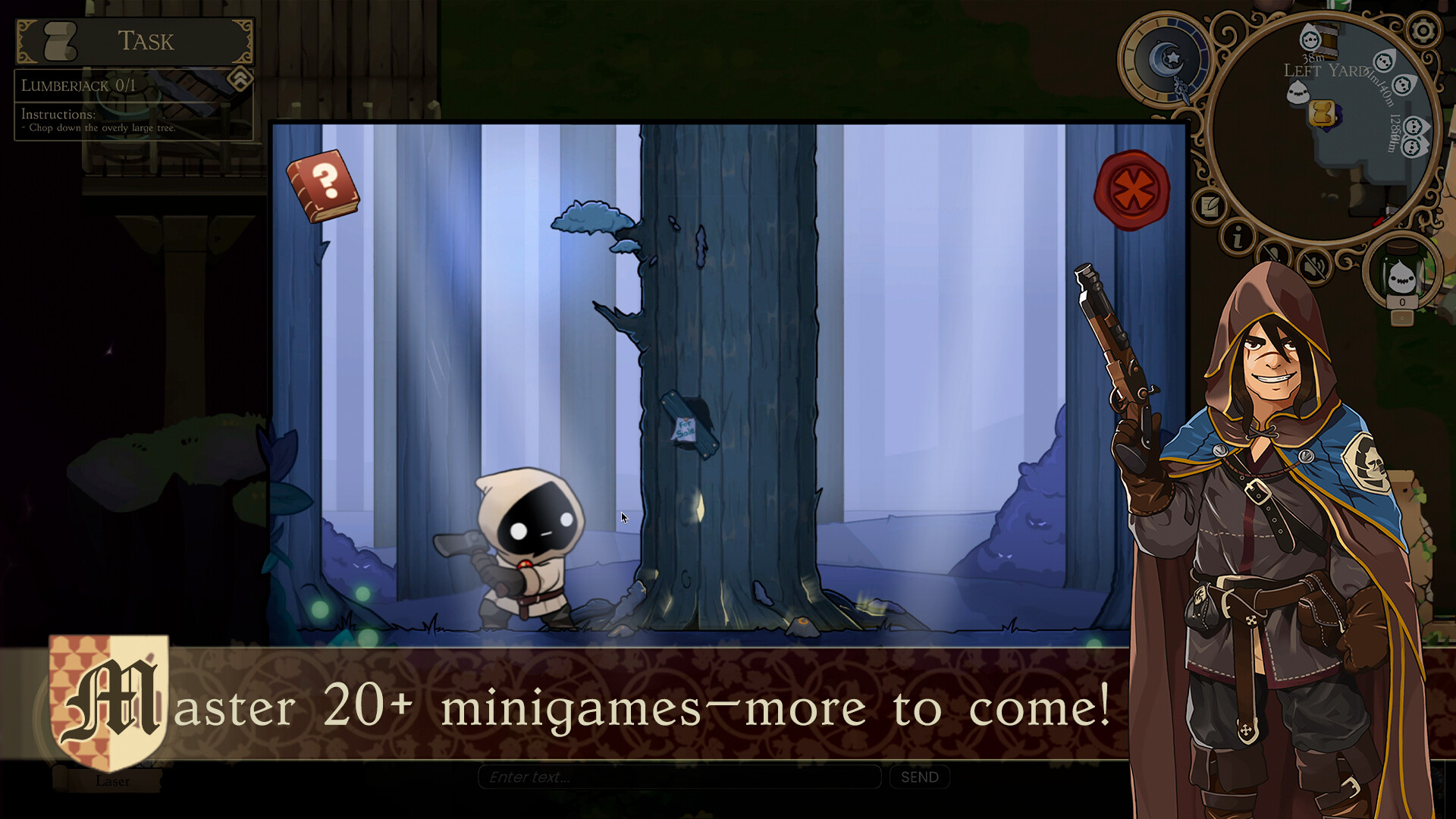
Pressure is the variety. A day cycle lasts three minutes and gives you slightly more light and slightly less honest danger. Protectors and Forgotten visit the Book of Tasks in the entrance hall, claim easy, medium, or hard work, and watch the XP bar like a shared pulse. Easy work is fast and stingy. Hard work is a combo of smaller chores and a better payday. A claimed task leaves the pool and gets a marker on the minimap. Finish it and it returns, but not immediately, which is how the castle keeps you from farming the same candle forever. If you are too far from the book, a quick task hands you a random easy job. You lose the overview. You keep your feet moving.
Satanic players spend the same three minutes pretending the book is their friend. They look for a room, a back, a moment. A body drops and waits. Anyone can investigate it, including the person who made it, and the investigation leaves fingerprints. A global bell tells the castle that someone has died, unless you are already hiding in the safe zone and the bell has decided you do not deserve the news. Report the body and the faction and role go public. Decline to report and you can try to steal a name. The body starts decomposing on first touch and vanishes a minute later. Investigators who arrive late can see who arrived early. Bodies that never get a report stay anonymous until a ghost buys the truth. That is a lot of manners for a corpse. It is also the best joke the loop tells.
Night is the temperature change. The clock strikes twelve and the castle offers you a choice that is free only once. Stay and keep working for bonus XP, or go to the safe zone and talk. The first night is complimentary. After that the door charges one soul, then two, then three, then four. Official copy is not shy about it. If you hid on night one you collected nothing, which means later nights will keep you in the dark with the Satanic and the Werewolf for company. I like a night that prices cowardice as a subscription. I also like a safe zone that turns into a committee meeting while the courtyard becomes a hunting ground. Both rooms are the job.
I will not invent a highlight reel with fake timestamps and tidy vote counts. The nights that stay with you are the ones where you thought the book was finished, then something started whispering in a rhythm that was not weather, and then you were on the wrong side of your own alibi. Melee can feel like two costumes agreeing to take turns being disappointed. That clunk is real. It is also priced into a social loop that would rather you investigate, retreat, and come back dressed in a better story. Distance helps. A working lie helps more.
Ghosts Keep a Shop After the Knife
Death is the other half of the short description and the kinder half of a week. Official features say death is not the end. As a ghost you collect souls, buy power-ups for the living, and listen to the hallway from a courtyard shop. You can talk to the dead in a Dead Man’s Chat. You can lock onto a survivor and ride their point of view like a rumor with manners. During the day, souls spawn where only ghosts can see them. During the night, the living can pick them up if they stay in the castle. Alive players cannot spend souls. They can save them for their own funeral or send them to a random dead teammate. That last sentence is the closest Castle of Blackwater comes to a power fantasy, and I like it more than a new knife.
The ghost shop sits in the courtyard and sells the kind of help that makes a living teammate look smarter than they are. Smart soul management is the difference between a pretty spectate and a win you can still claim from the shadows. Ghosts also throw daggers at other ghosts, which is a rude way to keep a rival from farming souls. I sold souls I was sure I needed and then needed them, which is the oldest shop joke in the book and still a good one.
Twenty-nine achievements sit behind the loop for people who like a receipt. Names like First Blood, Rampage, and Champion tell you the shop has a sense of humor about knives and loyalty. None of them change the central truth. You are here to finish a book, survive a night, and then find out whether the village believed you.
Presentation is readable, which matters more than prestige. You can tell a Protector hallway from a safe-zone huddle from a courtyard shop at a glance. If you cannot read a room, the hunt dies and the vote becomes homework. These spaces are atmospheric enough to carry a scare and clear enough to carry a plan. You always know where you are. You do not always know why a Werewolf is already there.
Proximity Lies and a Lobby That Has to Fill
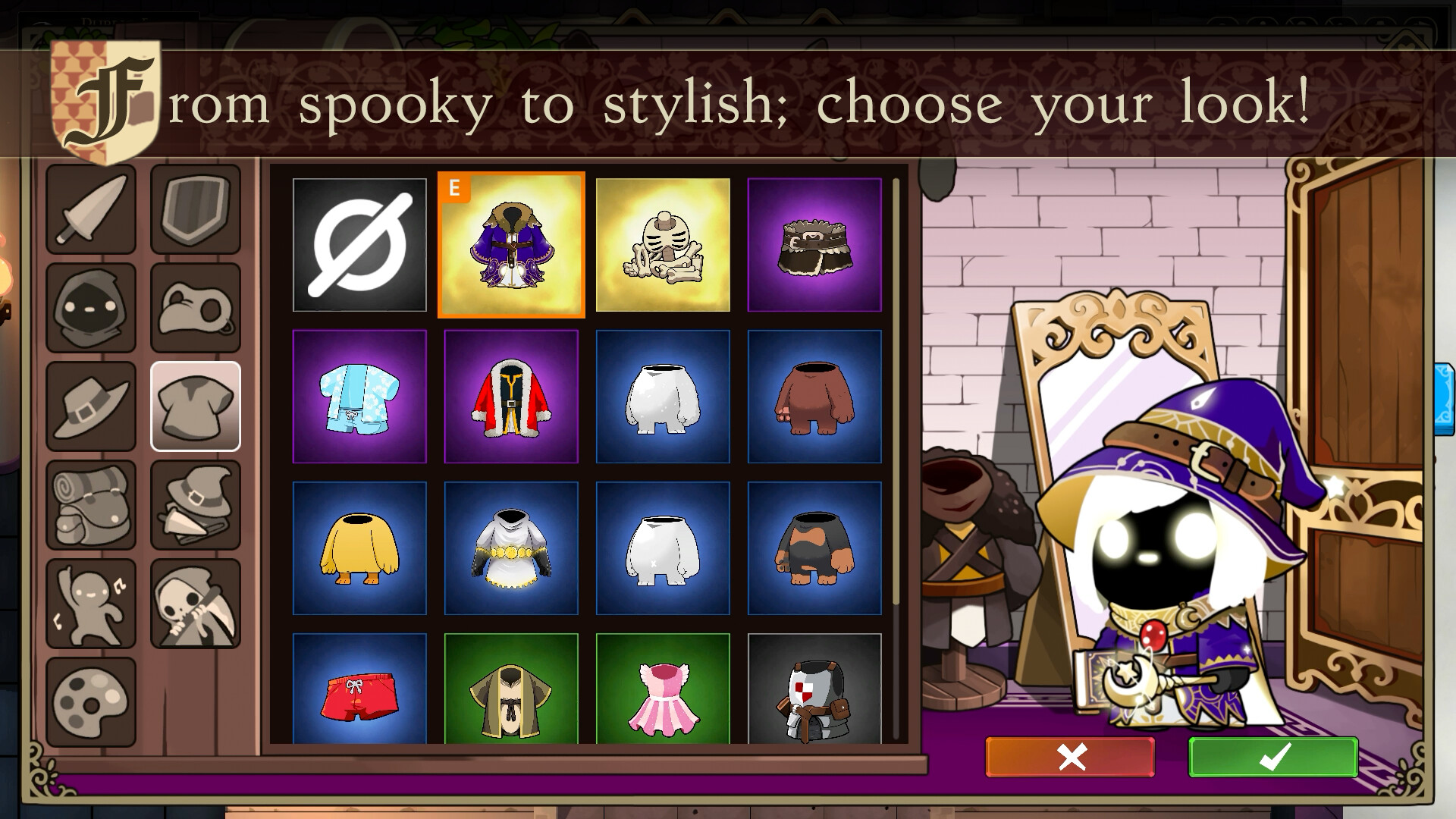
Voice is the temperature the store page cannot screenshot. Official features promise proximity voice and text chat, the right to scream, scheme, or whisper a sweet lie into an ear that is standing too close. That is the toy. Mini-games keep your hands busy so your mouth has something to hide. Slice vegetables. Chop a tree. Light candles like a medieval disc jockey. Twenty-plus tasks sit on that list. Two hundred-plus cosmetics sit next to it. I will not turn this into a fashion seminar. The voice of the game is the hallway, and the hallway talks in range, weather, and the occasional mechanical knock.
I should be clear about the friction, because it is real and it is not a footnote you hide after the score. Castle of Blackwater looks like a game that was built by a small shop that wanted a village more than a showcase, then discovered the village needed ten people who all clicked ready at the same time. Lobbies can be handsome. Queues can be stubborn. A load can arrive a half-minute late to its own party. Population can sulk when the castle decides to remember itself. I will not invent a player census. I will say the village sometimes forgets to stock the crowd you need and then shrugs.
Technical manners on a desktop build can stutter when a late match decides to be a theology problem. Bodies can get philosophical in a doorway. Voice can drop, which is a sentence no designer writes for fun. Autosaves are not the joke here. Matchmaking is. None of that is unique to this castle. All of that is the tax on a free-to-play social deduction that launched in March 2025, opened the doors wider in July, and is still hiring a night shift in 2026.
The developers wrote the free-to-play terms with the candor of a shop that has already lost the argument with a price tag. Optional cosmetics instead of an upfront ask. That sentence is both a promise and a warning. If you want a packed stadium that never asks you to bring friends, you should wait or bring the friends yourself. If you want a place that is already a place, you are the audience.
English is the Steam language with a long list of interface cousins. Tutorial narration is AI voiced, which the store page admits with the politeness of a shop that would rather you know. The rest of the talk is yours.
Better With a Village Than With a Queue
I have a rule for free-to-play deduction. If a game is worse with friends than with a queue, it is broken. If it is only good with friends, it is honest. Castle of Blackwater is honest, and that honesty should sit next to the price, which is now nothing and still costs a calendar.
A queue night is a competent weekend if the lobby fills. You punch the book, you invent the alibi, you lose a body, you walk back, you put a better lock on the joke. A village night is the version the systems were quietly designed around. Someone farms XP. Someone lurks. Someone learns, too late, that a Silencer does not respect a closing argument. The castle becomes a shared instrument you play with nine other disasters instead of a commute through empty halls.
The Steam sample around a game this small is always going to look like weather. Very Positive is the official report, 91 percent of 81 English voices, 163 of 179 across languages, and that split is fair. Players who wanted a deeper scrap, a prettier frame rate, or a matchmaker that never hides the wait bounce off. Players who wanted a 2D party with a book, a night, and a bad idea about proximity stay. I am in the second camp with caveats, which is the only honest place to stand.
Compared with the giants of the hidden-role business, Castle of Blackwater is not trying to be a career you finish this week. It is trying to be a place you keep returning to with the same nine people. The developer said the quiet part on the store page. A small but active team. Discord open. Fun if you will meet the game where it lives. That is not a cop-out if the place is worth the walk. Some nights it is. Some nights the lobby is a myth and the doorway is a theology problem. Both nights are Castle of Blackwater.
Still Standing After the Vote
Castle of Blackwater is a rare free-to-play deduction that understands its own joke and then has the nerve to make the joke a village. Castle of Blackwater the studio built a castle about trust, a book about teamwork you do with strangers, and a toybox that looks a little homemade and plays a lot more sincerely than that sentence suggests. The loop is the hook. The factions are the spine. The walk from a task to a vote is the grin.
It is better with a village than with a queue. The late matches can clunk in the way a small social scrap is clunky. Population can sulk. The presentation has indie fingerprints, from the stubborn loads to the story that would rather be a chronicle than a cutscene. All of that is true, and all of that is already priced in at free on Steam. You are not buying a decade. You are buying a night that can turn into several nights if you like being a coordinated disaster, or being the person who has to explain the disaster to a Book of Tasks.
I am scoring it 8.5, Great, because the identity is this clear and the limitations are the limitations of a focused village, not an empty one. I would recommend it to anyone who likes a hidden role that has weight and a map that is allowed to be rude. Distinctive faction weather, a night that charges rent, a ghost shop that turns death into conversation, and a price that respects a long week are a lot of game for the ask. The systems repeat their manners. The manners are still useful.
The castle is still out there, still hiring a night shift, still asking who you were. After a few votes, you will understand why the job is not finished, and why you keep walking back to the book anyway.
We prepared this review with a digital copy of Castle of Blackwater for the PC version provided by Pressengine.