There is a particular kind of loyalty, rare in a year that usually hands you a remaster and a slider, in watching a 1995 arcade hero decide the only honest job is still to run, jump, and shoot a kingdom of toys that learned to bite. The pendulum is missing. Scrubby is not subtle. The ponytailed action figure you just spawned is already late for a cabinet that no longer exists. Biomechanical Toy (QUByte Classics), the Zeus Software run-and-gun rescued by QUByte Interactive with Piko Interactive and Bleem!, is built on that job, and the job is ruder than a ten-dollar museum has any right to be.
I played the PlayStation 5 version, the July 16, 2026 launch that put a Gaelco-era 1995 arcade oddity onto living-room hardware at $9.99 through the QUByte Emulation Engine. Zeus Software made it in Spain a year before a certain metal slug taught the world the same joke with a bigger marketing budget. You are Inguz, sunglasses and ponytail and the kind of attitude that only costs a quarter. Scrubby stole the Magic Pendulum that brings toys to life. Six surreal worlds wait, a biomechanical army between you and the artifact, allied toys to rescue if you are paying attention. Rewind, save states, CRT filters, a jukebox, a gallery of concept art. Fourteen achievements with names like Crazy West and Hell Train. Great, not a new game, and very much a cabinet I would recommend you feed.

A Pendulum, a Ponytail, and a Villain Named Scrubby
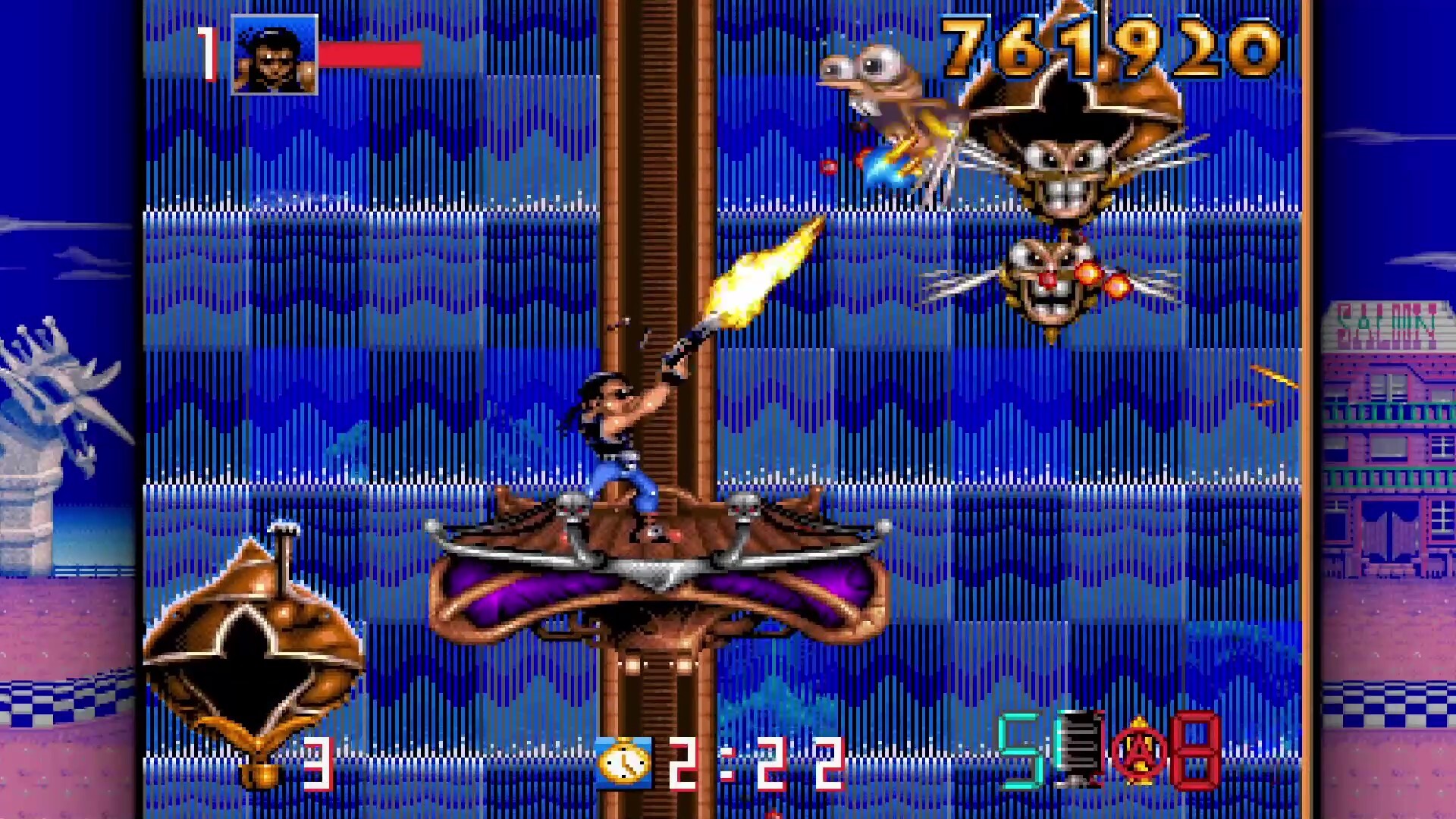
Most modern run-and-guns give you a war and a reason to look serious. Biomechanical Toy gives you a toybox and a dare. The Magic Pendulum brings playthings to life. Scrubby stole it. Inguz is the person with the gun, the jump, and the haircut. That triangle is not flavor text. It is the camera, the credit you feel in your shoulders, and the reason a missed jump is not a setback so much as a change of career. You will rescue a toy and discover the toy was the plot.
Story is environmental and stingy, which is the right instinct for a cabinet that wants your hands more than your diary. Crazy West, Chess Valley, a Hell Train that would like a word, a Forest of Clocks, a Dragon’s Tower, a massacre of flying pigs, a wild land, a pendulum at the end if you are stubborn. Those names are achievement titles and, after enough nights, stage titles you will say out loud like a person who has been living in 1995. You are not reading a novel. You are shooting a dream that is still arriving.
I like a premise that prices play as a hazard. A lot of arcade cousins hand you a soldier and a desert. This one hands you a kingdom of objects that decided to have opinions. The joke is childish. The punchline is a boss the size of a furniture store. You came to save toys. The toys would like you to become one.
The fantasy is not mastery of a lore bible. The fantasy is competence arriving about half a second after a mushroom turns a gap into a plan. You will be flattened, rewound, and sent back to the last save state, and the correct response is to fire the next volley like a person who has a reservation at the next world.
Run, Jump, Shoot, and Do Not Lecture the Cabinet
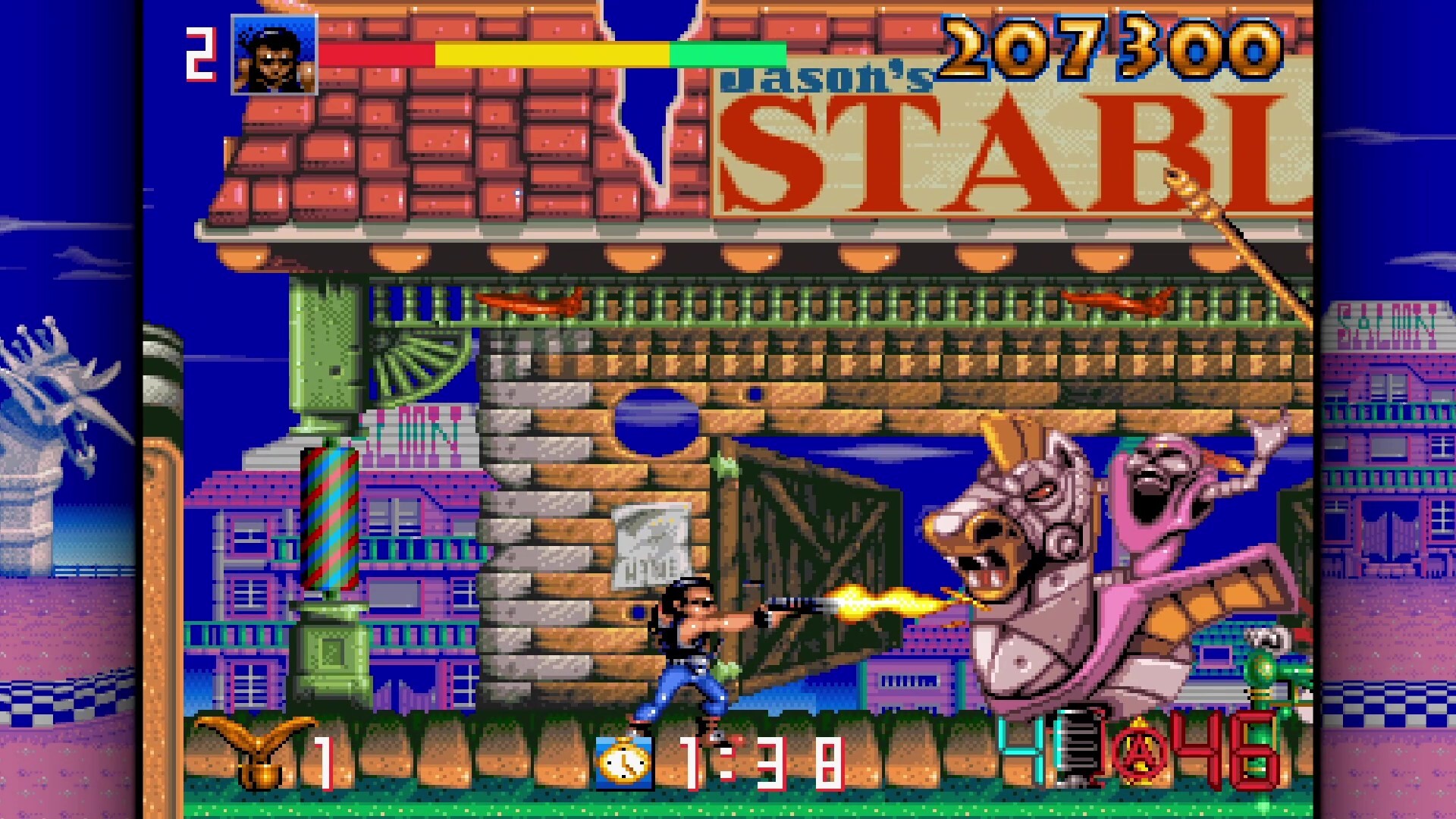
Combat is the reason the kingdom is worth the bruises. Official copy calls it non-stop action, which is a polite way of saying the screen is a conversation between your automatic fire, your explosive ammo, and a full-screen bomb you have been saving for a religious experience. Inguz is not a costume. Inguz is the verb. Run is how you write a line. Jump is how you refuse a line. Shoot is how you admit both lines were a trap you liked.
The first hour is a tutorial in not standing still. The tenth credit is a tutorial in looking like you meant the chaos. You bounce on mushrooms to reach the rude ledges. You smash chests because chests are how 1995 said please. You interact with a living world that is less a simulation than a set of gags that happen to be solid. A platformer and a shooter sharing a body is the house rule. The body is readable if you are looking, which is a courtesy from a game that is otherwise happy to turn you into confetti for being polite at the wrong time.
I have played a lot of games that borrowed this grammar and then treated it like a hat. Zeus treated it like a thesis a year before the genre’s most famous cousin made the thesis a brand. Explosive ammo is punctuation. Automatic fire is the sentence. The bomb is the paragraph break. The combination is why a stage can be solved three ways and still kill you for picking the fashionable one.
Bosses are where the kit gets graded. Giant toys, challenging combat mechanics, the official boast, and after enough nights the official feeling. A western gag that grew a health bar. A chess piece that forgot it was furniture. A dragon that thinks a tower is a personality. I got stuck. I changed the sentence I was speaking with the bomb. I came back with a rewind I was ashamed of and a better line through the arena. The fights stayed fair in the way a good cabinet is fair. If you got hit, you knew whose fault it was. The tell is a 1995 tell. The window is a 1995 window. That is the point of a preservation, not a complaint you hide after the score.
Six Worlds, a Rescue, and a Map That Remembers Cabinets
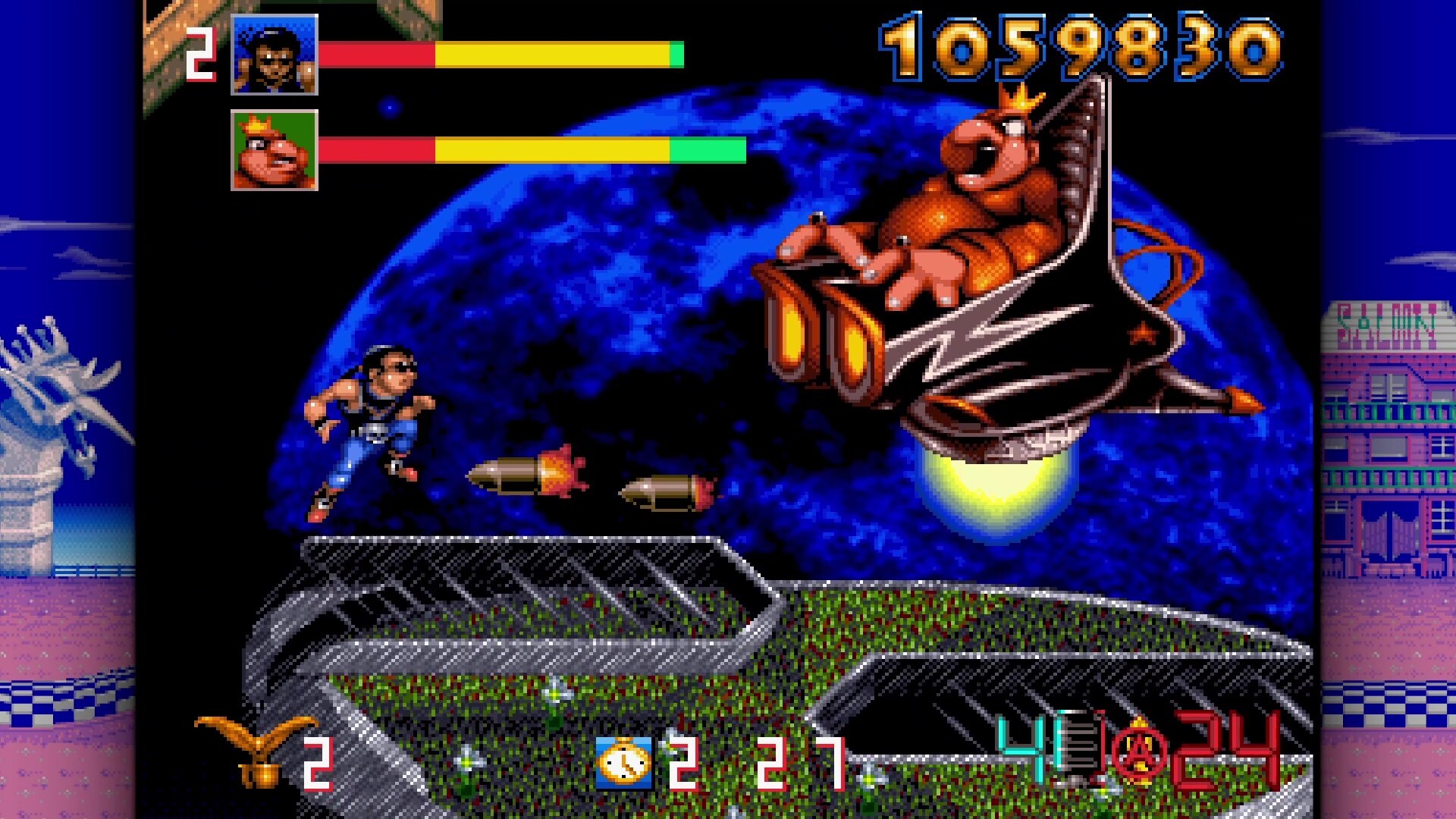
The catalog is six surreal, vibrant worlds, and that number is both a promise and a bill. Crazy West is a handshake that wears a hat. Chess Valley is a joke about board games that learned to bite. The Hell Train is a commute with worse manners. Screen Combat is the stage that winks at the glass you are looking through. Forest of Clocks is time wearing leaves. Dragon’s Tower is the appointment you made with a reptile. Flying pigs, wild land, the pendulum if you finish the argument. Achievement names do the cartography. I will not turn this into a spoiler atlas. Part of the pleasure is learning the house style. Part of the terror is learning it too late for a jump.
Rescue is the other thesis, and it is not wallpaper. Allied toys wait in the mess. Pulling them out of trouble is how the cabinet remembers it has a heart. I like a run-and-gun that prices kindness as a side objective instead of a cutscene. You will miss one. You will go back because the rewind exists and because you are a critic and a fool. Both returns are the product.
Exploration still has secrets. Mushrooms for the rude ledges. Chests for the greedy. Alternate lines for the person who looks up. Puzzles are light and environmental. They ask you to look at a room and use the kit you already have. I like a puzzle that does not stop the gun for a quiz. These do not. They stitch the action to the map so a secret feels like a reward for paying attention, not a reward for reading a guide.
I should be honest about length. A 1995 arcade game is not a fifty-hour castle. It is a loop you feed until the loop feeds you. Continues were the original business model. Save states are the new one. The evening is complete if you accept that complete means a cabinet, not a novel. I have paid more for a worse hour. I have also wanted, on a second night, another world Zeus did not have the budget to draw. Six is the spice rack. Spice is not a meal if you were hoping for a restaurant.
Rewind, Save States, and the Courtesy of a Modern Quarter
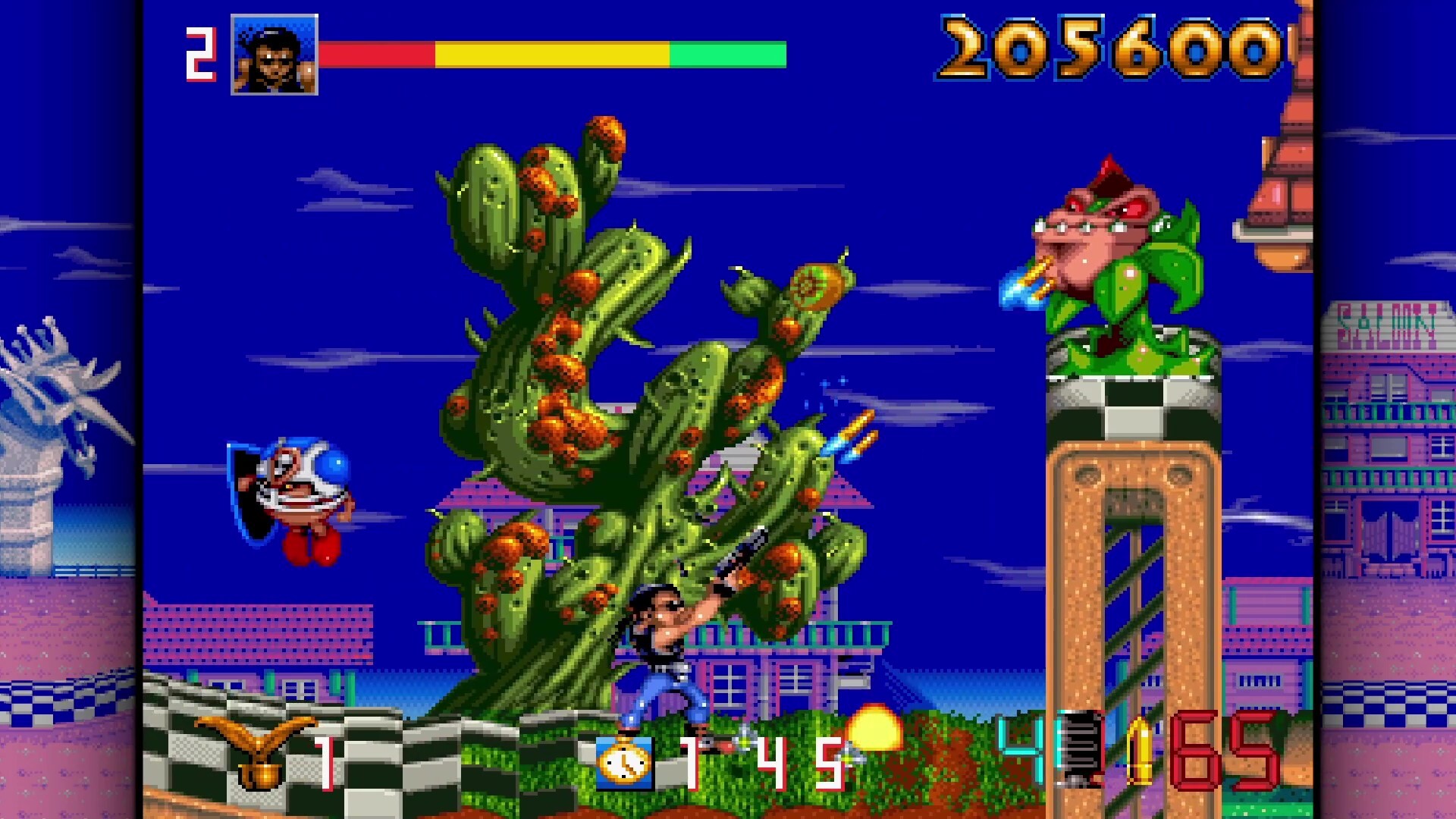
The modern kit is why I am comfortable recommending a game whose original audience needed a pocket of coins. Rewind: made a mistake, go back in time instantly. Save states: save and load anywhere. Screen filters: relive the feel of original CRT monitors. Jukebox and gallery: the soundtrack and the exclusive concept art, sitting in a lobby like a museum that learned to be useful. Those are the official tools and they are not a smear of extra. They are the difference between a preservation and a dare.
I have sat through plenty of arcade ports that wanted to be a hug with a scanline. This one wants to be a negotiation with your own pride. Turn rewind off and the cabinet is 1995. Turn it on and the cabinet is 1995 with a seatbelt. I used the seatbelt. I am a professional, not a masochist. I also turned it off for a boss I wanted to learn, because the tell is better when the mistake is expensive. Both settings are the product. The product is honest about which one you will use at midnight.
Save states are the other courtesy, and they will irritate anyone who wanted the original continue structure to remain a moral lesson. They will please anyone who has a job. I am in the second camp and I will not pretend otherwise. A 1995 difficulty curve is a design. A 2026 living room is a context. QUByte and Bleem! understood the context without sanding the design into a different game.
The gallery and jukebox are the overtime for people who like a cabinet to come with a lobby. Concept art from a Spanish shop that did this work before the genre became a brand. A soundtrack that sounds like a boardwalk arguing with a synthesizer. I lingered. I am not ashamed. Preservation is partly about the play and partly about the proof that someone drew these pigs on purpose.
Fourteen achievements sit in the background like a second museum. Conquered the Crazy West. Escaped the Hell Train. The Dragon Vanquished. Pendulum Retrieved. Honest names, one per boast. I will not turn this into a trophy guide. What I can say is that the kingdom is more interested in your relationship to a jump than in a collectible checklist you could put on a wiki.
Pixel Toys, a Boardwalk Score, and a Filter That Remembers Glass
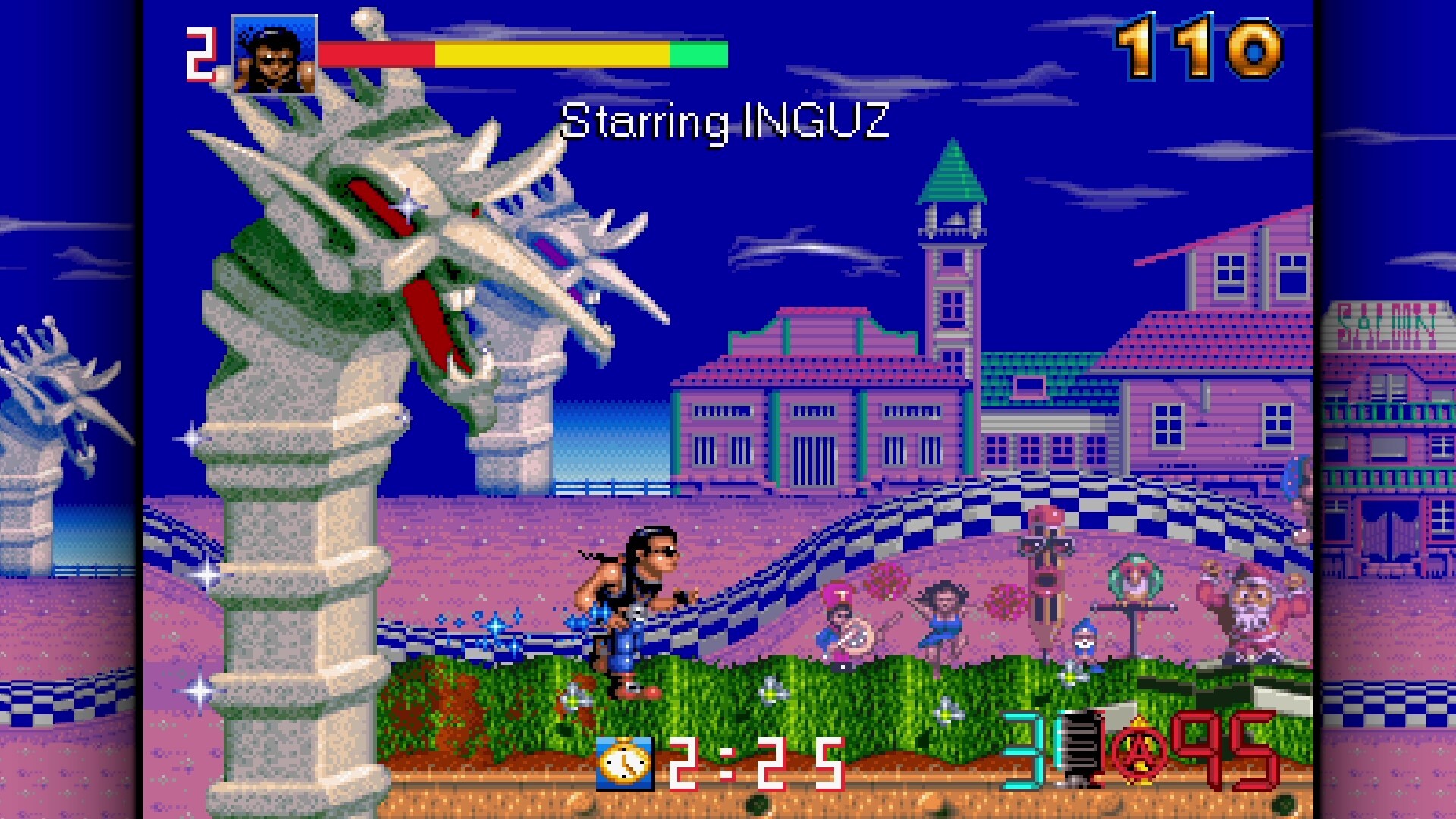
Presentation is the other reason the object feels more expensive than ten dollars. The pixel art is the official boast and, after enough nights, the official reason you keep the window open. Incredible is a marketing word. Handwriting is the critic word. These sprites have a Spanish arcade accent: chunky, expressive, a little drunk on color, readable in a panic. You can tell a friendly toy from a rude one at a glance, which is the review you want from a game that kills you for blinking. Early stages still look like a toy aisle. Later stages look like the toy aisle lost an argument with a dragon.
I have played a lot of retro collections that announce a unique look and then deliver a pleasant palette with nicer outlines. Biomechanical Toy’s kingdom has a handwriting you will not confuse with the cousin everyone names. Pigs fly because someone decided pigs should fly. Chess pieces walk because someone decided furniture should have a union. When a fight breaks and the pixels celebrate, it is not a loot explosion. It is the picture admitting you shut something expensive up.
CRT filters are the costume change. Turn them on and the living room pretends it is a mall. Turn them off and the pixels stand in modern light like a restoration. I used both. The filter is prettier. The clean picture is kinder to a jump. Either language works if you accept that the real input is your eyes.
Sound understands the assignment. A 1995 boardwalk score, chiptune grit, the little fanfare a pickup has been waiting thirty years to play again. The jukebox is how you admit you liked the music enough to stay in the lobby. Environmental audio is simpler than a modern mix and louder than a polite one. Guns bark. Bombs explain themselves. The mix stays out of the way of the tells you need to hear, then leans in when a boss arrives so the rematch has a costume.
Full controller support is the Steam checkbox, DualShock and DualSense called out, keyboard-only offered as a courtesy, save anytime listed like a feature because it is one. On a DualSense the run felt like a stick and the shot felt like a shoulder, which is how a living-room cabinet should feel. I will not write a benchmark novella. The published PC floor is an i5-4570-class chip, four gigabytes of memory, a GTX 960-class card, a gigabyte of disk. On the nights I spent with the PlayStation 5 build the frame held, the inputs listened, and the jump arrived when I asked. That is the review you want from a pixel action game. If the jump is late, the game is over. The jump was not late.
When 1995 Starts Rhyming With Itself
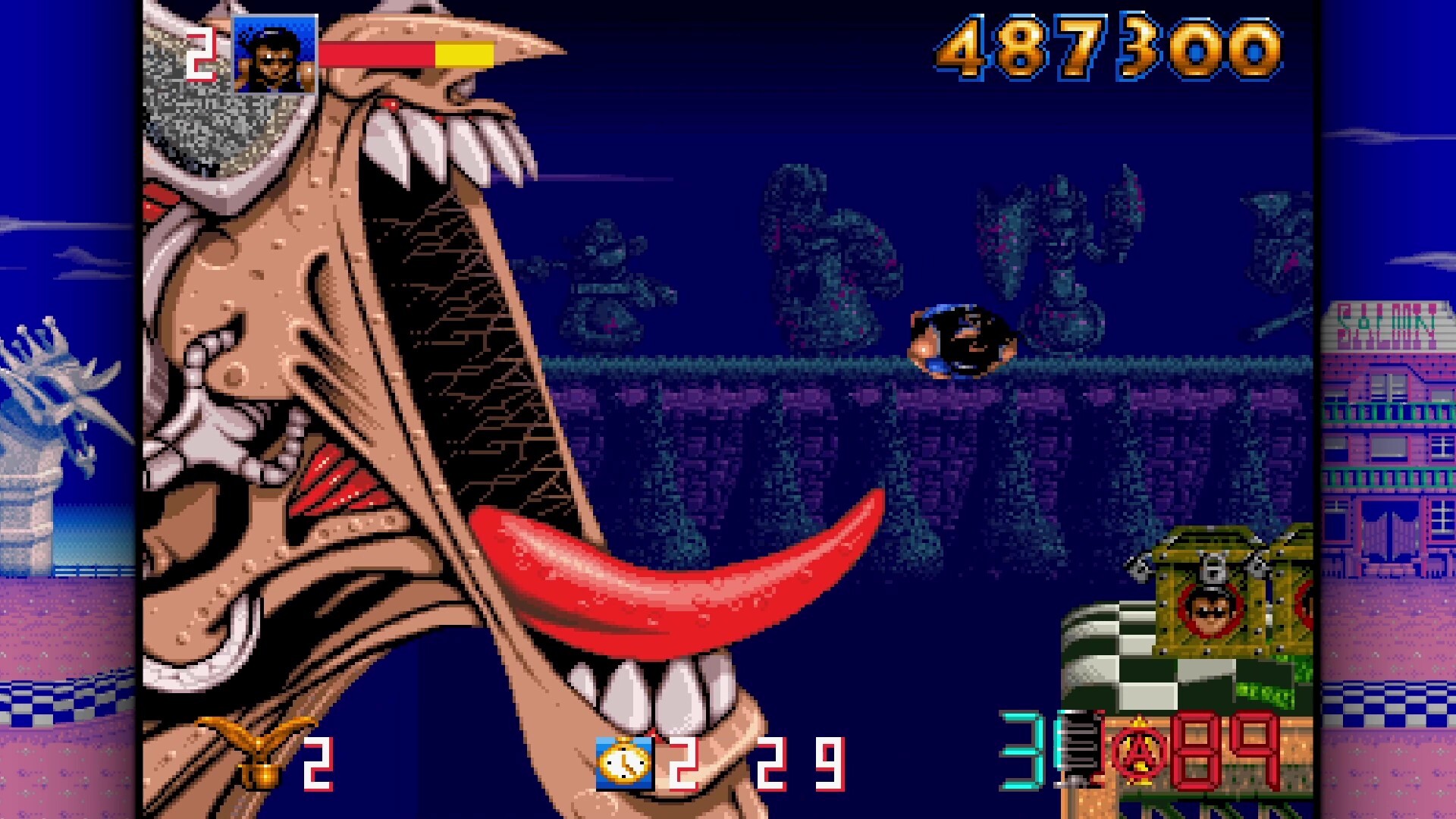
I should be clear about the friction, because it is real and it is not a footnote you hide after the score. The stages repeat their manners. New worlds, new bosses, new pigs, and still, after enough evenings, a corridor that is a rearrangement of an earlier corridor. Six worlds are a spice rack. Spice is not a meal if you wanted a novel. When the same category of surprise sits in a new costume, the surprise becomes a commute.
That is the cost of preserving a cabinet instead of rebuilding one. I wanted, more than once, another twenty minutes in a beautiful line the train was about to confiscate. I also wanted, more than once, a new verb in a late world and received a conjugation of an old one. Enemy variety thins if you live too long in the same joke. A full-screen bomb can flatten a room if you have been hoarding. The toybox, as atmosphere, is stronger than the toybox as a scare. Cartoons do a lot of the lifting. Dread does less. I felt hurried. I did not often feel afraid, which is fine, because the box promised a classic, not a haunting.
Difficulty is the other tax. 1995 is not a difficulty slider. Rewind and save states are the slider. Use them and the evening is a museum with a handrail. Ignore them and the evening is a pocket of coins you no longer have to carry. None of this is a broken object. All of it is why the score stays at Great instead of wandering into the next adjective. QUByte, Piko, and Bleem! made a complete preservation with a movement idea that still holds, a courtesy layer that respects your time, and a visual thesis you will remember in the shop later.
At $9.99 you are not buying a fifty-hour castle you can live in. You are buying a cabinet you will feed, a hero you will learn, and a villain who will start to look familiar before he stops being funny. The lobby is the overtime. The six worlds are the shift.
Still Shooting After the Pendulum Comes Home
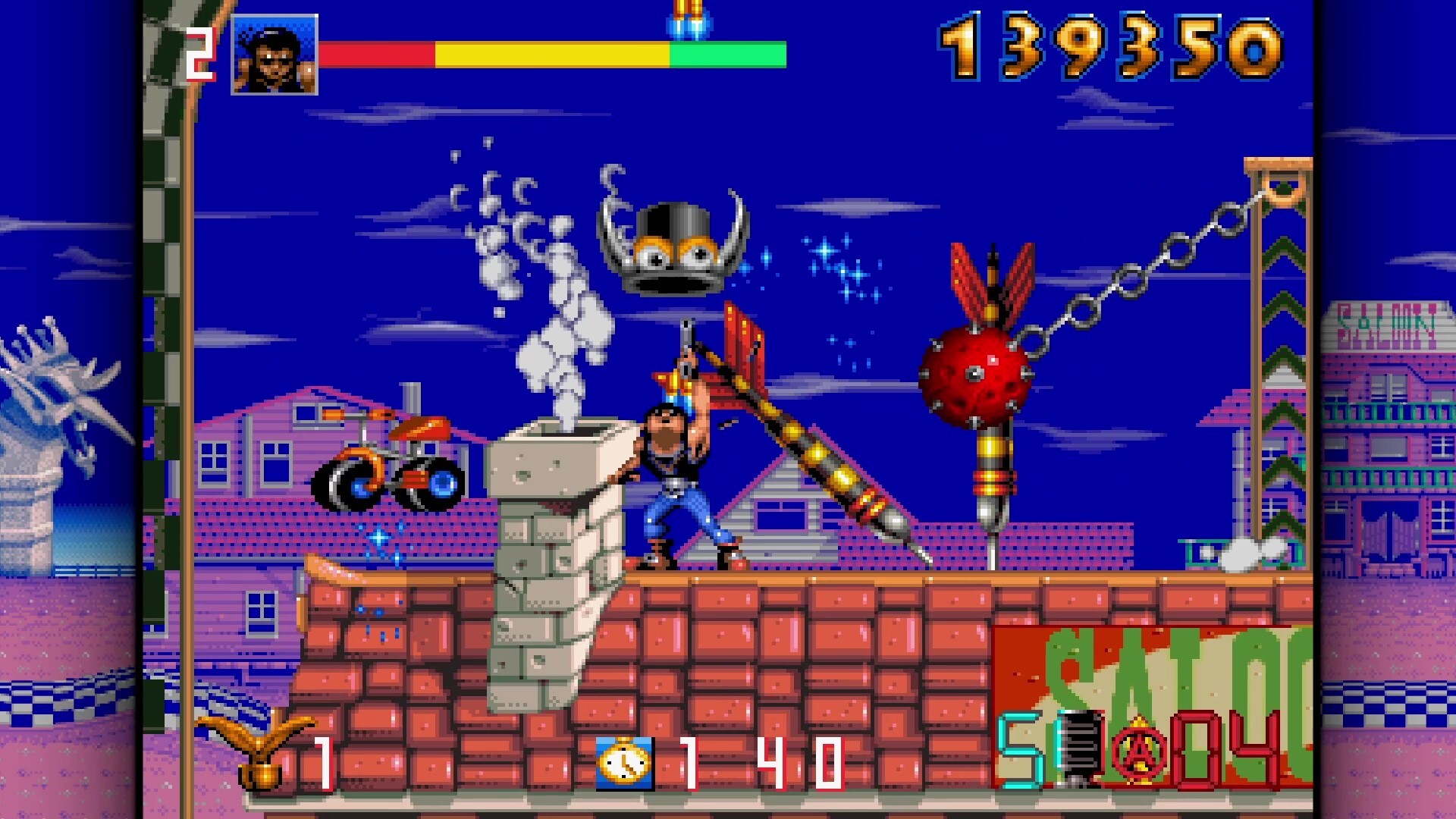
Biomechanical Toy is the rare snack-priced preservation that understands its own joke and then has the discipline to leave the joke a system. Zeus Software built a kingdom about play, a hero that has to share the frame with a bomb, and a toybox that keeps rewriting the hallway while Scrubby remembers what you rescued. QUByte Interactive, Piko Interactive, and Bleem! walked it to a modern door without asking it to become a different game. The hook is a ponytail on a dying workplace. The spine is the way a failed credit turns into a better line. The scar is the night the stages rhyme and you run anyway, because the next boss has a tell you have not finished listening to.
It is better as a craft than as a novel. The gun stays the reason to recommend it. The pixel toys stay the reason you keep the window open. The repetition is real. So is the grin when a mushroom steals a gap and a reckless bomb turns a bad room into a story you will tell like you meant it.
I am scoring it 8, Great, because the identity is this strong and the limitations are the limitations of a focused 1995 cabinet, not an unfinished one. At $9.99 you are buying stylish arcade comedy, six worlds that agreed to be restored, and a courtesy layer that respects the fact that death should leave a rewind. I would recommend it to anyone who likes a jump that has weight and a map that is allowed to be a toy. Distinctive run-and-gun panic, a lobby with a jukebox, filters for the restless, and a price that respects your week are a lot of game for the ask. The rooms repeat their jokes. The jokes are still sharp.
Inguz is still running through a kingdom that will not stay still. After a few pendulums, you will understand why the job is not finished, and why you keep dropping another credit anyway.
We prepared this review with a digital copy of the Biomechanical Toy (QUByte Classics) for the PS5 version provided by Pressengine.