There is a particular kind of courage, rare in a genre that usually hands you a diary and a tragic flashback, in walking into a village and discovering the dungeon has already hired a night shift. The tavern is still a tavern. The gold is still gold. The first orc who tries to eat you is not a metaphor. Dark Quest, the turn-based dungeon crawler from Brain Seal Ltd, is built on that night shift, and the night shift is ruder, older, and more useful than a seven-dollar remaster has any right to be.
I played the PlayStation 5 version, the 6 February 2026 remaster that Brain Seal Ltd walked onto living-room hardware the same day Steam handed the original 21 January 2015 owners a free update and asked $4.99 of anyone new. The console ask is $6.99. You command, you roll, you put three heroes on a grid, and you learn the sorcerer has already booked a sphere of judgment for your soul. Orcs, undead, a village that will take your gold, a skull of fate that would like a word, and a barbarian who still thinks a doorway is a personality. Eleven Steam achievements sit in the background. The Steam sample is Mostly Positive, 160 positive of 207, which is the honest weather report and not a dare. Great, not glossy, and very much an evening I would recommend you spend if you like a dungeon that knows it is a board.
Darkwood Does Not Care What Peace Was
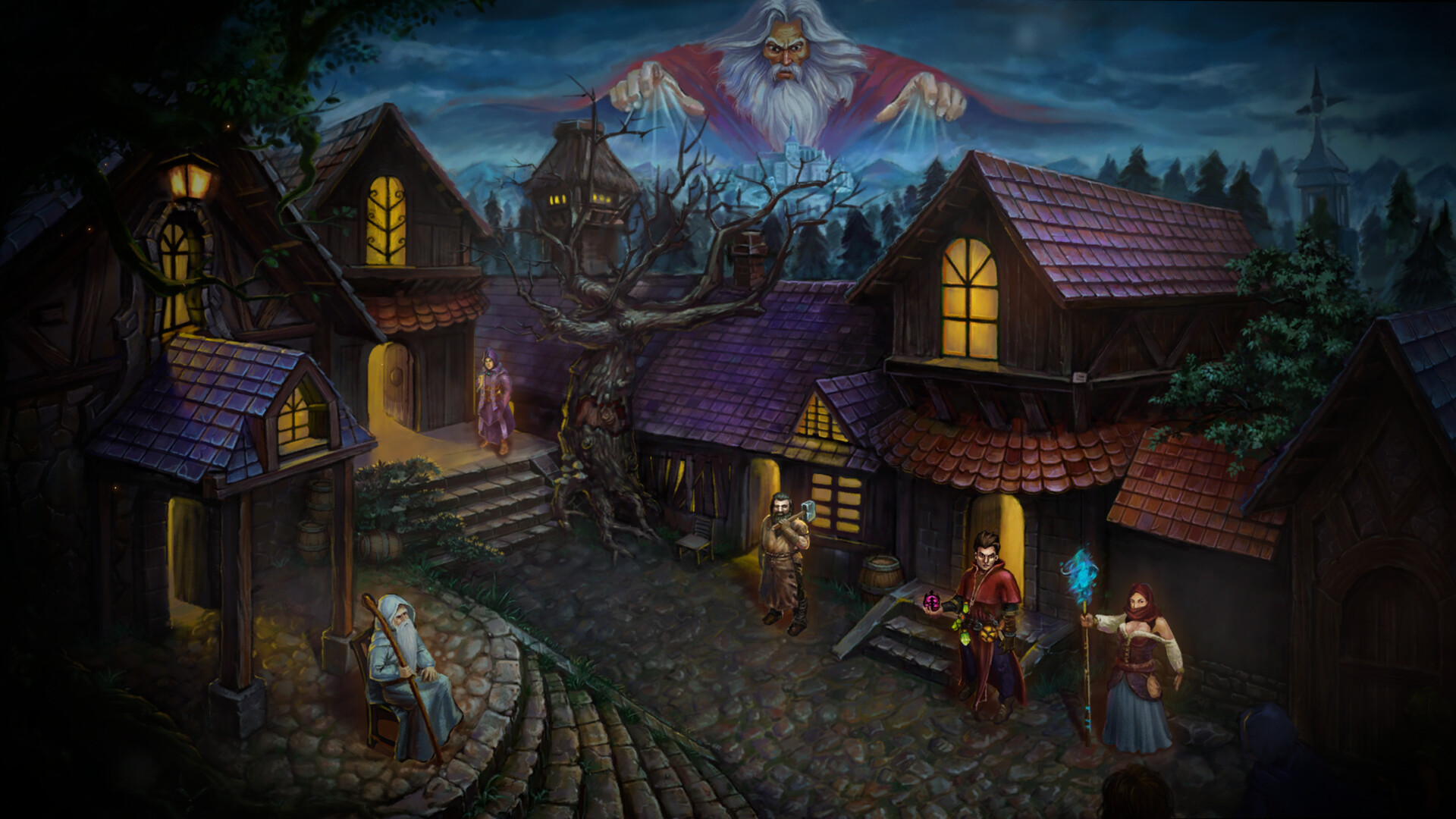
Most dungeon crawlers begin with a speech and a cheerful granary. Dark Quest begins with a raid. Official copy on Steam says a powerful sorcerer has risen in the land, building a dungeon beneath the village of Darkwood, then adds, with the grammar of a person who has been awake too long, that his minions raid nearby villages, spreading terror and death. The PlayStation store prefers the remastered grid and the party of heroes. Both versions agree on the next sentence. A small band, led by a mighty barbarian, dares to defy the sorcerer’s power. Descending is your only option.
That is not flavor text. It is the design refusing to pay for a cinematic when a village will do. You start picking a party, buying a potion, and putting boots on a tile because the alternative is becoming a rumor the minions already filed. The first goblin is staged like a punchline that forgot to be funny. He occupies a square. You occupy a square. He is dead for now. The script, still a little breathless, asks whether you can survive the sorcerer’s amusement. Nobody can assure the next room is kind. That is the rest of the dungeon.
I like a premise that prices patience as a hazard and then lets you walk toward it anyway. Handmade quests sit under Darkwood like questions with walls. Why are there structures and no peace. What was that skull. The more you descend, the more the dungeon answers with another grid and another thing that would like a piece of you. Story is environmental and stingy, which is the right instinct for a game that wants your formation more than your diary. You are not reading a novel. You are looting a disaster that is still happening, and the disaster has a barbarian.
The fantasy is not mastery of a lore bible. The fantasy is competence arriving about half a quest after you invent a reason to keep the mage behind the meat. You will lose in ways that would be funny if the restart were not so sincere. You leave a hero. You walk back. You become the kind of person who thinks a potion is a personality.
This is the original Dark Quest, fully remastered, which is a polite way of saying Brain Seal Ltd took the 2015 board and rebuilt it on the Dark Quest 4 engine so a living-room could finally sit at the table. New perspective, new lighting, new spells, new items, a village that learned how to hand you a quest. The classic build is still hiding in a beta branch for the people who liked the old boots. That sentence is both a promise and a warning. If you want a campaign that could unionize a plot, you will feel underemployed. If you want an evening that turns a tile into a plan, you will feel hired.
Three Heroes and a Grid That Talks Back
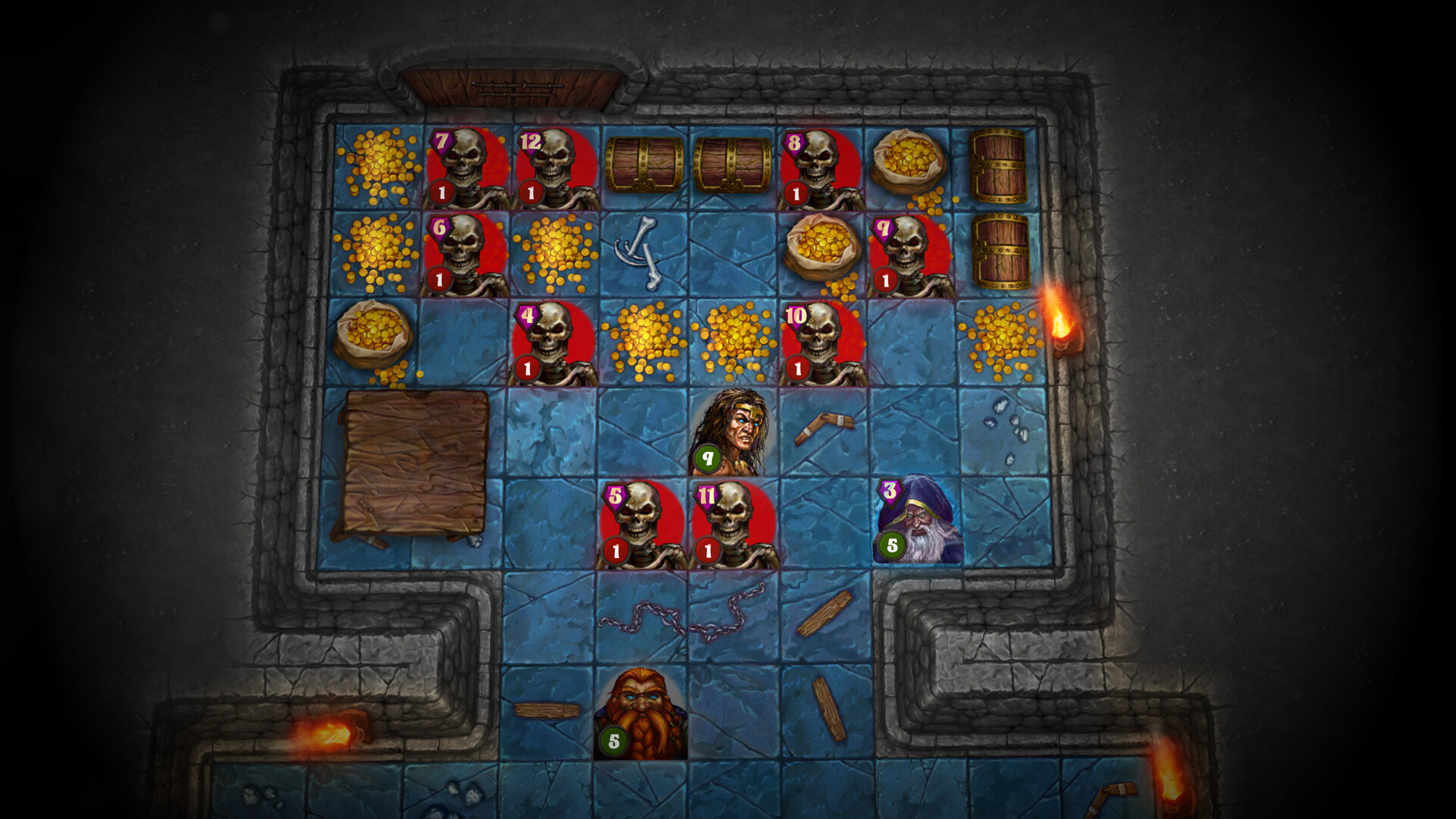
The loop is the old religion and Brain Seal Ltd does not pretend otherwise. Quests, gold, the usual dungeon groceries of potions and squares. A party of up to three, each with abilities that make the groceries arrive faster if the groceries are an orc. A village if the mud agrees to exist, a skull if you would like dinner to stop being a hunt. Courage is on the character sheet because a dungeon crawler without a stomach is just a walking tour. Turns change their mind. None of that is a revolution. All of that is the sentence the rest of the toybox has to live in.
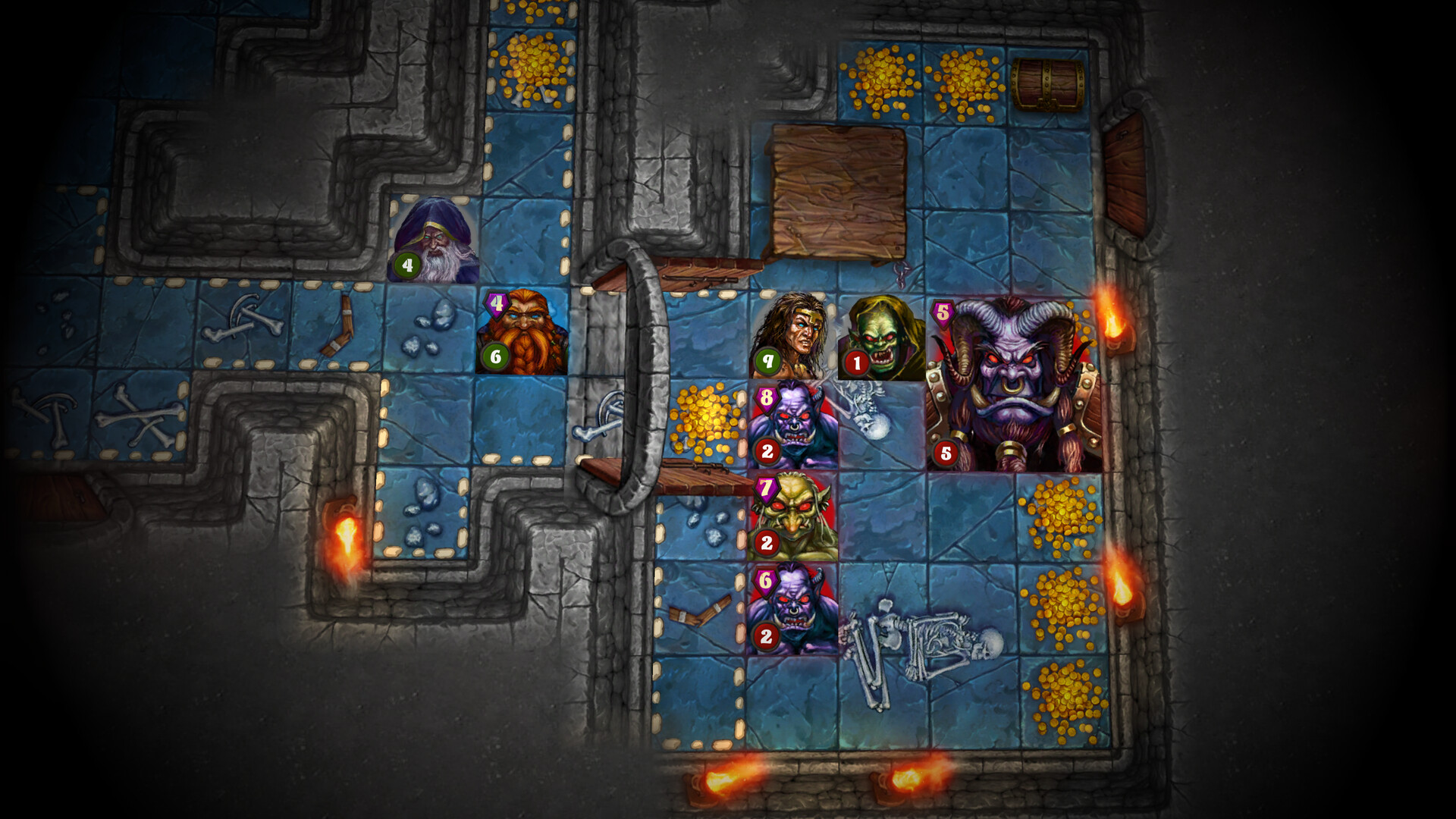
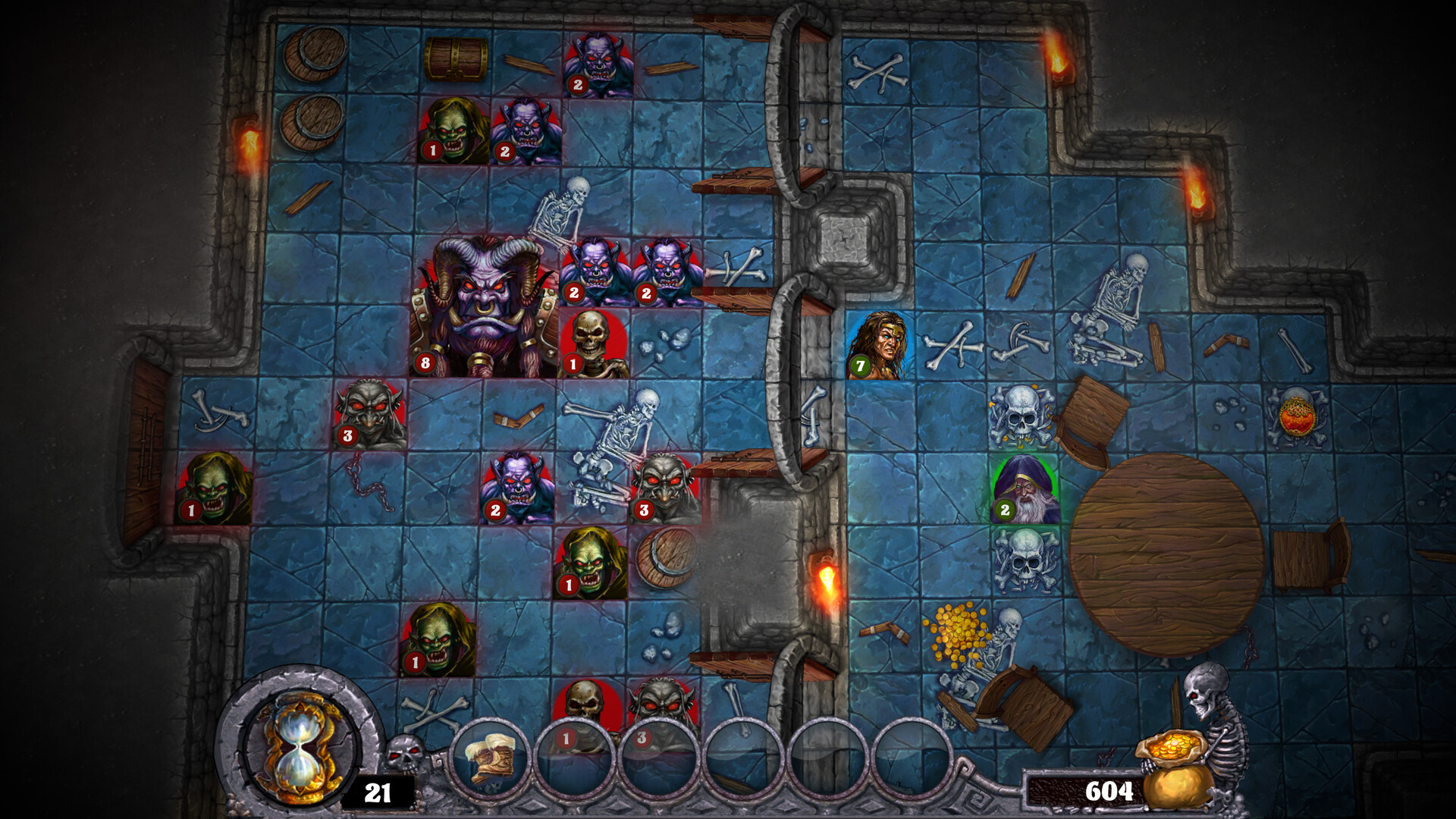
Combat is straightforward in the way a good workbench is straightforward. You are not drowning in a timeline that could unionize. You are looking at a grid and deciding whether you have been useful enough this turn. Positioning is flexible without becoming a second career. Frontline, backline, a defensive thought that you will test the first time a lich decides your formation is a suggestion. Unique abilities are on the feature list, which is a polite way of saying the party can grow a brain if you keep showing up.
I have played a lot of games that treat the first room as a tutorial and the hundredth room as a spreadsheet. Dark Quest is lighter than that on purpose. The developer wrote it into the store page with the candor of a person who has already lost the argument with feature creep. Use the unique strengths of each character. Work together. Slaughter endless hordes of orcs and undead. That sentence is both a promise and a warning. If you want a skill tree that could unionize, you will feel underemployed. If you want a weekend that turns a barbarian into a kitchen, you will feel hired.
The remaster keeps the commute from becoming a museum. New spells and items sit on the vendor like dares. You buy them. You leave. You come back when you have a better shirt. The village can be opened if you would like the realm to behave like a to-do list, which is a kindness for people who freeze when a sandbox says do what you like. I left it for an evening and sat in it for another. The village did not mind. The orcs minded either way.
Encounters have a puzzle temperature that the store page cannot quite sell. Early doors are where the grid feels its strongest. Skills matter. Positioning matters. It is rare that you can brute force a room if the room has more than one opinion. I will not invent a highlight reel with fake timestamps and tidy kill counts. The nights that stay with you are the ones where you thought the tile was finished, then something started occupying a square in a rhythm that was not weather, and then you were on the wrong side of your own architecture.
Orcs, a Skull, and a Village That Matters
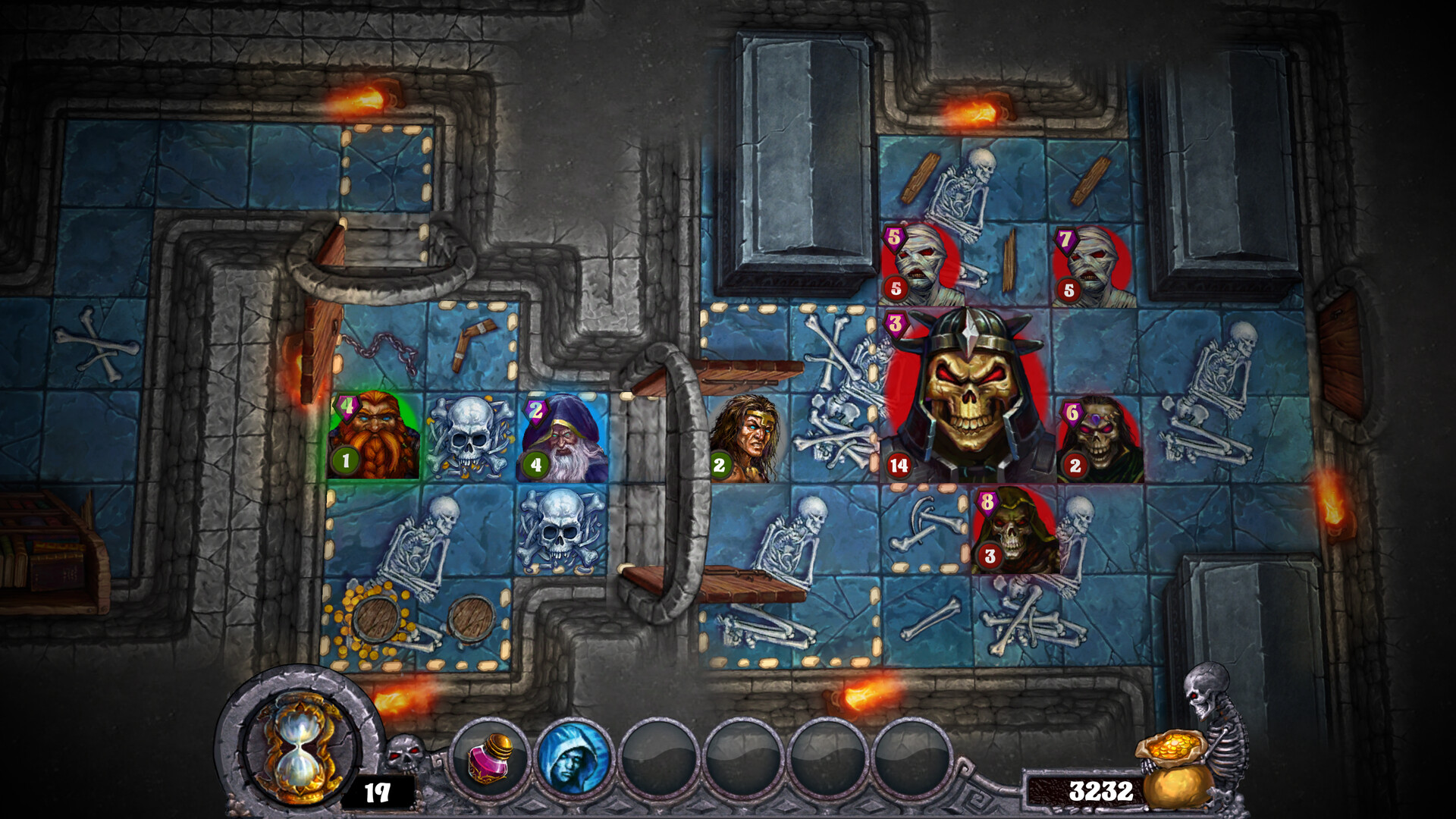
The bestiary is the temperature change. Early goblins establish that this is not a peaceful walking simulator with nicer lighting. They will occupy farther than pride would recommend. A barbarian handles the general population. The evolved, mage-shaped editions will empty a health bar if you treat them like scenery. Further in, a lich would like a word, and the word is short. Getting a spell with actual manners takes a while. Until then, positioning is a strategy, not a cowardice.
Orcs and undead are the other half of the short description and the nastier half of a walk. Goblin, orc, orc mage, skeleton, zombie, lich, orc warlord, skeleton king, orc king, mummy. The achievement list is a bestiary and a receipt. They are why a clearing that felt like home at noon can feel like a rumor at dusk. Enemy variety is not a novel. It does not need to be. Pressure is the variety. A formation that holds is a better reward than a new silhouette if the silhouette is just another way to lose your party.
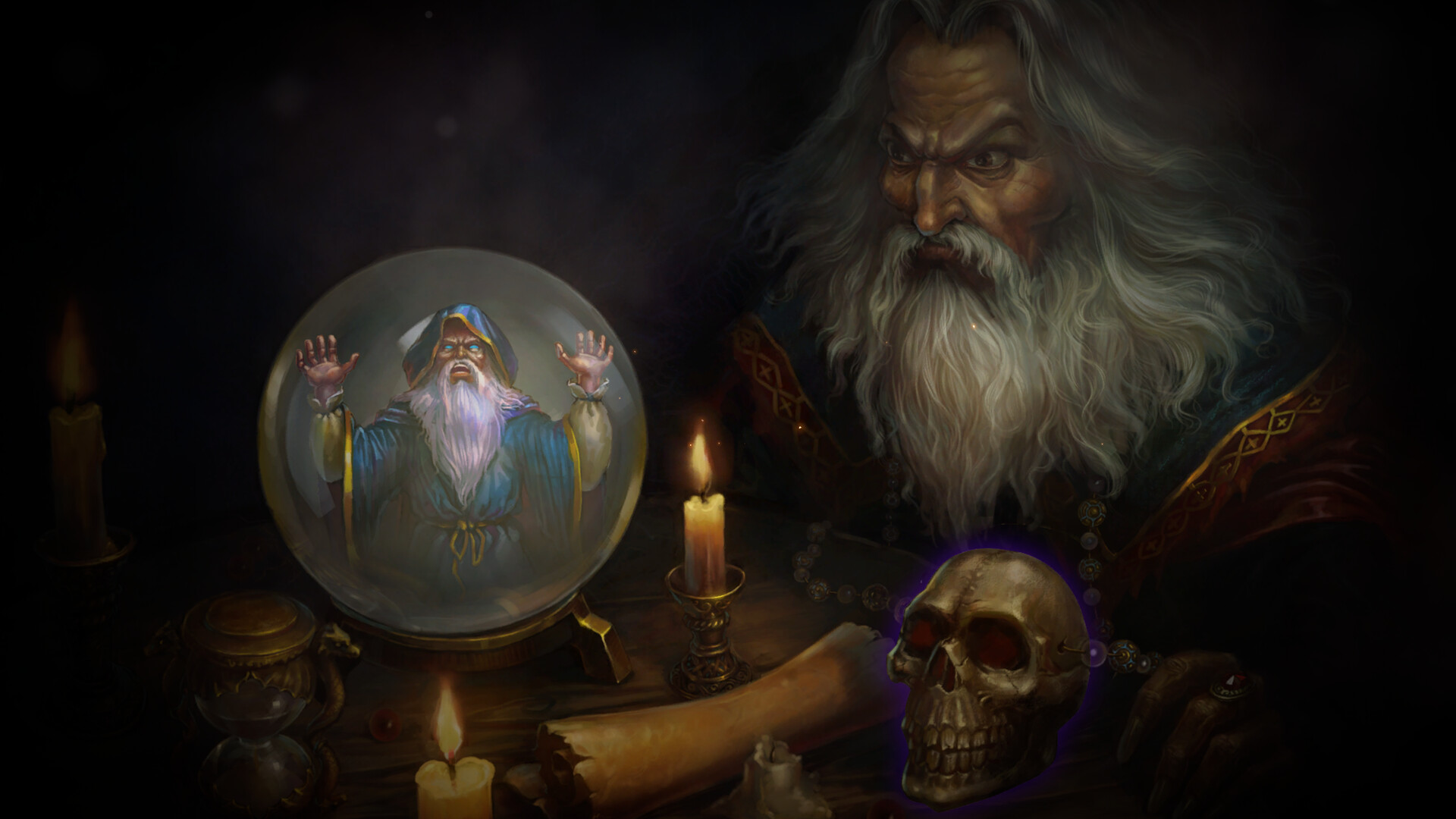
The skull of fate is the other vehicle. Official copy says the evil sorcerer will torment your soul for his own amusement, summon you into the sphere of judgment, and force you to play a twisted game of death. I will not write a minigame white paper. What I can say is that the loop is kinder when the dungeon remembers it is also a joke. The sphere is not a town. It is a reminder that someone else survived long enough to have a sense of humor, and that the humor would like you dead. I rolled a fate I was sure I needed and then needed a different fate, which is the oldest skull joke in the book and still a good one.
The village is good practice and a grocery run. Spend the gold you find. Buy potions, weapons, spells. The remaster revamped the place so you can pick quests instead of waiting for the dungeon to invent one. A randomly generated question sits in the bonus column like a dare. Dynamic events happen. The store page is not shy about it. What the store page cannot tell you is how quickly you will start treating a successful trade as a mood stabilizer. You buy. You drink. You put the barbarian down and look at the grid like a person who has decided civilization is a potion.
Remastered by Design, Short by Habit
I should be clear about the friction, because it is real and it is not a footnote you hide after the score. Dark Quest looks like a game that was built by a small shop that wanted a tabletop more than a showcase, and then had the nerve to rebuild the tabletop for a living room. Landscapes can be handsome. Animations can be stubborn. Combat can arrive a half-hour late to its own impact if you let a fight become a novel, and it can also be over before you have finished being clever. Rooms rhyme. Enemy types thin if you live too long in the same depth. I will not invent a mud census. I will say the dungeon sometimes forgets to stock a new silhouette and then shrugs like weather.
Technical manners on a living-room build are the point of the remaster. Full gamepad. Steam Deck support on the PC side. Localization that finally lets more than English sit at the table. Achievements. A new perspective 3D engine borrowed from the fourth game in the family. None of that is unique to this village. All of that is the tax and the gift of a 2015 crawler that arrived on PlayStation eleven years later wearing better boots.
Presentation is readable, which matters more than prestige. You can tell a village from a dungeon from a sphere at a glance. If you cannot read a tile, the hunt dies and the party becomes homework. These spaces are atmospheric enough to carry a dread and clear enough to carry a plan. You always know where you are. You do not always know why a lich is already there.
The voice of the game is the dungeon, and the dungeon talks in gold, weather, and the occasional undead knock. Eleven Steam achievements sit behind the loop for people who like a receipt. Twelve trophies keep the living-room door honest. None of them change the central truth. You are here to hold a grid and then find out what holding is for.
The campaign is short, which is a sentence no designer writes for fun and a sentence this designer wrote on purpose. A few hours will see the sorcerer if you do not get philosophical in a doorway. Repetition is the other tax. Every dungeon has almost the same goal. The loop, while fun, can feel like a rinse if you wanted a career. That fairness is also the charm. When you lose, it is usually your own poorly planned square.
I have a rule for cheap dungeon crawlers. If a game is worse as a board than as a novel, it is broken. If it is only good as a board, it is honest. Dark Quest is honest, and that honesty should sit next to the price. A solo night is a competent evening. You pick the party, you invent the formation, you lose a square, you walk back, you put a better potion on the joke. A night spent mixing the three heroes is the version the systems were quietly designed around. Someone tanks. Someone casts. Someone learns, too late, that a lich does not respect architecture.
The Steam sample around a game this small is always going to look modest. Mostly Positive is the official weather, 160 of 207 on the side of yes, and that split is fair. Players who wanted a deeper bestiary, a longer descent, or a grid that never rhymes bounce off. Players who wanted a lightweight tabletop with a skull and a bad idea about villages stay. I am in the second camp with caveats, which is the only honest place to stand. I will say the realm is better at beginning a sentence than at keeping the sentence long, and that the sentence is still worth hearing if you like a setting that has the nerve to be this specific.
Still Standing After the Sorcerer
Dark Quest is a rare cheap dungeon crawler that understands its own joke and then has the nerve to make the joke a remaster. Brain Seal Ltd built a village about a raid, a grid about teamwork with a backline, and a toybox that looks a little homemade and plays a lot more sincerely than that sentence suggests. The loop is the hook. The party is the spine. The walk from a goblin to a skull is the grin.
It is better as a board than as a novel. Fights are short in the way a tactical fight is short, until they are not. Rooms can rhyme. The presentation has indie fingerprints, from the stubborn bestiary to the story that would rather be a village than a cutscene. All of that is true, and all of that is already priced in at $6.99 on PlayStation and $4.99 on Steam. You are not buying a decade. You are buying an evening that can turn into a second evening if you like being a coordinated disaster, or being the person who has to explain the disaster to a merchant.
I am scoring it 8, Great, because the identity is this clear and the limitations are the limitations of a focused crawler, not an empty one. I would recommend it to anyone who likes a tile that has weight and a map that is allowed to be rude. Distinctive dark-fantasy weather, a skull that shrinks the horizon, a party that turns wood into conversation, and a price that respects your week are a lot of game for the ask. The systems repeat their manners. The manners are still useful.
The dungeon is still out there, still hiring a night shift, still asking what Darkwood was worth. After a few doors, you will understand why the job is not finished, and why you keep walking into the village anyway.
We prepared this review with a digital copy of the Dark Quest for the PS5 version provided by Pressengine.