
There is a particular kind of bargain, rare in a medium that usually charges coins or experience points, in handing a smiling rabbit your birthday. Mr. Fairweather does not take brass. He takes years. You walk out of the conversation younger on paper and older in the only way that matters, carrying an acorn that will grow into a family tree and a debt that will follow you into your children’s shoes. Kynseed, the life-sim sandbox RPG from Guildford indie PixelCount Studios, is built on that handshake, and the handshake is ruder, funnier, and more generous than a twenty-five-dollar fairy tale has any right to be.
I played the PlayStation 5 version, the living-room edition that arrived on 4 August 2026 with every major update the PC build has absorbed since its 6 December 2022 launch. PixelCount was founded by Fable alumni Charlie Edwards and Neal Whitehead and is chaired by Sir Ian Livingstone. Early Access began on 8 November 2018. More than ten community-driven updates later, including farm customisation, building projects, and a tavern you can actually run, the console release is not a snapshot of 2022. It is the complete vale. At $24.99 it is priced like a season of chores you will still be doing in October. You raise a family, keep a shop, smith a sword, and fight pig-faced Hobs that treat your turnips like a military objective. The personality is British, folkloric, and slightly untrustworthy. The prologue is long. The toybox, once it opens, is enormous. Great, not weightless, and very much a life I would recommend you live at least once.
Born in a Shoe, Raised by a Vale
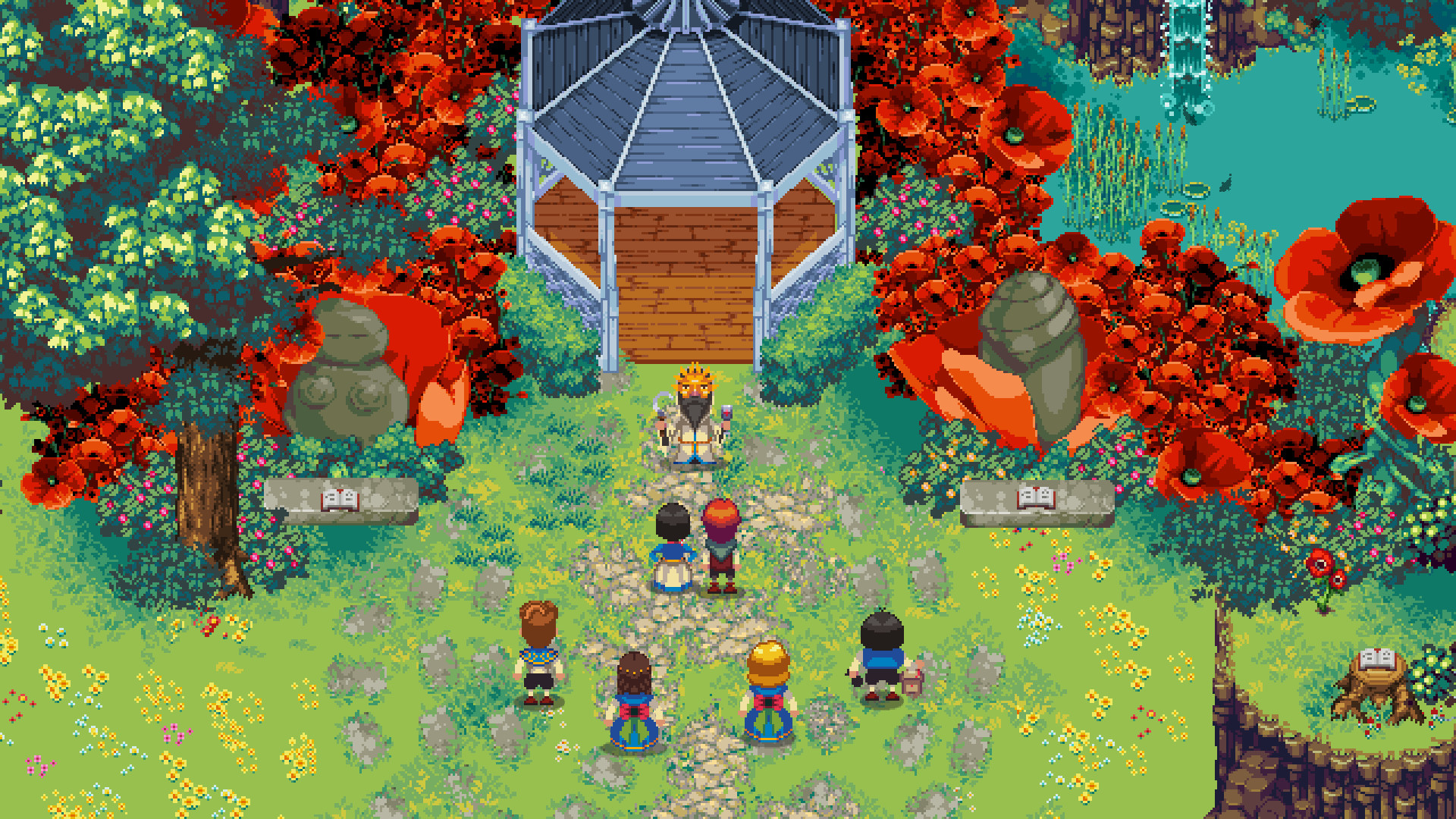
Kynseed begins with a personality quiz, which is a polite way of saying the game wants to know what kind of liar you are before it hands you a bucket. Your answers sprinkle small benefits onto the run. The larger statement is choice. PixelCount is not interested in a single correct harvest. The studio is interested in a vale that will remember whether you were useful, charming, or the sort of person who puts a frog in a neighbour’s boot and then sells that neighbour a cure.
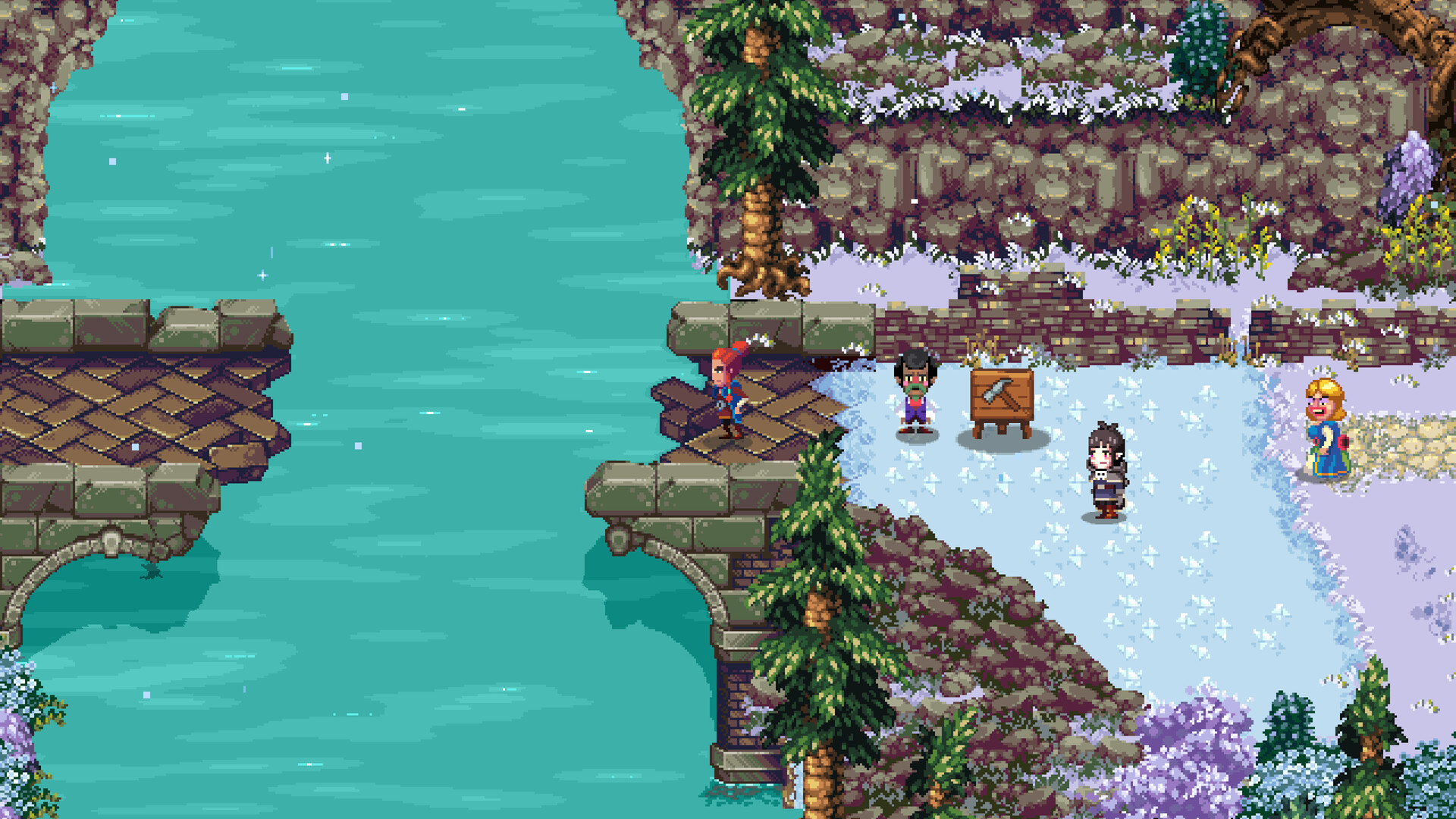
You and your twin start as children of the Old Woman Who Lived in a Shoe, the first of many nursery-rhyme jokes the script treats as civic infrastructure. Uncle Bill arrives, as uncles in this kind of story always do, and whisks you south to Willowdown Farm in the land of Quill. Candlewych Village sits nearby: rustic cottages, noticeboards, and people who talk about goddesses as if they were the weather. Druida, Morwenna, and Hyalis want offerings, rituals, and the occasional apple tax if you would like to fast travel. Cuckoo Wood and Mosswhisper Ruin wait with wreckage that implies the vale was never that gentle.
The prologue is a tutorial wearing a bedtime. Tools lock you out with a cheerful note that you can use them when you are older. Days end around eleven. Tasks arrive one at a time and then, if you like looking behind hedges, they pile up. I milked a cow later than the vale would have preferred because I was reading a proverb on a stone. The opening is overlong and overstuffed, a six-hour Once Upon a Time that teaches farming, fishing, cooking, and the fact that not every smile in Quill is neighbourly. Impatient players will bounce before the game has shown its real hand.
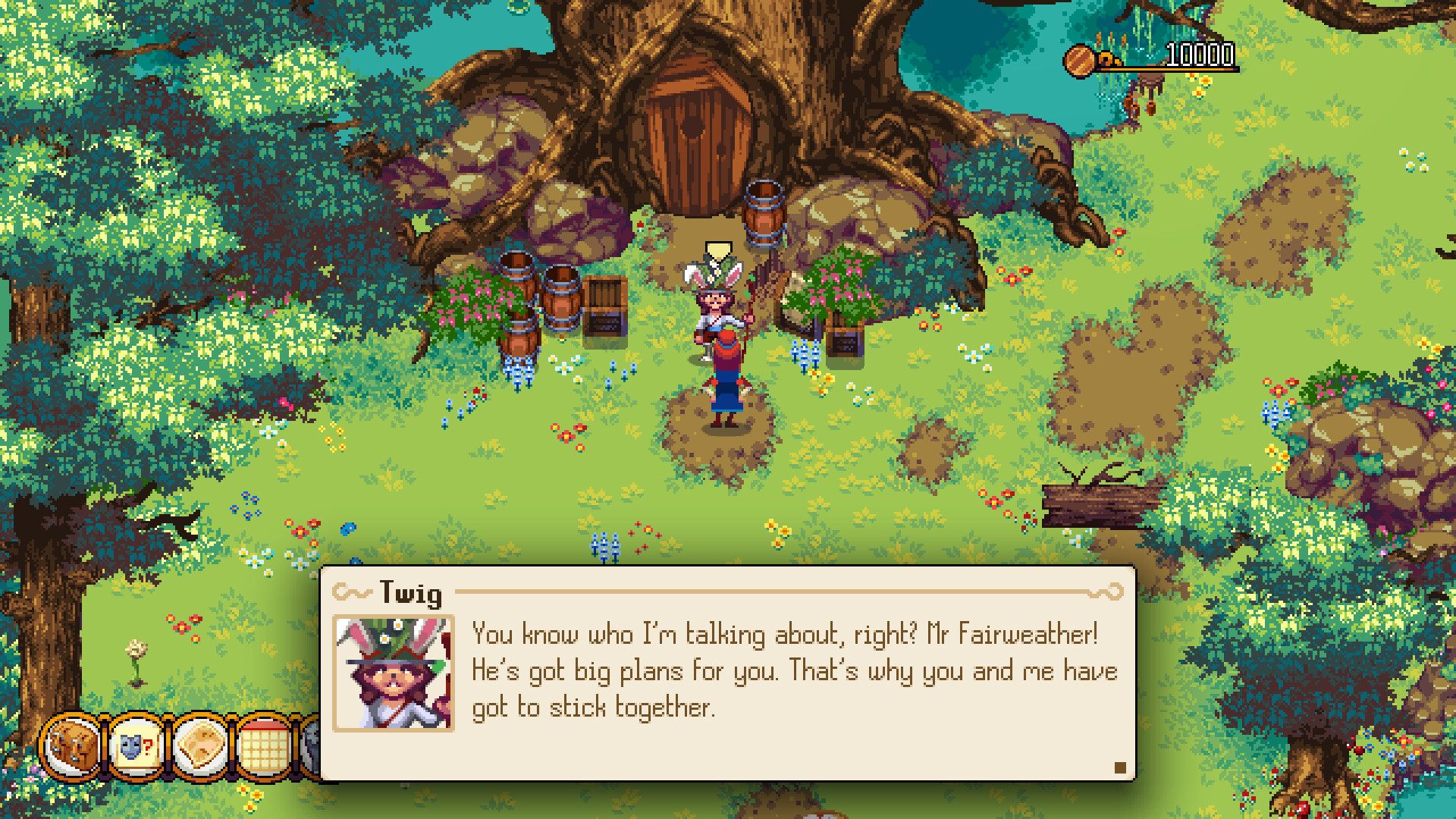
Toward the end of childhood you meet Mr. Fairweather, a rabbit-shaped piece of fae contract law with the manners of a travelling salesman. He gives you the Kynseed, a mystical acorn, and you plant it on the farm. The game skips five years. You are an adult. The tree is growing. The currency of the rest of your life has been explained, and it is not gold. Artifacts that grease chores or tilt combat are paid for in years. Die in a wood and he can revive you. The invoice is the same. One early write-up called the whole stew a mix of Fable, a beloved farm sim, and a dynasty game about family trees. That is the right grocery list. The cooking is PixelCount’s.
Reputation Is the Real Harvest
Once the vale stops treating you like a child, progression stops pretending it is a level number. Reputation is the harvest. You earn it by doing almost anything that looks like a life: quests, monster hunts, a shop that does not go bankrupt, a kindness, a prank, a repaired roof. The path to every goal is paved with breadcrumb-sized tasks, and those breadcrumbs are moreish in the way a well-run to-do list is moreish. You will tell yourself you are only delivering one more bundle of radishes.
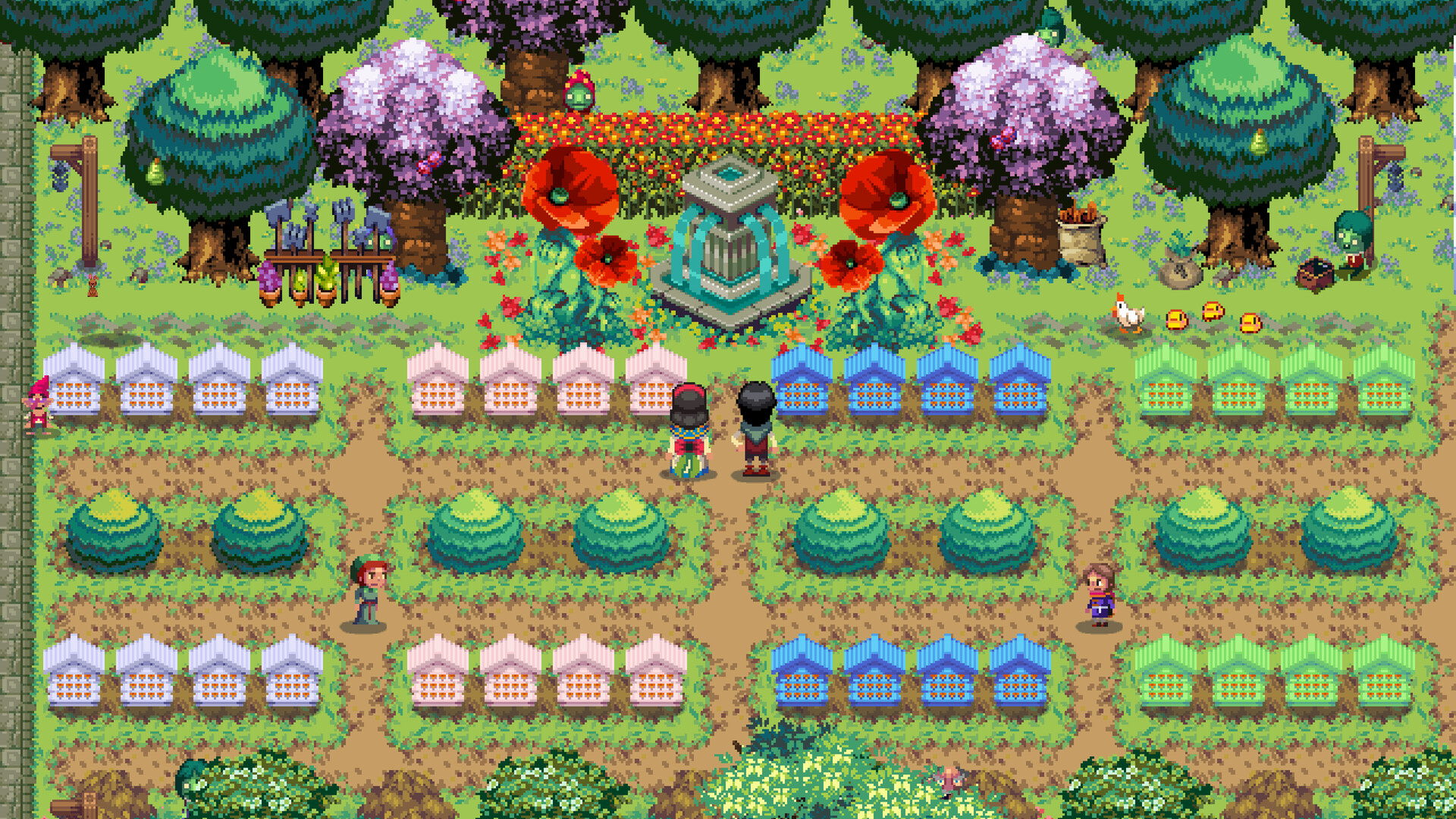
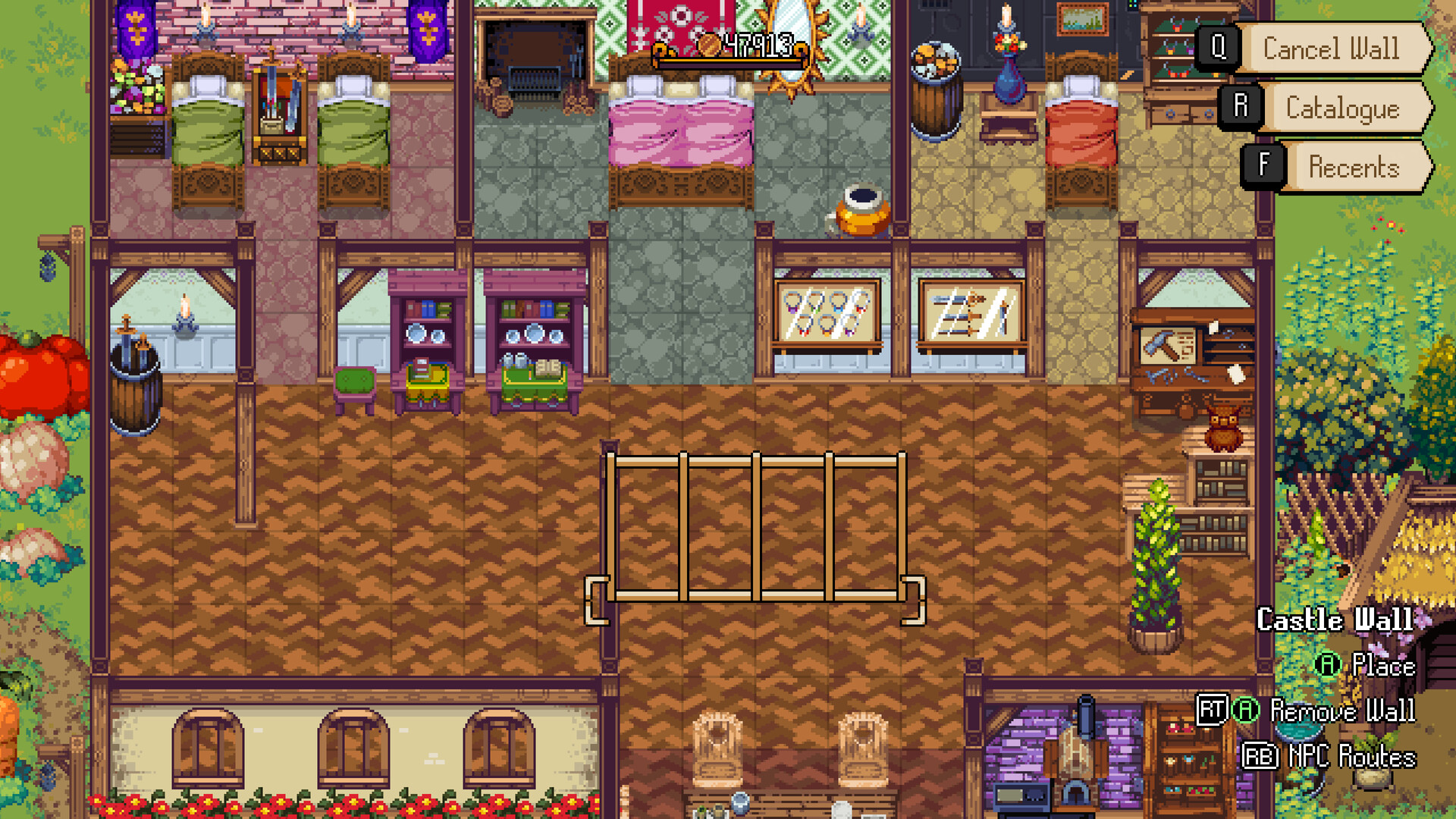
Willowdown Farm is the home base and, after the Big Build work, a dollhouse with a work ethic. You grow crops, keep animals, and customise the farm and farmhouse with hundreds of items. I have spent evenings making the place look like a postcard and other evenings making it look like a business that happens to have chickens. The farm is not a minigame you visit between adventures. It is the sentence the adventures come home to.
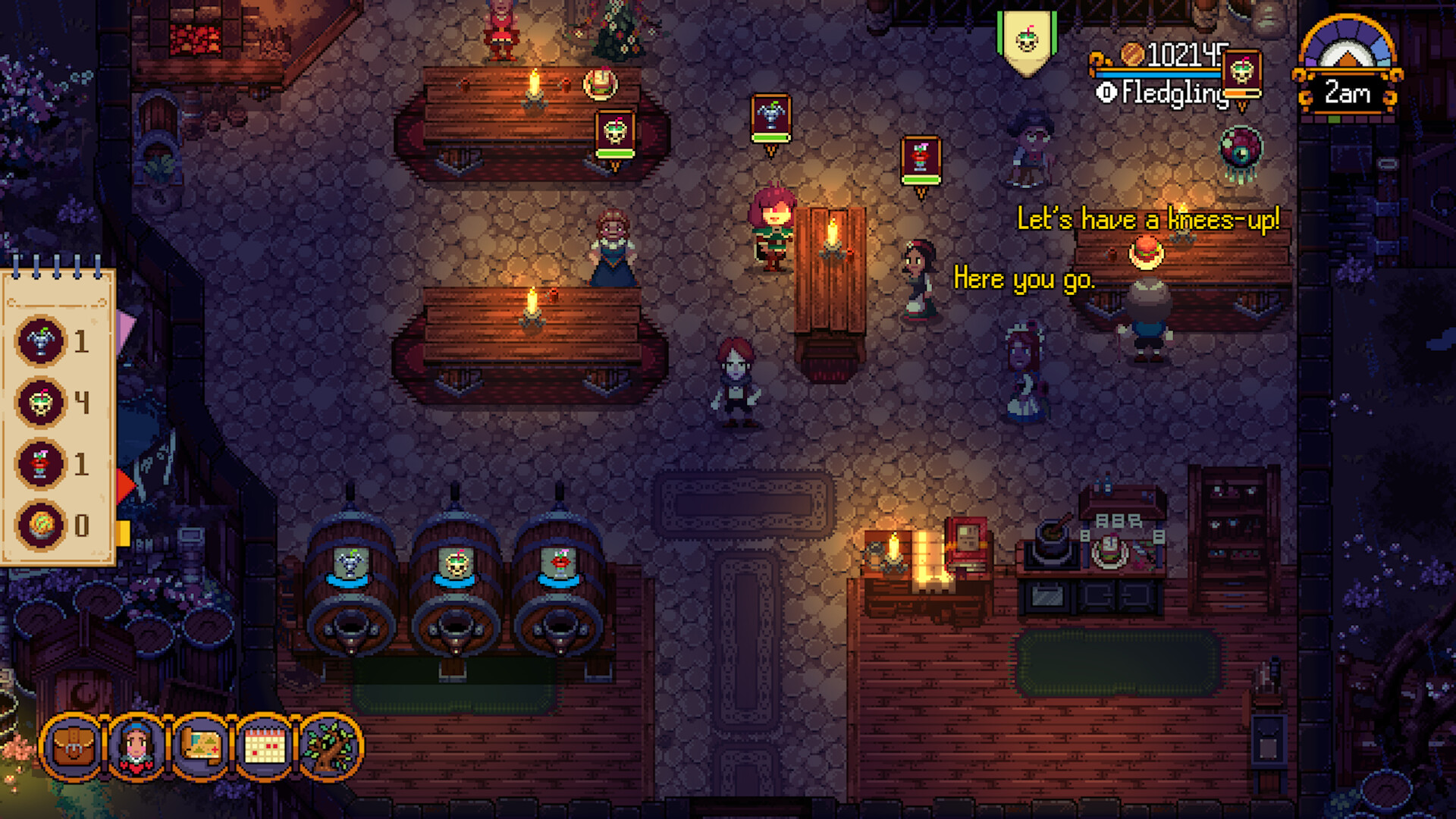
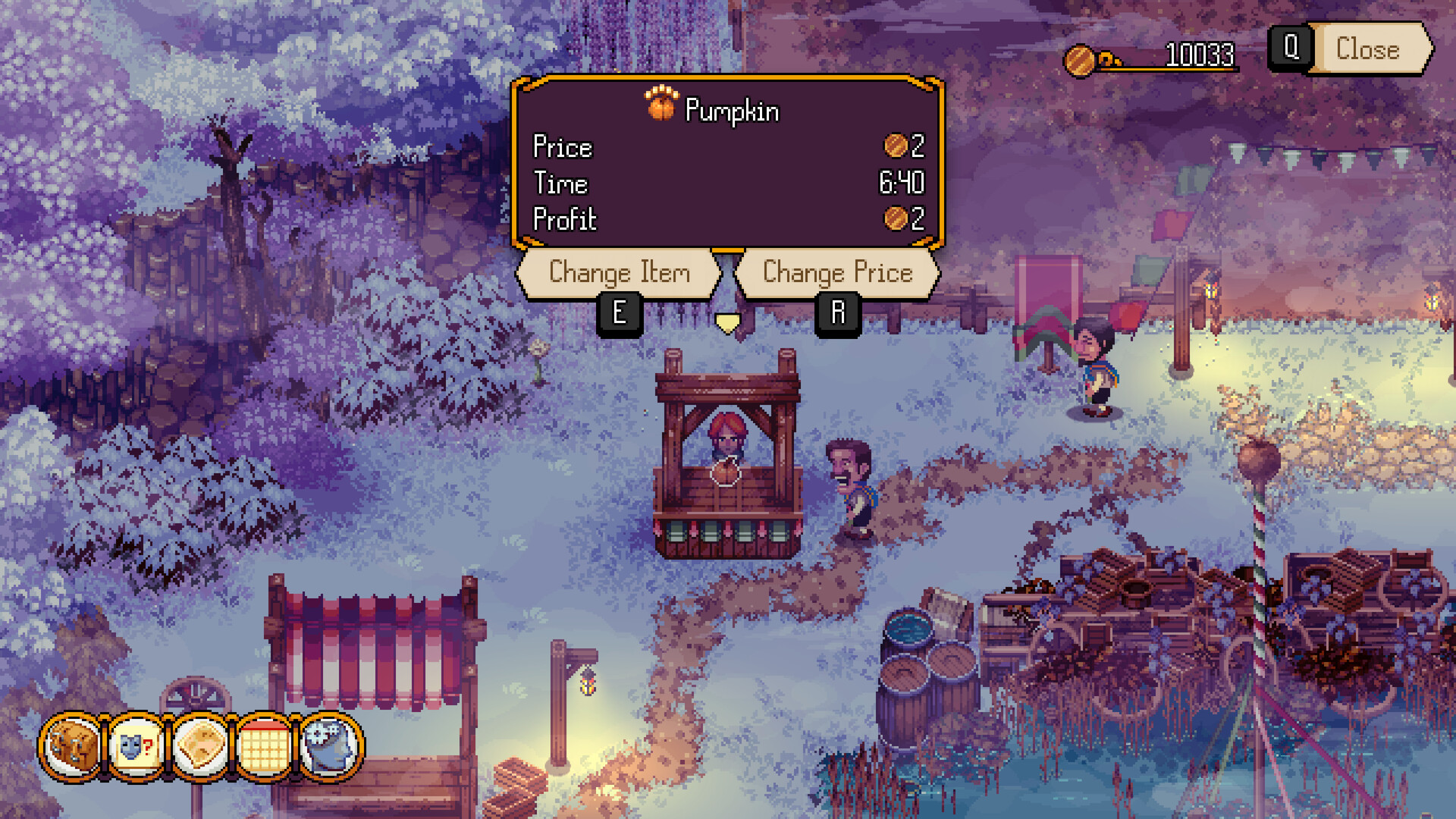
Businesses may be the best idea in the box. There are four shops you can buy into: a goods store, a blacksmith, an apothecary, and, thanks to the update that landed before consoles, a tavern in Homestead. These are not passive money taps. You hire staff, set three-hour shifts, stock the shelves, take special orders, and decide whether you will stand behind the counter yourself or trust a villager you politely fired after buying the place. Customers request specific goods. Fulfilled orders pay better and spread the shop’s name. Batch crafting arrives after you have made an item enough times that the vale agrees you may stop performing the whole play for every nail. I took the blacksmith first. Later I opened the tavern and watched Quill use my building as a social hub, which is a fancy way of saying the NPCs finally had a place to stand that was not a road.
Family is not wallpaper. You can court, marry (any gender), and raise or adopt up to three children. A spouse and kids of the right age can be scheduled to farm, study, cook, or go gathering. Send an adult child into a totem-infected wood with a sword and they can clear a problem you did not have time to punch. Mood matters. A family you feed will bring you honey and the occasional rare mushroom. Hobs and hags plant totems that strip resources and wreck buildings. You clear rifts, then the totem, and neighbours need houses rebuilt. The map grows because you spent a week being useful. That is the fantasy. The tuition is the grind. If you do not like factories that wear folklore, the vale will feel like a job.
The Smithy Grades Your Homework
Most life sims let you press a button and receive a loaf. Kynseed wants to watch you earn the loaf. Cooking asks you to chop, time, and assemble. Brewing an apothecary cure is a small ritual of ingredients and symbols that will distract you the first dozen times and then become a language. Smithing is the showpiece. You melt ore, pour a mould, hammer specific points along a blade, quench, and sharpen. It is a chain of minigames with the confidence of a craft documentary.
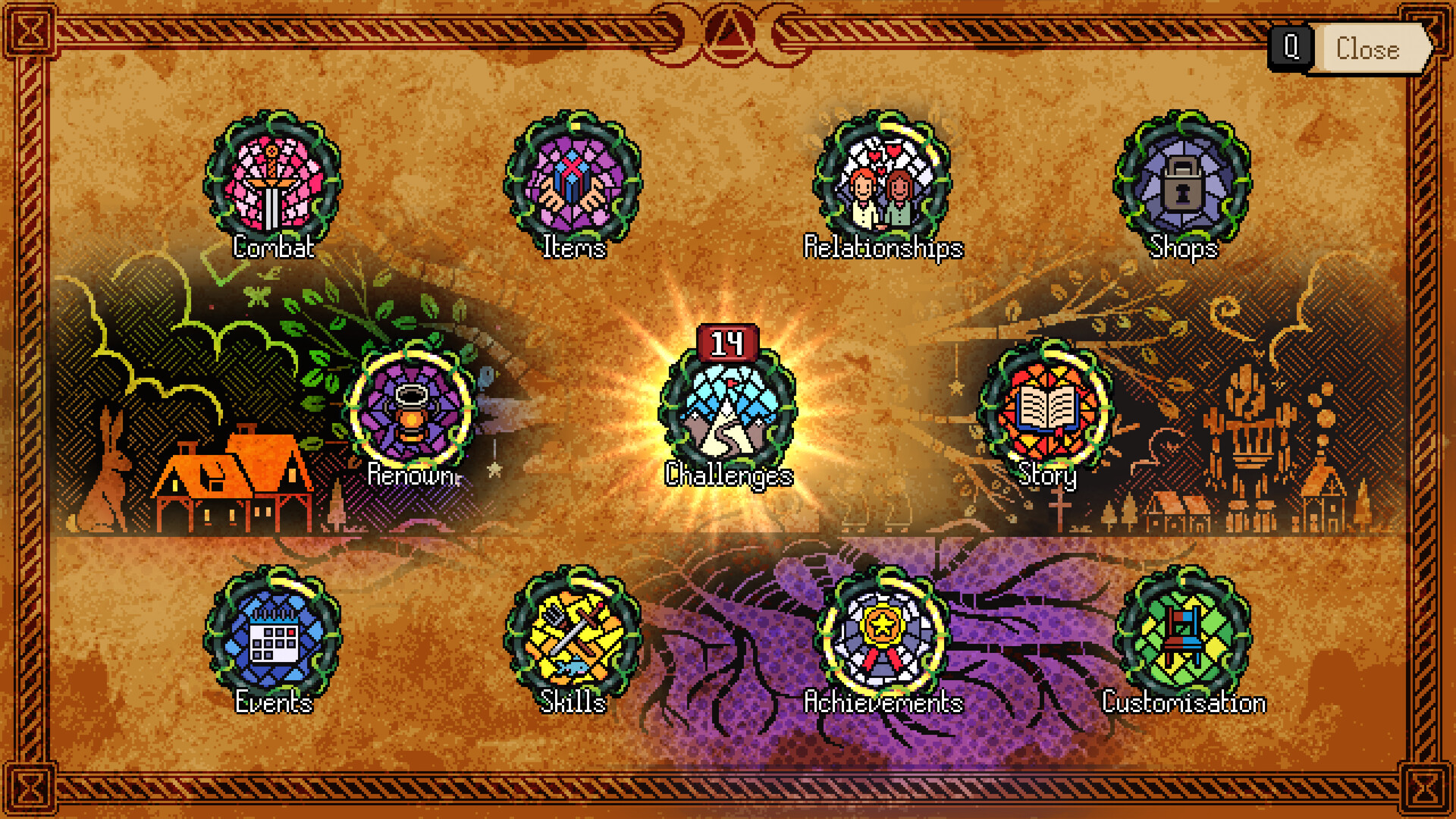
There are six skill trees: gardening, cooking, fishing, exploration, melee, and ranged. You can ignore half of them. In practice the vale keeps offering reasons to dabble. A better sickle makes the farm kinder. A better meal makes the woods less lethal. Kynseed lets mastery be optional and then makes amateur hour slightly embarrassing, without becoming cruel.
Tutorials, tips, and thatterways (tiny fairies that live in your hair and point at objectives if you let them) will save you from a lost afternoon. I still got lost, because the menus have categories, then sub-categories, then the drawer you were sure was the other drawer. Items hide with the politeness of British bureaucracy. There are multiple ways across the map, including goddess statues and an apple tax, and the game is not always eager to put the cheapest one in your hand on day one. Do not skip the tutorials. That is the difference between a charming vale and a filing cabinet with trees. When the minigames click, they are why the businesses feel like businesses. When they do not, they are homework you have already passed. After enough iron you unlock batch work, the game admitting that repetition has a half-life. I wanted that admission earlier in a couple of crafts. The smithy is more interesting than it has any right to be. Both crafts beat a progress bar that fills itself while you look at a phone.
Three Lanes and a Forest That Negotiates
Combat is the surprise, the system people who came for turnips do not expect to respect. Fighting lives, at first, in three woods with honest names: Simplewood, Midwood, and Toughwood. Before you enter you pack a loadout, a campfire meal, and weapons you may have forged yourself. Inside, you choose the temperature. Difficulty is a lever you can push for better drops and a faster death. You are not wandering a dungeon that has already decided you are the protagonist. You are booking a fight.
The encounters sit between real time and turns. You occupy one of three vertical lanes. Enemies occupy a cross-shaped field opposite you, up to four at a time. You can strike the foe in front and the ones on the diagonal. A ranged shot is less about damage and more about interrupting something ugly. Stamina decides how many times you get to be clever. Position decides whether cleverness lands. When you drop an enemy, the others can step into the gap or call a friend. The board is allowed to have opinions.
I did not expect to care this much about a pig monster’s footwork. The loop is easy to learn and rude to master. You do not fully recover between rooms, so greed is a build and also a way to die. Fairweather will sell you your pulse back. The years still leave. That economy makes a retreat feel like wisdom, which is rarer than a good dodge. Later the Hobs stop waiting in woods. Totems go up as your renown spreads. Rifts must be cleared before the totem falls. Family members can do the punching if they are old enough and armed, which turns your household into a small mercenary firm with a vegetable garden. Quill is pretty. Quill is also occupied. If you came only to farm, you can keep the woods as a rumour. If you came because someone said Fable, the three-lane puzzle is the punchline that learned how to be a system.
Mr. Fairweather Does Not Take Brass
The generational idea is the one PixelCount puts on the acorn, and it is the one the genre still does not copy enough. Everyone ages. You age. The dog will not be at the funeral, because the dog had its own funeral last autumn and you were in the woods. When your years run out, you step into a child’s shoes and keep the name. Skills and standing trickle forward. The Kynseed tree on the farm changes with the life you actually lived, a family album that grew bark.
In practice the inheritance is more checkpoint than novel. The first five-year skip, from child to adult, is a costume change that unlocks tools and shops. Villagers greet you as if you had been to the shops for a long weekend. Later deaths can feel the same: a new face, a familiar quest log, a farm that waited. The seed of the concept is unique. The growth is uneven. I still wanted it. A life sim that admits you are temporary is a life sim that has read a book.
Fairweather remains the best character in the transaction even when he is only a shop. His artifacts are cheats with a receipt. The life tax keeps them from becoming a debug menu. Spend too freely and you will meet your heir sooner than your plans required. I split the difference, bought the tools that saved me from my own impatience, and tried not to look at the birthday. Dating has its own minigame sheen. Friendship is slower than the shop, and you will need friends for the bigger builds. NPCs hand out proverbs as affection. The cast is large, more than a hundred faces, fond of a fart joke, a folk lyric, or a line that wandered out of a pub in 2005. Personalities can still land flat. Quantity is the studio’s vice. You will remember a handful of people and a larger handful of transactions. That is a real limit. It is also how villages work if you are honest.
Pixel Folklore With a Fable Accent
Kynseed looks like a cousin of the farm sims that taught a generation to water pixels, then takes a left into something gloomier. The pixel art finds a Goldilocks point between sweet cottage and grim statuary. Neighbourhoods are lush, rustic, and occasionally wrong in a way you cannot immediately name. A cheerful village tune will give way to an elegy when you cross an invisible line. Combat music actually hurries. The soundtrack understands that a vale needs more than one weather.
The Fable inheritance is not a costume you can hang on a trailer. It is the willingness to let a joke and a bruise share a sentence. There are no orcs and no high elves. There is British folklore, rustic ritual, and a travelling salesman who is also a rabbit who is also your mortality. Edwards and Whitehead left Lionhead and, instead of making a smaller Fable, made a shopkeeper’s Fable, a game where the punchline might be a successful quarter and a child who inherited your terrible fishing habit.
On PlayStation 5 the interface has been rebuilt for a pad and a sofa, the difference between a PC transplant and a game that knows you are holding a controller. I still opened the wrong submenu twice a session. A life this dense will always have a menu you wish were one layer shallower. The PC community spent years arguing the game into better shape. Customisation, challenges, cut-scenes, totems, and the tavern all arrived as free expansions of a world that was already large. People who wanted this exact stew are still eating. People who wanted a gentler farm or a shorter prologue left a note and went back to a valley with fewer rabbits. Both groups are telling the truth.
At this price the quantity argument is almost unfair. Eighty hours will not empty the vale if you read every proverb. A focused run can see a happily-ever-after sooner. I would rather you meander. Accessibility options exist (slower monsters, remapped inputs, quieter UI, larger text), the grown-up way to admit the toybox is tall. Seventy achievements sit in the background for the person who will not be satisfied until the tree has every scar.
The Tree Keeps Growing After You Don’t
Kynseed is the rare mid-priced sandbox that understands its own joke and then has the discipline to make the joke a life. PixelCount Studios built a vale about time, a salesman who collects birthdays, a shop ledger that is more exciting than it sounds, and a combat puzzle hiding in a wood with a name like a warning label. The hook is an acorn that becomes a family. The spine is reputation, craft, and the way a day can be a farm, a fight, and a date without feeling like three different cartridges. The scar is the evening the breadcrumbs become a commute and you keep walking anyway.
It is better as a place than as a novel. The systems stay the reason to recommend it. The folklore stays the reason you talk about it after you step away. The grind is real. So is the grin when a batch of iron and a child who came home with rare ore make a week feel like a story you meant to write. The prologue asks for patience it has not yet earned. The menus ask for a better filing system. A few faces in the crowd never become people. All of that is true, and all of that is already priced in at $24.99 for a world that has been tended, patched, and enlarged for years after it first opened the gate.
I am scoring it 8.5, Great, because the identity is this strong and the limitations are the limitations of a generous sandbox, not a thin one. You are not buying a weekend. You are buying a vale that will still have a job for you in the second month, plus a tavern, a smithy, and a rabbit who will happily shorten the month if you let him. I would recommend it to anyone who loved the cheek of old British RPGs and wished the village had been the main quest. Distinctive generational play, businesses that behave like businesses, and a setting that refuses to be only cute are a lot of game for the ask. The chores repeat. The chores are still the point.
Fairweather is still smiling. The acorn is still in the ground. After a few seasons you will understand why the vale does not hurry you toward an ending, and why you keep planting anyway.
We prepared this review with a digital copy of Kynseed for the PS5 version provided by Pressengine.