There is a particular kind of doubt, rare in a medium that usually hands you a flashlight and a map, in watching a newly hired inspector walk through a cabin that is supposed to be a movie prop and deciding whether the family in the portrait just moved. The elevator has terms. The contract updates without notice. The Cabin Factory, the short anomaly-hunting horror from International Cat Studios and Future Friends Games, is built on that decision, and the decision is colder than a $2.99 night shift has any right to be.
I played the PlayStation 5 version, the October 16, 2025 living-room clock-in that followed a December 13, 2024 PC launch at $2.99 and a pile of 3,418 Steam recommendations that had already argued about the closet. International Cat Studios is a small remote shop split between Spain and Japan, proud parents of two cats, first game on the table. Future Friends Games published it. You inspect cabins built for movies and theme parks. If something is haunted, turn around and press Danger. If it is safe, press Clear. Get eight right in a row and the credits try to send you home. Forty-odd cabins wait if you refuse to stay there. Seven achievements lurk in the rafters. Great, not long, and very much a factory I would recommend you tour.
Congratulations, You Have Accepted the Terms
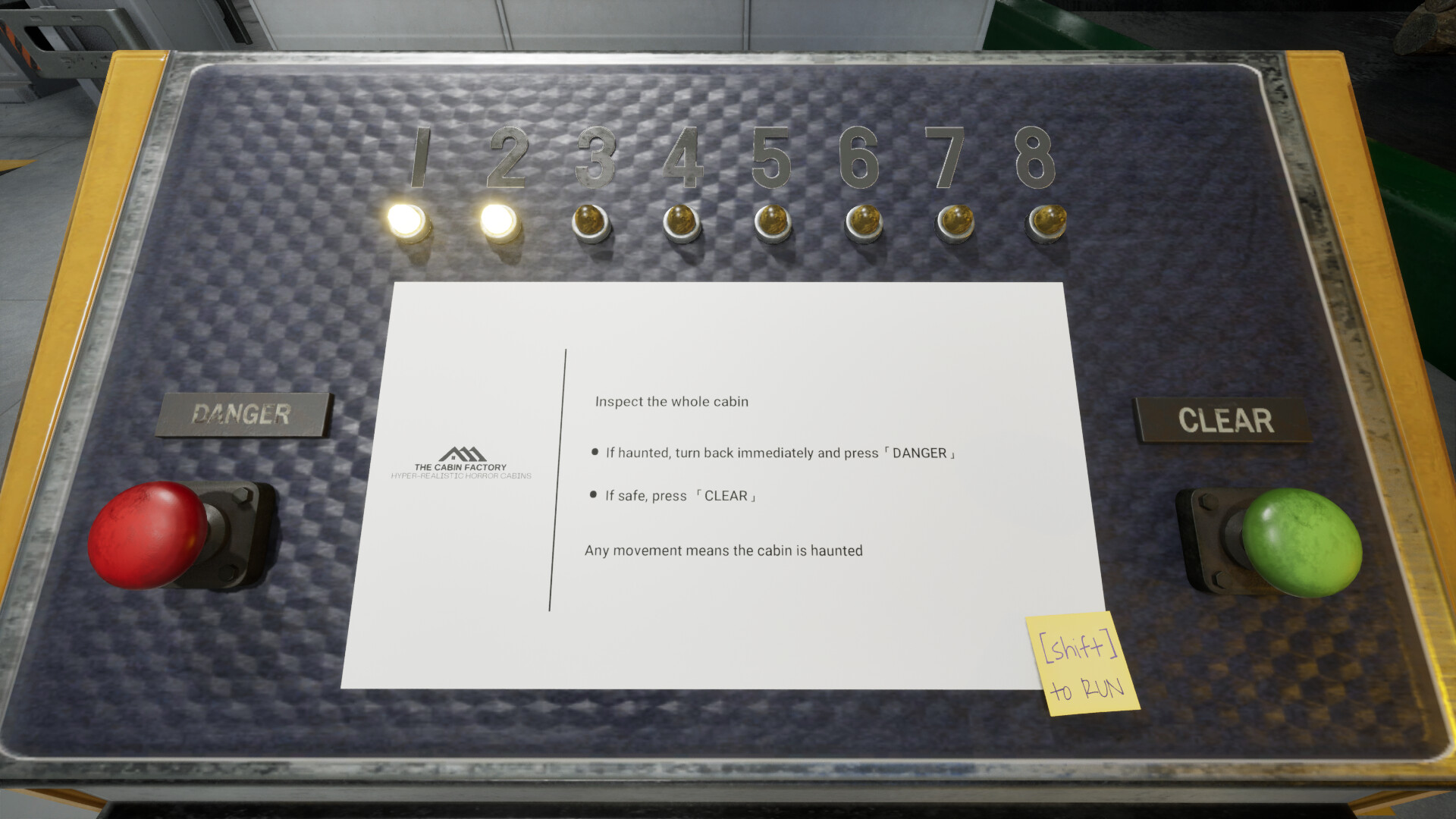
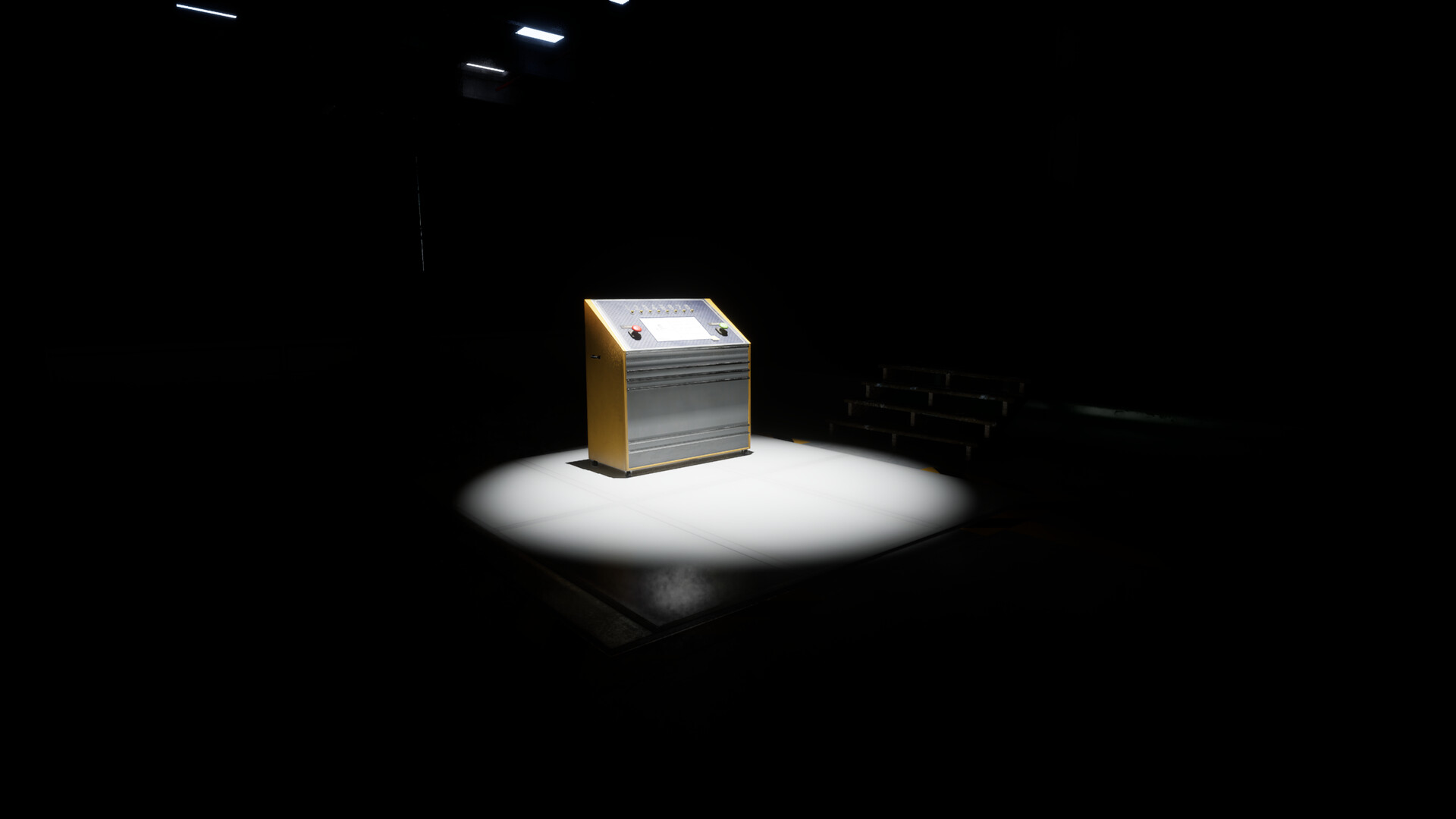
Most horror games give you a town and a reason. The Cabin Factory gives you an elevator and a contract. Welcome to the Cabin Factory Corporation. Starting today you are a cabin inspector. Congratulations. Due to a recent legal dispute that falsely claims some of the cabins are haunted, it is now mandatory to inspect every unit. The parents, the radio says, were found in a fire that may have been intentional. The police have clues. The investigation is on leave. By entering the elevator you have accepted all terms, which may be updated without notice.
That onboarding is a joke and a thesis. You are not a detective. You are quality control for hyper-realistic horror cabins sold to the movie and theme park industries. The job is simple on a poster. Inspect the whole cabin. If haunted, turn back immediately and press Danger. If safe, press Clear. The final decision is yours. You will be penalised for the wrong one.
Story is doled out like a safety video. A family, a fire, a factory that would like you to keep moving. Greta, Hans, Father, Mother: names that wait in achievements and in rooms if you stare long enough. I will not walk you to the closet and describe the two endings like a tour guide. One is eight correct calls and a credits roll that hints you are not well. One is the rest of the catalog, every anomaly, every weird setup, every standard layout, and a Random Mode for the employee who got attached.
I like a premise that prices labor as horror. A lot of Exit 8 cousins hand you a corridor and a spot-the-difference. This one hands you a job in a factory that builds the corridor. The factory is the scare. A cabin that is “clear” is still a cabin where a family burned. The radio will tell you that for free. The game is wise enough not to underline it with a lecture. The underline is the green button.
The fantasy is not mastery of a combat system. The fantasy is competence arriving by accident, usually about half a second after you notice the portrait is wrong. You will be killed, reset, and sent back to the elevator, and the correct response is to inspect the next unit like a person who has a quota.
Danger, Clear, and the Art of Leaving
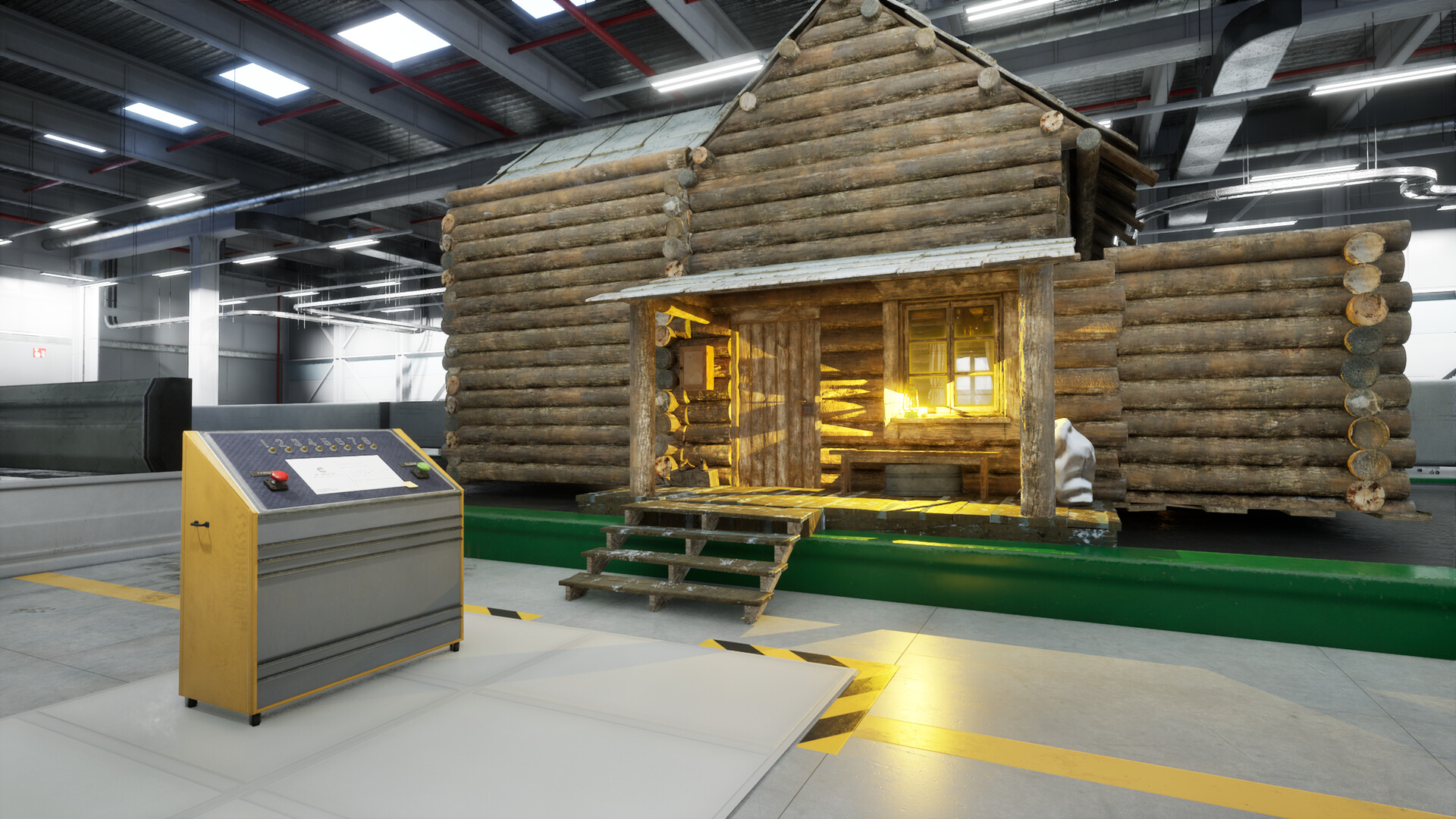
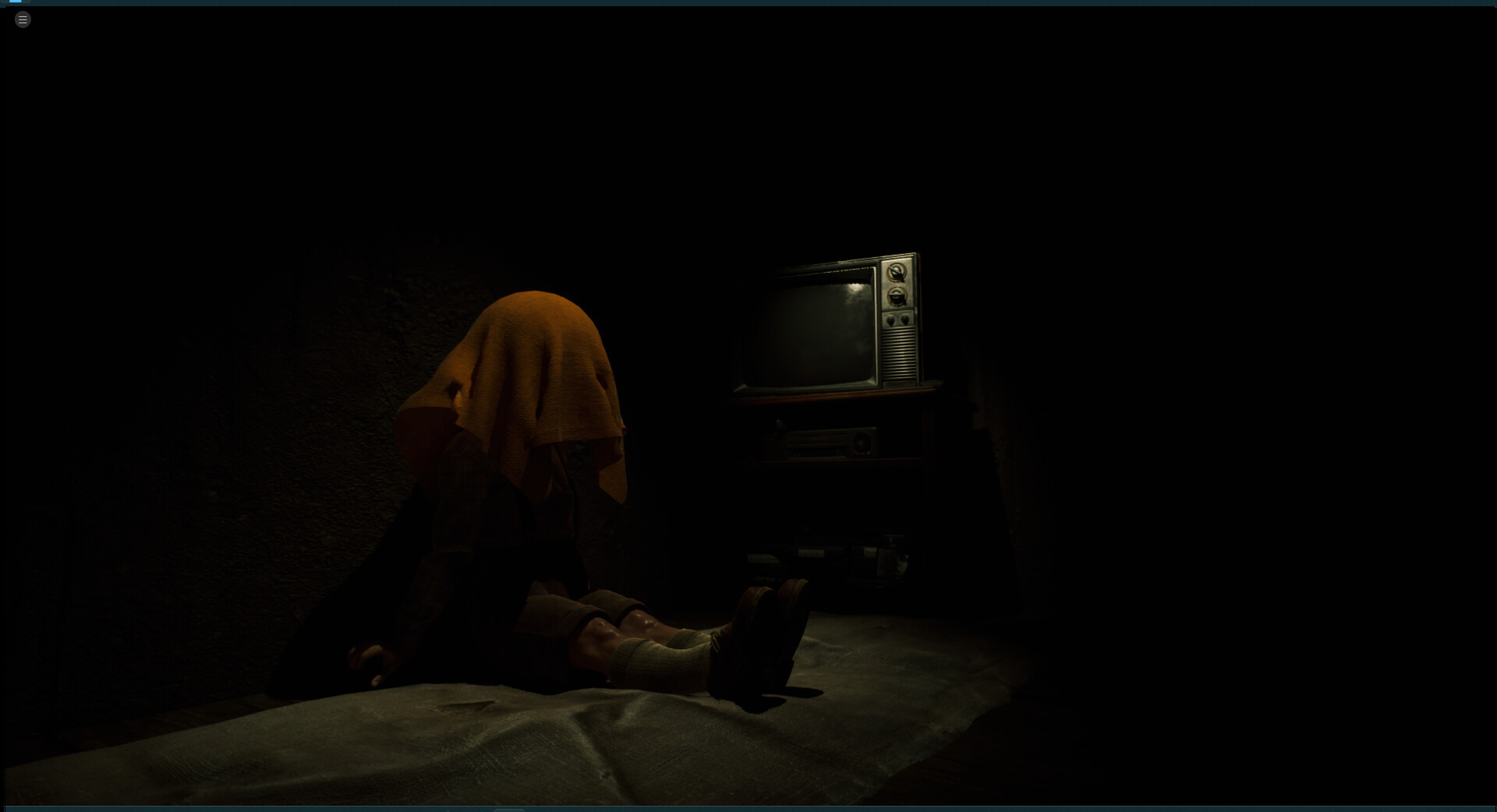
The loop is the reason the factory is worth the commute. You walk the cabin. Ground floor, stairs, loft, the little lies in the corners. You are looking for evidence that something is moving or has moved while you were inside. A ghost, an attack, a father who leaves a room, a cabin that turns orange and remembers a fire: those are haunted. Press the big red button. Soft toys that do not move, a radio talking about the death, a family smiling too hard, a cabin that is upside down and still: those can be safe. Press green. Get it right eight times in a row and the workday ends. Get it wrong and you start the day again. Get attacked and the screen goes red, which is the game’s way of saying run.
That binary is rude and fair. I have sat through plenty of walking sims that wanted to be a hug. This one wants to be a quality-assurance form. The first ending is eight in a row, which sounds small until you miss a moving curtain and watch the streak die. The second ending is the catalog, forty-odd units, twenty-five or so with haunted manners, a pile of weird setups that are not technically ghosts, and a handful of standard cabins that exist to make you distrust the quiet.
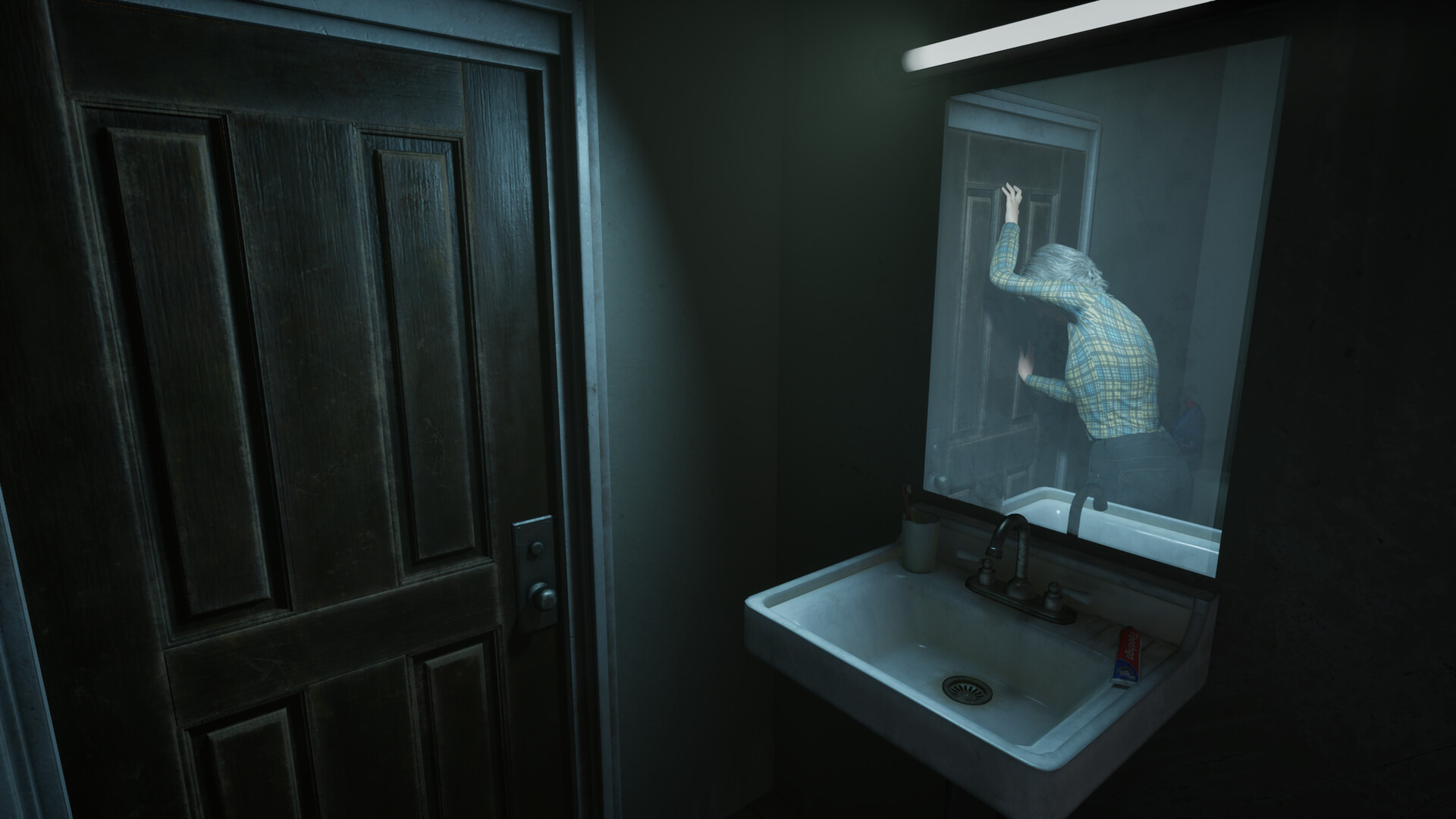
Staring is a mechanic. Face your past: Greta under the stairs. Hans upstairs while the parents eat. Father in a window. Mother outside. Look long enough and the factory pays you a line of dialogue and an achievement. I will not list the anomalies like a spoiler catalog. Part of the pleasure is learning the house style. Part of the terror is learning it too late.
I keep coming back to the leave. The correct play, when a cabin is haunted, is to turn around immediately. Greed is how the family gets you. I have stayed for one more room because I am a critic and a fool. I have also stayed because the design sometimes hides the tell upstairs. Both stays are the product. A short horror that punishes curiosity is a mean cousin of P.T. A short horror that rewards a clean exit is a professional. The Cabin Factory is both, depending on the unit.
Jumpscares exist and they are optional in the menu, which is a courtesy I wish more factories offered. Turn them on and the Boo achievement is waiting. Turn them off and the dread has to do the work. The dread is better at the job.
Forty Cabins, One Floor Plan, a Family That Will Not Stay Put
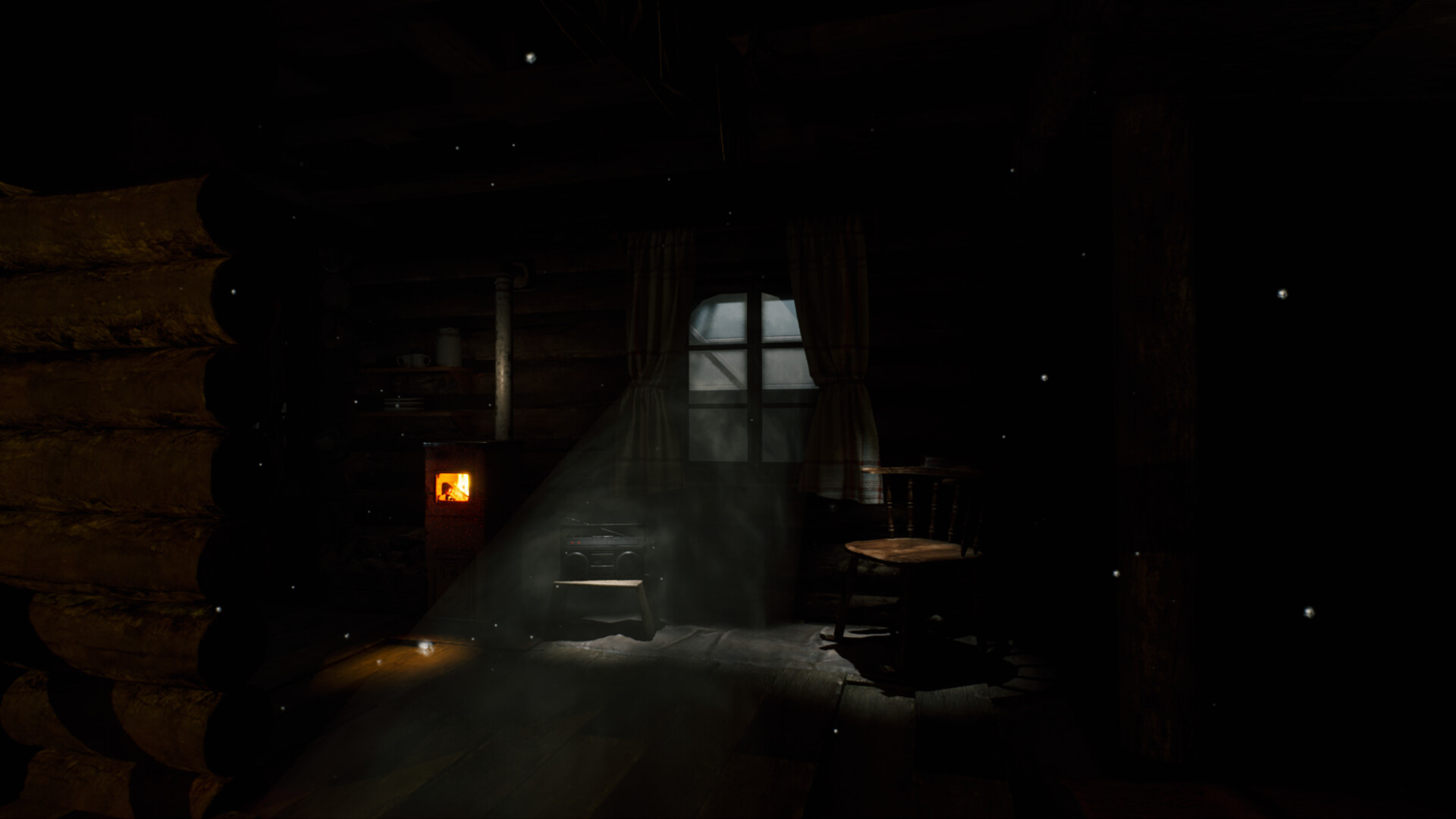
The catalog is one floor plan wearing forty hats, and that is a choice with a cost. You will learn the stairs. You will learn the portrait. You will learn the table. The pleasure is in the difference. The tax is that a standard cabin, late in the streak, can feel like a commute with better lighting. International Cat Studios knew the tax. The weird safe setups are the refund: a house full of toys, a family posed like a postcard, an interior that flipped and still wants a green button. Your brain screams haunted. The rules say no. That argument is the game.
Liminal space is the store page’s favorite comparison, and it is earned. Pools, Exit 8, the virtual predecessor everyone names with two letters: the factory is in that family and then it gets a job. You are not looping a subway. You are looping a product. The product is a cabin that was used, or will be used, to scare people for money. The metafiction is light and nasty. Someone is going to sit in this room on purpose. You are the person who stamps it.
I should be honest about length. The box says about sixty minutes. The first ending can be shorter if you are lucky and literate. The second ending is the real hour, plus the minutes you donate to resets. Random Mode is the hobby after the hobby. Seven achievements are not a mountain. They are a family album. Cabin Inspector. Employee of the Month. Four faces from a past the radio only sketches. A hidden Boo.
Short is not a slur at $2.99. Short is the thesis. A lot of horror overstays because a producer needed a ten-hour hook. This one clocks out. I have paid more for a worse hour. I have also wanted, on a second night, one more floor plan. The closet after credits is the studio’s way of saying they knew you would want to go back to work. Walk around the apartment. Wait. The doors open. The cabin is in your house. That is either a sequel hook or a diagnosis. Both can be true.
DLC already sits on the porch for people who wanted more units. I reviewed the shift I was given. The base factory is already a complete evening. The extras are for the inspector who got attached.
Greta, Hans, and the Radio That Will Not Mind Its Business
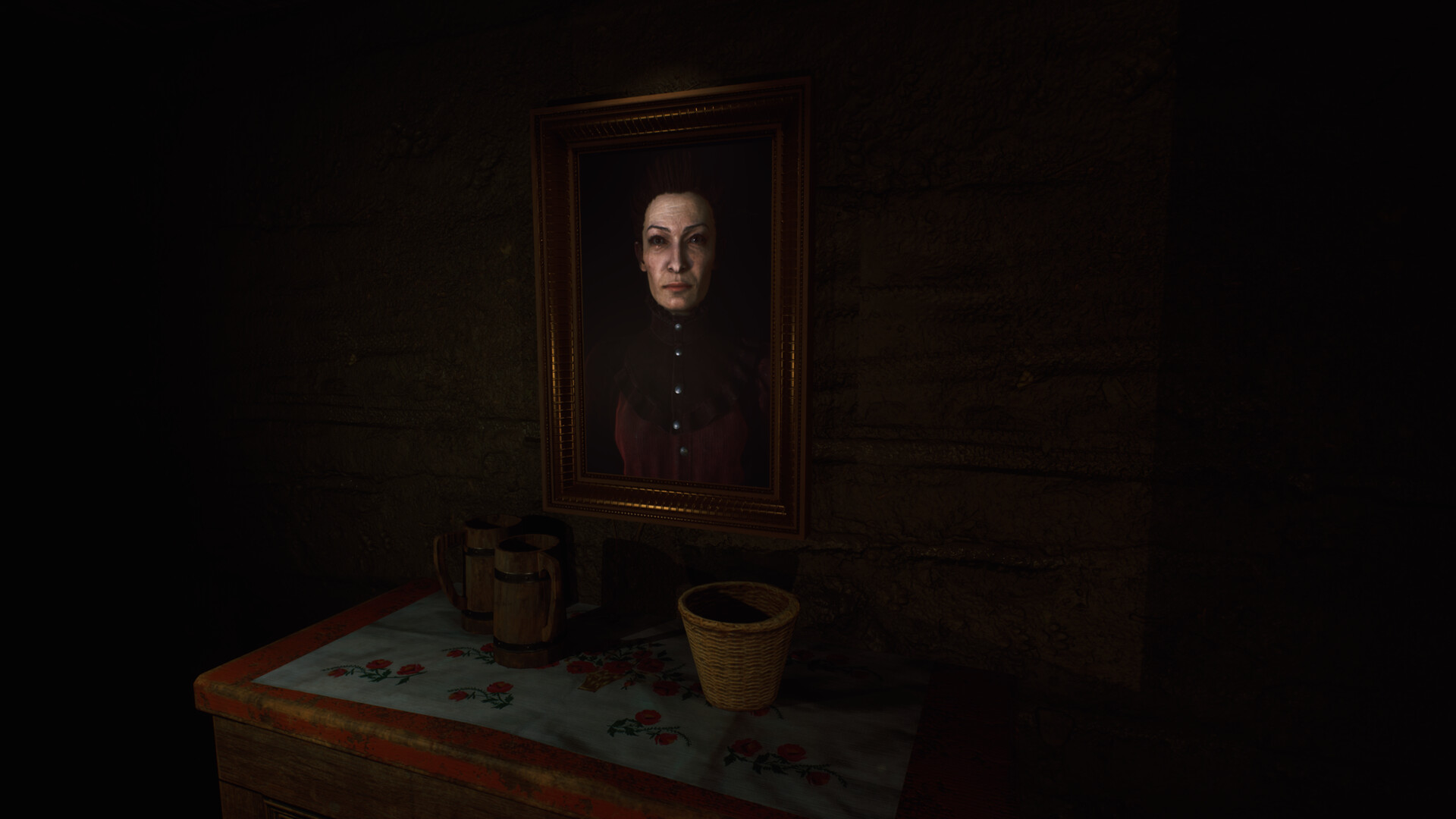
The family is the other half of the personality, and they are not wallpaper. A mother in a portrait who is also at the table. A father at a window that may or may not break. A girl under the stairs who will talk if you are rude enough to stare. A boy upstairs with an appetite. The radio narrates a fire as if it were weather. Two bodies, calcinated, a Sunday. Hush little baby, a trailer sings, as if a lullaby were a warranty.
I will not turn this into a lore bible. What I can say is that the factory is more interested in your relationship to the family than in a twist you could put on a wiki. Face your past is the achievement category and the thesis. The inspector is not a tourist. The inspector is involved. The first ending’s credits hint that everything is not well with you. The apartment after the credits agrees.
Atmosphere does the horror work a bigger budget would have spent on a second map. Wood has a temperature. Dust has a color. A loft is a dare. Lighting is honest enough to read and dishonest enough to hide a tell. I have played cheap indies that announce liminal and then deliver a gray box with a sting. These cabins have handwriting. They also have nights where the tell is a little too proud of itself and a night where you press green because you are tired. Tired is how the factory gets you.
Sound is the better craftsman. A floorboard. A radio. A window that has an opinion. The soundtrack understands the assignment. It is tense without becoming a jumpscare factory, domestic without becoming a sitcom cue. You can hear a cabin decide to be haunted. You can hear yourself decide that one more look is a plan. Thirteen languages sit on the console box if your group chat is international. English carries the onboarding. The rest carry the menus.
Controller support is first-class enough that the buttons feel like the red and green on the wall. A session is an evening. Steam Cloud on PC keeps the streak. The living-room edition keeps the same manners. Either language works if you accept that the real input is your eyes.
A Sixty-Minute Factory With a Closet for Overtime
Price is part of the review. $2.99 is a coffee that scares you. For that ask you get a complete anomaly hunter, two endings, a family that will not stay in the portrait, and a Random Mode if eight in a row was not enough humiliation. I have paid more for a skin. I have paid more for a worse hour.
The genre problem is the other half of the honesty. Spot-the-difference horror is a crowded hallway. If you have already spent a year in an underground passage counting posters, the first cabin will feel like a dialect, not a new language. The Cabin Factory earns the dialect with the factory fiction, with the family, with the apartment that refuses to be a menu. It does not earn a free pass on a single floor plan. You will learn the stairs. The stairs will not learn you back.
I should also say the quiet part about difficulty. Some tells are kind. Some tells are a father leaving a room while you are looking at a loaf of bread. A reset to the start of the streak is the genre. It is also, after a late miss, a little uncivilized. The game is short enough that the reset is tuition, not a second job. That math only works because the price is a snack.
International Cat Studios said they wanted to create completely safe and totally-not-haunted experiences. The joke is the product. Future Friends has a habit of walking small, strange things to a store page and then not sanding off the strangeness. That walk is why a first game from a two-cat household landed in living rooms a year later without becoming a different game.
If the first cabin feels like a toy, give it a second. If the fifth cabin feels like a vice, you are the audience. If you never want to stare at a portrait, there is a whole industry of games that will not ask. The closet will still open. The factory will still have a shift.
Props, Legal Disputes, and the Kind of Job That Follows You Home
I keep coming back to the legal dispute. Falsely claims, the orientation says, as if a lawsuit were the monster. The cabins are products. You are insurance. The family is a rumor the radio cannot stop telling. That triangle is sharper than a bigger monster would have been. A lot of horror wants a creature. This one wants a process.
The process is why I am comfortable recommending a game whose catalog you can finish before the kettle boils a second time. The identity is loud. The evening is complete. The price is an argument-ender. When it slips, it slips like a first game that learned an engine and then shipped a joke that was already good. I can live with that slip. I cannot live with another walking sim that charges thirty and then asks me to collect fourteen diaries.
P.T. is the ghost everyone names. The Cabin Factory is not a sequel to that ghost. It is a workplace that hired the ghost and then asked you to stamp it. Exit 8 is the other cousin, a loop with better signage. Pools is the wet cousin. The factory belongs on that shelf and then it goes upstairs and stares at Hans. That stare is the tell. A copy would not have asked you to face a past. A first game would.
Forty cabins, two buttons, a lullaby in a trailer, and a closet that opens when you thought you were off the clock: that is an evening. The museum closing time is real. So is the grin, if grin is the word, when a clean streak and a well-timed exit turn a haunted unit into a story you will tell like you meant it.
The Closet Still Opens After Credits
The Cabin Factory is the rare cheap horror that understands its own joke and then has the discipline to make the joke a shift. International Cat Studios built a possession fantasy about an inspector, two buttons, and a family that will not stay in the portrait. Future Friends Games walked it to the door. The hook is a cabin that might be a prop. The spine is the way looking, leaving, and stamping turn a floor plan into a plan.
It is better as an evening than as a novel. The tells stay the reason to recommend it. The factory fiction stays the reason you keep the window open. The repetition is real. So is the quiet when eight correct calls send you home and the closet disagrees.
I am scoring it 8, Great, because the identity is this strong and the limitations are the limitations of a focused hour, not an unfinished one. At $2.99 you are buying a factory that respects your night, a catalog with forty ways to be wrong, and a loop that refuses to charge a full-price ticket for the privilege of being reset. Distinctive anomaly hunting, a family that stares back, and cabins designed to be replayed are a lot of game for the ask. The stairs repeat their jokes. The jokes are still sharp.
The elevator is still there. The contract still updates without notice. After a few clean streaks, you will understand why the factory is not finished with you, and why you keep taking the job anyway.
We prepared this review with a digital copy of The Cabin Factory for the PS5 version provided by Future Friends Games.