
Sakurai’s Sequel Dream Realized
The wait is over. After two decades of fan campaigns and wishlists, Masahiro Sakurai, the mastermind behind Kirby’s birth, returns to direct the true sequel to Kirby Air Ride. Launched November 20, 2025, exclusively on Nintendo Switch 2 for $99.99 CAD, this labor of love transforms the GameCube cult classic into a sprawling 20-30 hour adventure blending racing frenzy, arena brawls, and party pandemonium. With a Metacritic average hovering in the low 80s and widespread acclaim for its maximalist mayhem, it’s already doubled the original’s Japanese sales and spawned memes that have taken over online lobbies.
The narrative kicks off with Zorah, a sentient machine stranded on Popstar, yearning for freedom. Galactic Nova answers by crafting Air Ride machines, but hides a dark secret: these vehicles lead riders to Gigantes, Zorah’s destructive evolution. Road Trip mode strings this into an engaging tale of discovery, minigames, and boss chases, culminating in NG+ showdowns against Hyper Gigantes and the satellite itself. Cutscenes burst with charm, wild twists keep you guessing, and the simple premise blooms into something unexpectedly epic, evoking the narrative flair of Smash Bros.’ Subspace Emissary.
Amiibo figures bundle riders with machines for trainable “Figure Players,” adding collection joy. Global Test Rides packed servers, birthing legends like Rick the hamster, his breakneck speed and goofy animations flooding lobbies. Sakurai poured his soul into perfection: premium presentation, zero planned DLC, a complete package that feels like the definitive evolution of his 2003 vision.
Simplified Controls, Infinite Depth
Forget complex inputs. Vehicles auto-accelerate, you steer, boost, drift, and attack with one button mastery. Hold for turbo bursts, tap for spin assaults that damage rivals and fill the Special Gauge for rider-specific super moves (Kirby’s star dash scatters stars, Meta Knight’s shuttle slices like a guillotine). Perfect landings and enemy hits generate speed trails for slingshot passes, turning every maneuver into momentum magic. It’s deceptively simple: baffling for five minutes, addictive forever.
Twenty-one riders bring variety, Kirby’s color variants each unleash unique specials, paired with 22 machines boasting stat spreads from speed demons to handling heroes. Relay races force vehicle swaps per lap, keeping strategies fresh. The Machine Market lets you trade custom creations online, while gummies offer playful collectibles for menu fiddling. Paddock lobbies buzz with pre-race mingling, Global Win Power ranks your license with stickers and effects for bragging rights.
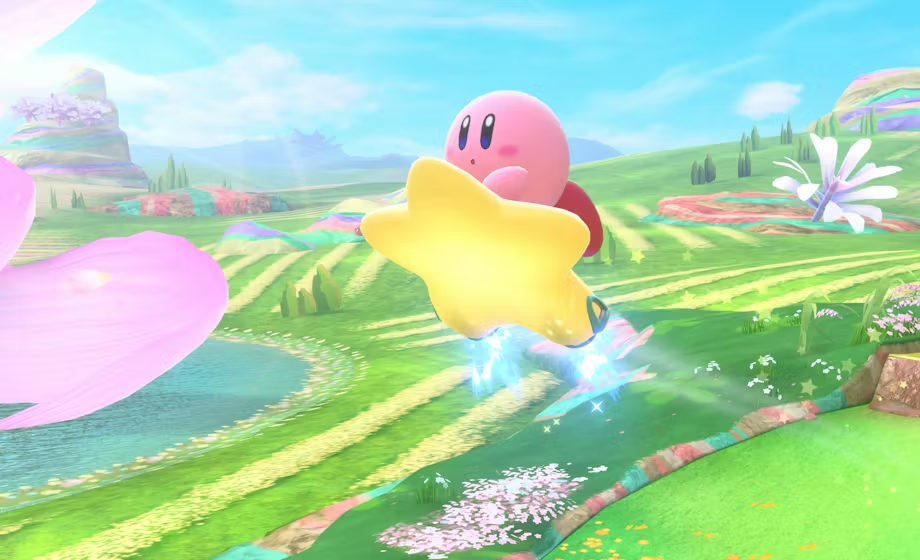 Sakurai’s single-button genius unleashes chaos: manage boost wisely, chain drifts for explosive acceleration, time specials to obliterate packs. The depth emerges from synergy, machine stats mesh with rider abilities, creating builds that dominate dunes or dive through dimensions. Critics rave about the “mechanical purity” that hooks newcomers while challenging veterans, a control scheme that’s restrictive yet revolutionary.
Air Ride: Manic Mario Kart Rival
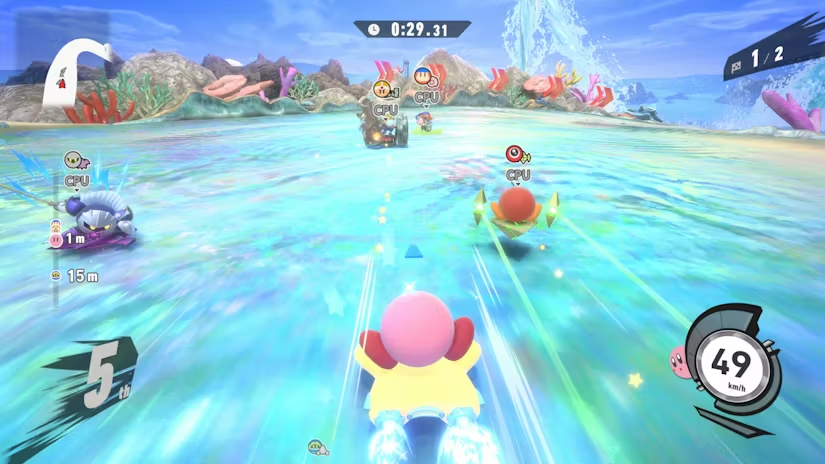
Eighteen tracks span nine returning favorites and nine fresh circuits, delivering three-lap sprints for up to six players. Warp Rings activate on lap two, flinging the field into CrossWorlds, fifteen bite-sized biomes bursting with hazards like Minecraft’s blocky pitfalls, PAC-MAN’s pellet pursuits, or lava worms wriggling through magma mazes. The leader picks the dimension or gambles on random, injecting strategy into the scramble: choose ice slides to freeze pursuers or neon mazes to trap tailgaters.
Land, sea, air transformations keep karts evolving, wheels to wings to wakes, while star trails and perfect drifts propel slingshot supremacy. Daily rotations and Limited Events twist rules (no items, reverse boosts), ensuring no race repeats. Tracks dazzle with variety: Sky Sands’ sunny drifts contrast Waveflow Waters’ tidal twists, each demanding mastery of machine quirks and rider specials.
The pace borders overwhelming, forcing split-second calls that reward aggression with adrenaline avalanches. It’s Mario Kart’s accessibility amplified into anarchy, where a well-timed special can flip twelve positions in seconds. Players report “dopamine rushes” from clutch comebacks, though track memorization becomes key after dozens of laps.
City Trial: Party Chaos Perfected
Skyah’s sprawling sky-island hosts 16-player free-for-alls: hoard stats, hijack machines, clash in mid-air melees before Stadium finales like Gourmet Race feasts or boss bashes against Marx and Nightmare. Random events spike the spectacle, power-up rains reward top performers, while legendary machines (Hydra, Dragoon, Leo) assemble from scavenged parts for late-game legends.
 Team battles introduce alliance anarchy, secret islands conceal supreme upgrades, and player votes decide Stadium showdowns from four options. Solo sessions feel repetitive, but multiplayer bursts birth brilliance: coordinate machine steals, ambush rivals mid-stadium setup, or survive boss rushes as a synchronized swarm. The chaos peaks in “totally out of control” crescendos where one special swing scatters the sky.
It’s an acquired taste, overwhelming for solo purists, paradise for party animals. The randomness ensures replay rapture, though final challenges lack variety, leaving some craving map expansions. Still, few modes match its “chaotic best way” energy.
Top Ride, Road Trip, and Multiplayer Magic
Top Ride’s eight-player time trials deliver “nostalgic tickling” purity: race mini-courses for leaderboard glory, addictive for precision pilots but straightforward for speed junkies. Road Trip strings story through mode-mashing minigames, unlocking routes and bosses with satisfying progression, ideal newbie gateway, though combat focus stretches controls thin.
Online lobbies hum with Paddock pre-race mingling, Global Win Power ranking customized licenses. Air Ride (6p), Top Ride (8p), City Trial (16p) scale seamlessly, cross-play uniting worlds. Local split-screen supports four (eight on larger screens), turning couches into competitive carnivals.
Smooth performance and deep customization elevate every encounter, though occasional instability in Top Ride mars the mark.
Presentation: Soundtrack Symphony and Pixel Perfection
Shogo Sakai and Noriyuki Iwadare craft a soundtrack blending Air Ride remixes with Smash cameos, “Starlit Journey” soars with dual-language vocals. Menus mesmerize with Michiko Sakurai’s UI wizardry, a “contender for greatest ever.” Visuals vibrate: vibrant tracks burst detail, chaotic CrossWorlds captivate, amiibo-trained Figure Players add flair.
Machines gleam with personality, riders animate adorably, maximalist charm captivates. Amiibo swappability and sticker-spiced licenses personalize profiles.
It’s a sensory speedway: soundtrack swells chiptune crescendos, effects evoke exhilaration, presentation polishes perfection.
Peaks and Pitfalls
Maximalist mayhem reigns supreme, CrossWorlds keep races revolutionary, customization creates endless builds, soundtrack soars symphonically, content cascades (750 challenges). Online lobbies link legends, Road Trip ramps newcomers gracefully, Sakurai’s passion palpable.
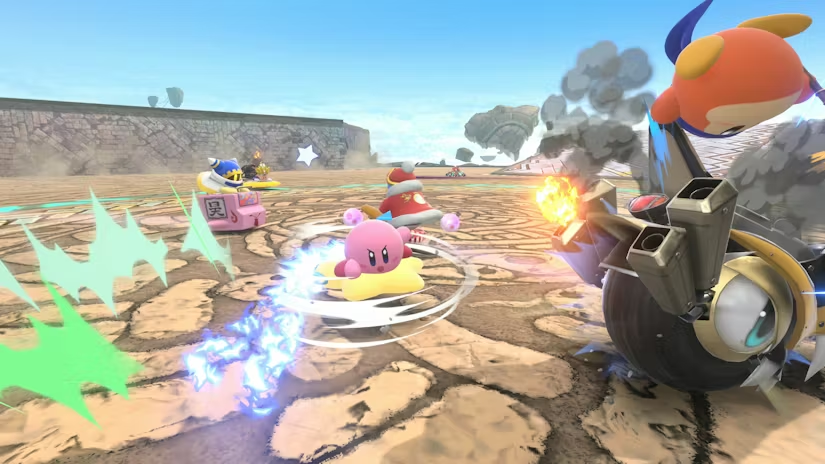 City Trial overwhelms solo (repetitive finales), Top Ride underwhelms (unengaging), one-button limits lunacy, ad jingle jars.
Yet peaks pulverize pitfalls, this chaotic kart king crowns the comeback.
Final Thoughts
Kirby Air Riders realizes a 22-year dream with chaotic brilliance, blending racing, brawling, party modes into addictive action. Air Ride’s manic tracks, City Trial’s wild multiplayer, Road Trip’s epic story, it’s Sakurai’s passion project perfected. Not for everyone, but Kirby fans and chaos seekers will adore it.
We prepared this review with a digital copy of Kirby Air Riders for the Nintendo Switch 2 version provided by Nintendo.


Eddie Mastrocovi
Hello, Neat post. There’s a problem with your site in internet explorer, might test this?K IE still is the market leader and a big section of people will omit your magnificent writing because of this problem.
Sidneytum
1-к квартира в Могилеве с отличным ремонтом. Встроенная кухня техника Bosch. Ищем чистоплотного жильца. Без животных. Аренда квартиры посуточно Сморгонь Семейное гнездышко в Гродно. 3 комнаты раздельный санузел лоджия. Двор без машин детская площадка. Ждем вас снять жилье сморгонь Для романтического отдыха ищите особенные «фишки» в описании: камин панорамные окна джакузи балкон с видом. Они создадут нужную атмосферу. квартира в сморгони для семьи
BlakeRib
Для большой компании важен простор и количество спальных мест. Проверьте реальные фото гостиной. Уточните количество ключей и правила шума в доме. квартира посуточно Квартира включает основные зоны: спальную гостевую кухонную санузел. Каждая зона оборудована соответствующей мебелью и техникой. Бельё и средства гигиены выдаются. комфортная квартира на сутки Хозяин знающий юридические основы договор отчетные документы дает чувство защищенности. С ним аренда — цивилизованный и прозрачный процесс. снять квартиру Квартира с характером Стильный лофт кирпичная стена удобная кровать-чердак. Всё для крутых фото. При этом технически всё??: вода свет отопление. Было здорово квартира с отделкой
🙇♀️ Transfer to your e-wallet. Log In 📍→ yandex.com/poll/GjSFvwyKcmEMXpzm6yDExc?hs=211f0f97adca82ad44828dad746ea08f& 🙇♀️
diivqc
🤑 Ethereum 2025–2026 Recovery Receive Now ➡️➡️ telegra.ph/Blockchaincom-03-17-4?hs=211f0f97adca82ad44828dad746ea08f& 🤑
zj14d9
phuktnOt
Looking at best Pakistani casino sites offers incredible opportunities for players. The security of transactions and fast payouts are guaranteed on these platforms. Most sites provide mobile-friendly interfaces and 24/7 customer support. Professional dealers and high-quality streams create a real atmosphere. Dont miss your chance to win big on a trusted platform.
💹 36,824.56 $$ transfer. Get 🚀→ graph.org/Withdrawal-process-04-14?hs=211f0f97adca82ad44828dad746ea08f& 💹
9yfu6l
Alvinjon
Вывод из запоя на дому — это формат медицинской помощи при котором лечение проводится в привычной для пациента обстановке с использованием инфузионной терапии и врачебного контроля. Такой подход позволяет начать детоксикацию без задержек и снизить нагрузку на организм связанную с транспортировкой. В наркологической клинике «Частный медик 24» выезд специалиста организуется круглосуточно а терапия подбирается с учётом текущего состояния пациента. Разобраться лучше – вывод из запоя на дому анонимно в санкт-петербурге
📝 Transaction to you.Go => graph.org/BALANCE-36824-US-DOLLARS-04-24-2?hs=211f0f97adca82ad44828dad746ea08f&
0ui6hy