There is a particular kind of greed, rare in a medium that usually hands you a skill tree and a map, in watching a pre-rendered hero spin in place while a thousand undead pay rent on the same pixel. The clock is a dare. The Lord is a calendar appointment. Halls of Torment, the horde-survival roguelite from Stuttgart’s Chasing Carrots, is built on that appointment, and the appointment is deeper and cheaper than a $6.66 descent has any right to be.
I played the PlayStation 5 version, the October 28, 2025 living-room arrival that followed a May 2023 Early Access, a September 24, 2024 1.0 on PC, and a pile of 30,646 Steam recommendations that had already done the arguing. Chasing Carrots is a five-person German studio that still makes almost every piece in-house. The console launch landed with the free Bardcore update and the first paid descent, The Boglands. You pick one of eleven heroes, survive wave after wave in a late-nineties Diablo postcard, and try to be home in thirty minutes. Six stages, 35-plus bosses, 60 items with 240 rarer cousins, 74 abilities, 500 quests, a thousand traits if you are the kind of person who counts. Great, not infinite, and very much a hall I would recommend you die in.

Thirty Minutes, Then the Lord Writes Back
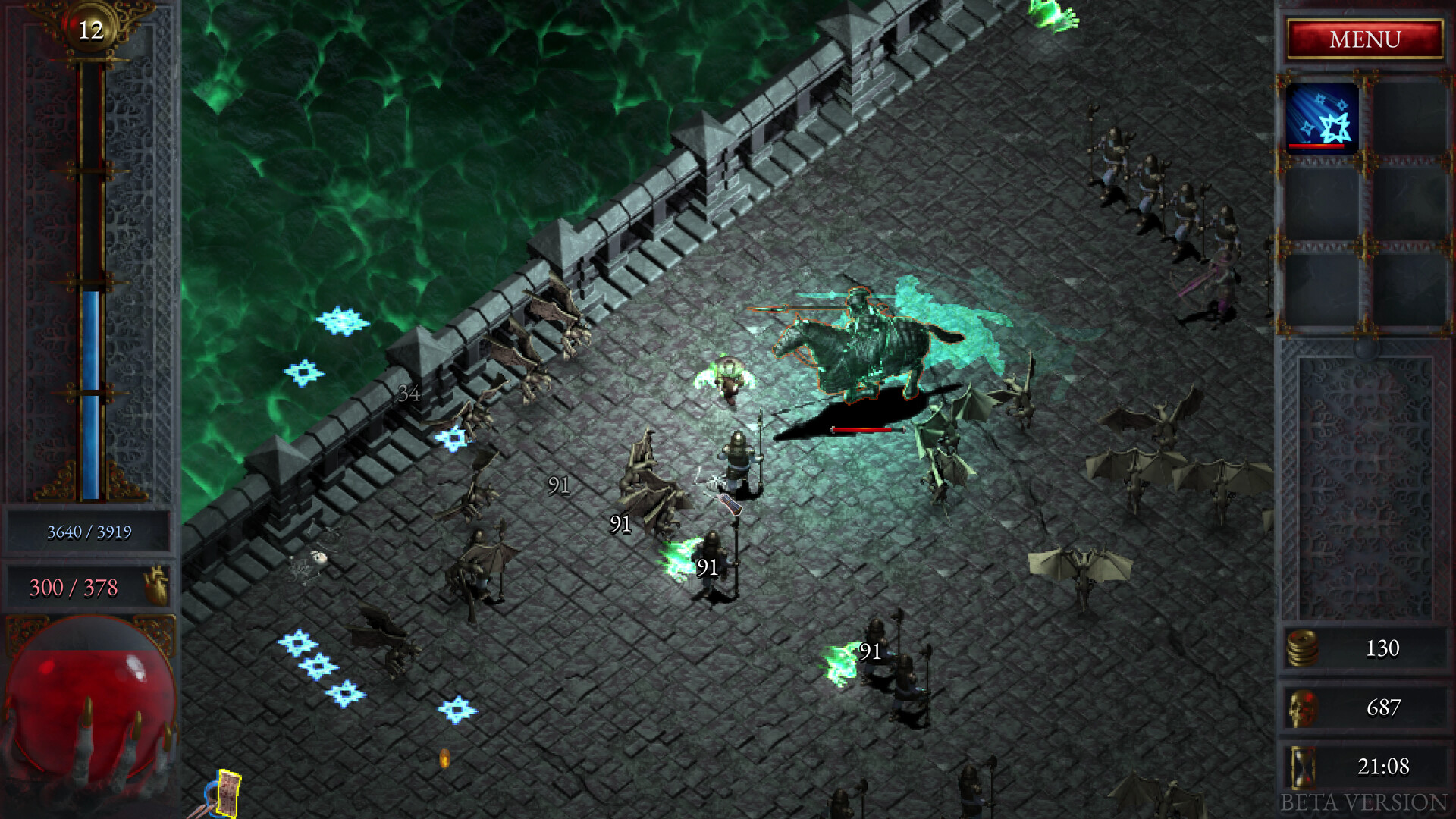
Most horde survivors give you a kitchen timer and a smile. Halls of Torment gives you a kitchen timer and a quest log that remembers your name. A run is a casual thirty minutes if you are polite about it. Survive until the Lord of the hall arrives, or fail trying, and the overworld keeps the receipt. Blessings stack. Items come home. The next descent starts a little ruder and a little richer.
The picture is the first handshake. Pre-rendered, late-nineties, the kind of lighting that made a CRT feel expensive. You are looking at a cousin of those old action RPGs, not a twin-stick toy that borrowed a vampire. The camera is top-down and honest. Health bars are ugly on purpose. A new player will think they have traveled. A veteran will think they have come home.
Story is functional and stingy, which is the right instinct. You descend. Lords wait. Horrors from beyond would like a word. The fiction is a caption on a grind, and the grind is the story. I will not pretend there is a novella hiding under the loot. There is a mood. The mood is a dungeon that has been open since 1998 and has not forgiven anyone.
I like a run that respects an evening. Too many roguelites want a second job. This one wants a half hour and then, if you are weak, another half hour. Quest-based meta-progression is why the second half hour is not an insult. Survive the Haunted Caverns long enough and the Archer shows up for work. Kill a thousand in the Ember Grounds and the Exterminator brings a flamethrower. Defeat the Lich and the Cleric starts healing the joke. The hall is a hiring office that pays in classes.
The fantasy is not mastery of a single build. The fantasy is competence arriving by accident, usually about four minutes after you picked a trait you did not understand and then watched a swarm become a lawn. You will be flattened by a Lord, bullied by an elite, and drowned in a pixel flood, and the correct response is to open the quest list and take it personally.
Eleven Heroes and a Thousand Ways to Be Rude
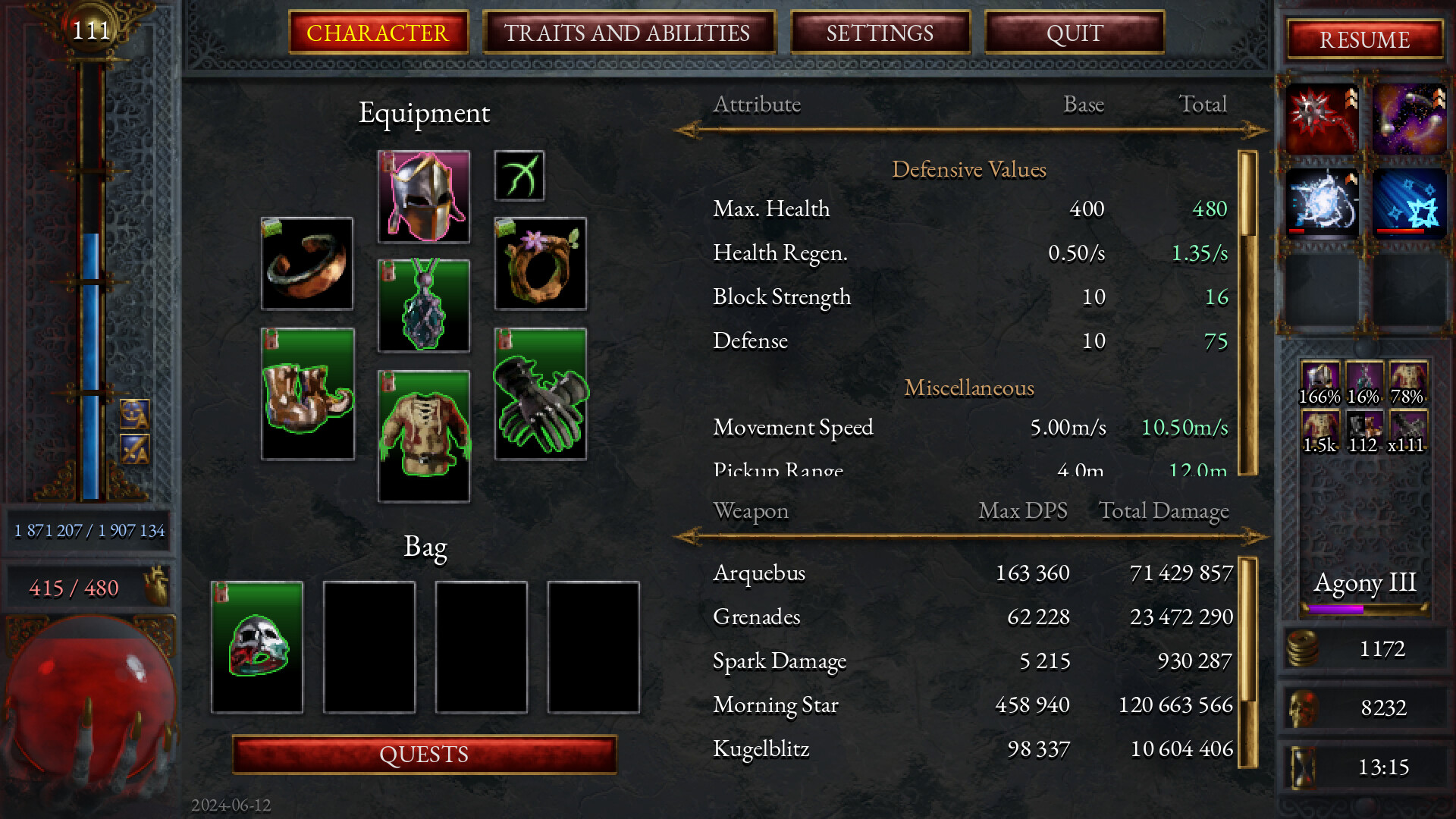
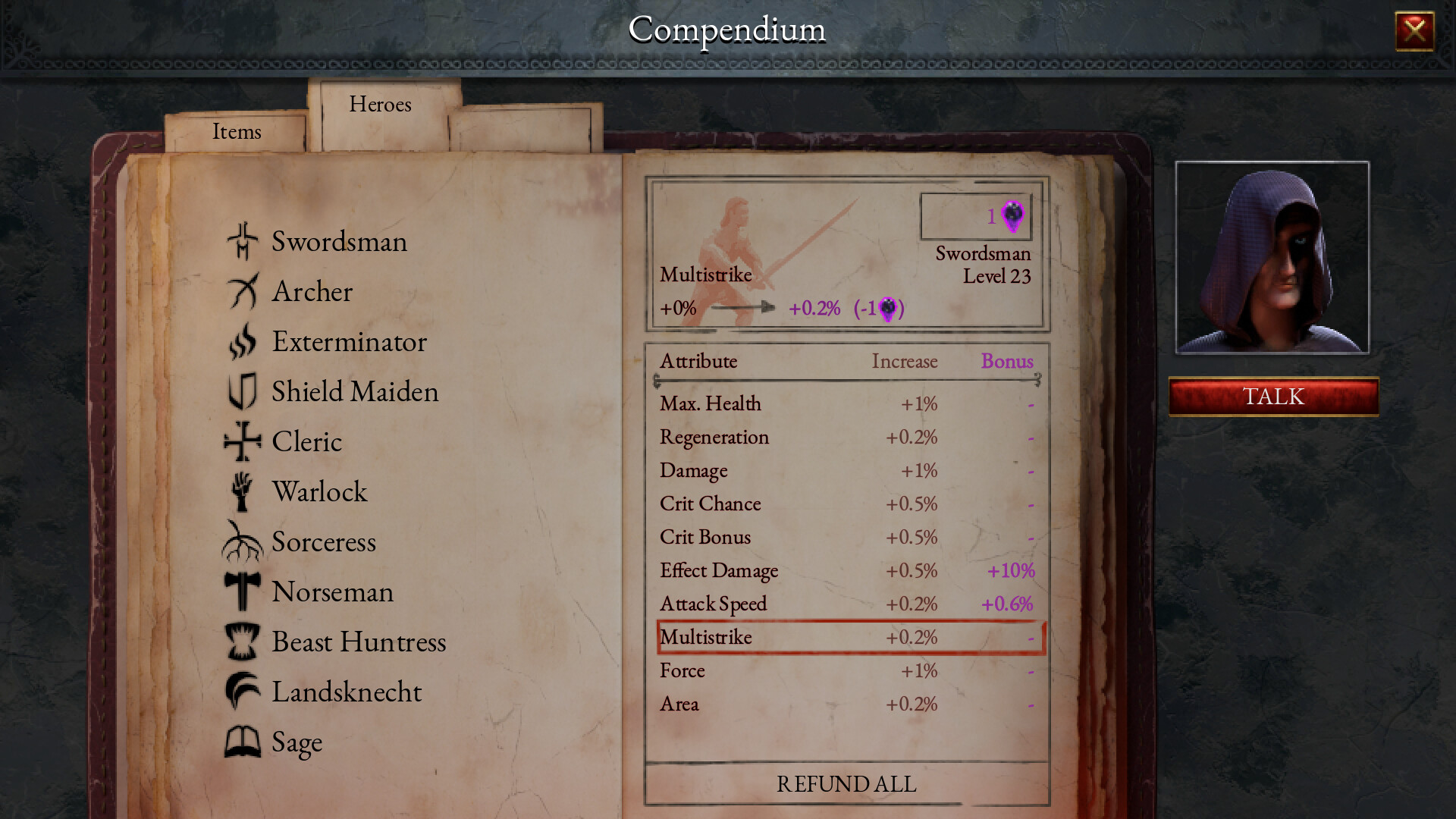
The roster is the reason the abyss is worth the commute. Swordsman is the handshake, a fighter with enough hit points to learn the grammar. Archer becomes a critting rumor if you feed her the right rings. Exterminator starts with a flamethrower and a ten-percent chance to make the floor a hobby. Cleric heals and deletes in a way that will spoil you. Warlock, Sorceress, Shield Maiden, Norseman, Landsknecht, Sage, Priestess: each one is a dialect, unlocked by a quest that already wanted you to play differently.
Main weapons are not skins. A sword wants you close. A bow wants you greedy. A flamethrower wants attack speed the way a fire wants paper. Marks and character traits rewrite the sentence further. Equip a class power on a body that was not born with it and the hall starts offering opinions it did not have last night. That combination layer is the 1.0 promise the Early Access only sketched.
Abilities arrive from Tomes and Scrolls of Mastery, six to a run if you are lucky and literate. Ring Blades, Transfixion, Clay Golem, Arcane Rift, Spirit Warrior, Morning Star, Spectral Fists, Dragon’s Breath that can grow up to be a death ray: the names are a menu and a dare. Traits upgrade the lot. A thousand of them sit in the files. You will not see a thousand in a weekend. You will see enough to start arguing with yourself about burn versus lightning versus a golem that wants a raise.
Items are the other hat. Sixty unique retrieves, 240 higher-rarity variants, rings that look like junk until they are not. Send a favorite back to the overworld and tomorrow’s hero dresses like yesterday’s mistake on purpose. Artifacts, thirty of them, customize the rules. Tinctures nudge fate. Rare variants turn a comfortable build into a comedy.
I keep coming back to the Exterminator, because fire is a personality. Stack burn, feed attack speed, watch a Lord melt like a deadline. I also keep coming back to the nights a squishy Archer died because I treated a hall like a shooting gallery and forgot the gallery shoots back. Both nights were better than a run where I treated every pickup like a vending machine.
Six Halls, a Bog, and a Shrine That Will Not Die
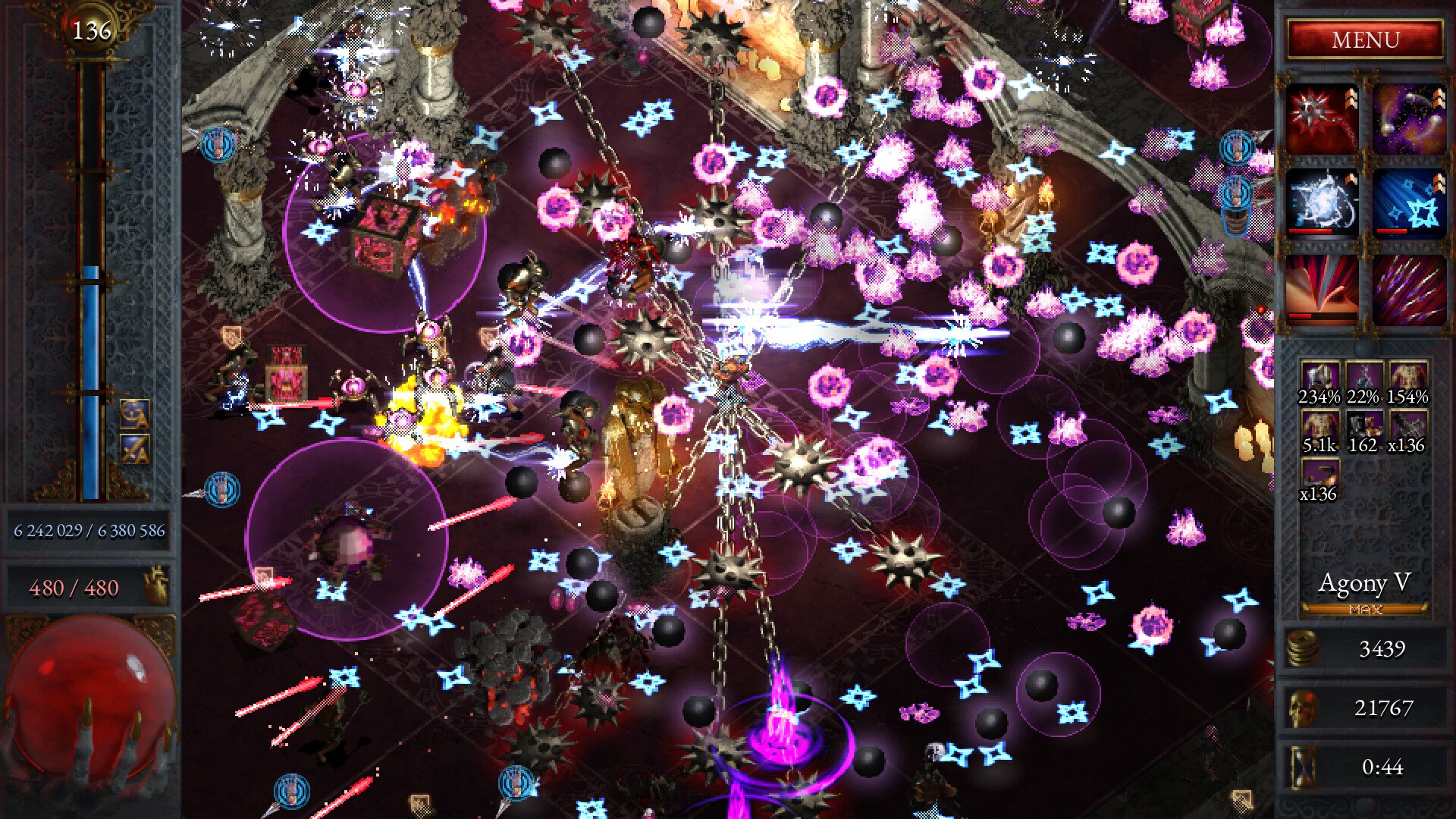
The climb is six stages with handwriting, plus the Boglands if you paid for the extra mud. Haunted Caverns teach the alphabet. Ember Grounds ask whether you like being on fire. Forgotten Viaduct stretches the camera and the crowd. Frozen Depths make the air expensive. Chambers of Dissonance are a late exam. Each hall has a Lord with a pattern, elites with bad manners, and a set of monsters that refuse to be a reskin of the last.
Thirty-five unique bosses is not a boast so much as a threat. Unique mechanics, unique tantrums. A Lord is not a bigger health bar with a hat. A Lord is a reason to save a cooldown. Seventy-plus monsters keep the lawn from becoming one texture. Interactable environments let you use traps and hazards like a person who has learned the furniture. I have kited a swarm into a hall’s own bad idea and felt like a genius for four seconds.
Agony Mode is the other weather. Survive long enough, or survive on purpose, and the hall stops being polite. The Shrine of Torment sits at the far end as the unbeatable joke, a late-game exam for people who have already broken the calculator and want the calculator to fight back. Infinite growth is the store page’s phrase. In play it means a build can become comedy if the traits agree, and a smear if they do not.
The Boglands arrived with the console doors as the first paid descent. New mud, new neighbors, a reason for veterans to clock in again. Bardcore, the free update, is the studio’s way of saying the 1.0 was a station, not a funeral. I like a small team that keeps a cheap game alive without turning the shop into a season.
Six halls are still six halls. After enough evenings a cavern is a commute. Horde survivors rhyme by nature. The pixel flood that thrilled you in week one can become weather you check out of. That is the genre tax. Halls of Torment pays it later than most, because the quest list keeps inventing a reason to take a different hero into a room you already survived.
Quests, Blessings, and the Overworld That Hoards
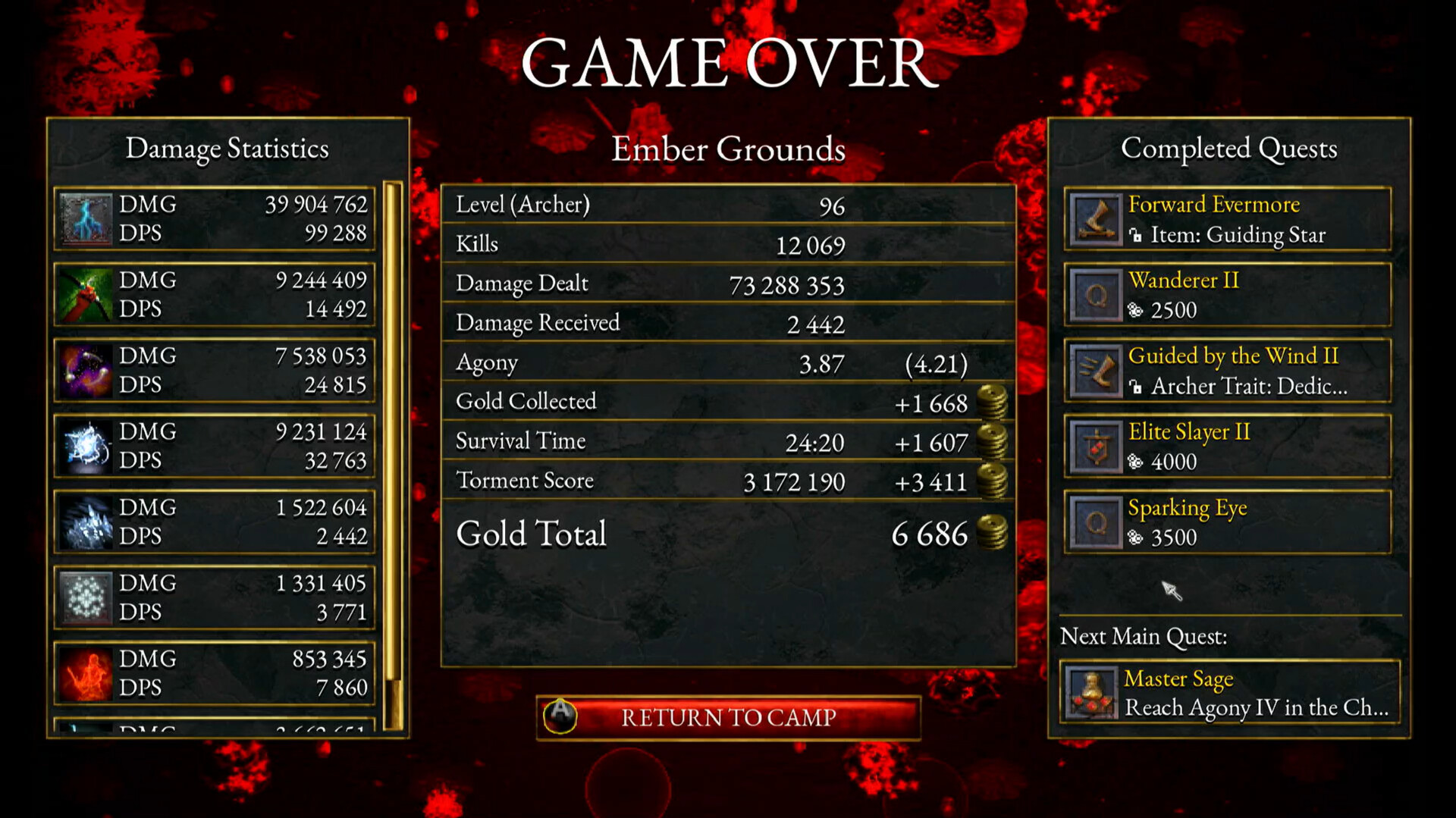
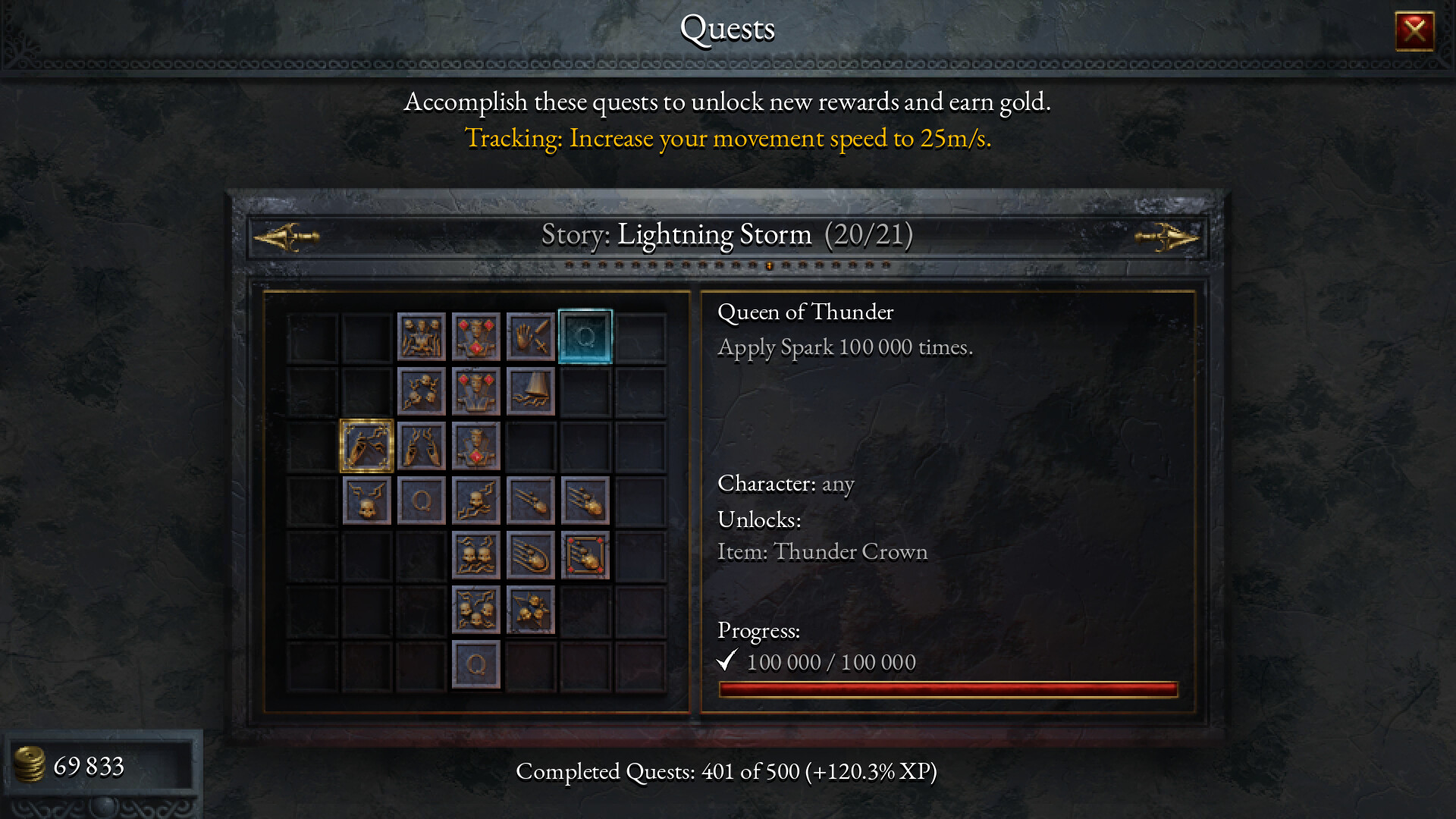
Meta-progression is why I stopped resenting the timer. Halls of Torment makes the hill a town that keeps a receipt. Twenty-five blessings make you stronger for each attempt, a quiet pension. Five hundred quests sound like a joke until you realize they are the campaign. Unlock a hero. Unlock an ability. Retrieve an item. Touch a mark. The quest log is a design document you are allowed to read.
This is the difference between a survivor you drop and a survivor you inhabit. A lot of the cousins want you to get lucky. Chasing Carrots wants you to get specific. Kill ten thousand on the viaduct. Crit five thousand times in a run. Deal a stupid amount of damage with a main weapon. The tasks are grind dressed as a curriculum, and the curriculum is why a $6.66 object has hundreds of hours hiding in it if you are the kind of person who cannot leave a checkbox alone.
Artifacts let you customize the experience, which is a polite way of saying you can make the hall weirder on purpose. Tinctures direct fate, a little lie you tell the loot table. Class combinations are the late-game dialect. Put a flamethrower’s manners on a body that wanted a sword and the swarm starts filing complaints.
I should be clear about the friction, because it is real. Quest text can be a scavenger hunt. Some unlocks sit behind a Lord you are not ready to meet on the hero you have. The sheer pile of traits can turn a level-up into a reading comprehension test in a room that is already on fire. I respect a game that wants you to think. I resent a game that wants you to think while a thousand skeletons are eating the tooltip.
Steam Cloud and full controller support make the pile portable. Keyboard-only and mouse-only options exist for the stubborn. Playable without timed input is an accessibility courtesy a horde game does not always remember. The console edition remembers the pad first, which is the correct instinct for a living room that only has thirty minutes before dinner.
Pixels From a Year That Knew About Treasure
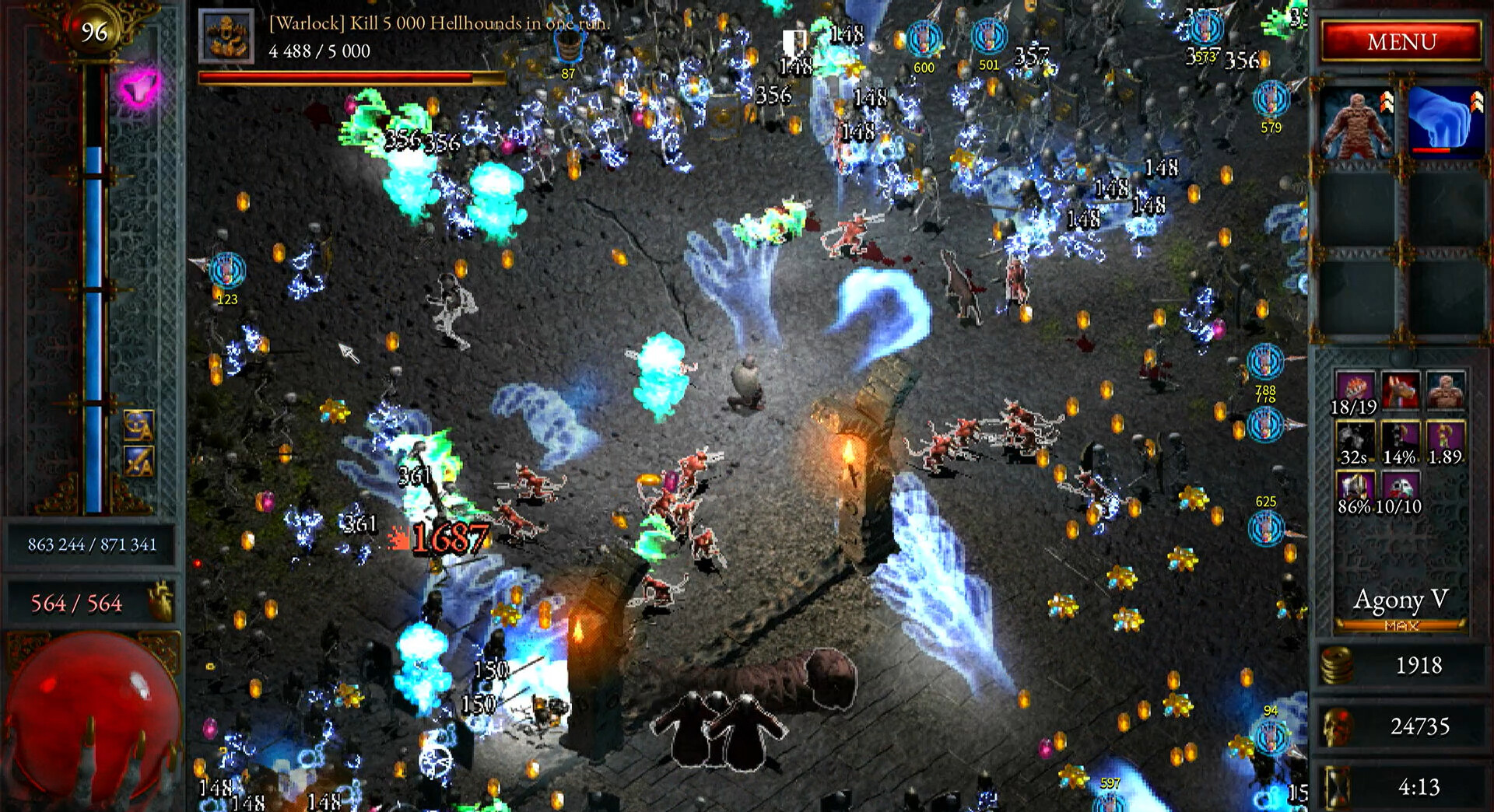
Halls of Torment does not look like a 2024 production, and that is the compliment. The pre-rendered art is the whole pitch. Characters have weight. Halls have a temperature. Blood is a pixel weather. I have played a lot of survivors that announce atmosphere and then deliver a brown arena with a sting. These arenas have handwriting. You can tell a cavern from a viaduct at a glance, which matters, because if you cannot read a swarm the build dies.
Animations are short and rude: a swing, a burn tick, a Lord windup that you will learn to hate like a coworker. When a synergy lands, the screen becomes a parade. When it does not, the parade is the enemy’s. You do not need a cutscene. You need a number going up and a health bar going quiet.
The soundtrack understands the assignment. It is dungeon-crawler tense without becoming a jumpscare factory, catchy without becoming a slot-floor loop. You can hear an elite. You can hear a pickup. You can hear the Lord thinking about you. Sixteen languages sit on the box if your group chat is international. English carries the voice. The rest carry the menus.
A critic score of 88 sits on the PC store page if you like a number. Thirty thousand recommendations sit next to it if you like a crowd. I am not hiding behind either. I am saying a five-person studio in Stuttgart made a cheap horde game that outlasted the joke it was compared to, then walked it into the living room without sanding off the quest log. That walk is the news.
If the first cavern feels like a clone, give it a second hero. If the third hall feels like a vice, you are the audience. The Shrine will still be there, unbeatable and slightly smug.
The Cheap Seat With a Deep Basement
Price is part of the review. $6.66 is a dare and a thesis. The number is a Halloween handshake and a warning that the studio knows exactly what it is selling. For that ask you get a roster, a quest mountain, a loot basement, and a loop that can eat a month if you let it. I have paid more for a skin. I have paid more for a worse thirty minutes.
The genre problem is the other half of the honesty. Horde survivors are a crowded basement. If you have already spent a year in a garlic field, the first night here will feel like a dialect, not a new language. Halls of Torment earns the dialect with art, with quests, with the way items go home. It does not earn a free pass on samey late swarms. The screen will still fill. Your brain will still check out if you let a strong build play itself. That AFK comedy is a feature for some nights and a hole in the design for others.
Console arrival is late and welcome. The Bardcore gift and the Boglands door tell veterans the town is open. Newcomers get the whole 1.0 pile on day one, which is the correct kind of late. I would rather a cheap game show up finished than a full-price one show up lonely.
I keep coming back to the overworld chest. Sending an item up so tomorrow’s fool can wear it is a small kindness and a long addiction. That is the Halls of Torment sentence. Die, retrieve, descend, argue with a tooltip, die better.
The Shrine Still Wants a Volunteer
Halls of Torment is the rare cheap roguelite that understands its own joke and then has the discipline to make the joke a curriculum. Chasing Carrots built a possession fantasy about a late-nineties postcard, a thirty-minute clock, and a quest log that hires you a new hero every time you survive the joke. The hook is a hall that fills with the dead. The spine is the way traits, retrieves, and blessings turn a swarm into a plan.
It is better as a workshop than as a novel. The synergies stay the reason to recommend it. The art stays the reason you keep the window open. The repetition is real. So is the grin when a flamethrower and a stupid amount of burn turn a Lord into a story you will tell like you meant it.
I am scoring it 8.5, Great, because the identity is this strong and the limitations are the limitations of a focused horde survivor, not an unfinished one. At $6.66 you are buying a basement that respects your evening, a toybox with eleven dialects, and a loop that refuses to charge a full-price ticket for the privilege of being buried. Distinctive retro dress, a quest mountain, and halls designed to be replayed are a lot of game for the ask. The swarms repeat their jokes. The jokes are still sharp.
The clock is still there. The Shrine is still unbeatable. After a few descents, you will understand why the hall is not finished with you, and why you keep clocking in anyway.
We prepared this review with a digital copy of the Halls of Torment for the PS5 version provided by Chasing Carrots.