
There is a particular kind of invitation, rare in a genre that usually hands you a dialogue box and a polite ending, in taking a contract to extract a bioengineer and discovering that the entire product is a night that would like you to die in the right order. The warehouse is still a warehouse. The mark is still a mark. The first squadmate that tries to teach you a lesson is not a metaphor. SkullX: Aibohphobia, the choice-driven psychological horror visual novel from SkullX and DSTRCT Creatives, is built on that night, and the night is ruder, loopier, and more useful than a ten-dollar extraction has any right to be.
I played the PC version, the 30 June 2025 launch at $9.99 that SkullX and DSTRCT Creatives walked onto Steam after a comic-book pitch that already knew how to hold a line. You lead a mercenary squad. You extract a bioengineer. You survive a night that refuses to stay finished. Forty-one Steam achievements sit behind the loops. The English Steam sample is Very Positive, 90 percent of 67, with 76 Steam-purchase reviews on the store page at 90 percent, which is the honest weather of a loud first chapter and not a dare. Great, not the whole series, and very much a night I would recommend you work if you like a visual novel that knows it is a loop.
The Night Does Not Care What the Contract Was
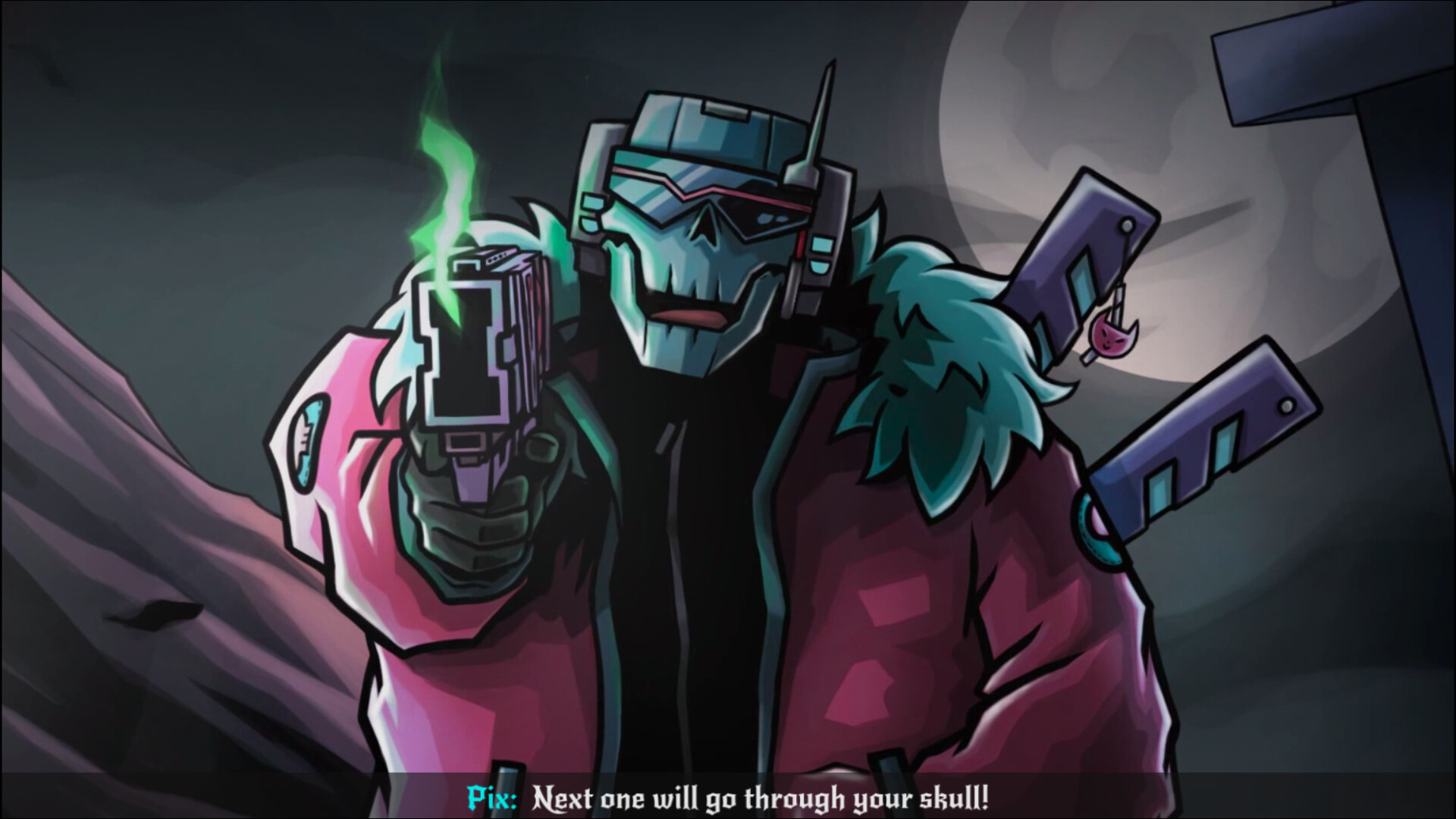
Most visual novels begin with a speech. SkullX: Aibohphobia begins with a radio. Official copy on Steam says you were hired to extract a bioengineer, then asks you, with the grammar of a person who has already lost the upright life, to hold the line, make the calls, and survive the night. You are the leader of a mercenary squad on a routine job. Find him. Extract him. Get out. That is not flavor text. It is the design refusing to pay for a cinematic when a warehouse will do.
You start holding the perimeter because the alternative is becoming a rumor in a place that does not keep rumors. The first stretch is staged like a punchline that forgot to be funny. Comms die. Strange people share a mark. The full moon rises. The script, still in first person and still a little breathless, tells you that you are no longer the hunters. You are the prey. That is the rest of the map.
I like a premise that prices curiosity as a hazard and then lets you walk toward it anyway. Lightless corridors, an abandoned warehouse, and the usual extraction hospitality sit on the night like questions with walls. Why are there marks and no answers. What was that bioengineer. The more you explore, the more the building answers with another choice and another thing that would like a piece of your sanity. Story is voiced and stingy, which is the right instinct for a game that wants your calls more than your diary. You are looting a disaster that is still happening, and the disaster has a radio.
The fantasy is not mastery of a lore bible. The fantasy is competence arriving about half a loop after you invent a reason to keep the squad alive. You will fail in ways that would be funny if the reset were not so sincere. You choose. You die. You become the kind of person who thinks a palindrome is a personality.
Extract the Bioengineer, Then Invent a Reason to Stay
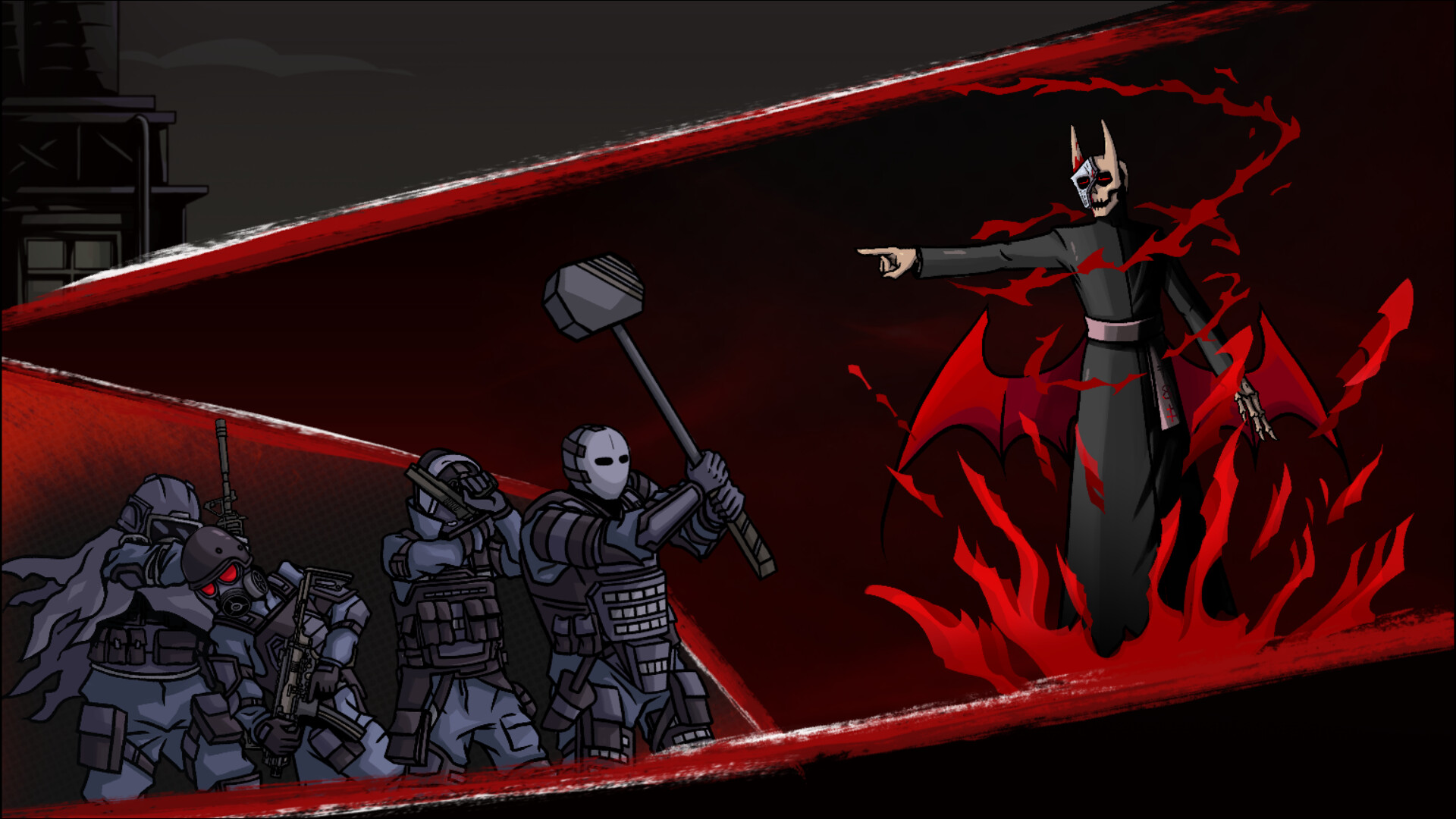
The loop is the old religion and SkullX and DSTRCT Creatives do not pretend otherwise. Official copy frames this as a dark visual novel series. Each Chapter follows a new protagonist, caught in the crossfire of conflicting powers, human and inhuman alike. Their stories are separate. The choices you make in one Chapter will twist the next in ways you will not see coming. None of that is a revolution in the abstract. All of that is the sentence the rest of the toybox has to live in, and the toybox you can buy today is Chapter 1.
Choice is physical in the way a good radio is physical. You are not only drowning in menus. You are looking at a squad and deciding whether you have been useful enough tonight. Official features put it plainly. Five playable characters. Six possible endings. Over 20,000 words, with choices that affect all future Chapters. That number is both a promise and a warning. If you want a saga that is already six chapters deep, you will feel underemployed. If you want a first night that turns a contract into a loop, you will feel hired.
I have played a lot of games that treat the first death as a tutorial and the hundredth death as a spreadsheet. SkullX: Aibohphobia is heavier than that on purpose. Official copy says a branching narrative remembers everything, then asks you to find others, share what you have seen, and compare what you remember. That sentence is the joke the whole night is telling. Without a choice, the warehouse is a rumor. Without a loop, you are a tourist. Without a memory, you are finished. The trailer says the quiet part out loud. How do I get out of this. Same way you always do. Bullet to the head.
Dynamic moral management is the other half of the pitch. Hold the line. Make the calls. Trust the squad or decide you can only trust yourself. I left the careful path on for an evening and the colder, meaner path on for another. The night did not mind. The marks minded either way.
Marks, Loops, and a Squad That Matters
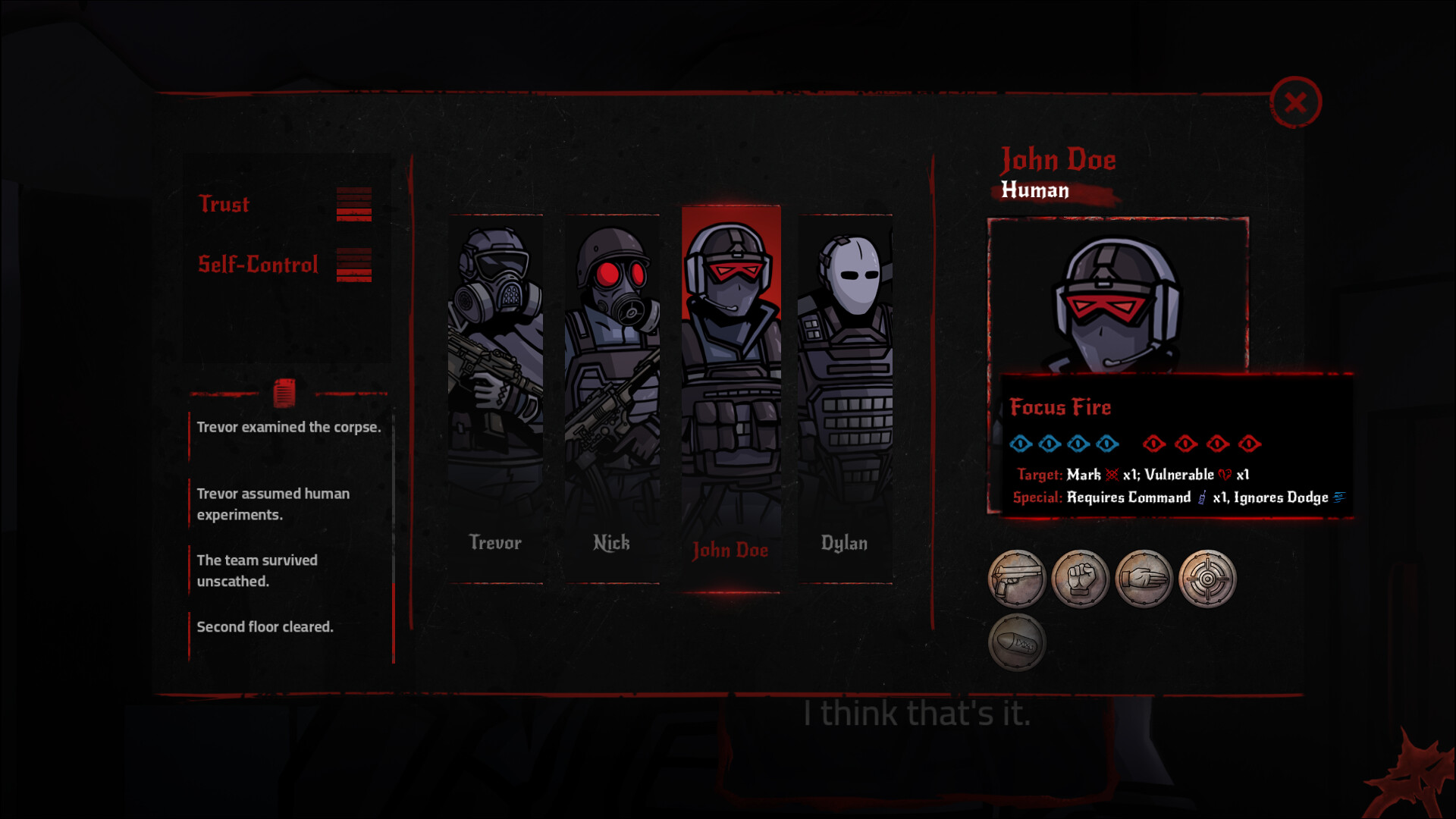
Combat is the temperature change. Early rooms establish that this is not a peaceful reading simulator with nicer lighting. A turn will chase your patience farther than pride would recommend. A skill handles the general population of problems. The later, nastier rooms will empty a sanity if you treat them like scenery. Further in, something wearing human skin would like a word, and the word is short. Getting a fight with actual manners takes a while. Until then, a mark is a strategy, not a cowardice.
The squad is the other half of the short description and the kinder half of a week. Official features list characters with their own unique sets of skills, and the shop’s own site names the people you will actually live with. The Commander keeps emotions locked away until they refuse to stay buried. Nick is fast, sharp, and never short on opinions. Trevor is loyal, lethal, and professional. Dylan has steady hands and a past he does not talk about. Hawk-Seven was once human. Now it is something else. That shift is the closest SkullX: Aibohphobia comes to a power fantasy, and I like it more than a gun. Mastery, here, is logistics. You gather calls. You stash trust. You walk a corridor over a place that tried to eat your squad last loop, and you stand like a person who has mail. The map does not get smaller because the developers deleted rooms. It gets smaller because you invented commuting between a radio and a reset.
A voice will ask you to hold the line if you would like the fantasy of purpose without a town. Fully voiced scenes will take the junk you have been tripping over and turn it into a history. Those two voices keep the warehouse from feeling like a comic that learned to punch. I sold trust I was sure I needed and then needed it, which is the oldest squad joke in the book and still a good one.
I will not invent a highlight reel with fake timestamps and tidy kill counts. The nights that stay with you are the ones where you thought the extraction was finished, then something in the warehouse started knocking in a rhythm that was not weather, and then you were on the wrong side of your own call. Combat can feel like two skills agreeing to take turns being disappointed. That clunk is real. Distance helps. A working memory helps more.
The fights themselves are fewer than the art promises. Players who came for a long campaign of stress-and-turn rooms will find a tutorial, a pair of scripted scraps, and an infinite room that exists so the toy can keep talking. That is not a secret the store page tells you. It is the honest size of a ten-dollar first chapter that would rather spend its budget on voices and panels than on a dungeon you farm. I like the manners when they arrive. I will not pretend they arrive often.
Palindromes, Puzzles, and the Map Getting Smaller
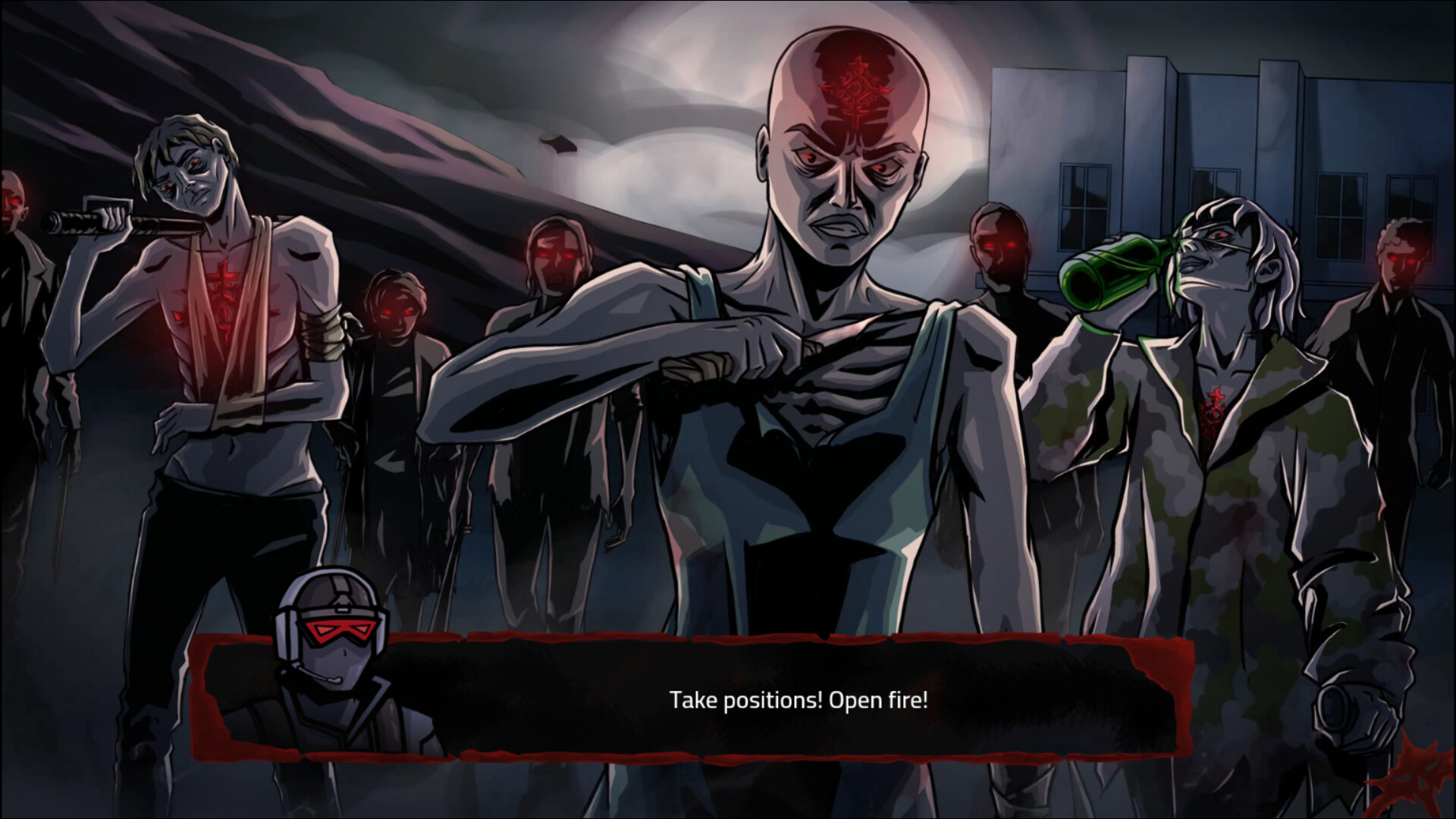
Pressure is the variety. A loop that holds is a better reward than a new silhouette if the silhouette is just another way to lose a squad. Hunting clues is good practice and a grocery run. Point-and-click rooms, a warehouse that wants to be searched, the usual occult hospitality. Official achievements name the joke without blushing. Eyes on the Perimeter. This is not a bioengineer. You are not scared of palindromes, are you. Compos mentis. Hey. Dead guy. Sparks happen. The store page is not shy about it. What the store page cannot tell you is how quickly you will start treating a successful call as a mood stabilizer. You eat memory. You drink memory. You put the radio down and look at the night like a person who has decided a palindrome is a map.
The world has history if you will walk toward it. Official features list more than a hundred hauntingly detailed scenes, hand-drawn in a comic book art style, directed and designed by Soh, the original artist behind the SkullX setting. Animated characters. Intense cutscenes. A branching night that remembers. The story is uncovered through places, calls, characters, and the remains of a world that is being undone. Some rooms are handsome. Some rooms are a commute. Both rooms are the job.
Forty-one achievements sit behind the loop for people who like a receipt. Names like What is this thing, You must be living a charming life, Pull the slide back, and I just want to forget tell you the shop has a sense of humor and is not ashamed of it. None of them change the central truth. You are here to survive a night and then find out what the night is for.
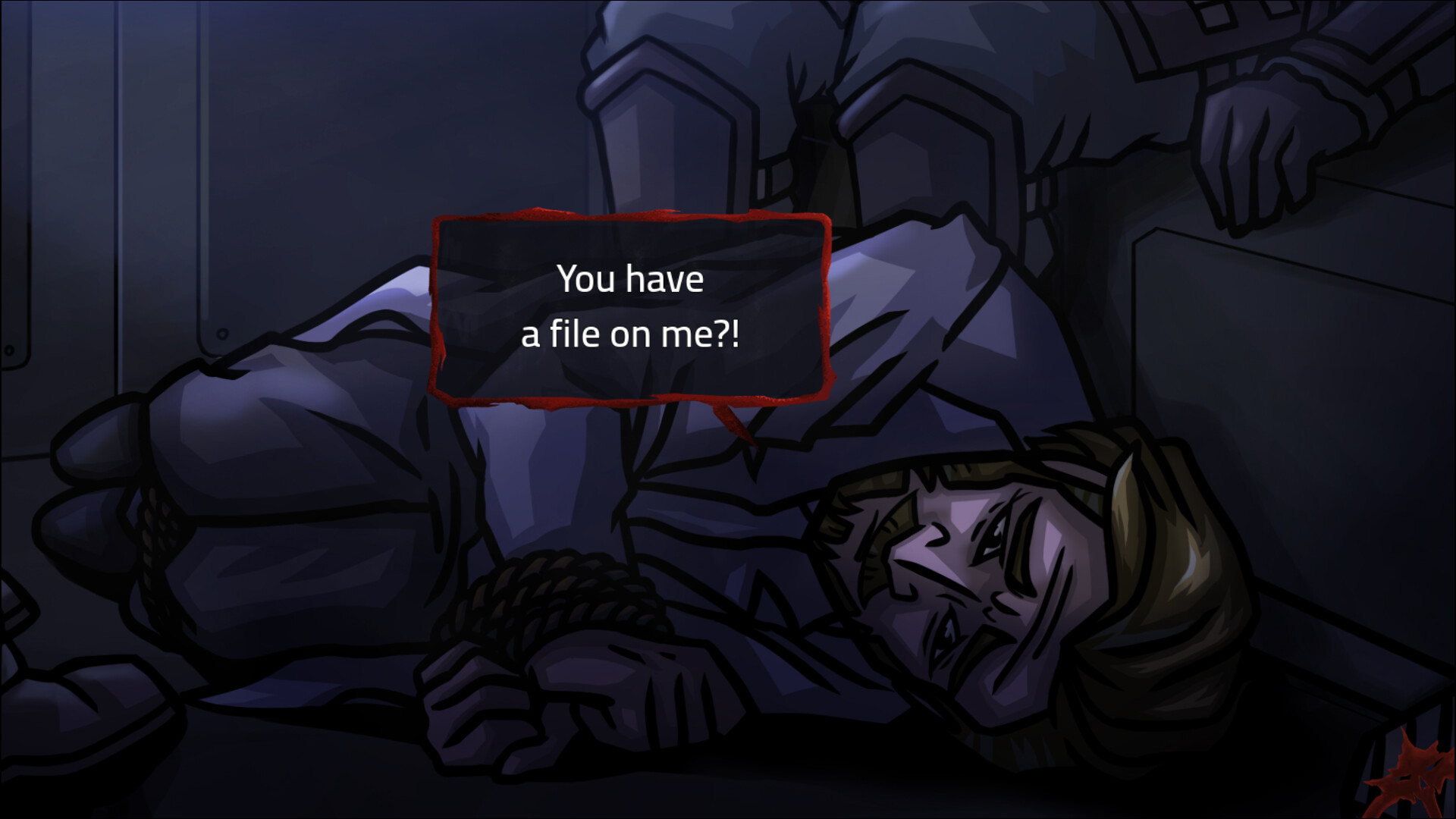
I should be honest about the puzzles, because they are the other half of the price and the sharper half of a week. Some of them live in the warehouse like a good joke. Some of them live outside the game, in the kind of clue that asks you to find others, share what you have seen, and compare what you remember. Official copy says that last sentence like a community pitch. In practice it is also a lock. If you want every answer printed on a panel, you will bounce. If you want a first chapter that treats a palindrome as homework you do with strangers, you are the audience. I bounced once. I came back. Both nights were the game.
First Chapter by Design, Rough by Habit
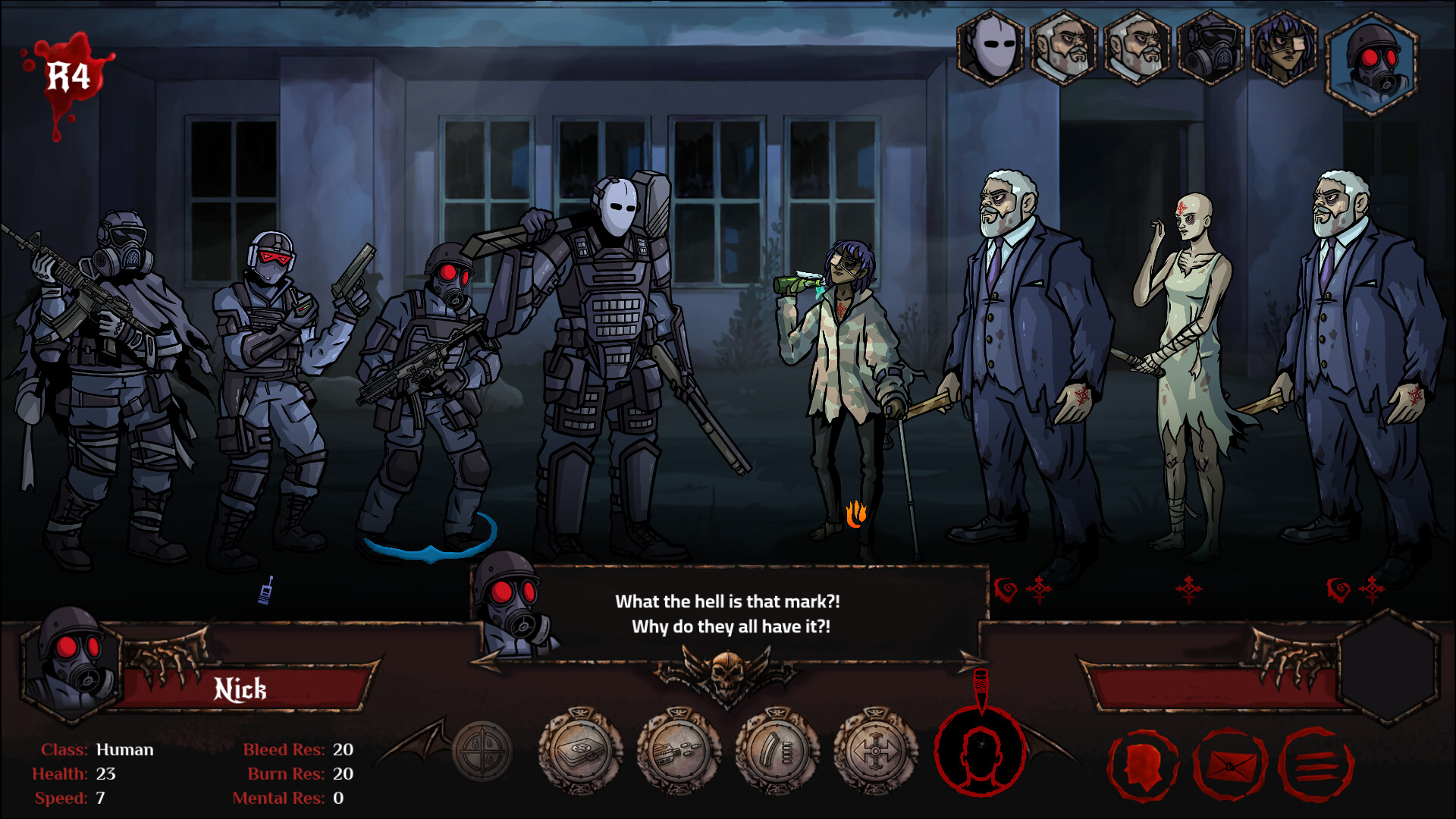
I should be clear about the friction, because it is real and it is not a footnote you hide after the score. SkullX: Aibohphobia looks like a game that was built by a small shop that wanted a comic more than a showcase, then discovered the comic was a whole night. DSTRCT Creatives is a Netherlands studio, founded in 2024 by Vladimir Grimwulf Bulatov as a creative offshoot, and the fingerprints are still wet. Panels can be handsome. Animations can be stubborn. A skip can arrive late to its own mercy. I will not invent a frame census. I will say the night sometimes forgets to stock the smoothness you need and then shrugs.
Technical manners on a desktop build can stutter when a late-game call decides to be a theology problem. Dialogue can get philosophical in a doorway. A hold-to-skip that takes its time is a sentence no designer writes for fun, and it gets louder the tenth time you walk the same corridor for a new line. Manual saves are stingy. Checkpoints are the law. None of that is unique to this warehouse. All of that is the tax on a first chapter that launched in June 2025, shipped an official soundtrack and a Chinese pass in September, and has been quieter than a six-chapter promise would like in 2026.
The developers wrote the terms of the fiction with the candor of a shop that has already lost the argument with a finished saga. Six connected Chapters, each with their own lead. A branching narrative that remembers everything. Dark arts, occult mysteries, and a world being undone. That sentence is both a promise and a warning. If you want a polished six-night career, you should wait. If you want a place that is already a place, you are the audience.
Presentation is readable, which matters more than prestige. You can tell a warehouse from a mark from a memory at a glance. If you cannot read a panel, the hunt dies and the night becomes homework. These spaces are atmospheric enough to carry a scare and clear enough to carry a plan. You always know where you are. You do not always know why Hawk-Seven is already there.
English is the Steam language with full audio and Simplified Chinese sitting beside it. Full controller support, Family Sharing, and Steam Cloud are on the sheet. I will not turn this into a localization seminar. The voice of the game is the night, and the night talks in radios, marks, and the occasional inhuman knock.
Content warnings sit on the store page without winking. Strong language, disturbing imagery, violence, and blood. If you want a polite extraction, this is not the warehouse.
Better With a Loop Than With a Checklist
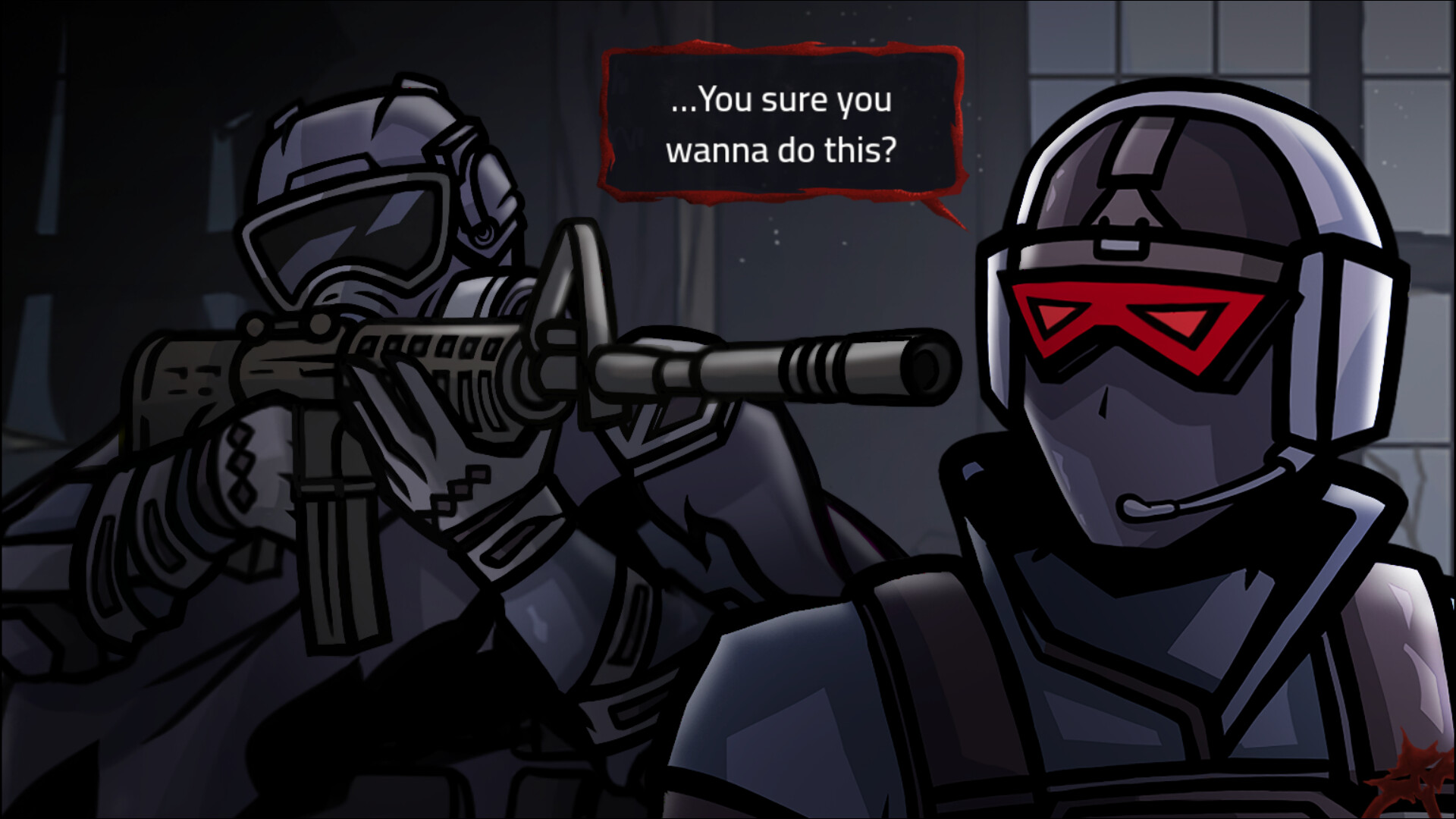
I have a rule for mid-priced first chapters. If a game is worse with a loop than with a checklist, it is broken. If it is only good with a loop, it is honest. SkullX: Aibohphobia is honest, and that honesty should sit next to the price.
A checklist night is a competent weekend. You punch the contract, you invent the extraction, you lose a squad, you walk back, you put a better lock on the joke. A loop night is the version the systems were quietly designed around. Someone farms a call. Someone learns, too late, that a mark does not respect kindness. The warehouse becomes a shared instrument you play with yourself instead of a commute.
The Steam sample around a game this pointed is always going to look like weather. Very Positive is the official report, 90 percent of 67 English voices, 90 percent of 76 Steam-purchase reviews on the store page, and that split is fair. Players who wanted a deeper scrap, a prettier skip, or a puzzle economy that never hides the answer outside the build bounce off. Players who wanted a first chapter with a radio and a bad idea about palindromes stay. I am in the second camp with caveats, which is the only honest place to stand.
Compared with the giants of the panel-and-choice business, SkullX: Aibohphobia is not trying to be a career you finish this week. It is trying to be a place you keep returning to. The developer said the quiet part on the store page. Six Chapters. A narrative that remembers. Fun if you will meet the game where it lives. That is not a cop-out if the place is worth the walk. Some nights it is. Some nights the puzzle is a myth and the doorway is a theology problem. Both nights are SkullX: Aibohphobia.
Still Standing After the Full Moon
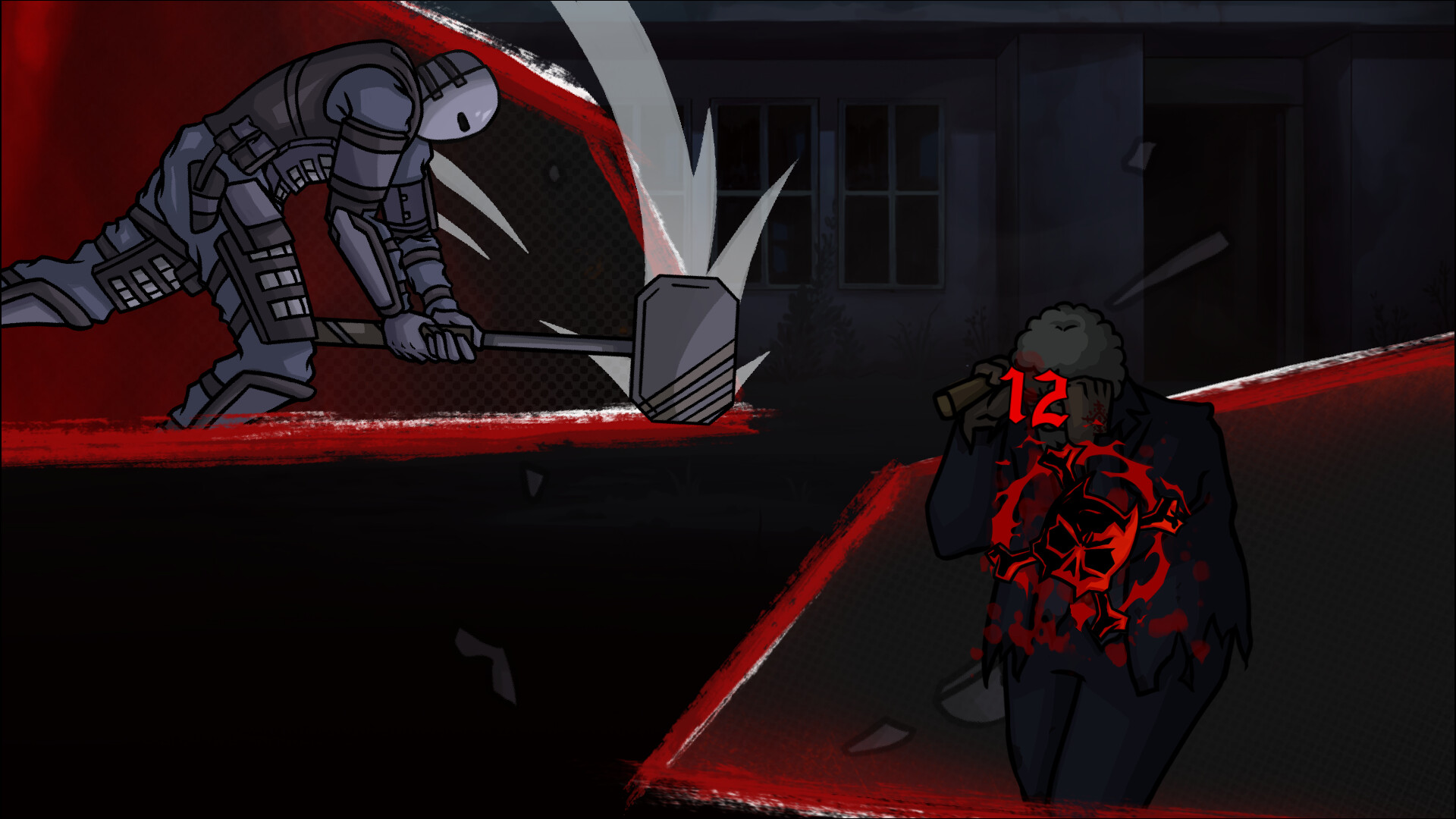
SkullX: Aibohphobia is a rare mid-priced first chapter that understands its own joke and then has the nerve to make the joke a night. SkullX and DSTRCT Creatives built a warehouse about purpose, a squad about teamwork you do with a radio, and a toybox that looks a little homemade and plays a lot more sincerely than that sentence suggests. The loop is the hook. The panels are the spine. The walk from a contract to a palindrome is the grin.
It is better with a loop than with a checklist. The late rooms can clunk in the way a first chapter is clunky. Skips can sulk. The presentation has indie fingerprints, from the stubborn animations to the story that would rather be a call than a cutscene you can fast-forward. All of that is true, and all of that is already priced in at $9.99 on Steam. You are not buying a decade. You are buying a night that can turn into several evenings if you like being a coordinated disaster, or being the person who has to explain the disaster to a squad that already died.
I am scoring it 8, Great, because the identity is this clear and the limitations are the limitations of a focused first chapter, not an empty one. I would recommend it to anyone who likes a radio that has weight and a map that is allowed to be rude. Distinctive comic weather, a squad that shrinks the warehouse, a palindrome that turns salvage into conversation, and a price that respects a long week are a lot of game for the ask. The systems repeat their manners. The manners are still useful.
The night is still out there, still hiring a radio shift, still asking what the contract was. After a few loops, you will understand why the job is not finished, and why you keep waking up on the perimeter anyway.
We prepared this review with a digital copy of SkullX: Aibohphobia for the PC version provided by Pressengine.