
There is a particular kind of invitation, rare in a genre that usually hands you a spreadsheet and a cheerful warehouse, in taking the keys to an empty lobby and discovering that the entire product is a hotel that used to be a vacant lot. The reception desk is still a reception desk. The mop is still a mop. The first guest who tries to teach you a lesson is not a metaphor. Hotel Architect, the hotel construction and tycoon management game from Pathos Interactive, is built on that chaos, and the chaos is ruder, funnier, and more useful than a thirty-dollar check-in has any right to be.
I played the PC version, the 14 May 2026 1.0 launch at $29.99 that Pathos Interactive and Wired Productions and Gamersky Games walked onto Steam after an Early Access that began on 20 May 2025 and a demo that already knew how to put a bed down. You design. You build. You hire a night shift that will argue with the mop. You try to earn a star that a critic is already writing. Thirty-seven Steam achievements sit behind the front desk. The English Steam sample is Overwhelmingly Positive, 95 percent of 955, with 2,110 of 2,248 voices agreeing across languages, which is the honest weather of a finished hotel and not a dare. Great, not glossy, and very much a lobby I would recommend you take if you like a management loop that remembers it is also a floorplan.
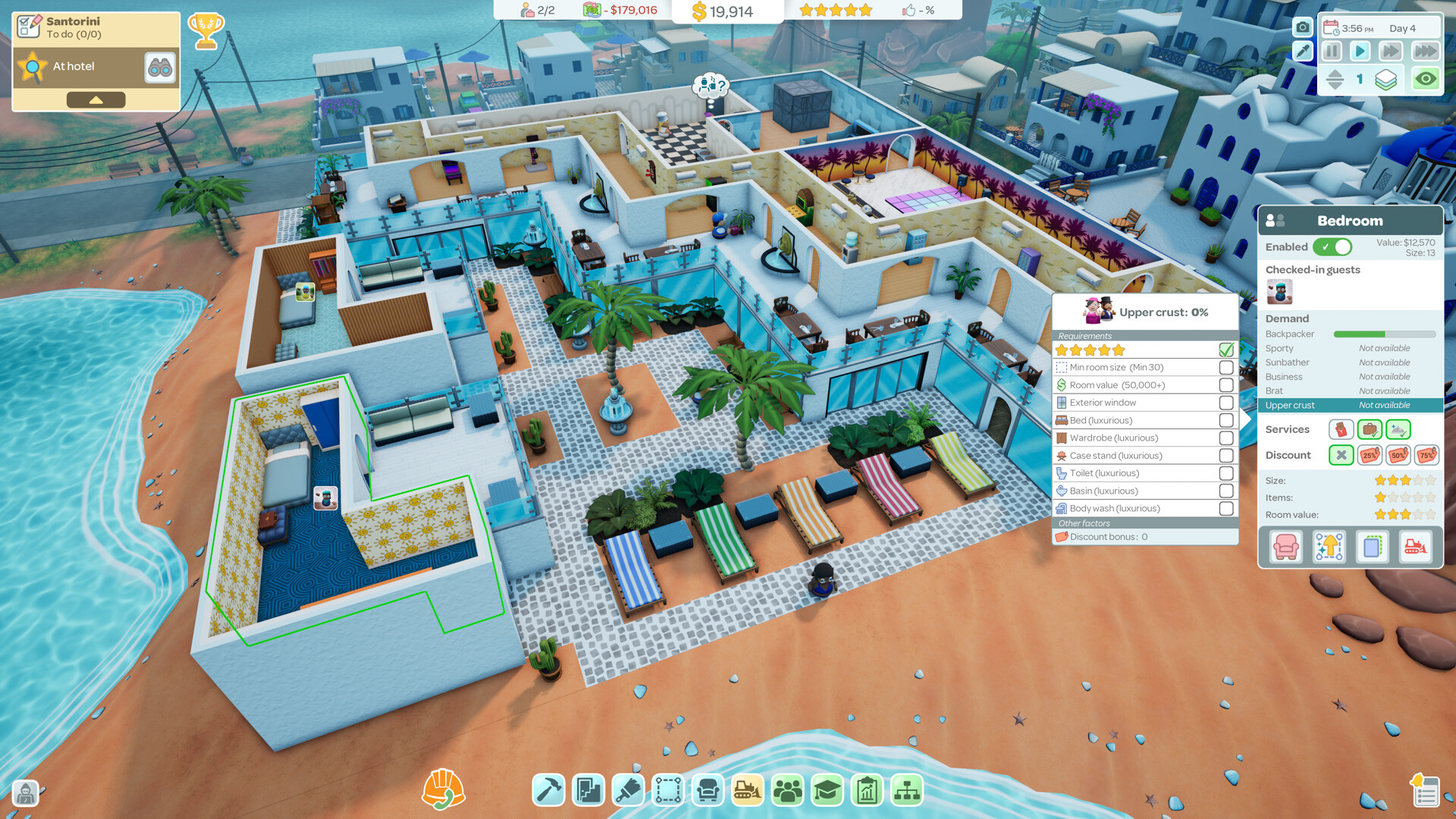
The Lobby Does Not Care What Five Stars Were
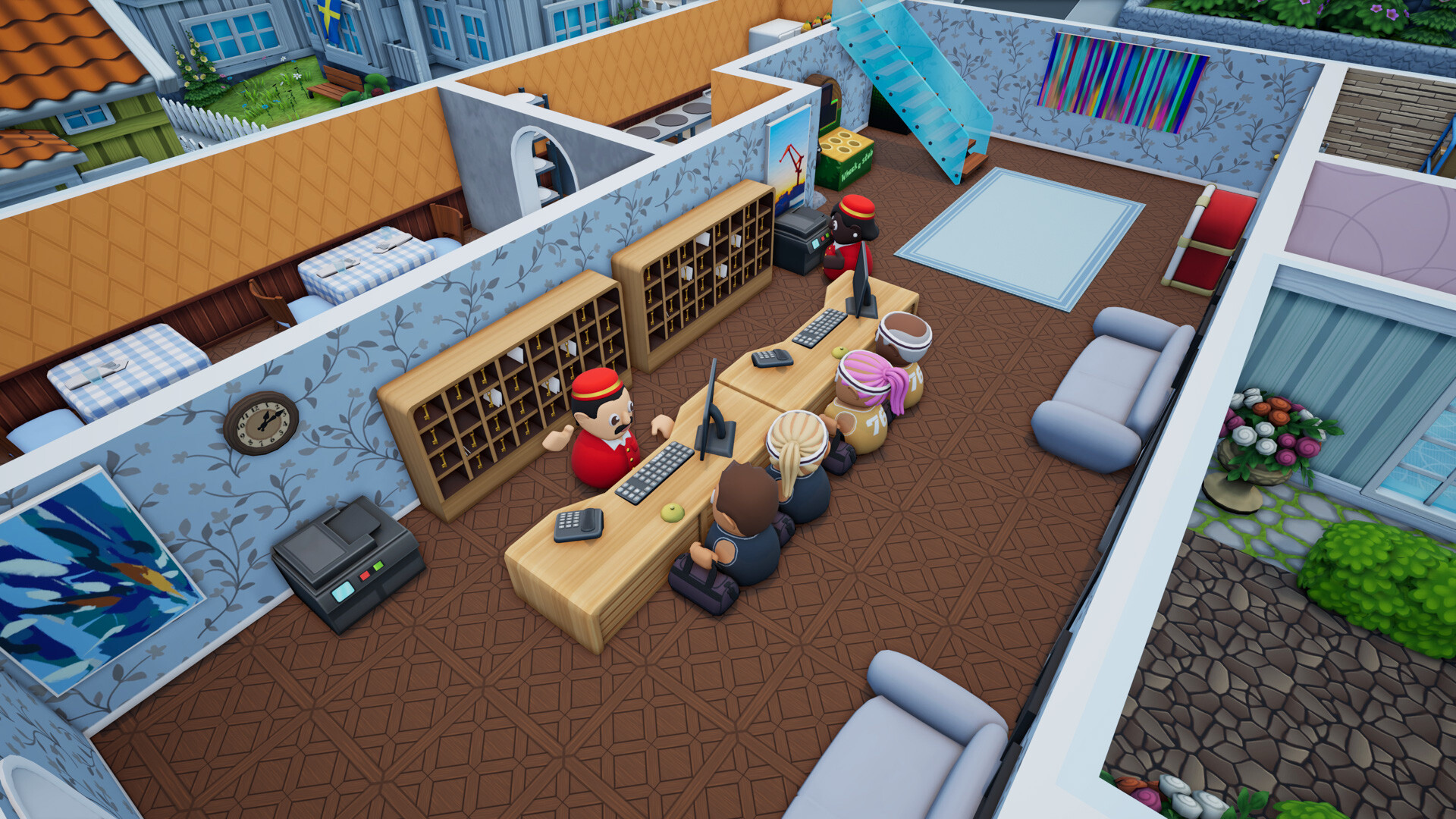
Most tycoon games begin with a speech and a plot of dirt that has agreed to stay polite. Hotel Architect begins with a lobby that has opinions. Official copy on Steam says your job is to design, build, and manage grand hotels scattered across the globe, then asks you, with the grammar of a person who has already lost the argument with a suitcase, to juggle demanding guests, frantic logistics, and a delightful array of unexpected challenges. That is not flavor text. It is the design refusing to pay for a cinematic when a reception desk will do.
You start placing rooms because the alternative is becoming a rumor in a place that does not keep rumors. The first stretch is staged like a punchline that forgot to be funny. You draw a corridor. The corridor thinks about it. A guest thinks about the corridor. The script, still a little breathless, asks you to keep the establishment running smoothly. Nobody else will. That is the rest of the map.
I like a premise that prices curiosity as a hazard and then lets you walk toward it anyway. Career Mode and Sandbox Mode sit on the same hotel like two kinds of mail. Official copy is not shy about the joke. Want a prison-style hotel that maximizes rooms, regardless of how guests feel? Want a pyramid with strange amenities? Make every hotel your own. That sentence is both a promise and a warning. If you want a tycoon that never asks you to move a plant while a guest is using it, you will feel underemployed. If you want a week that turns a vacant lot into a review, you will feel hired.
The fantasy is not mastery of a lore bible. The fantasy is competence arriving about half a day after you invent a reason to put the kitchen next to the restaurant instead of three floors away. You will fail in ways that would be funny if the review bomb were not so sincere. You leave a floor half dressed. You come back. You become the kind of person who thinks a luggage rack is a personality.
Raise a Floor, Then Invent a Review
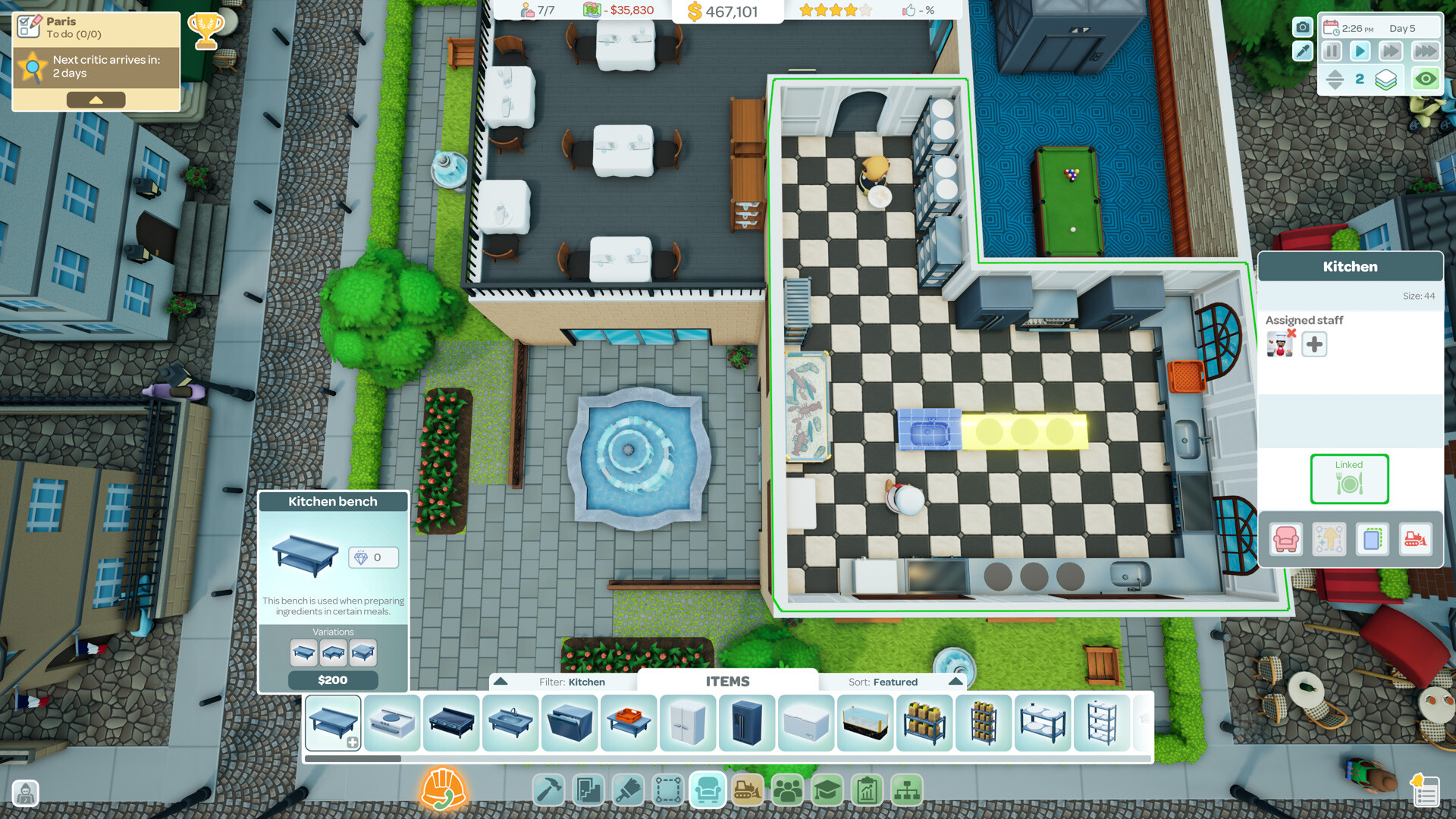
The loop is the old religion and Pathos Interactive does not pretend otherwise. Design a layout. Hire a construction crew. Watch the vision come to life in real time. Fill the rooms with wallpaper, flooring, and the kind of furniture that tells a guest whether you meant it. None of that is a revolution. All of that is the sentence the rest of the toybox has to live in.
Building is physical in the way a good workbench is physical. You are not only drowning in menus. You are looking at a bed and deciding whether you have been useful enough today. Official copy says annoy, disturb, or remove items your guests are using, and your reviews might plummet. That is not a tooltip you hide after the score. It is the design admitting the hotel is already occupied while you are still inventing it. I left a sofa in a lobby I was sure I needed and then needed the sofa, which is the oldest renovation joke in the book and still a good one.
The 1.0 upgrade tree is the other half of the pitch and the cleaner half of a year that used to be a web. Upgrades now sit in five tiers, each tied to a guest type. You earn points for a tier whenever that guest checks out. Backpackers are the easy hello. Sporty arrives next. Sunbather and Business share a middle floor. Brat is the cousin who would like a word. Upper Crust is the late bill. A critic applies points to the highest open tier, which is a polite way of saying the newspaper is also a tech tree. I left the greedy path on for an evening and the careful path on for another. The hotel did not mind. The Upper Crust minded either way.
If you want a single optimized clientele and a tree that never asks you to diversify, you will feel employed by a realtor. If you want a month that turns a backpacker into a reason to buy a better chair, you will feel hired. Progress from one location does not always translate cleanly to the next, which is a real manners problem. I will not invent a highlight reel with fake checkout counts. The nights that stay with you are the ones where you thought the tree was finished, then a new city asked you to prove the joke again.
Staff, Contractors, and a Shift That Matters
Staff is the temperature change. Early hires establish that this is not a peaceful decorating toy with nicer lighting. A clumsy receptionist will chase your patience farther than pride would recommend. Official copy asks the quiet part out loud. Will you splash out on a world class chef at the risk of hiring a clumsy receptionist? The choice is yours.
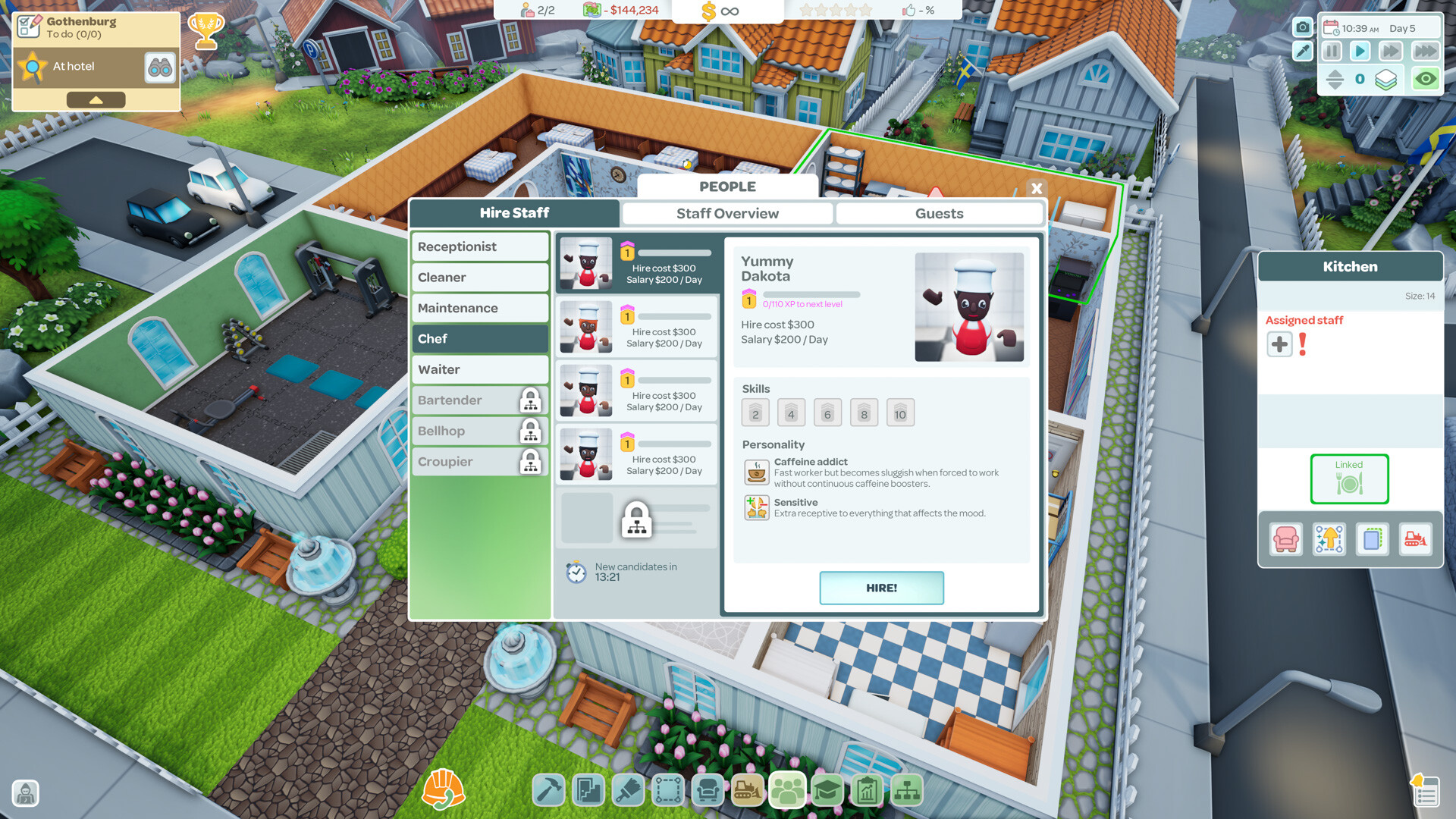
Each employee arrives with attributes, traits, and a future. They level up. They hold up to five skills. A training desk in the break room lets you buy improvements one by one, which is the shop admitting a bad trait is not a death sentence if you will spend the afternoon. You cannot delete what they walked in with. You can counterbalance it. I like that more than a new wallpaper. Mastery, here, is logistics. You gather, you stash a decent housekeeper, you put the contractor on the pantry, and you dock like a person who has mail.
Aging is the ruder half of a long save. People get older. They would like to retire unless you spend a skill slot on staying useful, which is a sentence no designer writes for fun and still a sentence the hotel will keep making. Wage demands arrive, especially when the difficulty is not being cute. Contractors restock the things you forgot were groceries. A room that is not spotless is a review waiting to happen. I sold patience to a roster I was sure I needed and then needed a different mop, which is the oldest staffing joke in the book and still a good one.
The training loop can feel like a commute that forgot to be a grin. Longevity as a skill tax can feel like homework you have already passed. That is the tax on a management sim that wants staff to be characters and then discovers characters need pensions. Distance helps. A working break room helps more.
Eight Cities, and the Map Getting Smaller
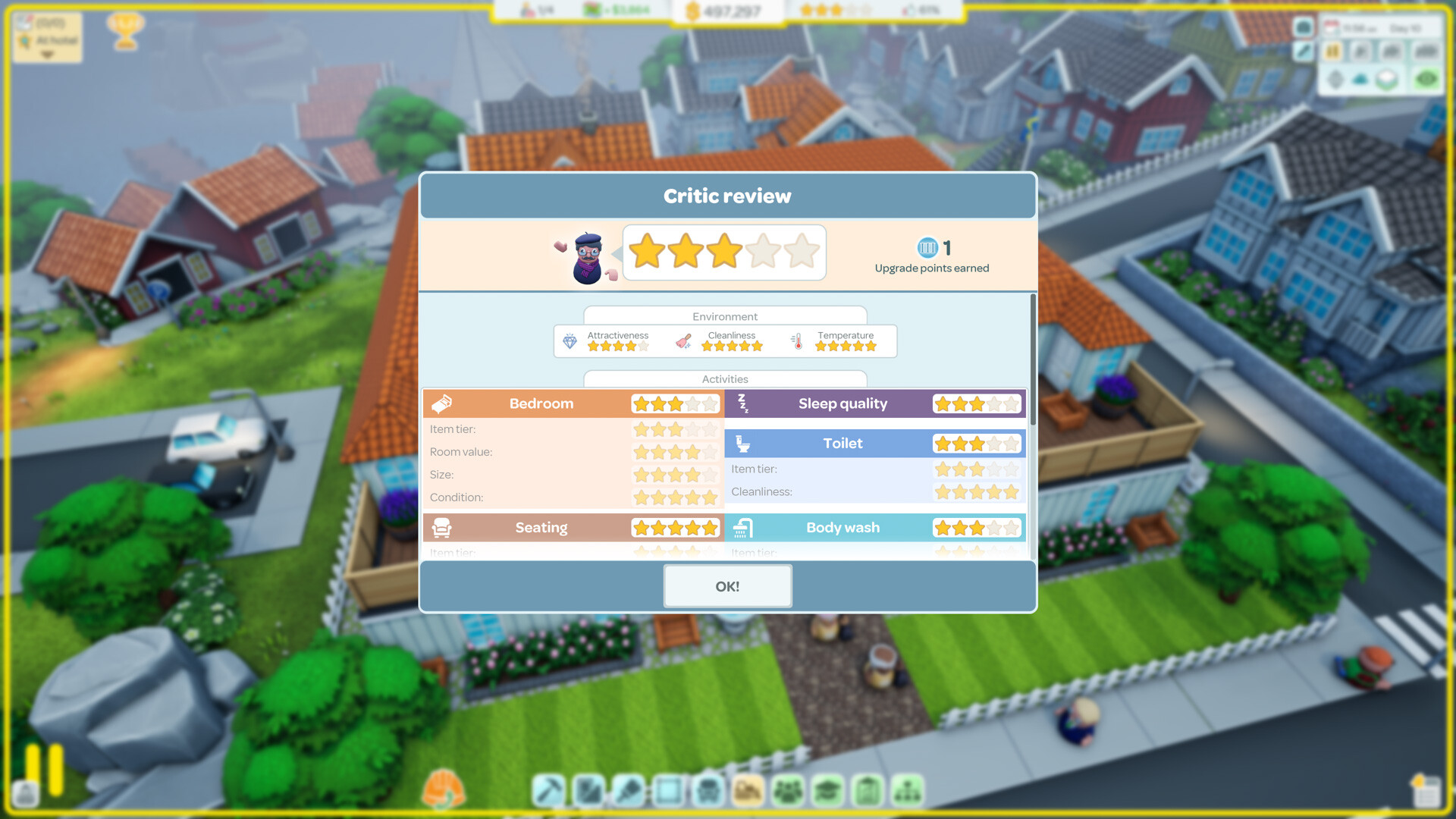
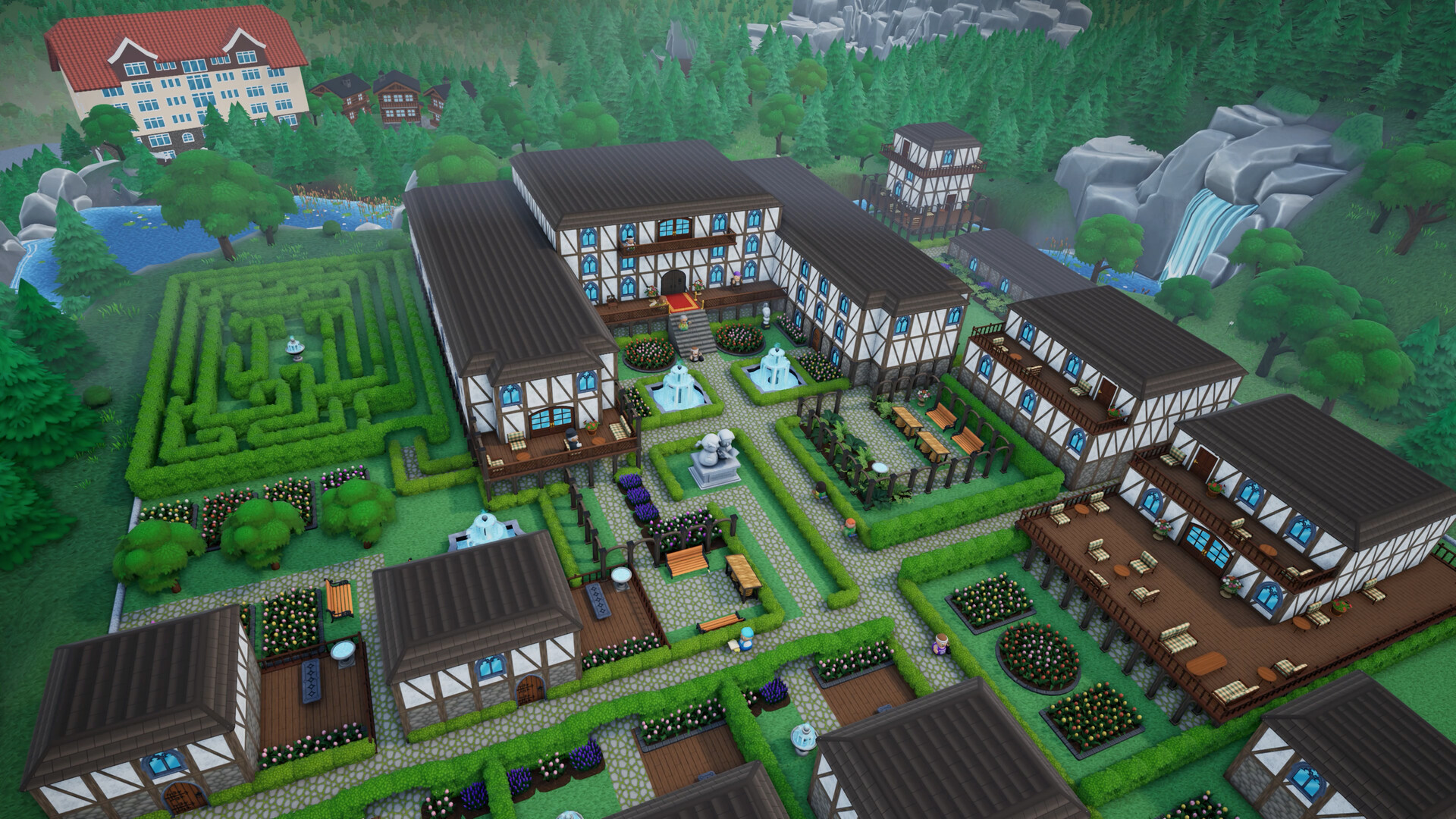
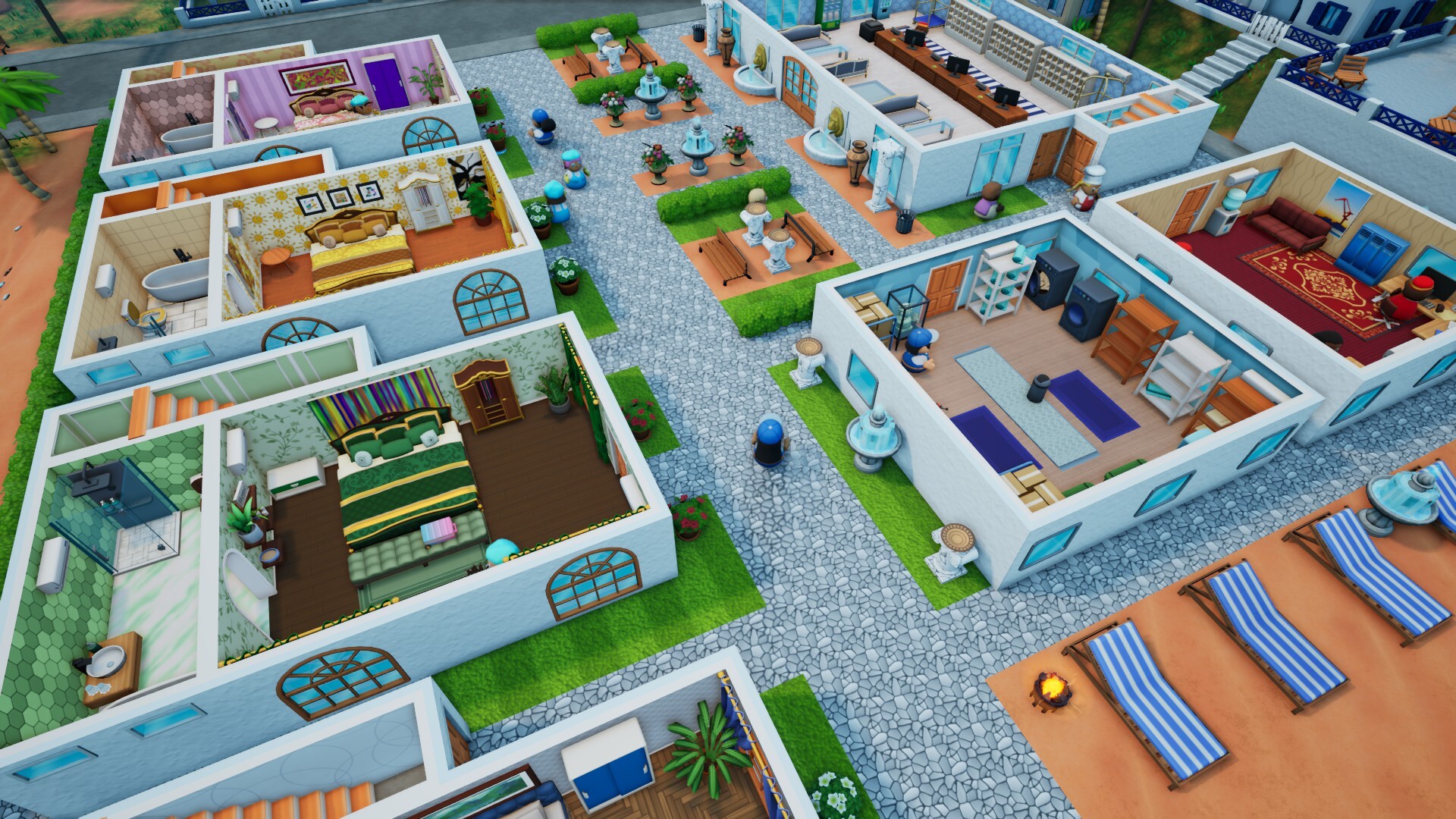
Pressure is the variety. A door that holds is a better reward than a new silhouette if the silhouette is just another way to lose a weekend. Official 1.0 copy and the career map now name eight destinations. London. The Black Forest. Las Vegas. New York. Gothenburg. Santorini. Paris. St. Anton. Some sites arrive with a building that already has opinions. Some are blank slates waiting for you to make a mark. The map does not get smaller because the developers deleted cities. It gets smaller because you invented commuting with a blueprint.
London is the temperature change in the campaign and the meaner half of a week. You inherit a hotel that is already arguing with bankruptcy, a countdown, and a wallet that would like you to fire people you just learned the names of. That is a sharp change from the build-at-your-own-speed hospitality of earlier rooms, and I like it more than a new lamp. Getting the books under control, culling the expensive shift, and walking back toward a star is the closest Hotel Architect comes to a thriller. On a higher difficulty the same scenario can feel punishing to the point of hiding the lesson, which is a real scar. A phone booth objective that will not explain itself is the shop forgetting to leave a note at the desk.
The Black Forest is the opposite joke. A 48 by 48 lot, a four-floor mansion, and a ghost problem sit on the largest map like a dare. It is atmospheric, generously sized, and packed with objectives that reward staying. Between those two 1.0 rooms and the cities Early Access already hired, the campaign now feels like a complete hotel instead of a proof of concept. Some rooms are handsome. Some rooms are a commute. Both rooms are the job.
Sandbox is the unofficial second career. Each location already had a toybox. Version 1.0 added a custom one that lets you pick Forest, Desert, or Snowland and then argue with temperature. Desert wants air conditioning. Snowland wants heat. Neglect either and staff morale and guest satisfaction write the review for you. You also trade surface area for height. A 50 by 50 plot gives you four floors of sprawl. A 10 by 10 plot opens a hundred floors of tower. Difficulty runs from Casual through Challenging into a Custom that will let you unlock the tree or turn the money into a rumor. I did both. The desert did not mind. The guests minded if the air was a myth.
Couples, balconies, and gardens are the smaller 1.0 manners. Couples share a room, want two beds and two luggage racks, and walk the hotel like a sentence, which forces you to stop designing every suite for a backpacker who travels alone. Balconies and outdoor gardens let a restaurant breathe. Blueprint mode copies a room you already solved. None of that is a revolution. All of that is a year of community mail arriving as furniture.
Thirty-seven achievements sit behind the loop for people who like a receipt. Names like Meatballs and 5 Stars, Sunbathing in 5 Stars, 5 Stars by the Eiffel Tower, 5 Stars at the slopes, Ghosts!, and Unique character tell you the shop has a sense of humor and is not ashamed of it. None of them change the central truth. You are here to raise a floor and then find out what the floor is for.
Finished by Design, Rough by Habit
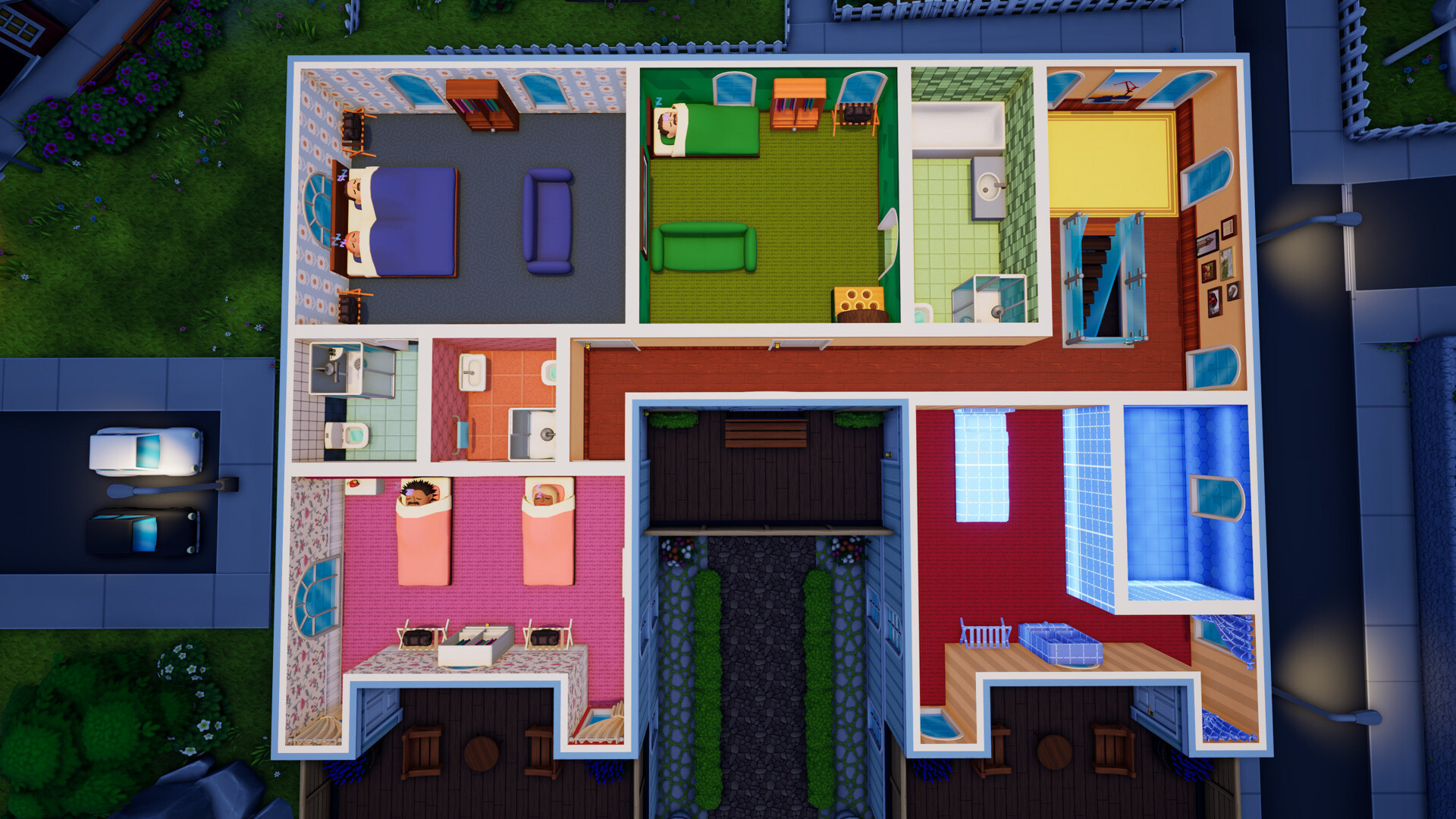
I should be clear about the rest of the friction, because it is real and it is not a footnote you hide after the score. Hotel Architect looks like a game that was built by a small Gothenburg shop that wanted a hotel more than a showcase, then discovered the hotel was eight cities and a year of mail. Animations can be stubborn. Performance can sulk when a Huge sandbox decides to remember itself. I will not invent a frame census. I will say the lobby sometimes forgets to stock the smoothness you need and then shrugs like weather.
Technical manners on a desktop build can stutter when a late tower decides to be a theology problem. Staff can get philosophical in a doorway. Objectives can hide their win condition with the politeness of a concierge who assumes you already live here. The upgrade tree can feel misaligned when you return to an earlier city expecting last week’s tools to still be the law. None of that is unique to this hotel. All of that is the tax on a 1.0 that left Early Access on 14 May 2026 after four major content seasons, New York, Las Vegas, Room Service, and Management, and is still wearing some of the same boots.
Presentation is readable, which matters more than prestige. You can tell a Gothenburg meatball lunch from a Santorini terrace from a Las Vegas floor at a glance. If you cannot read a biome, the hunt dies and the floorplan becomes homework. These spaces are atmospheric enough to carry a scare, the Black Forest will try, and clear enough to carry a plan. You always know where you are. You do not always know why a critic is already there.
English is the Steam language with full audio and a long list of interface cousins, which is how a wider audience gets in the door. A mouse-only option is on the sheet. A demo if you would like to put a bed down before you pay. I will not turn this into a localization seminar. The voice of the game is the lobby, and the lobby talks in stars, wages, and the occasional knock from a guest who has decided the plant is in the way.
Better With a Floorplan Than With a Wishlist
I have a rule for mid-priced management. If a game is worse with a floorplan than with a wishlist, it is broken. If it is only good with a floorplan, it is honest. Hotel Architect is honest, and that honesty should sit next to the price.
A wishlist night is a competent weekend. You punch the empty lot, you invent the kitchen, you lose a review, you come back, you put a better lock on the joke. A floorplan night is the version the systems were quietly designed around. Someone trains. Someone builds while the guest is in the garden. Someone learns, too late, that an Upper Crust does not respect architecture. The hotel becomes a shared instrument you play with yourself instead of a commute.
The Steam sample around a game this loud is always going to look like weather. Overwhelmingly Positive is the official English report, 95 percent of 955, Very Positive across languages, 2,110 of 2,248, and that split is fair. Players who wanted a prettier late tower, a first hour that never hides the fork, or an objective that writes its own manual bounce off. Players who wanted a construction tycoon with a night shift and a bad idea about pyramids stay. I am in the second camp with caveats, which is the only honest place to stand.
Compared with the giants of the deserted-warehouse business, Hotel Architect is not trying to be a career you finish this week. It is trying to be a place you keep returning to. The developer said the quiet part on the store page. Career or sandbox. Fun if you will meet the game where it lives. That is not a cop-out if the place is worth the stay. Some nights it is. Some nights the star is a myth and the doorway is a theology problem. Both nights are Hotel Architect.
Still Standing After Checkout
Hotel Architect is a rare mid-priced management sim that understands its own joke and then has the nerve to make the joke a hotel. Pathos Interactive built a lobby about taste, a roster about teamwork you do with a mop, and a toybox that looks a little homemade and plays a lot more sincerely than that sentence suggests. The loop is the hook. The floorplan is the spine. The walk from a vacant lot to a critic who has to pay is the grin.
It is better with a floorplan than with a wishlist. The late cities can clunk in the way a 1.0 that still remembers Early Access is clunky. Performance can sulk on a Huge plot. The presentation has indie fingerprints, from the stubborn animations to the objective that would rather be a rumor than a receipt. All of that is true, and all of that is already priced in at $29.99 on Steam. You are not buying a decade. You are buying a season that can turn into several seasons if you like being a coordinated disaster, or being the person who has to explain the disaster to a luggage rack.
I am scoring it 8.5, Great, because the identity is this clear and the limitations are the limitations of a focused 1.0, not an empty one. I would recommend it to anyone who likes a workbench that has weight and a map that is allowed to be rude. Distinctive city weather, a staff shift that shrinks the horizon, a star that turns salvage into conversation, and a price that respects a long week are a lot of game for the ask. The systems repeat their manners. The manners are still useful.
The lobby is still out there, still hiring a night shift, still asking what five stars were. After a few cities, you will understand why the job is not finished, and why you keep waking up at reception anyway.
We prepared this review with a digital copy of Hotel Architect for the PC version provided by Pressengine.