There is a particular kind of dare, rare in a genre that usually hands you a plunger and a high score, in being given one button and discovering that the entire product is a climb that used to be a cabinet. The flipper is still a flipper. The ball is still a ball. The first drop that tries to teach you a lesson is not a metaphor. A Pinball Game That Makes You Mad, the physics-based rage climb from Azimuth Studios, is built on that dare, and the dare is ruder, funnier, and more useful than a ten-dollar cabinet has any right to be.
I played the PC version, the 18 November 2025 launch at $9.99 that Azimuth Studios walked onto Steam after a demo that already knew how to drop you into False Hope. You flip. You fall. You learn the shape of a table that is actually a mountain. Forty-six Steam achievements sit behind the climb. The English Steam sample is Positive, 85 percent of 34, which is the honest weather of a loud little debut and not a dare. Great, not glossy, and very much a night I would recommend you spend if you like a physics toy that knows it is a personality test.
One Button Is a Personality
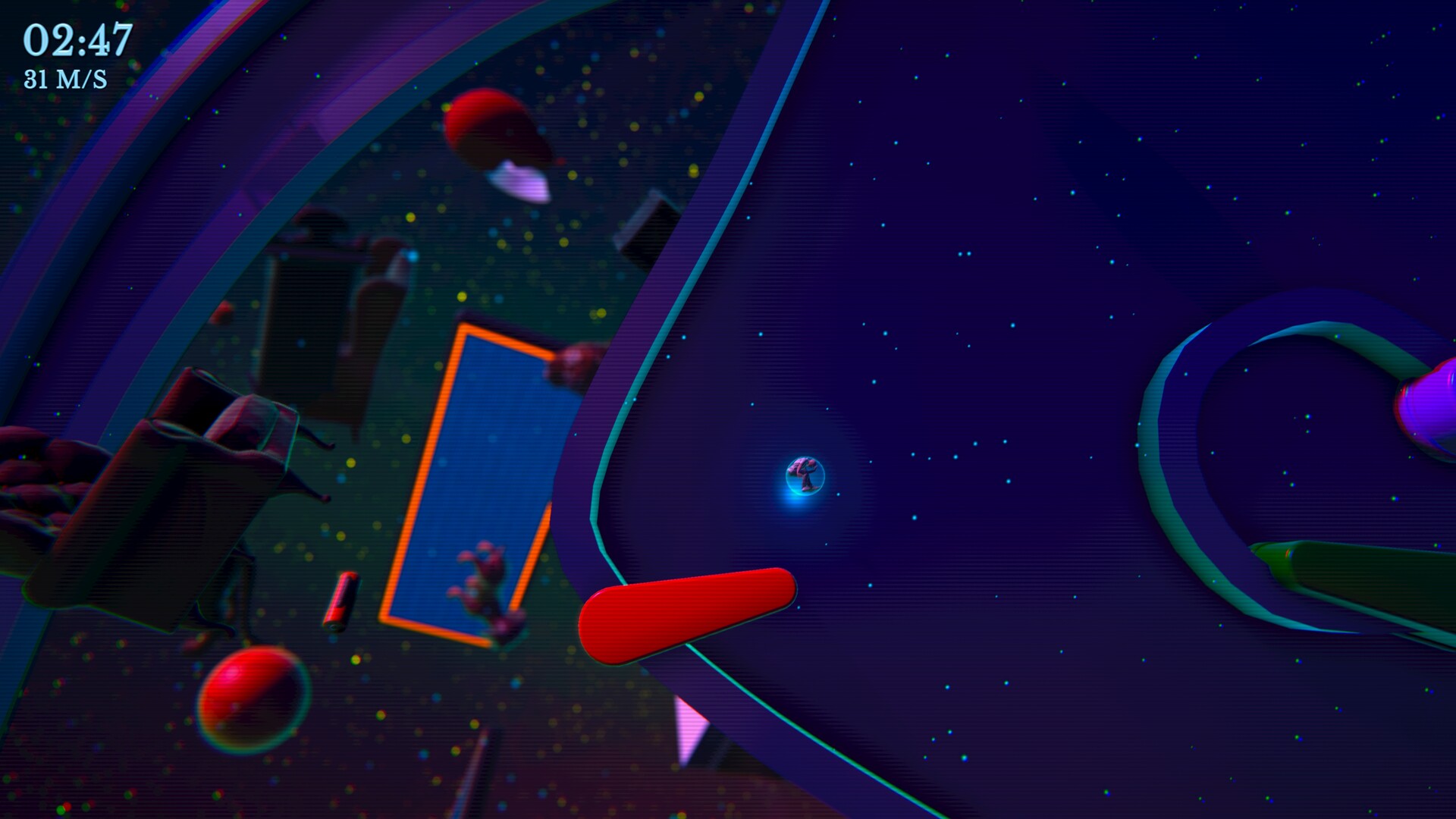
Most pinball games begin with a table and a promise of multiball. A Pinball Game That Makes You Mad begins with a sentence. Official copy on Steam says one button, one ball, hours and hours of utter agony. That is not flavor text. It is the design refusing to pay for a second input when a flipper will do. You press. Every flipper in the room answers. The ball leaves. The room has opinions about where it should go next.
I like a control scheme that prices curiosity as a hazard and then lets you press toward it anyway. The store page is not shy. Play it with one finger. Physics-based, almost like real pinball. Nudge and time features, these will require extra fingers. That last line is the joke the rest of the toybox has to live in. The one-button fantasy is real for a stretch. Then the room asks you to lean, to hold, to steal a sliver of slow motion, and suddenly you are a person with a second thought and a slightly guilty extra digit.
The first stretch is staged like a punchline that forgot to be funny. A flipper waits. A ramp waits. A drop waits harder. You will fail in ways that would be comic if the height you just lost were not so sincere. You leave your altitude. You bounce back. You become the kind of person who thinks a rebound angle is a personality. Official features call it pinball rage climb gameplay that makes you go mad, and I will not pretend the shop is being cute. The title is a contract. The contract is honored.
This is not a cabinet you finish for a high score and a neon photograph. It is a mountain assembled out of flippers, rails, colored pads, and the occasional see-saw that would like a word. Master the flipper, the store page says. Surpass your mortal limits and claim your awesome gift at the summit if you have got what it takes. Become a Pinball Wizard. That last rank is not marketing fog. It is an achievement with a name and a condition, and the condition is an S+ on every world, which is the sort of receipt a shop writes when it already knows you will come back.
There is no tech tree. There is no inventory. There is a ball, a button, a narrator who has been waiting for you to miss, and a summit that does not care how you felt about the last bounce. If you want a pinball game that never asks you to climb, you will feel underemployed. If you want an evening that turns a flipper into a religion, you will feel hired.
The Ball Does Not Care What You Intended
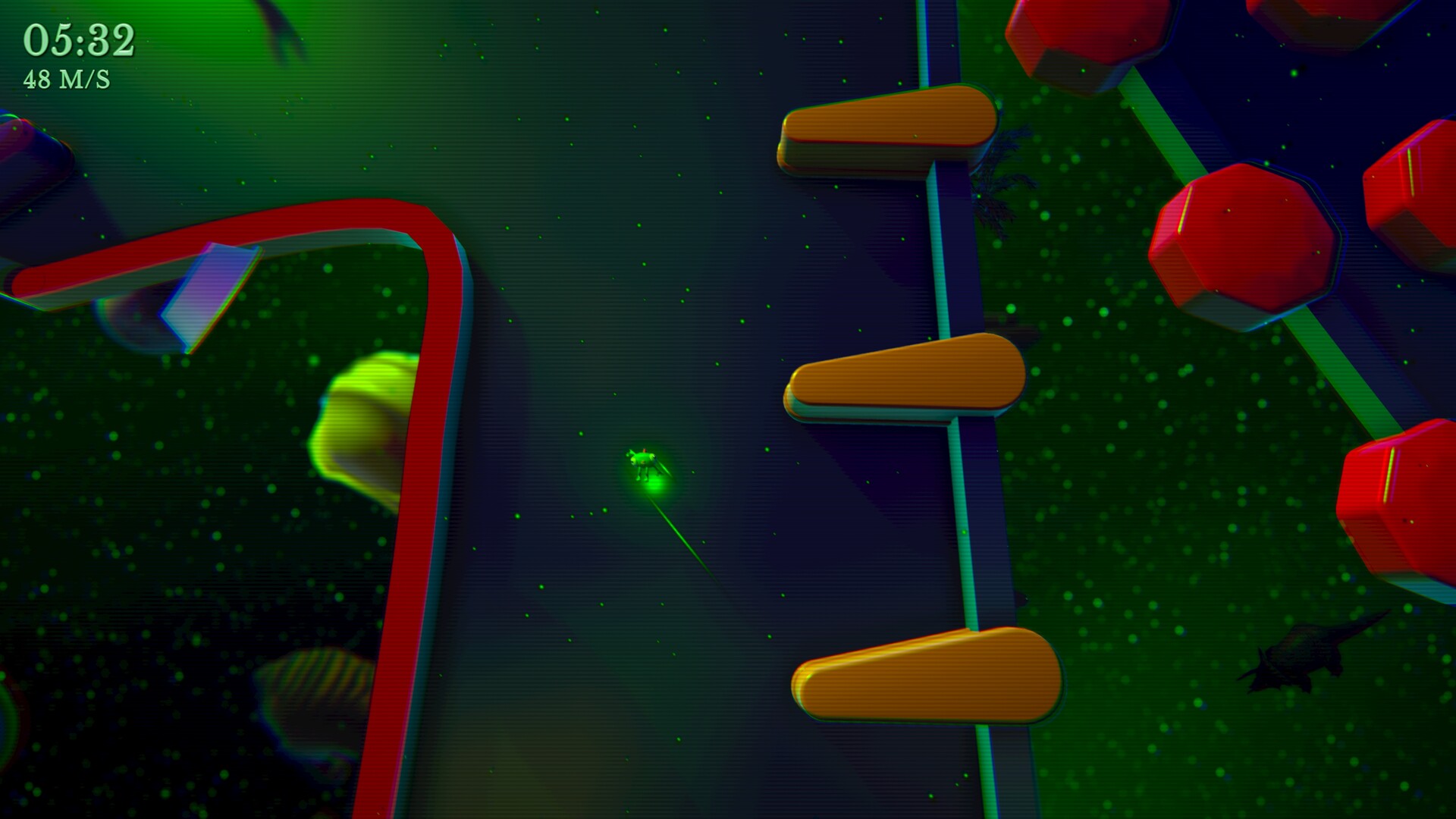
Physics is the temperature change. Early rooms establish that this is not a peaceful table simulator with nicer lighting. A dead bounce will chase your patience farther than pride would recommend. A clean flip handles the general population of problems. The later, nastier rooms will empty a run if you treat them like scenery. Further up, the geometry would like a word, and the word is short. Getting a line with actual manners takes a while. Until then, a timid tap is a strategy, not a cowardice.
The ball has spin, and the spin has opinions. Flippers do not all share a tempo. Some answer like a handshake. Some answer like a delayed apology. Colored surfaces can feed a bounce or swallow it. You learn that by eating it, which is the oldest physics joke in the book and still a good one. Official copy says the game is physics-based, almost like real pinball, and the almost is doing honest work. Real pinball wants a score. This one wants altitude. The table has been stood on its end and told to become a mountain, and the mountain agreed.
I will not invent a highlight reel with fake timestamps and tidy bounce counts. The nights that stay with you are the ones where you thought the line was finished, then the ball kissed a lip that was not in the plan, and then you were watching a hundred meters of progress become a rumor. The trailer says the quiet part out loud. There is beauty in failure, in persistence, in suffering, in frantically flinging a pinball about. That sentence would be cheap if the rooms were random. They are not. Hours of hand-crafted suffering, the features list says, and the craft is the reason the anger stays useful.
Competence arrives about half an hour after you invent a timing you can name. You start seeing the room as a sentence instead of a stack of props. This flipper is a comma. That pad is a period. The long rail is a clause you should not interrupt. Then you interrupt it anyway, because the ball is a character and characters have agency. I left the greedy path on for an evening and the careful path on for another. The mountain did not mind. The drop minded either way.
The fantasy is a bounce that does what you asked, once, in a place that has already watched you fail the same request twelve times. You eat height. You drink height. You put the button down and look at the next flipper like a person who has decided civilization is a rebound. That is the loop, and the loop is the job.
False Hope, Cruel Reality, and a Dream That Shatters
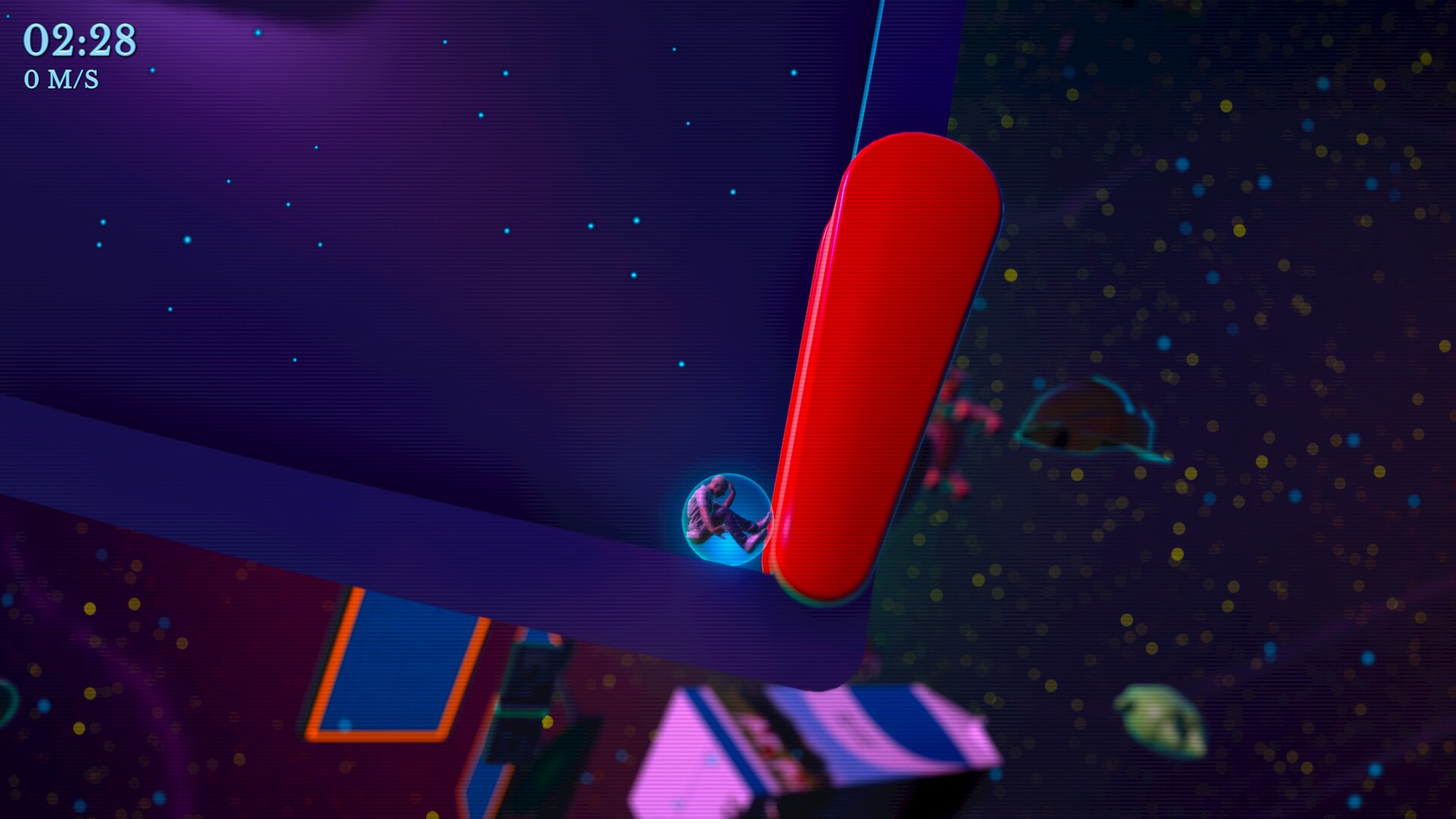
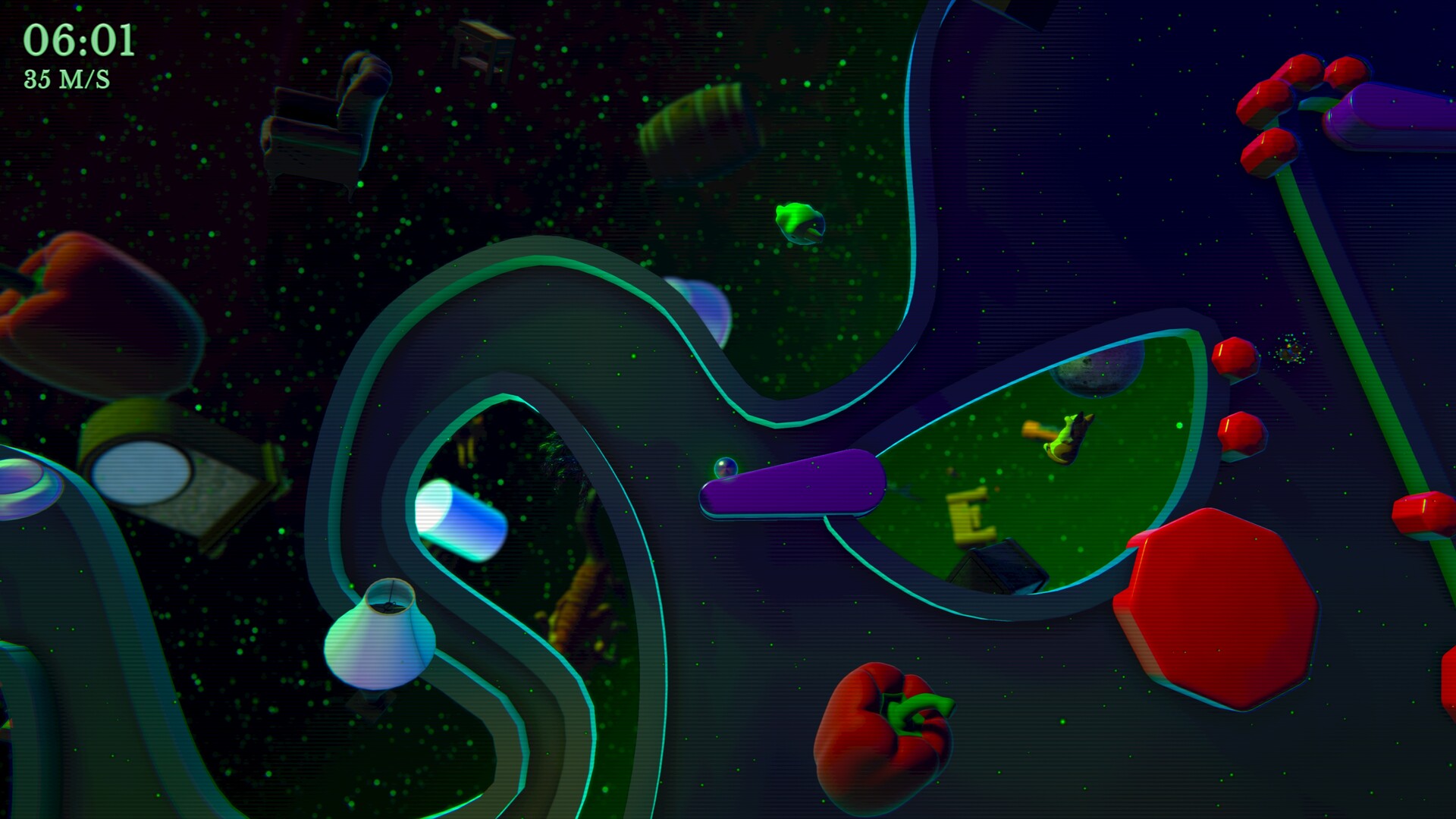
Pressure is the variety. A world that holds is a better reward than a new silhouette if the silhouette is just another way to lose a climb. The shop named the three worlds with the candor of a person who has already lost the argument with kindness. False Hope is the introduction. Cruel Reality is the true test. Shattered Dream is the final awakening. Those names sit on Steam achievements, which is how you know they are not a mood. They are a map.
False Hope is the demo’s old address and the full game’s handshake. Reach the summit of False Hope is an achievement that 18.9 percent of players have, which tells you the handshake has teeth. The rooms teach the grammar without pretending the grammar is easy. A flipper here, a pad there, a drop that wants to see whether you were paying attention. You will treat a successful climb as a mood stabilizer. You should. The next world is not a handshake.
Cruel Reality is the sentence the title was practicing. Reach the summit of Cruel Reality sits at 2.3 percent. There are also jokes aimed at people who think they are fast. Finish Cruel Reality faster than the developer. Finish Cruel Reality faster than the first to ever do it. I will not pretend I am in that census. I will say the world is long enough to become a commute you invent, then a commute you lose, then a commute you start treating like mail.
Shattered Dream is the last room the shop is willing to name in public. Reach the summit of Shattered Dream sits at 0.7 percent, which is the honest weather of a last world and not a dare. Pinball Wizard asks for an S+ on all three, and 0.1 percent of the sample has that receipt. I like a ladder that is allowed to be rude about its own rungs. Some rooms are handsome. Some rooms are a commute. Both rooms are the job.
Height and speed have their own receipts. Lift, Rise, Soar, Ascend, and Arise mark 50 through 600 meters. Summit is the simpler sentence, reach a summit, and it sits next to False Hope because the first summit is the one most people actually meet. Speed is the louder half of a good bounce. Glide, Boost, Jet, and Mach run from 100 meters a second to 2,000. Those last two numbers sound like a trailer lie until a pad and a line agree with each other, and then the ball is a rumor with a camera chasing it.
Mercy Is Optional and the Narrator Knows It
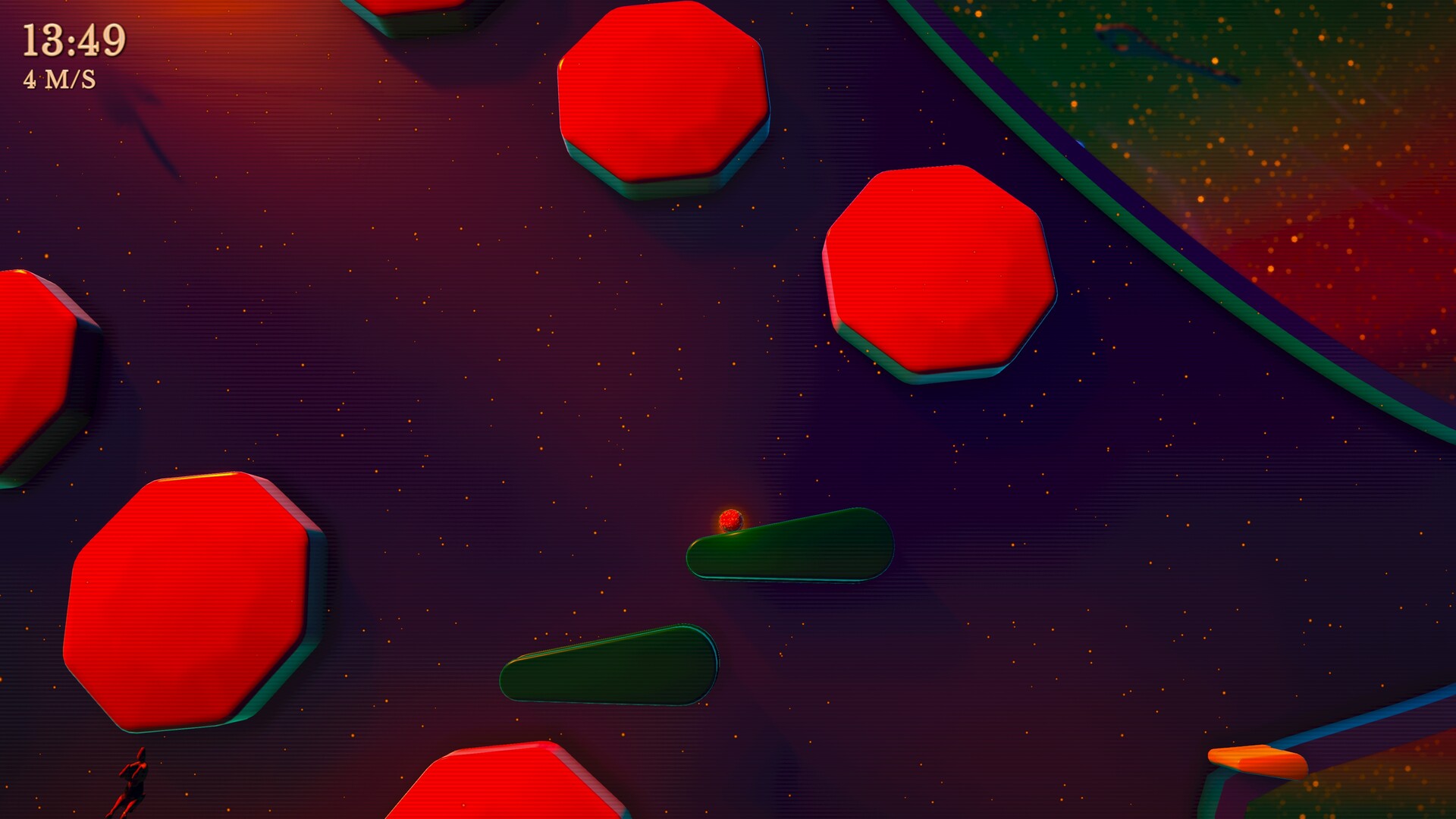
I should be clear about the mercy, because it is real and it is not a footnote you hide after the score. Official features list optional checkpoints and skips, then add that the shop does not judge. Progress Made is the achievement for reaching a checkpoint, and 42.4 percent of players have it, which is a crowd that includes me if the climb is starting to feel like a theology problem. Unassisted is the other door. Reach a summit without using any checkpoints or skips. 5.6 percent. Both doors are the game. The shop was not joking when it said adjustable difficulty is on the sheet.
The trailer is even blunter. It can be a merciful journey too, with checkpoints and skips for the weary or the wise. That sentence is both a promise and a warning. If you want a polished purity run, you should leave the skips in the menu and treat Unassisted like mail. If you want a place that is already a place, you are allowed to take the cheaper glory and keep walking. I left the proud path on for an evening and the merciful path on for another. The narrator minded either way. The mountain did not.
The narrator is the other half of the short description and the ruder half of a week. Official features put soothing in quotes, which is the most honest punctuation on the store page. Relaxing music that makes you go mad sits next to it, and the two voices keep the climb from feeling like a physics documentary that learned to punch. The music is calm in the way a waiting room is calm. The voice is calm in the way a person who has already counted your falls is calm. You can trigger a line that seems to know the number. That was number thirty-eight, by the way. I sold pride I was sure I needed and then needed it, which is the oldest narrator joke in the book and still a good one.
Resets have their own ladder, because of course they do. Let’s Try That Again is the first. Learning The Hard Way, The Harder Way, and The Hardest Way mark ten, fifty, and a hundred. I will not invent a personal census. I will say the reset is not a fail state you hide. It is a verb the design expects you to conjugate. Inertia says the journey begins. Forty-six achievements sit behind that sentence for people who like a receipt.
English is the Steam language with sixteen interface cousins, which is how a wider audience gets in the door. Full controller support, save anytime, and Steam Cloud are on the sheet. The voice of the game is the flipper, and the flipper talks in timing, spin, and the occasional knock from a narrator who has been waiting.
Themes, Ranks, and a Gift at the Top
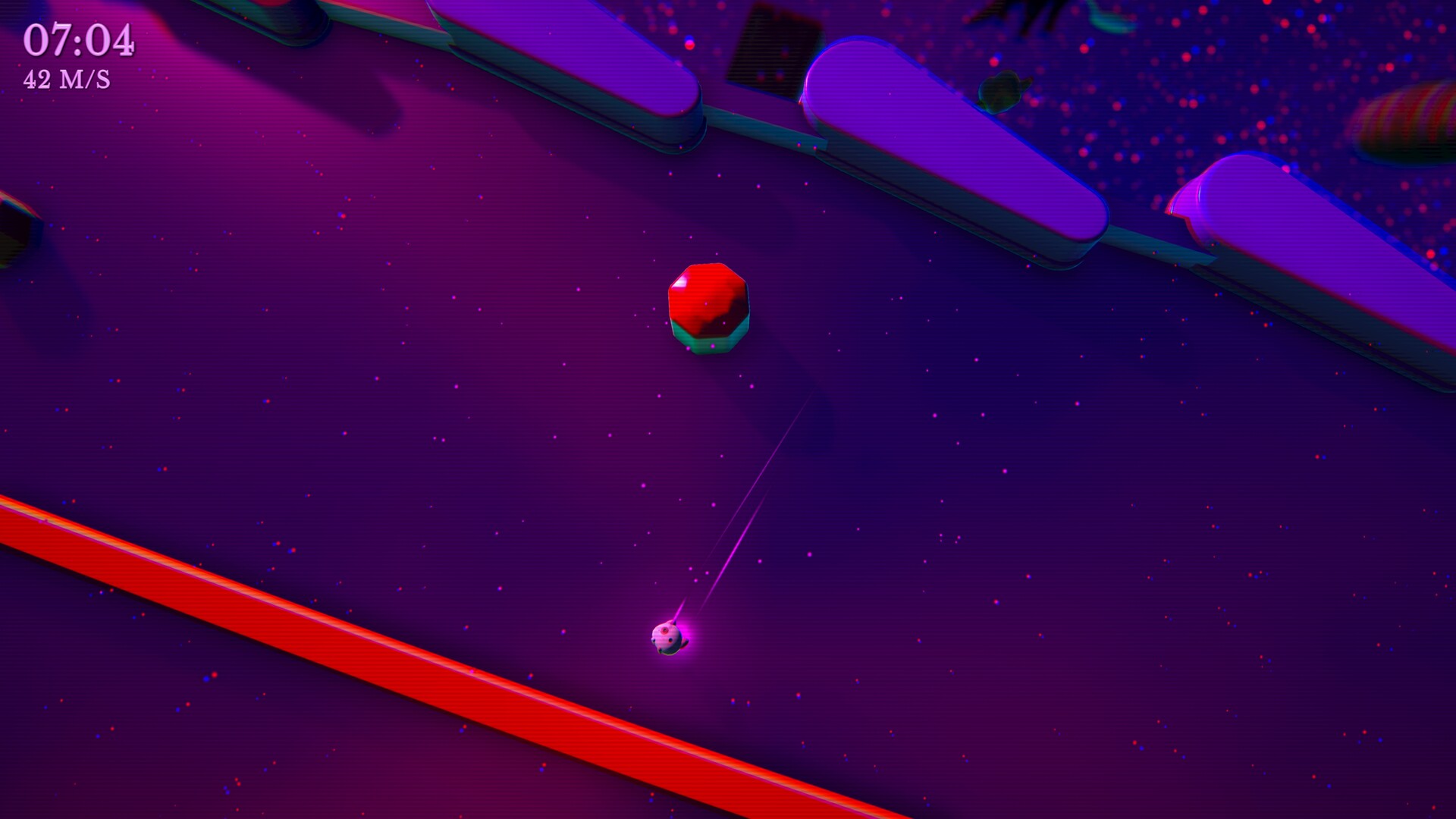
The other toybox is vanity, and vanity is a better reward than a new silhouette if the silhouette is just another way to lose a climb. Art by Elen Johnson is the credit the store page bothers to print, and official features promise tons of unlockable themes. Fresh Look is the first. Mixing It Up, Style Options, Fully Customized, and Every Look walk the ladder from three themes to all of them. The trailer tells you to collect curiosities as you climb, change how you look, change how you sound. There is even a button to clear your throat. It serves absolutely no purpose at all, but you will press it anyway. I pressed it anyway.
I like a shop that prices a cosmetic as a mood stabilizer and then lets you wear it into the next drop. A cat-shaped ball will not save a bounce. It will make the bounce funnier, which is a kind of save. The worlds stay the worlds. The ball becomes a joke you are in on. That shift is the closest A Pinball Game That Makes You Mad comes to a power fantasy, and I like it more than a new flipper. Mastery, here, is still timing. The costume is how you stay in the room after the timing has already left.
Ranks are the receipt the summit actually writes. Could Be Worse is a C. Not Too Shabby is a B. Star Student is an A. Almost Perfect is an S. Perfectionist is an S+. Pinball Wizard is the S+ on all three worlds, and that is the awesome gift the store page has been waving at the summit since the first paragraph. Déjà Vu, Persistence, Addiction, Madness, Obsession, and Transcendence count summits from two to fifty. Those last names have the humor of a shop that has already met its audience and is not pretending the audience is well.
Masochist is the other door, a summit with challenge modifiers on, and the store page’s 2 to 1000 hours playtime line, pending skills, is a joke with a spreadsheet inside it. A clean False Hope can be an evening. A proud Shattered Dream can be a season. Both evenings are the product. The demo is still the cheapest way to find out whether False Hope is a handshake or a restraining order. If the demo makes you laugh and then makes you put the mouse down, the full game will not suddenly become a different religion.
Still Climbing After the Flipper
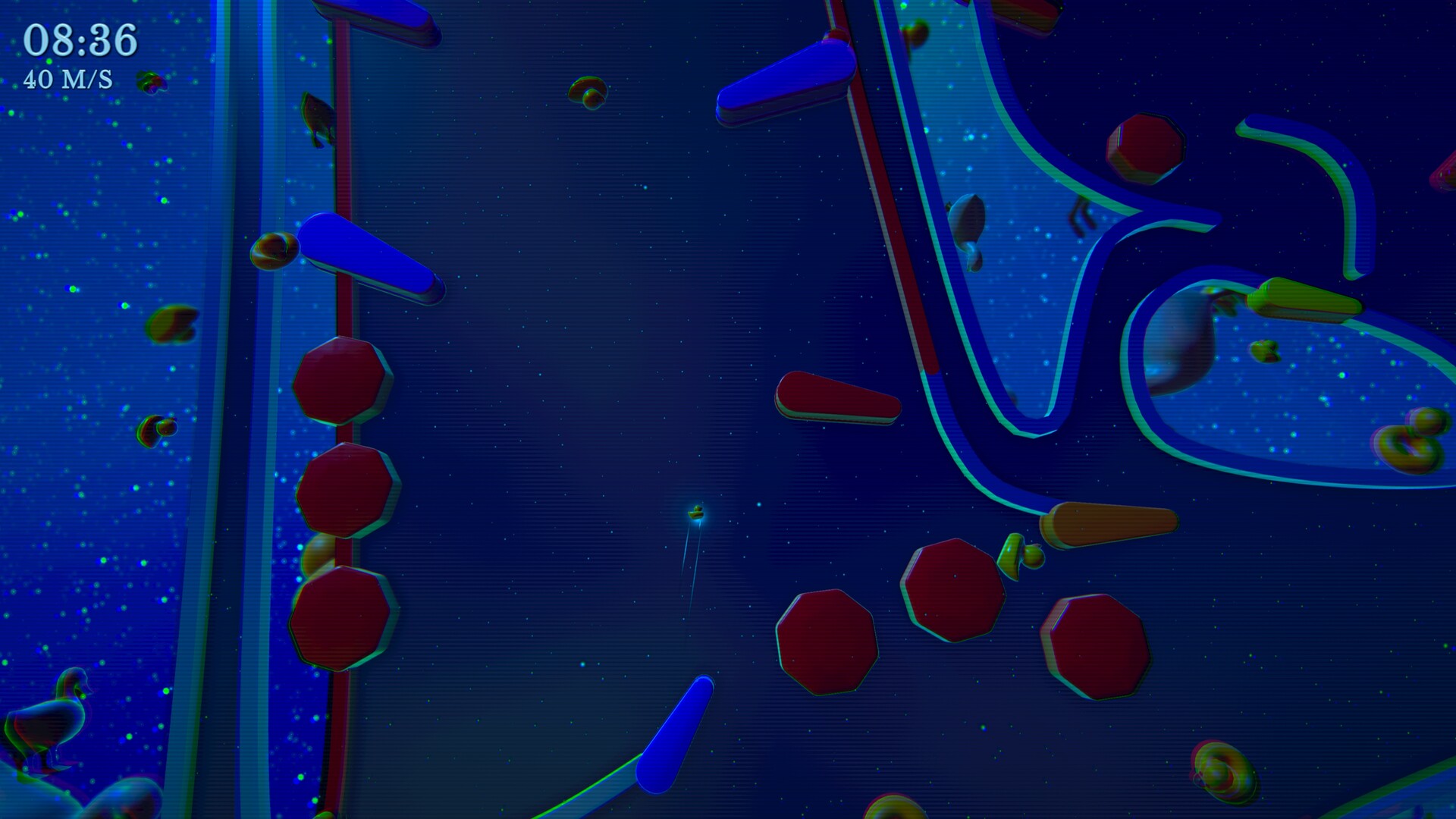
A Pinball Game That Makes You Mad is a rare ten-dollar climb that understands its own joke and then has the nerve to make the joke a mountain. Azimuth Studios built a cabinet about persistence, a narrator about teamwork you do with a bounce, and a toybox that looks a little homemade and plays a lot more sincerely than that sentence suggests. The loop is the hook. The flipper is the spine. The walk from False Hope to a gift is the grin.
It is better with a purpose than with a checklist. The late rooms can clunk in the way a stubborn physics toy is clunky. A bounce can arrive a half-second late to its own intention. The presentation has indie fingerprints, from the stubborn see-saws to the story that would rather be a taunt than a cutscene. All of that is true, and all of that is already priced in at $9.99 on Steam. You are not buying a decade. You are buying a season that can turn into several seasons if you like being a coordinated disaster, or being the person who has to explain the disaster to a narrator who already counted it.
The Steam sample around a game this loud and this small is always going to look like weather. Positive is the official report, 85 percent of 34 English voices, and that split is fair. Players who wanted a deeper table, a prettier cabinet, or a climb that never hides the drop bounce off. Players who wanted a one-button adventure with a ball and a bad idea about altitude stay. I am in the second camp with caveats, which is the only honest place to stand.
I am scoring it 8.5, Great, because the identity is this clear and the limitations are the limitations of a focused debut, not an empty one. I would recommend it to anyone who likes a flipper that has weight and a map that is allowed to be rude. Distinctive cabinet weather, a ball that shrinks the mountain, a narrator that turns a fall into conversation, and a price that respects a long night are a lot of game for the ask. The systems repeat their manners. The manners are still useful.
The mountain is still out there, still hiring a night shift, still asking what a cabinet was. After a few summits, you will understand why the job is not finished, and why you keep putting the ball back on the flipper anyway.
We prepared this review with a digital copy of A Pinball Game That Makes You Mad for the PC version provided by Pressengine.