
There is a particular kind of last stand, rare in a genre that usually hands you a random chest and a smile, in being told to finish the loadout before the graveyard is allowed to start. The bone spear is still a bone spear. The horde is still a horde. The first thing that detonates is not a metaphor. CODEX MORTIS, the necromantic survival bullet hell from GROLAF, is built on that pre-mission argument, and the argument is ruder, cheaper, and more useful than a four-dollar apocalypse has any right to be.
I played the PC version, the 26 March 2026 Early Access that CRUNCHFEST walked onto Steam after a noisy demo, a Christmas update, and a $3.99 ask that does not pretend to be a career. You are a necromancer with five schools of dark magic and a calendar that wants a different build for every address. Eight levels at launch, from Forgotten Graveyard to a North Pole that did not ask to be involved. Local co-op if a friend would like to share the crime. Ninety-six Steam achievements sit in the background like a very sincere ledger. The Steam sample is Mostly Positive, 53 positive of 69, which is the honest weather report and not a dare. Great, not glossy, and very much a night I would recommend you spend if you like a survivors-like that remembers it is also a theory-craft.
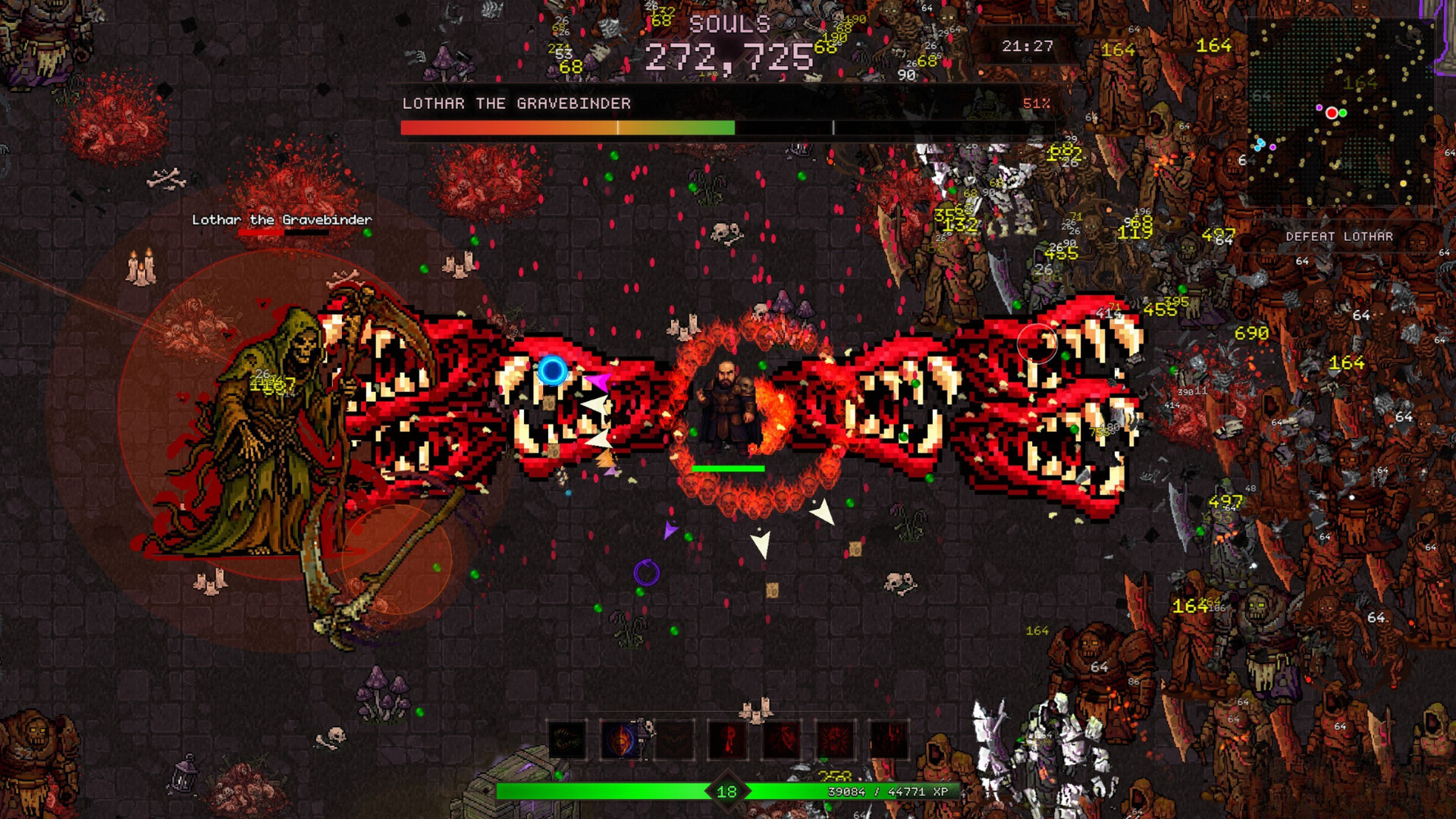
Death Is the Loadout
Most survivors-likes begin with a chest. CODEX MORTIS begins with a desk. Official copy says plan before you slaughter, assemble the death squad, and equip them for annihilation before the mission is allowed to exist. That is not flavor text. It is the design refusing to pay for RNG when a loadout will do. You pick spells. You pick heroes. You pick artifacts. Then the graveyard is permitted to have an opinion.
I like a premise that prices competence as homework and then lets you spend it in public. Story is environmental and stingy, which is the right instinct for a game that wants your hands more than your diary. You are not reading a novel. You are looting a forbidden book that is still being written, and the book has a soundtrack that was grown in a lab and then asked to behave like a choir.
The fantasy is not mastery of a lore bible. The fantasy is still being the person who finishes the theory before the first skeleton is allowed to clock in. You will die in ways that would be funny if the corpse explosion were not so sincere. You walk back to the planner. You become the kind of person who thinks a synergy is a personality.
The store page is not shy about the pipeline. One hundred percent AI-driven development sits in the short description the way a warning label sits on a bottle. Code, sprites, music, the whole commute. I will get to that. First I should say the loop is a loop, and the loop is why anyone stayed after the argument.
Five Schools and a Theory That Explodes
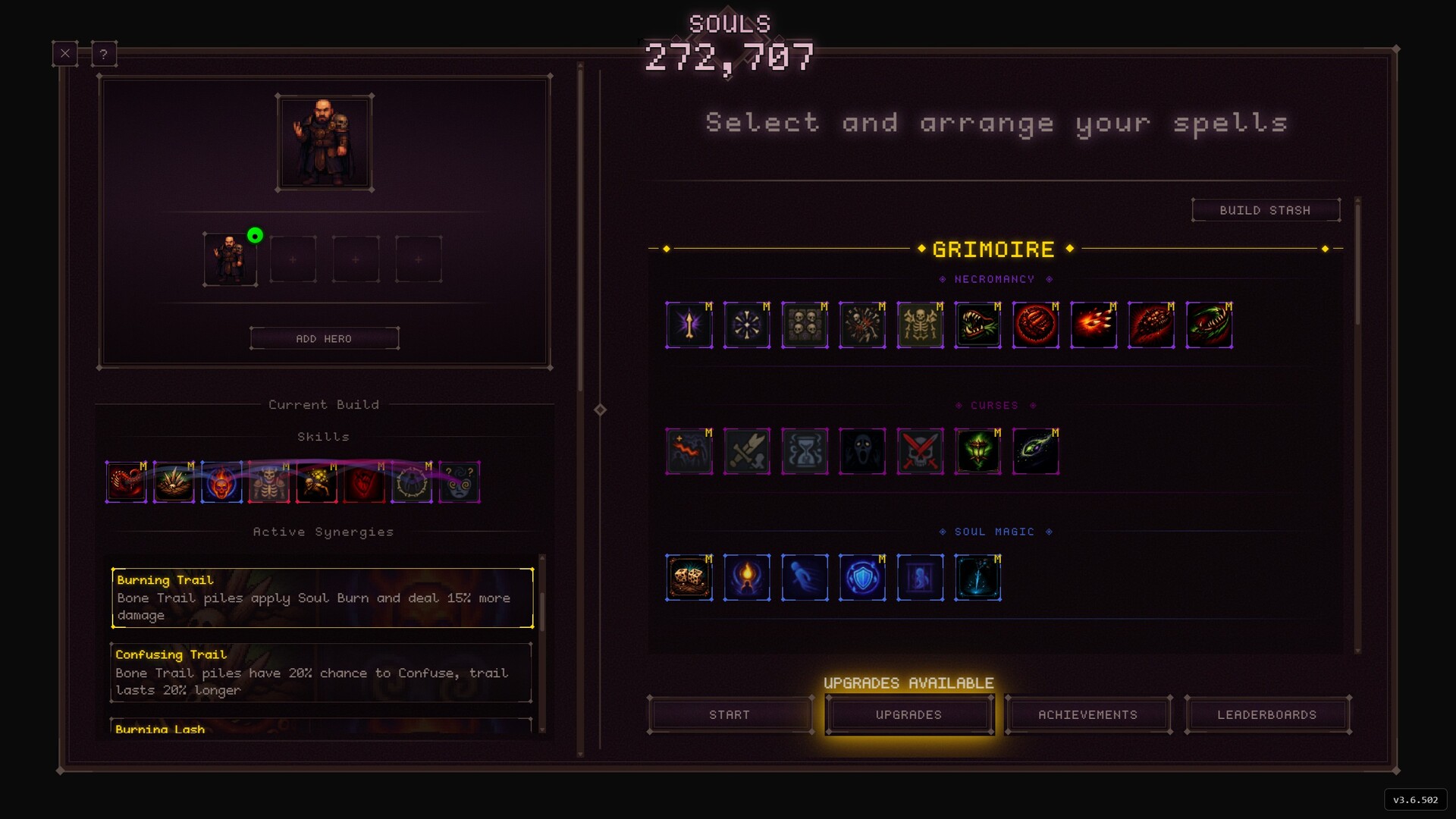
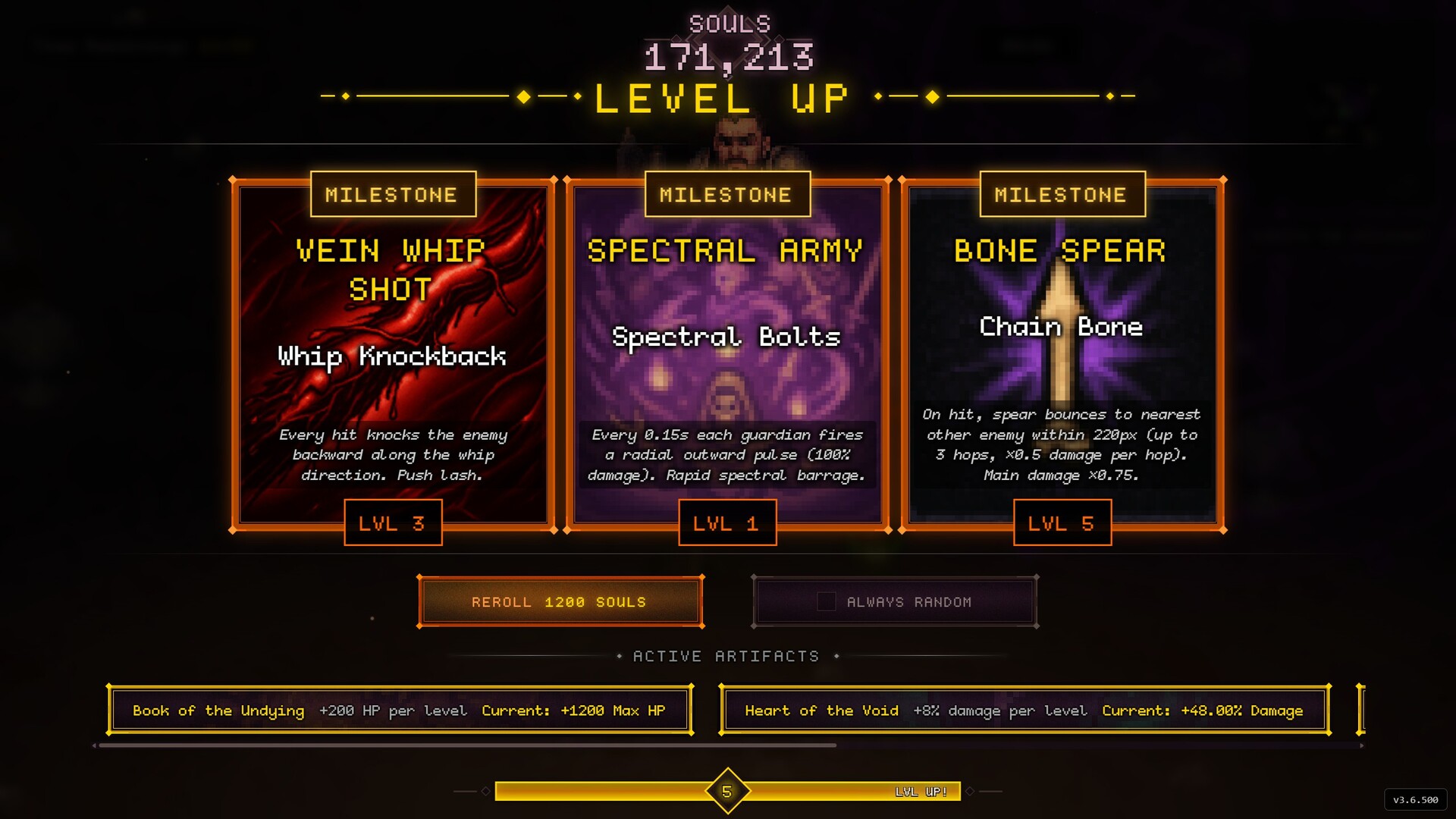
The loop is the old religion of auto-fire and GROLAF does not pretend otherwise, then it straps a syllabus to the religion and asks the religion to study. Necromancy is bone spears, corpse explosions, skeletal prisons. Summoning is armies and bone golems. Blood Magic spends life like a person who has already lost the argument with a health bar. Soul Magic harvests essence and phases through problems. Curses break will and spread the kind of confusion a horde deserves. None of that is a revolution. All of that is the sentence the rest of the toybox has to live in.
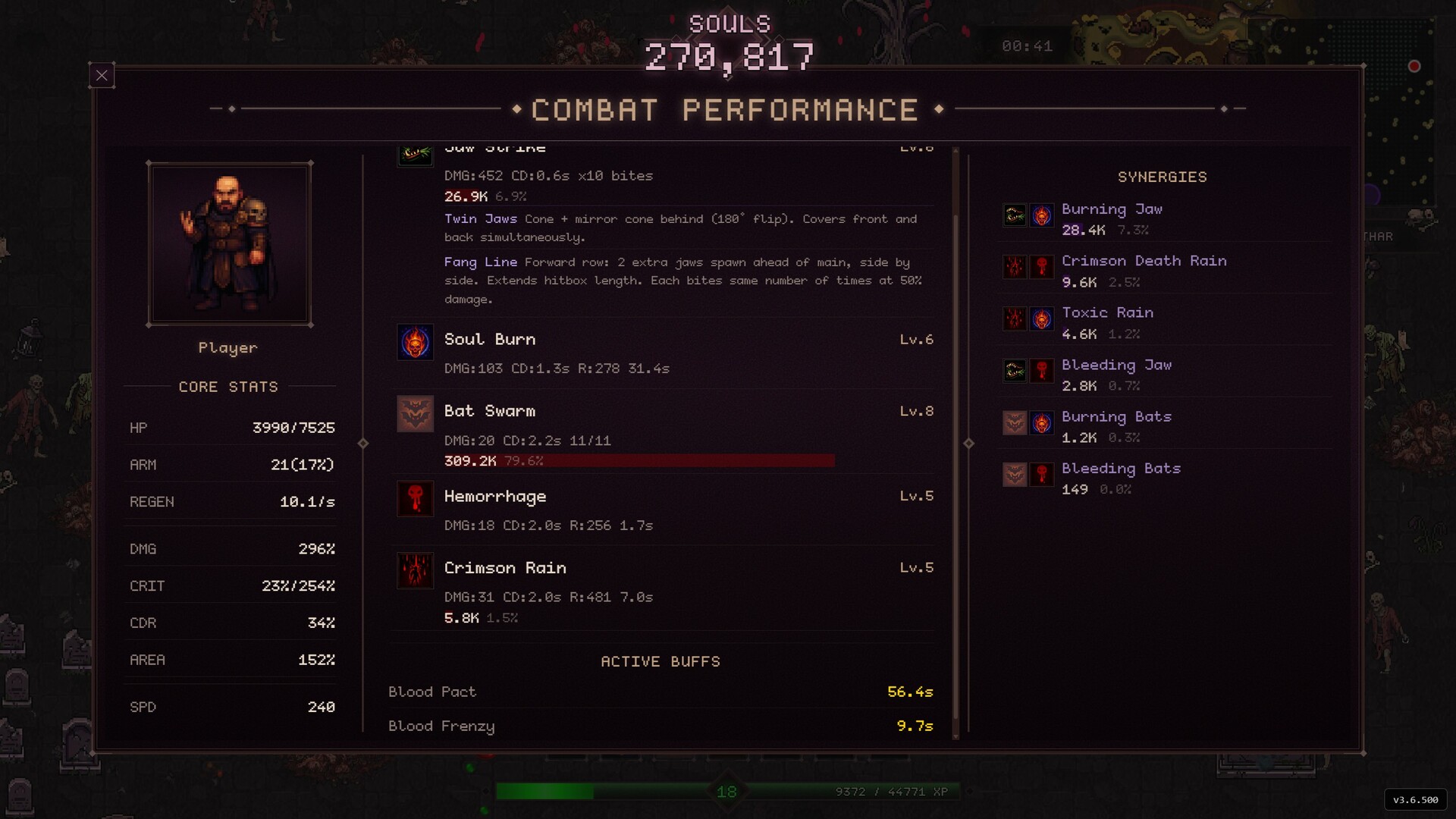
Combine, the page says, with the candor of a person who has already won a whiteboard fight. Blood plus Necromancy is a burning explosion. Curses plus Summoning is a neighborhood that cannot leave. Later patches added movement that is also an attack, a corpse on a chain, a tentacle that sweeps the horizon, a tooth barrage that aims at the densest rumor. I will not turn this into a patch-note novel. What I can say is that the planner is the version the systems were quietly designed around.
I have played a lot of games that treat the first chest as a tutorial and the tenth as a spreadsheet. CODEX MORTIS is heavier than that on purpose and lighter than a sim. You are looking at a school and deciding whether you have been useful enough today. If you want a random magnet that could unionize, you will feel underemployed. If you want a weekend that turns a graveyard into a thesis, you will feel hired.
Presentation is readable, which matters more than prestige. You can tell a Forgotten Graveyard from a Bone Cathedral from a North Pole at a glance. If you cannot read a biome, the hunt dies and the codex becomes homework. These spaces are atmospheric enough to carry a joke and clear enough to carry a plan. You always know where you are. You do not always know why a mini boss is already there.
Eight Levels That Refuse Yesterday’s Build
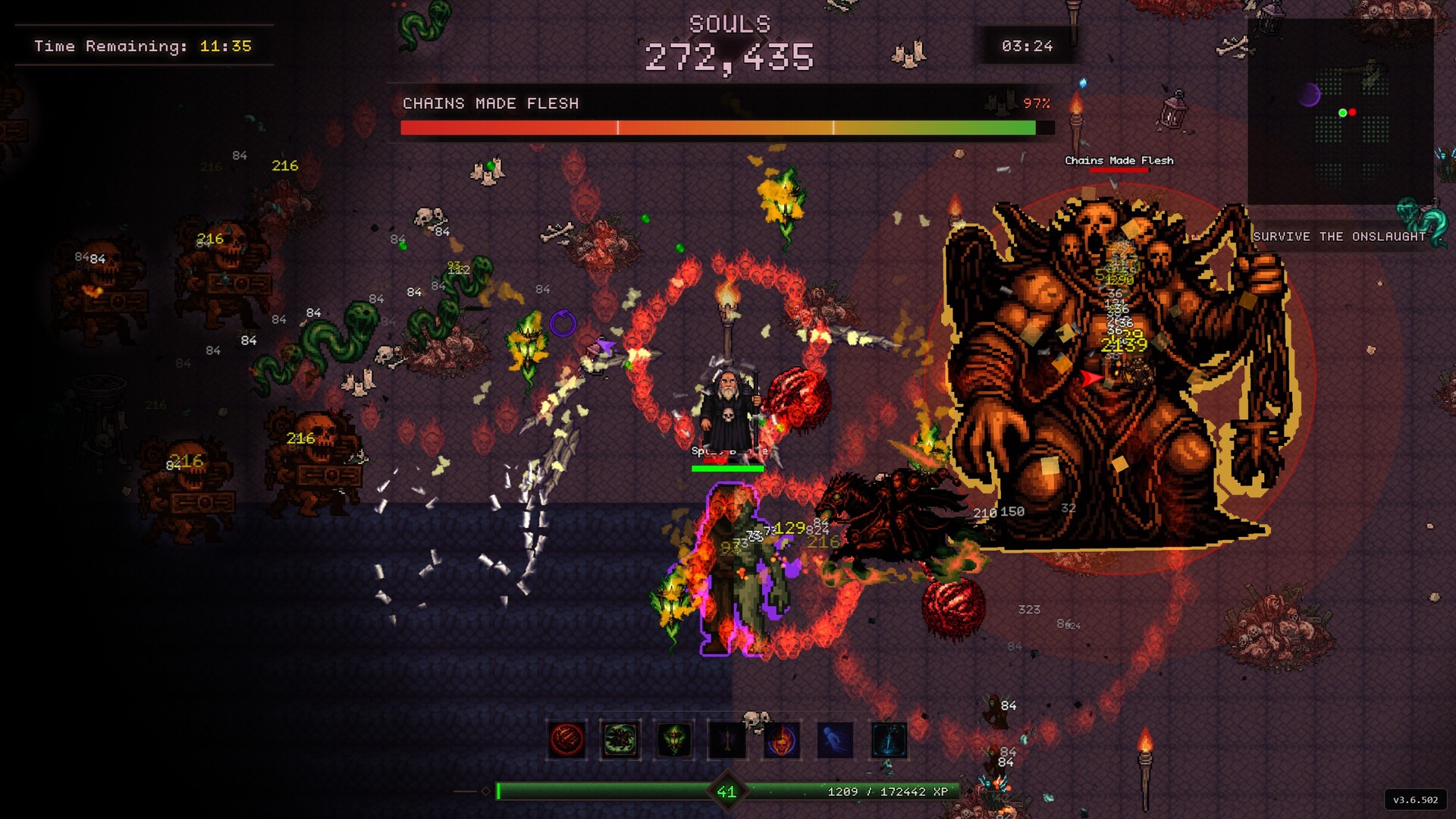
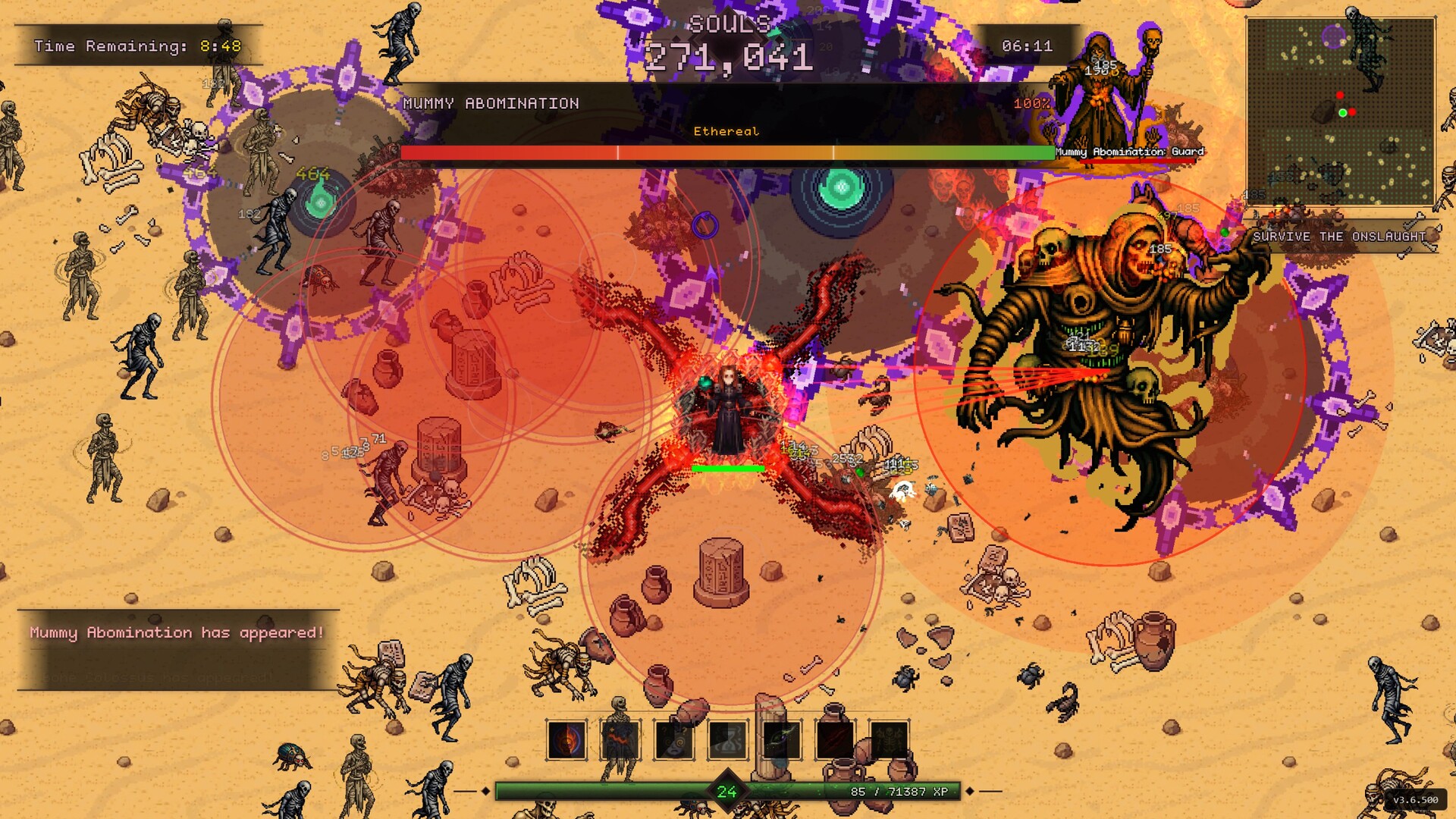
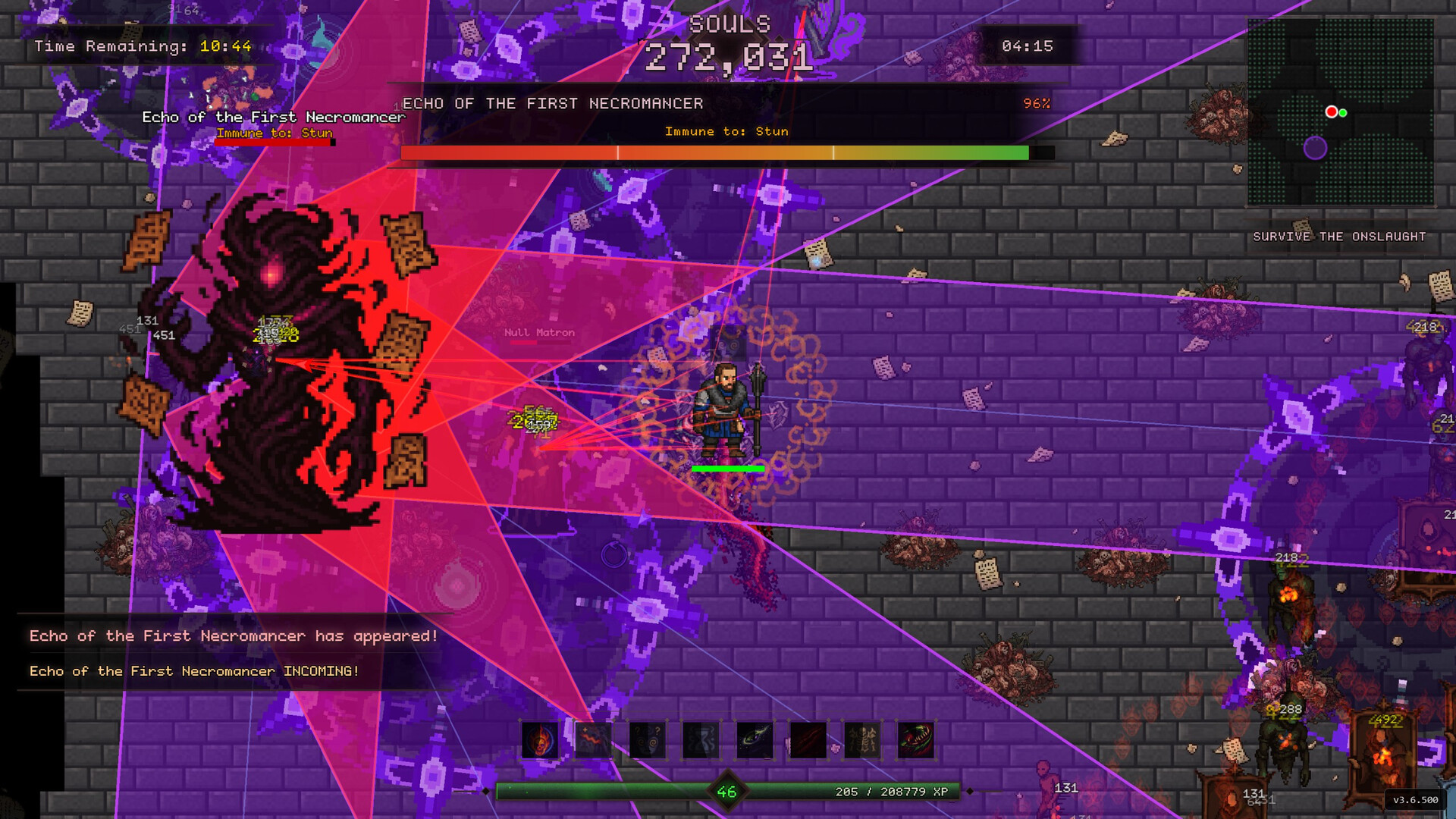
Combat is the temperature change. Early undead establish that this is not a walking tour with nicer lighting. They will fill a lane farther than pride would recommend. A bone spear handles the general population. The thing a level is named after will empty a health bar if you treat it like scenery. Official features list eight Early Access addresses: Forgotten Graveyard, Sand Tomb, Cursed Catacombs, Bone Cathedral, Void Sanctum, Soul Nexus, The Throne Room, North Pole. That last one is the grin.
Each address wants a different sentence. A build that painted the first graveyard can arrive at the catacombs and discover it has been unemployed. That is the closest this game comes to a power fantasy, and I like it more than a new cutscene. Mastery, here, is logistics. You gather a theory, you stash a thought about the next door, you detonate like a person who has mail. The map does not get smaller because the developers deleted land. It gets smaller because you invented a syllabus.
I will not invent a highlight reel with fake timestamps and tidy kill counts. The nights that stay with you are the ones where you thought the circle was finished, then a portal opened at minute fifteen, and then you were on the wrong side of your own blood tax. Enemy variety is not a bestiary novel. It does not need to be. Pressure is the variety. A corner that holds is a better reward than a new silhouette if the silhouette is just another way to lose the squad.
Survivor mode, added after launch with the manners of a small shop that is listening, opens a later door and asks whether the planner still works when the clock gets rude. Bloodbath dropped a bath house, a pile of new silhouettes, and four tracks. I will not write a content-drop novel. The cadence is the point. Someone posts a complaint in the morning and there is a real chance it is a spell by evening.
Heroes, Artifacts, and a Friend on the Couch
Heroes are the other half of the short description and the kinder half of a walk. Command them, or hand the second stick to a person who would like to share the crime. Local co-op is listed with the honesty of a living room. I will not write a networking white paper. What I can say is that the loop is louder when someone else is detonating while you argue with a curse. Multitasking is the co-op fantasy. So is the moment a golem that would have ended a solo walk becomes a group project with worse manners.
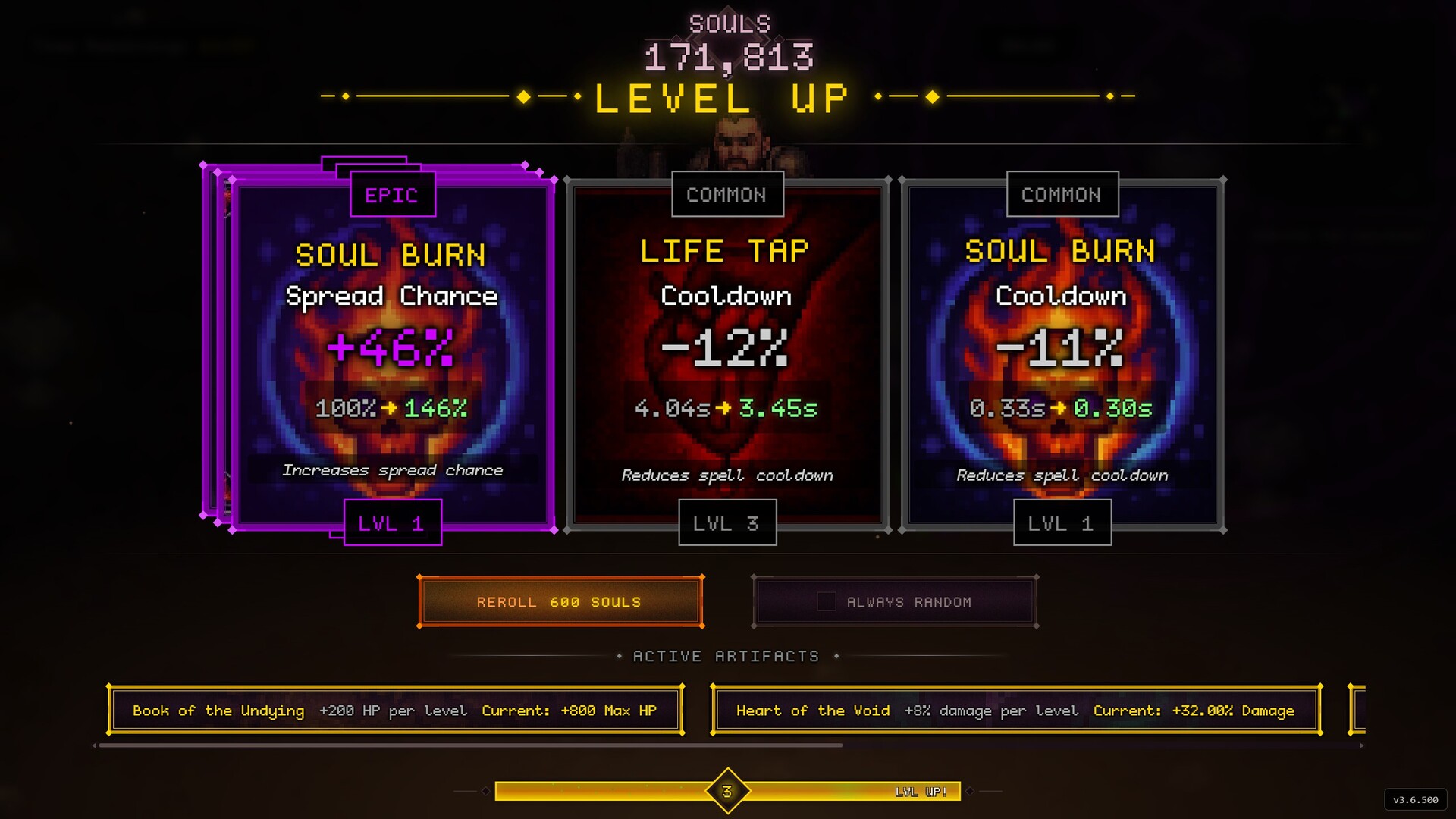
Artifacts grant bonuses the way a merchant grants bad ideas. I sold myself on a damage node I was sure I needed and then needed a cooldown, which is the oldest loadout joke in the book and still a good one. Deep progression upgrades the usual groceries: damage, cooldowns, health, speed. Procedural worlds keep the commute from becoming a museum. Every run is different, the page says. Every run is also the same religion. Both things can be true.
English is one of a pile of interface languages that would make a localization seminar blush. I will not hold that seminar. Ninety-six achievements sit behind the loop for people who like a receipt. First Blood. Apprentice Necromancer. Master of the Dead. Eternal Deathlord. Architect of Eternity. None of them change the central truth. You are here to finish a plan that has already decided the horde is evidence.
A solo night is a competent weekend. You pick the school, you invent the synergy, you lose a minion, you walk back, you put a better artifact on the joke. A couch night is the version the systems were quietly designed around. Someone summons. Someone curses. Someone learns, too late, that Blood Magic does not respect your calendar.
The Pipeline Everyone Already Argued About
I should be clear about the pipeline, because it is real and it is not a footnote you hide after the score. The store page says the quiet part in the short description. One hundred percent AI-driven development. GROLAF is a solo shop that treated a language model like an exoskeleton and then shipped a TypeScript desktop that does not owe Unity a postcard. Sprites wobble because character animation lost the argument. Music arrived from the same commute. The trailer looks like a trailer that was grown, not shot.
That sentence is both a promise and a warning. If you want a handmade frame and a human fingerprint on every bone, you will feel unemployed. If you want a four-dollar planner that plays like a real survivors-like, you will feel hired, and then you will have a longer conversation with yourself about why that bothers you or why it does not. I am not here to finish that conversation for the internet. I am here to say the graveyard still works.
I have a rule for cheap-to-mid bullet heavens. If a game is worse with a thesis than with a checklist, it is broken. If it is only good as a thesis, it is a press release. CODEX MORTIS is a game, and that fact should sit next to the price and next to the argument. Players who came in to be angry sometimes stayed to theory-craft. Players who came in to theory-craft sometimes left because the wobble was louder than the synergy. Both reports are already in the sample.
Technical manners on a mid-range box can stutter when the swarm decides to remember itself. Enemies can get philosophical in a doorway. Animations can be stubborn in the specific way a shader is stubborn. Landscapes can be handsome in a generated way, which is a polite way of saying the image is allowed to be ugly if the ugly is the point. Steam Deck verification arrived with the manners of a small shop that wanted the couch to work. I will not invent a mud census. I will say the codex sometimes forgets to stock the scare you need and then shrugs like weather.
Mostly Positive Is the Honest Weather
The Steam sample around a game this loud is always going to look like weather. Mostly Positive is the official report, 53 of 69 on the side of yes, and that split is fair. A demo that pulled thousands of curious hands will always leave a scar in the comments. People who wanted a prettier fight, a handmade sprite, or a pipeline that never mentions the lab bounce off. People who wanted a lightweight necromancer with a planner and a bad idea about the North Pole stay. I am in the second camp with caveats, which is the only honest place to stand.
Compared with the giants of the survivors-like business, CODEX MORTIS is not trying to be a career. It is trying to be a page. The developer wrote the quiet part on the store page. Death is your weapon. Embrace the forbidden. That is not a cop-out if the place is worth the walk. Some nights it is. Some nights the doorway is a theology problem and the golem is a rumor. Both nights are the Codex.
I should be clearer about the scope, because Early Access is not a vibe, it is a contract. Eight levels is a defensible starting point and a heavy bet. If the planner does not land, there is not a ninth address in the build to recover the evening. Patches have already arrived with the manners of a person who is listening. Input. UI. A combat panel someone asked for on a Monday. More spells. A bath house. I will not write a patch-note novel. Content cadence will decide whether this graveyard builds a career or becomes a demo that learned to charge.
When the five schools and the pre-mission desk shake hands, the tape is better than the price. When they miss, you are a person in a graveyard with a very sincere spreadsheet. The wobble is real. The four dollars are also real. I took the second fact more seriously than the first, which is how I ended up writing this instead of a sermon.
Still Turning the Page
CODEX MORTIS is a rare bargain bullet hell that understands its own joke and then has the nerve to make the joke a planner. GROLAF built a necromancer about homework, a pipeline about an argument, and a toybox that looks a little grown in a lab and plays a lot more sincerely than that sentence suggests. The loop is the hook. The five schools are the spine. The walk from a bone spear to a North Pole is the grin.
It is better as a thesis than as a museum. Combat is clunky in the way an Early Access fight is clunky. The presentation has generated fingerprints, from the stubborn wobble to the story that would rather be a synergy than a cutscene. All of that is true, and all of that is already priced in at $3.99 on Steam. You are not buying a decade. You are buying a weekend that can turn into several weekends if the roadmap keeps its appointments, or being the person who has to explain the appointment to a curse.
I am scoring it 8, Great, because the identity is this clear and the limitations are the limitations of a focused Early Access, not an empty one. I would recommend it to anyone who likes a planner that has weight and a map that is allowed to be rude. Distinctive graveyard weather, a loadout that shrinks a horde, levels that know they are exams, and a price that respects your week are a lot of game for the ask. The systems repeat their manners. The manners are still useful.
The Codex is still out there, still hiring a night shift, still asking who decided you get to theory-craft. After a few pages, you will understand why the job is not finished, and why you keep opening the book anyway.
We prepared this review with a digital copy of the CODEX MORTIS for the PC version provided by Pressengine.