There is a particular kind of last stand, rare in a genre that usually hands you a healthy sprite and a cheerful magnet, in waking up already bleeding and discovering the cavalry has booked a nuke for your coordinates. The limp is still a limp. The autogun is still an autogun. The first thing that tries to eat you is not a metaphor. Let Them Come: Onslaught, the retro sci-fi survivors-like from Tuatara Games, is built on that countdown, and the countdown is ruder, louder, and more useful than an eight-dollar orbital strike has any right to be.
I played the PlayStation 5 version, the 11 November 2025 launch that Digital Bandidos walked onto living-room hardware the same day Steam and Xbox got the same $7.99 ask. You crash, you limp, you stack weapons that fire themselves, and you learn the planet has already hired a night shift of things with too many legs. Two playable faces at launch, the Soldier and the Psychic. Four worlds. A synth wave score by Cartridge 87 that treats a horde like a chorus. Twenty-five Steam achievements sit in the background. The Steam sample is Very Positive, 218 positive of 241, which is the honest weather report and not a dare. Great, not glossy, and very much a weekend I would recommend you spend if you like a survivors-like that remembers it is also a VHS box.
Crash Site, Then the Clock
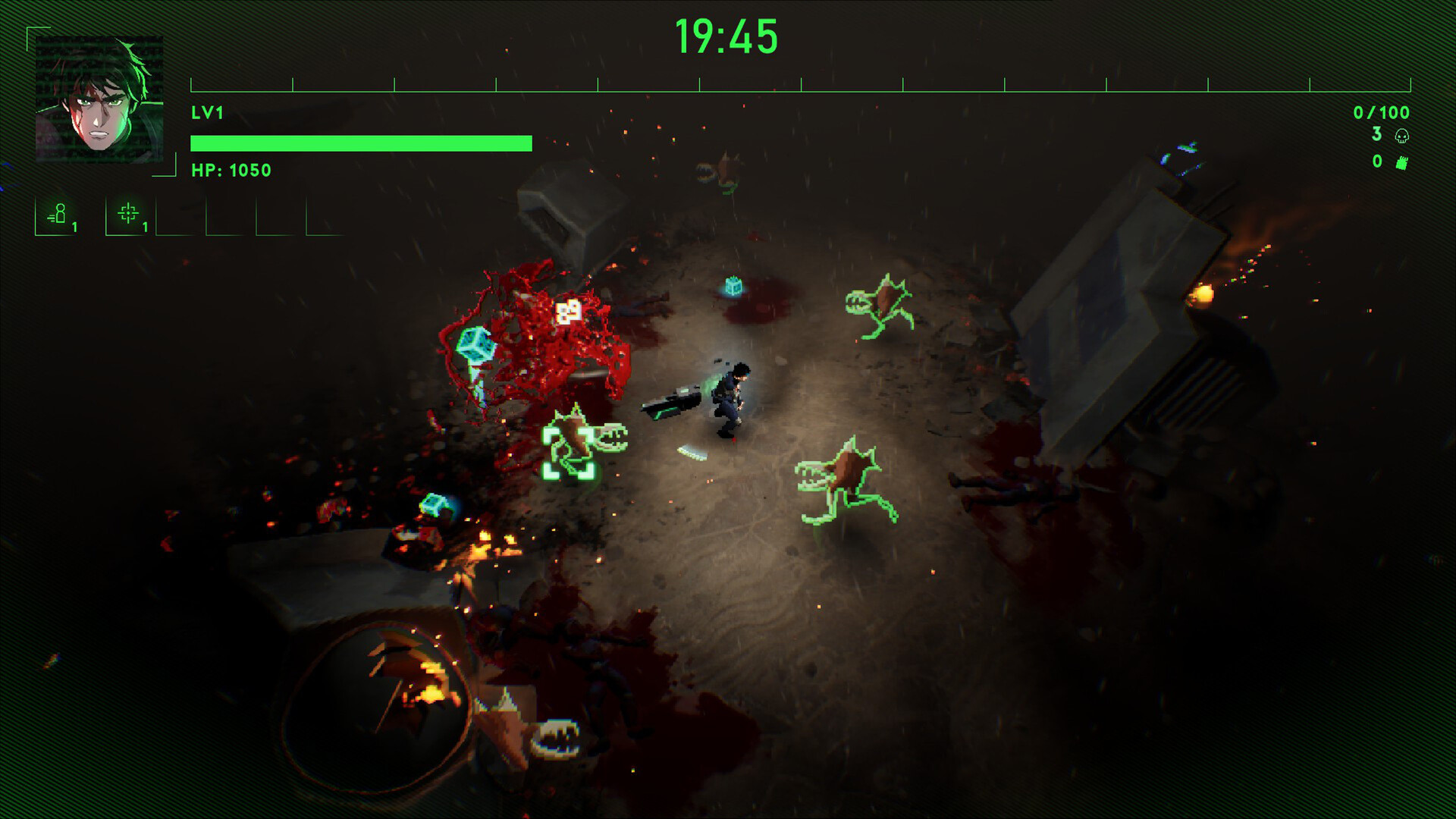
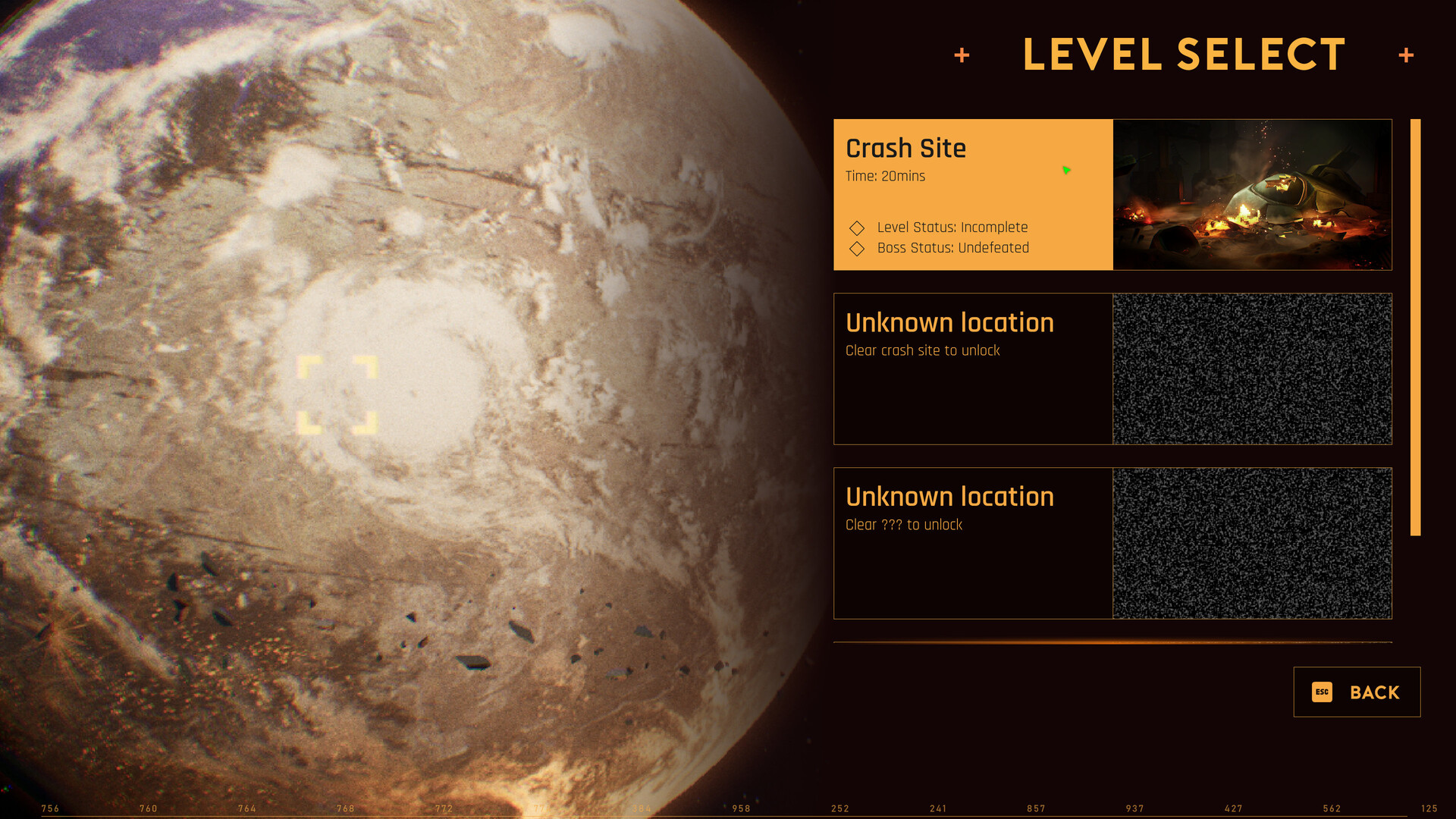
Most survivors-likes begin with a healthy walk. Let Them Come: Onslaught begins with a limp and a timer that already hates you. Official copy says you are stranded on an alien world overrun by horrors, with only one way out, which is to nuke the site from orbit. That is not flavor text. It is the design refusing to pay for a sequel speech when a crash will do. The original Let Them Come was a side-on arcade last stand. This one keeps the last stand and turns the camera isometric, then asks you to survive about twenty minutes before the military finishes the argument for you.
I like a premise that prices competence as a rumor and then lets you earn it back one crate at a time. Story is environmental and stingy, which is the right instinct for a game that wants your hands more than your diary. You are not reading a novel. You are looting a disaster that is still happening, and the disaster has a soundtrack. Tire tracks in the dirt lead to outposts if you are paying attention. Supply drops land in the distance like dares. Random missions flash a reward in the corner and ask whether you have the minutes left to collect it.
The fantasy is not mastery of a lore bible. The fantasy is still being the person who can limp through a wave after the mission has already decided you are disposable. You will die in ways that would be funny if the credit drop were not so sincere. You walk back to the armory. You become the kind of person who thinks a dash cooldown is a personality.
The clock is the joke and the spine. Survive long enough and a boss arrives to collect the last two minutes. Survive that and the nuke still drops, which is the most honest ending a survivors-like has written in a while. You did not win the planet. You won a receipt. The next run starts poorer and then, if you spent the credits, a little less poor.
The Soldier Limps, the Psychic Deletes
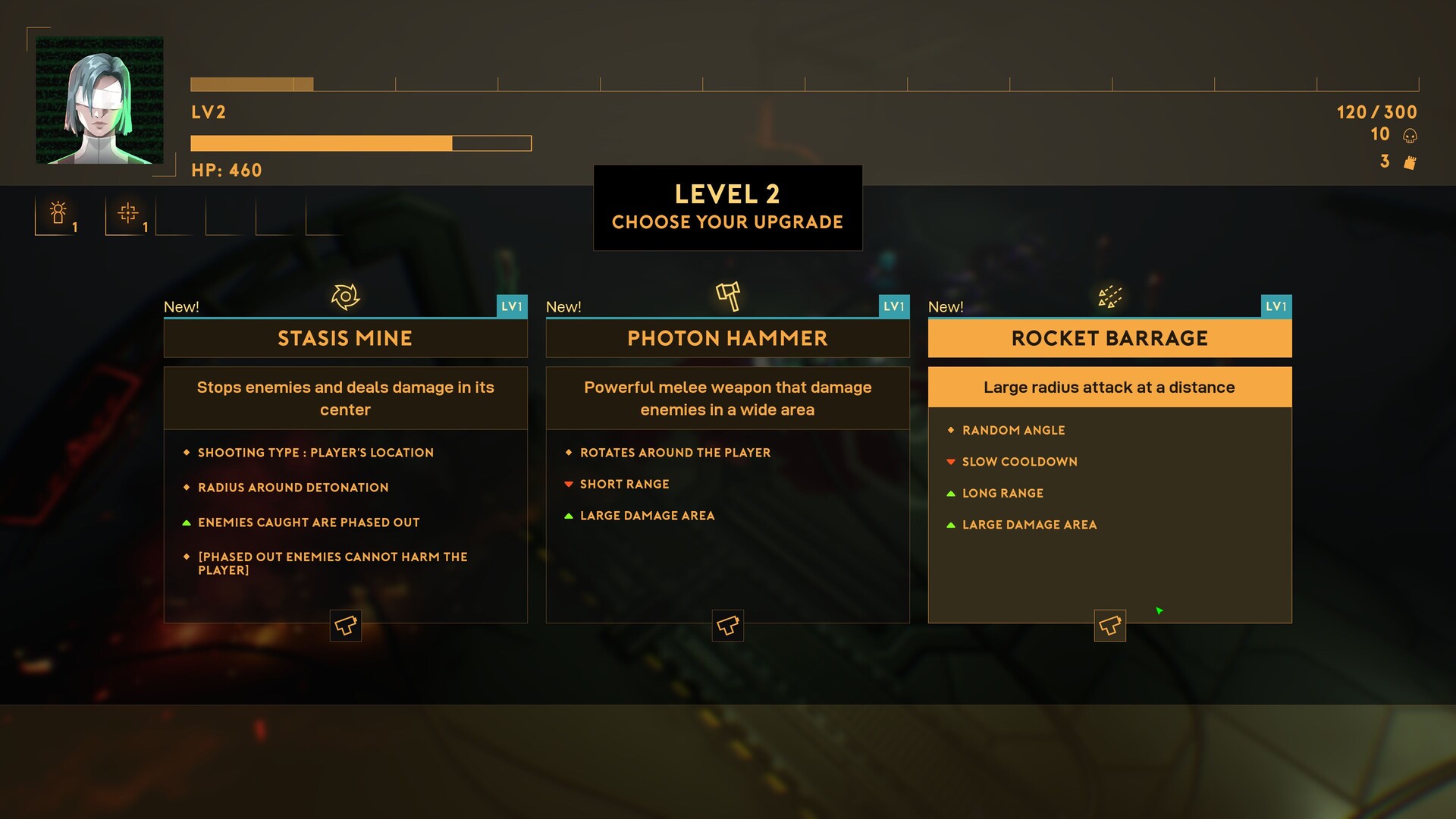
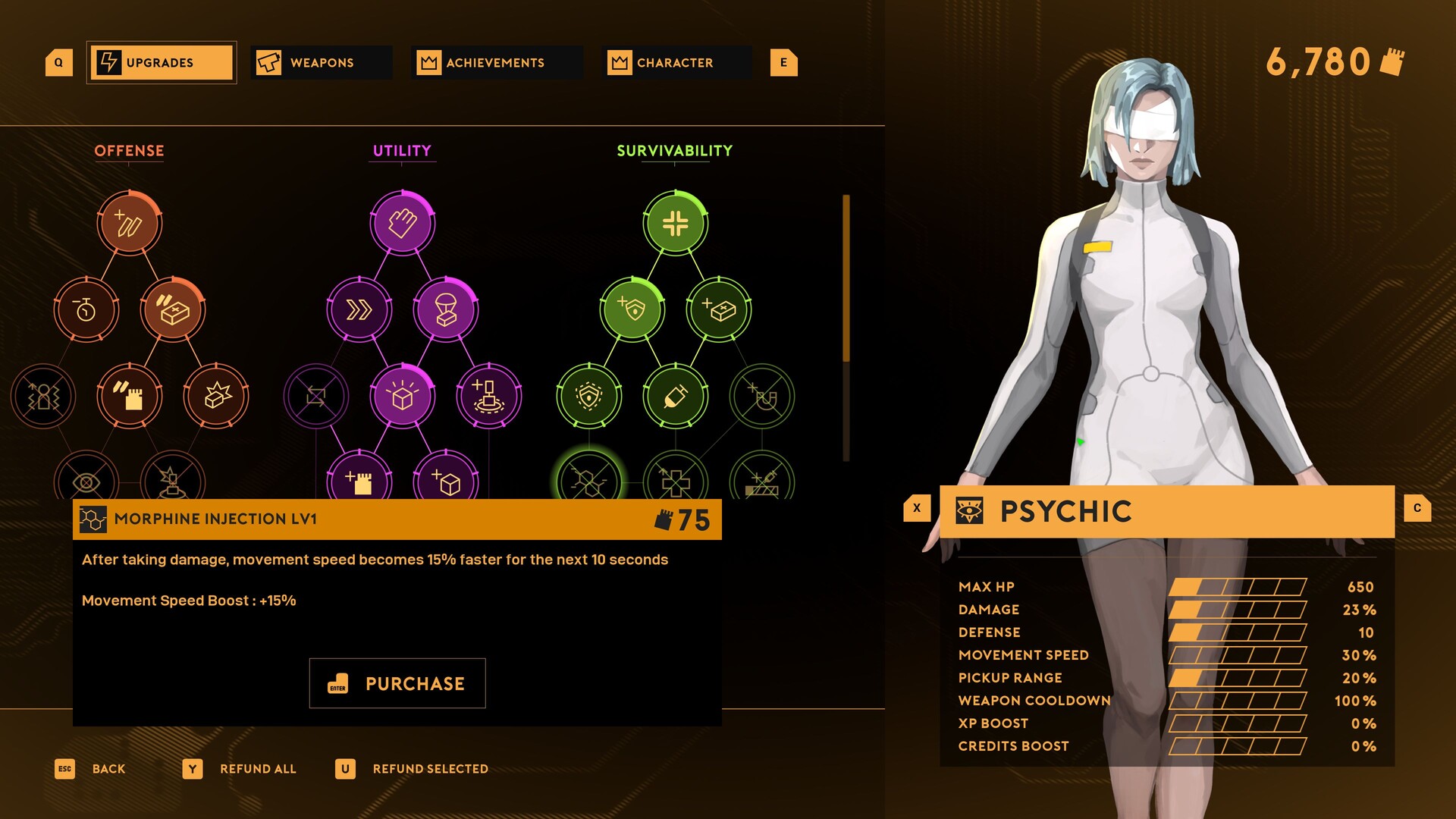
The loop is the old religion of auto-fire and Tuatara Games does not pretend otherwise, then it straps a limp to the religion and asks the religion to sweat. You steer. The weapons do the talking. Experience drops. A level-up offers a new toy or a better version of an old one. Between runs the Armory takes your credits and pretends to be a career. None of that is a revolution. All of that is the sentence the rest of the toybox has to live in.
Two faces at launch is a short sentence and a real one. The Soldier starts wounded, which is both a cutscene and a stat, and his dash is the i-frame conversation the genre already had. Chain the charges and you can walk through a wave like a rumor. Miss the cooldown and you are a person with a limp in a crowd that does not respect personal space. The Psychic unlocks after an SOS objective that the first hour is happy to show you, and her trick is a delete button dressed as a stun. Groups vanish. The screen exhales. Then it inhales again.
I have played a lot of games that treat the first character as a tutorial and the tenth as a spreadsheet. Let Them Come: Onslaught is lighter than that on purpose. If you want a roster that could unionize, you will feel underemployed. If you want a weekend that turns a limp into a loadout, you will feel hired. The differentiation is real enough that I swapped and stayed swapped. The Soldier is logistics with a gun. The Psychic is a thesis about personal space.
Presentation is readable, which matters more than prestige. You can tell a crash site from a later world at a glance. If you cannot read a biome, the hunt dies and the run becomes homework. These spaces are atmospheric enough to carry a scare and clear enough to carry a plan. You always know where you are. You do not always know why a mini boss is already there.
Flamethrowers, Photon Sabers, and a Site Nuked From Orbit
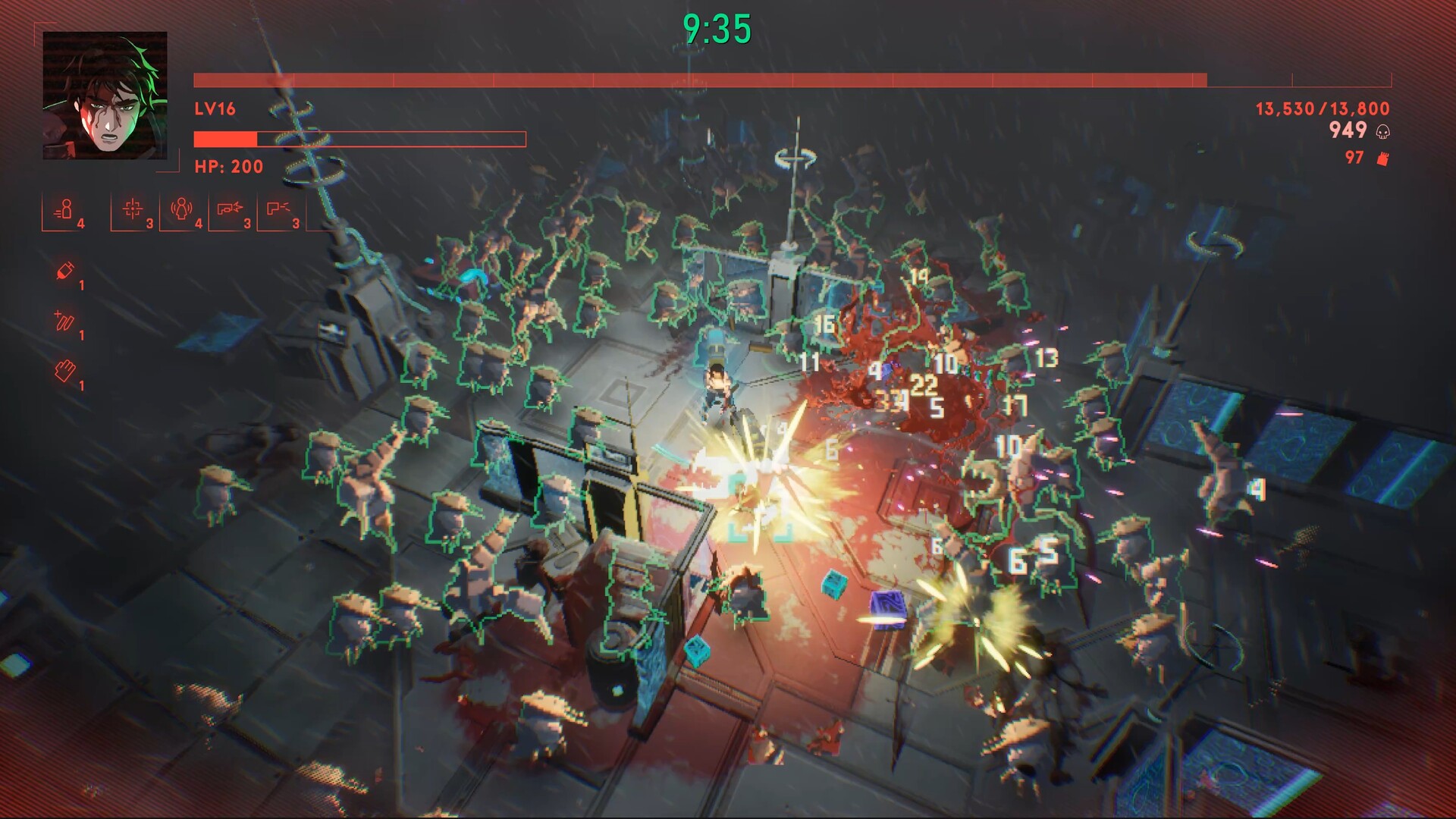
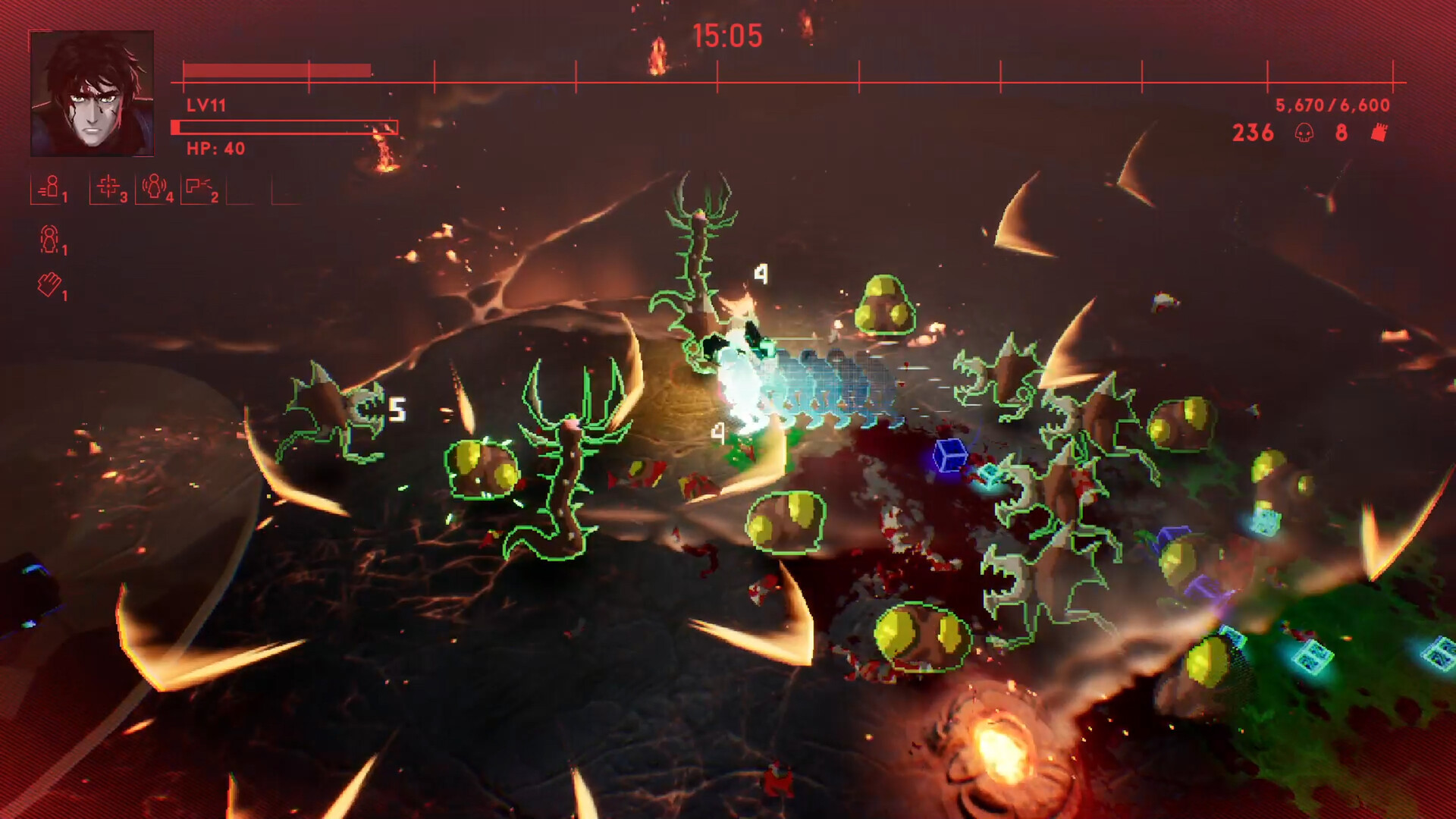
Combat is the temperature change. Early spiderlings establish that this is not a walking tour with nicer lighting. They will fill a lane farther than pride would recommend. An autogun handles the general population. The thing that arrives when the clock gets rude will empty a health bar if you treat it like scenery. Official copy promises flamethrowers, Photon Sabers, and the option to nuke the site from orbit because it is the only way to be sure. That sentence is both a promise and a warning.
Weapon roles are the closest this game comes to a power fantasy, and I like them more than a new cutscene. Shotgun and Repulse both push. One cripples. One shoves the whole neighborhood. Autogun and Blaster both aim for the nearest problem. The Blaster wants you to stand still like a person who has made a bad decision on purpose. Electric Grenades work close. Rocket Barrage works farther. The store page is not shy about style. What the store page cannot tell you is how quickly you will start treating a Level 3 breakpoint as a mood stabilizer. Many weapons begin to mean it at three. Below that they are hobbies.
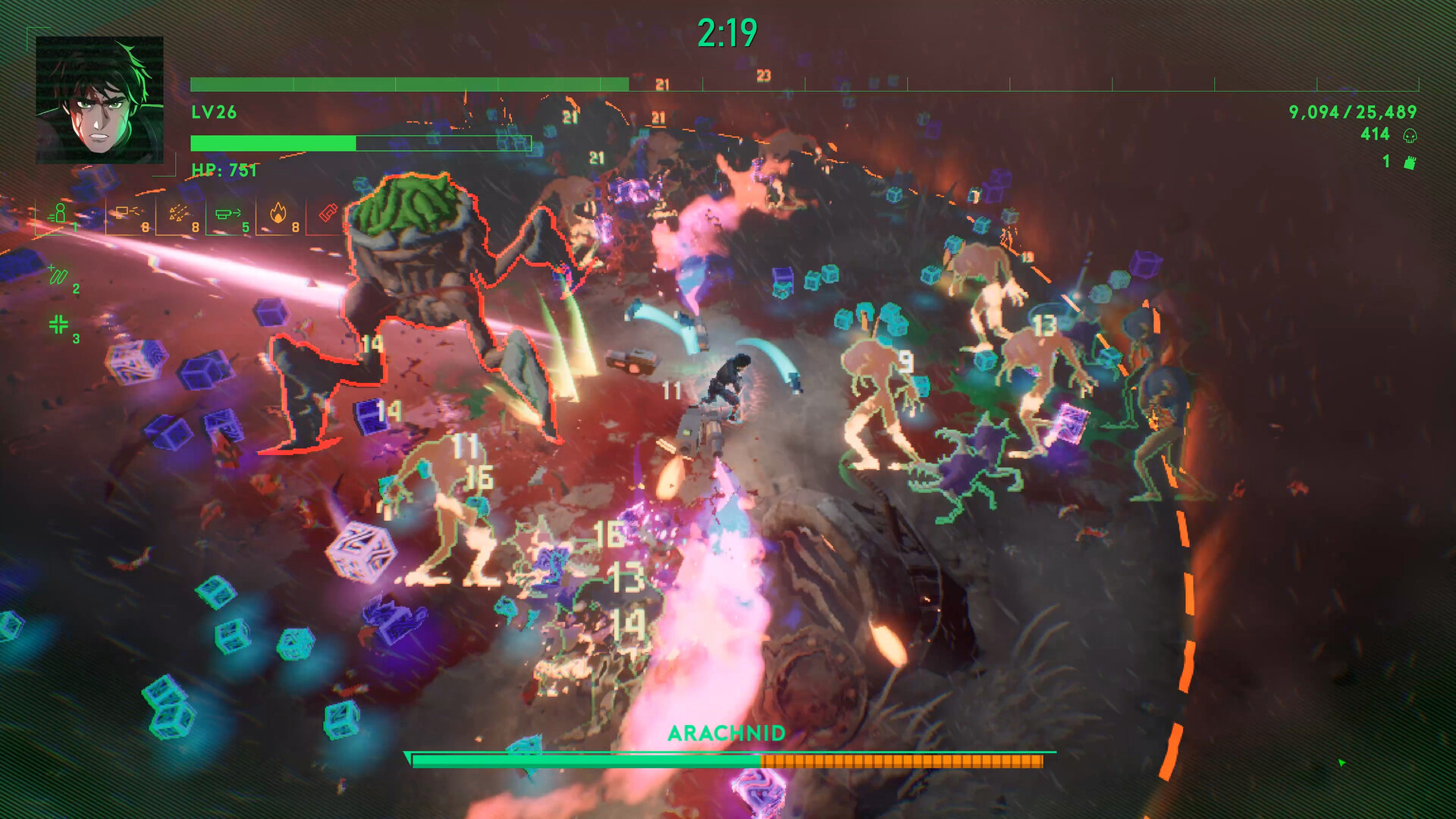
I will not invent a highlight reel with fake timestamps and tidy kill counts. The nights that stay with you are the ones where you thought the circle was finished, then a supply drop and a mission lit up at the same time, and then you were on the wrong side of your own greed. Offense is king, the developer wrote, with the candor of a person who has already lost the argument with defense mains. A Shield that eats one hit and comes back on a cooldown is the other half of that sentence. Health Regen and Armor Plating turn a limp into a commute. I-frames after a hit, after a Super Shield, after a dash, are the manners the swarm respects.
Emergency healing is a level-up that raises max HP by a chunk and then has the nerve to heal you by that chunk. When you are close to death it is a life saver and a joke. I took it more often than pride would recommend. Pride is not a build.
Four Worlds That Change Their Mind
The map is the other vehicle. Official features list four distinct environments, procedural layouts, surprise mini bosses, supply drops, and random missions. Both of those last two can fire at once, which is how a good run becomes a scheduling problem. Missions show the reward in the corner. Supply drops do not. Distance is information. Time is ruder information. I have abandoned a pretty reward because the clock was a better critic than I was.
That shift is logistics wearing a trigger. You gather, you stash a thought about the next crate, you limp like a person who has mail. The map does not get smaller because the developers deleted land. It gets smaller because you invented a route. Credits hide in common crates and in the bonus wave after a boss, and Hard Mode multiplies the joke if you would like the island to charge rent. The Extermination Contract in the Armory pays you for mini bosses, which is a polite way of saying the game would like you to stop ignoring the mid-size problems.
An environmental hazard is not a metaphor until you stand in it. Terrain can be a friend if you herd. Terrain can be a rumor if you panic. I will not turn this into a cartography seminar. The voice of the game is the swarm, and the swarm talks in XP, crates, and the occasional thing that should not have that many joints.
English is one of a pile of interface languages, which is how a wider audience gets in the door. I will not turn this into a localization seminar either. Twenty-five achievements sit behind the loop for people who like a receipt. Continent Nuked. Planet Core Nuked. Arachnid Killer. Bug Queen Killer. None of them change the central truth. You are here to finish a clock that has already decided the planet is evidence.
Cartridge 87 and a VHS That Still Works
I have a rule for cheap-to-mid survivors-likes. If a game is worse with atmosphere than with a checklist, it is broken. If it is only good with atmosphere, it is honest. Let Them Come: Onslaught is honest, and that honesty should sit next to the price.
A solo night is a competent weekend. You limp, you invent the loadout, you lose a shield, you walk back, you put a better dash on the joke. The VHS weather is the version the systems were quietly designed around. Someone at Tuatara looked at an 80s sci-fi tape and said the real threat should have a magnet. Cartridge 87, listed on the store page with the confidence of a person who has already won the argument with silence, keeps the horde from feeling like a spreadsheet with nicer lighting. The score is not a town. It is a reminder that someone else survived long enough to own a synthesizer.
The Steam sample around a game this focused is always going to look like weather. Very Positive is the official report, 218 of 241 on the side of yes, and that split is fair. Players who wanted a deeper roster, a prettier fight, or a campaign that is a novel bounce off. Players who wanted a lightweight bullet heaven with a limp and a bad idea about orbital strikes stay. I am in the second camp with caveats, which is the only honest place to stand.
Compared with the giants of the survivors-like business, Let Them Come: Onslaught is not trying to be a career. It is trying to be a tape. The developer wrote the quiet part on the store page. How long can you survive the Onslaught. That is not a cop-out if the place is worth the walk. Some nights it is. Some nights the doorway is a theology problem and the Blaster is a rumor because you would not stand still. Both nights are Onslaught.
Lightweight by Design, Thin by Habit
I should be clear about the friction, because it is real and it is not a footnote you hide after the score. Two characters is a defensible starting point and a heavy bet. If the Soldier and the Psychic do not land, there is not a third face in the build to recover the evening. More characters are the obvious sequel sentence. Until they arrive, the toybox is a kit, not a catalogue.
I should be clearer about the scope, because a four-world survivors-like at eight dollars is a contract. The first runs can feel underpowered in the way a genre tax feels underpowered. The Armory is the recovery. Credits turn a limp into a commute. If you bounce before that commute, the game will look thinner than it is. If you stay, the screen fills the way the genre promised, and the promise is loud.
Technical manners on a living-room build can stutter when the swarm decides to remember itself. Enemies can get philosophical in a doorway. Autosaves have a way of announcing themselves. None of that is unique to this crash site. All of that is the tax on a retro sci-fi horde that wanted a VHS more than a showcase. Landscapes can be handsome in a tape way, which is a polite way of saying the image is allowed to be ugly if the ugly is the point.
I will not invent a mud census. I will say the planet sometimes forgets to stock the crate you need and then shrugs like weather. When the soundtrack and the synergies shake hands, the tape is better than the price. When they miss, you are a person with a limp and a very sincere timer. The dash cooldown can feel like two people agreeing to take turns being disappointed. That clunk is real. It is also priced into a lightweight combat loop that would rather you hunt, retreat, and come back dressed. Distance helps. Level 3 helps more.
Still Standing After the Nuke
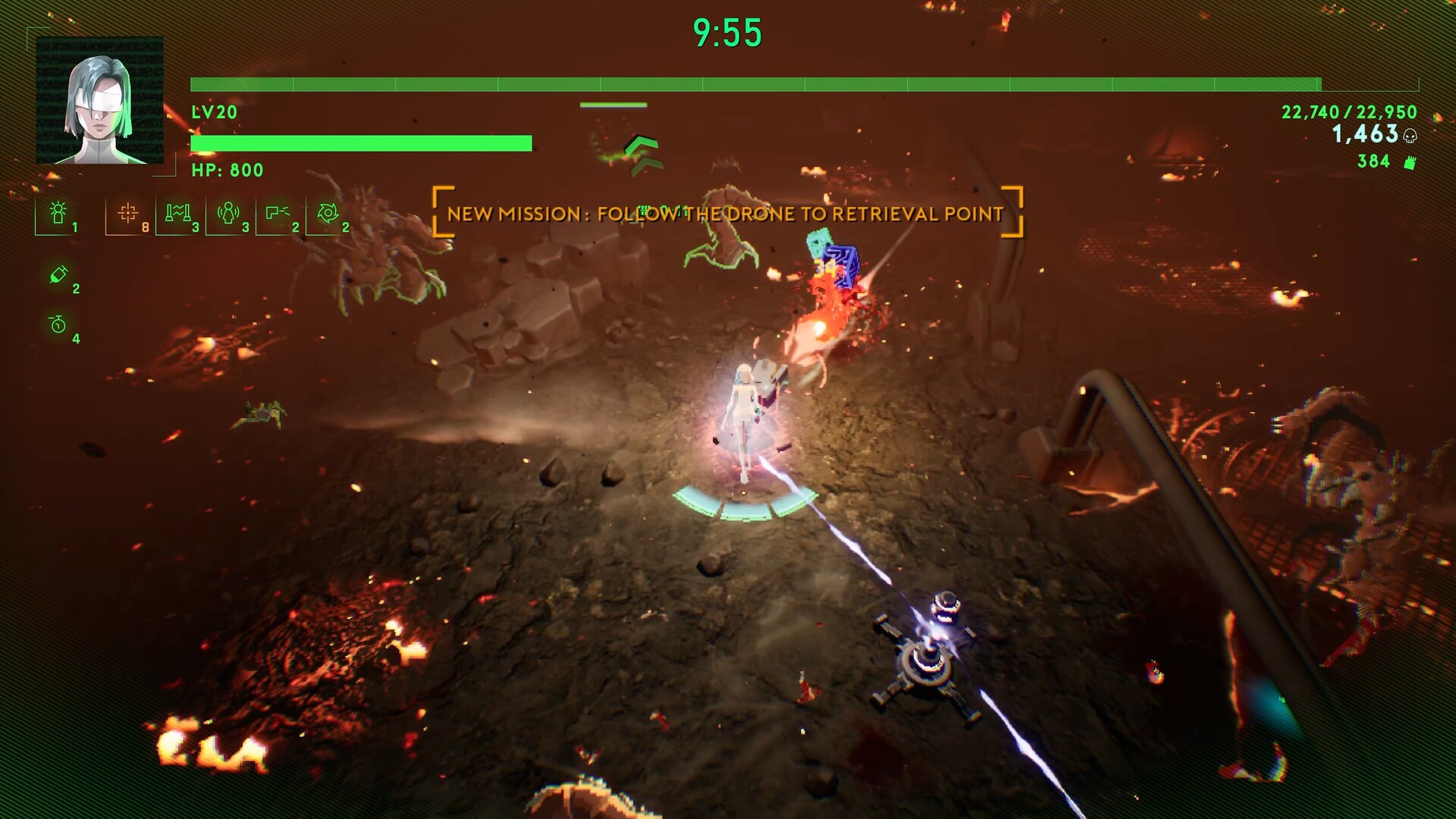
Let Them Come: Onslaught is a rare mid-priced survivors-like that understands its own joke and then has the nerve to make the joke a countdown. Tuatara Games built a crash about a limp, a Psychic about personal space, and a toybox that looks a little homemade and plays a lot more sincerely than that sentence suggests. The loop is the hook. The arsenal is the spine. The walk from an autogun to an orbital strike is the grin.
It is better as a tape than as a novel. Two faces is a short sentence. Four worlds is a focused one. The presentation has indie fingerprints, from the stubborn dash cooldown to the story that would rather be a nuke than a cutscene. All of that is true, and all of that is already priced in at $7.99. You are not buying a decade. You are buying a weekend that can turn into several weekends if the Armory keeps its appointments, or being the person who has to explain the appointment to a supply drop.
I am scoring it 8, Great, because the identity is this clear and the limitations are the limitations of a focused horde, not an empty one. I would recommend it to anyone who likes a magnet that has weight and a map that is allowed to be rude. Distinctive VHS weather, a loadout that shrinks a swarm, characters that know they are last stands, and a price that respects your week are a lot of game for the ask. The systems repeat their manners. The manners are still useful.
The planet is still out there, still hiring a night shift, still asking how long you can stay. After a few nukes, you will understand why the job is not finished, and why you keep limping back to the crash anyway.
We prepared this review with a digital copy of the Let Them Come: Onslaught for the PS5 version provided by Pressengine.